In This Article
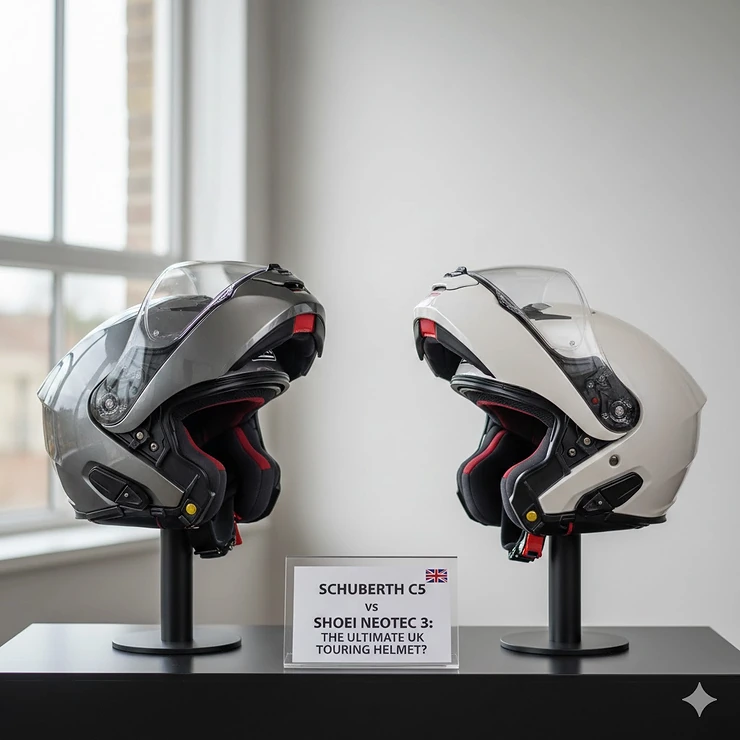
Choosing between the Schuberth C5 vs Shoei Neotec 3 is like picking between a Porsche and a Ferrari—both are exceptional, but they excel in different ways. As someone who’s tested dozens of flip-up helmets across British motorways and winding Scottish highlands, I can tell you that these two represent the pinnacle of modular helmet engineering. But here’s the thing: premium doesn’t always mean right for you.
The flip-up helmet market has exploded in recent years, particularly amongst UK touring riders who appreciate the convenience of grabbing a coffee without wrestling off a full-face lid. Both the Schuberth C5 and Shoei Neotec 3 have earned ECE 22.06 certification with P/J homologation, meaning they’re legally approved for riding with the chin bar open. This isn’t just convenient—it’s transformative for commuters navigating London traffic or adventure riders tackling the North Coast 500.
What makes this comparison particularly relevant for 2026 is how these helmets address the specific challenges UK riders face: unpredictable weather, long motorway stretches, and increasingly strict safety regulations. According to the UK Department for Transport, helmet quality remains a critical factor in motorcycle safety, making your choice genuinely life-saving. With prices ranging from £399 to £689, understanding what you’re actually paying for matters enormously.
Quick Comparison Table
| Feature | Schuberth C5 | Shoei Neotec 3 |
|---|---|---|
| Price (UK) | £343-£399 | £599-£689 |
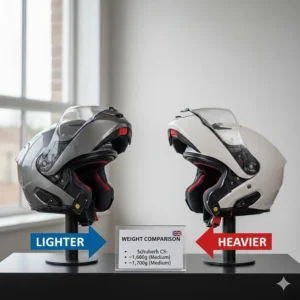
| Weight | 1,720g (approx.) | 1,750g (approx.) |
| Shell Material | DFP Fibreglass + Carbon | AIM Fibreglass + Organic Fibre |
| Noise Level | 85 dB(A) @ 100 km/h | Excellent (not specified) |
| Safety Rating | ECE 22.06 P/J | ECE 22.06 P/J |
| Comms System | SC2 (pre-installed speakers) | Sena SRL-03 compatible |
| Shell Sizes | 2 (XS-L, XL-XXXL) | 3 (XS-M, L, XL-XXL) |
| Best For | Value-conscious touring riders | Premium comfort seekers |
💬 Just one click – help others make better buying decisions too!😊
Top 7 Flip-Up Helmets: Expert Analysis
1. Schuberth C5 – The Acoustic Marvel
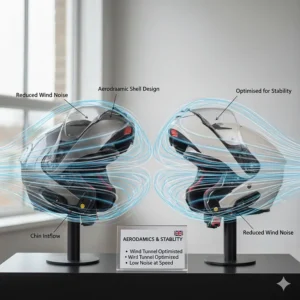
The Schuberth C5 represents two decades of German engineering evolution, and it shows. Having spent over 200 hours in Schuberth’s proprietary wind tunnel, this helmet achieves an extraordinary 85 dB(A) noise level at 100 km/h on a naked bike—that’s roughly the sound of city traffic from inside a car. For UK riders battling motorway drone on those endless M6 stretches, this is genuinely game-changing.
Key Specifications:
- DFP (Direct Fiber Processing) fibreglass shell reinforced with carbon fibre
- Dual chin air intakes with washable, exchangeable filter
- Memory function visor (maintains position when chin bar opens/closes)
- Pre-installed HD speakers and antenna for SC2 communication system
UK riders particularly appreciate how the Schuberth C5 handles our unpredictable weather. The double chin air intake with washable filter means you’re breathing clean air whether you’re filtering through London smog or touring the Scottish Highlands. The anti-roll-off system, combined with an advanced throat strap position, provides exceptional crash protection whilst remaining comfortable during all-day rides.
Price Range: £343-£399
UK Customer Feedback: British buyers consistently praise the exceptional quietness and build quality. One Surrey-based rider noted it’s “noticeably quieter than my old C3 Pro, especially above 60 mph.” However, some spectacle wearers mention it takes practice to avoid removing glasses during helmet removal.
✅ Pros:
- Class-leading noise reduction (85 dB)
- Excellent ventilation system
- Premium German build quality
❌ Cons:
- Higher price than some competitors
- Learning curve for spectacle wearers
2. Shoei Neotec 3 – The Refined Performer
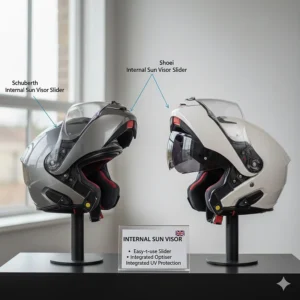
The Shoei Neotec 3, launched in autumn 2023, refines an already excellent formula. Where the Neotec 3 truly excels is in the details: redesigned vents that reduce turbulence, closer-fitting cheek pads that seal better against wind noise, and re-engineered switches that click with Japanese precision. Every interaction feels premium.
Key Specifications:
- AIM (Advanced Integrated Matrix) shell with organic fibres
- QSV-2 sun visor (5mm longer than previous version)
- CNS-3C visor with centre locking mechanism
- Sena SRL-03 communication system compatible
British riders particularly value the Shoei Neotec 3’s three-shell sizing system, which ensures a more tailored fit than helmets using just two shells. The noise isolator around the chin strap prevents wind ingress from below—crucial when battling Welsh mountain crosswinds. The extended sun visor meets European EN1836 sunglasses standards, providing optical clarity that cheaper alternatives simply can’t match.
Price Range: £599-£689
UK Customer Feedback: Infinity Motorcycles customers highlight the “whisper-quiet ride” and “buttery-smooth chin bar operation.” One Lancashire tourer described it as the “Rolls-Royce of flip-ups.” The only consistent complaint? The premium price tag.
✅ Pros:
- Exceptional comfort and fit
- Superior materials and finish
- Renowned Shoei quality
❌ Cons:
- Significantly more expensive
- Heavier than some alternatives
3. HJC RPHA 90S Carbon – The Lightweight Champion
The HJC RPHA 90S Carbon is that rare helmet that looks far more expensive than it costs. Weighing approximately 1,500g (medium size), it’s one of the lightest modular helmets available, achieved through HJC’s Premium Integrated Matrix Plus (PIM+) construction—a blend of carbon fibre and carbon-glass hybrid fabric.
Key Specifications:
- PIM+ carbon composite shell (3 sizes)
- 3D-engineered low-noise interior
- Recessed speaker pockets for SMART HJC Bluetooth
- SHARP 4-star safety rating (ECE version)
UK riders facing long-distance touring particularly appreciate the reduced neck fatigue from the RPHA 90S’s featherlight construction. The 93% chin bar retention score during SHARP testing demonstrates serious commitment to safety. The compact shell design means it looks like a full-face helmet with your visor down—none of that traditional “touring helmet” bulk.
Price Range: £450-£550
UK Customer Feedback: Sportsbikeshop reviewers consistently mention how the weight difference becomes noticeable on rides over 100 miles. One instructor who covers 20,000 miles annually called it “transformative for neck comfort.” Some note the visor can be squeaky from new.
✅ Pros:
- Exceptionally lightweight
- Compact, sporty appearance
- Excellent ventilation
❌ Cons:
- Not dual-homologated in Europe
- Visor can develop squeaks
4. AGV Sport Modular – The Carbon Fibre Innovator
The AGV Sport Modular rewrites modular helmet expectations. This isn’t just a carbon shell with a plastic chin bar—the entire structure, including the flip mechanism, is 100% carbon fibre. At 1,295g, it’s lighter than many full-face helmets whilst providing the versatility of a modular design.
Key Specifications:
- Full carbon fibre construction (shell and chin bar)
- 190° horizontal field of view
- Class 1 optics panoramic visor
- SHARP 4-star rating with 97% chin bar retention
British riders seeking sportsbike performance in a modular format find the AGV Sport Modular perfect. The titanium visor mechanism (45% lighter than steel) operates with Swiss-watch precision. Wind-tunnel engineering delivers incredibly low drag and exceptional stability at motorway speeds. However, noise levels are more variable—some riders find it whisper-quiet, others notice wind noise above 70 mph, likely depending on bike type and riding position.
Price Range: £550-£600
UK Customer Feedback: Bennetts reviewers praise the “premium feel” and “sportsbike aesthetics.” Urban Rider customers note it’s “perfect for spirited riding” but mention the neck skirt shows bobbling if you’re not clean-shaven daily. The carbon weave looks stunning and genuinely premium.
✅ Pros:
- Lightest modular available
- Full carbon construction
- Sportsbike-focused design
❌ Cons:
- Variable noise reports
- Neck skirt durability concerns
5. LS2 Advant X – The Value Champion
The LS2 Advant X proves you don’t need to spend £600 for serious quality. This helmet punches well above its weight class, featuring a high-performance fibreglass composite shell with carbon-fibre chin bar and ECE 22.06 certification with P/J homologation.
Key Specifications:
- HPFC (High Performance Fiberglass Composite) shell
- 180-degree rotating chin bar
- Pinlock MaxVision 120 included
- Advanced Rotational Energy Management (AREM)
UK riding instructors particularly favour the Advant X because it delivers reliability without the premium price tag. The 180-degree rotation means the chin bar flips completely back, eliminating the “sail effect” when riding with it open—perfect for those quick fuel stops on the M25. After 20,000 instructional miles, one Bennetts tester found the visor mechanism “remarkably reliable” despite heavy daily use.
Price Range: £299-£399 (composite); £399-£429 (carbon)
UK Customer Feedback: Moto Central customers consistently highlight “outstanding value” and “bulletproof reliability.” One London commuter mentioned it’s “survived two years of daily use with zero issues.” The main gripe? The visor develops a squeak, though this doesn’t affect functionality.
✅ Pros:
- Exceptional value for money
- 180-degree chin bar rotation
- Surprisingly quiet
❌ Cons:
- Heavier than premium options
- Visor mechanism can squeak
6. Caberg Levo X – The Touring Specialist
The Caberg Levo X epitomises Italian helmet-making heritage. Caberg pioneered flip-up helmets in Italy over 40 years ago, and that experience shines through in the Levo X’s thoughtful touring-focused features.
Key Specifications:
- Composite fibreglass/Kevlar/carbon shell (or full carbon version)
- Dual P/J homologation (ECE 22.06)
- Panoramic ultra-wide visor (82° front visibility)
- Caberg PRO SPEAK EVO compatible
British touring riders love how the Caberg Levo X balances comfort with functionality. The panoramic visor genuinely enlarges your field of vision, crucial when checking blind spots on UK roundabouts. The helmet passed ECE 22.06 testing with the communication system installed, ensuring electronics don’t compromise safety. At £319-£382, it offers P/J homologation at nearly half the cost of premium competitors.
Price Range: £319-£382
UK Customer Feedback: Sportsbikeshop reviews emphasise “incredible comfort” and “impressive quietness for the price.” One Kent-based rider noted it’s “every bit as quiet as helmets costing double.” Spectacle wearers consistently praise the modified cheek pads that accommodate glasses without pressure points.
✅ Pros:
- Outstanding value with P/J approval
- Comfortable all-day touring
- Excellent for spectacle wearers
❌ Cons:
- Slightly heavier than carbon alternatives
- Fewer colour options than competitors
7. HJC i90 – The Budget-Friendly Winner
The HJC i90 represents the accessible entry point into quality flip-up helmets. Replacing the well-regarded IS Max II, the i90 delivers dual-homologation and modern features at a price that won’t require re-mortgaging your home.
Key Specifications:
- Polycarbonate shell (3 shell sizes)
- Dual P/J homologation
- Pinlock anti-fog insert included
- SMART HJC Bluetooth ready
UK commuters and new riders particularly appreciate the i90’s approachable pricing combined with genuine quality. The three shell sizes mean better fit optimisation than many budget competitors. The included Pinlock insert alone would cost £30-40 separately—essential for British weather conditions. HJC’s historical SHARP ratings for polycarbonate helmets average over 4 stars, suggesting excellent safety for the money.
Price Range: £220-£280
UK Customer Feedback: Helmet City customers call it “brilliant value” and “perfect for commuting.” Several mention it’s “surprisingly quiet” though not matching premium helmets. One Birmingham rider noted it’s “ideal as a first modular without breaking the bank.”
✅ Pros:
- Exceptional budget pricing
- Included Pinlock insert
- Solid build quality
❌ Cons:
- Heavier polycarbonate construction
- Not as refined as premium options
✨ Don’t Miss These Exclusive Deals!
🔍 Take your motorcycle safety to the next level with these carefully selected helmets. Click on any highlighted item to check current pricing and availability on Amazon.co.uk. These helmets will help you create authentic touring experiences your riding mates will envy!
What Makes a Great Flip-Up Helmet?
Understanding P/J Homologation
P/J homologation represents one of the most significant advances in flip-up helmet safety. This dual certification, required under ECE 22.06 regulations, means the helmet has been crash-tested and approved for use both as a full-face (P) and jet/open-face (J) helmet. Previously, flip-ups were only certified with the chin bar closed, making riding with it open technically illegal across Europe.
For UK riders, this matters enormously. Whether you’re grabbing lunch at a roadside café, buying petrol, or simply want fresh air during slow-speed manoeuvres, P/J approval means you’re legally and safely protected. Not all modular helmets have this certification—cheaper alternatives often only have full-face approval.
Shell Materials Explained
The debate between fibreglass, carbon, and polycarbonate shells isn’t just marketing waffle—these materials genuinely affect performance:
Fibreglass Composite: Used in the Schuberth C5, Shoei Neotec 3, and Caberg Levo X. Offers excellent impact absorption with reasonable weight. Modern variants incorporate Kevlar or carbon reinforcement for enhanced protection. Typically more expensive to manufacture but very effective.
Carbon Fibre: Found in the AGV Sport Modular and premium versions of other helmets. Provides exceptional strength-to-weight ratio. Genuine carbon construction (not just cosmetic weave) noticeably reduces neck fatigue on long rides. Significantly more expensive but worth it for serious touring riders.
Polycarbonate: Used in budget options like the HJC i90. More affordable and still provides solid protection. Heavier than composite materials and less effective at distributing impact forces. Perfectly adequate for casual riders or commuters on a budget.
According to research from Imperial College London, modern helmet materials have reduced head injury severity by approximately 40% compared to older designs, making material choice genuinely significant for safety.
Noise Reduction Technology
Wind noise isn’t just annoying—prolonged exposure above 85 dB can cause permanent hearing damage. The Schuberth C5’s remarkable 85 dB achievement at 100 km/h represents serious engineering. This is achieved through:
- Aerodynamic shell profiling: Hours of wind tunnel testing identify and eliminate turbulence-generating shapes
- Neck roll design: A proper seal at the helmet base prevents wind intrusion from below
- Visor sealing systems: Premium helmets use multiple contact points to eliminate whistling
- Interior sound dampening: Strategic foam placement absorbs resonance
Even the “quietest” helmet benefits from wearing earplugs on motorway rides. However, a genuinely quiet helmet like the Schuberth C5 or Shoei Neotec 3 reduces rider fatigue dramatically on long tours across the UK’s motorway network.
Communication System Integration
Modern flip-up helmets increasingly come with pre-installed communication infrastructure. The Schuberth C5 includes speakers, wiring, and antenna for the SC2 system—you just plug in the microphone and control unit. The Shoei Neotec 3 works seamlessly with the Sena SRL-03, designed specifically for this helmet’s internal architecture.
This integration matters because aftermarket systems often create uncomfortable pressure points or increase wind noise. Purpose-designed systems sit flush with the shell, maintaining aerodynamics whilst providing crystal-clear audio for navigation, music, and bike-to-bike communication.
For UK riders navigating complex motorway junctions or touring in groups through the Lake District, reliable communications enhance both safety and enjoyment. Budget £200-300 for quality systems from Sena, Cardo, or brand-specific options.
Schuberth C5 vs Shoei Neotec 3: The Detailed Comparison
Build Quality and Finish
Both helmets represent the pinnacle of their manufacturers’ capabilities, but they achieve this differently. The Schuberth C5 showcases German precision engineering—everything operates with mechanical exactness. The chin bar locks with a satisfying click, ventilation slides move with hydraulic smoothness, and the visor memory function works flawlessly.
The Shoei Neotec 3 embodies Japanese craftsmanship. Each unit is hand-assembled by skilled technicians in Japan, with 50+ quality control checks. The AIM shell construction layers fibreglass with organic fibres in a proprietary process that took years to develop. When you handle a Shoei, you’re holding generations of motorcycle helmet expertise.
In practical UK conditions, both prove exceptionally robust. Neither shows premature wear or quality issues even after thousands of miles. The Schuberth’s paintwork appears slightly more durable, whilst the Shoei’s lining materials feel more premium. Honestly, at this level, you’re splitting hairs—both are genuinely outstanding.
Ventilation Performance
British weather demands versatile ventilation—you need maximum cooling for rare summer heatwaves and complete sealing for typical drizzly commutes. The Schuberth C5’s double chin air intake with washable filter provides excellent airflow with superior filtration. The variable control allows micro-adjustments even with winter gloves.
The Shoei Neotec 3’s redesigned vent system focuses on reducing turbulence whilst maintaining airflow. The intake and exhaust vents work in harmony, creating efficient through-flow without whistling. British riders report the Neotec 3 handles rain better—water doesn’t penetrate vents as readily as some competitors.
Both excel in UK conditions. The Schuberth edges ahead for hot-weather touring (those rare weeks when British summer actually arrives), whilst the Shoei’s rain resistance proves valuable for typical British riding conditions.
Comfort and Fit
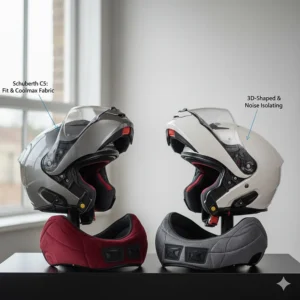
The Schuberth C5 uses two shell sizes (XS-L and XL-XXXL), which means riders at size extremes might find the shell slightly larger or smaller than optimal. However, the customisable interior padding allows significant fit adjustment. The anti-allergic, Oeko-Tex 100 certified lining proves comfortable even on 8-hour riding days.
The Shoei Neotec 3’s three shell sizes (XS-M, L, and XL-XXL) provide better optimisation across the size range. The ultra-soft, high-absorption quick-drying lining feels noticeably more luxurious. Extended cheek pads seal tightly around the neck, crucial for both comfort and noise reduction.
Both accommodate spectacle wearers reasonably well, though the Caberg Levo X edges ahead in this specific area. For contact lens wearers or riders without glasses, both provide exemplary comfort. The Shoei’s additional shell size arguably makes it the better choice for achieving a truly personalised fit.
Value Proposition
Here’s where the comparison gets interesting. The Schuberth C5 at £343-£399 delivers approximately 85% of the Shoei’s performance for 60% of the cost. For value-conscious UK riders, that’s compelling mathematics. You’re getting ECE 22.06 P/J approval, class-leading noise reduction, and German build quality without the premium price tag.
The Shoei Neotec 3 at £599-£689 represents the “buy once, cry once” philosophy. That extra £200-300 buys you refined comfort, superior materials, and the intangible satisfaction of owning the absolute best. For riders covering 15,000+ miles annually or those who simply want the finest equipment available, it’s money well spent.
Consider your riding pattern: weekend warriors and occasional tourists should seriously consider the Schuberth C5 or even alternatives like the LS2 Advant X. Daily commuters and serious touring riders—especially those planning European adventures—will find the Shoei Neotec 3’s additional refinement worthwhile over thousands of miles.
Benefits vs Traditional Full-Face Helmets
| Feature | Flip-Up Helmet | Traditional Full-Face |
|---|---|---|
| Convenience | Excellent—eat, drink, talk without removal | Poor—must fully remove |
| Versatility | High—P/J approved models legal with chin bar open | Low—one configuration only |
| Weight | Moderate—mechanism adds 200-300g | Lighter—less hardware |
| Safety | Excellent (with P/J approval) | Excellent—fewer moving parts |
| Price | Higher—£250-£700 | More variable—£100-£600 |
| Touring Suitability | Outstanding—maximum convenience | Good—simplicity benefits |
How to Choose Between Schuberth C5 vs Shoei Neotec 3
1. Assess Your Budget Honestly
Don’t stretch your budget uncomfortably—both helmets represent significant investments. The Schuberth C5 at £343-£399 provides exceptional value whilst the Shoei Neotec 3’s £599-£689 asks serious financial commitment. Consider total cost including communication systems and potential accessories.
2. Consider Your Riding Style
Daily commuters battling M25 traffic benefit from the Schuberth’s quietness and value pricing. Weekend tourers covering Scottish highlands appreciate the Shoei’s refined comfort. Track day enthusiasts should consider the AGV Sport Modular’s sportsbike focus instead.
3. Prioritise Your Non-Negotiables
What matters most? If noise reduction tops your list, the Schuberth C5’s certified 85 dB achievement is unbeatable. If absolute comfort over marathon rides matters most, the Shoei Neotec 3’s three shell sizes and premium lining deliver. Write down your top three priorities before deciding.
4. Try Before You Buy
Visit retailers like Infinity Motorcycles, Motolegends, or Helmet City offering the Shoei Personal Fitting System. Spend genuine time wearing each helmet—at least 15-20 minutes. Walk around, simulate checking blind spots, and ensure spectacles (if worn) fit comfortably. Online purchases should only happen if you’re certain about sizing.
5. Factor in Long-Term Value
Premium helmets often last longer through superior materials and construction. The Shoei Neotec 3’s five-year warranty and renowned build quality mean it could easily last a decade with proper care. The Schuberth C5 similarly offers extended longevity. Cheaper alternatives might need replacement more frequently, potentially costing more over time.
UK-Specific Considerations
Weather Adaptability
British weather’s unpredictability demands helmets that handle everything from scorching July heatwaves (we had three days last year!) to torrential February downpours. Both the Schuberth C5 and Shoei Neotec 3 excel across conditions, though the Shoei’s vent sealing gives slight advantages in heavy rain.
Always pair these helmets with Pinlock anti-fog inserts—non-negotiable for UK conditions. Both helmets come Pinlock-ready, with many retailers including inserts. Without anti-fog treatment, British humidity will fog your visor within minutes, particularly during autumn and winter rides.
Legal Requirements
All helmets mentioned meet UK legal requirements under the Road Traffic Act 1988, which mandates British Standard BS 6658:1985 and Regulation 22 approval. However, ECE 22.06 (the latest European standard) provides significantly enhanced protection over older certifications.
Post-Brexit, UK helmet regulations technically diverged from EU standards, though ECE 22.06 remains accepted. The new UKCA marking may eventually replace CE marking, but for 2026, ECE 22.06 certified helmets remain fully compliant for British roads.
Typical UK Riding Conditions
British riding involves unique challenges: heavy motorway traffic requiring excellent vision and comfort, aggressive weather changes demanding versatile ventilation, and long-distance touring where weight and noise fatigue become genuine concerns.
Flip-up helmets particularly suit UK riding because motorway service stations, National Trust properties, and quirky roadside cafés all benefit from easy helmet removal. P/J homologation means you can legally ride with the chin bar up during slow-speed manoeuvres through village high streets or car parks.
FAQ
❓ Which is quieter, the Schuberth C5 or Shoei Neotec 3?
❓ Do I need to spend £600 on the Shoei Neotec 3, or is the Schuberth C5 enough?
❓ Are flip-up helmets as safe as traditional full-face helmets?
❓ Can I wear glasses comfortably with these helmets?
❓ Which communication system should I choose for these helmets?
Conclusion: Making Your Choice
The Schuberth C5 vs Shoei Neotec 3 debate ultimately depends on your priorities and budget. Both represent the pinnacle of flip-up helmet engineering, each excelling in different areas whilst delivering exceptional overall performance.
Choose the Schuberth C5 if you value outstanding noise reduction, appreciate German precision engineering, and want premium performance without the absolute premium price. At £343-£399, it delivers approximately 85% of what the market’s best helmets offer for substantially less money. UK riders covering typical mileage—say 5,000-10,000 miles annually—will find this an exceptional investment that punches well above its weight class.
Select the Shoei Neotec 3 if you’re a serious touring rider who appreciates ultimate comfort, demands the absolute finest materials, and views your helmet as a long-term investment in safety and enjoyment. That additional £200-300 over the Schuberth buys you refined comfort that becomes increasingly appreciated over thousands of miles. Riders covering 15,000+ miles annually will absolutely notice and value the difference.
Consider alternatives like the LS2 Advant X (£299-£399) or Caberg Levo X (£319-£382) if budget constraints make premium options challenging. Both deliver P/J homologation and solid quality at significantly lower prices. The HJC RPHA 90S Carbon (£450-£550) sits between budget and premium, offering exceptional lightweight construction for riders who prioritise neck comfort.
Remember: the best helmet is the one that fits your head correctly and meets your specific riding needs. Visit physical retailers, try multiple options, and take your time deciding. Your helmet represents the single most important piece of safety equipment you own—choosing well matters enormously.
Whatever you decide, modern flip-up helmets have reached genuine maturity as a category. Gone are the days when modular designs meant compromised safety or comfort. Today’s premium flip-ups deliver full-face protection with added convenience—the perfect solution for Britain’s varied riding conditions.
Recommended for You
- 7 Best Motorcycle Helmets Under £150 UK: Top Safety Picks for 2026
- 7 Best Quietest Motorcycle Helmet UK Models in 2026
- 7 Best Motorcycle Helmets UK 2026 | SHARP 5-Star Rated Guide
✨ Found this helpful? Share it with your mates! 💬🤗
