
In This Article
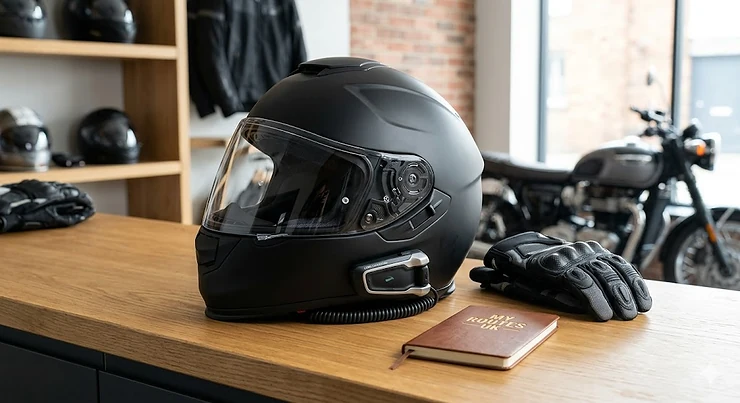
Choosing the right Cardo ready motorcycle helmet transforms your riding experience from solitary silence to connected adventure. These helmets aren’t just about strapping on a Bluetooth unit and calling it innovation—they’re specifically engineered with recessed mounting points, speaker pockets, and wiring channels that eliminate the usual faff of retrofit installations. What you’re really buying is seamless integration that doesn’t compromise the helmet’s ECE 22.06 certification or add unnecessary bulk.

The British riding environment demands particular attention to communication systems. Between our unpredictable weather—where a sunny morning in Hampshire can become a torrential downpour by the time you reach the New Forest—and the cacophony of urban filtering through London or Manchester, you need audio quality that cuts through wind noise without drowning out critical sounds like sirens and lorries. Cardo’s Dynamic Mesh Communication (DMC) technology addresses this brilliantly, allowing up to 15 riders to maintain fluid group communication across distances that traditional Bluetooth simply cannot match. According to the UK Government’s SHARP helmet safety programme, helmet selection should prioritise both safety ratings and practical features—communication integration falls squarely into that latter category when done properly.
What most UK buyers overlook is that not all “Cardo compatible” helmets are created equal. Some merely accommodate an aftermarket Cardo unit with adhesive mounts that’ll peel off after six months of British weather. Properly Cardo ready helmets feature factory-engineered mounting systems that integrate the communication hardware as if it were original equipment. This matters when you’re riding through November rain or dealing with the grit and salt that UK councils liberally apply to our roads from October through March.
Quick Comparison: Top Cardo Ready Helmets Available in the UK
| Helmet Model | Type | Shell Material | Weight | Cardo System | ECE Rating | Price Range (£) | Best For |
|---|---|---|---|---|---|---|---|
| LS2 Advant X Carbon | Modular | Carbon Fibre | 1,650g | LS2 4X (Cardo) | 22.06 P/J | £400-£550 | Premium touring |
| LS2 Valiant II | Modular | KPA | 1,806g | Compatible | 22.06 P/J | £180-£280 | Value versatility |
| LS2 Airflow II | Open Face | HPTT | 1,500g | LS2 Intercom Ready | 22.06 | £90-£140 | Urban commuting |
| LS2 Vector II Carbon | Full Face | Carbon/Fibreglass | 1,420g | LS2 4X Ready | 22.06 | £320-£450 | Sport riding |
| Cardo Beyond GTS | Full Face | Carbon Composite | 1,870g | Integrated Packtalk Pro | 22.06 | £1,000-£1,100 | Premium integrated |
| AGV Tourmodular | Modular | Carbon/Aramid | 1,740g | DMC Mesh Ready | 22.06 P/J | £550-£650 | Italian touring |
| HJC i90 | Modular | Polycarbonate | 1,720g | Sena Compatible | 22.05 | £180-£240 | Budget-conscious |
The data above reveals an interesting pattern: carbon construction doesn’t necessarily guarantee lighter weight—the LS2 Vector II Carbon at 1,420g actually undercuts several composite designs. For UK riders frequently transitioning between motorway slogs and stop-start urban filtering, the modular designs dominate this list because they offer genuine P/J certification, meaning you’re legally protected whether riding with the chin bar up or down. The price jump to the Cardo Beyond GTS reflects integrated technology rather than just helmet quality—you’re essentially buying a Packtalk Pro system built into the shell rather than bolted on afterwards.
💬 Just one click — help others make better buying decisions too!😊
Top 7 Cardo Ready Motorcycle Helmets: Expert Analysis
1. LS2 Advant X Carbon – Premium Modular Excellence
The LS2 Advant X Carbon represents Spanish engineering at its finest, delivering genuine 100% carbon fibre construction at a price point that makes Italian competitors look rather greedy. This modular helmet’s defining feature is its 180-degree flip mechanism, which allows the chin bar to rotate completely backward and rest flush against the rear of the shell. Unlike traditional modular designs where the flipped chin bar catches wind like a sail, this system maintains aerodynamic integrity even with the face open—particularly useful when filtering through congested British high streets during summer.
What sets this apart for Cardo integration is the factory provision for the LS2 4X communication system, co-developed with Cardo. The helmet arrives with dedicated recesses machined into the EPS liner for the 40mm speakers, pre-routed channels for wiring, and a mounting plate that doesn’t require drilling or adhesive. During installation, you’re looking at roughly 15 minutes from box to fully operational system—a stark contrast to the 45-minute struggle sessions involved with retrofitting generic Bluetooth units. The carbon shell achieves approximately 1,650 grammes for a large size, which feels noticeably lighter during all-day touring compared to composite alternatives hovering around 1,800g.
UK riders will appreciate the ECE 22.06 P/J homologation, meaning this helmet meets the stringent new safety standards introduced in 2024 for both configurations. The included Pinlock MaxVision 120 anti-fog insert proves its worth during autumn rides through the Lake District or Scottish Highlands, where temperature differentials between inside and outside the helmet can fog a standard visor in seconds. Customer feedback from UK buyers on Amazon.co.uk consistently praises the helmet’s performance in wet conditions, with the integrated rain channels effectively directing water away from the seal line.
Pros:
✅ Genuine carbon construction including chin bar reduces neck fatigue on long rides
✅ Factory Cardo integration eliminates retrofit hassles and maintains ECE certification
✅ 180-degree chin bar rotation provides genuine open-face experience when needed
Cons:
❌ Premium pricing may deter budget-conscious riders
❌ Carbon shells can be more susceptible to UV degradation in storage
The Advant X Carbon typically retails in the £400-£550 range on Amazon.co.uk, representing excellent value when you consider a comparable Italian carbon modular would easily command £700-£800. For UK touring riders who regularly tackle mixed conditions—motorway miles, coastal roads, and urban navigation—this helmet delivers premium features without the premium brand tax.
2. LS2 Valiant II – Value-Driven Versatility
The LS2 Valiant II strikes that rare balance between affordability and genuine capability, making it particularly popular among UK riders who want communication integration without remortgaging their house. Built from LS2’s proprietary Kinetic Polymer Alloy (KPA), this modular helmet weighs approximately 1,806 grammes—slightly heavier than carbon alternatives but substantially lighter than budget polycarbonate designs that can approach 2,000g.
The defining characteristic here is the same 180-degree flip mechanism found on the Advant X, but executed in composite materials. This engineering choice delivers exceptional value: you’re getting the aerodynamic benefits of rear chin bar placement and full P/J certification at roughly half the cost of carbon construction. The helmet’s compatibility with aftermarket Cardo systems benefits from thoughtfully placed speaker pockets and sufficient internal space for routing cables without creating pressure points against your head. Most UK buyers report successful installation of Cardo Freecom or Spirit units within 20 minutes using the provided mounting hardware.
What makes this particularly suitable for British conditions is the dual visor system: a full-size outer visor with anti-scratch and UV treatment, plus an integrated drop-down sun visor for those rare sunny intervals we experience between May and August. The Pinlock-ready outer visor accepts MaxVision inserts, essential for preventing fog during cold, damp autumn mornings when you’re commuting through the Pennines or riding Welsh mountain passes. UK customer reviews on Amazon.co.uk frequently mention the helmet’s excellent seal against wind noise at motorway speeds—a critical factor when you’re trying to hear navigation instructions through your Cardo system whilst battling 70mph buffeting.
Pros:
✅ Exceptional value delivers premium features at mid-range pricing suitable for UK budgets
✅ Full P/J certification means legal flexibility for urban filtering with chin bar raised
✅ Dual visor system adapts to unpredictable British weather conditions
Cons:
❌ KPA construction adds weight compared to carbon alternatives
❌ Some riders report the internal sun visor mechanism requires periodic adjustment
Expect to pay around £180-£280 on Amazon.co.uk for the Valiant II, making it roughly £200 less than carbon equivalents whilst sacrificing minimal practical performance. For UK commuters tackling the M25, M6, or M62 corridors daily, this helmet represents brilliant value—saving that £200 buys a decent Cardo Freecom 2X system to populate those factory-ready mounting points.
3. LS2 Airflow II – Urban Commuter’s Choice
The LS2 Airflow II takes a completely different approach: this open-face design targets urban riders who prioritise visibility, comfort, and easy communication over full-face protection. At approximately 1,500 grammes, it’s noticeably lighter than modular alternatives, reducing neck fatigue during stop-start city riding through Birmingham, Bristol, or Edinburgh. The HPTT (High Performance Thermoplastic Technology) shell delivers ECE 22.06 certification whilst maintaining that classic jet helmet aesthetic favoured by scooter riders and classic motorcycle enthusiasts.
For Cardo integration, the Airflow II features recessed mounting points specifically designed for LS2 Intercom systems powered by Cardo technology. The open-face design actually simplifies speaker placement—no tight cheek pad squeeze here—and the boom microphone installation proves straightforward even for mechanically challenged riders. What’s particularly clever is how LS2 positioned the mounting points: low enough to avoid visual bulk, yet high enough to remain clear of jacket collars that might interfere with microphone pickup. UK urban riders appreciate being able to flip up the wide visor at traffic lights for face-to-face conversations without removing the entire helmet, then snap it back down as lights change.
The helmet’s ventilation system deserves mention: two large air inlets at the front channel air directly over the crown, exhausting through rear ports. This matters enormously during summer commutes through London’s congestion zone or Manchester city centre, where you’re frequently stationary in traffic whilst the sun beats down. Customer feedback from UK buyers consistently praises the Airflow II’s ability to remain comfortable during slow-speed urban riding—a scenario where full-face helmets can become unbearably stuffy.
Pros:
✅ Lightweight design reduces neck strain during extended urban filtering sessions
✅ Open-face format facilitates easy Cardo installation and optimal speaker positioning
✅ Superior ventilation prevents overheating during British summer traffic jams
Cons:
❌ Limited face protection compared to full-face or modular alternatives
❌ Not suitable for high-speed motorway riding or touring applications
The Airflow II typically costs £90-£140 on Amazon.co.uk, making it the most affordable entry point into the Cardo ecosystem. For UK riders whose journeys rarely exceed 40mph city limits—think food delivery riders, urban commuters on 125cc machines, or classic scooter enthusiasts—this helmet delivers targeted functionality without paying for features you’ll never use.
4. LS2 Vector II Carbon – Sport Riding Focus
The LS2 Vector II Carbon represents LS2’s answer to performance-focused riders who demand lightweight construction and aerodynamic efficiency without sacrificing communication capability. This full-face sport helmet combines carbon fibre and fibreglass in a hybrid shell that achieves approximately 1,420 grammes for a medium size—impressively light for a lid offering this level of protection and integration capability.
The helmet’s sport-oriented design becomes immediately apparent: the chin bar sits higher and angles upward slightly to accommodate the forward-leaning riding position favoured on sports bikes and naked machines. This matters when you’re tucked behind a screen on the M40 or carving through the Peak District’s serpentine B-roads, as it prevents that uncomfortable chin-to-chest sensation that plague riders wearing touring helmets on sport-focused machines. For LS2 4X Cardo integration, the Vector II features the same recessed mounting system as the Advant range, but with speaker positioning optimised for the closer-fitting sport helmet profile.
What UK riders particularly appreciate is the helmet’s stability at high speeds. The aerodynamic shell generates minimal lift or buffeting at motorway velocities, whilst the channelled EPS liner creates internal air passages that prevent heat build-up during spirited riding. The included Pinlock 120 MaxVision insert provides an exceptionally wide field of view—crucial when you’re checking your racing line through corners or monitoring traffic during high-speed motorway overtakes. UK customer reviews on Amazon.co.uk frequently mention the helmet’s impressive wind noise suppression, which allows Cardo audio to remain intelligible even at indicated speeds approaching the national speed limit.
Pros:
✅ Hybrid carbon/fibreglass construction delivers race-replica performance at accessible pricing
✅ Aerodynamic profile minimises buffeting during spirited riding across UK A-roads and motorways
✅ Sport-optimised fit accommodates aggressive riding positions without discomfort
Cons:
❌ Tighter sport fit may prove uncomfortable for riders with rounder head shapes
❌ Limited ventilation compared to touring-focused alternatives
Expect to pay £320-£450 on Amazon.co.uk for the Vector II Carbon, positioning it as a mid-premium option that undercuts Italian sport helmets by £200-£300. For UK riders on sports bikes, naked machines, or adventure bikes who occasionally enjoy enthusiastic riding through Wales or Scotland, this helmet delivers the performance credentials to match your motorcycle without the boutique pricing.
5. Cardo Beyond GTS – Integrated Innovation
The Cardo Beyond GTS represents something genuinely new: a helmet designed from the ground up around integrated communication technology rather than accommodation of aftermarket units. Cardo’s first foray into helmet manufacturing collaborates with the same Austrian design house (Kiska) behind KTM’s iconic styling and uses manufacturing from the company producing AGV, Alpinestars, and Bell helmets. At approximately 1,870 grammes, it’s heavier than pure sport designs but competitive with premium touring lids—the weight primarily attributable to the integrated 53mm speakers and active noise cancellation hardware.
The headline feature—Active Noise Cancelling (ANC)—promises to revolutionise long-distance touring by eliminating harmful wind noise frequencies whilst preserving engine sound and traffic awareness. Early testing by UK motorcycle media suggests approximately 40% better noise reduction compared to traditional DSP systems, potentially eliminating the need for earplugs during extended motorway miles. The integrated Packtalk Pro communication system brings Dynamic Mesh Communication 2.0, connecting up to 15 riders across a 2-kilometre range, plus Open Bluetooth Intercom compatibility allowing cross-brand connections with Sena and other systems.
What makes this particularly relevant for UK riders is the helmet’s five-year warranty covering three years of electronics and two years for the replaceable 2,000mAh battery. Given British weather’s tendency to test equipment durability, this extended coverage provides genuine peace of mind. The carbon composite shell meets ECE 22.06 standards, includes an integrated sun visor, and features rear-facing LED brake lights that automatically illuminate during deceleration—particularly useful during those grey, drizzly British mornings when visibility drops to dangerous levels.
Pros:
✅ Active noise cancellation could eliminate earplug requirements for touring riders
✅ Fully integrated system avoids retrofit compromises and maintains clean aesthetics
✅ Five-year warranty with replaceable battery addresses long-term reliability concerns
Cons:
❌ Premium pricing represents significant investment for first-generation technology
❌ Weight penalty compared to non-integrated alternatives may concern some riders
The Beyond GTS is expected to retail around £1,000-£1,100 in the UK when it launches in summer 2026. This represents substantial investment, but consider the comparison: a Shoei GT Air 3 costs approximately £650, and adding a Cardo Packtalk Pro at retail (around £341) totals £991—making the Beyond GTS potentially competitive whilst offering superior integration and ANC technology unavailable on retrofit systems.
6. AGV Tourmodular – Italian Engineering Meets DMC Mesh
The AGV Tourmodular brings seven decades of Italian helmet manufacturing expertise to the Cardo-ready category, featuring integrated DMC mesh technology developed in partnership with Cardo Systems. Built from a sophisticated blend of carbon, aramid fibre, and fibreglass, this modular helmet underwent what AGV claims is their most rigorous testing programme, resulting in ECE 22.06 P/J certification and a weight of approximately 1,740 grammes—impressively light for a modular with integrated communication hardware.
The engineering focus here centres on zero dynamic weight at 130 km/h (roughly 80mph)—meaning aerodynamic forces essentially cancel the helmet’s mass at motorway cruising speeds. For UK riders regularly traversing the M4, M5, or A1(M), this translates to noticeably reduced neck fatigue during multi-hour journeys. The AGV INSYDE Intercom system enables communication between up to 15 riders with a total range of 6 kilometres, utilising Cardo’s proven DMC technology. Four large adjustable air vents combined with 16 internal extraction channels ensure optimal ventilation without compromising acoustic performance—critical when you’re trying to hear navigation instructions through Yorkshire moorlands or Scottish highlands.
UK buyers particularly appreciate the helmet’s attention to practical details: the quick-release visor system allows glove-friendly operation, the Pinlock MaxVision insert comes pre-installed, and the emergency release cheek pads facilitate rapid helmet removal by medical personnel if needed. Customer feedback from British riders on specialist forums consistently praises the Tourmodular’s build quality and refinement, though some note the premium pricing reflects the AGV badge as much as the technology.
Pros:
✅ Zero dynamic weight engineering reduces fatigue during extended motorway touring
✅ Premium Italian build quality delivers refinement across all operational details
✅ Factory-integrated DMC mesh avoids retrofit compromises
Cons:
❌ Premium AGV pricing commands roughly £100-£150 more than comparable LS2 offerings
❌ Limited UK dealer network compared to more mainstream brands
The AGV Tourmodular typically retails £550-£650 on Amazon.co.uk and through AGV authorised dealers. This positions it firmly in premium territory, appealing to UK riders who value Italian design heritage and are willing to pay for the AGV cachet alongside genuine engineering excellence.
7. HJC i90 – Budget-Conscious Bluetooth Integration
The HJC i90 closes our list as the value champion for riders wanting Bluetooth capability without premium pricing. This Korean-manufactured modular helmet achieves ECE 22.05 certification (pre-dating the 22.06 standard but still perfectly legal and protective for UK roads) whilst weighing approximately 1,720 grammes. Built from advanced polycarbonate composite, it delivers impressive impact protection at a price point that makes premium brands look rather pretentious.
What makes the i90 particularly clever is its co-development with Sena for Bluetooth integration. Whilst not technically Cardo-ready, Sena’s systems offer similar functionality at comparable pricing, and the helmet features purpose-built recesses at the rear for the Bluetooth module, internal channels for wiring, and tailor-made speaker pockets. UK riders report straightforward installation taking 15-20 minutes, with results that rival factory-integrated systems costing twice the price. The modular design offers genuine versatility: flip up the chin bar at fuel stops, during conversations, or when filtering through congested urban centres.
The helmet’s practicality shines through British conditions: the anti-fog coating on the outer visor works adequately (though Pinlock would be better), the internal sun visor deploys smoothly even with winter gloves, and the removable liner facilitates washing after salty winter rides. Customer reviews from UK buyers on Amazon.co.uk consistently mention the i90’s comfort during all-day wear—crucial for touring riders tackling routes like the North Coast 500 or Welsh 1000-mile challenge.
Pros:
✅ Outstanding value delivers modular versatility and Bluetooth readiness at accessible pricing
✅ Thoughtful Sena integration equals more expensive factory systems in practical terms
✅ Comfortable all-day fit suits UK touring without premium brand tax
Cons:
❌ ECE 22.05 certification predates newer 22.06 standard (though remains legal and protective)
❌ Polycarbonate construction adds slight weight compared to composite alternatives
The HJC i90 typically costs £180-£240 on Amazon.co.uk, making it the most affordable modular option in this guide whilst sacrificing minimal practical capability. For UK riders building their first touring setup or those who refuse to pay premium brand markups, the i90 delivers genuine value that respects your budget whilst elevating your riding experience.
Real-World Application: Matching Helmets to British Riding Scenarios
Understanding which Cardo ready motorcycle helmet suits your specific riding pattern requires honest assessment of how you actually use your bike—not aspirational fantasies of weekend blasts through the Highlands. Let’s examine three common UK rider profiles and their optimal helmet matches.
Urban Commuter (London Zone 2-4, Manchester City Centre, Birmingham): You’re filtering through congested traffic 250 days per year, rarely exceeding 40mph, and frequently stopping for traffic lights, pedestrian crossings, and roadworks. The LS2 Airflow II open-face design makes immediate sense here—lightweight reduces neck strain during constant head-checking, the flip-up visor facilitates quick conversations at junctions, and superior ventilation prevents that greenhouse effect during summer traffic jams. Integrated Cardo allows navigation instructions and phone calls without fumbling for your mobile at red lights, whilst the open-face format keeps you cooler when stationary. Budget approximately £90-£140 for the helmet plus £120-£180 for a Cardo Freecom 2X system, totalling around £210-£320—less than most premium full-face helmets alone.
Weekend Touring Enthusiast (Peak District, Lake District, Scottish Highlands): Your riding involves 150-300 mile weekend excursions mixing motorway slogs, A-road blasts, and challenging B-road sequences. The LS2 Advant X Carbon delivers exactly what this demands: carbon construction keeps weight down during 6-8 hour riding days, the modular design allows comfortable breaks without full helmet removal, and factory Cardo integration maintains group communication across those 15-rider club runs through Snowdonia. The P/J certification means you’re legal riding with the chin bar up during fuel stops in remote Scottish villages, whilst the 180-degree flip mechanism prevents wind blast when open. Budget £400-£550 for the helmet plus the included LS2 4X Cardo system—total outlay around £400-£550 delivers premium touring capability.
Daily Motorway Commuter (M25, M6, M62 corridors): You’re covering 100-150 miles daily, predominantly at 60-70mph, dealing with British weather across all seasons. The Cardo Beyond GTS represents the investment that pays dividends here: Active Noise Cancelling dramatically reduces fatigue during multi-hour motorway exposure, the integrated Packtalk Pro system delivers crystal-clear phone calls for business use, and the five-year warranty protects your £1,000-£1,100 investment. The rear LED brake lights enhance visibility during those grey November mornings when visibility drops dangerously low on the M1. Yes, it’s expensive, but calculate the cost per commute across three years of daily use—roughly £1/day—and suddenly it seems rather sensible compared to replacing cheaper helmets every 18 months.
How DMC Mesh Networks Transform Group Riding Communication
Dynamic Mesh Communication represents a genuine technological leap beyond traditional Bluetooth intercom systems—understanding why matters when choosing your Cardo ready motorcycle helmet. Traditional Bluetooth operates on a chain topology: rider A connects to rider B, who connects to rider C, who connects to rider D. When rider B stops for fuel, the entire chain breaks, requiring manual reconnection. This proves frustrating during UK club runs through Wales or Scotland where fuel stops occur at different intervals.
Cardo’s DMC technology creates a self-healing mesh network where each helmet acts as a relay point. Every rider maintains independent connections to multiple other riders simultaneously, and the system automatically routes communications through alternative paths when someone leaves the group. During a typical UK Sunday ride through the Cotswolds or Peak District, this means riders can split for fuel, rejoin the group 10 miles later, and the system reconnects automatically without anyone touching a button. The practical range extends to approximately 1.6 kilometres between individual helmets, but the total group range can span 5-6 kilometres because intermediate riders relay signals.
British riding conditions particularly benefit from mesh technology. Consider riding through the Lake District’s Kirkstone Pass on a busy summer weekend—riders spread across 2 kilometres of switchbacks can maintain fluid communication, coordinating overtakes and warning about approaching hazards. Traditional Bluetooth would have dropped connections after the first few corners. Similarly, during touring through Scottish Highlands where mobile phone coverage disappears for hours, DMC mesh keeps your group connected regardless of cellular infrastructure.
The technology also demonstrates impressive resilience against interference. UK urban environments bombard riders with competing signals—from wireless networks in residential areas to commercial radio systems in city centres. Mesh networks automatically adjust frequency hopping patterns to find clear channels, maintaining audio quality even whilst filtering through central London or navigating Manchester’s Northern Quarter. This matters enormously when you’re trying to hear navigation instructions whilst dealing with 360-degree traffic awareness demands.
UK Helmet Safety Standards and Cardo Integration
Understanding British helmet safety regulations prevents expensive mistakes and ensures legal compliance. All helmets sold in the UK must meet minimum standards defined by ECE 22.05 or the newer ECE 22.06 specification, or British Standard BS 6658:1985. The UK Government’s motorcycle helmet law strictly enforces these requirements, and police can issue fixed penalty notices for non-compliant helmets.
The newer ECE 22.06 standard, mandatory for all new helmet designs from January 2024, introduces more rigorous testing protocols more closely aligned with real-world accident scenarios. According to SHARP (Safety Helmet Assessment and Rating Programme), the government-funded independent testing scheme, ECE 22.06 helmets demonstrate improved protection in both high-speed crashes and low-speed tumbles. SHARP testing goes beyond minimum legal requirements, providing star ratings from 1 to 5 stars based on comprehensive impact testing across multiple zones of the helmet.
When integrating Cardo systems into helmets, UK riders must understand that aftermarket modifications can potentially void ECE certification if they compromise the helmet’s structural integrity. This represents a significant advantage of factory Cardo-ready helmets like the LS2 range or Cardo Beyond: the manufacturer has tested and certified the helmet with communication hardware installed, maintaining full legal compliance. Retrofitting Cardo units to non-ready helmets using adhesive mounts and drilled holes could theoretically void your certification, leaving you legally vulnerable and insurance questionable after an accident.
SHARP provides comprehensive guidance on helmet selection emphasising that price doesn’t correlate with protection levels—some £150 helmets achieve 5-star ratings whilst certain £600 alternatives score only 3 stars. For UK riders choosing Cardo ready helmets, this means prioritising models with strong SHARP ratings alongside communication capability. The LS2 range generally achieves 3-4 star ratings depending on specific model, representing solid protection at accessible pricing.

Common Mistakes When Choosing Cardo Compatible Helmets
British riders frequently make predictable errors when selecting Cardo ready motorcycle helmets, often discovering problems only after several hundred miles of disappointing use. Understanding these pitfalls saves money and frustration.
Mistake 1: Assuming “Bluetooth Ready” Equals Cardo Integration Many helmets claim Bluetooth readiness whilst offering nothing more than generic speaker pockets and adhesive mounting plates. Genuine Cardo integration features machined recesses in the EPS liner, pre-routed wiring channels, and mounting systems specifically designed for Cardo hardware. UK buyers should verify explicit Cardo compatibility before purchase—searching product listings for “LS2 4X ready” or “Cardo Packtalk compatible” provides clearer guidance than vague “Bluetooth ready” claims.
Mistake 2: Ignoring Head Shape Compatibility Helmet manufacturers design around specific head shapes: round oval, intermediate oval, or long oval. Most UK riders have intermediate oval heads, but roughly 20% fall outside this range. The best Cardo system in the world provides zero benefit if the helmet creates pressure points that become unbearable after 30 minutes. Before committing £300-£500 to a premium Cardo ready helmet, visit a physical retailer to verify fit—Motorcycle Live events and dealer demo days offer excellent opportunities for trying multiple models.
Mistake 3: Underestimating British Weather Impact UK riding conditions punish communication systems more severely than Mediterranean climates. Six months of rain, road salt, and temperature cycling from -5°C to 25°C tests waterproofing and battery performance. Riders should prioritise IP67-rated systems (submersion-proof) over IP54 (splash-proof) specifications. The LS2 4X and Cardo Packtalk ranges achieve IP67 ratings, meaning they’ll survive November downpours across the Pennines or spray from lorries on the M6.
Mistake 4: Neglecting Long-Term Running Costs Initial purchase price represents only part of total ownership costs. Consider battery replacement schedules (typically 3-5 years), potential repairs, and accessory requirements. Helmets accepting proprietary systems may lock you into expensive replacement parts, whilst those supporting universal mounting standards provide flexibility. UK riders should also factor in potential import duties if purchasing EU-manufactured helmets post-Brexit—though most Amazon.co.uk sellers handle customs clearance transparently.
Mistake 5: Overlooking Helmet Replacement Schedules SHARP and safety experts recommend replacing motorcycle helmets every 3-5 years regardless of visible damage, as EPS foam gradually degrades from UV exposure and absorbed oils. Investing £1,000 in a Cardo Beyond GTS makes less sense if your current helmet already has four years of use—you’ll be replacing it within 12 months regardless of Cardo integration quality. Consider your helmet’s age before committing to premium communication upgrades.
Optimising Cardo Audio Quality in British Riding Conditions
Achieving excellent audio quality from your Cardo ready motorcycle helmet requires understanding how British weather, road surfaces, and riding environments affect communication systems. Generic installation following manufacturer instructions delivers adequate results; optimisation delivers transformative improvement.
Speaker Positioning Makes or Breaks Audio Clarity Factory speaker pockets position speakers for average ear placement, but individual variation means your ears might sit 5-10mm forward or backward from standard. This seemingly minor difference dramatically affects audio quality—speakers too far from ears sound tinny and quiet, whilst excessive pressure creates uncomfortable hotspots. UK riders should experiment with speaker positioning before final installation: use temporary placement with Velcro to test different positions during 30-minute rides, then commit to permanent mounting only after confirming optimal placement. The difference between “acceptable” and “excellent” audio often lies in 3-4mm of speaker adjustment.
Wind Noise Management Requires Layered Approach Even premium helmets generate wind noise at motorway speeds, and no Cardo system can compete with 90dB of buffeting. UK riders should employ multiple strategies: ensure proper helmet fit eliminates gaps around the neck seal (common problem with off-the-shelf sizes), consider aftermarket wind deflectors for particularly noisy helmets, and don’t dismiss earplugs—modern filtered plugs reduce harmful frequencies whilst preserving speech intelligibility through your Cardo system. The combination of properly fitted helmet, filtered earplugs, and optimally positioned speakers delivers superior results compared to cranking volume to overcome poor fundamentals.
Microphone Selection Matches Riding Style Cardo systems typically offer both boom and wired microphone options. Boom microphones provide superior noise cancellation during phone calls and intercom use, positioning the mic close to your mouth where voice pickup remains strong. However, they can interfere with full-face helmet donning/removal and may contact the chin bar on modular designs. Wired microphones install flush against the cheek pad, offering unobtrusive operation but requiring slightly higher voice projection for optimal pickup. UK commuters making frequent business calls should prioritise boom microphones, whilst touring riders focused on group communication often prefer wired alternatives.
Battery Management During Cold British Winters Lithium batteries powering Cardo systems lose approximately 20-30% capacity when temperatures drop below 5°C—common throughout British winter months. This affects both talk time and standby duration. UK riders can mitigate winter battery degradation by storing helmets indoors rather than cold garages overnight, allowing systems to warm to room temperature before starting rides, and carrying USB power banks for mid-ride charging during extended winter tours. The LS2 4X and Packtalk ranges support charging whilst in use, enabling you to top up batteries during fuel stops without removing the unit from your helmet.
Cardo Communication Systems: Features Comparison
Understanding the differences between Cardo communication systems helps match technology to your riding requirements. Not every rider needs the flagship Packtalk Pro—knowing where to economise and where to invest prevents overspending on unused features.
Cardo Packtalk Neo (£280-£350): Represents the entry point into DMC mesh technology, supporting up to 15 riders across 1.6km range. Features Natural Voice Operation (“Hey Cardo, call John”), 40mm JBL speakers, and Bluetooth 5.2 for smartphone connectivity. Battery life approximately 13 hours. UK touring riders find this the sweet spot between capability and cost—you’re getting 90% of Packtalk Pro functionality at 60% of the price.
Cardo Packtalk Pro (£340-£420): Flagship system adding crash detection, auto on/off, 45mm JBL speakers, and air mount for vibration-free installation. The crash detection feature monitors head acceleration and can trigger emergency notifications through the Cardo Connect app—potentially life-saving during solo rides through remote Scottish Highlands or Welsh mountains where mobile coverage proves spotty. Battery life matches Neo at 13 hours. UK riders who frequently tour alone or ride in remote areas benefit most from crash detection capabilities.
Cardo Freecom Series (£120-£280 depending on model): Traditional Bluetooth architecture without mesh capability, supporting 2-4 rider chains depending on model variant. Features 40mm JBL speakers and basic Natural Voice Operation. Battery life 10-13 hours depending on model. UK commuters and casual riders who typically ride solo or with one passenger find Freecom systems provide adequate connectivity at substantially lower cost than mesh alternatives.
Cardo Spirit (£90-£130): Budget entry offering single Bluetooth connection, basic intercom functionality, and 32mm speakers. Limited to 2 riders with approximately 1km range. Battery life 8-10 hours. UK learners and occasional riders benefit from this affordable introduction to helmet communication without committing premium prices before confirming long-term interest in connected riding.
Frequently Asked Questions
❓ Can I use Cardo systems with any motorcycle helmet sold in the UK?
❓ What's the difference between DMC mesh and traditional Bluetooth for group riding?
❓ Are Cardo ready helmets legal for UK roads and do they maintain safety certification?
❓ How long do Cardo system batteries last in British weather conditions?
❓ Can I connect Cardo systems to other brands like Sena during UK group rides?
Conclusion: Choosing Your Cardo Ready Helmet for British Riding
Selecting the optimal Cardo ready motorcycle helmet demands honest assessment of your actual riding patterns rather than aspirational fantasies. Urban commuters tackling London, Manchester, or Birmingham benefit enormously from lightweight open-face designs like the LS2 Airflow II, where ventilation and quick visor operation trump aerodynamic efficiency. Weekend touring enthusiasts exploring Peak District, Lake District, or Scottish Highlands require modular versatility and premium comfort delivered by the LS2 Advant X Carbon or LS2 Valiant II, balancing weight savings against budget constraints.
The British riding environment—six months of wet weather, temperature swings from -5°C to 25°C, and aggressive road salt application—demands robust communication systems with IP67 waterproofing and proven durability. Factory Cardo-ready helmets from LS2, AGV, and the forthcoming Cardo Beyond deliver this reliability whilst maintaining ECE 22.06 certification that aftermarket installations struggle to guarantee.
Budget allocation requires considering total system costs: a £180 LS2 Valiant II plus £180 Cardo Freecom 2X totals £360 for complete capability, whilst premium LS2 Advant X Carbon at £450 with included LS2 4X system delivers carbon construction and superior integration at only £90 additional investment. The Cardo Beyond GTS at £1,000-£1,100 represents substantial commitment but eliminates retrofit compromises entirely—calculate cost-per-ride across three years of daily commuting to assess true value proposition.
Most importantly, prioritise proper helmet fit over features. The finest Cardo system in the world provides zero benefit if pressure points create unbearable discomfort after 30 minutes. Visit physical retailers, attend Motorcycle Live events, and exploit dealer demo programmes before committing £300-£1,100 to your helmet investment. Your head deserves equipment that protects, communicates, and remains comfortable across British riding’s demanding conditions.
✨ Recommended for You
- 7 Best Sena Integrated Bluetooth Helmets UK 2026
- 7 Best Schuberth SC2 Bluetooth Helmet Systems UK 2026
- 7 Best Bluetooth Motorcycle Helmets UK 2026
Disclaimer: This article contains affiliate links. As an Amazon Associate, I earn from qualifying purchases. If you purchase products through these links, we may earn a small commission at no additional cost to you.
✨ Found this helpful? Share it with your mates! 💬🤗
