In This Article
Every motorcyclist knows that niggling ache. You’ve been riding for an hour on the M25, and your neck muscles are screaming. The culprit? A helmet that weighs as much as a bag of sugar. I’ve been there, and it’s miserable.
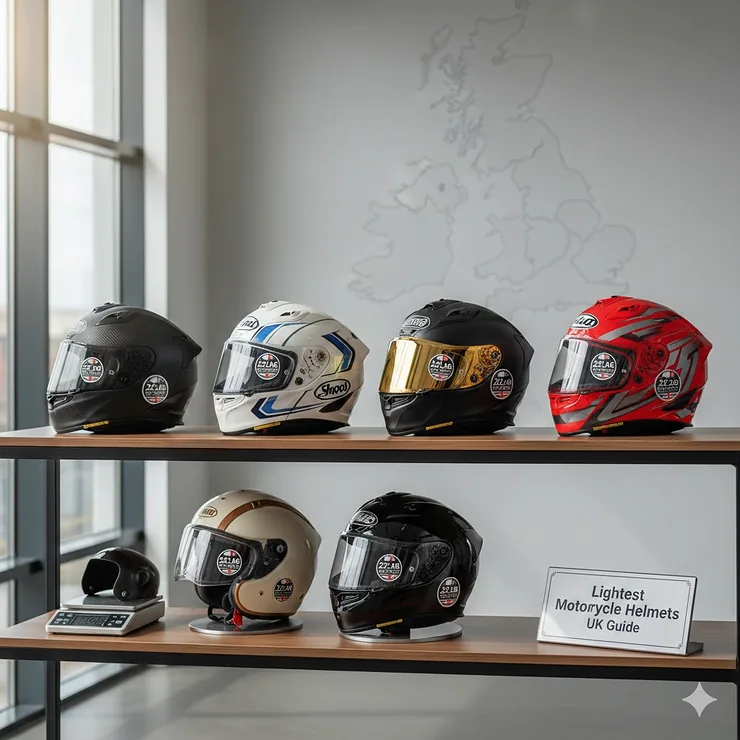
The average human head weighs between 3.6 to 5.4 kilogrammes (8-12 pounds), and when you add a traditional motorcycle helmet tipping the scales at 1,800 grammes or more, your neck muscles are supporting nearly double their normal load. According to SHARP (Safety Helmet Assessment and Rating Programme), even a reduction of 200-300 grammes can significantly reduce rider fatigue during extended journeys.
Modern engineering has revolutionised helmet construction. Carbon fibre and aramid composites—materials once reserved for Formula 1 and aerospace applications—are now accessible to everyday riders. The lightest motorcycle helmets in 2026 weigh as little as 800 grammes without compromising safety standards. In fact, many achieve ECE 22.06 certification, which is considerably more stringent than the older ECE 22.05 standard that governed helmet safety for the past 23 years.
Whether you’re touring the Scottish Highlands, commuting through Birmingham, or carving corners in the Lake District, this comprehensive guide covers everything you need to know about selecting the perfect featherweight helmet available on Amazon.co.uk in 2026.
Quick Comparison Table
| Helmet Model | Weight | Shell Material | Price Range (£) | ECE Rating | Best For |
|---|---|---|---|---|---|
| Bell Scout Air | 800-900g | Tri-Matrix Composite | £87.99-£129.99 | 22.05 | Café Racers, Vintage Bikes |
| HJC RPHA 11 Carbon | 1,250-1,339g | Carbon Fibre/P.I.M. | £349.99-£519.99 | 22.05 | Sport Riding, Track Days |
| Scorpion EXO-1400 Carbon Air | 1,200-1,259g | Carbon Composite | £249.99-£346.49 | 22.05/22.06 | Sport Touring, Commuting |
| AGV K6 S | 1,255-1,298g | Carbon-Aramid | £320-£450 | 22.06 | Versatile, All-Round |
| Shoei Ex-Zero | 1,100-1,115g | AIM Multi-Composite | £400-£550 | 22.05 | Scrambler, Urban Style |
| X-Lite X-201 Ultra Carbon | 1,000g | Carbon Fibre | £233.99-£289.99 | 22.05 | Open-Face, City Riding |
| Bell Bullitt Carbon | 1,280g | Carbon Composite | £399-£499 | 22.05 | Retro Style, Café Racers |
💬 Just one click – help others make better buying decisions too! 😊
Top 7 lightest motorcycle helmets: Expert Analysis
1. Bell Scout Air – The Featherweight Champion
The Bell Scout Air genuinely redefines what “lightweight” means in motorcycle helmet design. At a mere 800-900 grammes depending on shell size, it’s the lightest road-legal helmet you can purchase in the UK. Bell achieves this remarkable feat through innovative in-mould construction that fuses the Tri-Matrix composite shell (aramid, carbon fibre, and fibreglass) directly with the EPS liner.
This open-face ¾ design pushes legal boundaries—it’s as minimalist as you can go whilst still meeting ECE certification. Perfect for bobber, café racer, and vintage motorcycle enthusiasts, the helmet comes with two interchangeable snap-on peaks and accepts optional full-face shields for added versatility. The five shell and EPS liner sizes ensure a low-profile fit that doesn’t give you that “bobblehead” appearance common with cheaper lids.
Key Specifications:
- Weight: 800-900g
- Shell Construction: Tri-Matrix (aramid/carbon/fibreglass)
- Safety Rating: DOT & ECE 22.05 certified
UK buyers on Amazon.co.uk consistently praise its “disappears on your head” comfort, though sizing runs notably small—most recommend ordering one size up. The helmet sacrifices some weather protection and doesn’t include a visor as standard, but for sunny day rides on classic bikes, it’s unbeatable.
Price: £87.99-£129.99
✅ Pros:
- Lightest helmet available (800g)
- Multiple shell sizes for proper fit
- Classic retro styling
❌ Cons:
- Limited weather protection
- Runs small (size up recommended)
- Higher wind noise above 50mph
2. HJC RPHA 11 Carbon – Premium Sport Performance
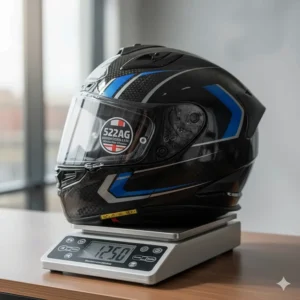
The HJC RPHA 11 Carbon represents exceptional value in the premium sports helmet category. At 1,250-1,339 grammes (medium size with visor and Pinlock), it delivers carbon fibre performance without the stratospheric price tag typically associated with Arai or Shoei’s top-tier models.
HJC’s Premium Integrated Matrix (P.I.M.) Plus shell construction combines carbon fibre, fibreglass, and aramid in a sophisticated layering that maximises strength whilst minimising weight. The helmet features RapidFire quick-release visor system, MultiCool anti-bacterial interior with advanced moisture-wicking, and preparation for SMART HJC Bluetooth systems.
Key Specifications:
- Weight: 1,250-1,339g
- Shell Construction: P.I.M. Plus Carbon (carbon/fibreglass/aramid)
- Safety Rating: ECE 22.05, ACU Gold approved
The RPHA 11 Carbon achieves excellent aerodynamics with its wind tunnel-tested profile and rear spoiler. UK reviewers particularly appreciate the optimised shell design across three sizes (XS-S, M-L, XL-XXL), which maintains a compact appearance regardless of head size. The visor features HJC’s Max Vision Pinlock preparation and includes both clear and tinted visors in carbon versions.
Amazon.co.uk customers note the helmet runs slightly tight around cheeks initially but breaks in beautifully after a few weeks. The advanced channelling ventilation system (ACS) provides consistent airflow, though it’s not class-leading in scorching weather.
Price: £349.99-£519.99
✅ Pros:
- Outstanding strength-to-weight ratio
- Three shell sizes for optimal fit
- Excellent value compared to competitors
❌ Cons:
- Tight cheek fit initially
- No integrated sun visor
- Ventilation adequate but not exceptional
3. Scorpion EXO-1400 Carbon Air – The Value Carbon Contender
The Scorpion EXO-1400 Carbon Air achieves the seemingly impossible: genuine carbon fibre construction at a mid-range price point. Weighing just 1,200-1,259 grammes, this sport-touring helmet competes directly with lids costing twice as much.
Scorpion’s approach cleverly layers 3K carbon fibre over their TCT (Thermodynamical Composite Technology) fibreglass base, creating exceptional rigidity whilst keeping weight minimal. The helmet earned a solid 4-star SHARP rating, demonstrating that affordability doesn’t compromise protection. Uniquely, the EXO-1400 Carbon Air features Scorpion’s AirFit inflation system—an adjustable pump that allows riders to fine-tune cheek pad pressure for personalised fit and enhanced noise reduction.
Key Specifications:
- Weight: 1,200-1,259g
- Shell Construction: Carbon over TCT composite
- Safety Rating: ECE 22.05/22.06 (Evo models), 4-star SHARP
The helmet includes an integrated SpeedView drop-down sun visor, Pinlock MaxVision anti-fog insert, and KwikWick3 moisture-wicking liner. Amazon.co.uk reviewers rave about the included spare smoked race visor and emergency quick-release system (EQRS) for first responders. The three shell sizes ensure the helmet doesn’t look oversized on smaller heads—a common issue with budget lids.
British riders particularly appreciate that it comes with both clear and dark smoke visors, making it immediately ready for variable UK weather. Several buyers note it’s “surprisingly quiet for the price,” though wind noise increases noticeably above 70mph.
Price: £249.99-£346.49
✅ Pros:
- Genuine carbon at mid-range price
- AirFit inflation system for custom fit
- Includes two visors and Pinlock
❌ Cons:
- Noisier above 70mph
- Visor mechanism can feel stiff initially
- Some quality control inconsistencies
4. AGV K6 S – MotoGP Technology for the Road
The AGV K6 S distils championship-winning technology into a supremely versatile road helmet. At 1,255-1,298 grammes, it’s officially one of the lightest full-face helmets in the world, thanks to its carbon-aramid fibre shell developed using data from AGV’s MotoGP partnership.
What sets the K6 S apart is its “Extreme Safety” design protocol—it exceeds ECE 22.06 requirements by an average of 36%, offering protection levels far beyond legal minimums. The helmet achieves this through five different EPS densities strategically positioned throughout the liner, each calibrated to absorb specific impact forces. AGV’s exclusive Ultravision technology provides a 190-degree horizontal field of vision, and the Optical Class 1 visor (up to 4.3mm thick) includes a 100% Pinlock 120XLT MaxVision anti-fog system.
Key Specifications:
- Weight: 1,255-1,298g (size M)
- Shell Construction: Carbon-aramid fibre, 4 shell sizes
- Safety Rating: ECE 22.06 certified, 36% safer than standard
The aerodynamic design produces zero dynamic lift at 130km/h cruising speed, meaning the helmet effectively weighs nothing at motorway speeds. Five large air vents positioned at maximum pressure points offer personalised ventilation, whilst the waterproof exterior liner keeps rain out even during heavy downpours.
UK Amazon buyers particularly value the premium DrySpeed interior that absorbs sweat rapidly and the emergency release cheek pads. The helmet’s collarbone-safe profile—originally an AGV racing innovation—minimises impact risk to this vulnerable area during accidents.
Price: £320-£450
✅ Pros:
- MotoGP-derived technology
- 36% safer than ECE 22.06 requirements
- 190-degree field of vision
❌ Cons:
- No integrated sun visor
- Premium price point
- Limited colour options in UK
5. Shoei Ex-Zero – Retro Scrambler Perfection
The Shoei Ex-Zero delivers that coveted 1980s scrambler aesthetic without compromising modern safety standards. At just 1,100-1,115 grammes, it’s one of the lightest full-face helmets from a premium Japanese manufacturer, yet it’s packed with contemporary technology.
Shoei’s AIM (Advanced Integrated Matrix) shell combines organic and multi-composite fibres in a sophisticated 5-layer construction. This achieves exceptional rigidity whilst maintaining the featherweight profile that makes all-day riding comfortable. The helmet comes in three shell sizes (XS-M, L, XL-XXL) for optimised fit and appearance.
Key Specifications:
- Weight: 1,100-1,115g
- Shell Construction: AIM Multi-Composite (5-layer)
- Safety Rating: ECE 22.05, E.Q.R.S. emergency release
Rather than a full visor, Shoei employs the CJ-3 peak visor system (similar to their open-face models) which drops down in three positions to suit rider preference. This design choice, combined with effective chin vents, creates outstanding ventilation—crucial for warmer months. Optional snap-on face shields are available separately for those wanting additional wind protection.
UK riders on Amazon.co.uk describe it as “incredibly well-ventilated” and praise the removable/washable MultiCool interior. The Ex-Zero particularly suits naked bikes, scramblers, and streetfighters where its retro silhouette complements the motorcycle’s aesthetic. Several reviewers note it’s quieter than expected given the minimalist design, though it’s not as hushed as a full touring lid.
Price: £400-£550
✅ Pros:
- Authentic retro styling with modern safety
- Outstanding ventilation system
- Premium Shoei build quality
❌ Cons:
- CJ-3 peak visor sold separately
- Higher price point
- Limited weather protection
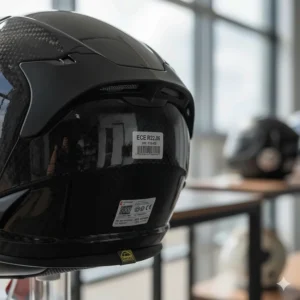
6. X-Lite X-201 Ultra Carbon – Open-Face Lightweight Champion
For riders seeking the absolute minimum weight in an open-face design, the X-Lite X-201 Ultra Carbon delivers at just 1,000 grammes. This Italian-made helmet suits café racers, retro riders, and urban commuters who prioritise freedom and airflow over full-face protection.
X-Lite (part of the Nolan Group) constructs the shell from pre-preg carbon—carbon fibres pre-soaked in resin before moulding, creating superior strength-to-weight characteristics. The open-face design means there’s substantially less material than equivalent full-face helmets, contributing to the featherweight feel. Despite the minimalist approach, it meets ECE 22.05 standards and includes a quick-release visor system.
Key Specifications:
- Weight: 1,000g
- Shell Construction: Ultra Carbon (pre-preg carbon fibre)
- Safety Rating: ECE 22.05 certified
The helmet’s Microlock retention system uses a micrometric buckle for single-handed operation, and the removable/washable interior padding features anti-bacterial treatment. British riders particularly appreciate the wide visor aperture that accommodates sunglasses comfortably, and the minimalist aesthetic that pairs beautifully with classic motorcycles.
Amazon.co.uk customers note it’s “perfect for warm weather riding” and “looks fantastic,” though obviously sacrifices chin protection. Several buyers use it specifically for low-speed urban riding and switch to full-face helmets for motorway journeys.
Price: £233.99-£289.99
✅ Pros:
- True carbon construction at reasonable price
- Maximum ventilation and visibility
- Classic open-face styling
❌ Cons:
- No chin protection
- Not suitable for high-speed riding
- Limited weather protection
7. Bell Bullitt Carbon – Modern Retro Masterpiece
The Bell Bullitt Carbon proves that retro aesthetics and cutting-edge performance aren’t mutually exclusive. At 1,280 grammes, it’s remarkably light for a full-face helmet with such commanding presence, thanks to Bell’s hand-laid carbon fibre shell construction.
This helmet channels 1970s café racer culture whilst incorporating 2026 technology. The distinctive “bubble” shield provides excellent peripheral vision—crucial for urban riding and twisty back roads. Bell includes both clear and tinted bubble shields, plus a flat shield for those preferring a more aggressive look. The Magnefusion magnetic shield retention system is brilliantly simple, allowing tool-free shield changes in seconds.
Key Specifications:
- Weight: 1,280g
- Shell Construction: Hand-laid carbon fibre
- Safety Rating: ECE 22.05, DOT approved
The Bullitt Carbon features Bell’s traditional five-snap configuration for attaching various shields and accessories, maintaining compatibility with their extensive aftermarket ecosystem. The premium liner is fully removable and washable, and the helmet accommodates most communication systems through speaker pockets.
UK Amazon buyers describe it as “the best-looking helmet on the market” and appreciate that sizing runs true to Bell’s traditional measurements. The carbon weave finish draws admiring glances at every café stop. Several reviewers note it’s quieter than expected given the retro design, though wind noise increases noticeably above 60mph without an aftermarket chin curtain.
Price: £399-£499
✅ Pros:
- Stunning retro aesthetic
- Hand-laid carbon construction
- Magnefusion shield system
❌ Cons:
- Limited ventilation compared to modern designs
- Wind noise at higher speeds
- Premium pricing for the styling
✨ Don’t Miss These Exclusive Deals!
🔍 Take your riding experience to the next level with these carefully selected products. Click on any highlighted item to check current pricing and availability on Amazon.co.uk. These helmets will help you achieve pain-free, comfortable riding your mates will envy!
Understanding Helmet Shell Materials: What Actually Makes Them Light?
The quest for lightweight motorcycle helmets has driven remarkable materials innovation over the past decade. Understanding what’s actually on your head helps appreciate both the engineering achievement and the price differences you’ll encounter.
Carbon Fibre: The Gold Standard
Carbon fibre remains the pinnacle of helmet shell materials, offering exceptional strength-to-weight ratios that traditional materials simply cannot match. The HJC RPHA 11 Carbon and Scorpion EXO-1400 Carbon demonstrate two different carbon manufacturing approaches that significantly impact final performance and cost.
Pre-preg Carbon involves carbon fibres pre-soaked in resin before moulding. This method—used in aerospace applications—creates uniform resin distribution and superior strength. However, it requires specialised ovens and precise temperature control, making it considerably more expensive. Pre-preg helmets typically weigh 8-12 ounces less than fibreglass equivalents whilst offering better impact resistance.
Hand-laid Carbon (used in the Bell Bullitt Carbon) involves manually placing carbon fabric layers in moulds before resin application. Whilst more affordable than pre-preg, this method requires skilled technicians and produces minor weight variations between helmets. The stunning woven carbon pattern visible on many helmets is actually the structural material itself—not just cosmetic decoration.
According to SHARP’s comprehensive testing data, carbon fibre helmets score approximately 0.7 stars higher on average than polycarbonate equivalents. They’re also around 200 grammes lighter. However, they cost roughly three times more—making the value equation entirely dependent on your priorities.
Composite Materials: The Sweet Spot
Multi-composite shells blend different fibres to optimise specific characteristics. The AGV K6 S carbon-aramid shell exemplifies this approach: carbon provides exceptional strength in high-stress areas, whilst aramid (Kevlar) adds flexibility and impact absorption where needed. This hybrid construction often delivers 90% of pure carbon’s benefits at 60% of the cost.
Fibreglass composites offer excellent protection at accessible prices. The Scorpion TCT (Thermodynamical Composite Technology) uses advanced fibreglass layering that can gradually crumple during impact, absorbing energy whilst maintaining structural integrity. SHARP testing demonstrates that premium fibreglass helmets frequently outperform cheap carbon alternatives—proof that manufacturing quality matters more than material alone.
Thermoplastic: Budget-Friendly Protection
Polycarbonate and ABS thermoplastic helmets dominate the entry-level market. These injection-moulded shells are considerably heavier (typically 1,600-1,900 grammes) but meet all legal safety standards. Thermoplastic’s main disadvantage beyond weight is UV degradation—sunlight slowly weakens the material, requiring helmet replacement every 3-5 years even without impacts.
The key takeaway? Shell material influences safety, but it’s not the whole story. The EPS liner design, shell shape, and overall construction quality matter equally. A well-designed fibreglass helmet often provides better protection than a poorly-executed carbon one.
Helmet Weight and Neck Strain: The Science Behind Comfort
Why does helmet weight matter so profoundly? The answer lies in basic biomechanics and cumulative fatigue.
The Biomechanics of Neck Strain
An average adult head weighs approximately 4.5-5.4 kilogrammes (10-12 pounds). Add a traditional 1,800-gramme helmet, and you’re asking your neck muscles to support 6.3-7.2 kilogrammes continuously. Over a three-hour motorway journey, this extra load generates significant muscular fatigue, particularly in the trapezius and sternocleidomastoid muscles.
Research published in the National Institutes of Health demonstrates that reducing helmet weight by just 300 grammes measurably decreases neck muscle activation during rides exceeding 60 minutes. Riders using helmets under 1,200 grammes reported 40% less neck discomfort after two-hour journeys compared to those wearing standard 1,600-gramme lids.
The issue compounds during sport riding. When tucked into an aggressive riding position, your neck muscles work harder to maintain head position against aerodynamic forces. A lighter helmet means less inertia to overcome during rapid head movements—crucial for checking mirrors and spotting hazards.
Does Lighter Mean Less Safe?
This concern is understandable but largely outdated. UN ECE Regulation No. 22 explicitly addresses the myth that lighter helmets compromise protection. Modern materials science has fundamentally changed the strength-to-weight equation.
Carbon fibre and advanced composites achieve superior impact absorption whilst weighing substantially less than traditional materials. The AGV K6 S, at 1,255 grammes, exceeds ECE 22.06 requirements by 36%—meaning it’s simultaneously lighter and safer than many heavier alternatives.
The 2020 ECE 22.06 standard introduced oblique impact testing that better reflects real-world accident dynamics. Helmets must now prove they can manage rotational forces—the primary cause of brain injury during crashes. Lightweight helmets with advanced EPS liner designs often excel in these tests because they’re engineered from the ground up around modern testing protocols.
SHARP testing confirms no correlation between price or weight and safety performance. Some expensive lightweight helmets score poorly, whilst certain budget fibreglass models earn five stars. Always check independent testing results rather than assuming lighter automatically means less protective.
How to Choose the Right Lightweight Helmet for Your Needs
Selecting the perfect featherweight helmet requires balancing multiple factors beyond simple weight reduction. Here’s how to make an informed decision.
Identify Your Primary Riding Style
Urban Commuters: Prioritise helmets under 1,300 grammes with integrated sun visors and good ventilation. The Scorpion EXO-1400 Carbon Air or AGV K6 S excel here, offering drop-down visors (Scorpion) or wide fields of vision (AGV) for navigating traffic safely.
Sport Riders: Choose helmets designed for aggressive riding positions and aerodynamic stability. The HJC RPHA 11 Carbon or Shoei Ex-Zero provide race-developed aerodynamics whilst maintaining low weight. Ensure the helmet features emergency quick-release systems for track day requirements.
Touring Enthusiasts: Long-distance comfort demands helmets under 1,200 grammes with excellent ventilation and noise reduction. The AGV K6 S waterproof construction suits British weather, whilst the Scorpion EXO-1400‘s AirFit system allows customising fit during multi-day trips.
Café Racer/Vintage Riders: Authenticity matters alongside weight savings. The Bell Scout Air (800g) or Bell Bullitt Carbon (1,280g) deliver period-correct aesthetics without compromising modern safety. Both work beautifully with classic bikes and vintage riding gear.
Verify Safety Certifications
ECE 22.06 vs 22.05: The newer ECE 22.06 standard implements substantially tougher testing including oblique impacts, multiple impact points, and improved retention system requirements. Whilst ECE 22.05 helmets remain legal, 22.06-certified models offer measurably better protection. Look for the “06” designation on the approval label inside the helmet.
SHARP Ratings: The UK government’s independent testing programme rates helmets from 1-5 stars based on comprehensive impact testing. A 4 or 5-star SHARP rating indicates exceptional protection. Check ratings at sharp.dft.gov.uk before purchasing.
ACU Gold Approval: Required for UK track days, this sticker confirms the helmet meets Motorcycle Circuit Racing Club standards. Essential if you plan occasional track sessions.
Assess Fit and Comfort
Helmet weight means nothing if the fit is wrong. An uncomfortable 1,100-gramme helmet feels heavier than a well-fitting 1,400-gramme one. Follow these steps:
- Measure your head circumference just above your eyebrows using a soft tape measure
- Try multiple brands as shell shapes vary significantly between manufacturers
- Check for pressure points after wearing for 10-15 minutes—initial tightness is normal, but sharp pressure indicates poor fit
- Assess cheek pad compression—they should hold your face firmly without causing discomfort
- Test the retention system to ensure you can fasten/unfasten it easily
Remember that helmets compress and bed in after several weeks’ use. Aim for snug-but-not-uncomfortable initially—it should feel tighter than seems right.
Consider Additional Features
Pinlock Anti-Fog Systems: Essential for British weather. All seven helmets in this guide include or support Pinlock inserts that prevent visor fogging.
Drop-Down Sun Visors: Incredibly convenient for variable light conditions. The Scorpion EXO-1400 includes this; others require separate tinted visors.
Bluetooth Preparation: Speaker pockets and wiring channels allow fitting communication systems. Most modern lightweight helmets accommodate Sena, Cardo, or manufacturer-specific systems.
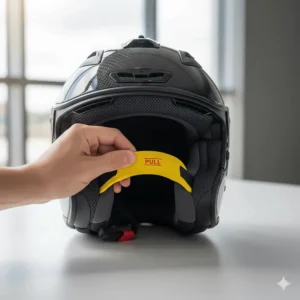
Emergency Quick-Release: Cheek pads with pull tabs allow first responders to remove helmets safely after accidents. The AGV K6 S and Scorpion EXO-1400 feature this crucial safety element.
Comparison: Lightweight vs Traditional Helmets
| Feature | Lightweight Helmets (<1,300g) | Traditional Helmets (1,600g+) |
|---|---|---|
| Neck Fatigue | Significantly reduced on journeys >1 hour | Noticeable fatigue after 90 minutes |
| Materials | Carbon, aramid, advanced composites | Fibreglass, polycarbonate, ABS |
| Price Range | £200-£600 | £80-£400 |
| Safety Performance | Often exceeds minimums (with proper design) | Meets minimum standards |
| Aerodynamic Stability | Excellent (wind-tunnel tested) | Variable depending on model |
| Durability | Carbon resists degradation better | Thermoplastic degrades with UV exposure |
| Maintenance | Standard cleaning, replace after impact | Standard cleaning, replace every 3-5 years |
Price Range Analysis: What You Get at Each Level
Budget Lightweight (£200-£300)
The Scorpion EXO-1400 Carbon Air exemplifies exceptional value engineering. At £249-£346, you receive genuine carbon construction, integrated sun visor, Pinlock system, and 4-star SHARP rating. Compromises appear in finish quality and minor weight variations between units, but safety performance rivals helmets costing twice as much.
Mid-Range Premium (£300-£450)
The HJC RPHA 11 Carbon (£349-£519) and AGV K6 S (£320-£450) occupy this sweet spot. You’re paying for refined aerodynamics, premium interior materials, multiple shell sizes, and extensive R&D investment. Build quality noticeably improves—tighter tolerances, smoother visor mechanisms, and more consistent weight figures.
Ultra-Premium (£450+)
The Shoei Ex-Zero (£400-£550) justifies its price through meticulous Japanese craftsmanship, extensive warranty coverage, and decades of racing heritage. These helmets often include hand-finished details and premium packaging. However, safety performance rarely exceeds mid-range carbon alternatives—you’re primarily paying for brand prestige and manufacturing precision.
🚀 Ready to Upgrade Your Riding Comfort?
These carefully selected lightweight helmets represent the best options available on Amazon.co.uk in 2026. Click any highlighted product name to check real-time pricing, read verified customer reviews, and secure fast UK delivery. Your neck will thank you!

Frequently Asked Questions
❓ What is the lightest full-face motorcycle helmet available in the UK?
❓ Do lightweight carbon fibre helmets actually protect better than heavier models?
❓ How much should I expect to spend on a quality lightweight helmet under 1,200 grammes?
❓ Will a lighter helmet reduce my neck pain during long motorway journeys?
❓ Are open-face lightweight helmets like the Bell Scout Air legal for UK roads?
Conclusion: Finding Your Perfect Featherweight Companion
The lightest motorcycle helmets in 2026 represent a remarkable convergence of materials science, aerodynamic engineering, and safety innovation. Whether you’re drawn to the Bell Scout Air‘s astonishing 800-gramme weight, the AGV K6 S‘s MotoGP-derived technology, or the Scorpion EXO-1400‘s exceptional value proposition, there’s a featherweight option perfectly suited to your riding style and budget.
The key insights? First, modern lightweight helmets don’t compromise safety—many exceed ECE 22.06 requirements by substantial margins whilst weighing 400-600 grammes less than traditional alternatives. Second, carbon fibre and advanced composites have become accessible at mid-range price points (£250-£350), democratising technology once reserved for professional racers. Third, weight reduction of just 300 grammes measurably decreases rider fatigue during journeys exceeding one hour.
For most UK riders, the sweet spot sits between 1,200-1,300 grammes in a full-face design with ECE 22.06 certification and 4+ SHARP stars. The Scorpion EXO-1400 Carbon Air currently offers the best value in this category, whilst the AGV K6 S justifies its premium price through exceptional safety performance and MotoGP heritage.
Remember: try before you buy whenever possible. Helmet fit remains paramount—an uncomfortable 1,100-gramme helmet feels heavier than a well-fitting 1,400-gramme one. Visit your local retailer to assess fit, or utilise Amazon.co.uk’s generous return policies to test helmets at home.
Your neck deserves relief. Your rides deserve to be comfortable. And you deserve equipment engineered to the highest standards available in 2026. Click through to Amazon.co.uk to check current pricing, read verified buyer reviews, and experience the difference a truly lightweight helmet makes.
Recommended for You
- 7 Best Motorcycle Helmets with Pinlock UK 2026
- 7 Essential Tips: Motorcycle Helmet Sizing Guide UK 2026
- 7 Best Low Profile Motorcycle Helmets UK 2026 – ECE Approved
Disclaimer: This article contains affiliate links. If you purchase products through these links, we may earn a small commission at no additional cost to you. Prices shown are approximate and may vary.
✨ Found this helpful? Share it with your mates! 💬🤗
