
In This Article
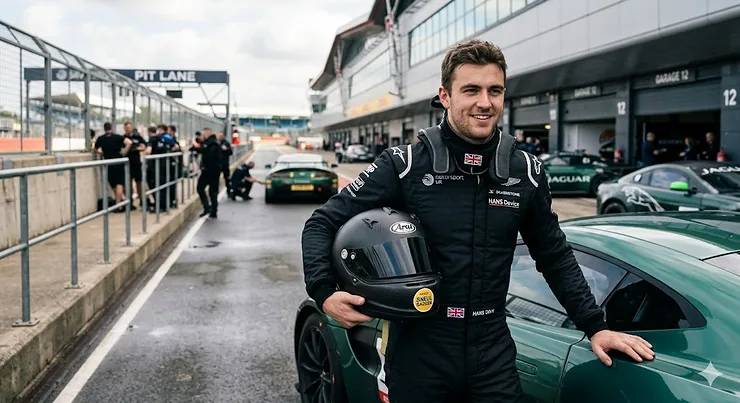
Whether you’re competing in club racing at Brands Hatch, tackling time trials at Silverstone, or planning to race internationally, choosing the right helmet certification can be rather more complicated than you’d think. Whilst FIA certification dominates European motorsport, Snell certified racing helmets offer something particularly valuable for British drivers with global ambitions—or those who simply want the most rigorous independent testing money can buy.
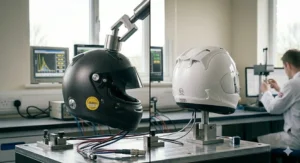
The Snell Memorial Foundation, established in 1957 following the tragic death of American racer Pete Snell, operates as a non-profit organisation dedicated exclusively to helmet safety through scientific research and independent testing. Unlike manufacturer self-certification schemes, Snell purchases helmets from the marketplace and tests them in their own laboratory—a practice that’s earned them credibility amongst professional and amateur racers alike. For UK drivers, this means access to helmets that meet or exceed both American racing standards and, increasingly, align with FIA 8859 requirements used across Europe.
What most British buyers overlook about Snell certification is its evolution. The SA2025 standard, released in October 2025, now harmonises with FIA 8859-2024 requirements, meaning many modern Snell helmets carry dual certification—handy if you’re racing the Nürburgring one weekend and competing in SCCA events the next. However, availability on Amazon.co.uk remains limited compared to the vast selection on American Amazon, so patience and strategic shopping become essential.
Quick Comparison: Top Snell Racing Helmets Available to UK Buyers
| Helmet Model | Certification | Price Range (£) | Weight | Best For |
|---|---|---|---|---|
| Conquer Snell SA2020 Full Face | SA2020 | £200-£300 | ~1.8 kg | Budget-conscious club racers |
| ILM Snell SA2025 Model 760 | SA2025 | £300-£400 | ~1.7 kg | Latest standard compliance |
| ILM Snell SA2025 Model 890 | SA2025 | £350-£450 | ~1.5 kg | Lightweight fiberglass construction |
| RaceQuip PRO20 Series | SA2020 | £250-£350 | ~1.8 kg | Proven mid-range reliability |
| Typhoon Helmets Snell SA2020 | SA2020/DOT | £200-£320 | ~1.9 kg | Dual certification flexibility |
| ILM Snell M2020 Carbon | M2020 | £400-£550 | ~1.4 kg | Track day motorcycle use |
| Conquer SA2025 Open Face | SA2025 | £280-£380 | ~1.5 kg | Open cockpit/drag racing |
💬 Just one click — help others make better buying decisions too! 😊
Top 7 Snell Certified Racing Helmets: Expert Analysis
1. Conquer Snell SA2020 Full Face Auto Racing Helmet
The Conquer Snell SA2020 represents the accessible entry point into legitimate Snell certification for UK club racers. This full-face helmet combines fiberglass composite construction with fire-retardant Nomex interior padding, Kevlar chin strap, and HANS M6 threaded inserts—the essentials you’d expect from any serious racing helmet, delivered at a price that won’t require remortgaging your house.
The fiberglass shell weighs approximately 1.8 kg, which feels substantial compared to carbon alternatives but remains manageable for sprint races and time trials lasting under an hour. The 3mm anti-scratch visor includes tear-off posts, rather useful when you’re following someone through a dusty British club racing event. Ventilation comes via strategically placed channel vents and rear exhaust ports, though UK buyers report these work better in warm conditions—hardly a concern given our typical race-day weather involves drizzle and temperatures hovering around 15°C.
What the spec sheet won’t tell you: the cheek pads run slightly thicker than European equivalents, which benefits riders with narrower faces but can feel claustrophobic if you’ve got broader features. Several UK purchasers on Amazon.co.uk note ordering one size smaller than their usual helmet size yielded a better fit—worth considering before clicking ‘buy now’.
UK Customer Feedback: British racers appreciate the included helmet bag and the fact that it arrives ready for scrutineering at most UK club events. The SA2020 certification remains valid through 2030 for most sanctioning bodies, giving this helmet several more years of competitive eligibility.
✅ Pros:
- Excellent value under £300
- SA2020 certification accepted until 2030
- HANS-compatible with M6 inserts
❌ Cons:
- Heavier than carbon alternatives
- Limited colour options on UK Amazon
Price Verdict: Around £250-£300 on Amazon.co.uk when available, representing solid value for weekend racers who prioritise budget over cutting-edge weight savings.
2. ILM Snell SA2025 Full Face Model 760
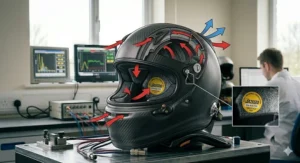
The ILM SA2025 Model 760 arrives just as the latest Snell certification cycle kicks into gear, making it immediately relevant for drivers purchasing helmets in 2026 and beyond. Built to the new SA2025 standard—which harmonises peak G-force limits (275G) with FIA 8859-2024 requirements—this helmet theoretically offers compatibility with both American and European racing series.
ILM’s fibre-reinforced plastic (FRP) composite shell balances impact resistance with reasonable weight, coming in around 1.7 kg. The double D-ring closure provides secure retention, whilst fully removable fire-retardant liners simplify cleaning after those sweaty summer track days (the three days per year Britain actually gets warm). A 30mm sunshade film sits atop the visor, designed to reduce glare from strong sunlight—somewhat optimistic for British conditions, but genuinely useful if you’re racing abroad or during those rare August heatwaves.
The helmet includes HNR M6 threaded inserts for head-and-neck support devices, though the HANS device itself doesn’t come included—a point worth noting since quality HANS systems cost £400-£800 separately. Tear-off post buttons on the visor allow quick removal of debris-covered layers, maintaining clear vision without fumbling mid-session.
Real-World Application: For UK drivers competing in championships that will mandate SA2025 certification from 2026 onwards, this helmet represents future-proofing. However, check your specific series regulations—many British club championships still happily accept SA2020 helmets through 2030.
✅ Pros:
- Latest SA2025 certification
- Compatible with head-and-neck restraints
- Sunshade film included
❌ Cons:
- Limited UK Amazon.co.uk stock
- Slightly heavier than premium options
Price Verdict: Expect to pay £300-£400 when sourcing through UK channels, positioning it in the mid-range category with the benefit of current-generation certification.
3. ILM Snell SA2025 Lightweight Fiberglass Model 890
The ILM SA2025 Model 890 sheds approximately 300 grammes compared to its Model 760 sibling, bringing weight down to roughly 1.5 kg through enhanced glass-fibre reinforced plastic (GFRP) composite construction. For context, that’s meaningfully lighter than the Conquer SA2020 but still heavier than full carbon-fibre helmets costing £800+.
This weight reduction matters more than casual track-day drivers might assume. During a 45-minute endurance stint—standard fare in British club racing—those 300 saved grammes translate to measurably less neck fatigue and improved concentration in the final laps when you’re chasing down a rival or defending position. The lightweight construction doesn’t compromise safety; SA2025 certification requires identical impact testing regardless of shell weight.
The helmet maintains all essential features: HANS M6 compatibility, fire-retardant Nomex interior, double D-ring fastening, and comprehensive ventilation. The visor mechanism operates smoothly even with racing gloves, addressing a common frustration where cheaper helmets require bare hands to manipulate the locking mechanism.
UK-Specific Consideration: The lightweight shell responds well to British weather variability. Unlike cheaper helmets where temperature extremes can affect shell rigidity, the GFRP composite maintains consistent performance whether you’re racing in Scottish drizzle or the occasional southern England heatwave.
✅ Pros:
- Noticeably lighter than budget options
- SA2025 future-proof certification
- Smooth visor operation with gloves
❌ Cons:
- Higher price than SA2020 alternatives
- May require importing from US Amazon
Price Verdict: In the £350-£450 range, this helmet occupies the sweet spot between budget offerings and premium carbon models—well worth considering if neck fatigue has been an issue.
4. RaceQuip PRO20 Series Snell SA2020
The RaceQuip PRO20 represents American grassroots racing heritage—a brand that’s been supplying affordable safety equipment since 1975. Their SA2020 full-face helmet delivers proven reliability through pre-preg composite materials placed into pressurised steel moulds, achieving respectable strength-to-weight ratios around 1.8 kg.
What distinguishes RaceQuip from competitors is attention to practical details. The distortion-free 3mm polycarbonate face shield includes red anodised aluminium pivot kits and hand-ratcheting tear-off posts that actually work smoothly—unlike some budget alternatives where the ratchet mechanism seizes after minimal use. A silicone eyeport gasket seals out dust and dirt, genuinely useful during British club racing where following another car often means visibility through a cloud of tyre debris and occasional mud.
The interior features fire-retardant Nomex padding with a comfort-fit blend that accommodates longer racing sessions. Cheek pads attach via hook-and-loop fasteners, allowing removal for cleaning or adjustment. Exhaust vents on the top and back help manage heat, though UK conditions rarely challenge any helmet’s cooling capacity—our problem tends to be keeping warm enough.
British Racing Context: Several UK drivers report the PRO20 passing scrutineering without issues at MSA/Motorsport UK-sanctioned events, though you’ll want to confirm with your specific championship that Snell SA2020 is accepted (most do, but FIA-only series exist).
✅ Pros:
- Proven RaceQuip reliability
- Superior visor mechanism
- Effective dust sealing
❌ Cons:
- Limited availability on Amazon.co.uk
- Heavier than lightweight alternatives
Price Verdict: Around £250-£350 depending on colour and size, representing fair value for a well-engineered American brand with strong pedigree.
5. Typhoon Helmets Snell SA2020 DOT Certified
The Typhoon Helmets Snell SA2020 offers something unique in this comparison: dual Snell SA2020 and DOT FMVSS 218 certification. Whilst DOT certification holds no legal weight for UK motorsport (we follow Motorsport UK regulations, not American standards), it demonstrates the helmet meets multiple testing protocols—never a bad sign.
This fiberglass composite helmet weighs approximately 1.9 kg, making it the heaviest option reviewed here. However, that weight comes with notably plush interior padding and generous cheek pad thickness that many UK buyers find more comfortable during extended wear. The fire-retardant lined interior and rear exhaust vents manage moisture adequately, though Britain’s typically cool race conditions mean overheating rarely troubles any decent helmet.
HANS threaded inserts are factory-installed in the shell, and the Kevlar chin strap with D-ring closure provides secure retention. The helmet includes basic ventilation—channel vents and exhaust ports—sufficient for UK conditions but potentially lacking if you’re racing in genuinely hot climates abroad.
Value Proposition: What most buyers overlook is the Typhoon’s generous return policy through some retailers, addressing the perennial helmet-buying challenge: ensuring proper fit before committing. Since Amazon.co.uk stock fluctuates, checking return terms before purchasing becomes essential.
✅ Pros:
- Dual SA2020/DOT certification
- Comfortable interior padding
- Reasonable pricing
❌ Cons:
- Heaviest helmet reviewed
- Basic ventilation system
Price Verdict: Typically £200-£320 when available, positioning it as a budget-friendly option with the comfort advantage of thicker padding—worth considering for drivers prioritising comfort over weight.
6. ILM Snell M2020 Carbon Fibre Racing Helmet
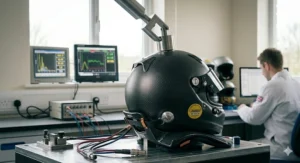
The ILM Snell M2020 Carbon serves a slightly different audience: track-day motorcyclists and drivers whose championships accept M2020 (motorcycle) certification rather than strictly requiring SA (special application) certification. At approximately 1.4 kg, this represents the lightest helmet in our comparison, thanks to carbon-fibre shell construction.
The M2020 certification differs from SA2020/SA2025 in one crucial aspect: it doesn’t require flammability testing or roll-bar impact assessment. For motorcycle track days or car track days where full race certification isn’t mandated, M2020 provides rigorous impact protection whilst shedding the fire-resistance requirements (and associated weight) of SA-rated helmets. British drivers using this for non-competitive track days or motorcycle racing report excellent comfort and superior visibility through the wide eye port.
Carbon construction delivers stiffness without mass, though it comes at a price premium. The shell feels noticeably more rigid than fiberglass alternatives, transmitting less flex during impacts—theoretically advantageous, though hopefully you’ll never test this property in anger.
UK Track Day Reality: Many British track-day organisations accept M2020 certification for automotive use, but competitive motorsport typically requires SA certification. Verify requirements before purchasing—the last thing you want is arriving at scrutineering with an ineligible helmet.
✅ Pros:
- Lightest option reviewed
- Premium carbon-fibre construction
- Excellent visibility
❌ Cons:
- M2020 not accepted in some race series
- Higher price point
Price Verdict: Around £400-£550, reflecting carbon construction premium. Excellent for track days; verify eligibility before using in competitive motorsport.
7. Conquer Snell SA2025 Open Face Racing Helmet
The Conquer SA2025 Open Face addresses a specific niche: open-cockpit racing, drag racing, and certain vintage motorsport categories where open-face designs are permitted or preferred. Weighing approximately 1.5 kg, it delivers SA2025 certification in a design that prioritises visibility and communication over full-face protection.
Open-face helmets trade impact coverage for peripheral vision and easier communication—valuable in racing formats where co-drivers, pit signals, or radio communication play central roles. The lightweight fiberglass composite shell includes fire-retardant padding, Kevlar chin strap, and HANS M6 inserts. Strategic airflow venting provides comfort, though open-face designs inherently offer superior ventilation compared to full-face alternatives.
UK buyers should note that many circuit racing championships mandate full-face helmets, restricting open-face designs to specific disciplines. However, for permitted applications—certain historic racing classes, drag racing, or autocross events—the open-face configuration offers genuine advantages.
Regulatory Note: Motorsport UK regulations specify helmet requirements by discipline. Open-face helmets typically require goggles or visors, and some series prohibit them entirely. Check your specific championship’s blue book before purchasing.
✅ Pros:
- Latest SA2025 certification
- Superior visibility and communication
- Excellent ventilation
❌ Cons:
- Not permitted in many UK racing series
- Reduced facial protection
Price Verdict: Around £280-£380, reasonable for a specialist helmet serving specific racing disciplines where open-face designs are acceptable.
Understanding Snell Certification: What UK Drivers Need to Know
Before you click ‘add to basket’ on any Snell helmet, understanding what those alphanumeric codes actually mean prevents expensive mistakes. The Snell Memorial Foundation operates several parallel certification programmes, each targeting different motorsport disciplines with distinct testing protocols.
SA Certification (Special Application)
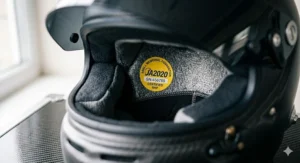
SA stands for Special Application, specifically designed for automobile racing. SA2020 and SA2025 represent the current and latest standards respectively, with SA2025 released in October 2025. These helmets undergo rigorous flammability testing—interior padding, paint, and chin straps must resist fire. They’re also tested for roll-bar impacts, simulating the forces experienced when a driver’s helmet strikes the roll cage during a collision.
For British circuit racers, rally drivers, or anyone competing in closed-cockpit motorsport, SA certification is typically mandatory. The good news: SA2025 now aligns with FIA 8859-2024 standards, meaning many helmets carry dual certification—handy for drivers competing internationally.
M Certification (Motorcycle)
M2020 and M2025 certifications target motorcycle use. These standards exclude flammability testing and roll-bar impact assessment, focusing instead on varied impact angles typical of motorcycle accidents. Whilst some car track-day organisations accept M-rated helmets, competitive automobile racing almost universally requires SA certification.
Certification Lifespan
Here’s where it gets interesting for UK buyers: Snell certifications don’t technically “expire,” but racing organisations typically accept helmets for 10 years from the certification date. An SA2020 helmet purchased in 2026 remains legal for most competitions through 2030. However, some professional series mandate more recent certifications—always check your specific championship’s regulations.
The Snell Foundation’s certification lookup tool allows verification of any helmet’s authenticity—worth using given the existence of counterfeit Snell stickers sold through questionable online marketplaces.
Snell vs FIA: Which Certification Should UK Racers Choose?
British motorsport predominantly uses FIA (Fédération Internationale de l’Automobile) certification, creating an interesting dilemma for UK racers considering Snell helmets. Understanding the practical differences helps inform your purchasing decision.
FIA certification—specifically FIA 8859-2015 and the newer FIA 8859-2024—represents the European standard, mandatory for most international motorsport and widely adopted across British club racing. Testing protocols emphasise fire resistance, impact protection, and compatibility with head-and-neck restraint systems. Premium brands like Stilo, Bell, and Arai predominantly pursue FIA certification, though many now offer dual FIA/Snell certification.
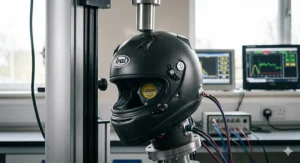
Snell certification operates as an independent American standard with arguably more rigorous testing in certain areas. The Snell Foundation purchases random production helmets and tests them independently—unlike FIA certification where manufacturers submit samples. This independence appeals to drivers seeking third-party verification beyond manufacturer claims.
Practical Reality for UK Drivers: Most British championships specify FIA 8859 or later, though many also accept Snell SA2020/SA2025. The key advantage of dual-certified helmets becomes clear: you can race BTCC support series one weekend, fly to America for SCCA events the next, without needing multiple helmets. However, pure Snell-only helmets may face rejection at some UK events—verify before purchasing.
Cost Consideration: Snell-only helmets (particularly budget brands available on Amazon) significantly undercut premium FIA-certified European helmets. A Stilo ST5 GT with FIA 8859 certification costs £800-£1,500, whilst Conquer or ILM Snell helmets deliver in the £200-£450 bracket. For club racers on tight budgets, Snell certification provides legitimate safety at accessible prices—provided your championship accepts it.

Real-World UK Racing: How to Choose the Right Snell Helmet
Selecting a racing helmet involves balancing certification requirements, budget, comfort, and intended use. Here’s a practical framework for British drivers navigating these decisions.
Step 1: Verify Your Championship Requirements
Before anything else, download your championship’s regulations (the “blue book” in Motorsport UK terminology) and identify exact helmet certification requirements. Some series specify “FIA 8859-2015 or later,” others state “FIA or Snell SA2020/SA2025.” A few mandate only FIA certification—making Snell helmets ineligible regardless of quality.
For multi-discipline drivers or those planning international competition, dual-certified helmets (both FIA and Snell) eliminate compatibility worries. Unfortunately, dual-certified options rarely appear on Amazon.co.uk, requiring purchase through specialist retailers like Demon Tweeks, Grand Prix Racewear, or direct from manufacturers.
Step 2: Assess Your Budget in Pounds
Snell helmets available to UK buyers cluster in distinct price brackets:
Budget Tier (£200-£350): Conquer SA2020/SA2025, Typhoon SA2020, entry-level ILM models. Fiberglass construction, weights around 1.7-1.9 kg, basic but functional features. Ideal for beginners or club racers prioritising affordability.
Mid-Range (£350-£500): ILM SA2025 Model 890, RaceQuip PRO20, lightweight fiberglass options. Improved comfort, reduced weight (1.4-1.6 kg), better build quality. Suitable for serious club racers doing multiple events per season.
Premium (£500-£1,500+): Dual-certified FIA/Snell carbon-fibre helmets from Bell, Stilo, Arai. Weights under 1.4 kg, integrated electronics, superior comfort. Worth considering for professional or semi-professional drivers doing extended races.
Step 3: Consider Your Racing Format
Sprint Races (15-30 minutes): Heavier budget helmets prove manageable. Prioritise cost-effectiveness and certification compliance over weight savings.
Endurance Racing (45+ minutes): Every 100 grammes matters. Invest in lighter options (ILM 890, carbon alternatives) to reduce neck fatigue and maintain concentration.
Open Cockpit/Drag Racing: Open-face SA2025 helmets offer visibility advantages where regulations permit.
Track Days (non-competitive): M2020 certification often acceptable, potentially saving money versus SA-certified alternatives—but verify with your track-day organiser.
Step 4: UK-Specific Considerations
British weather and racing conditions introduce unique factors:
Ventilation Needs: UK races rarely happen in extreme heat. Basic ventilation systems prove adequate—don’t overpay for aggressive cooling features you’ll seldom use.
Visor Fog Resistance: British drizzle and cool temperatures create fogging challenges. Anti-fog coatings or Pinlock-compatible visors add value.
Storage in Damp Conditions: Many UK racers store helmets in garages or sheds prone to dampness. Ensure your helmet bag provides moisture protection, and inspect fire-retardant padding regularly for mildew.
Import Considerations: Amazon.co.uk Snell helmet stock fluctuates wildly. Importing from Amazon.com incurs delivery costs (£20-£40) and potential customs charges post-Brexit. Factor total landed cost, not just listed price.
The Hidden Costs: Total Ownership in the UK
Purchasing the helmet represents just the initial investment. British racers should budget for complementary equipment and ongoing costs:
Essential Additions
HANS/Head-and-Neck Restraint (£400-£800): Required by most UK racing series. Ensure your helmet includes M6 threaded inserts for compatibility. The HANS device itself costs more than many budget helmets—factor this into total safety equipment spending.
Spare Visors (£30-£80): British racing through all seasons means encountering stones, debris, and general wear. Stocking spare visors prevents scrambling before race day when your visor develops a critical scratch.
Tear-Off Films (£15-£25 per pack): Essential for visibility during wet British races or when following other cars closely. Budget for multiple packs per season.
Helmet Bag (often included, or £20-£40): Protects your investment during transport and storage. Worth checking if included before purchasing separately.
Replacement Cycle
Most racing organisations accept Snell helmets for 10 years, but practical lifespan proves shorter:
5-Year Optimal Use: Interior padding degrades, retention systems wear, and newer safety standards emerge. Selling your helmet at the 5-year mark whilst it still holds value, then upgrading to current-generation certification, makes financial sense.
Post-Impact Replacement: ANY impact—even dropping your helmet from table height onto a hard floor—can compromise the EPS liner’s protective capability. If you’ve had a racing incident involving helmet contact, replace it immediately regardless of visible damage.
Total Cost of Ownership (5 years):
- Initial helmet: £300-£450
- HANS device: £500 (one-time)
- Spare visors: £60 (2 replacements)
- Tear-off films: £100 (multiple packs over 5 years)
- Total: ~£960-£1,110 over five years
Amortised across 5 seasons of club racing, that’s £192-£222 annually for head protection—less than a single set of decent racing tyres, and considerably more important.
Common Mistakes When Buying Snell Helmets in the UK
British racers new to Snell certification often stumble into avoidable errors. Learning from others’ mistakes saves money and potential embarrassment at scrutineering.
Mistake 1: Assuming All Amazon Listings Ship to UK
Many Snell helmets on Amazon.com won’t ship internationally, or charge prohibitive delivery fees. Always verify:
- Shipping to your UK postcode before adding to basket
- Total landed cost including delivery and potential customs duties (post-Brexit reality)
- Return policy if ordering from overseas—sending back a helmet to America costs £30-£50 via tracked service
Mistake 2: Ordering Without Trying Similar Helmets
Head shapes vary dramatically. A helmet receiving rave reviews might prove uncomfortable or dangerously loose on your specific head profile. Ideally, visit a UK specialist retailer (Demon Tweeks, Grand Prix Racewear, GSM Performance) to try various brands and identify your head shape (round vs. oval) before ordering online.
If that’s not practical, Amazon’s return policy becomes crucial—but returning bulky items like helmets means you’re often out the return shipping cost even if the product proves unsuitable.
Mistake 3: Neglecting Post-Brexit Import Reality
Purchasing from US sellers may trigger customs declarations and potential VAT/duty charges. The threshold is £135 for goods—most Snell helmets exceed this, potentially adding 20% VAT plus handling fees. Factor this into budget calculations.
Mistake 4: Buying Expired Certifications
SA2015 helmets, whilst still safe if unused and undamaged, face increasing rejection from British championships. Most sanctioning bodies now require SA2020 or SA2025, with SA2015 phased out through 2025-2026. Bargain-hunting on clearance SA2015 stock might seem clever, but you’ll likely face rejection at scrutineering.
Mistake 5: Overlooking UK-Specific Regulatory Nuances
Motorsport UK regulations sometimes differ from American requirements. For instance, some UK championships mandate specific visor standards or prohibit certain tinting levels. Reading the fine print in your series regulations prevents purchasing an otherwise-legal helmet that your championship specifically excludes.
Mistake 6: Confusing M and SA Certifications
The Snell M2020 and SA2020 labels look similar to casual observers. M certification (motorcycle) lacks the flammability and roll-bar testing required for automobile racing. Many British car championships explicitly reject M-certified helmets—double-checking the label before purchasing prevents a costly error.
Maintaining Your Snell Helmet in British Conditions
British weather—damp, occasionally freezing, rarely extreme in either direction—creates specific maintenance requirements for racing helmets.
Storage Best Practices
Avoid Damp Garages: Many UK racers store equipment in unheated garages or sheds where humidity accumulates. Fire-retardant Nomex padding can develop mildew in persistently damp conditions, potentially compromising both comfort and scrutineering approval.
Solution: Store helmets indoors in climate-controlled spaces, or invest in a quality helmet bag with moisture-absorbing packets. Inspect padding every few months for musty smells or visible mildew—catching problems early prevents replacement costs.
Cleaning Protocols
British racing through spring and autumn means mud, standing water, and general filth. However, aggressive cleaning damages helmets:
Interior: Remove cheek pads and liners if possible, hand-wash in mild soap solution, air-dry thoroughly. Never machine-wash—agitation and heat damage fire-retardant treatments.
Exterior: Wipe with damp microfibre cloth and mild soap solution. Avoid petroleum-based cleaners, adhesives, or solvents—these can degrade the fiberglass or carbon shell, creating invisible structural damage.
Visor: Use manufacturer-approved anti-fog treatments. Some chemicals damage polycarbonate visors, creating crazing or opacity.
Pre-Race Inspection Checklist
✅ Chin strap shows no fraying or excessive wear
✅ Retention system (D-rings or ratchet) operates smoothly
✅ Visor locks securely in all positions
✅ No cracks, crazing, or obvious impact damage to shell
✅ Certification label remains affixed and legible
✅ HANS posts (if equipped) show no looseness or damage
British scrutineers will check these items—identifying problems beforehand prevents last-minute scrambling.
FAQ: Snell Certified Racing Helmets for UK Buyers
❓ Are Snell certified helmets legal for UK motorsport?
❓ What's the difference between SA2020 and SA2025 certification?
❓ Can I use a Snell M2020 motorcycle helmet for car racing in the UK?
❓ How long do Snell certified helmets remain legal for UK racing?
❓ Where can UK racers buy Snell certified helmets if Amazon.co.uk stock is limited?
Conclusion: Making the Right Choice for British Motorsport
Choosing a Snell certified racing helmet as a UK racer means navigating American safety standards, limited local availability, and European motorsport regulations simultaneously. The good news: modern SA2025 certification increasingly aligns with FIA requirements, whilst SA2020 helmets offer proven protection at clearance pricing as manufacturers transition to newer standards.
For British club racers on budgets, Snell certification delivers legitimate safety considerably cheaper than premium FIA-certified European brands. The Conquer SA2020 or ILM SA2025 models provide everything you need—proper certification, HANS compatibility, fire-retardant materials—without requiring second mortgages. Serious competitors doing extended races should consider lighter options like the ILM Model 890, where reduced neck fatigue justifies the price premium.
The landscape will shift further as SA2025 adoption accelerates through 2026 and beyond. Early adopters gain extended helmet lifespan (legal through 2035 rather than 2030), whilst patient buyers might snag SA2020 bargains as retailers clear inventory. Either approach works—prioritise proper fit, verified availability, and championship compliance over chasing the absolute latest certification.
British motorsport continues welcoming Snell-certified helmets alongside FIA standards, giving racers valuable flexibility. Whether you’re competing at Brands Hatch, Oulton Park, or Knockhill, proper head protection remains non-negotiable—and Snell certification delivers that protection with rigorous independent testing backing every helmet bearing their sticker.
Recommended for You
- Best Snell M2020 Helmets UK: 7 Top Rated Safety Picks 2026
- 7 Best FIM Homologated Helmet for Track Racing UK 2026 Guide
- 7 Best MotoGP Standard Helmets for Sale UK 2026 – FIM Approved
Disclaimer: This article contains affiliate links. As an Amazon Associate, I earn from qualifying purchases. If you purchase products through these links, we may earn a small commission at no additional cost to you.
✨ Found this helpful? Share it with your mates! 💬🤗
