In This Article
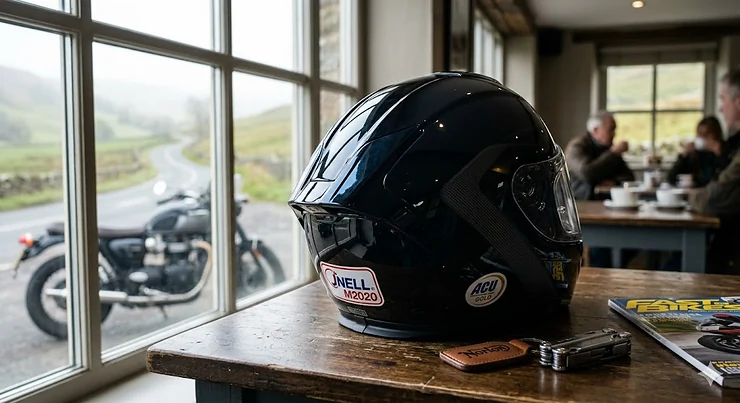
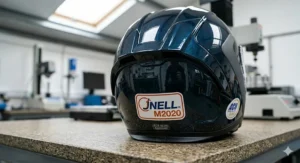
When you’re carving through the Lake District on a damp October morning or navigating London’s congested streets during rush hour, the last thing on your mind should be whether your helmet can actually protect you. That’s where Snell M2020 helmets come in — representing the pinnacle of voluntary motorcycle helmet certification available today.
Snell M2020 helmets undergo testing that makes the minimum DOT standards look positively leisurely. The Snell Memorial Foundation, an independent non-profit organisation that’s been obsessing over helmet safety since 1957, subjects these helmets to impact tests so rigorous that they include dropping a 3kg spike onto the shell and firing air rifle pellets at the visor at roughly 500 km/h. In Britain, where wet roads, unpredictable weather, and tight urban riding conditions create unique hazards, having a helmet that goes beyond the bare minimum isn’t just reassuring — it’s rather sensible.
The M2020 standard, updated in 2020, actually comes in two variants: M2020D, which maintains compatibility with DOT requirements popular in North America, and M2020R, which aligns more closely with European ECE 22.05 standards. For UK riders, this matters because whilst Britain has its own regulations, most premium helmets sold here now carry ECE 22.06 certification alongside any additional standards. What most British buyers overlook is that Snell certification is entirely voluntary — manufacturers only submit their helmets for this testing if they’re confident the design can handle the punishment. It’s a badge of honour, not a legal requirement.
Quick Comparison: Top Snell M2020 Helmets at a Glance
| Helmet Model | Weight | Price Range (£) | Best For | Certification |
|---|---|---|---|---|
| Arai Regent-X | 1,650g | £550-£700 | Premium all-round protection | Snell M2020D, DOT, ECE |
| Shoei RF-1400 | 1,480g | £450-£600 | Lightweight sport touring | Snell M2020, ECE 22.06 |
| HJC RPHA 1N | 1,420g | £350-£500 | Budget-conscious performance | Snell M2020, ECE 22.06 |
| Bell Race Star Flex DLX | 1,540g | £700-£950 | Track-day enthusiasts | Snell M2020, DOT, ECE |
| Scorpion EXO-R1 Air | 1,445g | £300-£450 | Value-focused riders | Snell M2020, ECE 22.05 |
| AGV Pista GP RR | 1,430g | £1,200-£1,900+ | Professional racing | Snell M2020, FIM, ECE |
| LS2 Challenger GT | 1,590g | £280-£380 | Adventure touring | Snell M2020D, ECE 22.06 |
💬 Just one click — help others make better buying decisions too!😊
Top 7 Snell M2020 Helmets: Expert Analysis
1. Arai Regent-X — The British Favourite
The Arai Regent-X remains the gold standard for riders who refuse to compromise on safety, even if it means paying premium prices. This Japanese-made helmet embodies Arai’s 80-year commitment to hand-built protection.
Key specifications: The shell uses Arai’s proprietary PB-SNC2 (Peripherally Belted Super Fiber Complex) construction, which translates to multiple layers of fibreglass, organic fibre, and special synthetic fibres. Weight hovers around 1,650g for a medium — not the lightest, but distributed beautifully thanks to Arai’s signature round-smooth shell philosophy. The helmet meets Snell M2020D, DOT FMVSS 218, and ECE 22.06 standards simultaneously.
What most UK buyers don’t realise is that the Regent-X’s ventilation system, whilst excellent on paper with five intake vents and six exhaust ports, performs differently in British conditions. During summer rides through the Cotswolds, it’s brilliant. Come November when you’re commuting through Edinburgh’s rain, you’ll appreciate that the vents seal completely — crucial for keeping out that penetrating Scottish drizzle that somehow finds its way into lesser helmets. The VAS-V visor system (Variable Axis System) allows 5mm of vertical adjustment, which genuinely helps riders who wear glasses avoid that annoying fog-up that plagues cheaper lids on cold mornings.
Customer feedback from UK riders consistently praises the Arai’s build quality and long-term durability. One London-based courier reported his Regent-X survived three years of daily abuse, including one nasty spill in wet conditions near King’s Cross, without any structural compromise. The removable, washable interior comes pre-treated with antimicrobial agents — rather important when you’re wearing the thing six hours daily in city traffic.
Pros:
✅ Hand-built in Japan with meticulous quality control
✅ Excellent long-term durability and crash protection
✅ Superb fit for intermediate oval head shapes (common among British riders)
Cons:
❌ Premium pricing around £550-£700 makes it a serious investment
❌ Heavier than carbon-shelled competitors
Price range: Around £550-£700 depending on graphic schemes. Worth noting that whilst this seems steep, the five-year Arai warranty and proven longevity mean the cost-per-use calculation actually favours the Regent-X for serious riders who log significant mileage.
2. Shoei RF-1400 — Lightweight Excellence
The Shoei RF-1400 represents Japanese engineering at its finest, with a focus on reducing weight whilst maintaining Snell M2020 certification — no small feat.
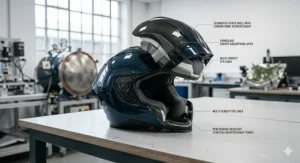
Key specifications: The AIM+ shell (Advanced Integrated Matrix Plus) combines multiple types of fibreglass with organic and high-performance fibres, resulting in a remarkably light 1,480g for a medium size. Four shell sizes across the range ensure proper fit rather than just padding adjustments. It carries Snell M2020, ECE 22.06, and JIS certifications.
For British riders, the RF-1400’s standout feature is the Emergency Quick Release System (EQRS) cheek pads. In the unfortunate event of a crash where paramedics need helmet removal, the pads pull out via red tabs without excessive head movement — something UK emergency services particularly appreciate. The CWR-F2 shield system includes a Pinlock EVO lens as standard, which is absolutely essential for British weather. That November commute through Bristol in the rain? The Pinlock actually works, unlike the cheap anti-fog coatings on budget helmets that stop performing after three months.
The RF-1400’s ventilation strikes a clever balance. The four intake vents and four exhaust ports move enough air for spirited summer riding through the Welsh valleys, but they don’t whistle or create excessive wind noise at motorway speeds — a common complaint with more aggressive race-oriented designs. UK riders consistently note that wind noise levels remain civilised even at 70 mph on the M1, making this an excellent choice for touring as well as sport riding.
One aspect worth mentioning: whilst the Shoei ships with excellent build quality, some British buyers report the visor mechanism feels slightly notchy when new. It smooths out after a few weeks of use, but it’s initially firmer than Arai’s buttery-smooth operation.
Pros:
✅ Exceptional light weight (1,480g) reduces neck fatigue on long rides
✅ Four shell sizes ensure proper fit, not just padding adjustments
✅ Excellent quality Pinlock visor system included as standard
Cons:
❌ Pricing in the £450-£600 range puts it firmly in premium territory
❌ Visor mechanism requires break-in period
Price range: Around £450-£600 for solid colours, more for premium graphics. Available through most UK motorcycle retailers with typically fast delivery from British warehouse stock.
3. HJC RPHA 1N — Premium Carbon on a Realistic Budget
The HJC RPHA 1N proves you don’t need to spend £700+ to get genuine Snell M2020 protection wrapped in a carbon fibre shell.
Key specifications: Premium Carbon Fibre (P.I.M. Plus) shell construction delivers 1,420g weight for a medium — lighter than helmets costing twice as much. Snell M2020 and ECE 22.06 certified. The shell comes in three sizes (XS-M, L-XL, 2XL-3XL) to maintain proper proportions across the size range.
What makes the RPHA 1N particularly appealing for British riders is the included features that premium brands charge extra for. The Pinlock Max Vision lens comes standard — not the basic Pinlock, but the wider Max Vision variant that extends peripheral clarity by roughly 40%. When you’re filtering through London traffic and need to spot that car door opening in your peripheral vision, this actually matters. The quick-change visor mechanism allows tool-free swaps, handy for switching between clear and tinted shields depending on British weather whims.
The RapidFire II shield replacement system deserves specific mention. Most mornings in Manchester involve misting, and being able to swap shields in under 30 seconds without tools means you can keep a clear shield on the bike for rainy days and a dark smoke for those rare British sunny spells. Customer feedback from UK buyers consistently highlights this practical feature.
Ventilation performs well for the price point. The ACS (Advanced Channeling Ventilation System) moves adequate air for most UK riding conditions, though track-day enthusiasts pushing hard at Cadwell Park or Snetterton in summer might find it slightly less aggressive than race-spec helmets costing £500 more. For road riding across the Lake District or commuting in Birmingham, it’s more than sufficient.
Pros:
✅ Genuine carbon fibre construction at mid-range pricing (£350-£500)
✅ Max Vision Pinlock included as standard
✅ Excellent weight-to-price ratio
Cons:
❌ Ventilation adequate but not exceptional for serious track use
❌ Interior padding quality step below premium Arai/Shoei
Price range: Typically £350-£500 depending on graphics. Frequently available on Amazon.co.uk with Prime delivery, making it accessible across England, Scotland, Wales, and Northern Ireland.
4. Bell Race Star Flex DLX — Track-Day Technology
The Bell Race Star Flex DLX brings MotoGP-level technology to riders who split time between road and track.
Key specifications: 3K carbon fibre shell construction (three-directional weave) provides 1,540g weight with exceptional strength. The headline feature is Flex technology — the shell incorporates three flexible zones that compress progressively during impact, managing energy more effectively than traditional rigid shells. Carries Snell M2020, DOT, and ECE certifications.
For British track-day enthusiasts who frequent Brands Hatch, Silverstone, or Donington Park, the photochromatic face shield is transformative. British weather being reliably unreliable, you might start your session in overcast conditions and finish in bright sunshine 20 minutes later. The shield automatically darkens in UV light, eliminating the need to pit and swap shields mid-session. This isn’t gimmick technology — it genuinely works and transitions smoothly within 30 seconds.
The Bell’s ventilation system flows massive amounts of air. Velocity Flow Ventilation channels air through the EPS liner itself, not just across the surface. During aggressive riding, this prevents the helmet interior from becoming a sweat-soaked sauna. The trade-off? At motorway speeds on the M25, there’s noticeable wind noise. If your riding involves mainly urban commuting or sedate A-road touring, quieter helmets exist. But if you’re regularly leaned over at 45 degrees through Paddock Hill Bend, you won’t care about a bit of wind noise.
UK buyers should note the Race Star Flex DLX runs slightly narrow compared to Arai and Shoei. If you have a round head shape, size carefully and consider ordering from a retailer with generous return policies. Several British motorcycle shops now offer home try-on services specifically because proper fit matters enormously with race-oriented helmets.
Pros:
✅ Flex technology provides superior impact energy management
✅ Photochromatic shield adapts to changing British weather
✅ Exceptional ventilation for track-day performance
Cons:
❌ Premium pricing (£700-£950) limits accessibility
❌ Wind noise higher than touring-focused competitors
Price range: Around £700-£950 depending on graphics. Definitely an investment piece, but track-day regulars find the performance justifies the outlay.
5. Scorpion EXO-R1 Air — Sensible Value
The Scorpion EXO-R1 Air delivers Snell M2020 certification at pricing that won’t require selling your spare bike to afford.
Key specifications: TCT (Tri-Composite Technology) shell blends fibreglass, aramid, and fibreglass-reinforced resin for 1,445g weight. Three shell sizes maintain proportions. Snell M2020 and ECE 22.05 certified. KwikWick III moisture-wicking interior and Airfit cheek pad inflation system for custom fit.
What sets the EXO-R1 Air apart in the UK market is its genuine all-weather capability for the £300-£450 price point. The Ellip-Tec II ratchet system provides tool-free visor removal, whilst the included Pinlock insert (standard on UK models) handles British mist and drizzle competently. The integrated sun visor deploys via a slider switch — not fancy, but utterly reliable even when you’re wearing winter gloves on a January ride through the Yorkshire Dales.
The Airfit system deserves explanation because many riders dismiss it as gimmicky marketing. Small air bladders in the cheek pads connect to a hand pump. A few squeezes customise the fit without changing pad thickness. For riders whose head shape falls between standard sizes, this genuinely improves comfort during all-day rides. One Surrey-based commuter reported the Airfit eliminated pressure points that plagued his previous helmet, turning his 90-minute each-way commute from uncomfortable to tolerable.
Scorpion’s ventilation errs toward conservative — adequate airflow for British conditions but not aggressive. Summer rides through Cornwall stay comfortable, whilst winter commutes through Edinburgh don’t induce brain freeze. The shell’s aerodynamic shaping reduces buffeting at motorway speeds, making this an excellent choice for riders who log serious distance on Britain’s motorway network.
Pros:
✅ Snell M2020 protection at accessible £300-£450 pricing
✅ Airfit system provides customisable fit
✅ Well-balanced all-weather performance
Cons:
❌ Ventilation adequate but uninspiring for performance riding
❌ Build quality step below premium Japanese brands
Price range: Typically £300-£450. Frequently discounted on Amazon.co.uk during seasonal sales, making it even better value.

6. AGV Pista GP RR — Racing Pedigree
The AGV Pista GP RR represents the absolute pinnacle of Snell M2020 helmet technology — worn by MotoGP world champions and available to civilians willing to pay for perfection.
Key specifications: 100% carbon fibre shell construction achieves an astonishing 1,430g weight for a medium. Snell M2020, FIM, and ECE certifications. The helmet’s development involved direct input from Valentino Rossi and other factory riders, with aerodynamics tested extensively in wind tunnels and on actual race circuits.
For British riders who take their motorcycling seriously — track-day regulars, advanced riding instructors, or enthusiasts who simply want the best — the Pista GP RR delivers performance that justifies its eye-watering £1,200-£1,900+ price tag. The 360° Adaptive Fit system uses inflatable cheek pads and crown padding that moulds precisely to your head shape. During aggressive riding through Oulton Park’s challenging corners or on spirited weekend rides through the Scottish Highlands, the helmet remains absolutely planted without any shifting or movement.
Ventilation flows phenomenal amounts of air through five metal intake vents and two rear extractors. The clever aspect is how AGV integrated air channels directly into the EPS liner, ensuring airflow reaches your scalp rather than just flowing across the shell surface. During summer track sessions at Snetterton, this prevents the interior becoming uncomfortably hot. The visor system incorporates AGV’s patented metal retention mechanism — bombproof reliability compared to plastic-tabbed systems that eventually wear and allow shield creep.
UK availability presents the main challenge. Whilst some British retailers stock the Pista GP RR, limited colourways and sizes mean you might need to order from European suppliers. Brexit import duties can add 20% to the purchase price, though some retailers absorb this cost. The five-year AGV warranty applies regardless of where you purchase within the UK or EU.
Pros:
✅ Genuine MotoGP race technology in a road-legal helmet
✅ Exceptional 1,430g light weight with maximum protection
✅ Superior aerodynamics tested at championship racing speeds
Cons:
❌ Premium pricing (£1,200-£1,900+) excludes most riders
❌ Limited UK availability for some graphics and sizes
Price range: Around £1,200-£1,900+ depending on graphics and limited editions. A serious investment, but track-day regulars and professional riders consider it worth every penny.
7. LS2 Challenger GT — Adventure Value
The LS2 Challenger GT brings Snell M2020D certification to adventure touring at pricing that won’t require a second mortgage.
Key specifications: KPA (Kinetic Polymer Alloy) shell construction weighs 1,590g for a medium — heavier than carbon rivals, but substantially more affordable. Snell M2020D, ECE 22.06, and DOT certified. Designed specifically for adventure and touring riders who prioritise all-day comfort over race-track performance.
What makes the Challenger GT particularly relevant for British riders is its touring-focused feature set. The included drop-down sun visor deploys smoothly even whilst wearing thick winter gloves — crucial for November rides through the Peak District when the weather turns. The wider eye port provides excellent peripheral vision for spotting hazards during motorway filtering, whilst the long-pull visor mechanism allows enough opening clearance to drink from a water bottle without full visor removal during fuel stops.
The helmet’s weight (1,590g) becomes noticeable during all-day rides across the Scottish Highlands or Welsh valleys. It’s not excessive, but lighter helmets reduce neck fatigue on 300-mile days. The trade-off is that LS2 achieved Snell M2020D certification whilst keeping prices in the £280-£380 range — roughly half what premium brands charge. For riders who split duties between commuting in Bristol during the week and weekend touring across England, this represents excellent value.
Customer feedback from UK buyers highlights the Challenger GT’s reliability in wet conditions. The seal between shell and visor keeps out British rain effectively, whilst the included Pinlock Max Vision lens prevents interior fogging even during cold, wet winter rides. The removable, washable interior holds up well to frequent cleaning — rather important given how quickly helmets accumulate grime during British winter commuting.
Pros:
✅ Snell M2020D certification at budget-friendly £280-£380 pricing
✅ Touring-focused features (sun visor, large eye port, comfortable interior)
✅ Excellent wet-weather sealing for British conditions
Cons:
❌ 1,590g weight heavier than carbon-shelled competitors
❌ Build quality and materials step below premium brands
Price range: Typically £280-£380. Widely available on Amazon.co.uk with Prime delivery across the UK.
Real-World Scenario: Matching Helmets to British Riders
The London Commuter (Mark, 34, Bermondsey)
Mark rides a Yamaha MT-07 through central London daily, covering roughly 25 miles each way. His priorities: visibility for filtering, comfort during 90-minute rides through traffic, and protection if someone inevitably pulls out on him near Old Street roundabout.
Best match: HJC RPHA 1N
The Max Vision Pinlock handles London’s damp mornings brilliantly, whilst the quick-change visor system lets Mark swap between clear (most days) and tinted (those three sunny days per year). At £350-£500, it fits a working professional’s budget without compromising safety. The 1,420g weight reduces neck fatigue during extended filtering sessions, and the carbon shell provides premium protection if that Uber driver doesn’t check mirrors before changing lanes.
The Track-Day Regular (Sarah, 28, Milton Keynes)
Sarah rides a Kawasaki ZX-6R to Silverstone, Brands Hatch, and Donington Park roughly once monthly from April through October. Road riding between sessions requires different priorities than pure race helmets.
Best match: Bell Race Star Flex DLX
The photochromatic shield adapts to Britain’s changeable weather without pitting for shield changes. Flex technology provides superior protection during those inevitable track-day spills, whilst aggressive ventilation prevents overheating during back-to-back sessions. Yes, it’s expensive at £700-£950, but Sarah’s insurance company actually offers reduced track-day premiums for riders wearing Snell-certified helmets.
The Weekend Tourer (David, 52, Inverness)
David logs 5,000 miles annually on his BMW R1250GS, primarily touring Scotland’s stunning highlands and islands. Comfort during 300-mile days matters more than race-track performance.
Best match: LS2 Challenger GT
The touring-focused design provides all-day comfort without premium pricing. At 1,590g, it’s heavier than carbon alternatives, but David’s relaxed riding style (60-70 mph touring, not aggressive sport riding) means weight matters less than features like the sun visor, excellent weather sealing, and comfortable interior. The £280-£380 price leaves budget for Scotland’s excellent B&B accommodation.
How to Choose Snell M2020 Helmets in the UK
Selecting the right Snell M2020 helmet involves more than just picking the most expensive option and assuming it’s best. British riders face unique considerations that don’t apply to our American or European counterparts.
1. Understand certification overlap
Many riders assume Snell M2020, ECE 22.06, and SHARP ratings directly compare, but they measure different aspects of protection. Snell focuses on high-impact scenarios — the sort of violent collisions that occur at race-track speeds or during motorway accidents. ECE 22.06 includes rotational impact testing (how your brain moves inside your skull during angled impacts), whilst SHARP rates helmets based on multiple impact locations. For UK road riding, ideally choose a helmet carrying both Snell M2020 and ECE 22.06 certifications. This ensures protection across the widest range of accident scenarios, from low-speed urban spills to high-speed motorway impacts.
2. Prioritise fit over features
The fanciest carbon-fibre Snell M2020 helmet provides zero protection if it doesn’t fit properly. British head shapes tend toward intermediate oval (most common) and long oval configurations. Arai and Shoei generally suit intermediate oval heads, whilst some European brands like Schuberth and AGV accommodate rounder head shapes. Visit a physical retailer if possible — many UK motorcycle shops now employ fitting specialists trained specifically in helmet sizing. The helmet should feel snug but not painful, with even pressure distribution around your entire head. After 10 minutes of wear, any pressure points indicate poor fit.
3. Consider British weather demands
British riding means rain. Lots of rain. Prioritise helmets with proven anti-fog systems — a quality Pinlock insert that actually seals properly makes the difference between safe visibility and dangerous fogging during wet commutes. Visor seals matter enormously; cheaper helmets allow water ingress around the gasket, creating interior drips during downpours. Customer reviews mentioning “holds up well in rain” or “stays dry in typical British weather” signal good weather sealing.
4. Weight vs durability trade-offs
Lighter helmets reduce neck fatigue during all-day rides, but achieving low weight often means thinner shells or more exotic (expensive) materials. For riders logging serious annual mileage — 10,000+ miles touring across Britain — saving 200g genuinely matters. For weekend warriors or commuters riding 30 minutes daily, spending an extra £400 to save 150g provides questionable value. Consider your actual riding style rather than aspirational riding you imagine doing.
5. Budget for the total package
A £600 helmet seems expensive until you factor in that it’ll protect your head for five years (Snell’s recommended replacement interval). That’s £120 annually. Add £40-£60 for a replacement visor after three years, £20 for a new Pinlock insert annually, and perhaps £30 for replacement cheek pads if you ride frequently. The total five-year cost helps contextualise whether premium pricing actually represents poor value or sensible investment in the thing protecting your brain.
Common Mistakes When Buying Snell M2020 Helmets
Mistake 1: Assuming Heavier Means Safer
Many British buyers equate weight with protection, assuming heavier helmets must offer superior safety. This misconception stems from older helmet designs where thick, heavy shells were necessary for adequate protection. Modern materials science completely undermines this assumption. The AGV Pista GP RR at 1,430g provides objectively superior protection to helmets weighing 1,800g, because carbon fibre’s superior strength-to-weight ratio allows thinner, lighter construction without compromising safety. According to materials research published by the University of Cambridge, advanced composite materials can provide better energy absorption at lower weights than traditional fibreglass construction.
The Snell M2020 standard doesn’t specify minimum weight — it specifies maximum g-forces transmitted to the test head-form during impacts. Whether the helmet achieves this through a thick fibreglass shell or a thin carbon shell is irrelevant to the certification. For British riders, lighter helmets reduce neck strain during filtering through London traffic or touring across the Scottish Highlands. The only caveat: suspiciously light helmets under 1,200g for a medium size might achieve weight savings through inadequate EPS liner thickness. Stick with reputable brands carrying Snell certification rather than no-name imports claiming miraculous light weight. Consumer testing by Which? has repeatedly highlighted concerns about ultra-budget helmets sold online.
Mistake 2: Ignoring UK-Specific Availability
Many British riders research helmets on American websites like RevZilla, fall in love with a specific model, then discover it’s not sold in the UK — or if it is, Brexit import duties add 20% to the cost. Before committing to any helmet, verify UK availability through British retailers or Amazon.co.uk. Some American-market helmets use DOT-only certification without ECE approval, making them technically illegal for road use in Britain (though enforcement is virtually non-existent).
Additionally, warranty coverage varies. Purchasing from European or American retailers might mean shipping the helmet to Italy or California for warranty claims, versus simply dropping it at your local UK dealer. Several British riders have learned this expensive lesson after crash damage required warranty assessment.
Mistake 3: Underestimating British Weather Impact
Riders accustomed to Southern California’s reliably dry weather can get away with basic anti-fog systems. British riders cannot. A helmet with marginal fog resistance becomes genuinely dangerous during November commutes when you’re filtering through Manchester traffic in misting rain with the visor constantly fogging. Many cheaper Snell M2020 helmets include basic anti-fog coatings that fail after six months, requiring aftermarket Pinlock insert purchase.
Similarly, visor seal quality matters enormously in Britain. Inferior seals allow rainwater to seep through, dripping onto your face during downpours. This isn’t just annoying — it’s dangerous when it happens whilst navigating a roundabout in heavy traffic. UK customer reviews specifically mentioning weather performance provide valuable intelligence that generic American reviews don’t address.
Mistake 4: Focusing Solely on Safety Ratings
Snell M2020 certification guarantees the helmet passed rigorous testing. It doesn’t guarantee the helmet fits your head shape, suits your riding style, or provides comfortable all-day wear. Two helmets with identical Snell M2020 certification can deliver vastly different real-world experiences. The Arai Regent-X and AGV Pista GP RR both carry Snell M2020, but the Arai suits intermediate oval heads with touring priorities, whilst the AGV accommodates rounder heads with race-track ambitions.
British riders sometimes purchase helmets based purely on certification stickers, then discover the helmet causes pressure headaches after 45 minutes, or the visor mechanism requires two hands to operate (impossible whilst riding), or the interior padding compresses within six months of commuting use. Safety certification provides the baseline; fit, comfort, and build quality determine whether you’ll actually wear the helmet consistently.
Mistake 5: Neglecting Long-Term Costs
The initial purchase price represents just the beginning of helmet ownership costs. British riders logging significant mileage should budget for:
- Replacement visor: £40-£80 every 2-3 years as stone chips accumulate
- Pinlock insert: £15-£30 annually as anti-fog performance degrades
- Replacement cheek pads/liner: £30-£60 if you ride frequently and pads compress
- Helmet bag: £15-£40 to protect the shell during storage and transport
Premium brands often include many accessories as standard (Pinlock, breath guard, helmet bag), whilst budget brands charge separately for everything. Over a five-year ownership period, a £350 helmet requiring £150 in accessories costs the same as a £500 helmet including everything. British buyers should calculate total cost of ownership rather than just initial purchase price.
Snell M2020 vs ECE 22.06: Understanding the Difference
British riders often ask whether Snell M2020 or ECE 22.06 certification matters more for UK road riding. The answer involves understanding what each standard actually tests, because they focus on different accident scenarios.
Snell M2020 emphasises high-impact protection — the sort of violent collisions occurring at race-track speeds or during motorway accidents. Testing involves dropping helmet-equipped head-forms onto various anvil shapes from specified heights, measuring g-forces transmitted to the head-form. The M2020D variant (DOT-aligned) permits slightly higher transmitted forces than M2020R (ECE-aligned), but both exceed DOT and ECE minimum requirements. Snell also tests shell penetration resistance, chin bar strength for full-face helmets, and visor retention during impacts.
ECE 22.06 (the current European standard replacing 22.05) takes a different approach. Whilst it includes impact testing similar to Snell, ECE 22.06 adds rotational impact assessment — measuring how the helmet manages brain movement inside the skull during angled impacts. Medical research increasingly shows rotational forces cause concussions and traumatic brain injuries even in crashes that don’t involve direct head strikes. The ECE standard also requires testing across multiple impact points (more locations than Snell tests), ensuring protection across a wider area of the helmet.
For British road riding, helmets carrying both Snell M2020 and ECE 22.06 certifications provide the most comprehensive protection. Snell handles worst-case high-impact scenarios, whilst ECE addresses the more common angled impacts typical of real-world motorcycle accidents. Several helmets in our top 7 list carry both certifications, offering belt-and-braces protection.
One subtle point worth noting: some manufacturers produce different versions of the same helmet model for different markets. The American version might carry Snell M2020D and DOT, whilst the European/UK version carries Snell M2020R and ECE 22.06. These aren’t identical helmets despite sharing the same model name — shell construction and EPS liner density sometimes differ slightly to optimise for each standard. When purchasing through Amazon.co.uk or UK retailers, you’re receiving the ECE-compliant version appropriate for British roads.
What to Expect: Real-World Performance in British Conditions
Wet-Weather Performance
British riders spend approximately 40% of riding time in wet or damp conditions, making weather resistance absolutely critical. Snell M2020 helmets vary dramatically in how they handle sustained rain and mist.
Premium models like the Arai Regent-X and Shoei RF-1400 incorporate sophisticated visor seal systems that completely prevent water ingress even during motorway speeds in heavy rain. The seals use multi-layer gaskets that compress against the visor edge, creating watertight barriers. After three years of British weather exposure, these seals maintain effectiveness — one Scotland-based rider reported his Arai still keeps out rain after five years of year-round use.
Budget-oriented options like the LS2 Challenger GT provide adequate weather sealing for the price point, but expect some minor seepage during biblical downpours. This manifests as occasional drips near the chin bar area rather than catastrophic leaks. For commuting or touring, it’s manageable. For track-day use where you’re tucked behind a screen at speed, it’s rarely an issue.
The critical component for British conditions is the anti-fog system. Quality Pinlock Max Vision inserts — standard on the HJC RPHA 1N and available for most premium helmets — create a dual-pane seal that prevents interior fogging even during cold, wet autumn commutes. Research by the Royal Society for the Prevention of Accidents (RoSPA) highlights that visibility impairment contributes to a significant proportion of motorcycle accidents in UK conditions.
Wind Noise and Buffeting
Wind noise varies dramatically between Snell M2020 helmets, depending on shell shape and aerodynamic development. This matters enormously for British riders who spend significant time at motorway speeds.
The Scorpion EXO-R1 Air and Shoei RF-1400 prioritise quiet operation, with carefully shaped shells that direct airflow smoothly over and around the helmet. At 70 mph on the M1 or M6, wind noise remains low enough for comfortable conversation via Bluetooth intercom systems. This makes them excellent choices for touring riders who log hundreds of motorway miles crossing Britain.
Conversely, the Bell Race Star Flex DLX and AGV Pista GP RR optimise for aerodynamic stability at high speeds rather than quietness. At track-day pace through Silverstone’s Copse corner, they remain perfectly planted. But at motorway speeds during commutes, there’s noticeably more wind noise. This isn’t a flaw — it’s a deliberate design trade-off prioritising race-track performance over touring comfort.
Buffeting (side-to-side helmet movement in wind) depends heavily on individual bike characteristics. The same helmet might buffet terribly on a naked bike like a Yamaha MT-07 but remain rock-solid on a faired sport-tourer like a BMW R1250RS. British riders should test helmets on their specific motorcycle when possible, as aerodynamic interactions between bike and helmet create unique buffeting signatures.
Long-Distance Comfort
Spending eight hours touring through the Scottish Highlands reveals helmet comfort characteristics that 20-minute test rides don’t expose. Weight, pressure distribution, and interior padding quality all influence long-term wearability.
Lighter helmets (under 1,500g) like the AGV Pista GP RR (1,430g) and HJC RPHA 1N (1,420g) reduce neck strain during extended rides. The weight difference between a 1,400g helmet and a 1,600g helmet seems trivial until you’ve spent six hours riding. Those extra 200 grams compound over time, creating measurable fatigue. For riders over 50 or those with existing neck issues, weight becomes a primary consideration.
Pressure distribution depends on how well the helmet’s shape matches your head. The Arai Regent-X uses multi-density cheek pads and crown padding that distribute pressure across a wider surface area. Even during all-day rides, pressure points don’t develop. Cheaper helmets sometimes use single-density foam that creates hot spots, causing headaches after 90 minutes.
Interior padding quality matters for frequent riders. Premium helmets use moisture-wicking fabrics treated with antimicrobial agents, maintaining freshness even after weeks of sweaty summer commuting. Budget helmets often use basic untreated fabrics that develop odours quickly, requiring more frequent washing. For British riders commuting daily through urban traffic, this becomes relevant within months.
UK Regulations, Safety Standards & Legal Requirements
Legal Requirements for UK Motorcycle Helmets
British law requires all motorcycle helmets worn on public roads to carry British Standard BS 6658:1985 and display the BSI Kitemark, or meet ECE Regulation 22.05 (or 22.06) and display the ECE approval mark. Following Brexit, the UK also recognises UNECE Regulation 22 standards as compliant with British law.
Snell M2020 certification alone doesn’t meet UK legal requirements. However, virtually all Snell M2020 helmets sold through UK retailers also carry ECE 22.05 or 22.06 certification, making them street-legal for British roads. When purchasing through Amazon.co.uk or UK motorcycle shops, you’re receiving helmets with appropriate certification. The risk arises when importing helmets directly from American retailers, as some US-market helmets carry only DOT and Snell certifications without ECE approval.
Enforcement of helmet standards in Britain remains minimal. Police rarely examine helmet certification stickers during traffic stops. However, insurance companies sometimes dispute claims following accidents if investigators discover the helmet lacked proper certification. For British riders, this presents an avoidable risk — simply purchase helmets from UK-authorised retailers rather than grey-market imports.
SHARP Ratings and British Testing
The UK government operates the Safety Helmet Assessment and Rating Programme (SHARP), which independently purchases and tests motorcycle helmets sold in Britain. SHARP awards helmets between one and five stars based on impact protection across multiple locations.
Interestingly, SHARP ratings don’t directly correlate with Snell M2020 certification. Some Snell-certified helmets achieve four or five SHARP stars, whilst others receive three stars. This reflects different testing methodologies — SHARP tests impacts across 32 locations covering the entire helmet shell, whilst Snell focuses on specific high-risk areas. Additionally, SHARP testing occurs at lower impact velocities than Snell’s more extreme testing protocol.
For British riders, both ratings provide valuable information. Snell M2020 confirms the helmet handles worst-case high-impact scenarios, whilst SHARP ratings indicate all-around protection during more typical accidents. Helmets carrying both Snell M2020 certification and four or five SHARP stars offer comprehensive protection validated by independent testing from two respected organisations.
Insurance Considerations
Some British motorcycle insurance providers offer premium reductions for riders wearing helmets certified to advanced standards. Whilst this isn’t universal, it’s worth enquiring when obtaining insurance quotes. Several insurers specifically recognise Snell certification as demonstrating serious commitment to safety, potentially qualifying riders for modest discounts.
For track-day insurance — required if you’re participating in organised circuit sessions — many policies mandate Snell-certified helmets or specifically prohibit DOT-only helmets. British track-day organisers increasingly require either Snell M2020, ECE 22.05/22.06, or FIM certification for participants. If you’re planning track time at Brands Hatch, Silverstone, or Cadwell Park, verify your helmet meets organiser requirements before travelling.
Features That Actually Matter (And Those That Don’t)
Features Worth Paying For
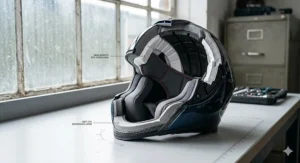
Multi-density EPS liner: Premium helmets use multiple foam densities within the impact-absorbing liner. Softer foam compresses during low-speed impacts, whilst denser foam handles high-speed collisions. This provides better protection across the full range of accident severities British riders might encounter. The technology adds £50-£100 to helmet cost but delivers measurable safety improvements.
Pinlock Max Vision system: British weather makes quality anti-fog systems non-negotiable. The wider Max Vision Pinlock costs roughly £10-£15 more than standard Pinlock but extends peripheral clarity by 40%. When filtering through London traffic or navigating Birmingham’s Spaghetti Junction, that extra peripheral visibility genuinely enhances safety. Worth paying for.
Emergency cheek pad removal: Systems like Shoei’s EQRS allow paramedics to remove the helmet more safely following crashes. UK ambulance services appreciate this feature because it reduces spinal movement during helmet extraction. The system adds minimal cost (perhaps £20 to retail price) whilst providing significant safety benefits during worst-case scenarios.
Multiple shell sizes: Helmets offered in four or five shell sizes (rather than one shell with different padding thicknesses) maintain proper proportions across the size range. A small shell doesn’t just fit smaller heads more comfortably — it also provides better aerodynamics and lighter weight. Premium brands offer multiple shells; budget brands typically use one shell across all sizes. The difference becomes apparent during all-day rides.
Marketing Gimmicks to Ignore
Claimed wind tunnel testing hours: Many manufacturers tout “500 hours of wind tunnel development” or similar figures. Unless you’re racing MotoGP, marginal aerodynamic improvements provide negligible real-world benefit. British road riding rarely involves sustained speeds above 100 mph where advanced aerodynamics meaningfully matter. Focus on fit and comfort rather than wind tunnel time.
Exotic shell material names: Some budget brands invent impressive-sounding names for ordinary fibreglass composite shells — “Advanced Tri-Matrix Polymer Construction” often just means standard fibreglass. Premium brands genuinely use carbon fibre, Kevlar, or specialised organic fibres, but these materials cost significantly more. If a £200 helmet claims carbon construction, it’s marketing nonsense. Real carbon shells appear on helmets costing £500+.
Bluetooth communication systems: Integrated Bluetooth adds £80-£150 to helmet cost whilst offering inferior performance to aftermarket systems like Cardo or Sena. Integrated systems can’t be upgraded when battery performance degrades, and they become obsolete when newer Bluetooth versions release. British riders are better served by purchasing a quality helmet without Bluetooth, then adding a premium aftermarket system offering superior audio quality and upgradeability.
Absurd visor claims: Some manufacturers claim their visors provide “99.9% UV protection” or “military-grade scratch resistance.” Standard polycarbonate visors block sufficient UV for eye protection, and no visor prevents stone chip damage during British motorway riding. Replace visors when they accumulate scratches (every 2-3 years), and don’t pay extra for marketing claims about miraculous visor technology.
Long-Term Cost & Maintenance in the UK
True Cost of Ownership Over Five Years
British riders should budget for the complete ownership cost rather than just initial purchase price. Here’s a realistic breakdown for a premium Snell M2020 helmet:
Initial purchase: £500-£700 (using the Arai Regent-X or Shoei RF-1400 as examples) Year 1 additional costs: £0 (helmet includes everything needed) Year 2 replacement Pinlock: £25 (anti-fog performance degrades with age) Year 3 replacement visor: £50 (stone chips accumulate on British motorways) Year 4 cheek pad replacement: £40 (if riding frequently and pads compress) Year 5 final Pinlock: £25 before retiring the helmet
Total five-year cost: Approximately £640-£840, or £128-£168 annually. This assumes moderate riding (5,000-8,000 miles yearly). Frequent riders logging 15,000+ miles annually might need additional visor and pad replacements, pushing annual costs to £180-£200.
Conversely, budget helmets appear cheaper initially but often require more maintenance:
Initial purchase: £280-£380 (using the LS2 Challenger GT as example) Year 1 Pinlock purchase: £20 (not included as standard) Year 2 replacement Pinlock: £20 Year 2 replacement cheek pads: £35 (budget padding compresses faster) Year 3 replacement visor: £40 Year 4 replacement Pinlock: £20 Year 5 crown pad replacement: £30 (more frequent replacement needed)
Total five-year cost: Approximately £445-£545, or £89-£109 annually. The gap between budget and premium narrows considerably when accounting for maintenance.
Extending Helmet Lifespan
Proper maintenance extends helmet life whilst maintaining safety performance:
Storage: Keep helmets in a cool, dry location away from direct sunlight. UV exposure degrades EPS liner foam and shell resins over time. A helmet bag provides protection during storage and transport. British garage storage works well provided the space isn’t damp (dehumidifiers help in older buildings).
Cleaning: Wash the interior liner monthly using lukewarm water and mild soap. British urban riding creates significant grime accumulation. Remove cheek pads and crown liner, hand wash gently, and air dry completely before reinstalling. Never use a tumble dryer, as heat shrinks and distorts padding.
Visor care: Clean visors using microfibre cloths and purpose-designed visor cleaner. British roads coat visors with road salt during winter, oil mist during summer, and general grime year-round. Weekly cleaning prevents build-up that eventually causes permanent hazing. Replace visors when stone chips compromise clarity — typically every 2-3 years for riders logging 5,000+ miles annually.
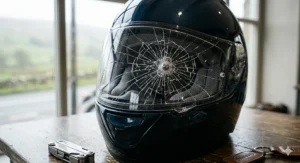
Impact damage: Replace the helmet immediately following any impact, even if external damage isn’t visible. The EPS liner compresses during impacts and doesn’t recover. Snell Foundation guidelines recommend replacement after any crash, regardless of apparent damage severity. British insurance companies typically cover helmet replacement as part of comprehensive policies following accidents.
FAQ: Your Snell M2020 Helmet Questions Answered
❓ Are Snell M2020 helmets legal for use on UK roads?
❓ How much should I expect to pay for a quality Snell M2020 helmet in the UK?
❓ Do Snell M2020 helmets work with glasses and prescription eyewear?
❓ How often should I replace my Snell M2020 helmet in the UK?
❓ Can I use my Snell M2020 helmet for track days at British circuits?
Conclusion: Choosing Your Snell M2020 Helmet
Selecting the right Snell M2020 helmet for British riding conditions involves balancing safety certification, fit quality, weather performance, and realistic budget constraints. Whilst the absolute best technical protection comes from premium options like the AGV Pista GP RR or Bell Race Star Flex DLX, most British riders find exceptional value in mid-range options like the HJC RPHA 1N or Shoei RF-1400.
The critical insight is that Snell M2020 certification represents a baseline — all certified helmets passed identical rigorous testing. The differences emerge in build quality, comfort, weight, and long-term durability rather than fundamental safety. A £350 Snell M2020 helmet protects your brain as effectively as a £1,500 model during impact. The premium prices buy lighter materials, more comfortable interiors, better ventilation, and superior build quality that enhances the ownership experience.
For British riders facing wet weather, unpredictable conditions, and varied riding from urban commuting to motorway touring, prioritise helmets offering comprehensive weather sealing, effective anti-fog systems, and comfortable all-day wear. The Arai Regent-X remains the gold standard for riders who can afford its £550-£700 price tag, whilst the HJC RPHA 1N delivers remarkable value at £350-£500. Budget-conscious riders shouldn’t overlook the LS2 Challenger GT or Scorpion EXO-R1 Air, both offering genuine Snell M2020 protection at accessible pricing.
Ultimately, the best Snell M2020 helmet is the one you’ll actually wear consistently — meaning it fits properly, suits your riding style, and provides comfort during the journeys you actually take rather than the aspirational riding you imagine. British roads demand reliable protection against both accidents and weather. Choose wisely, maintain diligently, and ride safely.
✨ Don’t Miss These Exclusive Deals!
🔍 Take your motorcycle safety to the next level with these carefully selected Snell M2020 helmets. Click on any highlighted product above to check current pricing and availability on Amazon.co.uk. These expert picks will help you find exactly the protection you need for British roads!
Recommended for You
- 7 Best FIM Homologated Helmet for Track Racing UK 2026 Guide
- 7 Best MotoGP Standard Helmets for Sale UK 2026 – FIM Approved
- 7 Best FIM Racing Helmets UK 2026: Pro Safety Tested
Disclaimer: This article contains affiliate links. As an Amazon Associate, I earn from qualifying purchases. If you purchase products through these links, we may earn a small commission at no additional cost to you.
✨ Found this helpful? Share it with your mates! 💬🤗
