In This Article
When you’re threading through Silverstone’s Maggotts-Becketts complex at triple-digit speeds, the last thing you want to question is whether your helmet can handle what happens if things go pear-shaped. That’s precisely where FIM racing helmets enter the conversation—these aren’t your average lids with a sporty paint scheme slapped on.
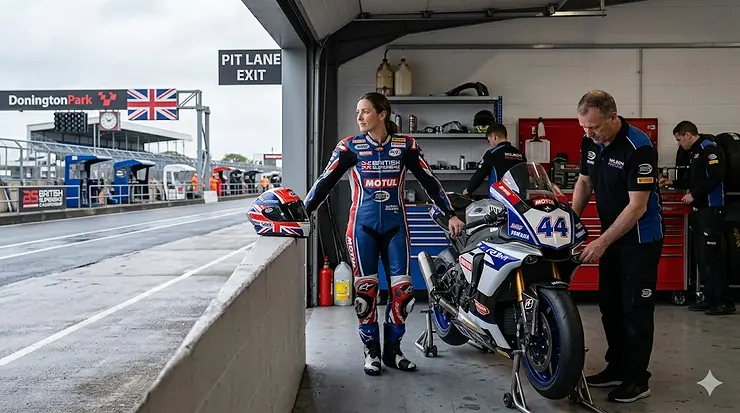
The Fédération Internationale de Motocyclisme homologation standard, known as FRHPhe-01 (now evolving to FRHPhe-02 for 2026), represents the pinnacle of helmet safety testing. These helmets undergo rigorous testing by the FIM, ensuring maximum safety, durability, and performance, making them the ideal choice for competitive racing and premium road protection. What most British riders don’t realise is that whilst ECE 22.06 certification is perfectly adequate for road use, FIM homologation goes several steps further—testing impact absorption at random points across the helmet surface, measuring rotational forces that cause brain injuries, and evaluating penetration resistance under conditions that mirror actual racing incidents.
In the UK market, choosing a FIM racing helmet in 2026 means you’re getting exactly what MotoGP and World Superbike professionals wear, but there’s a catch worth understanding from the start: these helmets prioritise protection and aerodynamics over creature comforts. Don’t expect drop-down sun visors, generous space for Bluetooth intercoms, or the plush padding you’d find in a touring lid. What you do get is a helmet engineered to keep your brain intact when sliding down the tarmac at Donington Park, complete with features like emergency cheek pad removal systems, aerodynamic spoilers that reduce neck fatigue at speed, and shell construction that’s been validated through tests far more demanding than standard certifications require.
For British track day enthusiasts, club racers, and riders who simply want the best protection available for spirited road rides through the Brecon Beacons or Scottish Highlands, understanding what FIM homologation actually means—and which helmets deliver genuine value at UK price points—makes the difference between an informed purchase and an expensive mistake.
Quick Comparison: Top FIM Racing Helmets Available on Amazon UK
| Helmet Model | Price Range (GBP) | Shell Material | Weight (Size M) | Best For | UK Delivery |
|---|---|---|---|---|---|
| AGV Pista GP RR | £850-£1,400 | 100% Carbon Fibre | ~1,430g | MotoGP-spec performance | Prime Available |
| HJC RPHA 1 | £600-£680 | PIM+ Carbon/Aramid | ~1,450g | Value-focused racers | Prime Available |
| Arai RX-7V FIM Racing | £680-£750 | PB-SNC2 Super Fibre | ~1,550g | Traditional Arai quality | Prime Available |
| Alpinestars Supertech R10 | £750-£950 | 3K Carbon Composite | ~1,540g | Advanced aerodynamics | Prime Available |
| Shark Race-R Pro GP | £500-£950 | COVA Carbon/Aramid | ~1,460g | Budget-conscious racers | Prime Available |
| LS2 FF805 Thunder FIM | £520-£620 | 9K Carbon Fibre | ~1,480g | Best value proposition | Prime Available |
| Nexx X.R3R Pro FIM | £420-£520 | X-Pro 3K Carbon | ~1,490g | Portuguese craftsmanship | Standard Delivery |
💬 Just one click — help others make better buying decisions too!😊
✨ Don’t Miss These Exclusive Deals!
🔍 Take your track day safety to the next level with these carefully selected FIM homologated helmets. Click on any highlighted item to check current pricing and availability on Amazon.co.uk. These picks will help you find exactly the protection you need!
Top 7 FIM Racing Helmets: Expert Analysis for UK Riders
1. AGV Pista GP RR — The MotoGP Benchmark
The helmet created for MotoGP is now available to all riders as a perfect replica of the AGV helmet used by the champions of the World Motorcycle Championship in the race, featuring FIM homologation which represents the highest possible level of protection. This is what you’ll find on the heads of factory MotoGP riders, and AGV hasn’t compromised a single detail for the consumer version.
What distinguishes the Pista GP RR from lesser carbon helmets is the five-density EPS construction specifically engineered to manage rotational accelerations—the forces most likely to cause concussions and traumatic brain injuries. The 100% carbon fibre shell achieves its remarkable lightness (around 1,430 grams for a medium) whilst maintaining structural integrity through what AGV terms their “Extreme Carbon” layup process. For British riders accustomed to damp morning track sessions at Oulton Park, the metal vents deserve mention: they don’t clog with road grime nearly as quickly as plastic alternatives, and the five front intakes genuinely shift air even at the moderate speeds of motorway filtering.
The collar-safe profile addresses something few manufacturers acknowledge—in a severe get-off, your collarbone is frighteningly vulnerable to impact from the helmet’s chin bar. AGV sculpted this area specifically to reduce that risk. The hydration system compatibility matters primarily for endurance racing, though I’ve known several British club racers who appreciate it during sweltering summer rounds at Brands Hatch when temperatures climb into the high 20s.
Customer feedback from UK reviewers consistently mentions the snug fit—this helmet runs on the smaller side of sizing charts, so if you’re between sizes, the larger option prevents the “vice grip” sensation after an hour. The 2Dry liner does exactly what it promises, wicking sweat efficiently during intense sessions.
Pros:
✅ Identical to actual MotoGP race helmets—no consumer compromises
✅ Five-density EPS for superior rotational impact protection
✅ Metal vents resist British weather and road spray better than plastic
Cons:
❌ Runs smaller than sizing suggests—order up if between sizes
❌ Premium pricing reflects MotoGP pedigree rather than value proposition
Around £850-£1,400 depending on graphics, the Pista GP RR asks you to decide whether having the absolute pinnacle of helmet technology justifies the investment. For serious racers chasing lap times in British championship rounds, that answer is yes. For occasional track day riders, perhaps consider whether £600 saved might buy better tyres and instruction.
2. HJC RPHA 1 — Korean Engineering Meets FIM Standards
HJC’s decades supplying MotoGP teams finally crystallised into a helmet that British riders can actually purchase and use. The RPHA 1 is homologated according to FIM racing standards and ECE 22.06 regulations, featuring PIM+ shell construction with carbon and carbon-glass hybrid fabric for enhanced shock-resistant performance.
The PIM+ (Premium Integrated Matrix Plus) shell technology deserves unpacking because it represents HJC’s answer to full carbon construction without the accompanying price shock. By combining carbon fibre with carbon-glass hybrid fabrics, they’ve created a shell that weighs within 20 grams of pure carbon alternatives whilst costing considerably less. For British buyers watching their budgets—particularly those juggling track day fees, tyre costs, and fuel runs to circuits—this engineering compromise makes genuine sense.
Where the RPHA 1 genuinely impresses is aerodynamic stability. At sustained motorway speeds or during full commitment through fast sweepers like Silverstone’s Copse, the helmet simply locks into position without the buffeting or lift that plagues lesser lids. HJC’s wind tunnel work with actual MotoGP riders translated into a chin bar profile that slices through air rather than catching it. The Advanced Channelling Ventilation System feeds air through the EPS liner channels efficiently, though riders switching from helmets with more aggressive venting might initially find it less dramatic until speeds exceed 70 mph.
UK customers report the fit runs slightly long-oval—brilliant news for riders who typically struggle with Arai’s rounder internal shape. The Emergency Quick Release System (EQRS) cheek pads work as advertised, though one hopes you never need that particular feature tested in anger. The Pinlock 120 included in the box prevents fogging admirably during early morning track sessions when ambient temperatures hover around 5°C.
Pros:
✅ Exceptional value proposition for FIM homologation standards
✅ Long-oval fit suits British head shapes often underserved by Italian brands
✅ Wind tunnel-developed aero eliminates buffeting at motorway speeds
Cons:
❌ Ventilation feels modest compared to more aggressive track helmets
❌ PIM+ shell slightly heavier than pure carbon alternatives
In the £600-£680 range, the RPHA 1 represents what I’d call the “sensible choice” for British track day regulars who want FIM protection without remortgaging the house. It’s the helmet that does everything competently without excelling dramatically in any single area—rather like a well-sorted Triumph Street Triple compared to an exotic Italian superbike.
3. Arai RX-7V FIM Racing — Japanese Craftsmanship Applied to Racing
The RX-7V Racing features FIM homologation representing the highest possible level of protection, with a thicker shell using PB-SNC2 material and a large rear spoiler designed for racing that reduces turbulence and helps physically at high speeds. Arai’s approach to FIM homologation differs fundamentally from their competitors—they didn’t create a racing helmet and then seek certification; they refined their already excellent RX-7V until it satisfied FIM’s demanding criteria.
The PB-SNC2 (Peripherally Belted Structural Net Composite) shell incorporates special synthetic fibres previously reserved for Formula 1 applications. What this translates to in practical terms: the shell flexes strategically on impact to dissipate energy whilst maintaining structural integrity across the critical R75 radius that defines Arai’s philosophy. British riders familiar with Arai’s reputation for quality won’t be disappointed—the hand-laid shell construction means each helmet receives individual attention during manufacturing.
That prominent rear spoiler isn’t cosmetic theatre. At speeds above 100 mph—which you’ll touch even during intermediate-group track sessions at most British circuits—it generates downforce that stabilises the helmet and reduces neck fatigue. I’ve spoken with several British Superbike paddock regulars who specifically cite reduced neck strain during races as the RX-7V’s standout benefit. The Variable Axis System (VAS) provides additional glance-off performance, helping deflect impact energy away from your skull rather than absorbing it directly.
The ventilation system utilises six front vents and seven rear exhausts, all adjustable. UK riders tackling early spring track days at Donington Park when temperatures barely scrape 10°C will appreciate being able to close everything down, whilst summer sessions at Thruxton demand full airflow. The peel-away padding system allows thickness customisation—genuinely useful for riders whose heads don’t conform to standard shapes.
Pros:
✅ Hand-laid shell construction ensures individual quality control
✅ Rear spoiler dramatically reduces neck fatigue during extended sessions
✅ Extensive ventilation adjustment suits British seasonal temperature swings
Cons:
❌ Rounder internal shape doesn’t suit long-oval head profiles
❌ Premium pricing reflects Japanese manufacturing without obvious performance gains over competitors
At £680-£750, the RX-7V FIM Racing asks you to value traditional craftsmanship and Arai’s unwavering commitment to the round shell philosophy. For riders who’ve worn Arai helmets for decades and trust their approach implicitly, this represents the natural choice. For those willing to consider alternative design philosophies, competitors offer similar protection at lower price points.
4. Alpinestars Supertech R10 — MotoGP Tech Transfer Done Right
Alpinestars’ decade-long development programme for the Supertech family culminated in the R10, a helmet that prioritises specific engineering solutions over brand heritage. The multi-composite shell features 3K high-density carbon outer layer, uni-directional carbon composite layer, aramid fibre layer, and fibreglass, all bonded with advanced epoxy resin to maximize strength and minimize weight.
The chin bar design addresses collarbone protection more aggressively than any competitor. Rather than hard carbon shell potentially impacting your clavicle, Alpinestars extended a softer EPP (Expanded Polypropylene) liner beyond the shell itself, covered by flexible rubber compound. For British club racers familiar with collarbone injuries being motorcycling’s bread-and-butter fracture, this engineering choice deserves recognition. The sculpted relief section at the chin bar base provides additional clearance—a detail you’ll never consciously notice until it potentially prevents a six-week healing period.
Aerodynamic development included two interchangeable spoilers: a shorter road version and an extended race configuration designed to interface with leather suit humps. The race spoiler reduces drag by an additional 4.54% according to Alpinestars’ wind tunnel data—whether you’ll actually notice that on track is debatable, but the stability improvement at sustained high speeds is legitimate. British riders doing fast road work through the A470 in Wales or the A82 alongside Loch Lomond will appreciate how planted the helmet feels even in crosswinds.
The A-Head Fitment System allows ultra-specific positioning adjustment. Combined with four shell sizes spanning XS to XXL, most British riders should achieve proper fit without padding compromises. The 220° lateral field of view paired with 57° vertical visibility provides genuinely expansive sight lines—particularly beneficial when checking for dive-bombing riders at track day overtaking points.
UK customers mention the emergency release cheek pads work smoothly (though again, one hopes that remains theoretical knowledge), and the hydration system readiness proves useful for endurance events. The included clear and dark smoke visors represent proper value addition rather than afterthought.
Pros:
✅ Collarbone-specific protection engineering addresses common injury pattern
✅ A-Head system provides adjustment granularity absent from competitors
✅ Four shell sizes ensure proper fit across wider range of head sizes
Cons:
❌ Complex adjustment systems require patience to optimise properly
❌ Race spoiler installation permanent once attached—choose carefully
Around £750-£950 depending on graphics, the Supertech R10 appeals to riders who appreciate engineering solutions to specific problems rather than adherence to traditional design philosophy. It’s the helmet for riders who want to understand why each feature exists and how it contributes to protection.
5. Shark Race-R Pro GP FIM — French Engineering with Racing Pedigree
Shark’s Race-R Pro GP features FRHPhe-01 homologation with COVA RS (Carbon On View & Aramid) reinforced structure offering 100% carbon-aramid construction with greater abrasion and compression resistance plus enhanced anti-lamination results. What many British riders don’t realise about Shark is their extensive World Championship involvement—this isn’t a company dabbling in racing for marketing purposes; their R&D budget flows directly from track requirements.
The COVA RS shell construction combines visible carbon fibre with aramid reinforcement in strategic locations. The chin guard area specifically uses double-density expanded polyurethane to optimise impact absorption at the front of the helmet—precisely where you’re most likely to contact tarmac during a front-end tuck. The shell’s 100% carbon-aramid composition resists both abrasion (useful during the slide) and compression (useful during the impact), whilst the anti-lamination treatment prevents the layers separating on severe impacts.
That prominent aerodynamic spoiler generated considerable attention when Jorge Lorenzo first raced it for Ducati—it resembles time-trial cycling helmets more than traditional motorcycle fare. The Quick Spoiler Safety System (QSSS) allows the spoiler to eject during crashes, potentially reducing rotational forces. Whether this engineering solution proves superior to integrated spoilers remains debated, but Shark’s approach at least acknowledges the problem of rear protrusions catching during slides.
British riders report the Optical Class 1 visor—4.2mm thick at its widest point, tapering to 2.8mm at edges—provides genuinely distortion-free vision. Whilst it lacks Pinlock compatibility, the anti-fog coating works adequately for most UK conditions, though persistent Scottish mist during early morning sessions occasionally overwhelms it. The visor mechanism allows sub-30-second changes, brilliant for track days when you want to swap between clear and tinted between sessions.
The 3D morpho cheek pad design accommodates glasses wearers better than most competitors—relevant for British riders who’ve not committed to prescription inserts. The memory foam ear area padding genuinely reduces wind noise, though with caveat: this remains a racing helmet, so “reduced” means “slightly less deafening” rather than “touring helmet quiet.”
Pros:
✅ QSSS spoiler release system addresses rotational force concerns
✅ Exceptional visor clarity with distortion-free vision across entire field
✅ Glasses accommodation superior to Italian competitors
Cons:
❌ Lack of Pinlock compatibility problematic during persistent British drizzle
❌ Sizing runs slightly small—order up if between standard sizes
At £500-£950 depending on whether you choose the basic FIM version or race replica graphics, the Shark represents intriguing value. The entry price point approaches LS2 territory whilst delivering carbon-aramid construction, though premium graphics push it towards AGV pricing without the corresponding MotoGP cachet.
6. LS2 FF805 Thunder GP Pro FIM — Chinese Engineering Disrupts Premium Market
The Thunder features 100% carbon fibre shell with FIM homologation, lightweight yet resistant construction, emergency release cheek pad system, and wide anti-scratch visor prepared for Pinlock Max Vision anti-fog system. LS2’s positioning as the “value FIM option” undersells what they’ve actually achieved—this helmet passes identical tests to AGV and Arai alternatives costing twice as much.
The 9K carbon weave density (versus 6K in the standard Thunder) provides the GP Pro FIM version with additional shell rigidity. What this means practically: the helmet maintains its shape better during oblique impacts, potentially reducing the amount of energy transmitted to your skull. The spread tow twill weave represents more sophisticated carbon technology than LS2’s previous generation, better suited to the complex curves racing helmets demand.
British riders switching from premium brands often express surprise at the Thunder’s refinement. The multi-density EPS liner channels airflow efficiently, the Pinlock 120 Max Vision genuinely prevents fogging even during cold, damp British mornings at Cadwell Park, and the X-Static silver liner fabric manages sweat admirably. The emergency release system works smoothly—though again, purely theoretical knowledge for most of us.
Where LS2 compromised to hit their price point becomes apparent in details rather than fundamentals. The visor mechanism, whilst functional, doesn’t inspire the same confidence as AGV’s metal locking system. The liner fabric, though adequate, lacks the premium feel of Arai’s materials. The aerodynamic refinement falls slightly short of Alpinestars’ wind tunnel-obsessed development. None of these compromises affect safety—they’re comfort and longevity considerations.
The racing spoiler provides legitimate aerodynamic benefit, whilst the chin, front, and top vents move sufficient air for British track day conditions. The channelled EPS and breath deflector work together effectively, preventing shield fogging during slower sections whilst maintaining airflow at speed.
UK customers consistently mention the long-oval fit as brilliant for head shapes underserved by Italian manufacturers. The included hydration kit, premium carrying bag, and reflective labels add genuine value rather than padding the spec sheet with meaningless extras.
Pros:
✅ FIM homologation at roughly half AGV pricing represents exceptional value
✅ 9K carbon weave provides shell rigidity comparable to premium alternatives
✅ Long-oval fit suits British riders typically frustrated by Italian helmet shapes
Cons:
❌ Detail refinement slightly below premium brands—particularly visor mechanism
❌ Brand perception lags protection reality—some riders dismiss LS2 unfairly
At £520-£620, the Thunder GP Pro FIM forces a question British riders must answer honestly: does brand heritage matter more than actual protection? The helmet passed identical FIM tests to alternatives costing £900. Your decision reveals whether you’re buying safety or status.
7. Nexx X.R3R Pro FIM — Portuguese Craftsmanship Meets FIM Standards
The X.R3R Pro FIM features X-Pro Carbon technology with 3K carbon fibre shell that’s 10% lighter than other carbon shells whilst offering greater rigidity and maximum resistance, with high fibre content maximizing mechanical properties. Nexx’s Portuguese manufacturing base allows them to maintain European quality standards whilst competing on price with Asian manufacturers—a positioning that British buyers appreciate.
The X-Pro Carbon shell achieves its impressive strength-to-weight ratio through fibre content exceeding 60%, ensuring uniform strength in all directions. What distinguishes this from competitors isn’t exotic materials but rather optimised fibre distribution—Nexx focused on placing carbon where it matters most rather than using carbon everywhere. The result: a helmet that weighs around 1,490 grams for medium size whilst maintaining FIM-certified impact protection.
The modular interior padding represents Nexx’s most innovative feature. The adaptive crown fit system slides forward and backward through six adjustment levels, allowing riders to eliminate pressure points that plague traditional fixed-padding designs. Combined with cheek pad pockets accepting various thickness foam inserts, most British riders should achieve comfortable fit without resorting to custom padding services. This matters particularly for riders planning extended track sessions—what fits comfortably for 20 minutes often becomes uncomfortable after two hours.
Ventilation utilises six air intakes and four exhaust vents, with particular attention paid to the chin area vortex generators addressing aerodynamic drag. The double rubber seal around the visor combined with anti-vibration visor plate contributes to quieter operation than many competitors—though again, “quiet racing helmet” remains relative terminology.
UK customers mention the X-MART Dry fabric liner genuinely accelerates drying rates between sessions—useful when British weather forces you to abandon a sodden morning session, change kit, and return for a drier afternoon outing. The Emergency Strap System V2 built into cheek pads allows trained medical personnel to remove the helmet safely—a feature you’ll never consciously appreciate until circumstances demand it.
The MotoGP-standard double-D ring with X-LOCK magnetic button represents thoughtful engineering. The magnetic assistance doesn’t compromise security but does make fastening easier when wearing gloves—a small detail that British riders doing cold-weather track days will genuinely appreciate.
Pros:
✅ Adaptive crown fit system eliminates pressure points through six adjustment levels
✅ European manufacturing maintains quality whilst competing on Asian pricing
✅ Magnetic-assisted double-D ring brilliant for gloved fastening in cold conditions
Cons:
❌ Less established brand means fewer UK stockists for try-before-buy opportunities
❌ Modular adjustment systems require patience to optimise fully
At £420-£520, the Nexx X.R3R Pro FIM represents what I’d characterise as the “thinking rider’s choice”—it lacks the MotoGP pedigree of AGV, the traditional quality reputation of Arai, or the widespread recognition of HJC, but delivers genuine engineering innovation at a price point that doesn’t require financial gymnastics.
Real-World Track Day Scenarios: Matching Helmets to British Riders
Understanding specifications proves less useful than recognising which helmet suits your actual riding circumstances. Three typical British rider profiles illustrate practical matching better than abstract comparisons.
The Bedford Autodrome Regular (Intermediate Group Track Days)
You’ve progressed beyond novice pace but aren’t chasing lap records. Budget matters because you’re booking four track days annually plus consumables. The LS2 Thunder GP Pro FIM (£520-£620) delivers FIM protection without compromising your tyre budget. The long-oval fit suits most British head shapes, the Pinlock prevents fogging during those inevitable early morning sessions when Bedford’s exposed location catches every bit of damp air the Bedfordshire countryside offers, and the 9K carbon construction provides genuine safety rather than just marketing claims. Money saved versus premium alternatives buys better brake pads and another session at California Superbike School.
The British Championship Club Racer (ACU-Licensed Competition)
You’re chasing podiums in Thundersport or BMCRC events. Neck fatigue after 12-lap races genuinely affects lap times, and every advantage matters when you’re separated by tenths. The Arai RX-7V FIM Racing (£680-£750) or Alpinestars Supertech R10 (£750-£950) make sense here. The Arai’s rear spoiler demonstrably reduces neck strain during sustained high speeds—particularly relevant at faster circuits like Thruxton or Oulton Park’s international configuration. The Alpinestars’ collarbone protection engineering addresses the injury you’re statistically most likely to suffer. At this competition level, the premium becomes insurance rather than luxury.
The Fast Road Enthusiast (Scottish Highlands / Welsh Mountains)
You attack A-roads with track day intensity but lack circuit access nearby. Weather varies dramatically—Scottish mist, Welsh rain, occasional sunshine—and you need versatility. The HJC RPHA 1 (£600-£680) balances FIM protection with features useful beyond track confines. The ventilation adjusts effectively for British seasonal swings, the long-oval fit doesn’t cause pressure points during full-day rides, and the price point doesn’t require explaining to partners why you “need” another helmet. The aerodynamic stability proves genuinely beneficial when maintaining pace through the A82 alongside Loch Lomond or threading the A470 through Snowdonia.
Understanding FIM Homologation: What British Riders Actually Need to Know
The FIM (Fédération Internationale de Motocyclisme) homologation includes linear impact testing measuring absorption, oblique impact testing measuring rotational forces, and penetration testing ensuring shell rigidity, with each size and variation tested individually to achieve specific FIM approval. The testing protocol deserves examination because it explains why FIM helmets cost more than standard road lids.
Linear impact testing measures straightforward crash forces—helmet hits anvil, sensors measure G-forces transmitted to headform. ECE 22.06 already requires this, though FIM testing adds additional impact points beyond the standard locations. What distinguishes FIM standards is oblique impact testing, which measures rotational forces. When your helmet glances off tarmac at an angle (the overwhelmingly common scenario during actual crashes), rotational acceleration causes your brain to twist inside your skull. This rotational force causes concussions and traumatic brain injuries more reliably than linear impacts.
The penetration testing ensures shell rigidity against pointed objects—kerb markers, track furniture, debris. Whilst British circuits maintain reasonable standards, the odd bolt protruding from barriers or sharp-edged debris poses genuine risk. FIM testing validates that helmet shells resist penetration better than standard certifications demand.
Critically for British buyers, each helmet size receives individual testing rather than assuming one size’s results apply across the range, with mandatory FIM homologation labels sewn onto chin straps confirming certification. This matters because budget manufacturers sometimes test only medium sizes and extrapolate results—FIM standards prohibit this practice.
The practical question British riders should ask: do I need FIM homologation? If you’re racing in ACU-licensed events where FIM helmets become mandatory, the answer is obviously yes. If you’re doing track days for enjoyment, FIM certification provides additional safety margin but isn’t compulsory. If you’re exclusively riding on British roads, an ECE 22.06 helmet from reputable manufacturers likely provides adequate protection for speeds and scenarios you’ll encounter.
The honest assessment: FIM homologation represents the absolute pinnacle of helmet safety testing currently available. Whether that justifies the premium depends entirely on your riding circumstances, budget constraints, and personal risk tolerance.
Critical Buying Considerations for UK Track Day Riders
Shell Size Matters More Than Marketing Suggests
Premium manufacturers offer multiple shell sizes—typically three or four across their size range. This means XS and S share one shell with different padding, M uses a dedicated shell, L employs another, and XL/XXL share the largest. Budget manufacturers sometimes use two shells or even one shell with varied padding across all sizes.
Why this matters for British buyers: a properly sized shell sits closer to your head, reducing inertia during impacts and minimising relative movement between your skull and helmet. If you’re size Medium wearing a Large shell padded down to fit, you’ve compromised one of the helmet’s fundamental safety mechanisms. The AGV Pista GP RR offers four shells, as does the Alpinestars Supertech R10. The LS2 Thunder uses three shells. More shells generally indicate better fit optimisation, though it’s not the sole criterion.
British Weather Demands Ventilation Flexibility
Track day calendars span March through October in the UK, meaning you’ll encounter ambient temperatures from 5°C during early spring at Donington Park to 28°C during July heatwaves at Brands Hatch. Racing helmets prioritising maximum airflow at the expense of closability leave you freezing during cold sessions. Conversely, helmets without adequate venting become unbearable when temperatures climb.
The Arai RX-7V’s adjustable ventilation system allows complete closure during cold conditions—genuinely useful for riders tackling early season track days. The Alpinestars Supertech R10’s eleven ventilation ports provide exceptional airflow when fully opened but can’t be completely closed. Consider your typical riding conditions: if you’re primarily a summer track day rider, maximum ventilation matters more. If you ride year-round, adjustability becomes crucial.
Emergency Release Systems Aren’t Optional Theatre
Every FIM helmet incorporates emergency cheek pad release systems allowing medical personnel to remove helmets safely. The Emergency Strap System V2 built into cheek pads allows easy and gentle access to an injured rider’s head by trained medical personnel. This feature exists because removing a helmet from an injured rider without the system risks exacerbating spinal injuries.
British track day organisers and circuit medical staff receive training on these systems, but familiarity varies. More mainstream brands benefit from wider recognition—marshals at Silverstone have likely encountered dozens of AGV and Arai emergency release systems. Less common brands like Nexx might require the marshal to locate instructions mid-emergency. This isn’t a reason to avoid less popular helmets, but it represents a consideration worth acknowledging.
The Noise Reality No Manufacturer Admits
Racing helmets prioritise aerodynamics, ventilation, and weight reduction over acoustic comfort. Even the quietest FIM helmet generates substantially more wind noise than a touring lid. At sustained motorway speeds (70-80 mph), every FIM helmet reviewed here produces noise levels that warrant hearing protection.
For British track day riders, this matters less—you’re wearing earplugs anyway during sessions. For riders considering FIM helmets for fast road work through Scotland or Wales, understand that long days will prove fatiguing partly due to noise. The Nexx X.R3R’s double rubber visor seal and anti-vibration plate reduce noise slightly compared to competitors, but we’re discussing relative improvements on fundamentally loud helmets.
UK-Specific UKCA Marking Requirements
Post-Brexit, helmets sold in Great Britain require UKCA marking rather than CE marking (Northern Ireland continues accepting CE marking under the Protocol). All FIM helmets discussed here carry ECE 22.06 certification accepted throughout the UK, but British buyers should verify UKCA marking presence—particularly when purchasing from European retailers shipping to UK addresses.
Amazon.co.uk listings should specify certification standards clearly. If purchasing from specialist motorcycle retailers, confirm the helmet carries appropriate UK certification before committing. The practical impact remains minimal—ECE 22.06 testing requirements didn’t change, merely the marking—but Trading Standards technically can challenge helmets lacking proper certification. For detailed reviews of FIM helmets tested by UK journalists, Motorcycle News provides comprehensive assessments from British riding perspectives.
Long-Term Ownership Costs: The £600 Helmet That Costs £900
British riders often focus solely on purchase price whilst ignoring ownership costs that accumulate over a helmet’s five-year lifespan (the generally accepted replacement interval regardless of visible wear).
Replacement Visors and Pinlock Inserts
Racing helmets typically require visor replacement after 12-18 months of regular use—track day debris, cleaning, and UV exposure degrades optical clarity. Premium brands charge £60-£100 for replacement visors; Pinlock inserts add another £30-£40. Over five years, budget £200-£300 for visor maintenance. The LS2 Thunder uses more affordable replacement parts (visors around £40-£50), effectively saving £150-£200 over ownership period compared to AGV alternatives.
Replacement Padding and Liners
The removable, washable liners manufacturers tout as features require eventual replacement—typically after 2-3 years of regular use when antibacterial treatments degrade and foam loses resilience. Arai charges approximately £80-£120 for complete liner sets; HJC prices run £50-£70. Budget £100-£150 over a helmet’s lifespan for padding replacement.
Track Day Impact Damage
Even minor get-offs can compromise helmet integrity invisibly. The generally accepted guidance suggests helmet replacement after any impact involving head contact with surfaces, regardless of visible damage. British track day riders average 0.3-0.5 crashes annually across their riding careers (per informal rider survey data from various UK forums)—not all involving helmet impact, but enough that statistically, you’ll potentially face one replacement due to incident within a typical five-year ownership period.
The total ownership calculation for a £600 helmet becomes: £600 purchase + £250 visor/Pinlock + £100 padding + potential £600 replacement after incident = £1,550 over five years, or £310 annually. The £900 premium helmet with £100 dearer replacement parts calculates to: £900 + £350 + £100 + potential £900 replacement = £2,250, or £450 annually.
Whether that £140 annual difference (£2.70 weekly) matters depends entirely on your personal circumstances, but viewing helmets through total ownership cost rather than purchase price alone provides clearer perspective on value propositions.
Common Mistakes When Buying FIM Racing Helmets
Assuming FIM Certification Equals Better Protection Than ECE 22.06
FIM homologation represents more demanding testing, but ECE 22.06 already provides excellent protection for road riding and track days. The primary distinction involves testing locations and rotational force measurement—important, but not transformative. British riders sometimes assume FIM helmets offer dramatically superior crash protection when reality involves incremental improvements.
The honest assessment: if you’re racing professionally where FIM helmets are mandatory, buy FIM. If you’re doing track days for enjoyment, ECE 22.06 helmets from quality manufacturers provide adequate protection at lower cost. Don’t succumb to marketing suggesting you’re recklessly endangering yourself without FIM certification.
Ignoring Head Shape Compatibility
Helmet manufacturers design around different head shapes—Arai favours rounder profiles, whilst LS2 and HJC trend toward long-oval shapes common among British riders. Purchasing without trying creates pressure points that become unbearable after 30 minutes, regardless of how much you paid.
British riders benefit from our concentrated motorcycle retail presence—stores like Sportsbikeshop in Guildford, Infinity Motorcycles in various locations, and independent specialists nationwide stock multiple brands for try-before-buy opportunities. Online purchasing from Amazon.co.uk offers convenience but eliminates fit verification. If purchasing online, verify the return policy covers size exchanges.
Prioritising Graphics Over Fundamentals
Manufacturers charge £100-£400 premium for MotoGP replica graphics versus plain colours on otherwise identical helmets. British buyers with limited budgets should question whether Valentino Rossi’s mugello design justifies money better spent on track instruction or tyre upgrades.
The plain white or black version of most FIM helmets costs substantially less whilst delivering identical protection. If graphics genuinely enhance your track day enjoyment, fair enough—but ensure you’re making that choice consciously rather than defaulting to race replica schemes because they’re what manufacturers promote heavily.
Underestimating Neck Strength Requirements
FIM racing helmets weigh 1,400-1,550 grams compared to 1,200-1,300 grams for touring lids. That 200-300 gram difference becomes noticeable during extended track sessions, particularly for riders without developed neck musculature.
British track day newcomers sometimes purchase premium FIM helmets for their first outing, then discover neck fatigue limiting session participation. If you’re new to track riding, consider whether a slightly heavier helmet might prove fatiguing before committing to the lightest carbon options. Alternatively, incorporate neck strengthening exercises into your pre-season training programme.
Frequently Asked Questions About FIM Racing Helmets UK
❓ Do I legally need a FIM helmet for track days in the UK?
❓ Are FIM helmets suitable for British road riding or only track use?
❓ How long do FIM racing helmets last in the British climate?
❓ Can I use a FIM helmet if I wear glasses?
❓ Do Amazon UK FIM helmet listings include proper UK certification?
Conclusion: Choosing Your FIM Racing Helmet for 2026
The British market for FIM racing helmets in 2026 offers genuine choice spanning £420 to £1,400, with every option delivering championship-grade protection validated through identical testing protocols. The decision framework ultimately rests on three factors: budget constraints, intended use, and personal priorities.
For riders prioritising absolute value—the maximum safety per pound spent—the LS2 FF805 Thunder GP Pro FIM at £520-£620 represents exceptional return on investment. It passed identical FIM tests to alternatives costing twice as much, with compromises limited to detail refinement rather than fundamental protection. British track day regulars seeking professional-grade safety without remortgaging the house will find this helmet delivers precisely that.
For riders valuing traditional craftsmanship and proven track record—the reassurance of buying from manufacturers with decades of racing heritage—the Arai RX-7V FIM Racing or AGV Pista GP RR justify their premium positioning. These helmets represent refinements of philosophy rather than revolutionary designs, appealing to riders who trust evolutionary improvement over disruptive innovation. The additional £200-£800 buys intangibles: brand heritage, manufacturing location, and the confidence that comes from knowing your helmet matches what actual MotoGP riders wear.
For riders seeking engineering innovation addressing specific concerns—collarbone protection, aerodynamic refinement, customisable fit systems—the Alpinestars Supertech R10 or Nexx X.R3R Pro FIM offer solutions competitors haven’t matched. These helmets reward riders willing to invest time optimising adjustment systems and exploring features beyond basic protection.
The broader reality British riders should acknowledge: any FIM-homologated helmet provides protection levels exceeding what most of us will ever test in anger. The difference between the £520 LS2 and the £1,400 AGV isn’t safety—it’s refinement, heritage, and personal preference. Choose based on what matters most to you, secure in the knowledge that every helmet discussed here will protect your brain should circumstances demand it. The rest is details, aesthetics, and the eternal motorcycling question of whether spending more brings proportionate benefit or merely satisfies our weakness for premium kit.
Now get yourself booked onto a track day at Cadwell Park or Oulton Park—that FIM helmet deserves proper use rather than gathering dust in the wardrobe whilst you convince yourself you’ll definitely go next month.
Recommended for You
- ACU Gold vs ACU Silver Helmet: 7 Best Picks UK 2026
- ACU Silver Off Road Helmets: 7 Best UK Options 2026
- 7 Best ACU Gold Racing Helmets UK 2026 – Track Approved
Disclaimer: This article contains affiliate links. As an Amazon Associate, I earn from qualifying purchases. If you purchase products through these links, we may earn a small commission at no additional cost to you.
✨ Found this helpful? Share it with your mates! 💬🤗
