
In This Article
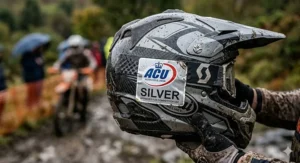
Choosing a proper off road helmet for motocross, enduro, or grass track riding isn’t just about slapping something on your head and hoping for the best. The ACU Silver off road helmets standard, whilst no longer formally issued, represented the minimum requirement for motocross, grass track, enduro, speedway, and all speed events held entirely off road in the UK. Today’s ECE 22.05 and ECE 22.06 certified helmets have evolved beyond those original specifications, offering British riders enhanced protection for our uniquely wet, muddy conditions.
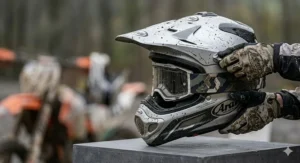
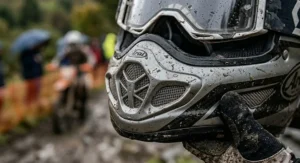
What many UK buyers overlook is how different our riding environment is from the sun-baked tracks of California or the dusty trails of Australia. Between October and April, you’re more likely to be riding through British drizzle than sunshine — which means your helmet needs proper ventilation that won’t fog up in damp conditions, plus a liner that stays breathable when it’s soaking wet. The helmets I’ll recommend in this guide aren’t just technically compliant; they’re specifically suited to riders tackling Yorkshire moors in February or Welsh valleys in November.
The modern off road helmet market has moved beyond simple ACU approval stickers. Current standards like ECE 22.06 demand more rigorous testing, and manufacturers have responded with helmets featuring MIPS technology, multi-density EPS liners, and emergency release systems. Whether you’re a weekend trail rider in the Cotswolds or a competitive racer at Blaxhall, understanding which helmet genuinely suits British conditions — rather than just meeting minimum standards — makes all the difference between genuine protection and marketing waffle.
Quick Comparison: Top 7 ACU-Approved Off Road Helmets for UK Riders
| Helmet Model | Weight | Price Range | Safety Rating | Best For |
|---|---|---|---|---|
| LS2 MX700 Subverter | 1,250g | £180-£230 | ECE 22.05 | All-round versatility |
| Zorax ZOR-X303 | 1,300g | £60-£90 | ECE 22.06 | Budget beginners |
| LS2 Pioneer Evo | 1,450g | £220-£280 | ECE 22.05 | Adventure riding |
| Arai MX-V Evo | 1,350g | £450-£550 | ECE 22.06 | Premium protection |
| Airoh Aviator 3 | 1,095g | £380-£480 | ECE 22.06 | Lightweight racing |
| Bell Moto-10 Spherical | 1,470g | £420-£520 | ECE 22.05 + MIPS | Impact resistance |
| HJC i50 Tona | 1,380g | £140-£190 | ECE 22.06 | Value performance |
💬 Just one click — help others make better buying decisions too!😊
Top 7 ACU Silver Off Road Helmets: Expert Analysis for UK Conditions
1. LS2 MX700 Subverter Evo — The All-Rounder’s Choice
The LS2 MX700 Subverter Evo stands as one of the most sensible purchases for British off road riders who demand quality without premium pricing. Built with LS2’s KPA shell — a clever blend of polycarbonate, thermoplastic, and reinforcing fibres — this helmet strikes that rare balance between protective strength and manageable weight at just 1,250 grams.
What sets the Subverter apart for UK use is its ventilation system, which actually functions in our climate. Multiple top vents and channelled EPS work together to prevent the suffocating heat buildup you’d experience in Mediterranean temperatures, whilst the chin vent channels airflow without creating an ice tunnel during January rides in the Pennines. The removable, washable liner proves essential after muddy sessions at your local track — and trust me, you’ll be washing it frequently if you ride through a proper British winter.
The helmet features three shell sizes to ensure a proper fit across different head shapes, with the long oval design suiting many British riders better than the round shells common on budget imports. Emergency release cheek pads allow medical staff to remove the helmet safely without causing additional neck trauma — a feature that sounds theoretical until you witness a crash at your local club.
Customer Feedback Summary: UK riders consistently praise the Subverter’s value proposition, noting it punches well above its price point. Several Amazon.co.uk reviewers mention the helmet’s comfort during extended trail rides, though some find the stock visor position sits slightly high for their preference.
Pros:
✅ Excellent value around £200
✅ Proper multi-density EPS protectio
✅ Washing-machine-friendly liner for muddy British conditions
Cons:
❌ Stock visor may require adjustment for some riders
❌ Paint finish shows scratches more readily than matte options
Around the £180-£230 range on Amazon.co.uk, the LS2 MX700 represents genuine value — you’re getting legitimate protection technology without subsidising flashy brand marketing or MotoGP sponsorships.
2. Zorax ZOR-X303 — Budget Protection That Actually Works
The Zorax ZOR-X303 occupies an interesting space in Britain’s off road helmet market — proper ECE 22.06 certification at prices that seem almost suspiciously low. At around £60-£90, you’d reasonably expect corners cut somewhere, yet this helmet delivers legitimate protection for riders just starting out or those needing a spare lid for occasional track days.
Constructed from an ABS composite shell rather than more exotic materials, the Zorax weighs in at approximately 1,300 grams — not featherlight, but perfectly acceptable for weekend riders who aren’t racing at professional level. The ECE 22.06 certification means it meets current European safety standards, making it suitable for UK off road events that don’t specifically mandate ACU Gold approval. What you’re sacrificing at this price point is refinement rather than fundamental safety: the ventilation works adequately rather than brilliantly, and the liner foam feels basic compared to the laser-cut, hypoallergenic materials in premium helmets.
For British conditions specifically, the Zorax performs better than its price suggests. The wide visor offers decent peripheral vision — crucial when you’re navigating tight woodland trails in the New Forest or dodging tree roots in Scottish forests. The double-ring chin strap, whilst not as convenient as micrometric buckles, provides secure fastening that won’t slip during rough riding.
Customer Feedback Summary: Amazon.co.uk buyers appreciate the helmet’s honest value proposition. Common feedback mentions it’s ideal for beginners, though several reviewers note the liner packing down after 6-8 months of regular use.
Pros:
✅ Genuine ECE 22.06 at budget pricing
✅ Includes goggles, gloves, and balaclava in many packages
✅ Multiple colour options for personalisation
Cons:
❌ Liner durability doesn’t match premium brands
❌ Ventilation adequate rather than exceptional
The Zorax makes particular sense for parents buying helmets for rapidly growing teenagers, or experienced riders wanting an affordable spare. In the £60-£90 bracket, it’s honest protection without pretensions.
3. LS2 Pioneer Evo MX436 — The Adventure Crossover Specialist
The LS2 Pioneer Evo MX436 addresses a specific need for British riders: those who want genuine off road capability but also ride significant stretches on tarmac to reach the trails. This dual-sport helmet combines off road protection with features that make A-road journeys less punishing than traditional motocross lids.
What immediately distinguishes the Pioneer Evo is its twin visor system — a peak for off road riding and a drop-down sun visor for road sections. Whilst this might sound gimmicky, it proves remarkably practical when you’re riding from Manchester suburbia out to the Peak District trails. The internal sun visor flips down for road riding, then tucks away when you reach the dirt. Both visors feature UV and scratch-resistant coatings, with Pinlock Max Vision compatibility preventing the fog that plagues cheaper helmets in damp British air.
The shell construction uses KPA compound across three shell sizes, keeping weight around 1,450 grams — slightly heavier than pure motocross helmets, but justified by the additional road-focused features. Ventilation channels deliver controlled airflow that doesn’t create excessive wind noise during road sections, yet opens up sufficiently for demanding trail riding. The liner utilises laser-cut foam that moulds to your head shape over several rides, with hypoallergenic properties that prevent the skin irritation some riders experience with cheaper foam materials.
Customer Feedback Summary: UK riders value the versatility, particularly those in rural areas where reaching off road venues requires motorway journeys. Some Amazon.co.uk reviewers note the helmet’s weight during extended off road sessions, though most consider it a fair trade-off for road capability.
Pros:
✅ Twin visor system eliminates need for separate helmets
✅ Pinlock-ready for British weather conditions
✅ ECE 22.05 certified for road and off road use
Cons:
❌ Slightly heavier than dedicated MX helmets
❌ Peak less aggressive than pure motocross designs
Priced around £220-£280 on Amazon.co.uk, the Pioneer Evo suits riders who split their time between trail riding and road touring. It’s particularly clever for Scottish Highland riders who face long A-road stretches between off road sections.
4. Arai MX-V Evo — When Budget Isn’t Your Primary Concern
The Arai MX-V Evo represents the Japanese manufacturer’s philosophy applied to off road riding: protection engineered to a level most riders won’t consciously notice until the moment they desperately need it. At £450-£550, this helmet costs as much as some complete motorcycles, yet Arai’s approach to impact protection justifies the investment for serious riders.
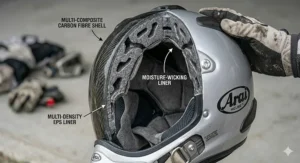
Arai’s PB-CLC2 shell uses proprietary Z-compound resins that distribute impact forces differently from conventional shells. Rather than focusing solely on hardness, the compound allows controlled deformation that spreads energy across a wider surface area — reducing the concentrated forces transmitted to your skull. The shell undergoes individual quality inspection, with Arai rejecting any shell showing irregularities that automated testing might miss. This obsessive approach explains both the price and why professional riders consistently choose Arai for high-stakes racing.
For British conditions specifically, the MX-V Evo’s ventilation system has been refined through years of feedback from riders competing in British weather. The intake and exhaust vents work in our uniquely damp climate without creating the arctic blast effect some American-designed helmets generate during winter rides. The multi-density EPS liner provides graduated protection, whilst the removable, washable interior withstands repeated cleaning after muddy British trail sessions.
Customer Feedback Summary: UK riders who invest in the Arai typically keep it for years, noting exceptional comfort during long ride days. Several mention the helmet’s resale value remains strong, partially offsetting the initial investment.
Pros:
✅ Industry-leading impact protection technology
✅ Hand-finished quality control
✅ Five-year warranty demonstrating manufacturer confidence
Cons:
❌ Premium pricing excludes budget-conscious buyers
❌ Weight-obsessed racers might prefer carbon alternatives
Around £450-£550 on Amazon.co.uk, the Arai MX-V Evo makes sense for riders who compete seriously or simply want the best protection their budget allows. It’s the helmet your insurance company would choose if they were paying.
5. Airoh Aviator 3 — The Lightweight Racing Champion
The Airoh Aviator 3 tackles off road helmet design from the opposite direction to Arai: minimise weight through advanced materials whilst meeting all safety requirements. At approximately 1,095 grams, it’s among the lightest ECE 22.06 certified off road helmets available to UK riders — a distinction that matters enormously during extended race sessions or full-day trail rides.
Airoh achieves this featherlight construction through their proprietary carbon-Kevlar shell, which provides exceptional impact resistance relative to its mass. The Italian manufacturer wind-tunnel tests each design, optimising the shell shape to reduce aerodynamic drag and neck strain at racing speeds. For British riders tackling technical enduro routes in Wales or Scotland, reduced helmet weight translates directly to less fatigue during challenging sections where precision matters.
The ventilation system features 13 intake and exhaust ports, channelling airflow through the EPS liner via carefully positioned channels. In practice, this means the helmet breathes exceptionally well during demanding riding, yet doesn’t create excessive cold spots during winter sessions. The emergency release system allows medical personnel to remove cheek pads quickly, facilitating safer helmet removal after accidents — a feature standardised across Airoh’s range following feedback from racing organisations.
Customer Feedback Summary: Competitive riders praise the Aviator 3’s lack of fatigue during races, with several UK reviewers noting they can maintain focus longer without neck strain. Some mention the premium price requires careful consideration.
Pros:
✅ Exceptional 1,095g weight reduces rider fatigue
✅ Carbon-Kevlar construction for impact resistance
✅ Wind-tunnel optimised aerodynamics
Cons:
❌ Premium materials command premium pricing
❌ Requires careful handling to avoid carbon shell damage
At £380-£480 on Amazon.co.uk, the Airoh Aviator 3 targets serious racers and experienced riders who understand how weight affects performance. It’s engineering excellence with a price tag to match.
6. Bell Moto-10 Spherical — MIPS Technology for Maximum Protection
The Bell Moto-10 Spherical introduces rotational impact protection through MIPS (Multi-directional Impact Protection System) — addressing injury mechanisms that traditional helmet testing largely ignores. Whilst conventional testing focuses on linear impacts, research increasingly shows rotational forces cause significant brain injuries during crashes. Bell’s implementation separates the helmet into two layers that can move independently during angled impacts, reducing rotational acceleration transmitted to your brain.
The carbon shell construction keeps weight at approximately 1,470 grams despite the additional MIPS layer — slightly heavier than pure motocross helmets, but justified by the enhanced protection. British riders specifically benefit from this technology during our typical crash scenarios: slipping in mud, tree strikes during woodland trails, or tumbling down embankments — situations involving significant rotational forces rather than straight-line impacts.
Bell’s “Spherical” implementation differs from strap-based MIPS systems by eliminating the plastic liner entirely, creating a cleaner interface between the two helmet layers. The result is a system that engages more smoothly during impacts whilst allowing better ventilation through the gap between layers. The Magnefusion magnetic closure system on the cheek pads facilitates emergency removal, addressing concerns about helmet-induced injuries during accident response.
Customer Feedback Summary: UK riders appreciate the reassurance of MIPS technology, particularly those who’ve experienced crashes. Several Amazon.co.uk reviews mention the helmet’s solid build quality justifies the investment.
Pros:
✅ MIPS Spherical addresses rotational impacts
✅ Carbon shell provides structural integrity
✅ Magnetic emergency release system
Cons:
❌ Weight slightly higher than non-MIPS alternatives
❌ Premium technology commands premium pricing
Priced around £420-£520 on Amazon.co.uk, the Bell Moto-10 Spherical suits riders who prioritise cutting-edge protection technology and have budget flexibility to invest in their safety.
7. HJC i50 Tona — The Value Performance Contender
The HJC i50 Tona demonstrates that ECE 22.06 certification needn’t require premium pricing. At £140-£190, HJC delivers legitimate modern safety standards with features that make daily riding comfortable rather than merely tolerable. The Korean manufacturer has refined their production efficiency over decades, passing those cost savings to riders without compromising fundamental protection.
The polycarbonate shell construction provides adequate impact resistance across HJC’s size range, with three shell sizes ensuring proper fit proportions. What distinguishes the i50 from cheaper alternatives is attention to details that affect real-world comfort: the removable, washable liner uses moisture-wicking fabrics that actually work during sweaty summer trail rides, whilst the ventilation system channels airflow effectively without creating pressure points around the brow.
For British conditions, the i50’s moisture management proves particularly valuable. Our climate means you’re often riding in damp, cool air — conditions where cheaper helmets trap moisture against your skin, creating that clammy discomfort that ruins otherwise enjoyable rides. HJC’s liner materials breathe adequately to prevent this, whilst remaining affordable enough to replace annually without financial distress.
Customer Feedback Summary: Amazon.co.uk buyers consistently rate the i50 as exceeding expectations for its price point. Common feedback mentions it’s ideal as a first proper helmet beyond absolute budget options, offering noticeable quality improvements.
Pros:
✅ ECE 22.06 certification at mid-budget pricing
✅ Moisture-wicking liner suits British humidity
✅ Three shell sizes for better fit proportions
Cons:
❌ Weight and refinement trail premium alternatives
❌ Ventilation adequate rather than exceptional
Around £140-£190 on Amazon.co.uk, the HJC i50 Tona makes particular sense for intermediate riders upgrading from basic helmets, or experienced riders wanting a solid spare without premium investment.
Real-World Application: Matching Helmets to British Riding Scenarios
Every off road rider in Britain faces different demands depending on terrain, competition level, and riding frequency. A weekend trail rider exploring Forestry Commission land near Brighton requires different helmet characteristics than a competitive enduro racer tackling Scottish Highlands events.
The Competitive Racer (Motocross, Enduro, Trials): If you’re racing regularly, helmet weight becomes critical during those final laps when neck fatigue affects your line choices. The Airoh Aviator 3 or Arai MX-V Evo justify their premium pricing through reduced fatigue and enhanced protection during high-consequence crashes. Racing organisations may scrutinise helmet certifications closely, making current ECE 22.06 approval essential rather than optional.
The Weekend Trail Rider (Recreational Off Road): Most British riders fall into this category — enthusiasts who ride local trails fortnightly or monthly without competitive pressure. The LS2 MX700 Subverter or HJC i50 Tona deliver excellent value here. You’ll appreciate the washable liners after muddy sessions, and the mid-range pricing means damage from inevitable tree branch encounters won’t require mortgage extension.
The Adventure Rider (Mixed On/Off Road): Scotland, Wales, and northern England offer fantastic green lanes requiring significant road riding to access. The LS2 Pioneer Evo specifically addresses this scenario with its dual-visor system and Pinlock compatibility. You’ll ride motorways comfortably, then switch seamlessly to trail mode without stopping to change helmets.
The Budget-Conscious Beginner: Starting off road riding requires substantial equipment investment beyond just the helmet. The Zorax ZOR-X303 allows beginners to meet safety requirements whilst preserving budget for boots, body armour, and inevitable crash repairs. It’s honest protection without premium refinement — ideal whilst you’re still determining whether off road riding suits you long-term.
How to Choose Your Off Road Helmet: The British Rider’s Decision Framework
Selecting the right off road helmet requires balancing protection, comfort, and budget against your specific riding conditions. Here’s how to narrow your choices systematically:
Step 1: Establish Your Budget Ceiling in GBP Off road helmets range from £60 to £550 on Amazon.co.uk. Be realistic about what you can justify spending — remembering that your helmet is your primary crash protection but also needs replacing every 3-5 years regardless of visible damage. Budget £60-£100 for entry-level, £140-£280 for mid-range, £380-£550 for premium.
Step 2: Determine Your Primary Riding Environment British conditions vary enormously. Scottish Highland riding demands different features than Hampshire forest trails. Cold, wet conditions benefit from Pinlock-ready visors and moisture-wicking liners. Dusty summer conditions (rare but possible) need superior ventilation. Mixed on/off road riding suggests dual-sport designs like the LS2 Pioneer Evo.
Step 3: Assess Your Competitive Ambitions Recreational riders can prioritise comfort and value, whilst competitive racers need lightweight construction and cutting-edge protection. ACU-sanctioned events may require specific certifications — verify current requirements with your racing organisation before purchasing.
Step 4: Consider Your Riding Frequency Weekend warriors benefit from durable, easy-maintenance helmets with washable liners. Daily riders or competitive racers should invest in premium materials that withstand frequent use without degradation. If you’re riding 2-3 times weekly, mid-range options like the LS2 MX700 Subverter offer the best durability-to-cost ratio.
Step 5: Factor in British Weather Reality Our climate demands specific features: fog-resistant visor systems (Pinlock compatibility), breathable yet warm liners for winter riding, and ventilation that works in cool, damp air without creating ice tunnels. Helmets designed primarily for Mediterranean or American conditions often underperform in British drizzle.
Step 6: Verify Current Safety Certifications ECE 22.06 represents current European testing standards, superseding the older ECE 22.05. Whilst 22.05 helmets remain legal and protective, 22.06 helmets undergo more rigorous testing. ACU events may specify minimum standards — confirm requirements before assuming any ECE-certified helmet qualifies.
Step 7: Plan for Replacement Timing Even undamaged helmets degrade over time through UV exposure, temperature cycling, and material fatigue. Budget for replacement every 3-5 years, sooner if you crash. Factor this lifecycle cost into your purchase decision — a £500 helmet costing £125 annually over four years versus a £150 helmet replaced every two years (£75 annually) requires honest assessment of your riding intensity and crash likelihood.
Common Mistakes When Buying Off Road Helmets in the UK
British riders consistently make several preventable errors when selecting off road helmets. Avoiding these pitfalls saves both money and potentially serious injuries.
Assuming US-Market Helmets Work in British Conditions: Many riders import helmets from American retailers, attracted by lower prices or unavailable colourways. Unfortunately, helmets designed for California desert racing often feature ventilation systems that create arctic blasts during British winter riding, whilst their liners may not manage moisture effectively in our damp climate. Worse, some US-market helmets carry only DOT certification rather than ECE approval, which isn’t recognised for UK racing events. Always verify ECE certification before purchasing.
Prioritising Graphics Over Protection: Marketing departments excel at creating visually striking helmet designs that photograph brilliantly on social media. However, fancy graphics add nothing to impact protection whilst often commanding £50-£100 premiums over plain colourways of identical helmets. That money would be better invested in superior liner technology, lighter shell materials, or simply saved for your next helmet replacement.
Ignoring UKCA Marking Requirements Post-Brexit: The UK now requires UKCA (UK Conformity Assessed) marking for helmets sold in Great Britain, though ECE certification remains accepted during transition periods. Helmets must meet specific approval requirements for use in ACU-sanctioned events, so verify your chosen helmet displays appropriate certification for British use. Northern Ireland buyers should note different rules apply under the Protocol.
Buying Based Solely on Amazon.co.uk Reviews: Online reviews provide valuable insights, but they’re heavily weighted towards first impressions rather than long-term durability. A helmet might feel comfortable during initial wear yet develop pressure points after 30 minutes, or its liner might pack down after three months. Supplement Amazon reviews with dedicated motorcycling forums like ADVrider UK or UKGSer, where experienced riders share long-term ownership reports. For independent product testing, Which? offers comprehensive reviews of motorcycle equipment, though their off road helmet coverage is limited compared to road helmets.
Neglecting Proper Size Measurement: Many riders guess their helmet size based on previous purchases or hat sizes, resulting in poor fits that compromise both safety and comfort. Measure your head circumference properly: wrap a soft measuring tape around your head approximately 2cm above your eyebrows, ensuring it passes over the widest part of your skull. Compare measurements against each manufacturer’s specific sizing chart — sizes vary between brands, so “Large” from one manufacturer may differ from another’s.
Overlooking Goggle Compatibility: Off road helmets and goggles function as a system, not independent components. Before purchasing a helmet, verify it accommodates your preferred goggle brand and model. Some helmets feature outriggers designed for specific goggle strap widths, whilst others have varying face port dimensions that affect goggle seal. Nothing ruins a trail ride faster than discovering your £200 helmet creates gaps around your £150 goggles, allowing mud and debris to enter.
Assuming “Lightweight” Always Equals Better: Whilst reducing helmet weight generally improves comfort, extremely lightweight helmets sometimes sacrifice shell coverage or padding thickness to achieve impressive weight specifications. A 900-gram carbon helmet sounds appealing until you realise its thin shell cracks during minor branch strikes that a heavier polycarbonate helmet would shrug off. For British woodland trail riding where tree contact occurs frequently, moderate-weight helmets with robust shells often prove more practical than ultra-light racing helmets designed for open track use.
Understanding Off Road Helmet Safety Standards in 2026
The landscape of helmet certification has evolved significantly, particularly with Britain’s post-Brexit regulatory environment. Understanding what various safety marks actually mean helps riders make informed decisions beyond marketing claims.
ECE 22.06: Current European Standard (2026) The ECE (Economic Commission for Europe) certification represents the testing standard recognised across Europe and the UK. Version 22.06, introduced in 2020 and now widely adopted in 2026, demands more rigorous testing than its 22.05 predecessor. Tests include impact attenuation across multiple points (not just the crown), rotational impact assessment, peripheral vision requirements, and chin bar strength verification.
For British riders, ECE 22.06 helmets undergo testing by approved laboratories using standardised protocols. The certification mark appears as a label sewn into the helmet’s strap, displaying “E” followed by a number indicating which country approved it (E11 for UK). Whilst older ECE 22.05 helmets remain legal and protective, 22.06 helmets represent current best practice.
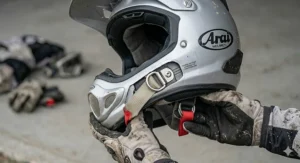
ACU Gold and Silver: Historical Context The Auto-Cycle Union’s Gold and Silver approval stickers were additional certifications beyond road-legal requirements. Silver approval was the minimum standard for motocross, grass track, enduro, speedway, and all speed events held entirely off road. However, the ACU Silver approval has been discontinued, with modern ECE certifications generally exceeding those original requirements.
ACU Gold stickers remain relevant for circuit racing and mixed-surface events, requiring helmets to meet higher standards than basic road-legal certification. If you’re competing in ACU-sanctioned events, verify current requirements directly with the organising body — some events still mandate ACU Gold stickers, whilst others accept ECE 22.06 as sufficient.
SHARP Testing: UK-Specific Assessment The SHARP (Safety Helmet Assessment and Rating Programme) scheme, run by the UK’s Department for Transport, provides independent testing beyond basic certification. SHARP awards helmets 1-5 star ratings based on impact performance across various locations and speeds. Whilst SHARP primarily focuses on road helmets, their methodology offers insights into relative protection levels.
However, SHARP has tested relatively few off road helmets compared to their extensive road helmet database. Don’t assume a helmet lacking SHARP rating is inferior — it may simply not have been submitted for testing. ECE certification remains the primary safety indicator for off road helmets.
MIPS and Rotational Impact Systems Increasingly common in premium helmets, MIPS (Multi-directional Impact Protection System) addresses a safety dimension traditional testing largely ignores: rotational forces during angled impacts. Research demonstrates that many serious brain injuries result from rotational acceleration rather than linear impacts.
MIPS-equipped helmets like the Bell Moto-10 Spherical feature a low-friction layer allowing slight rotation between the helmet shell and the rider’s head during angled impacts, reducing rotational forces transmitted to the brain. Whilst not yet mandatory under any certification standard, MIPS represents an evidence-based enhancement worth considering if budget allows.
Post-Brexit Considerations for UK Buyers Following Britain’s departure from the EU, equipment regulations have diverged slightly. The UKCA (UK Conformity Assessed) marking will eventually replace CE marking for goods sold in Great Britain, though transitional arrangements currently accept both. For practical purposes in 2026, ECE 22.06 helmets remain valid for UK use regardless of whether they display UKCA or CE marking.
Northern Ireland buyers should note that different rules apply: the Protocol means NI continues following EU regulations, so CE marking remains required. If purchasing a helmet in Northern Ireland for use in Great Britain (or vice versa), verify it carries appropriate certification for your intended jurisdiction.
Long-Term Ownership: Maintenance and Replacement in British Conditions
Off road helmets endure more punishment than road-going lids — mud infiltration, repeated wash cycles, temperature extremes, and physical impacts from branches, stones, and occasional crashes. Understanding how to maintain and when to replace your helmet maximises both safety and value.
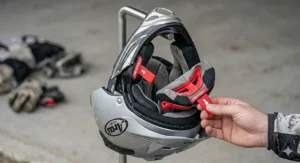
Cleaning After Muddy British Trail Rides Most modern off road helmets feature removable, washable liners designed specifically for regular cleaning. After particularly muddy sessions — which, let’s be honest, describes most British trail rides between October and May — remove the liner and hand wash in lukewarm water with mild detergent. Avoid hot water or washing machines, as aggressive cleaning degrades the liner’s moisture-wicking properties and may distort the foam padding.
For the outer shell, use a damp microfiber cloth with mild soap, avoiding aggressive solvents that might damage the shell material or graphics. Pay particular attention to ventilation ports, which accumulate mud and debris that restrict airflow. A soft toothbrush works brilliantly for cleaning vent channels without damaging the surrounding material.
Winter Storage Considerations British riders often experience extended periods without off road riding during deep winter or waterlogged ground conditions. Store your helmet in a cool, dry location away from direct sunlight — UV exposure degrades shell materials and EPS foam over time. Avoid garages or sheds subject to temperature extremes or damp conditions; the warm, dry cupboard under your stairs makes a better storage location than that damp garage.
Place the helmet on a proper helmet stand or hang it by the chin strap to prevent the shell deforming under its own weight. Don’t store heavy objects on top of the helmet, as sustained pressure can compress the EPS liner and compromise its protective properties.
Recognising When Replacement Becomes Necessary Even without visible crash damage, helmets degrade over time. Manufacturers typically recommend replacement every 3-5 years, depending on usage intensity and storage conditions. However, several specific situations demand immediate replacement regardless of age.
Any impact severe enough to compress the EPS liner — even if the shell shows no visible damage — necessitates replacement. The foam compresses during impacts to absorb energy, but it doesn’t fully recover its protective properties afterward. If you’ve crashed, replace the helmet. If you’ve dropped the helmet from significant height (say, off your bike’s handlebars onto concrete), seriously consider replacement even if it looks undamaged.
Visual inspection provides clues to hidden degradation. Check the EPS liner for compression marks, cracks, or areas where the foam has separated from the shell. Examine the shell for cracks, particularly around mounting points and stress areas. Inspect the retention system for wear — stretched chin straps or damaged buckles compromise the helmet’s ability to stay on your head during crashes.
The liner’s condition also signals replacement timing. If the padding has compressed to the point where the helmet no longer fits snugly, or if the liner’s fabric shows significant wear or degradation, replacement time has arrived. A properly fitting helmet should feel snug without pressure points, with minimal movement when you shake your head vigorously.
Total Cost of Ownership in GBP When comparing helmets, consider lifecycle costs rather than just initial purchase prices. A £500 Arai lasting five years costs £100 annually, whilst a £150 budget helmet replaced every two years costs £75 annually — but the budget option requires more frequent shopping, fitting, and bed-in periods. For riders who value their time and hate helmet shopping, investing in a premium lid that lasts longer may actually prove more economical.
Factor in maintenance supplies: helmet bags (£15-£25), cleaning products (£10-£15 annually), replacement liners (£30-£60 for premium brands), and spare visors or peaks (£20-£40). Premium helmets often support longer-term parts availability, whilst budget brands may discontinue parts within 12-18 months of a model’s release.
FAQs: ACU Silver Off Road Helmets for UK Riders
❓ Are ACU Silver approved helmets still available to buy in the UK?
❓ What's the difference between ECE 22.05 and ECE 22.06 helmet certifications?
❓ Do off road helmets work on British roads, or do I need separate helmets?
❓ How do I know if my head shape suits a particular helmet brand?
❓ What safety features matter most for British woodland trail riding?
Conclusion: Investing in Your Head’s Protection for British Off Road Adventures
Selecting the right off road helmet for British riding conditions requires balancing protection, comfort, and budget within the context of our uniquely challenging environment. The ACU Silver off road helmets standard, whilst discontinued as a formal approval mark, established baseline protection requirements that modern ECE-certified helmets substantially exceed.
Whether you’re investing £70 in the budget-friendly Zorax ZOR-X303 as your first proper off road helmet, stepping up to the £200 sweet spot with the LS2 MX700 Subverter, or committing £450-plus to the premium protection of an Arai MX-V Evo or Airoh Aviator 3, prioritise helmets with current ECE 22.06 certification, moisture management suited to British humidity, and construction quality that withstands our characteristically muddy conditions.
Remember that your helmet represents your primary defence against serious head injuries — an investment that pays dividends every time you ride, whether you realise it or not. The £300 difference between budget and premium helmets becomes remarkably insignificant when measured against the cost of traumatic brain injury treatment or the invaluable asset of your long-term cognitive function. Choose wisely, replace proactively, and ride with confidence knowing you’ve prioritised genuine protection over marketing hype.
The British off road riding community offers some of the world’s most challenging and rewarding terrain, from Scottish Highland enduro routes to Welsh woodland trails and Yorkshire moorland tracks. Equipping yourself with a properly certified, well-maintained helmet appropriate to our conditions ensures you’ll continue enjoying those adventures for years to come.
Recommended for You
- 7 Best ACU Gold Racing Helmets UK 2026 – Track Approved
- 7 Best ACU Gold Helmets for Track Days UK 2026
- 7 Best SHARP 5 Star Helmet with Sun Visor UK 2026
Disclaimer: This article contains affiliate links. As an Amazon Associate, I earn from qualifying purchases. If you purchase products through these links, we may earn a small commission at no additional cost to you.
✨ Found this helpful? Share it with your mates! 💬🤗
