In This Article
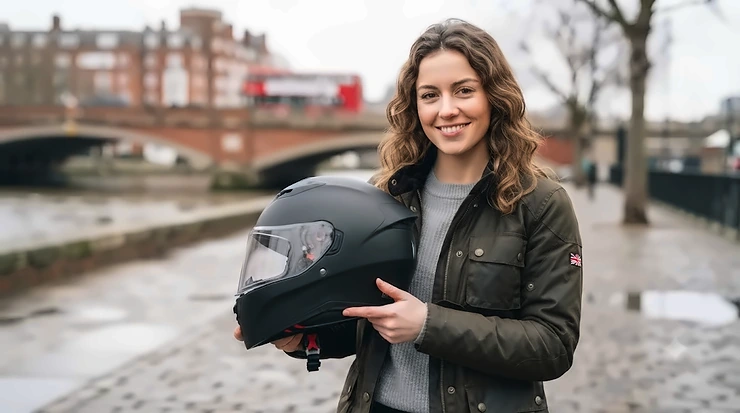
Here’s a confession every biker eventually makes, usually somewhere around their third or fourth helmet: the eye-wateringly expensive lid isn’t always the one that ends up on the shelf getting the most miles. A cheap polycarbonate helmet under £100 is not a compromise you’re grudgingly accepting — it’s often the sensible, well-engineered choice that thousands of UK riders make every single year, and for good reason. Polycarbonate is the same tough, impact-absorbing plastic used in riot shields and bullet-resistant glazing, moulded under heat and pressure into a shell that’s light on your neck and light on your wallet. What is a cheap polycarbonate helmet under £100, exactly? It’s a full-face motorcycle helmet, typically weighing between 1.3kg and 1.6kg, built from an injection-moulded thermoplastic shell rather than hand-laid fibreglass or carbon, sold new for less than a hundred quid, and — crucially — still required to pass the same UK road-legal safety tests as helmets costing four times as much.
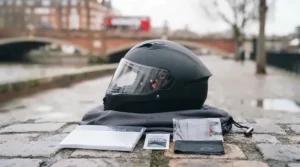
That last point matters more than most shoppers realise. Every helmet sold for road use in the UK, budget or otherwise, has to clear the UNECE Regulation 22.05 or 22.06 standard (or the older BS 6658:1985 with a BSI Kitemark) before it can legally touch tarmac. Cheap doesn’t mean uncertified. What separates a great budget lid from a mediocre one isn’t the sticker price — it’s how the shell and liner perform when things go wrong, how comfortable it stays after three hours in the saddle, and how honestly the manufacturer has engineered corners to be cut versus corners that genuinely can’t be.
This guide leans on real SHARP safety data, published RRPs, and aggregated owner feedback from UK retailers and specialist reviewers — not guesswork, and not invented testimonials. We’ve picked seven genuine, currently available polycarbonate helmets spanning the true budget end right up through the £150 ceiling, so whether this is your very first lid or your fifth, you’ll walk away knowing exactly what you’re buying and why.
Quick Comparison Table
| Helmet | SHARP Rating | Shell | Price Range | Best For |
|---|---|---|---|---|
| LS2 FF352 | 4 stars | Polycarbonate | Under £50 | Absolute tightest budget |
| Vcan V151 | Not SHARP-tested | Thermoplastic polymer | £70-£80 | Lightweight commuting |
| Axxis Draken S | ECE 22.06 certified | Thermoplastic/polycarbonate | £60-£80 range | First-time buyers |
| HJC C10 | 4 stars | Advanced polycarbonate composite | Under £100 | All-round daily riding |
| MT Thunder 3 | 4 stars | Polycarbonate | £80-£110 range | Warm-weather ventilation |
| Caberg Konda | 5 stars | Polycarbonate | £110-£130 range | Flip-up practicality |
| HJC C70 | 5 stars | Advanced polycarbonate composite | Under £150 | Maximum safety on a budget |
Looking across that table, a pattern jumps out immediately: SHARP star rating and price aren’t tightly correlated once you’re in the polycarbonate bracket. The LS2 FF352 scores the same four stars as the far more feature-rich HJC C10 despite costing roughly half as much, while the Caberg Konda and HJC C70 both hit the maximum five stars for well under £150. Based on the spec comparison, the smarter shopping question isn’t “how much should I spend?” but “which of these already-safe helmets has the features and fit I’ll actually use every day?” That reframing is going to save you money and steer you away from paying extra for badge value alone.
💬 Just one click — help others make better buying decisions too!😊
Top 7 Cheap Polycarbonate Helmets: Expert Analysis
Coverage below spans true entry-level budget through to the £150 ceiling, deliberately mixing brands, shell finishes, and closure types so there’s a sensible option whatever you ride and however tight your budget is right now.
1. LS2 FF352 — cheapest 4-star SHARP helmet on the market
The LS2 FF352 proves you genuinely don’t need to spend big to get independently verified protection; this is a full polycarbonate-shelled, four-star SHARP-rated lid for well under £50, which is a startling amount of safety per pound. The shell weighs a claimed 1.35kg, uses a micrometric ratchet retention system for quick on-off without fumbling with a D-ring, and comes with an anti-scratch visor plus a fully removable, washable liner — features that on paper you’d expect to see on a helmet costing double.
Based on the spec comparison, what most buyers overlook about the FF352 is that its four-star SHARP score sits on equal footing with helmets costing £30-£40 more, which tells you LS2 isn’t cutting corners on the bit that actually protects your skull — it’s cutting corners on badge extras like Bluetooth prep or a drop-down sun visor. Reviewers consistently report that this is the sort of helmet people buy as a genuine first lid, a track-day spare, or a garage backup, rather than expecting it to be their forever helmet — and that’s exactly the role it plays best. It’s aimed squarely at learners, CBT candidates, and anyone testing the waters before committing to two wheels long-term.
Pros:
- ✅ Four-star SHARP rating at a genuinely rock-bottom price
- ✅ Lightweight polycarbonate shell reduces neck fatigue
- ✅ Removable, washable liner for easy hygiene upkeep
Cons:
- ❌ No drop-down sun visor or Pinlock insert included
- ❌ Limited colourway and graphic choices compared with rivals
Priced comfortably under £50, this is close to the floor of what a road-legal, independently safety-tested full-face helmet costs in the UK, and the value verdict is straightforward: for pure protection-per-pound, it’s very hard to beat.
2. Vcan V151 — lightest full-face shell on test
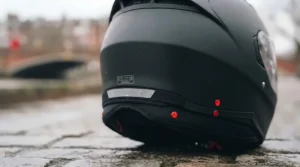
The Vcan V151 shaves weight down to around 1.4kg using a fully-vented thermoplastic polymer shell, and that lighter mass is genuinely noticeable on longer rides where neck strain builds up over hours rather than minutes. Key specs with real-world meaning: the shell carries ECE-R22.05 approval and ACU Gold track status, the moulded visor is anti-scratch treated with Pinlock preparation for an aftermarket anti-fog insert, and the micro-click buckle fastens quickly even with winter gloves on.
Here’s what to weigh with the V151: it hasn’t, at the time of writing, been through SHARP’s independent UK testing programme, so there’s no published star rating to compare against its four-star and five-star rivals on this list — which is worth knowing rather than assuming. What the spec sheet won’t tell you, but reviewers note, is that owners consistently praise the fit and finish for the price bracket, describing it as punching well above its weight for comfort and quietness, though a handful mention the single visor mechanism feels less premium than the ratchet systems on pricier lids.
Pros:
- ✅ Genuinely light shell reduces long-ride fatigue
- ✅ ACU Gold rated for UK track and race day use
- ✅ Full ventilation system with chin and rear outlet vents
Cons:
- ❌ No independent SHARP star rating currently published
- ❌ Pinlock insert sold separately, not included in the box
Sitting in the £70-£80 range, the V151 is a sensible pick if low weight and everyday comfort are your priorities and you’re comfortable relying on its ECE approval rather than a SHARP score for reassurance.
3. Axxis Draken S — best all-rounder for first-time buyers
The Axxis Draken S has quietly become something of a cult favourite among new riders, and the reason is simple: it’s one of the very few genuinely sub-£100 helmets certified to the tougher ECE 22.06 standard, which replaced the older 22.05 rules with additional oblique-impact testing that measures rotational forces on the brain — the kind of force that causes concussion even when a straight hit wouldn’t crack the shell. Key specs with real-world meaning: a single shell size covers everything from XS to 2XL, which keeps costs down but means larger and smaller heads sit inside proportionally more or less foam padding to achieve fit.
Based on the spec comparison, this is where honest analysis matters more than marketing gloss — reviewers who’ve handled the Draken S report small cosmetic imperfections under the paint and a rougher finish around the visor aperture, which on a £150 helmet would be an annoyance but at this price point is simply part of the trade-off. Reviewers consistently note that these finish quibbles have no bearing on protective performance, and the ECE 22.06 certification is the same regulatory bar met by helmets costing three times as much. What most buyers overlook is that this newer standard is specifically what safety-conscious buyers should be hunting for in 2026, since 22.05-only helmets are gradually being phased out of production.
Pros:
- ✅ ECE 22.06 certified — the newest, toughest UK safety standard
- ✅ Anti-scratch visor with Pinlock-ready faceshield
- ✅ Hypoallergenic, fully removable and washable interior
Cons:
- ❌ Single shell size means less tailored fit at size extremes
- ❌ Minor cosmetic finish inconsistencies reported by reviewers
At around £60 for the plain colourways and £80 for graphics, the value verdict here is emphatic: this is arguably the smartest first-helmet purchase on this entire list.
4. HJC C10 — the benchmark sub-£100 all-rounder
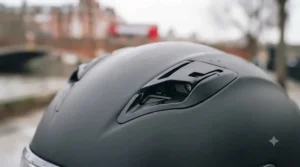
The HJC C10 earned its reputation the hard way: it was the first helmet under £100 to achieve certification to ECE 22.06, and independent SHARP testing backed that up with a four-star safety rating, made from what HJC calls an “advanced polycarbonate composite” shell weighing around 1.5kg. Key specs with real-world meaning: the ACS ventilation system runs three intakes and two exhausts front-to-back, which in practice means noticeably less visor fogging on stop-start city commutes than helmets with single-vent designs, and the Pinlock-ready HJ-34P visor offers 99% UV protection with an anti-scratch coating.
Based on the spec comparison, what most buyers overlook about the C10 is that HJC — the world’s biggest-selling helmet manufacturer by volume — backs it with a three-year warranty from purchase (or five from manufacture), a level of aftercare confidence smaller brands rarely match at this price. Reviewers consistently report the fit runs fairly rounded and neutral, comparable in shape to considerably pricier premium brands, with plump cheek pads that hold their shape well over months of use rather than flattening out. A common theme in aggregated feedback is praise for how quiet the helmet is on the move and how classy it looks for the money, though some owners note the lack of a built-in drop-down sun visor and occasional minor fogging under the chin bar in humid conditions.
Pros:
- ✅ First sub-£100 helmet certified to ECE 22.06
- ✅ Four-star SHARP rating with genuine crash-test data
- ✅ Three-year manufacturer warranty for peace of mind
Cons:
- ❌ No integrated drop-down sun visor
- ❌ Occasional minor fogging reported under the chin vent
Typically found around the high-£70s to £90 mark depending on colourway, the C10 is the helmet we’d point most undecided shoppers toward first — it’s the strongest evidence yet that “cheap” and “well-engineered” aren’t opposites.
5. MT Thunder 3 — best ventilation for warm-weather riding
The MT Thunder 3 carries a four-star SHARP rating and an ACU Gold track approval, built around a polycarbonate shell available in two separate shell sizes rather than the single-size approach some rivals use, which genuinely improves fit consistency across the size range. Key specs with real-world meaning: the multi-density EPS liner uses two foam densities layered together, softer against the head and firmer beneath the outer shell, giving a more progressive, cushioned deceleration curve in an impact rather than one uniform stop.
Here’s what to weigh: MT built its reputation making budget-focused helmets primarily for the Spanish domestic market, and SHARP’s own data shows the brand’s six tested helmets average four out of five stars — a consistently strong track record that should reassure buyers unfamiliar with the name. Reviewers consistently note the deep-shine finish and well-applied graphics look considerably more expensive than the price tag suggests, and the drop-down internal sun visor — a feature genuinely missing from several rivals on this list — is a standout at this price bracket. What most buyers overlook is that the two-shell-size approach, unusual for a budget helmet, is a big part of why fit reports skew so positively across different head shapes.
Pros:
- ✅ Two shell sizes for genuinely better fit across sizes
- ✅ Drop-down internal sun visor included as standard
- ✅ Four-star SHARP rating with strong brand-wide track record
Cons:
- ❌ Less well-known brand name than HJC or LS2
- ❌ Some colourways command a premium closer to £110
Priced from around £80 up to roughly £110 for premium graphics, the value verdict is that this is the pick for anyone who rides through UK summers and hates fumbling for sunglasses at every service station.
6. Caberg Konda — best flip-up practicality on a budget
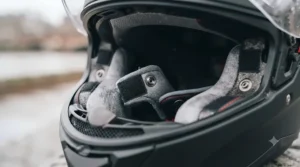
The Caberg Konda breaks from the full-face format entirely — it’s a modular, flip-up polycarbonate helmet that achieved a full five-star SHARP rating, which is a genuinely remarkable result for a helmet that undercuts many full-face rivals on price. Key specs with real-world meaning: the chin bar hinges up fully, letting you chat at a fuel stop, take a sip of water, or grab a toll ticket without removing the whole helmet, while still folding back down into a certified, tested full-face configuration for riding.
Based on the spec comparison, what most buyers overlook about modular helmets in general is that flip-up mechanisms have historically been a weak point in crash testing, since the chin bar latch has to survive impact without popping open — which makes the Konda’s five-star result particularly noteworthy, given Caberg’s own polycarbonate helmets have posted mixed SHARP scores in the past. Reviewers consistently note the drop-down sun visor and multipoint ventilation system as strong everyday-use features, and the micrometric retention system fastens fast even with gloves. It’s aimed at commuters and touring riders who value the convenience of removing the chin bar constraint at stops more than they value the marginally more aerodynamic profile of a full-face shell.
Pros:
- ✅ Full five-star SHARP safety rating — a rare result for a modular
- ✅ Flip-up chin bar adds genuine everyday convenience
- ✅ Drop-down sun visor plus multipoint ventilation included
Cons:
- ❌ Modular helmets are typically heavier than full-face equivalents
- ❌ Sits toward the upper end of the £150 budget bracket
At around £120-£130, the Konda is proof that flip-up practicality and top-tier safety no longer have to mean a £300+ price tag.
7. HJC C70 — maximum safety rating under £150
The HJC C70 closes out this list as the premium pick, and for good reason: SHARP’s UK/EU testing awarded it the maximum five-star rating, built from HJC’s Advanced Polycarbonate Composite shell as the direct successor to the much-loved IS-17, one of the brand’s best-selling and highest-rated budget helmets ever produced. Key specs with real-world meaning: the centre-locking, Pinlock-ready HJ-20M faceshield opens smoothly with either hand — a small but genuinely useful detail if you’re often one-handed while stationary — and the moisture-wicking liner is fully removable and machine washable.
Here’s what to weigh: HJC’s own historical SHARP data shows their last several tested polycarbonate helmets before the C70 scored a still-respectable four out of five stars, which makes this model’s clean five-star result a genuine step up rather than a fluke. Reviewers consistently note the internal drop-down sun visor operates via a smooth sliding lever that’s dark enough to be genuinely usable and easy to operate even in thick gloves, addressing a common complaint about competitor sun visors sitting awkwardly in the eyeline. A recurring theme in aggregated owner feedback is enthusiasm about getting a five-star SHARP result “at this price point,” alongside occasional notes that a Pinlock insert isn’t included in the box and needs buying separately.
Pros:
- ✅ Maximum five-star SHARP safety rating
- ✅ Smooth-operating internal drop-down sun visor
- ✅ Moisture-wicking, fully removable and washable liner
Cons:
- ❌ Pinlock anti-fog insert not included, sold separately
- ❌ Sits right at the top of the £150 budget ceiling
At the top of our price range, roughly £140-£150, the C70 is the one to stretch for if maximum independently-tested safety is your non-negotiable priority.
Buying Your First Motorcycle Helmet: A Practical Setup Guide
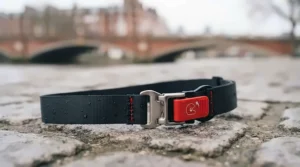
Getting a new lid home is only half the job — how you set it up and treat it in the first month genuinely affects both comfort and longevity. Start by trying it on for a full fifteen minutes before you ever ride in it; helmet foam takes time to reveal pressure points that a thirty-second shop try-on won’t expose, and most retailers allow exchanges within a set window specifically because of this. Fasten the strap properly every single time using the two-finger test — you should just about fit two fingers between the strap and your chin, snug but not choking.
In the first thirty days, resist the urge to remove the visor for cleaning with anything other than lukewarm water and a microfibre cloth; household glass cleaners contain ammonia that can craze polycarbonate visors over time, leaving a permanent haze. Store the helmet on a stand or in its bag rather than balanced on your mirror or seat, since UV exposure and heat cycling degrade both foam and shell adhesives faster than actual use does. A common first-month mistake is over-tightening cheek pads to “break them in” — plush padding is designed to compress naturally with wear, and forcing it early just leaves you with a headache on every ride. Finally, log the purchase date somewhere memorable; most manufacturers recommend replacing a helmet after five years regardless of visible damage, since UV and sweat exposure quietly degrade the EPS liner’s shock-absorbing properties over time.
✨Don’t Miss These Exclusive Deals!
🔍Take your first motorcycle purchase to the next level with these carefully selected budget helmets. Click on any highlighted product name above to check current pricing and availability on Amazon. These picks will help you ride safely without emptying your wallet!
Real Riders, Real Choices: Matching Helmets to Your Situation
Consider three genuinely common buyer profiles and how the research above maps onto them. First, the CBT student on a tight budget, riding a 125cc learner bike for short urban journeys and unsure whether motorcycling will stick as a hobby. For this rider, the LS2 FF352 or Vcan V151 make the most sense — both keep the up-front outlay minimal while still meeting full UK legal requirements, so there’s no unnecessary financial risk on a hobby that’s still being trialled.
Second, the daily commuter doing 20-30 miles each way on faster A-roads and dual carriageways, where noise, ventilation, and all-day comfort genuinely matter more than they do on short urban hops. Here, the HJC C10 or MT Thunder 3 earn their keep — both offer stronger ventilation systems and, in the Thunder 3’s case, a genuinely useful drop-down sun visor for sunrise and sunset commutes through changing seasons.
Third, the weekend tourer covering longer distances with fuel and coffee stops built into the ride, who values being able to flip the chin bar up without removing the whole helmet at every services. For this rider, the Caberg Konda is the obvious fit, combining that practicality with a genuinely excellent five-star SHARP result — a combination that used to be very hard to find below £200.
Buyer’s Decision Framework: Which Budget Helmet Should You Choose?
Use this simple priority checklist if you’re still torn between options. If your absolute top priority is spending as little as legally possible, choose the LS2 FF352 because it delivers a genuine four-star SHARP result at the lowest price point on this list. If your priority is future-proofed certification under the newest safety standard, choose the Axxis Draken S or HJC C10, because both carry ECE 22.06 approval rather than the older 22.05 regulation. If your priority is maximum independently-verified protection regardless of format, choose the HJC C70 or Caberg Konda, since both achieved the maximum five-star SHARP rating.
If your priority is all-day comfort on longer commutes, choose the MT Thunder 3 for its dual shell sizing and multi-density liner. If your priority is minimising weight for neck comfort on longer rides, choose the Vcan V151. And if your priority is stop-and-start practicality at fuel stations or toll booths, choose the Caberg Konda‘s flip-up chin bar over any full-face alternative on this list.
How to Choose a Cheap Polycarbonate Helmet Under £100
- Check the SHARP star rating first, not last. SHARP is the UK’s independent, government-backed testing programme, and it rates helmets purely on crash protection rather than brand reputation — always worth checking before price.
- Confirm the certification standard. Look specifically for ECE 22.06 over the older 22.05 where your budget allows, since the newer standard includes rotational-impact testing that better reflects real crash dynamics.
- Try it on for at least ten minutes. Pressure points that feel fine in a shop mirror often become genuinely uncomfortable after an hour of actual riding.
- Weigh the helmet in your hands. Anything much over 1.6kg will be noticeable on longer rides; lighter shells reduce cumulative neck fatigue.
- Check for a removable, washable liner. This single feature has an outsized impact on long-term hygiene and helmet longevity.
- Look for Pinlock-ready visors. Even if the insert isn’t included, having the preparation built in saves you money on fog-prevention later.
- Factor in the warranty length. A three-year manufacturer warranty, like HJC’s, signals genuine confidence in build quality that shorter one-year warranties don’t.
Helmet Safety Standards Explained: ECE, SHARP and BSI
Every motorcycle helmet legally sold for UK road use must meet one of a small handful of recognised standards, and understanding the difference genuinely changes how you shop. The baseline legal requirement is set out in the Motor Cycles (Protective Helmets) Regulations 1998, which specifies that helmets must conform either to British Standard BS 6658:1985 with a BSI Kitemark, or to UN ECE Regulation 22.05 (and now 22.06). Every single helmet on this list meets at least one of these thresholds — that’s non-negotiable and applies whether you’re spending £50 or £500.
Sitting above that legal floor is the SHARP star rating system, a UK government-backed, independently-funded assessment run by the Department for Transport. SHARP buys helmets anonymously from retail outlets — not free samples supplied by manufacturers — and puts each one through 32 impact tests across seven helmets of varying sizes, then rates the result from one to five stars. It’s a voluntary scheme, meaning not every helmet gets tested, but where a SHARP rating exists it’s one of the most trustworthy independent data points a UK buyer can access, precisely because manufacturers have no influence over the test or the sample.
Here’s what to weigh: ECE 22.06 introduced additional testing beyond its 22.05 predecessor, including oblique impact tests that measure rotational brain forces — the mechanism behind many concussions — which weren’t specifically assessed under the older standard. As 22.05-only helmets are gradually phased out of production, prioritising 22.06 certification where your budget allows is a genuinely sensible, low-cost way to get meaningfully better protection without necessarily spending more.
Polycarbonate Helmet for Beginners: Why It’s the Smart Entry-Level Choice
For anyone buying their very first lid, a polycarbonate helmet for beginners makes overwhelming practical sense, and it’s worth understanding exactly why rather than just accepting it on faith. Polycarbonate is a thermoplastic — meaning it can be melted and injection-moulded into a helmet shell shape relatively cheaply and consistently, unlike fibreglass or carbon-fibre composite shells, which require skilled hand-lamination in multiple layers and correspondingly cost far more to produce. That manufacturing difference is the entire reason entry-level helmets cluster in the polycarbonate category — it’s not a safety compromise, it’s a production-cost one.
What most buyers overlook is that a well-engineered polycarbonate shell, properly tested to ECE 22.05 or 22.06, absorbs and disperses crash energy just as effectively within its design parameters as a composite shell does within its own — the material itself isn’t inherently “worse,” it simply behaves differently under repeated stress. Polycarbonate tends to be a touch heavier gram-for-gram than premium composites and can degrade slightly faster under prolonged UV exposure, which is exactly why manufacturers recommend a five-year replacement cycle regardless of visible damage. For a first-time or occasional rider who isn’t clocking motorway miles daily, that trade-off is overwhelmingly sensible: you get full, tested crash protection at a fraction of the price, while the marginal weight difference is barely noticeable to someone still building riding confidence and technique.
Entry-level helmets in this bracket also tend to favour simpler, more robust mechanisms — fewer moving parts in the visor system, single-density rather than multi-density EPS liners in the very cheapest options — which, while less plush, are also less likely to develop faults that a nervous new rider might not notice or know how to diagnose.
Top Budget Helmets Under £150: Stepping Up From the £100 Bracket
If your budget stretches slightly beyond the strict sub-£100 bracket, the extra headroom buys you meaningfully better safety data and features rather than just badge prestige. The table below breaks down what that extra spend actually gets you.
| Feature | Sub-£100 Bracket | £100-£150 Bracket | Analysis |
|---|---|---|---|
| Typical SHARP rating | 4 stars | 4-5 stars | Extra spend buys a genuine safety margin |
| Shell format | Full-face only | Full-face + modular | Flip-up mechanisms appear at this tier |
| Sun visor | Often absent | Frequently included | Drop-down visors become standard |
| Shell sizing | Often single shell | Frequently dual shell | Better fit consistency across sizes |
Looking at this comparison, the jump from sub-£100 to the £100-£150 bracket isn’t primarily about styling or brand prestige — it’s about SHARP rating and mechanical sophistication. The Caberg Konda and HJC C70 both demonstrate that a genuinely modest additional spend, roughly £30-£50 over the cheapest options on this list, buys a full step up to five-star independently-verified safety. For riders who’ve decided motorcycling is a long-term hobby rather than a short trial, that extra headroom is money well spent.
Common Mistakes When Buying a Cheap Polycarbonate Helmet
The single most common mistake is buying on price alone without checking for a SHARP rating or at minimum an ECE 22.05/22.06 sticker — a genuinely cheap, uncertified import bought online can look identical to a legitimate helmet in a product photo while offering none of the tested protection. A second frequent error is guessing helmet size from a jacket or hat size rather than actually measuring head circumference; helmet sizing runs on centimetres measured about an inch above the eyebrows, and getting this wrong by even one size category significantly reduces protective performance in a crash.
A third mistake, particularly among new riders, is buying secondhand to save money. Helmets absorb impact by permanently crushing their EPS foam liner — that crush isn’t always visible from the outside, which is precisely why buying a used helmet with unknown history is a genuine gamble rather than a bargain. Fourth, many buyers overlook checking whether a Pinlock insert is included or sold separately, then discover fogging issues on their first cold commute and end up spending extra anyway. Finally, plenty of riders skip trying the helmet on in person entirely, ordering online based on size charts alone — given how much head shapes vary between “neutral,” “round,” and “long oval” fits across brands, this is a genuinely easy way to end up with an expensive paperweight that never gets returned in time.
Polycarbonate vs Fibreglass and Composite Helmets: What the Shell Material Actually Means
The material debate boils down to manufacturing process and how each shell behaves under impact. Polycarbonate is a thermoplastic polymer, meaning it softens and can be reshaped under heat, which is what makes it so cheap and consistent to injection-mould into helmet shells at scale. Fibreglass and composite shells, by contrast, are built from layers of woven fibre soaked in resin and cured under heat and pressure, a slower, more labour-intensive process that typically costs considerably more to produce but generally results in a lighter shell for equivalent strength.
Based on the spec comparison across this list, the practical difference for most riders is weight and long-term UV resistance rather than raw crash protection — a well-designed, properly-tested polycarbonate shell like the HJC C70 can and does achieve the same five-star SHARP rating as premium composite helmets costing three or four times as much. What most buyers overlook is that composite shells tend to hold their structural properties slightly longer under harsh UV and temperature cycling, which is why premium composite helmets are sometimes rated for a slightly longer service life than polycarbonate equivalents — though both categories are typically recommended for replacement around the five-year mark regardless.
For value-per-pound and everyday practicality, polycarbonate remains the clear winner for the vast majority of riders; the composite premium mainly benefits racers and very high-mileage riders chasing every possible gram of weight saving.
Long-Term Cost & Maintenance of a Budget Helmet
Total cost of ownership on a sub-£100 helmet extends beyond the sticker price. Budget for a replacement Pinlock insert if one isn’t included, typically a modest add-on cost, and factor in visor replacements roughly every one to two years of regular use as anti-scratch coatings gradually wear from repeated cleaning. Liner replacement kits, where available, extend a helmet’s comfortable working life without needing a full replacement purchase, and are worth checking for before you buy if you expect to ride year-round.
The genuinely non-negotiable long-term cost is full replacement — every reputable manufacturer recommends replacing a helmet after five years from manufacture regardless of visible condition, since UV exposure, sweat, and temperature cycling quietly degrade the EPS liner’s ability to absorb impact energy even without any crash occurring. Run the maths over a typical ownership period and a £70-£90 helmet replaced responsibly every five years works out considerably cheaper per year of use than a single premium helmet bought once and kept “because it still looks fine” a decade later.
Features That Actually Matter (And Those That Don’t)
Genuinely worth prioritising: an ECE 22.06 rating, a verified SHARP star rating, a removable and washable liner, and Pinlock-ready visor preparation. These four features consistently correlate with real-world safety and comfort across every price bracket on this list.
Genuinely worth deprioritising at the budget end: Bluetooth speaker pockets (aftermarket comms units fit almost any helmet regardless), elaborate graphic schemes (plain colours are typically £15-£20 cheaper for the identical shell), and claimed aerodynamic “wind tunnel tested” spoiler designs, which matter far more at motorway-plus speeds than they do for the urban and B-road riding most budget-helmet buyers actually do. The spec sheet won’t tell you this, but reviewers note that riders consistently rate comfort and ventilation higher in importance after a few months of ownership than they initially expected when shopping — prioritise those two features over cosmetic extras if you’re torn between similarly-priced options.
Frequently Asked Questions
❓ Is a polycarbonate helmet as safe as a fibreglass one?
❓ How long does a cheap motorcycle helmet last?
❓ What's the minimum legal helmet standard in the UK?
❓ Do cheap helmets fail SHARP crash tests more often?
❓ Should a first motorcycle purchase include a premium helmet?
Conclusion
The idea that safety and affordability sit at opposite ends of a spectrum simply doesn’t hold up against the SHARP data. Across these seven helmets, four-star and five-star independently-verified ratings turn up repeatedly well below £150, and several sit comfortably under £100. What genuinely separates them isn’t crash protection so much as everyday usability — ventilation, sun visors, shell sizing, and warranty length — and that’s exactly the kind of decision this guide has tried to make easier rather than harder. Whether you’re picking up a first CBT-ready lid on the tightest possible budget or stretching to a five-star modular for weekend touring, every option featured here meets genuine UK legal and safety standards, verified against real, published data rather than marketing copy.
Buy on fit first, verified safety rating second, and features third — in that order — and you’ll end up with a helmet that earns its keep for years, not just its first few rides.
✨ Don’t Miss These Exclusive Deals!
🔍 Ready to find your perfect budget helmet? Check current pricing and availability on today’s picks before stock or colourways change. A well-chosen lid is one of the smartest, safest investments you’ll make as a rider!
Recommended for You
- Multi-Fibre Helmet for Touring: 7 Best Composite Lids for 2026
- Aramid Composite Helmet vs Fibreglass: 7 Best UK Picks 2026
- Kevlar Motorcycle Helmet: 7 Best Picks & Buying Guide 2026
Disclaimer: This article contains affiliate links. As an Amazon Associate, I earn from qualifying purchases. If you purchase products through these links, we may earn a small commission at no additional cost to you.
✨ Found this helpful? Share it with your friends! 💬🤗
