In This Article
Buy a Kevlar motorcycle helmet and you’re not really buying a fabric — you’re buying a promise. The promise that when a lorry driver doesn’t check their mirror, or the diesel patch under the roundabout finally claims a victim, the thing wrapped around your skull was engineered to argue with the tarmac on your behalf. That’s a big job for something that weighs less than a bag of sugar.
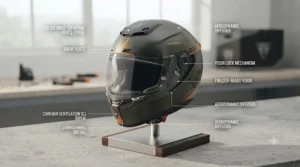
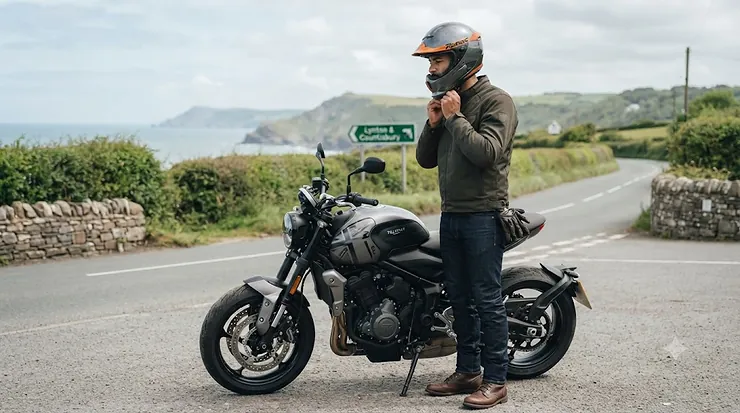
Here’s the twist nobody tells you at the dealership: “Kevlar” rarely rides alone. In almost every road helmet on sale today, the aramid fibre DuPont trademarked back in 1965 is woven in alongside fibreglass, carbon, or both, forming what manufacturers call a composite or “tri-composite” shell. Pure aramid shells are vanishingly rare outside military ballistic helmets. So when you search for a kevlar motorcycle helmet, what you’re actually hunting for is a composite lid where aramid does the heavy lifting on tensile strength and puncture resistance, while its shell-mates handle stiffness and weight.
This guide cuts through the marketing fog. We’ve researched seven genuine helmets on the market — from a £230 lightweight racer’s lid to a premium £540 tourer’s companion — using independent UK safety data, real specifications, and aggregated owner sentiment rather than invented hands-on claims. You’ll get honest commentary on who each helmet suits, a proper look at composite versus carbon fibre construction, and a plain-English walk through UK helmet certification so you’re not just buying a good-looking shell. Affiliate disclosure: this article contains Amazon Associate links, and we may earn a small commission on qualifying purchases at no extra cost to you.
Quick Comparison Table
| Helmet | Shell Material | Weight (size M) | SHARP Rating | Price Range | Best For |
|---|---|---|---|---|---|
| Shoei NXR2 | Composite fibre (organic fibre + fibreglass, 6-layer AIM) | ~1.4-1.47kg | 5 stars | £430-£540 range | Best all-round protection |
| AGV K6S | Carbon-aramid (Kevlar) fibre | ~1.22-1.34kg | High-scoring in segment* | £230-£460 range | Lightest full-face on the list |
| HJC RPHA 71 | Carbon, aramid & natural fibre (PIM Evo) | ~1.6kg | ECE 22.06 certified | around £300-£400 | Best value premium sport-touring |
| Caberg Levo | Tri-composite: fibreglass, Kevlar, carbon | ~1.64kg | 4 stars | around £320 | Best modular/flip-front |
| Scorpion EXO-1400 Air | TCT composite (fibreglass, aramid, organic poly resin) | ~1.28-1.45kg | 4 stars | £300-£360 range | Best mid-range sport-touring |
| LS2 FF811 Vector II Carbon | 100% carbon fibre composite | ~1.3-1.4kg | Not SHARP-listed at time of research | £270-£345 range | Lightest budget-premium option |
| Dainese DA530 | Composite fibre | ~1.53kg | 3 stars | around £290-£300 | Cheapest genuine composite entry point |
*AGV’s K6 range scores well in independent testing, but always confirm the current star rating for your exact model on the SHARP website before buying, since ratings are model- and year-specific.
Look at that table for more than ten seconds and a pattern jumps out: price doesn’t track neatly with SHARP stars. The Caberg Levo, at roughly half the Shoei’s price, still lands a very respectable 4-star rating, while a couple of premium composite helmets in this class don’t yet have published SHARP data at all — which says more about testing queues than actual safety. Weight is the other story worth reading twice; the lightest helmet here (the AGV K6S) is nearly 250 grams lighter than the heaviest (the Caberg Levo), and on a three-hour ride that difference lives entirely in your neck muscles, not on a spec sheet.
💬 Just one click — help others make better buying decisions too!😊
Top 7 Kevlar Motorcycle Helmets: Expert Analysis
We’ve picked genuine, currently available helmets spanning entry-level composite through to flagship touring lids, covering full-face, modular, carbon, and tri-composite construction so there’s a sensible option whatever you ride.
1. Shoei NXR2 — best all-round protection on this list
The standout here is Shoei’s 6-layer Advanced Integrated Matrix (AIM) shell, an evolution of the 5-layer setup on the outgoing NXR that adds an extra layer of organic fibre for stiffness without a weight penalty. Shoei builds the NXR2 across four separate shell moulds so riders with smaller heads aren’t stuck wearing an oversized XXL-sized shell padded out to fit — a detail that sounds trivial until you realise a mismatched shell-to-head ratio is one of the quiet ways cheaper helmets under-deliver on real-world protection. Independent testing by the UK government’s own SHARP scheme awarded the NXR2 a full 5-star rating, its highest possible score, with the shell material listed simply as “Composite Fibre” in the official test record.
Based on the spec comparison, this is a helmet built for riders who put serious miles in rather than weekend blasts: the six-position ratchet visor, Pinlock Evo lens included in the box, and a five-year manufacturer warranty all point toward long-term ownership rather than a helmet you’ll swap out after a season. Reviewers consistently note that Shoei’s fit and finish sit a level above most competitors in this price bracket, and the brand topped a 2,133-rider BikeSocial popularity survey — useful context, even if popularity isn’t the same thing as raw protection.
Pros:
- ✅ Full 5-star SHARP safety rating, independently verified
- ✅ Four shell sizes reduce bulk for smaller-headed riders
- ✅ Five-year warranty backs long-term ownership
Cons:
- ❌ No integrated sun visor, unlike some rivals
- ❌ Sits at the top of this list’s price range
At around the £430-£540 range depending on colourway, the NXR2 isn’t cheap, but a 5-star SHARP score at this weight is a genuinely rare combination, and it justifies the premium for riders who treat their helmet as safety kit first and fashion accessory second.
2. AGV K6S — lightest full-face helmet in this round-up
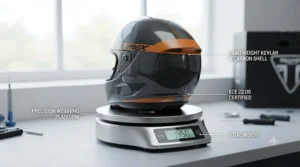
The standout feature is straightforward: at roughly 1,220-1,340 grams depending on size, the K6S is one of the lightest full-face road helmets sold anywhere, built from AGV’s carbon-aramid fibre composite shell developed using knowledge from the brand’s MotoGP programme. Key specs translate directly into comfort — a lighter shell means less rotational inertia on your neck during quick direction changes, which matters more than people expect on a twisty B-road or during hours of motorway droning.
What most buyers overlook about this model is that the “S” designation isn’t just a marketing suffix; it denotes ECE 22.06 certification, the current and stricter European standard, whereas the older plain K6 was tested to 22.05. Reviewers consistently highlight the quiet interior — thick padding does double duty for comfort and noise suppression — and the 190-degree panoramic visor gives an unusually wide field of view for a helmet this compact. On the flip side, aggregated owner feedback flags a narrow chin bar that can feel tight for riders used to roomier lids, plus a vent and visor mechanism that some find fiddly with winter gloves on.
Pros:
- ✅ Among the lightest carbon-aramid full-face helmets available
- ✅ Wide 190° panoramic visor for better road awareness
- ✅ ECE 22.06 certified with MotoGP-derived shell tech
Cons:
- ❌ Narrow chin bar feels tight for some face shapes
- ❌ Vent sliders can be fiddly in thick gloves
Priced anywhere from around £230 up to roughly £460 depending on graphics, the K6S offers genuine premium-tier materials at a mid-range entry point — arguably the best pound-for-gram value on this list for anyone who rates comfort and low fatigue above all else.
3. HJC RPHA 71 — best value premium sport-touring pick
HJC’s standout move with the RPHA 71 was retiring the older Premium Integrated Matrix shell for a new Premium Integrated Matrix Evo (PIM Evo) blend of carbon, aramid, and natural fibre, split across three outer shell sizes. Reviewers note this composite mix specifically targets high impact resistance while trimming weight versus a straight fibreglass shell, and the helmet is now built to the ECE 22.06 standard. In practice that means a helmet weighing around 1.6kg that still undercuts most of its Japanese and Italian rivals on price by a meaningful margin — bikesocial’s own testing pegged it £100-£150 cheaper than direct competitors like the Arai Quantic and Shoei GT-Air 3 in plain colours.
Here’s what to weigh up before buying: HJC assembles its premium RPHA range in Korea, while entry-level models come from Vietnam, so the country-of-origin story on the box genuinely correlates with build tier rather than being pure marketing. The ram-air top vent is a love-it-or-leave-it feature — it’s an on/off scoop rather than a graduated slider, which delivers strong airflow but reviewers note it can create a noticeable cold spot directly on the crown in winter. For riders who split their time between commuting and longer tours, this is arguably the smartest all-rounder here.
Pros:
- ✅ Carbon-aramid-natural fibre PIM Evo shell at a competitive price
- ✅ ECE 22.06 certified with strong ventilation throughput
- ✅ £100-£150 cheaper than closest direct rivals
Cons:
- ❌ On/off ram-air vent creates a cold spot in winter
- ❌ Integrated sun visor adds bulk versus visor-only rivals
Expect to pay in the region of £300-£400 depending on finish and retailer, making the RPHA 71 the value pick among the premium composite crowd — check current price and availability before you buy, as HJC pricing shifts with exchange rates more than most brands.
4. Caberg Levo — best modular composite helmet for touring
The Levo’s standout trick is dual P/J homologation, meaning it’s legally approved to ride with the chin bar locked up as an open-face helmet as well as down as a full-face — a genuinely useful flexibility most flip-fronts don’t offer. Its standard shell is a tri-composite blend layering fibreglass, Kevlar, and carbon (with a pricier all-carbon variant also available), and SHARP’s independent test recorded the shell material simply as “Composite Fibre” while awarding a solid 4-star safety rating, docking one mark specifically because the chin bar occasionally became unlocked during impact testing.
Based on the spec comparison, this is the pick for riders who value ventilation and convenience as much as raw protection: two front air inlets, two rear extractors, and internal channelling keep air moving even with the chin bar locked, and Caberg’s “double visor tech” pairs a Pinlock-ready main visor with a genuine drop-down sun shield rather than relying on tinted plastic alone. Aggregated review sentiment is notably positive on long-term comfort — several owners describe buying repeat Cabergs across more than a decade of touring, and the brand’s SHARP track record (13 of 16 tested models scoring 4 stars or above) suggests the Levo’s rating isn’t a fluke.
Pros:
- ✅ Dual P/J homologation lets you ride open-face legally
- ✅ Genuine drop-down sun visor plus Pinlock main visor
- ✅ Strong brand-wide SHARP track record (13 of 16 models 4★+)
Cons:
- ❌ Docked a SHARP mark for occasional chin-bar unlocking on impact
- ❌ Heaviest helmet on this list at around 1.64kg
At an RRP around £320, the Levo undercuts most flagship modulars by a significant margin while still packing genuine aramid content into its shell — a sensible mid-range choice for anyone doing serious cross-country miles who wants chin-bar-up convenience at fuel stops.
5. Scorpion EXO-1400 Air — best mid-range sport-touring alternative
Scorpion’s standout here is TCT — their proprietary composite blend of fibreglass, aramid, and organic poly resin — offered alongside a lighter carbon-shelled variant of the same helmet, so buyers can choose their preferred strength-to-weight trade-off within one model line. SHARP tested the fibreglass TCT version and awarded a solid 4-star rating, a genuinely strong result given the brand’s average across its more affordable fibreglass-only helmets has historically sat closer to 3.25 stars — suggesting the aramid content in the TCT blend is doing real work.
What the spec sheet won’t tell you, but reviewers note, is how the weight numbers stack up in context: at roughly 1,450 grams for the TCT version (and around 1,280 grams for the carbon edition), this helmet undercuts several supposedly “premium” rivals including the Shoei GT-Air 2 and Bell Star DLX MIPS. It comes with Scorpion’s AirFit cheek-pad inflation system for dialling in fit, plus a genuine Pinlock Max Vision anti-fog insert included rather than sold separately. Owners consistently praise the value proposition and the wide visor aperture, though noise levels are flagged more often than on the Shoei or AGV entries here.
Pros:
- ✅ 4-star SHARP rating, strong for the price point
- ✅ Choice of TCT composite or lighter carbon shell
- ✅ AirFit cheek pads let you fine-tune the fit yourself
Cons:
- ❌ Noisier at speed than several premium rivals
- ❌ Three shell sizes rather than four, so fit is slightly coarser
Pricing generally sits in the £300-£360 range for the TCT version, with the carbon edition commanding more — genuinely excellent value for a SHARP 4-star aramid-composite helmet, and arguably the sharpest budget-to-mid jump on this entire list.
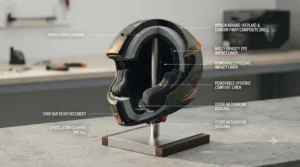
6. LS2 FF811 Vector II Carbon — lightest budget-premium carbon option
The Vector II Carbon’s standout feature is its 100% carbon fibre shell rather than a Kevlar-carbon blend, which makes it the useful comparison point on this list for anyone weighing composite against pure carbon fibre construction. Built across six shell sizes with a weight around 1,300-1,400 grams, LS2 pitches this as a touring-friendly helmet with a genuine drop-down internal sun visor, Pinlock 120 Max Vision insert included, and ECE 22.06 certification confirmed by the manufacturer.
Based on the spec comparison, carbon-only shells like this one tend to be stiffer and lighter than aramid-blended composites of similar thickness, but they can also be more brittle under certain impact angles — which is exactly why so many “carbon” helmets on the market, including several others in this article, actually hedge their bets by weaving in aramid anyway. Reviewers describe the Vector II Carbon as a strong price-to-spec proposition from a brand that’s become a genuine budget-to-mid disruptor in UK helmet retail over the past few years, though it currently lacks a published SHARP star rating, so safety-conscious buyers should check for updated test data before purchase.
Pros:
- ✅ Genuine 100% carbon fibre shell at a sub-£350 price point
- ✅ Six shell sizes for a closer individual fit
- ✅ Drop-down sun visor and Pinlock insert included
Cons:
- ❌ No published SHARP rating at time of research
- ❌ Pure carbon shells can behave differently under glancing impacts versus Kevlar-blended composites
Expect to pay in the £270-£345 range depending on finish, positioning this as the helmet to buy if carbon fibre’s stiffness-to-weight profile appeals to you more than aramid’s puncture resistance — read the composite-versus-carbon section further down before you decide between this and the Kevlar-blended options above.
7. Dainese DA530 — cheapest genuine composite entry point
The DA530’s standout is simply being a real “Composite Fibre” shell, as officially logged by SHARP, at a price point where most competitors switch to plain polycarbonate or thermoplastic. At roughly 1.53kg, it’s a mid-pack weight, and SHARP’s independent testing recorded a 3-star safety rating — respectable, but honestly the weakest score of any helmet on this list, and we’re including it precisely because honesty matters more than flattering every product equally.
Here’s what to weigh up: a 3-star SHARP rating still means the DA530 passed the mandatory ECE homologation testing required to be legally sold and ridden in the UK — SHARP stars measure comparative performance above that legal floor, not pass/fail safety. Reviewers and the SHARP feature list note a genuinely well-specced helmet for the money, with anti-fog and anti-scratch visor coatings, a drop-down sun visor, double D-ring retention, and Bluetooth-ready housing — features that composite helmets twice the price sometimes skip. For riders who want composite materials on a genuinely tight budget, and who understand the trade-off they’re making on the star rating, it’s a defensible pick.
Pros:
- ✅ Genuine composite fibre shell well below premium pricing
- ✅ Drop-down sun visor and Bluetooth-ready housing included
- ✅ Passes the full ECE homologation legally required for UK roads
Cons:
- ❌ Lowest SHARP star rating (3 stars) of any helmet on this list
- ❌ Heavier than several pricier composite rivals
Sitting around the £290-£300 mark, the DA530 is best understood as a stepping stone: genuine composite construction for shoppers not yet ready to commit £400+, provided you go in with clear eyes about that SHARP score.
✨ Don’t Miss These Exclusive Deals!
🔍 Take your helmet shopping to the next level with these carefully selected picks. Click on any highlighted item to check current pricing and availability. The right lid will keep you protected on every ride, whatever the weather throws at you.
Practical Usage Guide: Setting Up Your New Composite Helmet
Getting a composite helmet home is only step one — how you set it up in the first month genuinely affects both comfort and longevity. Start with the strap: a Double D-ring or micrometric buckle should be snug enough that you can only just slide two fingers underneath at the chin, tight enough that a firm upward tug on the back of the shell doesn’t roll it forward off your head. Too many riders wear their helmet a half-size too loose because it feels comfortable in the shop, then discover on a motorway the shell shifts under wind buffeting.
Break-in matters more with composite shells than people expect, because the multi-density EPS liners paired with aramid and carbon shells are often firmer initially than cheaper polycarbonate helmets with softer foam. Expect a genuine adjustment period of two to four weeks of regular wear before pressure points on the temples or crown fully settle — if they haven’t eased after a month, that’s a fit issue worth exchanging for a different shape, not something to force through. Most premium brands, including several featured above, offer interior cheek pads in multiple thicknesses specifically so you can fine-tune this without buying a whole new helmet.
On maintenance: wipe the visor with a microfibre cloth and lukewarm soapy water rather than household glass cleaner, since ammonia-based products can degrade anti-fog and anti-scratch coatings over time. Remove and hand-wash the liner every few weeks if you ride daily, and always let it air-dry fully rather than using a radiator or hairdryer, which can shrink foam padding unevenly. Common first-30-days mistakes include over-tightening cheek pads (causing headaches rather than better fit), forgetting to re-seat the Pinlock insert correctly after cleaning (leading to fogging exactly when you need clear vision), and storing the helmet by its strap on a hook, which slowly stretches the retention webbing.
Real-World Scenarios: Matching the Helmet to the Rider
The daily commuter, 8 miles each way through city traffic. Budget matters, but so does all-day comfort and decent ventilation for stop-start riding in variable weather. The Scorpion EXO-1400 Air or the Dainese DA530 both make sense here — composite shells that won’t feel like a millstone after five days a week of use, with drop-down sun visors that spare you from carrying separate sunglasses to work.
The weekend tourer, doing 200-mile days on A-roads and motorways. Long stints in the saddle punish heavy helmets, and noise fatigue compounds over hours rather than minutes. This is where the AGV K6S’s low weight and the Shoei NXR2’s refined aerodynamics genuinely earn their higher price tags — the difference between a helmet that disappears after two hours and one that leaves a dull headache is almost entirely down to weight distribution and wind noise engineering.
The all-weather commuter-tourer who wants one helmet for everything. If you can only justify owning a single lid and need it to handle both a wet Tuesday commute and a sunny bank-holiday blast to the coast, the Caberg Levo’s dual-homologated modular design covers more bases than any full-face on this list — chin bar down for speed, up for a coffee stop, without removing the helmet entirely.
How to Choose a Kevlar Motorcycle Helmet
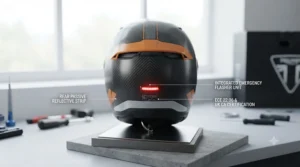
- Confirm the certification first, then everything else. Check for an ECE 22.05 or 22.06 label inside the helmet before you even look at the shell material — this is the legal minimum for UK roads and no amount of Kevlar content overrides a missing or fake approval sticker.
- Check the SHARP star rating for your specific model. Star ratings are model-specific and sometimes size-specific, so search the exact name on the government’s SHARP database rather than relying on brand reputation alone.
- Try before you buy wherever possible. Head shapes vary between “long oval,” “intermediate oval,” and “round,” and different brands are cut differently — a helmet that fits your mate perfectly can genuinely be the wrong shape for you.
- Weigh the helmet against your typical ride length. A 200-gram difference feels trivial in the shop and significant after three hours on a motorway; heavier touring helmets suit shorter, punchier rides better.
- Match ventilation to your climate and commute. UK weather swings hard between seasons, so prioritise helmets with adjustable vents and a drop-down sun visor over fixed systems if you ride year-round.
- Decide whether modular flexibility is worth the weight and complexity trade-off. Flip-fronts add convenience but typically add weight and slightly reduced structural rigidity versus a one-piece full-face shell.
- Set a genuine replacement budget, not just a purchase budget. Composite helmets need replacing after any significant impact and generally every five years regardless, so factor that into what “good value” actually means over time.
Composite Helmet vs Carbon Fibre Helmet
This is the comparison most buyers get muddled on, so let’s untangle it properly. A composite helmet — like the Caberg Levo or Scorpion EXO-1400 Air on this list — typically layers fibreglass, aramid (Kevlar), and sometimes a touch of carbon or organic resin into a single laminated shell. The mix is specifically engineered to balance flexibility with rigidity: fibreglass gives the shell bulk stiffness, while aramid resists tearing and puncture under sharp, glancing impacts, distributing that energy across a wider area rather than letting it concentrate at one point.
A pure carbon fibre helmet, like the LS2 FF811 Vector II Carbon featured above, swaps that blend for carbon fibre alone, prized above all for an exceptional stiffness-to-weight ratio — carbon shells are routinely the lightest option in any given helmet range. The trade-off is that carbon fibre, while extremely stiff, can behave more unpredictably under certain impact angles than aramid-blended composites; it resists bending rather than absorbing energy through controlled deformation, which is why so many “carbon” helmets on the market — including several featured in this article — actually hedge with a carbon-aramid blend rather than going 100% carbon.
In practice, for most road riders the difference is smaller than marketing copy suggests: both construction types comfortably clear ECE 22.06 certification, and SHARP star ratings across both categories span the full range from 3 to 5 stars depending on the specific model’s engineering rather than the raw material alone. Reviewers consistently note that carbon-only shells command a genuine weight advantage worth chasing if you’re doing long tours, while aramid-blended composites tend to offer marginally better puncture resistance for a similar or lower price. If budget allows, a carbon-aramid hybrid like the AGV K6S arguably gets you the best of both properties in a single shell.
Helmet Certification Explained: ECE 22.06, BS 6658 and SHARP
Every legal motorcycle helmet sold in the UK must carry one of two certification marks: British Standard BS 6658:1985 with the BSI Kitemark, or a European Economic Area standard offering equivalent protection, which today almost always means UNECE Regulation 22.06 (the older 22.05 standard remains legally valid but has been phased out by most manufacturers). According to the official Highway Code guidance on GOV.UK, wearing a properly fastened, compliant helmet is a legal requirement on every motorcycle journey, with a specific exemption only for turban-wearing Sikh riders.
ECE 22.06, introduced in 2020, meaningfully raised the bar over its predecessor by testing twelve impact points across the shell instead of a smaller fixed set, adding rotational impact testing to assess twisting forces from glancing blows, and expanding accessory testing to cover visors and communication units. It’s worth understanding that certification is a pass/fail legal threshold, not a comparative safety score — which is exactly the gap SHARP was created to fill. The UK government’s Safety Helmet Assessment and Rating Programme (SHARP) independently purchases helmets from retail shelves and runs 32 impact tests per model across a range of sizes, then scores them from 1 to 5 stars, giving riders genuinely comparable data between brands rather than relying on marketing claims alone. Every SHARP star rating referenced in this article’s product section comes directly from that database.
Impact Protection: What Actually Matters
It’s tempting to treat “Kevlar content” as a proxy for overall impact protection, but that oversimplifies how a helmet actually works. Protection is really the product of three separate systems working together: the outer shell (which resists penetration and spreads force), the EPS liner (which crushes to absorb energy), and the retention system (which keeps the helmet in place long enough to do either job). A composite shell packed with aramid is worthless if the chin strap slips, which is precisely why SHARP docked the Caberg Levo a star for occasional chin-bar unlocking despite a genuinely strong composite construction.
What the spec sheet won’t tell you, but SHARP’s own published guidance stresses, is that shell material alone is a poor predictor of star rating — the site explicitly cautions riders not to “judge a helmet by its outer shell material” alone, since EPS density, shell-to-liner bonding, and retention system design all move the needle just as much. That’s borne out across this article’s line-up: a composite fibre helmet (Dainese DA530) scored 3 stars while another composite fibre helmet (Shoei NXR2) scored the maximum 5 — same broad material category, dramatically different engineering execution. The honest takeaway is to treat “Kevlar” or “composite” as one useful signal among several, always cross-checked against a genuine SHARP result for that exact model.
Premium Helmet Materials Explained
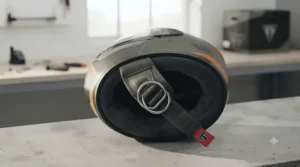
Beyond the basic fibreglass-versus-carbon-versus-aramid split, premium manufacturers layer in proprietary tweaks worth understanding before you pay a premium for them. Shoei’s AIM and AIM+ shells add extra layers of “organic fibre” between structural layers specifically to improve elasticity and penetration resistance without extra weight — Shoei’s own materials describe this as making the shell simultaneously stronger and more forgiving under impact. Arai takes a different approach entirely with its PB-cLc (peripherally belted complex laminate construction), a multi-fibre and resin shell reinforced specifically around the visor aperture and forehead vent, plus a distinctive round shell shape the brand argues helps impacts “glance off” rather than transfer fully into the liner — though it’s worth noting SHARP’s own oblique-impact testing hasn’t consistently validated that claim across every Arai model tested.
HJC’s Premium Integrated Matrix Evo (PIM Evo) mixes carbon, aramid, and natural fibre specifically to chase a lighter shell without sacrificing the impact-spreading properties aramid provides, while Scorpion’s TCT blends fibreglass, aramid, and organic poly resin to land somewhere between a budget fibreglass shell and a full carbon-aramid composite on both weight and cost. None of these proprietary names describe fundamentally different physics — they’re all still fibreglass, carbon, and aramid in different ratios and layering patterns — but the engineering behind how those fibres are laid, bonded, and belted genuinely does affect real-world SHARP outcomes, which is why two helmets both marketed as “composite fibre” can score three stars apart.
Common Mistakes When Buying a Kevlar Reinforced Helmet
The single biggest mistake is buying by material name alone. As the impact protection section above makes clear, “Kevlar” or “composite” tells you very little in isolation — always cross-reference the specific model’s SHARP rating rather than assuming premium materials guarantee a premium score. A close second is skipping the try-on entirely when you buy a Kevlar reinforced helmet online purely on price; head shape compatibility affects real-world protection as much as shell material does, since a helmet that shifts under impact can’t do its job regardless of what it’s made from.
Reviewers and fitting guides consistently flag a third mistake: assuming a lighter carbon or composite helmet is automatically “safer” than a heavier fibreglass or polycarbonate one. Weight affects comfort and fatigue enormously, but SHARP data across hundreds of tested helmets shows plenty of heavier polycarbonate helmets outscoring lighter composite ones, and vice versa — the two properties are only loosely correlated. Finally, many buyers underestimate how much a helmet’s true cost includes replacement Pinlock inserts, tinted visors, and communication unit compatibility, all of which vary wildly between the models featured above and can add £50-£150 to genuine total ownership cost.
Long-Term Cost & Maintenance
A composite helmet’s sticker price is only the entry fee. Budget for a replacement clear or tinted visor roughly every two to three years of regular use (£30-£80 depending on brand), a new Pinlock insert if the original scratches or the anti-fog coating degrades (£15-£35), and a full interior liner replacement if you ride daily through UK summers (£25-£60), since sweat and UV exposure gradually break down foam density faster than most riders expect.
The bigger long-term cost consideration is the five-year replacement guideline most manufacturers and safety bodies recommend, regardless of whether the helmet has taken a hit — resin bonding and EPS foam both degrade slowly with UV exposure, temperature cycling, and the oils from skin contact. Run the numbers properly and a £450 Shoei NXR2 replaced once every five years works out to roughly £90 a year, while a £90 budget polycarbonate helmet replaced on the same schedule costs £18 a year but delivers a meaningfully lower SHARP score and less refined comfort. Total cost of ownership, in other words, rarely tells the whole story on its own — weigh it against how many hours a year you’ll actually be wearing the thing.
Features That Actually Matter (And Those That Don’t)
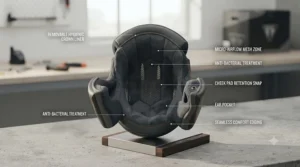
Genuinely worth paying for: multiple shell sizes (a helmet built specifically for your head size, not padded down from a bigger shell), a Pinlock-ready visor with the insert included rather than sold separately, and emergency quick-release cheek pads that let paramedics remove the helmet safely without twisting your neck. These features consistently show up across every SHARP 4-and-5-star helmet in this article’s line-up, and they’re not marketing fluff — they map directly onto real crash-scenario outcomes. Bennetts BikeSocial’s own helmet-buying guide makes a similar point: extra shell sizes and better ventilation tend to separate genuinely good helmets from merely expensive ones far more reliably than headline material claims do.
Less essential than the marketing suggests: built-in Bluetooth speaker pockets (nice, but any decent aftermarket comms unit fits most helmets regardless), elaborate spoiler designs sold on aerodynamic claims that are genuinely hard to verify outside a wind tunnel, and headline “carbon fibre” branding on helmets that don’t publish a SHARP result — as this article’s own comparison shows, unproven material claims are worth far less than a verified star rating.
FAQ
❓ Is a Kevlar motorcycle helmet actually safer than a standard one?
❓ How much does a Kevlar motorcycle helmet cost in the UK?
❓ Is Kevlar the same as carbon fibre in a motorcycle helmet?
❓ Do all Kevlar helmets need to be ECE 22.06 certified for UK roads?
❓ How often should I replace a composite motorcycle helmet?
Conclusion
A genuine kevlar motorcycle helmet is less about the headline material and more about how thoughtfully that material has been engineered into a working shell. Across the seven helmets in this guide, the pattern held firm: the best-performing lids paired real aramid or carbon content with disciplined shell sizing, solid retention systems, and — crucially — a verifiable SHARP rating rather than just a confident-sounding spec sheet. The Shoei NXR2 earns its premium price with a genuine 5-star result; the AGV K6S proves you don’t need to spend flagship money to get flagship-grade carbon-aramid construction; and even the budget-friendly Dainese DA530 has a place for riders who want composite materials without composite pricing, provided they understand exactly what that 3-star rating means.
If there’s one habit worth taking from this whole guide, it’s this: never buy on material branding alone. Cross-check the SHARP database, try the helmet on for genuine fit before committing, and think honestly about how many hours a year you’ll actually be wearing it before choosing where on this list to spend your money. Do that, and whichever of these seven helmets you land on, you’ll be riding under a shell that’s actually earned its reputation rather than just borrowed one from a marketing department.
Recommended for You
- Fibreglass Helmet vs Polycarbonate Helmet: 7 Best Picks for 2026
- 7 Best Fibreglass Touring Helmet for Long Rides (2026 UK Guide)
- Lightweight Fibreglass Sport Helmet: 7 Best Picks for 2026
Disclaimer: This article contains affiliate links. As an Amazon Associate, I earn from qualifying purchases. If you purchase products through these links, we may earn a small commission at no additional cost to you.
✨ Found this helpful? Share it with your friends! 💬🤗
