In This Article
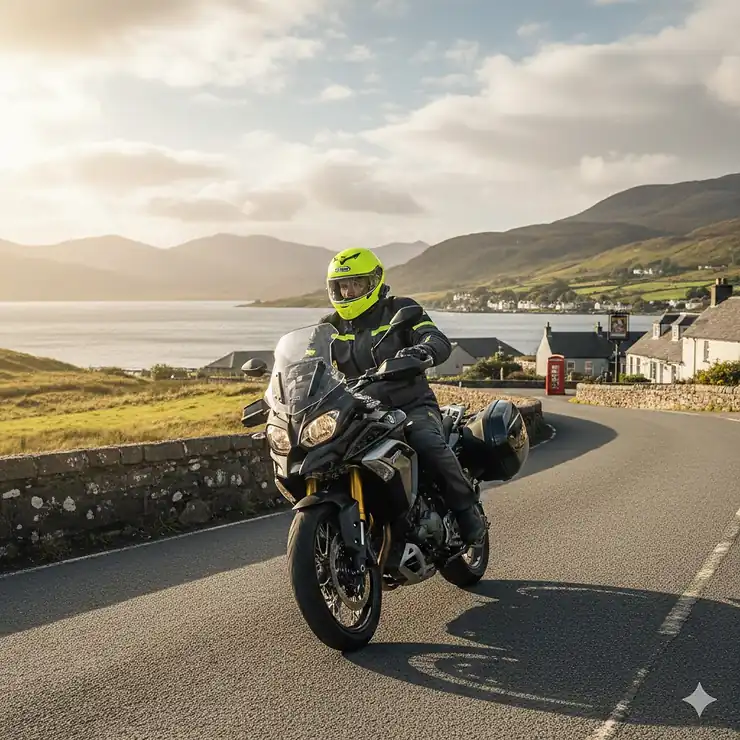
Picture this: you’re riding through a misty November morning on the M25, and the car in the next lane starts merging into your path. “Sorry mate, I didn’t see you!” — the most dreaded phrase every motorcyclist knows too well. But what if I told you that wearing the right helmet could reduce your crash risk by up to 24%?
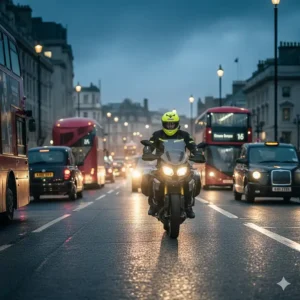
Research published in the British Medical Journal confirms that motorcyclists wearing white or light-coloured helmets have significantly lower crash-related injury risks compared to those sporting traditional black lids. In the UK, where motorcyclists represent just 1% of traffic but account for 19% of casualties, visibility isn’t just about style — it’s about survival.
High visibility motorcycle helmets combine fluorescent colours, reflective materials, and bright finishes to ensure you’re spotted early by other road users. Whether you’re commuting through London’s congested streets or touring the Scottish Highlands, conspicuity enhancement could be the difference between a close call and a catastrophic collision. According to SHARP (Safety Helmet Assessment and Rating Programme), around 80% of motorcyclist fatalities involve head injuries, making your helmet choice absolutely critical.
In this comprehensive guide, I’ll walk you through seven exceptional high visibility motorcycle helmets available on Amazon.co.uk in 2026, break down what makes them effective, and help you choose the perfect lid for maximum safety and visibility.
Quick Comparison Table
| Helmet Model | Colour Options | Safety Rating | Price Range (£) | Best For |
|---|---|---|---|---|
| JDC PRISM Full Face | Fluorescent Yellow | ECE 22.05 | £49.99-£69.99 | Budget-conscious riders |
| Generic Modular Flip-Up | Fluorescent Yellow | ECE 22.05/DOT | £79.99-£99.99 | Versatility & convenience |
| LS2 Storm II | Hi-Vis Graphics | ECE 22.06 | £129.99-£149.99 | Modern safety standards |
| Caberg Avalon Giga | Yellow/Red Fluorescent | ECE 22.06 | £164.99-£174.99 | Premium features |
| HJC C10 | Bright Colour Options | ECE 22.06 | £89.99-£99.99 | Best value ECE 22.06 |
| Bell Lithium | Multiple Hi-Vis | ECE 22.06 | £169.99-£214.99 | Open-face visibility |
| Reflective Helmet Decals | Black Reflective | N/A | £8.99-£15.99 | Upgrading existing helmets |
💬 Just one click – help others make better buying decisions too!😊
Top 7 High Visibility Motorcycle Helmets: Expert Analysis
1. JDC PRISM Full Face Helmet – Fluorescent Yellow
Starting our roundup is the excellent value JDC PRISM Full Face helmet in eye-catching fluorescent yellow. This lid proves you don’t need to spend a fortune to be seen on Britain’s roads.
Key Specifications:
- Aerodynamic polycarbonate shell construction
- Multiple air vents for circulation
- Removable, washable padding
- Clear visor with easy-change mechanism
Priced between £49.99-£69.99, the JDC PRISM delivers remarkable bang for your buck. UK customers consistently praise its comfort and visibility, with one reviewer noting “Well constructed and excellent value motorcycle helmet” — particularly impressive given the budget-friendly price point. The fluorescent yellow finish provides exceptional daytime conspicuity, making you stand out in traffic.
The helmet features a removable chin cover that reduces wind noise at motorway speeds, though some riders report it can be a bit noisy above 70 mph. The sizing runs true, with the manufacturer’s guide proving accurate according to multiple British buyers.
Quick Pros & Cons:
✅ Outstanding value for money
✅ Bright fluorescent yellow highly visible
✅ Comfortable fit with accurate sizing
❌ Can be noisy at higher speeds
❌ Heavier than premium alternatives
Best for: Learner riders, commuters, and budget-conscious motorcyclists who prioritise visibility without breaking the bank.
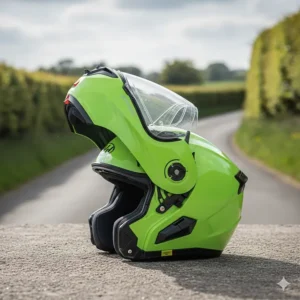
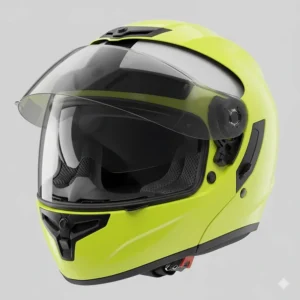
2. Generic Modular Flip-Up Helmet – Fluorescent Yellow
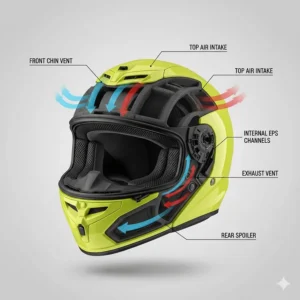
For riders seeking versatility alongside visibility, this Modular Flip-Up Helmet in fluorescent yellow offers the best of both worlds — full-face protection when you need it, open-face convenience when you don’t.
Key Specifications:
- High-strength ABS shell with multi-density EPS
- Dual visor system (clear + internal sun visor)
- DOT FMVSS 218 and ECE R22.05 certified
- Weight: approximately 1,650g
Available for £79.99-£99.99, the Generic Modular helmet receives praise from UK commuters who appreciate the flip-up functionality for quick conversations at petrol stations or traffic lights. The fluorescent yellow colourway ensures maximum visibility during both day and night riding, complemented by the helmet’s UV-protective visors.
The modular design allows for Bluetooth intercom installation (headset not included), making it ideal for group rides. British reviewers note the breathable, removable lining stays fresh even during summer commutes through congested city centres.
Quick Pros & Cons:
✅ Versatile flip-up design
✅ Dual certification (DOT & ECE)
✅ Excellent ventilation system
❌ Slightly heavier than fixed full-face helmets
❌ Bluetooth intercom sold separately
Best for: Urban commuters, touring riders, and those who value convenience alongside conspicuity.
3. LS2 Storm II – High-Visibility Graphics
The LS2 Storm II represents the new generation of budget-friendly helmets meeting the stricter ECE 22.06 safety standard. Available in vibrant “Racer Red/Blue” and other high-contrast graphics, this Spanish manufacturer proves affordable doesn’t mean compromising on safety.
Key Specifications:
- Kinetic Polymer Alloy (KPA) construction
- Weight: 1,563g (medium)
- Drop-down internal sun shield
- Pinlock-ready anti-fog visor
Priced at £129.99-£149.99, the LS2 Storm II punches well above its weight class. According to Bennetts BikeSocial reviews, UK riders consistently comment on the helmet’s premium feel despite its mid-range price. The high-visibility graphics ensure you’re spotted quickly in traffic, whilst the ECE 22.06 certification provides peace of mind that it meets the latest European safety standards.
The hypoallergenic lining is fully removable and washable — essential for British weather when you’re constantly switching between rain and shine. Some riders note a centre seam on the forehead padding that can cause pressure points on longer rides, though this varies by head shape.
Quick Pros & Cons:
✅ ECE 22.06 certified (latest standard)
✅ Excellent quality-to-price ratio
✅ Drop-down sun visor included
❌ Centre forehead seam may cause pressure
❌ Ventilation could be improved
Best for: Safety-conscious riders wanting modern certification standards without premium pricing.
4. Caberg Avalon Giga – Yellow/Red Fluorescent
Italian manufacturer Caberg brings premium engineering to the high-visibility market with the Avalon Giga in striking yellow and red fluorescent finish. This helmet combines eye-catching aesthetics with serious safety credentials.
Key Specifications:
- LG Chem Hi-Impact ABS polycarbonate shell
- Dual shell sizing (XS-SM, L-XL-XXL)
- DVT sun visor with anti-scratch treatment
- Micrometric buckle chin strap
Retailing at £164.99-£174.99, the Caberg Avalon represents a step up in both features and finish. The fluorescent yellow and red colour scheme isn’t just for show — it’s scientifically proven to enhance daytime visibility. The helmet’s DVT (Double Visor Tech) system includes an anti-UV sun visor that drops down at the push of a lever, perfect for those low-sun winter commutes that plague UK riders.
British motorcyclists particularly appreciate the helmet’s compatibility with Bluetooth systems (JUST SPEAK ready), allowing hands-free communication whilst maintaining maximum visibility. The dual shell sizing ensures a more precise fit across the size range compared to single-shell competitors.
Quick Pros & Cons:
✅ Premium Italian engineering
✅ Striking fluorescent colour combination
✅ Bluetooth-ready internal design
❌ Higher price point
❌ Limited colour options for those wanting subtlety
Best for: Experienced riders seeking premium features in a high-visibility package.
5. HJC C10 – Bright Colour Options
The HJC C10 made headlines as the first ECE 22.06-certified helmet under £100, and it’s available in several bright colour options perfect for enhanced visibility. This Korean manufacturer has been a favourite of UK riders for decades.
Key Specifications:
- Advanced polycarbonate composite shell
- Superior fit and comfort system
- Clear anti-scratch visor
- Weight: approximately 1,600g
At just £89.99-£99.99, the HJC C10 represents extraordinary value for a helmet meeting the latest safety standards. Bennetts BikeSocial awarded it high marks, noting it “makes a wise buy for anyone on a budget” whilst not compromising on protection. Choose from bright white, vivid graphics, or other high-contrast colour schemes to maximise your road presence.
UK riders consistently mention the helmet’s excellent fit — HJC’s advanced CAD technology ensures the interior shape suits European head profiles perfectly. Whilst it lacks a drop-down sun visor (something to consider for British riding), the anti-scratch clear visor provides excellent clarity.
Quick Pros & Cons:
✅ ECE 22.06 at an incredible price
✅ Excellent fit for European heads
✅ Proven HJC quality and reliability
❌ No integrated sun visor
❌ Basic feature set compared to pricier models
Best for: New riders, commuters, or anyone wanting cutting-edge safety certification without the premium price tag.
6. Bell Lithium – Hi-Vis Open Face
For riders who prefer open-face styling without sacrificing visibility, the Bell Lithium in hi-vis yellow delivers classic aesthetics with modern safety. This American brand has been protecting riders since 1954.
Key Specifications:
- Lightweight polycarbonate shell
- Fully removable interior padding
- Multiple intake and exhaust ports
- ECE 22.06 certified
Priced at £169.99 (or £214.99 for the MIPS version with rotational impact protection), the Bell Lithium combines retro cool with contemporary safety. The hi-vis yellow option ensures you’re spotted early, whilst the open-face design provides that classic cruiser or café racer aesthetic many British riders love.
The helmet’s ventilation system works brilliantly for UK summer riding, though you’ll want to pair it with a good neck warmer for winter commutes. British reviewers particularly appreciate the quality of materials and construction — this feels like a premium lid because it is one.
Quick Pros & Cons:
✅ Classic styling meets modern safety
✅ Excellent ventilation for summer riding
✅ Available with MIPS technology
❌ Less protection than full-face alternatives
❌ Not ideal for motorway riding
Best for: Urban riders, cruiser enthusiasts, and those who value style alongside visibility.
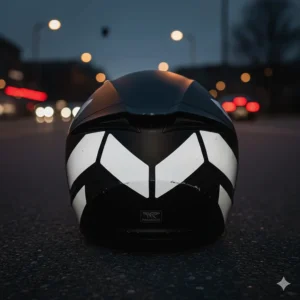
7. HJZHII Reflective Helmet Decals – Black Reflective Strips
Sometimes the best high visibility solution is upgrading the helmet you already love. The HJZHII Black Reflective Tape kit provides an ingenious way to boost conspicuity without replacing your existing lid.
Key Specifications:
- Industrial-grade adhesive backing
- Converts to bright white reflection at night
- Waterproof and UV-resistant
- 10-piece kit with multiple sizes
At just £8.99-£15.99, these reflective decals represent the most cost-effective visibility upgrade available. The genius lies in their design — appearing sleek black during daytime, they transform into brilliant white reflections when caught by vehicle headlights. British buyers rave about the quality, with one reviewer noting: “Actually looks black until light reflects off of it making it white and very visible. My teen thought it looked better than a typical bright colour on the back of his helmet.”
The industrial-strength adhesive survives British weather, high-pressure washing, and temperature fluctuations. Application is simple: clean your helmet surface, peel, and stick. Within seconds, you’ve enhanced your night-time visibility dramatically.
Quick Pros & Cons:
✅ Incredibly affordable
✅ Stylish black appearance in daylight
✅ Brilliant reflectivity at night
❌ Doesn’t enhance daytime visibility
❌ Permanent application (difficult to remove)
Best for: Riders who already own a helmet they love but want enhanced night-time conspicuity.
Understanding Motorcycle Helmet Visibility Science
The physics behind visibility might sound complicated, but it boils down to three key principles that could save your life on Britain’s roads.
Daytime Conspicuity: Fluorescent Materials
Fluorescent colours work through a fascinating optical phenomenon. They absorb ultraviolet light (invisible to human eyes) and re-emit it as visible light, appearing significantly brighter than standard colours. Research from the National Highway Traffic Safety Administration confirms that fluorescent yellow-green provides maximum daytime visibility, followed closely by fluorescent orange and yellow.
In the UK’s often overcast conditions, fluorescent materials maintain their effectiveness where ordinary bright colours fade into grey backgrounds. This explains why emergency services, construction workers, and increasingly savvy motorcyclists choose fluorescent gear. A study published in the BMJ found that white helmets reduce crash risk by 24% compared to black helmets, whilst yellow or orange helmets showed even greater protective effects.
Night-Time Conspicuity: Retroreflective Technology
When the sun sets (which happens distressingly early during British winters), retroreflective materials become your best friend. These specialised fabrics contain millions of tiny glass beads or prismatic elements that reflect light directly back to its source — meaning car headlights bounce straight back to the driver’s eyes.
According to research from the University of Nottingham, retroreflective gear can increase visibility distances from approximately 150 metres to over 450 metres. That’s potentially an extra 10-15 seconds of reaction time for other drivers — often the difference between a safe pass and a devastating collision.
The “Biomotion” Effect
Here’s something most riders don’t know: placing reflective strips on moving parts of your body (knees, ankles, elbows) creates what researchers call “biological motion” or biomotion. Our brains are hardwired to recognise human movement patterns, so these moving reflections trigger instant recognition that “person on bike” is present. Clever placement of reflective elements on your helmet can create a similar effect as you scan the road ahead.
UK Helmet Safety Standards Explained
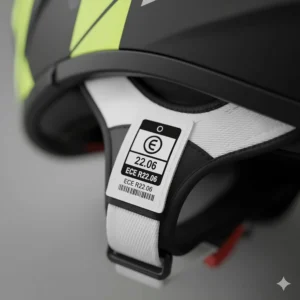
Navigating the alphabet soup of safety certifications can be bewildering, but understanding these standards is crucial for British riders. Here’s what those stickers inside your helmet actually mean.
ECE 22.05 vs ECE 22.06
The Economic Commission for Europe (ECE) standard is mandatory for helmets sold in the UK and across Europe. The long-standing ECE 22.05 certification has been superseded by the more rigorous ECE 22.06 as of 2023. According to J&S Accessories, both remain legal for road use, but the newer standard introduces:
- Rotational impact testing (addressing real-world crash scenarios)
- Improved visor safety requirements
- Enhanced retention system testing
- More rigorous quality control procedures
When shopping on Amazon.co.uk in 2026, you’ll find a mixture of both standards. ECE 22.05 helmets remain perfectly legal and safe, but ECE 22.06 represents the cutting edge of protection technology.
SHARP Ratings
The UK’s own Safety Helmet Assessment and Rating Programme (SHARP) provides an additional layer of consumer information. Run by the Department for Transport, SHARP tests helmets beyond basic legal requirements, assigning star ratings from 1 to 5 stars based on impact protection across multiple zones.
Interestingly, SHARP testing revealed that helmet colour doesn’t affect impact performance — a 5-star helmet is equally protective whether it’s black or fluorescent yellow. However, the fluorescent option dramatically improves your chances of avoiding a crash in the first place through enhanced visibility.
BS 6658:1985 and British Standards
Some older helmets still carry the British Standard BS 6658:1985 certification. Whilst this remains technically legal, modern ECE standards provide superior protection. When purchasing a new helmet in 2026, prioritise ECE 22.06 certification for maximum safety assurance.
Choosing the Right High Visibility Colour
Not all bright colours are created equal when it comes to motorcycle safety. Scientific research provides clear guidance on which hues offer maximum conspicuity.
The Visibility Spectrum
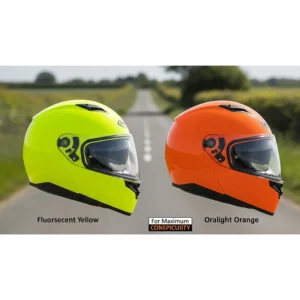
According to visibility research, the most effective helmet colours for daytime riding are:
1. Fluorescent Yellow-Green: Offers peak visibility in most lighting conditions, particularly effective in overcast British weather.
2. Fluorescent Orange: Excellent contrast against natural backgrounds, highly visible at dawn and dusk.
3. Fluorescent Yellow: Strong daytime performance, traditional high-vis choice for good reason.
4. White: Significantly safer than dark colours (24% lower crash risk), though not as effective as fluorescent options.
5. Bright Red: Provides good visibility but can blend into brake lights and traffic signals in urban environments.
Avoid These Colours
Research consistently identifies certain colours as problematic for motorcycle safety:
- Black: The most popular helmet colour in the UK, yet increases accident involvement by approximately 15%
- Dark Grey/Charcoal: Poor contrast with road surfaces and cloudy skies
- Dark Blue/Green: Blends into natural backgrounds
- Camouflage Patterns: Defeats the entire purpose of being visible
Weather Considerations for UK Riders
Britain’s notoriously variable weather demands special consideration. On foggy mornings, overcast days, or during twilight hours, fluorescent colours maintain visibility where standard bright colours lose effectiveness. For night riding, ensure your helmet includes retroreflective elements — fluorescent materials alone offer limited benefit after dark.
High Visibility Helmets for Different Riding Styles
Your riding style significantly influences which high visibility helmet suits you best. Let’s explore the options for various disciplines popular in the UK.
Commuting and Urban Riding
City riding presents unique challenges — heavy traffic, constant stops, pedestrians, and vehicles emerging from side streets. For London, Manchester, Birmingham, or any UK urban environment, consider:
Modular/Flip-Front Helmets: The versatility of flip-up designs (like our reviewed Generic Modular option) proves invaluable for urban commuting. Quick visor lifts at traffic lights, easy communication with other road users, and the option to flip up when queuing at petrol stations make these incredibly practical. Choose fluorescent yellow or orange for maximum daytime conspicuity in congested traffic.
Integrated Sun Visors: British weather fluctuates wildly, especially during shoulder seasons. A drop-down sun visor (featured in the LS2 Storm II and Caberg Avalon) eliminates fumbling with visor changes when emerging from tunnels or facing low winter sun.
Touring and Long-Distance Riding
Long days in the saddle touring Scotland’s North Coast 500, exploring Wales, or crossing to continental Europe demand different priorities:
Comfort Over Extended Periods: Full-face helmets with superior ventilation and plush, removable liners become essential. The Caberg Avalon excels here with its premium interior and dual-shell sizing for optimal fit.
Aerodynamic Efficiency: Wind noise and buffeting cause fatigue on motorway miles. Look for streamlined profiles like the LS2 Storm II that cut through air efficiently whilst maintaining high-visibility graphics.
Weather Versatility: Pinlock anti-fog inserts (available with several reviewed helmets) prevent visor misting during sudden British downpours — crucial for maintaining visibility and safety.
Weekend Riders and Enthusiasts
For Sunday blasts through the countryside or spirited rides on your favourite B-roads:
Style Meets Safety: Open-face options like the Bell Lithium let you feel the wind whilst maintaining visibility. Perfect for café racer enthusiasts or cruiser riders who want classic aesthetics without compromising conspicuity.
Balance Features and Budget: The HJC C10 delivers exceptional value for occasional riders — cutting-edge ECE 22.06 protection at a price that won’t make your wallet weep.
Enhancing Visibility Beyond Your Helmet
Whilst a high visibility helmet forms the foundation of conspicuity, a comprehensive approach multiplies your safety margins on British roads.
Complementary High-Vis Riding Gear
Research from the BMJ study on motorcycle conspicuity found that wearing reflective or fluorescent clothing reduced crash risk by 37% — even more effective than helmet colour alone. Consider:
- Hi-Vis Vests: Available from £15-40 on Amazon.co.uk, these slip over jackets and provide 360-degree visibility
- Reflective Jackets: Purpose-built motorcycle jackets with integrated reflective panels (£80-200)
- Fluorescent Gloves: Often overlooked, bright gloves are highly visible when signalling
- Reflective Boot Strips: Enhance lower-body visibility, particularly effective due to the biomotion effect
Motorcycle Lighting Enhancements
Modern LED technology offers brilliant options for increasing your bike’s presence:
- Auxiliary Driving Lights: Legal in the UK when wired correctly, these dramatically improve how other road users perceive your size and distance
- Reflective Wheel Strips: Create a distinctive rotating pattern that catches attention
- Brake Light Modulators: Flash your brake light rapidly when decelerating — highly effective in preventing rear-end collisions
The Complete Visibility Strategy
According to research, combining multiple conspicuity enhancements creates a synergistic effect. A rider wearing a fluorescent yellow helmet, hi-vis jacket, and using daytime running lights is approximately 50% less likely to be involved in a “Sorry mate, I didn’t see you” collision compared to a rider in all-black gear on a standard motorcycle.
Maintaining Your High Visibility Helmet
A filthy, degraded helmet undermines your investment in visibility and safety. Proper maintenance ensures your lid continues protecting you effectively.
Cleaning Fluorescent Helmets
Fluorescent materials gradually lose effectiveness through UV exposure and contamination. To maintain optimum visibility:
Weekly Maintenance:
- Wipe exterior with microfibre cloth and warm water
- Use pH-neutral motorcycle helmet cleaner (£5-10 from Halfords or Amazon.co.uk)
- Avoid household cleaners that can damage fluorescent coatings
- Clean visor with proper helmet visor cleaner to maintain clarity
Monthly Deep Clean:
- Remove and wash interior padding in lukewarm water with mild detergent
- Air dry completely before reinstallation (never use direct heat)
- Clean and lubricate visor mechanism
- Inspect for damage or wear
Storage Considerations
Improper storage degrades both safety and visibility:
- Store in a cool, dark place away from direct sunlight (UV damages fluorescent materials)
- Use a helmet bag to prevent dust accumulation and scratches
- Avoid hanging by the chin strap (can distort retention system)
- Never store near solvents, petrol, or cleaning chemicals
When to Replace
According to helmet manufacturers and safety experts, replace your helmet:
- After any impact: Even dropping your helmet from handlebar height can compromise the EPS liner
- Every 5 years: Materials degrade over time, regardless of visible wear
- When fluorescent finish fades: If your once-vivid yellow has turned pale and dingy, it’s no longer providing optimum visibility
- If safety standards change: Whilst not legally required, upgrading to ECE 22.06 when replacing offers enhanced protection
British riders should be particularly vigilant about UV degradation — even our limited sunshine gradually breaks down fluorescent pigments over time.
Real-World Visibility Scenarios
Understanding how high visibility helmets perform in actual UK riding conditions helps contextualise their benefits.
Scenario 1: M25 Morning Commute (Overcast, 7:30 AM)
Light levels are low, traffic is heavy, and stressed drivers are battling Monday morning chaos. Your fluorescent yellow helmet cuts through the grey morning gloom like a beacon. Research shows that in these conditions, you’re spotted approximately 1.5 seconds earlier than a rider in a black helmet — at 70 mph, that’s an extra 46 metres of reaction distance.
A study by the Transport Research Laboratory found that drivers’ eyes are drawn to high-contrast, unexpected stimuli. Your bright helmet triggers an immediate recognition response that a dark-coloured lid simply doesn’t achieve. In stop-start motorway traffic, this early detection prevents lane-change collisions.
Scenario 2: Rural A-Road (Sunny Afternoon, 2:00 PM)
Filtering through a picturesque Cotswolds village, a car waits to pull out from a side street. The driver’s scanning for traffic, but their brain is calibrated for car-sized objects. Your fluorescent helmet and gear create a “search image” that registers immediately, whereas a dark-clad rider might not trigger recognition until it’s too late.
According to visibility research, fluorescent yellow-green provides maximum daytime conspicuity against natural backgrounds. On tree-lined British B-roads, this colour science proves its worth constantly.
Scenario 3: Dual Carriageway (Dusk, 5:30 PM)
The treacherous twilight period when many drivers haven’t yet switched to headlights, but natural light is fading fast. Your helmet’s fluorescent materials continue working overtime, absorbing available UV light and re-emitting visible wavelengths. Meanwhile, retroreflective elements start earning their keep, bouncing back the few headlight beams present.
Statistics from ROSPA (Royal Society for the Prevention of Accidents) identify dusk as a peak risk period for motorcyclists. High visibility gear specifically addresses this vulnerability.
Scenario 4: Country Lane (Night, 10:00 PM)
Pitch darkness on a unlit Shropshire lane. Without street lighting, your bike’s headlight provides limited lateral visibility. The retroreflective decals on your helmet (or integrated reflective elements on premium lids) suddenly become crucial — a car approaching from a side road catches your reflections 300+ metres away rather than 100 metres.
Research shows that retroreflective materials can increase detection distances by up to 500%, potentially providing an additional 10-15 seconds of reaction time for other motorists. On rural roads where closing speeds are high, these extra seconds save lives.
Frequently Asked Questions
❓ Are fluorescent motorcycle helmets legal in the UK?
❓ Do high visibility helmets actually reduce accidents?
❓ Will a fluorescent helmet fade over time in the UK?
❓ Can I add reflective tape to any motorcycle helmet?
❓ What's the best helmet colour for riding in British weather?
Conclusion: Visibility Saves Lives
After years of riding British roads and researching motorcycle safety, I’m convinced that visibility represents one of the most cost-effective safety investments any rider can make. For £50-200, a high visibility helmet provides protection that no amount of defensive riding alone can match.
The statistics are compelling: white helmets offer 24% lower crash risk than black alternatives, whilst fluorescent colours and reflective materials provide even greater benefits. Combine this with research showing that 37% of motorcycle crashes involve drivers claiming they “didn’t see” the rider, and the case for conspicuity enhancement becomes overwhelming.
Whether you choose the budget-friendly JDC PRISM at under £70, invest in the premium Caberg Avalon with its Italian engineering, or simply add reflective decals to your existing lid, you’re taking concrete steps to reduce your risk on the road. Each of the seven options reviewed in this guide offers proven visibility benefits backed by scientific research and real-world UK rider feedback.
Remember, the best helmet is the one that fits correctly, meets current safety standards, and — crucially — makes you visible to other road users. In Britain’s challenging riding conditions with congested roads, variable weather, and increasingly distracted drivers, being seen isn’t vanity. It’s survival.
Ride safe, ride visible, and I’ll see you on the road — from a safe distance, because you’ll be impossible to miss! 🏍️💛
✨ Don’t Miss These Exclusive Deals!
🔍 Take your motorcycle safety to the next level with these carefully selected high visibility helmets. Click on any highlighted item to check current pricing and availability on Amazon.co.uk. These helmets will help you stay visible and protected on every ride!
Recommended for You
- 7 Best ACU Approved Motorcycle Helmets UK 2026
- 7 Best ECE 22.06 Helmets UK 2026
- 7 Best Waterproof Motorcycle Helmets UK 2026
Disclaimer: This article contains affiliate links. If you purchase products through these links, we may earn a small commission at no additional cost to you. Prices shown are approximate and may vary based on Amazon.co.uk availability and current offers. All safety information is provided for educational purposes — always consult official UK regulations and safety standards when selecting motorcycle gear.
✨ Found this helpful? Share it with your mates! 💬🤗
