In This Article
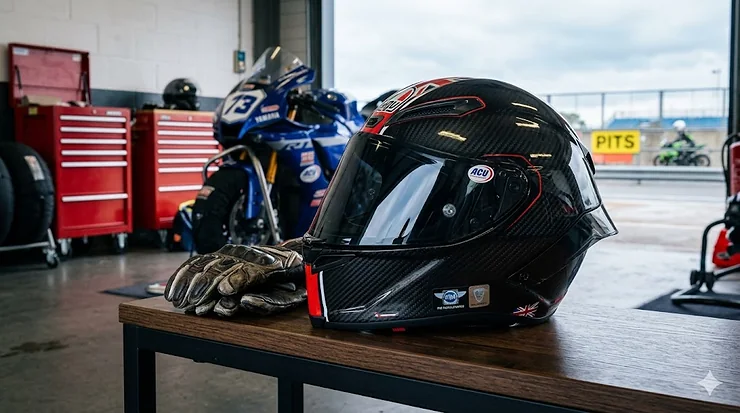
If you’re serious about track days or competitive circuit racing in the UK, you’ll have encountered the term “FIM homologation” more than once. The Fédération Internationale de Motocyclisme’s racing helmet certification has become mandatory for most FIM championships from 2026 onwards—and whilst you might not be lining up on the MotoGP grid just yet, there’s something rather reassuring about wearing the same safety specification as the professionals hurtling around at 200mph.
Here’s what most riders don’t realise: FIM homologation (FRHPhe-02) represents a testing regime that exceeds existing standards like ECE 22.06 and Snell M2020. We’re talking enhanced impact tests against oblique and hemispherical anvils to measure rotational forces, quick-removal cheek pad assessments, and even a Skull Fracture Criterion evaluation. In essence, these helmets aren’t just tick-box exercises—they’re engineered to withstand the specific punishment dished out during high-speed racing incidents.
For British track enthusiasts, whether you’re doing novice days at Brands Hatch or intermediate sessions at Silverstone, investing in an FIM homologated helmet delivers three key benefits: maximum protection during your fastest laps, eligibility for racing series that mandate FIM certification, and—let’s be honest—the psychological confidence that comes from knowing your lid has passed the most stringent tests available. With prices ranging from around £650 to well over £1,200, these helmets represent the pinnacle of protective headgear, and choosing wisely matters tremendously.
Quick Comparison Table: Top FIM Homologated Helmets for UK Riders
| Helmet Model | Weight (Size M) | Price Range (£) | Shell Material | Best For |
|---|---|---|---|---|
| Arai RX-7V Evo FIM Racing #2 | 1,550g | £750-£850 | PB-SNC2 Composite | Serious racers wanting proven Arai protection |
| Shark Aeron GP FIM Racing #2 | 1,410g | £800-£900 | COVA (80% Carbon/20% Aramid) | Riders prioritising adaptive aerodynamics |
| AGV Pista GP RR | 1,484g | £1,100-£1,300 | 100% Carbon Fibre | MotoGP-level performance seekers |
| Shoei X-SPR Pro | 1,400g | £900-£1,050 | AIM+ Multi-Composite | Premium quality with exceptional ventilation |
| Bell Pro Star FIM ECE | 1,150g | £850-£1,000 | TeXtreme Carbon | Lightest option for reduced neck fatigue |
| HJC RPHA 1 | 1,350g | £650-£750 | PIM+ Carbon Hybrid | Budget-conscious racers seeking FIM cert |
💬 Just one click — help others make better buying decisions too! 😊
Top 7 FIM Homologated Helmets for Track Racing: Expert Analysis
1. Arai RX-7V Evo FIM Racing #2
The RX-7V FIM Racing #2 was the world’s first helmet homologated to the FIM FRHPhe-02 standard, and Arai’s decades-long priority for protection shows in every detail. Built with their proprietary PB-SNC2 (Peripherally Belted Structural Net Composite) shell—which borrows technology from Formula 1—this helmet delivers exceptional strength whilst maintaining flexibility to absorb impact forces more effectively.
The Variable Axis System (VAS) visor mechanism provides enhanced impact protection whilst offering tool-less visor changes, and the Free Flow System ventilation channels cool air remarkably well even during aggressive track sessions. What separates the RX-7V from competitors isn’t flashy aerodynamics or marketing hype—it’s Arai’s unwavering focus on the shell’s ability to glance off surfaces rather than snag during slides.
Who is this for? Serious circuit riders who value Arai’s proven safety philosophy and don’t mind paying premium prices for Japanese hand-built quality. If you’re the sort who prefers substance over style and appreciates engineering heritage, this helmet rewards that mindset. Worth noting: Arai helmets generally suit rounder head shapes better than competitors, so trying before buying is essential.
Customer feedback summary: UK buyers consistently praise the build quality and comfort, though some note the conservative styling. Several track day regulars mention the helmet runs slightly warmer than more aggressive race designs, which can be noticeable during summer sessions at circuits like Donington Park.
✅ Exceptional build quality with hand-finished Japanese construction
✅ VAS visor system allows quick changes between sessions
✅ Proven safety record spanning decades of racing
❌ Styling rather conservative compared to Italian rivals
❌ Runs warmer than some competitors during extended track use
Price & Value Verdict: Around £800-£850. Not cheap, but you’re investing in Arai’s reputation and the peace of mind that comes with their safety-first approach.
2. Shark Aeron GP FIM Racing #2
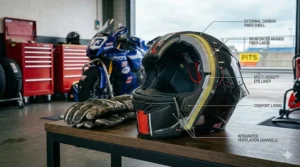
The Aeron GP represents Shark’s most ambitious engineering project to date, featuring their patented Adaptive Aero System (A²S)—the world’s first adaptive spoiler that adjusts automatically to the rider’s position. This revolutionary helmet adapts its aerodynamic shape to the rider’s position, reducing turbulence whether you’re upright between corners or fully tucked down the straights.
Constructed using Shark’s COVA technology (80% carbon, 20% aramid), the shell achieves outstanding lightness at 1,410g whilst maintaining superior abrasion and compression resistance. The EPU (expanded polyurethane) chin guard provides enhanced impact absorption in the critical frontal area—particularly relevant given that chin bar impacts feature prominently in racing accidents.
Who is this for? Riders prioritising cutting-edge aerodynamics and those competing in series where marginal gains matter. If you’re the sort who obsesses over lap times and appreciates innovative engineering, the Aeron GP’s adaptive system delivers measurable stability improvements at speeds exceeding 150mph. British riders should note this helmet particularly shines on faster circuits like Silverstone’s National or Snetterton’s 300 layout.
Customer feedback summary: Early adopters in the UK report noticeable reductions in head buffeting at high speed. Several racers mention the helmet’s stability inspires confidence when braking hard from 160mph down to 40mph for chicanes—exactly where inferior lids start feeling vague.
✅ Adaptive spoiler genuinely reduces buffeting and drag
✅ COVA shell construction provides excellent strength-to-weight ratio
✅ Morpho cheek pads designed for comfort even beyond 300km/h
❌ Premium price point approaching £900
❌ Adaptive system adds complexity—purists may prefer simpler designs
Price & Value Verdict: Around £850-£900. The adaptive aerodynamics justify the premium if you’re regularly exceeding 130mph on track.
3. AGV Pista GP RR
This is the helmet worn by MotoGP champions, now available to anyone with deep enough pockets. The Pista GP RR features 100% carbon fibre construction and has received FIM homologation certifying protection even against dangerous head twisting. Every detail—from the metal alloy air vents wind-tunnel tested by AGV’s MotoGP athletes to the minimalist visor mechanisms—exists purely to enhance performance.
The Ultravision visor, featuring optical class 1 clarity and 5mm thickness, provides 190° panoramic vision, which translates to superior peripheral awareness when monitoring competitors diving up the inside. The 100% carbon shell comes in four sizes (XS-S, MS, ML-L, XL-XXL), ensuring a properly compact fit regardless of your head size—crucial for reducing the helmet’s moment of inertia during rapid direction changes.
Who is this for? Experienced racers and track day addicts who demand MotoGP-specification equipment and have the budget to match. If you’re competing in club racing or doing 15+ track days annually, the Pista GP RR’s weight savings and aerodynamic refinement become genuinely noticeable advantages. Less suitable for occasional track day riders who’d benefit more from spending that budget on suspension upgrades or coaching.
Customer feedback summary: UK racers consistently cite the Pista GP RR’s planted feeling at speed—it simply refuses to lift or buffet even when you’re hard on the gas exiting Copse at Silverstone. Some note the aggressive racing fit requires careful sizing; this isn’t a helmet for leisurely Sunday rides.
✅ Uncompromising 100% carbon construction
✅ Ultravision visor provides class-leading peripheral vision
✅ Four shell sizes ensure optimal fit and minimal weight
❌ Premium pricing exceeding £1,100
❌ Aggressive fit may feel claustrophobic initially
Price & Value Verdict: In the £1,100-£1,300 range. Exceptional if racing is your primary pursuit; questionable value for casual track day use.
4. Shoei X-SPR Pro
Designed with input from Marc Márquez and other MotoGP champions, the X-SPR Pro represents Shoei’s pinnacle racing technology. The helmet achieves aerodynamic excellence at speeds exceeding 200mph with approvals to both FIM and ECE 22.06 standards. Shoei’s AIM+ (Advanced Integrated Matrix Plus) shell construction combines multiple high-performance fibres to deliver optimal strength whilst keeping weight around 1,400g.
The Emergency Quick Release System (E.Q.R.S.) allows marshals to remove cheek pads swiftly following incidents—a feature developed directly from MotoGP medical protocols. Seven intake vents and six exhaust outlets create exceptional airflow, which British riders will appreciate during those rare scorching track days when temperatures actually climb above 25°C.
Who is this for? Riders who value Shoei’s legendary quality control and want a helmet equally capable on track and spirited road rides. The X-SPR Pro’s refinement shows in details: smoother visor operation than rivals, superior paint finishes that resist chip damage from stone strikes, and comfort that remains consistent through 40-minute sessions. Particularly suits riders with intermediate oval head shapes—narrower than Arai but rounder than AGV.
Customer feedback summary: UK owners praise the helmet’s versatility—it doesn’t feel compromised when used for aggressive road riding between track days. Several note Shoei’s UK dealer network and aftersales support exceeds Italian competitors, which matters when you need replacement parts or warranty service.
✅ E.Q.R.S. system provides crucial safety feature for track use
✅ Exceptional ventilation through sophisticated duct system
✅ Shoei build quality and UK dealer support
❌ Pricing pushes toward £1,000 mark
❌ Conservative styling compared to flashier Italian rivals
Price & Value Verdict: Around £900-£1,050. Premium pricing reflects Shoei’s quality, but you’re getting a helmet that performs brilliantly across multiple riding scenarios.
5. Bell Pro Star FIM ECE
At 1,150g (size M), the Pro Star ECE ranks among the lightest FIM-certified helmets available. Built with an Ultralight 3K Carbon Shell, the Pro Star FIM offers extreme strength and weight savings for maximum performance. Bell’s Virus CoolJade liner uses fabric infused with recycled jade particles to actively reduce skin temperature—genuinely noticeable during extended sessions when ambient temperatures climb.
The Panovision shield system expands both vertical and horizontal fields of view, providing excellent visibility in the racing tuck. Five shell sizes ensure proper fit optimisation, and the Venturi-effect ventilation channels airflow precisely where it’s needed most.
Who is this for? Riders prioritising minimum weight to reduce neck fatigue, particularly taller individuals or those with previous neck injuries. If you’re doing multiple 20-minute sessions daily during track day weekends, those saved 200-300 grams make a tangible difference by day’s end. Also ideal for riders graduating from novice to intermediate groups who need FIM certification without bankrupting themselves before they’ve determined whether racing is their long-term commitment.
Customer feedback summary: UK track regulars mention the Pro Star’s light weight becomes most appreciated during the final sessions when fatigue sets in. Some note wind noise levels run slightly higher than Shoei or Arai—acceptable for dedicated track use, less ideal if you’re planning motorway miles between circuits.
✅ Lightest weight in this comparison at 1,150g
✅ Virus CoolJade liner actively reduces heat buildup
✅ Five shell sizes for optimal fit across rider sizes
❌ Wind noise levels higher than premium competitors
❌ Less refined visor mechanism compared to Shoei/Arai
Price & Value Verdict: Around £850-£1,000. Excellent value considering the weight savings and FIM certification.
6. HJC RPHA 1
The RPHA 1 was designed and developed with crucial feedback from top world-class athletes in MotoGP, making it the most accessible FIM-homologated helmet available to British riders. HJC’s Premium Integrated Matrix Plus (PIM+) construction combines carbon fibre with carbon-glass hybrid fabric, delivering impressive strength whilst keeping pricing remarkably competitive.
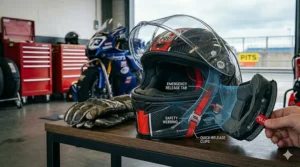
The Advanced Channelling Ventilation System (ACS) features five intakes and four exhausts, providing airflow that rivals helmets costing £200-£300 more. Emergency quick-release cheek pads allow rapid helmet removal following incidents, and the Pinlock-ready HJ-35 visor provides 99% UV protection with anti-scratch coating.
Who is this for? Budget-conscious racers who need FIM certification without sacrificing essential features. If you’re competing in club racing where grid positions aren’t determined by equipment budgets, or doing regular track days whilst saving for bike upgrades, the RPHA 1 delivers professional-specification protection at intermediate pricing. Also suits riders new to racing who haven’t yet determined their preferred brand—at around £650-£750, it’s less painful if you discover you prefer a different fit profile after a season’s use.
Customer feedback summary: UK buyers consistently highlight the exceptional value proposition—you’re getting genuine FIM homologation and features matching helmets costing £300-£400 more. Some mention the graphics options lean toward bold designs rather than understated elegance, which may not suit British tastes favouring subtlety.
✅ Outstanding value at £650-£750 price point
✅ PIM+ construction delivers strength comparable to pricier rivals
✅ ACS ventilation system performs excellently
❌ Build quality not quite matching Arai/Shoei refinement
❌ Graphic designs may be too bold for conservative British preferences
Price & Value Verdict: Around £650-£750. Quite possibly the cleverest purchase in this category—allocate the savings toward track day fees or suspension upgrades.
7. Alpinestars Supertech R10
Alpinestars’ flagship helmet combines their decades of protective apparel expertise with cutting-edge helmet technology. The carbon-aramid-fibre shell construction optimises energy absorption across varying impact velocities, whilst the patented A-Head Fitment System allows precise adjustment for different head shapes and sizes—particularly valuable for riders struggling to find proper fit in competing brands.
The aerodynamic shell features a unique air extraction system that creates negative pressure to pull heat away from the head, and the emergency release system allows quick cheek pad removal. Multiple intake and exhaust vents provide excellent airflow, and the anti-microbial interior remains fresh even after intensive track use.
Who is this for? Riders already committed to Alpinestars protective gear who value brand synergy, and those who’ve struggled achieving proper fit in more traditional helmet brands. The A-Head fitment system’s adjustability can accommodate head shapes that fall between standard sizing in Arai, AGV, or Shoei offerings.
Customer feedback summary: UK buyers appreciate the integration with Alpinestars’ Tech-Air race airbag system (if fitted), creating a cohesive safety package. Several mention the helmet’s Italian styling stands out on British circuits where Japanese brands dominate, which you’ll either find appealing or irrelevant depending on your personality.
✅ A-Head fitment system accommodates varied head shapes
✅ Excellent integration with Alpinestars protective ecosystem
✅ Aerodynamic extraction system effectively manages heat
❌ Less established helmet pedigree compared to specialist manufacturers
❌ Availability and dealer support more limited in UK
Price & Value Verdict: Around £800-£950. Solid choice particularly if already invested in Alpinestars protective gear.
Understanding FIM FRHPhe-02 Certification: What British Racers Need to Know
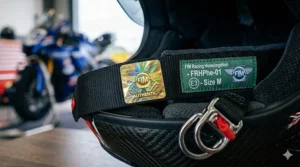
The FIM Racing Homologation Programme for Helmets Phase 02 (FRHPhe-02) represents the most demanding helmet certification available. Developed by the FIM in collaboration with leading helmet manufacturers, this includes new threshold requirements, new impacts and tests, such as oblique and hemispherical anvil tests to measure rotational solicitations, quick-removal cheek pad tests, and introduction of a Skull Fracture Criterion. These requirements specifically address injury mechanisms observed in high-speed racing incidents—precisely the scenarios British track riders face when exploring their bike’s capabilities at circuits nationwide.
Why FRHPhe-02 Exceeds Standard Certifications
Standard ECE 22.06 certification—the legal requirement for road helmets in the UK—tests helmets under controlled laboratory conditions simulating typical road accidents. FRHPhe-02 goes considerably further, evaluating performance under racing-specific conditions including high-speed impacts at oblique angles, rotational acceleration forces that can cause brain injury even without skull fractures, and repeated impacts simulating crashes where helmets contact multiple surfaces.
For British riders, this distinction matters particularly on faster circuits. When you bin it at 140mph down Hangar Straight at Silverstone, your helmet might impact the tarmac, slide into gravel, and contact an air fence—all within seconds. FRHPhe-02 certification ensures the helmet maintains protective integrity throughout this sequence, not just the initial impact.
The Quick-Release Requirement: Track Day Essential
One FRHPhe-02 requirement often overlooked: quick-removal cheek pad systems allowing circuit marshals to extract you from your helmet without excessive head movement. If you’re knocked unconscious following a crash, improper helmet removal can cause secondary spinal injuries—the emergency release system mitigates this risk significantly. British track day organisers increasingly expect this feature even for non-racing sessions, making it worthwhile consideration even if you’re not competing formally.
The UK Circuit Racing Context
FIM 2 helmet regulations become mandatory for 2026 across most FIM-sanctioned racing series. For British club racers competing in organisations like the British Motorcycle Racing Club or attending championship rounds at circuits like Brands Hatch, Cadwell Park, or Oulton Park, FIM certification is increasingly becoming the expected standard rather than optional upgrade. Even if not mandated in your specific series yet, having an FIM-certified helmet future-proofs your investment against evolving regulations.
How to Choose Your FIM Homologated Helmet: A British Rider’s Decision Framework
Step 1: Determine Your Racing Frequency and Commitment Level
If you’re doing 2-3 track days annually as a hobby, an HJC RPHA 1 around £700 delivers FIM certification without excessive investment. Allocate the savings toward tyres, brake pads, and track fees—consumables that directly improve your on-track experience. Conversely, if you’re competing in 10+ race weekends annually or doing weekly track training sessions, investing £1,000+ in an AGV Pista GP RR or Shoei X-SPR Pro makes sense—the superior ventilation, weight savings, and aerodynamic refinement genuinely enhance performance and reduce fatigue across season-long campaigns.
Step 2: Identify Your Head Shape Profile
This deserves more attention than most riders give it. Helmets broadly categorise into three internal shapes: round oval (Arai), intermediate oval (Shoei, HJC), and long oval (AGV, some Italian brands). Wearing the wrong profile creates pressure points that become excruciating during 20-minute sessions, regardless of how well-engineered the helmet might be.
The only reliable method: try multiple brands at a quality motorcycle shop. Wear each helmet for at least 10 minutes whilst walking around the shop, preferably with your race suit collar done up to simulate actual riding position. Pressure points that feel minor in the shop become unbearable after three laps pushing hard. British retailers like Sportsbikeshop and J&S Accessories stock multiple FIM helmets and understand fit nuances—use their expertise.
Step 3: Consider Your Primary Circuit Types
British circuits broadly divide into fast flowing layouts (Silverstone, Donington, Snetterton) and tighter technical tracks (Cadwell Park, Oulton Park, Brands Hatch Indy). Fast circuits demand superior aerodynamics and ventilation—the Shark Aeron GP’s adaptive spoiler and Bell Pro Star’s Venturi ventilation excel here. Technical circuits with frequent direction changes favour lighter helmets reducing rotational inertia—the Bell Pro Star’s 1,150g weight particularly suits these venues.
Step 4: Budget Realistically Including Accessories
The helmet’s purchase price represents only part of your investment. Budget for:
- Pinlock anti-fog insert (£30-£50)—essential for British weather conditions
- Tinted visor (£60-£100)—crucial for summer track days
- Tear-offs or visor wipes (£15-£25)—maintaining visibility when insects accumulate
- Helmet bag (often included, but verify)—protecting your investment during transport
These accessories add £100-£200 to your total outlay. An £800 helmet realistically costs around £950-£1,000 properly equipped.
Step 5: Evaluate Long-Term Value and Replacement Cycles
FIM helmets typically require replacement after significant impacts or 5-7 years maximum service life—whichever comes first. Spreading a £1,000 investment across 6 years and 30 track days yields £33 per track day depreciation. Suddenly the premium models seem rather more reasonable when calculated per-session rather than as lump sums. Conversely, if you’re uncertain whether racing will become a long-term commitment, starting with an HJC RPHA 1 around £700 makes more sense—less painful if you decide racing isn’t for you after a season.
UK Safety Ratings Explained: SHARP, ACU Gold, and How They Relate to FIM
British riders benefit from additional safety assessment systems beyond basic certification requirements. Understanding how these interact with FIM homologation helps make informed purchasing decisions.
The SHARP Rating System
The Safety Helmet Assessment and Rating Programme (SHARP) was launched in 2007 by the UK Department for Transport to help motorcyclists evaluate helmet protection levels beyond minimum legal requirements. SHARP tests helmets using a 1-5 star rating system, with five stars indicating superior all-round protection and one star meeting only minimum standards.
Here’s the crucial bit many riders misunderstand: SHARP doesn’t test FIM-homologated racing helmets. The programme focuses on road helmets commonly purchased by British riders, whilst FIM helmets target professional racing applications. This doesn’t mean FIM helmets are less safe—quite the opposite. FIM testing protocols equal or exceed SHARP’s most demanding assessments, particularly regarding rotational forces and high-speed impacts that SHARP doesn’t specifically evaluate.
For British track riders, this creates an interesting situation. Road-focused helmets might display impressive SHARP ratings but lack FIM certification’s racing-specific testing. Conversely, FIM helmets deliver track-proven protection without SHARP scores. If you’re splitting time between road and track, consider helmets like the Shoei X-SPR Pro or Arai RX-7V Evo that balance both worlds—though they typically won’t have SHARP ratings due to their racing focus.
ACU Gold Certification
The Auto-Cycle Union (ACU) Gold standard is specifically recognised for UK motorcycle racing. Helmets carrying ACU Gold stickers have passed additional stringent tests making them suitable for competitive racing environments. Most modern FIM-certified helmets automatically exceed ACU Gold requirements, but verify this before entering your first race meeting—scrutineers will check.
British club racing series often mandate ACU Gold as minimum specification, with FIM certification welcomed as exceeding this baseline. For riders progressing from track days into proper racing, investing directly in FIM-certified helmets saves replacing an ACU Gold helmet later when regulations tighten or you progress to higher-level series.
Real-World Performance: What British Circuits Teach Us About Helmet Choice
Britain’s diverse circuit layouts provide excellent testing grounds for evaluating helmet performance across varying conditions. Here’s what years of track day observations reveal about how different FIM helmets perform at specific UK venues.
Fast Flowing Circuits: Silverstone, Donington, Thruxton
These venues demand superior aerodynamics and stability at sustained high speeds. The Shark Aeron GP’s adaptive spoiler technology genuinely shines here—riders report noticeably reduced head buffeting when braking from 150mph+ down to chicane speeds. The AGV Pista GP RR’s wind-tunnel-developed profile similarly excels, maintaining planted stability through Silverstone’s Maggots-Becketts complex where inferior helmets start feeling vague.
Ventilation becomes critical during summer track days at these circuits. July afternoons at Silverstone can see track temperatures exceeding 40°C, and helmets with aggressive ventilation systems—particularly the Shoei X-SPR Pro with seven intake vents—provide measurable comfort advantages. Riders consistently report arriving at braking zones fresher and more focused when properly ventilated versus overheating in less sophisticated lids.
Technical Circuits: Cadwell Park, Oulton Park, Brands Hatch Indy
These tighter, more technical venues emphasise rapid direction changes over sustained speed. Here, the Bell Pro Star’s 1,150g weight becomes a tangible advantage—the reduced rotational inertia makes flicking the bike through Cascades at Oulton or Cadwell’s Mountain section noticeably less tiring over a full track day.
The HJC RPHA 1, whilst slightly heavier than the Bell, still delivers competitive performance at these circuits whilst saving you £250-£300. For intermediate riders developing skills at technical tracks, investing that difference in suspension setup or coaching yields better lap time improvements than marginal weight savings.
Wet Weather Performance: The British Reality
Let’s address what continental manufacturers often overlook: British circuits experience wet conditions regularly. Spring and autumn track days frequently feature damp morning sessions, and sudden afternoon showers aren’t uncommon even in summer.
Pinlock anti-fog systems become absolutely essential. Every helmet reviewed here offers Pinlock-ready visors, but the quality of implementation varies. Arai and Shoei feature the most robust Pinlock seal mechanisms—riders report these maintaining fog-free vision even during damp morning sessions when temperatures hover around 8-10°C. Italian manufacturers’ implementations sometimes allow slight edge fogging under extreme conditions, though remaining perfectly adequate for most situations.
Ventilation management matters more in British conditions than Mediterranean climates. Helmets with closeable vents—allowing you to shut airflow during cold, damp morning sessions then open everything for warmer afternoon running—provide superior comfort across our temperature variations. The Shark Aeron GP and Shoei X-SPR Pro excel here with easily adjustable vent systems.
Common Mistakes When Buying FIM Helmets (That British Riders Keep Making)
Mistake 1: Prioritising Graphics Over Fit
We’ve all seen it—a rider struggling through a track day in obvious discomfort because they loved a particular graphic and convinced themselves the fit would “break in.” Helmet liners compress slightly with use, but shells don’t stretch. If a helmet feels tight across your forehead or temples initially, it’ll feel excruciating after three laps. Buy the helmet that fits properly, not the one with the flashiest graphics. You can always add custom vinyl or paint later.
Mistake 2: Assuming More Expensive Equals Safer
Within FIM-certified helmets, all models meet identical minimum safety standards—that’s what certification means. An £800 HJC RPHA 1 passed the same tests as a £1,200 AGV Pista GP RR. The price premium buys lighter weight, superior aerodynamics, better ventilation, and more refined finishing—not additional safety. If your budget stretches to premium models and you value those features, brilliant. But don’t convince yourself a £700 helmet won’t protect you adequately.
Mistake 3: Buying Online Without Trying First
Yes, online retailers offer better pricing than brick-and-mortar shops. But ordering a £900 helmet based on Amazon reviews without trying it on is lunacy. Visit a physical shop, spend time finding the right brand and size, then—if you must—order online for savings. Many UK shops now offer price-matching policies; supporting them maintains the expertise and fitting services you’ll need next time.
Mistake 4: Neglecting the UKCA/ECE Certification Check
Post-Brexit, helmets sold in Great Britain should carry UKCA (UK Conformity Assessed) marking, whilst ECE 22.06 remains valid. Northern Ireland follows different rules under the Protocol. Verify your chosen helmet carries appropriate UK certification—FIM homologation alone doesn’t make a helmet road-legal for riding to and from circuits. All helmets reviewed here maintain proper UK/ECE certification alongside FIM approval, but always verify before purchasing.
Mistake 5: Ignoring the British Weather Reality
Mediterranean manufacturers sometimes design helmets assuming warm, dry conditions. In Britain, you’ll encounter damp mornings, sudden rain showers, and temperatures fluctuating 15°C between morning and afternoon sessions. Prioritise helmets with effective anti-fog provisions (Pinlock-ready visors), good ventilation management (closeable vents for cold morning sessions), and proven track records in British conditions. Reading reviews from UK-based riders rather than continental Europeans or Americans provides more relevant insights.
FIM Helmets vs Track Day Standards: What the Regulations Actually Require
Here’s what confuses many British riders: whilst FIM certification is mandatory for FIM-sanctioned racing, most UK track day providers only require ECE 22.05/22.06 or ACU Gold certification. You could theoretically attend Brands Hatch’s track days wearing a £150 ECE-certified helmet.
So why buy FIM-certified if not required? Three compelling reasons:
Future-proofing: If you develop serious pace and decide to contest club racing, you’ll need FIM certification eventually. Better to invest correctly from the start than replace a perfectly functional helmet purely for certification requirements.
Insurance considerations: Following incidents, some insurers scrutinise whether you used appropriate safety equipment for the activity. Using a race-certified helmet for track riding strengthens your position should disputes arise.
Actual protection: The enhanced testing protocols genuinely translate to better protection in racing-specific crash scenarios. British circuits like Cadwell Park (with its notorious high-speed Mountain section) and Brands Hatch (with limited run-off in several corners) present genuine risks even during casual track days. Why not maximise your protection?
That said, if budget is tight and you’re doing occasional track days purely for enjoyment without racing aspirations, spending £700+ on an FIM helmet versus £300 on a quality ECE-certified sportsbike helmet represents questionable value. Allocate that £400 difference toward professional coaching—improving your skills prevents crashes more effectively than marginal helmet specification improvements.
Maintaining Your FIM Helmet: British Climate Considerations
The damp British climate presents unique challenges for helmet maintenance. Here’s how to maximise your FIM helmet’s lifespan and performance:
Post-Track Day Cleaning Protocol
After each session, remove the interior padding and allow everything to air-dry thoroughly. British circuits often experience morning dew and dampness even on otherwise sunny days—trapping moisture inside your helmet promotes bacterial growth and degrades the EPS liner faster than normal use. Many riders make the mistake of stuffing a sweat-soaked helmet directly into their bag for the journey home; by the time they retrieve it, mildew has taken hold.
Wash removable liners in lukewarm water with mild detergent every 2-3 track days. Most FIM helmets feature removable, washable interiors specifically to facilitate this—use the feature. British riding in variable weather means your helmet interior works harder managing temperature and moisture than Mediterranean equivalents.
Visor and Pinlock Maintenance
British weather necessitates Pinlock inserts—non-negotiable. Clean both visor surfaces and the Pinlock lens carefully after each track day using microfibre cloths and dedicated helmet cleaning products. Never use household glass cleaners, which degrade anti-fog coatings and optical clarity. Stone chips and insect impacts accumulate on visors faster on British circuits where gravel traps launch debris and our generally damper conditions mean more insect activity near track surfaces.
Replace Pinlock inserts annually. Their anti-fog effectiveness degrades with exposure to cleaning products and general use. At £40-50, this represents cheap insurance against fogging during that critical first flying lap on a cold October morning at Donington.
Shell and Graphics Care
Carbon and composite shells require minimal maintenance, but graphics deserve attention. British weather—particularly the mix of rain, road salt during winter months, and general dampness—can degrade helmet graphics faster than dry climates. After wet track days, rinse the shell gently with clean water to remove any dissolved salt or chemicals from the circuit surface. Apply quality automotive wax to glossy finishes twice yearly to protect against UV degradation and minor scratching.
Store your helmet in a cool, dry location away from direct sunlight. Avoid garages where temperature fluctuations are extreme—British garage temperatures can swing from near-freezing on winter nights to 30°C+ on summer afternoons, causing expansion/contraction cycles that stress the shell and degrade adhesives.
Knowing When to Replace
FIM helmets should be replaced after any impact severe enough to compress the EPS liner, even if external damage isn’t visible. The liner’s energy-absorption capability degrades after impacts—it’s designed to sacrifice itself protecting your head. Most manufacturers recommend 5-7 year maximum service life regardless of condition, though many racers replace helmets every 3-4 years as safety technology advances.
Preparing Your FIM Helmet for Your First British Track Day
Investing in an FIM helmet is one thing—preparing it properly for track use maximises both performance and safety. Here’s what experienced British track riders do before their first session.
Pre-Track Day Setup Checklist
Visor Configuration (48 Hours Before): Install your Pinlock anti-fog insert well before the event—rushing this installation on track day morning often results in dust trapped between surfaces or improper seating that causes distortion. Clean both the visor and Pinlock meticulously using microfibre cloths and dedicated helmet cleaner. Many riders also apply a thin layer of anti-fog spray to the inside of the Pinlock itself as additional insurance during cold morning sessions.
If you’ve purchased tear-offs (recommended for dusty circuits like Pembrey or during dry, hot conditions), practice installing and removing them at home. Fumbling with tear-off installation whilst wearing gloves in the assembly area looks rather amateurish and wastes valuable track time.
Interior Preparation: Remove and wash all interior padding the evening before your track day. Fresh, clean padding absorbs sweat more effectively and smells considerably better than padding harbouring previous sessions’ exertions. Most riders keep a second set of cheek pads and crown padding for rotation—one set in use whilst the other dries after washing.
Apply talcum powder lightly to the interior—this helps the helmet slide on more easily when you’re already wearing earplugs and a balaclava. The powder also absorbs initial sweat, keeping the helmet fresher longer during consecutive sessions.
Communication Systems: If you’re riding in groups with instructors or using circuit radio briefings, ensure any communication systems are securely installed and tested beforehand. Loose wiring or poorly secured speakers become intensely annoying distractions during your fastest laps. Most FIM helmets have designated speaker pockets—use them rather than improvising mounts that might compromise the EPS liner.
Track Day Morning Setup
Ear Protection: Quality earplugs are non-negotiable. Wind noise at sustained speeds damages hearing, and track days typically involve 2-3 hours of high-speed running. Many British riders favour Alpine MotoSafe or similar reusable filtered earplugs that reduce harmful frequencies whilst maintaining awareness of bike sounds and marshal instructions.
Balaclava Selection: Choose moisture-wicking materials rather than cotton. British summer track days can be surprisingly hot inside leathers and helmets, and proper moisture management keeps you comfortable and focused. Nomex balaclavas offer additional fire protection if you’re concerned about fuel spill scenarios.
Final Checks: Before your first session, verify:
- Visor operates smoothly through full range of motion
- All vents open and close properly
- Chin strap adjusted correctly (should be snug but not uncomfortable)
- Emergency cheek pad removal tabs accessible
- No moisture or condensation trapped under Pinlock
Between Sessions
After each session, open all vents fully and prop the visor open to promote air circulation. Remove the helmet and let it air-dry whilst you’re debriefing or reviewing data. Many paddocks feature helmet drying stations with gentle fan airflow—use these if available.
Wipe the visor exterior with microfibre cloth to remove insects, rubber particles, and general circuit debris. The longer these contaminants sit, the more difficult they become to remove without scratching.
Check for any impact marks or damage—even minor drops in the paddock should be noted and monitored. FIM helmets are engineered for one significant impact; compromised shells must be replaced regardless of external appearance.
FAQ: FIM Homologated Helmets for British Track Riders
❓ Are FIM helmets road legal in the UK?
❓ Do I need an FIM helmet for track days at British circuits?
❓ What's the difference between FRHPhe-01 and FRHPhe-02 certification?
❓ How much should I budget for an FIM helmet in the UK?
❓ Can I use a FIM helmet for both track days and road riding?
Conclusion: Choosing Your Perfect FIM Helmet for British Track Racing
Selecting an FIM homologated helmet ultimately comes down to three considerations: your head shape, your budget, and your racing commitment level. There’s no universally “best” helmet—only the best helmet for your specific requirements and anatomy.
For British riders on modest budgets who need FIM certification without compromise, the HJC RPHA 1 around £700 delivers exceptional value. You’re getting genuine MotoGP-derived technology and proper FIM FRHPhe-02 certification at prices undercutting competitors by £150-£300. Allocate those savings toward track fees, tyres, or coaching—investments that actually improve your lap times.
Mid-budget riders seeking premium features should consider the Arai RX-7V Evo FIM Racing #2 (£800-£850) for proven Japanese quality and exceptional build standards, or the Shark Aeron GP FIM Racing #2 (£850-£900) if innovative adaptive aerodynamics appeal to your technical side. Both deliver features and performance levels justifying their pricing whilst remaining accessible to committed track day enthusiasts.
For serious racers and those who simply want the absolute best available, the AGV Pista GP RR (£1,100-£1,300) or Shoei X-SPR Pro (£900-£1,050) represent the pinnacle of current technology. You’re wearing the same specification protecting MotoGP riders at 220mph—rather reassuring when you’re exploring your limits through Paddock Hill Bend.
Remember: the most expensive helmet that doesn’t fit properly protects you less effectively than a cheaper model that fits correctly. Try before you buy, prioritise comfort and fit over graphics or brand loyalty, and invest in quality accessories to maximise your helmet’s performance in Britain’s variable climate. Your head deserves the best protection you can afford—but “best” means appropriate for your needs, not simply the highest price tag.
See you on track—stay safe and keep the rubber side down.
Recommended for You
- 7 Best MotoGP Standard Helmets for Sale UK 2026 – FIM Approved
- 7 Best FIM Racing Helmets UK 2026: Pro Safety Tested
- ACU Gold vs ACU Silver Helmet: 7 Best Picks UK 2026
Disclaimer: This article contains affiliate links. As an Amazon Associate, I earn from qualifying purchases. If you purchase products through these links, we may earn a small commission at no additional cost to you.
✨ Found this helpful? Share it with your mates! 💬🤗
