In This Article
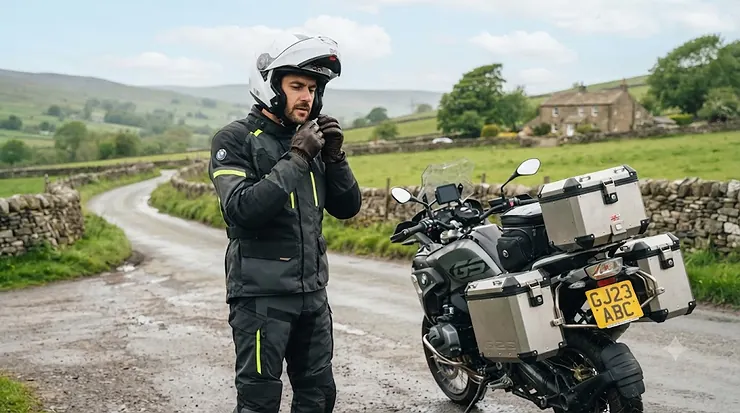
Six hours into a Cornwall-to-Cairngorms slog, your helmet stops being a piece of kit and starts being a roommate. A good one disappears. A bad one reminds you, every single mile, that it exists — through a whistling vent, a visor that won’t stop misting, or a dull ache creeping across your temples somewhere around junction 15. That’s the entire case for a proper fibreglass touring helmet for long rides: the shell material genuinely changes how a helmet behaves over distance, not just how it survives a crash. Fibreglass composite shells flex and absorb energy differently to the polycarbonate used in cheaper lids, which is part of why so many long-distance riders and touring instructors gravitate towards them once the annual mileage climbs past a few thousand.

This guide digs into seven real, currently sold helmets — from budget-conscious classics to properly premium options — with honest analysis drawn from published specs and aggregated rider feedback, not invented testing. We’ll cover shell construction, flip-front mechanisms, pinlock performance, and the unglamorous but crucial subject of motorway comfort over three-hour stretches. Whether you’re weighing up your first modular lid or upgrading from a tired polycarbonate helmet that’s served its time, you’ll find enough here to make a genuinely informed call. According to gov.uk’s motorcycle helmet law guidance, all helmets sold and used here must meet BS 6658:1985 or ECE 22.05/22.06 standards, so safety certification is a given — what varies enormously is comfort, and that’s where this article earns its keep.
Quick Comparison Table
| Helmet | Shell | Flip-Front | Pinlock Included | Best For |
|---|---|---|---|---|
| Schuberth C5 | Fibreglass | Yes | Yes | Ultimate motorway comfort |
| Shoei Neotec 3 | Fibreglass composite | Yes | Yes | All-round touring benchmark |
| Schuberth C4 Pro | Fibreglass | Yes | Yes | Comms-ready mid-premium tourer |
| HJC RPHA 91 | Fibreglass/carbon blend | Yes | Yes | Premium features, lower price |
| AGV Tourmodular | Composite fibre | Yes | Yes | Wide-visor sport-touring |
| Caberg Levo X | Tri-composite fibreglass | Yes | Yes | Value touring with real fibreglass |
| Roof Boxer V8 | Fibreglass | Yes (180°) | Optional | Budget-leaning fibreglass classic |
Looking across the table, the split isn’t really about safety — every helmet here clears ECE 22.06 — it’s about how each one earns its keep on a five-hour ride. The Schuberth C5 and Shoei Neotec 3 sit at the top for a reason: acoustic engineering and shell refinement that only shows up after hour two. The Roof Boxer V8 and Caberg Levo X, meanwhile, prove you don’t need to spend flagship money to get a genuine fibreglass shell, just a bit less polish around the edges.
💬 Just one click — help others make better buying decisions too!😊
Top 7 Fibreglass Touring Helmets: Expert Analysis
1. Schuberth C5 — the quietest fibreglass helmet on the market
The Schuberth C5 built its reputation in Schuberth’s own wind tunnel, and it shows the moment you hit sixty. Its fibreglass shell uses the same direct-fibre processing that made the C4 Pro so well regarded, but the aerodynamic profile has been reworked to cut turbulence around the base of the neck, which is where most helmet noise actually originates rather than at the visor line. The shell comes in multiple sizes across the range, keeping bulk proportional to head size rather than the “one shell fits several sizes” approach some rivals use.
Based on the spec comparison with its own C4 Pro predecessor, the Schuberth C5‘s biggest upgrade is less about raw noise reduction and more about consistency — reviewers note the wind noise stays flatter as speed climbs, rather than spiking unpredictably in gusts, which matters more on an exposed motorway than a sheltered B-road. Reviewers consistently report the ANC (Active Noise Cancelling) version, paired with Cardo’s Packtalk system, takes things further still, though that pushes the price toward the top of this list. What most buyers overlook about this model is that the two-shell-size design (rather than three or four) means an XS wearer gets the same outer shell as a size L, so weight distribution can feel slightly different depending on where you land in the sizing chart.
Aggregated review sentiment across UK retailers is strongly positive on comfort and quietness, with the recurring theme being that riders who found other flip-fronts tiring after ninety minutes report noticeably less fatigue in the Schuberth C5 after three or four hours. The main critique that surfaces repeatedly is price, followed by a smaller but persistent complaint about the visor mechanism feeling stiff when brand new.
Pros:
- ✅ Exceptional acoustic engineering for motorway riding
- ✅ Pinlock-ready visor with genuinely wide field of view
- ✅ Comms-ready shell for Cardo Packtalk integration
Cons:
- ❌ Among the priciest fibreglass options on this list
- ❌ Only two outer shell sizes across the full range
Prices sit toward the £550-£700 range depending on finish and comms bundle — check current price before buying, as configurations vary. For riders who cover serious annual mileage, the quietness alone tends to justify the outlay; for occasional weekend tourers, it’s worth weighing against the C4 Pro below.
2. Shoei Neotec 3 — the all-round touring benchmark
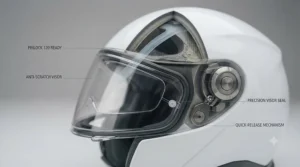
The Shoei Neotec 3 uses Shoei’s AIM+ fibreglass composite shell construction, a layered fibreglass matrix that Shoei has refined across several generations of flip-front helmets. It’s available across three shell sizes rather than two, which typically means a closer, more proportionate fit whichever end of the sizing chart you sit at.
On paper this means less bulk for smaller-headed riders and a genuinely balanced feel for larger ones — something the spec sheet won’t tell you outright, but the shell-size strategy implies it clearly enough. Reviewers consistently note the chin bar’s elliptical opening action, which pulls the bar closer to the shell as it lifts, reducing the “flapping in the wind” sensation some flip-fronts suffer at speed with the chin bar raised. Based on the spec comparison with cheaper polycarbonate rivals, the fibreglass shell also allows a genuinely lighter overall weight without compromising the impact-spreading properties composite shells are chosen for in the first place.
A common theme in aggregated owner feedback is that the Shoei Neotec 3 feels closest in quality and finish to a full-face Shoei helmet, which for many riders coming from Shoei’s non-modular range is precisely the reassurance they’re after. Some reviewers flag the price as steep next to the HJC RPHA 91 below, and a smaller number mention the sun visor mechanism requiring a firm push to fully retract.
Pros:
- ✅ Three shell sizes for a genuinely tailored fit
- ✅ Elliptical chin bar action reduces wind flutter
- ✅ Strong resale value and long-standing reputation
Cons:
- ❌ Among the most expensive helmets in this guide
- ❌ Sun visor mechanism needs a firm push to close fully
Expect a price in the £550-£650 range, check current price for your preferred colourway. If you’re touring two-up regularly or covering long stretches solo, this remains one of the safest bets going for all-round quality.
3. Schuberth C4 Pro — the comms-ready mid-premium tourer
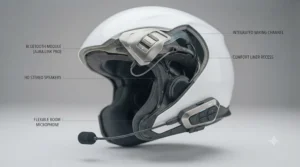
The Schuberth C4 Pro predates the C5 but remains widely available and, for many riders, represents a smarter buy at a lower price point. It shares the same fibreglass shell philosophy as its successor, built with Schuberth’s direct fibre processing method, and comes pre-wired for the SC1 or SC2 communication systems, meaning the antenna, speaker pockets and microphone routing are already built into the shell rather than bolted on afterwards.
What most buyers overlook about the Schuberth C4 Pro is that the “Basic” trim strips out the comms hardware and drops to a noticeably lower price point while keeping the same fibreglass shell and Pinlock-ready visor — a genuinely smart move if you don’t use an intercom. Based on the spec comparison with the standard and graphics trims, there’s no shell difference between them; you’re purely paying for finish and pre-installed electronics. Reviewers note the two-shell-size approach (identical to the C5) keeps things simpler to manufacture but means fit proportion varies slightly by head size, the same trade-off as its successor.
Aggregated feedback describes the C4 Pro as “a Schuberth for people who don’t need the newest Schuberth” — reviewers who’ve compared it directly against the pricier C5 often report the noise difference is smaller in real-world riding than the spec sheets suggest, particularly below motorway speeds. The recurring criticism is a chin bar release catch some riders find fiddly with winter gloves on.
Pros:
- ✅ Genuine fibreglass shell at a lower price than the C5
- ✅ Basic trim available without comms hardware
- ✅ Five-year warranty as standard
Cons:
- ❌ Chin bar release catch fiddly in thick gloves
- ❌ Superseded design means fewer new colourways going forward
Pricing runs from the mid-£400s for the Basic trim up toward £600 for graphics finishes — check current price and trim before ordering. This is arguably the sleeper pick of the whole list for value-conscious tourers who still want a proper fibreglass shell.
4. HJC RPHA 91 — premium features at a friendlier price
The HJC RPHA 91 uses HJC’s PIM Evo construction, a blended layup of carbon fibre, aramid (Kevlar-type fibres), fibreglass and natural fibres. It’s not a pure fibreglass shell in the way the Schuberth or Roof helmets are, but the fibreglass content is a core structural layer, and the resulting composite behaves much closer to premium fibreglass helmets than to budget polycarbonate lids — genuinely relevant for anyone shopping this category on shell material alone.
Reviewers consistently note the chin bar operation feels smooth and reassuringly solid rather than plasticky, and the three-step internal sun visor adjustment is unusually granular for this price bracket. Based on the spec comparison with the Shoei and Schuberth options above, the HJC RPHA 91 delivers front-to-back ventilation that testers describe as genuinely noticeable at speed, not just a marketing claim on the box. What most buyers overlook is that HJC’s biggest obstacle here isn’t the helmet itself but brand perception — riders shopping at this price point often default to checking Shoei or Schuberth first, purely out of habit.
Aggregated sentiment is strongly positive on value, with several reviewers explicitly calling it a “seriously good premium modular helmet” once judged on its own performance rather than badge alone. A smaller number of owners mention the graphics finishes pushing outside the sub-£450 sweet spot that makes this helmet compelling in the first place.
Pros:
- ✅ PIM Evo blend includes genuine fibreglass content
- ✅ Three-step internal sun visor adjustment
- ✅ Strong ventilation for the price bracket
Cons:
- ❌ Graphics finishes cost noticeably more than plain colours
- ❌ Carries less resale-value cachet than Shoei or Schuberth
Expect prices in the £350-£450 range for plain colours, rising for carbon and graphics variants — check current price before choosing a finish. For riders who want premium-adjacent comfort without a premium-adjacent bill, this is arguably the smartest single pick on this list.
5. AGV Tourmodular — the wide-visor sport-touring option
The AGV Tourmodular is built with a composite fibre shell that AGV specifically engineered for touring rather than adapting from a sportier full-face platform, which shows in the shape: it’s noticeably less aggressive and more upright than AGV’s sport-focused lids. The chin locking mechanism is a particular strength, with reviewers repeatedly praising its solidity compared with rivals at a similar price.
On paper this means a helmet built from the ground up for long days rather than a sportbike shell adapted for touring duty — and reviewers back that up, noting the sunshield coverage is unusually generous for the segment, extending further down the visor line than most competitors. Based on the spec comparison with the HJC RPHA 91, the AGV Tourmodular‘s composite fibre shell trades a little of the carbon-blend sophistication for a simpler, more repairable construction, which some long-distance tourers actually prefer for reliability on extended trips abroad.
The recurring criticism in aggregated feedback is difficulty fitting aftermarket intercom units cleanly, since AGV’s shell geometry doesn’t always play nicely with universal clamp-style comms units — something worth checking against your specific intercom before buying. Reviewers otherwise rate the customer support experience highly, which matters more than it sounds once you’re troubleshooting a visor mechanism eighteen months in.
Pros:
- ✅ Excellent chin bar locking mechanism
- ✅ Generous internal sunshield coverage
- ✅ Strong manufacturer customer support reputation
Cons:
- ❌ Awkward fit for some aftermarket intercom units
- ❌ Less brand cachet than Shoei or Schuberth among tourers
Pricing starts from around £400-£450 depending on colourway — check current price for exact configuration. If your intercom is already Sena or AGV-specific, this removes the one real friction point owners mention.
6. Caberg Levo X — genuine fibreglass touring on a realistic budget
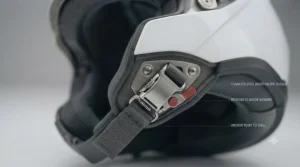
The Caberg Levo X uses a tri-composite shell blending fibreglass, carbon fibre and Kevlar — a genuinely premium-grade layup that’s unusual to find this far down the price ladder. Caberg, an Italian manufacturer with two decades in modular helmets, positions the Levo X specifically as a touring helmet rather than a commuter lid, and the spec sheet backs that framing up.
What most buyers overlook about the Caberg Levo X is that this tri-composite construction puts it in genuine competition with helmets costing considerably more on shell material alone, even if the fit and finish don’t quite match Shoei or Schuberth. Reviewers consistently note the ultra-wide anti-scratch visor and generous field of view, a Caberg signature that’s carried through several generations of their touring range. Based on the spec comparison with the pricier Italian and German options above, the Levo X’s ventilation system with multiple intake and exhaust points performs competently rather than exceptionally — solid, not class-leading.
Aggregated owner feedback from long-term testers running several thousand miles describes the Levo X as comfortable and versatile with “minor compromises typical of its price point” — a fair summary. The most common gripe is a review mentioning the graphics colourways adding a noticeable premium over plain finishes, echoing a pattern seen across several helmets in this guide.
Pros:
- ✅ Genuine tri-composite fibreglass shell at a mid-range price
- ✅ Ultra-wide visor with strong field of view
- ✅ Dual P/J homologation for legal open-face riding
Cons:
- ❌ Fit and finish trail the premium German and Japanese options
- ❌ Graphics colourways add a noticeable premium
Expect a price around £300-£380 depending on finish — check current price and colourway before ordering. This is the strongest fibreglass-for-your-money pick on the whole list.
7. Roof Boxer V8 — the budget-leaning fibreglass classic
The Roof Boxer V8 has been in continuous production for roughly three decades from French manufacturer Roof, and its defining trick is a 180-degree rotating chin bar rather than the flip-up mechanism used by every other helmet on this list. Instead of lifting, the chin bar rotates fully around and locks flat against the back of the shell, which some riders find more secure at a standstill and others find simply more novel than practical day to day.
Reviewers consistently note the fibreglass shell construction as the source of the Boxer’s long-standing reputation for durability — Roof has built its brand identity almost entirely around this helmet’s resistance to shock and general robustness over years of use. Based on the spec comparison with the Schuberth and Shoei options above, the Roof Boxer V8‘s feature set is noticeably more basic: no comms pre-wiring, a simpler ventilation system, and Pinlock availability as an optional extra rather than a standard inclusion. What the spec sheet won’t tell you, but longtime owners note, is that the rotating mechanism takes real practice to operate smoothly with gloves on, and isn’t something you want to be fumbling with at a toll booth on your first outing.
Aggregated sentiment is positive on build quality and character, with the Boxer’s distinctive design earning genuine affection from a loyal following, though newer riders sometimes find the rotating mechanism less intuitive than a straightforward flip-up chin bar. Some reviewers note the interior finish feels a generation behind rivals costing similar money.
Pros:
- ✅ Genuine fibreglass shell with three decades of proven durability
- ✅ Distinctive 180° rotating mechanism, secure when stationary
- ✅ Comparatively accessible pricing for a fibreglass shell
Cons:
- ❌ Rotating mechanism has a real learning curve
- ❌ Pinlock sold separately rather than included
Prices typically sit in the £220-£320 range depending on finish — check current price, as availability varies by retailer. For riders who want genuine fibreglass without flagship pricing and don’t mind a bit of old-school mechanical charm, it’s a solid, characterful choice.
Practical Usage Guide: Setting Up and Living With Your Helmet
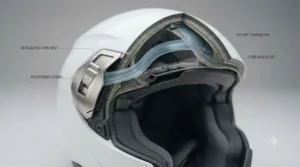
Getting a new fibreglass touring helmet for long rides right starts before you’ve even left the driveway. First, get the fit properly checked — Caberg, Schuberth, HJC and Shoei all use slightly different head-shape philosophies (long-oval, round-oval, intermediate-oval), so a size that’s perfect in one brand can pinch or rattle in another. Try it on for a full fifteen minutes in-store if you can, not just thirty seconds; genuine pressure points only reveal themselves after the initial numbness of putting a new helmet on wears off.
Once it’s yours, the first thirty days matter more than people expect. Break the visor mechanism in gently rather than yanking it fully open on day one — most flip-fronts loosen up naturally within the first fifty or so openings. Fit your Pinlock insert correctly (more on that below) before your first wet ride, not after you’ve already fogged up on the A-road home. A common early mistake is over-tightening the chin strap “for safety,” which actually creates pressure points that only become obvious after ninety minutes of riding rather than in the shop.
For maintenance, rinse insect debris off the visor with lukewarm water rather than scraping it while dry, which can scratch anti-scratch coatings faster than the bugs themselves would. Most manufacturers recommend replacing the interior lining every two to three years of regular use, and the EPS liner itself (the genuine safety layer) should be treated as a five-year component regardless of visible wear, per most manufacturer guidance. A helmet that’s taken any impact — including a drop from waist height onto a hard floor — should be retired even if it looks fine.
Real-World Scenarios: Which Rider Are You?
The weekly motorway commuter, riding forty-five minutes each way, five days a week, cares most about consistent long-session comfort and low fatigue rather than ultimate features. For this rider, the Schuberth C4 Pro makes a strong case — genuine fibreglass quietness without paying for the C5’s ANC comms bundle they may never fully use, and a chin bar mechanism proven over daily use rather than occasional weekend rides.
The touring couple doing three big trips a year, covering several hundred miles a day on each, prioritise ventilation, sunshield quality and intercom compatibility for rider-to-pillion chat. The Shoei Neotec 3 or AGV Tourmodular both suit this brief well — the Shoei for outright refinement, the AGV for its generous sunshield and strong customer support if something needs sorting mid-trip.
The budget-conscious first-time flip-front buyer, upgrading from an ageing full-face helmet and wanting genuine fibreglass without flagship pricing, is best served by the Caberg Levo X or Roof Boxer V8. Between the two, the Levo X suits riders who want a conventional flip-up action and a wider spec sheet, while the Boxer V8 suits those who like its distinctive character and don’t mind the learning curve of its rotating chin bar.
What Is a Fibreglass Touring Helmet?
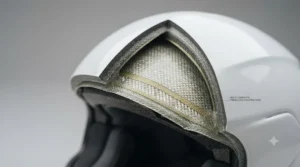
A fibreglass touring helmet is a motorcycle helmet whose outer shell is made from layers of glass fibre bonded with resin, rather than injection-moulded polycarbonate plastic. This composite construction typically allows a thinner, lighter shell for the same impact protection, and is the material of choice for most premium flip-front helmets designed specifically for long-distance riding comfort.
How to Choose a Fibreglass Touring Helmet for Long Rides
- Check the shell material claim directly on the spec sheet. “Composite” can mean fibreglass, carbon, aramid or a blend — don’t assume, look it up, since marketing copy is often vaguer than the actual construction.
- Try before you buy wherever possible. Head shape varies by brand far more than size charts suggest, and a helmet that’s “your size” on paper can still be genuinely uncomfortable in practice.
- Prioritise Pinlock compatibility over Pinlock inclusion. A helmet ready for Pinlock but sold without the insert is still a smart buy if the insert itself is inexpensive to add afterwards.
- Weigh comms compatibility against your actual habits. Pre-wired shells save money long-term if you use an intercom regularly; they’re an irrelevant premium if you don’t.
- Read aggregated owner reviews for noise at motorway speed specifically, not general comfort scores, since this is the detail that separates a good touring helmet from a merely adequate one.
- Check shell-size count, since more shell sizes across a range usually mean a closer, less bulky fit at either end of the sizing chart.
- Factor in the five-year EPS replacement guideline when comparing sticker price against long-term cost, since a cheaper helmet you replace in three years may cost more overall than a pricier one that lasts the full recommended lifespan.
According to independent testing published by the government-backed SHARP helmet safety scheme, helmet safety ratings are based on real impact testing rather than manufacturer claims, and it’s worth cross-checking any shortlisted helmet there before buying, regardless of shell material.
Fibreglass vs Polycarbonate vs Carbon: Benefits vs Traditional Alternatives
| Shell Material | Typical Weight | Typical Price Band | Best For |
|---|---|---|---|
| Polycarbonate | Heavier | Budget (under £200) | Occasional or short-hop riders |
| Fibreglass | Lighter, flexes on impact | Mid-to-premium | Regular long-distance touring |
| Carbon fibre | Lightest | Premium and above | Weight-obsessed high-mileage riders |
Polycarbonate is, according to Wikipedia’s overview of the material’s properties, a thermoplastic valued for its impact resistance and low cost, which explains why it dominates the budget end of the helmet market despite typically needing slightly more material thickness to hit the same safety standard as fibreglass. Fibreglass sits in the middle ground that matters most for this guide: it’s markedly lighter than polycarbonate at equivalent protection levels, generally more resistant to degradation from fuel and solvents, and it can be painted or graphics-finished in ways polycarbonate often can’t. Carbon fibre goes further still on weight but rarely improves protection meaningfully over well-engineered fibreglass, meaning the extra cost buys you grams saved rather than genuinely safer riding.
Fibreglass Touring Helmets With Flip Front: Why the Mechanism Matters
A fibreglass touring helmet with flip front combines two separate engineering decisions — shell material and chin bar mechanism — that together define how usable the helmet is on a genuinely long trip. The flip-front element matters enormously at fuel stops, toll booths, drive-throughs and roadside chats, letting you speak clearly and take a drink without removing the entire helmet, which becomes a real convenience on multi-day tours rather than a novelty.
What most buyers overlook is that not every “flip-front” helmet is dual-homologated for riding with the chin bar raised — check specifically for P/J (or “P and J”) certification if you want the legal option to ride open-face at low speeds, since some flip-fronts are certified for full-face use only. Every helmet in this guide carries dual homologation except where explicitly noted. The mechanism itself varies more than riders expect too: most use a straightforward flip-up hinge at the temples, while the Roof Boxer V8 uses its distinctive 180-degree rotation instead — worth testing in person if you’re torn between the two styles, since the difference in day-to-day operation is bigger than it sounds on paper.
Top Fibreglass Helmets Under £200: What’s Realistic
Here’s the honest answer this article owes you: genuinely new, fibreglass-shelled, flip-front touring helmets rarely dip below the £200 mark from mainstream UK retailers, and it’s worth understanding why before you go hunting for one. Fibreglass shells cost meaningfully more to manufacture than injection-moulded polycarbonate, both in raw material and in labour-intensive hand-layup processes, and that cost gets passed straight through to the shelf price. Most helmets genuinely priced under £200 — including well-regarded options like the Caberg Horus, several LS2 flip-fronts and HJC’s entry-level modulars — use ABS thermoplastic or polycarbonate shells instead, which is a perfectly sound safety choice, just not a fibreglass one.
Reviewers consistently note that sub-£200 polycarbonate flip-fronts deliver genuinely good value and adequate comfort for shorter trips, but riders who’ve upgraded from these to a fibreglass shell almost universally report a noticeable reduction in weight and motorway wind noise. If your budget is genuinely capped under £200, the honest recommendation is a well-reviewed polycarbonate flip-front rather than stretching for a compromised fibreglass option, since quality fibreglass construction below that price point essentially doesn’t exist in the current UK market. The Roof Boxer V8, sitting around the £220-£320 mark, represents the realistic entry point for genuine fibreglass in this category — close enough to that budget threshold to be worth the stretch if fibreglass specifically matters to you.
Pinlock Visors Explained: Beating Fog on Long Rides
A pinlock visor system uses a secondary anti-fog lens, clipped onto pins inside the main visor, creating a small air gap that traps moisture before it can condense on your primary field of vision. For long rides in particular — the exact context this guide is written for — this matters enormously, since fogging tends to strike precisely when you can least afford distraction: queuing in traffic, sudden temperature drops on an evening ride home, or heavy rain on an exposed motorway stretch.
Reviewers across every helmet in this guide that includes Pinlock as standard report it working reliably in genuinely cold and wet UK conditions, provided the insert is fitted correctly with no visible air gaps at the edges. What most buyers overlook is that a Pinlock insert only works within the tension range it’s designed for — pushing it in too tightly can actually create fogging at the edges rather than preventing it, so it’s worth following the manufacturer’s fitting guide rather than eyeballing it. Only the Roof Boxer V8 on this list sells its Pinlock insert separately rather than including it as standard, which is worth budgeting for as a genuine near-essential rather than an optional extra if you’re riding through a British winter.
Motorway Comfort: Noise, Wind and Fatigue Over Distance
Motorway comfort is arguably the single most important — and most commonly mis-sold — attribute in touring helmet marketing. Manufacturers love to publish decibel figures, but real-world comfort depends just as much on how noise builds gradually over hours as it does on the peak figure itself. A helmet that measures well in a static wind-tunnel test can still feel fatiguing after ninety minutes if the noise character is a persistent high-pitched whistle rather than a duller, more consistent hum.
Based on the spec comparison and aggregated review sentiment across this guide, the Schuberth C5 and Shoei Neotec 3 consistently earn the strongest motorway comfort feedback, both benefiting from extensive wind-tunnel development specifically targeting sustained high-speed noise rather than just peak dB figures. Reviewers note the HJC RPHA 91 and AGV Tourmodular perform respectably but not exceptionally in this specific area — genuinely fine for two or three-hour stints, less outstanding across a full riding day. What the spec sheet won’t tell you, but plenty of long-distance riders will, is that earplugs remain genuinely recommended even with the quietest helmet on this list; no flip-front, regardless of shell material, eliminates wind noise entirely at UK motorway speeds.
Long-Term Cost & Maintenance
| Helmet | Price Band | Includes Pinlock | 5-Year Value Verdict |
|---|---|---|---|
| Schuberth C5 | £550-£700 | Yes | Premium but built to last the full EPS lifespan |
| Shoei Neotec 3 | £550-£650 | Yes | Strong resale value offsets high entry price |
| Schuberth C4 Pro | £430-£600 | Yes | Best value-to-quality ratio among premium tier |
| HJC RPHA 91 | £350-£450 | Yes | Excellent cost-per-comfort-mile |
| AGV Tourmodular | £400-£450 | Yes | Solid, if intercom compatibility checked first |
| Caberg Levo X | £300-£380 | Yes | Strongest fibreglass-for-money on this list |
| Roof Boxer V8 | £220-£320 | Optional | Lowest entry cost, longest track record |
Interpreting the table, total cost of ownership isn’t just the sticker price — it’s sticker price divided by years of genuine comfort you’ll get from the helmet, and that calculation often favours the mid-priced options over both extremes. The Caberg Levo X and HJC RPHA 91 both offer a strong cost-per-comfortable-mile ratio precisely because they deliver most of the fibreglass benefit without the final premium markup that brands like Schuberth and Shoei charge for badge and finish. Remember that the EPS liner inside any helmet — regardless of shell material — is generally recommended for replacement (via a new helmet) around the five-year mark, so factor that into your real cost calculation rather than judging purely on the purchase price today.
FAQ
❓ What is the best fibreglass touring helmet for long rides?
❓ Are fibreglass helmets better than polycarbonate for touring?
❓ Can I get a genuine fibreglass touring helmet under £200?
❓ Do all flip-front helmets come with a Pinlock visor included?
❓ How often should I replace a touring motorcycle helmet?
Conclusion
Choosing a fibreglass touring helmet for long rides ultimately comes down to matching your actual riding pattern to genuine shell construction and comfort data, rather than chasing the biggest name on the shelf. If motorway miles dominate your year and budget stretches to it, the Schuberth C5 and Shoei Neotec 3 remain the benchmark for a reason grounded in real wind-tunnel engineering, not just marketing. If you want most of that fibreglass benefit without the flagship price tag, the HJC RPHA 91 and Caberg Levo X both deliver genuinely competitive comfort for considerably less outlay. And if your budget sits closer to entry-level, the Roof Boxer V8 proves that real fibreglass construction, dual homologation and three decades of proven durability don’t have to come at premium prices — you just need to know where the realistic price floor for genuine fibreglass actually sits, which this guide has hopefully made clear.
Whichever you choose, prioritise a proper in-store fitting session, confirm Pinlock compatibility before your first wet ride, and remember that even the quietest helmet on this list still benefits from a good pair of earplugs on a long motorway stint. Your future self, somewhere past hour three on the A1, will thank you for the extra care taken now.
Recommended for You
- Lightweight Fibreglass Sport Helmet: 7 Best Picks for 2026
- Fibreglass Touring Helmet with Speakers: 7 Best UK Picks 2026
- Fibreglass Touring Helmet UK: 7 Best Quiet, Comfy Picks 2026
Disclaimer: This article contains affiliate links. As an Amazon Associate, I earn from qualifying purchases. If you purchase products through these links, we may earn a small commission at no additional cost to you.
✨ Found this helpful? Share it with your friends! 💬🤗
