
In This Article
Stand in any decent bike shop and pick up two helmets that look almost identical, and you’ll notice something odd: one feels like a bag of sugar, the other like a bag of flour. Same size, wildly different heft. That difference usually comes down to one argument that rumbles on in every forum thread and every fitting room: aramid composite helmet vs fibreglass. Neither is “better” in some absolute, universal sense, and anyone who tells you otherwise is selling something. What actually matters is what the shell is doing for your neck, your wallet and your confidence going into turn one at Cadwell Park.

This guide leans on real specifications, real SHARP ratings and genuine aggregated review sentiment (not invented anecdotes) to walk you through seven actual helmets on sale in the UK right now, spanning budget fibreglass to full aramid-carbon race lids. Along the way you’ll get a proper explanation of aramid fibre technology, what “helmet shell strength” actually measures, and how racing helmet materials differ from the lid you’d wear on a Tuesday commute. By the end, you should know exactly which side of the aramid composite helmet vs fibreglass debate suits your riding, your budget and your track day ambitions.
Quick Comparison Table
| Helmet | Shell Material | Weight | Best For |
|---|---|---|---|
| AGV K6-S | Carbon-aramid | ~1,255g | Lightest all-rounder |
| Shark Race-R Pro Carbon | Carbon/aramid | ~1,250g | Track and race replicas |
| HJC RPHA 71 | Aramid-glass composite | ~1,570g | Value sport-touring |
| Shoei NXR2 | Fibreglass composite | ~1,400g | Premium road comfort |
| Arai Quantic | Fibreglass composite | ~1,600g | Long-distance touring |
| Caberg Drift Evo II | Fibreglass | ~1,450g | Budget composite entry |
Looking across this table, the pattern is clear: aramid-and-carbon blends cluster at the lighter end, while fibreglass shells trade a little weight for a gentler, more progressive way of shedding impact energy through the EPS liner underneath. Neither approach skips corners on safety when the helmet carries a genuine ECE 22.06 label — the material choice mostly changes how the weight, cost and feel are distributed, not whether the helmet protects you.
💬 Just one click — help others make better buying decisions too!😊
Top 7 Aramid Composite and Fibreglass Helmets: Expert Analysis
1. AGV K6-S — lightest carbon-aramid shell on the market
The K6-S trims weight harder than almost anything else in this list, and that single decision shapes everything else about how it rides. Its shell blends carbon fibre for rigidity with aramid fibres for tensile strength, landing at roughly 1,255g in a medium — AGV claims this makes it the lightest full-face road helmet currently sold, and the smallest shell size dips even lower. It’s built to pass ECE 22.06 with a comfortable margin rather than scrape through, which matters more than a marketing number once you’re actually wearing it for four hours. Based on the spec comparison, this is the pick for riders who rack up serious mileage and feel every extra 100g by the second hour; commuters swapping from a budget polycarbonate lid will notice the difference in neck fatigue almost immediately. Reviewers consistently note the box itself feels suspiciously light on arrival, and several report genuinely reduced neck strain on long motorway stints compared with heavier premium rivals. What most buyers overlook is that this lightness comes from a fairly aggressive, race-oriented head shape, so trying one on before buying matters more than usual.
Pros:
- ✅ Among the lightest ECE 22.06 full-face shells available
- ✅ Carbon-aramid blend built well beyond minimum safety margins
- ✅ MotoGP-derived aerodynamics reduce buffeting at speed
Cons:
- ❌ Narrower, sportier fit won’t suit every head shape
- ❌ Fewer built-in touring comforts than rival sport-tourers
Prices for the AGV K6-S typically sit in the £330-£460 range depending on colourway and graphics, and for the weight saving alone it represents strong value against helmets costing considerably more.
2. Shark Race-R Pro Carbon — MotoGP-proven race shell strength
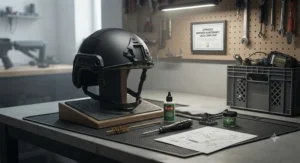
Shark built the Race-R Pro around genuine paddock feedback from MotoGP, Moto2 and WSBK riders, and the carbon-aramid shell reflects that brief: light, stiff, and engineered first for track abuse rather than daily comfort features. At around 1,250-1,320g it earned a full 5-star SHARP rating, the top mark the UK government’s own testing programme awards. Here’s what to weigh: this is a helmet designed by people who needed maximum protection at minimum weight for 200mph corners, so road riders get a genuine surplus of capability. Aggregated owner sentiment is unusually candid for a helmet in this category — riders who’ve actually crashed in it report walking away without concussion or bruising, which is about as honest a real-world data point as helmet shopping gets. On paper this means the shell disperses energy fast enough that the EPS liner underneath rarely has to work at its absolute limit.
Pros:
- ✅ Full 5-star SHARP safety rating
- ✅ Genuine carbon/aramid construction at roughly 1.3kg
- ✅ Real-world crash feedback reports no concussion or bruising
Cons:
- ❌ Track-focused ergonomics feel firm on short journeys
- ❌ Premium pricing compared with sport-touring alternatives
The Shark Race-R Pro Carbon generally sits in the £430-£600 range, and for a genuinely race-derived, five-star-rated shell that’s a defensible ask rather than an inflated one.
3. X-Lite X-803 RS Ultra Carbon — track-spec aero and FIM-ready build
This is the helmet you buy when track days have stopped being a novelty and started being a habit. The X-803 RS Ultra Carbon uses a full carbon shell with X-Lite’s “Carbon Fitting Racing Experience” interior padding, wind-tunnel-developed aerodynamics, and an RAS spoiler purpose-built for tucked-in circuit riding. What most buyers overlook about this model is that it can be specified in FIM-homologated form, meaning it clears the bar for club racing as well as ordinary track days — most UK circuits only ask for ACU Gold or ECE 22.05/22.06 as a minimum, so this comfortably exceeds what’s actually required for a standard track day. Reviewers consistently describe the build quality as excellent inside and out, praising the wide field of vision and calling the weight saving obvious the moment you pick it up, with wind noise flagged as the one recurring gripe — unsurprising for a helmet with virtually no acoustic foam sacrificed for weight.
Pros:
- ✅ Full carbon shell with wind-tunnel-tested aerodynamics
- ✅ Available in FIM-homologated spec for club racing
- ✅ Owners consistently praise build quality and field of view
Cons:
- ❌ Noticeably louder than road-oriented touring helmets
- ❌ Sparse comfort features compared with everyday commuting lids
Expect the X-Lite X-803 RS Ultra Carbon to sit around £450-£600, which is genuinely competitive for a FIM-capable carbon shell against similarly specified rivals from Arai or Shoei’s race ranges.
4. HJC RPHA 71 — best value aramid-glass composite
HJC’s Premium Integrated Matrix EVO shell blends carbon-aramid fibre, carbon fibre, glass fibre and organic non-woven fabric into one laminate, which sounds like marketing soup until you see what it delivers: a genuinely composite, ECE 22.06-certified shell at a noticeably lower price than its closest premium rivals. At around 1,570-1,670g it’s not the lightest helmet here, but based on the spec comparison it’s doing a lot with a modest budget — reviewers have clocked it around £100-£150 cheaper than the Arai Quantic and Shoei’s touring equivalent in plain colours. What the spec sheet won’t tell you, but reviewer testing suggests, is that ventilation trails slightly behind the class-leading Arai Quantic, though it remains entirely usable across a full riding season. The four-shell-size range across XS to XXL means smaller riders aren’t stuck wearing an oversized lid built for a larger average head, which is a detail budget helmets frequently skip.
Pros:
- ✅ True carbon-aramid-glass composite at a mid-range price
- ✅ Four shell sizes for a genuinely tailored fit
- ✅ Reviewers rate it strong value against pricier rivals
Cons:
- ❌ Ventilation slightly behind class-leading fibreglass rivals
- ❌ Marginally heavier than dedicated carbon-only shells
The HJC RPHA 71 typically runs £300-£400, making it the sensible middle ground for riders who want genuine composite construction without premium-brand pricing.
5. Shoei NXR2 — Shoei’s lightest ECE 22.06 fibreglass shell
Shoei calls its shell material AIM+ — a multi-layer laminate of organic fibre and fibreglass — and the NXR2 is the lightest ECE 22.06-certified helmet the brand has ever built, at roughly 1,400g. That’s the headline, but the more interesting detail is the dual-density EPS liner underneath, engineered specifically to work with this lighter shell rather than simply being carried over from a heavier predecessor. Reviewers who’ve worn it across multiple bikes and riding styles consistently praise the shell’s construction and finish, calling it exactly what you’d expect from a top-end manufacturer, while flagging one practical niggle: the compact cheek pads make routing intercom cabling slightly fiddly, though the helmet deliberately avoids locking riders into Shoei’s own comms ecosystem. Based on the spec comparison, this is the fibreglass pick for riders who want AGV-style lightness without stepping fully into carbon-aramid pricing.
Pros:
- ✅ Shoei’s lightest-ever ECE 22.06 fibreglass shell
- ✅ Four outer shell sizes for a genuinely tailored fit
- ✅ Reviewers consistently praise build quality and finish
Cons:
- ❌ Compact cheek pads make intercom cable routing fiddly
- ❌ Premium price bracket typical of the Shoei badge
Retail pricing for the Shoei NXR2 generally spans £420-£540 depending on finish, with graphic colourways at the top of that range.
6. Arai Quantic — round-shell fibreglass glance-off design
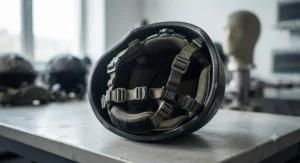
Arai has built its entire safety philosophy around one idea: a smooth, round shell “glances off” impacts rather than absorbing them square-on, and the Quantic’s PB e-cLc fibreglass construction (a peripherally belted, complex laminate) is the latest expression of that theory. At around 1,560-1,600g it’s not the lightest helmet on this list, and Arai doesn’t pretend otherwise — the trade-off is a hand-built, multi-layer shell that earned a 4-star SHARP rating from the UK government’s own safety testing programme. What most buyers overlook is that lighter alternatives like the AGV K6-S and HJC RPHA 71 exist at a similar price point, but neither uses Arai’s specific belted laminate construction, which is precisely the trade-off some riders are happy to make. Aggregated owner sentiment frequently mentions surprisingly good comfort and a quieter ride than expected, alongside the usual Arai trait of a snug, precise fit that rewards trying the helmet on rather than buying blind.
Pros:
- ✅ Hand-built PB e-cLc fibreglass laminate construction
- ✅ 4-star SHARP rating from independent UK government testing
- ✅ Owners report a quieter, more comfortable ride than expected
Cons:
- ❌ Heavier than comparable carbon-aramid alternatives
- ❌ Fit runs snug, so trying before buying is strongly advised
The Arai Quantic typically retails between £380-£470, positioning it as a premium fibreglass option rather than a budget-conscious pick.
7. Caberg Drift Evo II — budget-friendly fibreglass entry point
Not everyone needs — or can justify — a £400 helmet, and the Drift Evo II is proof that a genuine fibreglass composite shell doesn’t have to cost a fortune. Its predecessor, the original Drift Evo, improved on the older Drift’s 3-star SHARP rating to reach 4 stars, and the Evo II carries that same fibreglass shell (with a carbon-shelled variant also available) into an ECE 22.06-certified package at roughly 1,450-1,500g. Reviewers who’ve put real mileage on it — several thousand miles in one documented case — describe the sharp, sculpted styling and generally solid build quality, while flagging one minor cosmetic gripe around slightly puckered graphics near the visor beading, hardly a deal-breaker at this price. Based on the spec comparison, this is honest, no-nonsense composite construction: two outer shell sizes, a proper drop-down sun visor, and a Pinlock insert included in the box rather than sold separately.
Pros:
- ✅ Genuine fibreglass composite shell at a budget price
- ✅ ECE 22.06 certified with a drop-down integrated sun visor
- ✅ Pinlock anti-fog insert included as standard
Cons:
- ❌ Sizes small, so ordering true-to-tape is essential
- ❌ Minor cosmetic finishing niggles reported by long-term owners
You’ll typically find the Caberg Drift Evo II priced around £190-£240, making it one of the more accessible genuine composite helmets on the amazon.co.uk marketplace.
Practical Usage Guide: Living With a Composite Helmet
Getting the most from an aramid composite helmet vs fibreglass shell starts before you’ve even ridden anywhere. In the first 30 days, resist the urge to leave your new lid rattling around in a pannier or top box — both shell types are tough against impact but genuinely vulnerable to abrasion and chemical damage from unfiltered fuel fumes, so a proper helmet bag earns its keep fast. Check the retention strap tension every few rides during the initial bedding-in period, since new EPS liners compress slightly as the cheek pads settle to your head shape. A common first-month mistake is over-tightening the strap “to be safe” — it should sit snug enough that two fingers fit flat under your chin, no looser, no tighter. For maintenance, clean the outer shell with mild soap and water only; solvents and adhesive-based helmet stickers can quietly degrade both aramid-carbon resin and fibreglass gelcoat over time, even though neither shows obvious damage immediately. Replace the Pinlock insert roughly every 12-18 months of regular use, since scratched or clouded inserts undermine the visor’s anti-fog performance long before the shell itself needs attention.
Real-World Scenarios: Matching Riders to the Right Shell
Picture three riders shopping for the same broad category of helmet and arriving at completely different answers. First, a graduate commuting eight miles into the city five days a week on a naked 125cc: budget matters more than shaving 150g, so the Caberg Drift Evo II‘s genuine fibreglass composite at a sub-£240 price point makes far more sense than stretching for carbon-aramid weight savings they’ll barely notice on a short ride. Second, a weekend tourer doing 300-mile days across the Highlands twice a year: here, the lighter shell genuinely earns its price premium, and the Shoei NXR2 or AGV K6-S pays that back in reduced neck fatigue by hour four. Third, a track day regular booking six or seven sessions a season at Brands Hatch or Oulton Park: safety margin and FIM-readiness start to matter more than everyday comfort, making the Shark Race-R Pro Carbon or X-Lite X-803 RS Ultra Carbon the sensible call, even if they’re firmer and louder on the ride home.

Problem → Solution: Fixing Common Composite Helmet Headaches
Fogging visors are the most common complaint across both shell types, and the fix is almost always a missing or degraded Pinlock insert rather than a shell fault — check the insert’s tension clips are properly seated before assuming the helmet itself is at fault. Neck fatigue on long rides usually points to a mismatch between helmet weight and riding style; if you’re regularly doing multi-hour motorway stints in a heavier fibreglass touring lid like the Arai Quantic, stepping down to a carbon-aramid option such as the AGV K6-S directly addresses the cause rather than the symptom. Wind noise complaints, common with track-focused shells like the X-Lite X-803 RS Ultra Carbon, are best solved with properly fitted foam earplugs rather than assuming the helmet is defective — race lids deliberately sacrifice acoustic foam for weight. Finally, a helmet that feels loose after a few months usually means the cheek pads have compressed with use; most manufacturers, including HJC and Caberg, sell thicker replacement pads rather than requiring a whole new helmet.
How to Choose Between Aramid Composite and Fibreglass
- Set your weekly mileage first. Riders logging over 150 miles a week benefit most from the lighter carbon-aramid shells, where every gram compounds into hours of reduced strain.
- Decide if track days are genuinely on the cards. If you’re booking circuit sessions, prioritise SHARP or FIM credentials over comfort features.
- Check the SHARP rating independently. Don’t rely on brand marketing alone — the UK government’s own testing programme rates real crash performance.
- Try the shell shape, not just the size. Arai’s round profile, AGV’s aggressive taper and Shoei’s compact shell all fit differently even at the same stated size.
- Budget for the whole system, not just the shell. Spare Pinlock inserts, replacement cheek pads and comms compatibility all add to total cost.
- Weigh resale and longevity. Premium composite shells tend to hold value better and often accept multiple visor generations across model years.
- Never buy on price alone. A cheaper fibreglass helmet that fits properly beats an expensive carbon-aramid lid that doesn’t.
Aramid Fibre Technology Explained
Aramid is a family of heat-resistant, high-tensile synthetic fibres, and Kevlar is simply the best-known commercial brand within that family — you can read more about the underlying chemistry on Wikipedia’s aramid fibre page. In helmet construction, aramid’s real strength is tensile: it resists being pulled apart with extraordinary efficiency relative to its weight, which is exactly why body armour uses it. The catch, and the reason you’ll rarely see a helmet built from aramid alone, is that aramid performs comparatively poorly under compression — the kind of crushing force a helmet shell actually experiences in an impact. That’s why manufacturers almost always blend it with carbon fibre or glass fibre, letting each material cover the other’s weakness: carbon or glass handles compression, aramid handles tension and resists catastrophic tearing. Because aramid fibres are so strong per strand, fewer layers are needed to hit the same performance target as fibreglass, which is where the roughly 20% weight saving typically quoted for aramid-composite shells actually comes from.
Helmet Shell Strength: What the Numbers Actually Mean
“Shell strength” gets thrown around as marketing shorthand, but it’s really describing two separate jobs the shell has to do simultaneously. The first is spreading impact force across a wide enough area that the EPS liner underneath isn’t overwhelmed at one single point — this is where fibreglass’s slightly softer, more flexible character genuinely helps, since a shell with a little give distributes energy more gradually. The second job is resisting penetration from sharp or pointed impacts, where stiffer carbon-aramid laminates tend to have the edge. Neither job matters if the certification is weak, which is why ECE 22.06 — the newer, tougher European standard that added rotational impact testing on top of the older linear tests — is worth checking for regardless of shell material. A helmet’s outer shell size range matters here too: helmets offered in three or four shell sizes (like the Shoei NXR2 and HJC RPHA 71) avoid the compromise of jamming a small head into an oversized shell built for a much bigger average, which quietly affects real-world crash performance.
Aramid Composite Helmet vs Fibreglass: Head-to-Head Breakdown
| Factor | Aramid Composite | Fibreglass |
|---|---|---|
| Typical weight saving | ~15-20% lighter than fibreglass | Baseline comparison point |
| Impact character | Stiffer, faster energy transfer | Softer, more progressive flex |
| Typical UK price | £330-£600 | £190-£540 |
| Best For | AGV K6-S, Shark Race-R Pro Carbon | Arai Quantic, Caberg Drift Evo II |
The weight advantage of aramid composite construction is real and measurable, but it isn’t free — you’re generally paying a premium of £100-£200 over an equivalent fibreglass shell for that saving. Fibreglass, meanwhile, remains the more forgiving material to manufacture consistently at lower cost, which is exactly why budget-to-mid-range helmets like the Caberg Drift Evo II and Arai Quantic still lean on it rather than chasing carbon-aramid at every price point. For most road riders doing under 100 miles a week, the practical difference between the two is smaller than the marketing suggests; for touring riders and track regulars, it becomes the difference between a comfortable sixth hour and a genuinely uncomfortable one.
Composite Helmets for Track Days: What Racing Demands
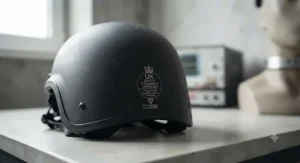
Track days quietly have their own rulebook, and it’s worth knowing before you spend money chasing specs you don’t actually need. Most UK circuits will accept any road-legal ECE 22.05 or ECE 22.06 helmet with an ACU Gold sticker for standard track day sessions — you don’t automatically need a race-homologated lid just to lap Cadwell Park on a trackday Tuesday. Where a composite shell genuinely earns its keep on track is in sustained high-speed stability and heat management during back-to-back sessions, both of which favour the stiffer, more aerodynamically developed carbon-aramid shells like the Shark Race-R Pro Carbon. If you’re progressing toward club racing rather than casual track days, FIM homologation becomes relevant, since some UK club racing categories specifically require it — the X-Lite X-803 RS Ultra Carbon is available in FIM-homologated spec for exactly this reason. Always double-check requirements directly with your specific track day organiser or racing series before assuming any given certification is sufficient, since rules vary between circuits and event types.
Racing Helmet Materials: From MotoGP to Your Local Track
The materials in the Shark and X-Lite helmets on this list aren’t marketing dressed up as racing pedigree — they’re genuinely descended from paddock-level development. Shark’s Race-R Pro shell construction is worn, in various homologated forms, by riders across MotoGP, Moto2 and WSBK, and that real-world testing at genuinely extreme speeds is exactly why the road version comfortably clears UK safety requirements with margin to spare. As one detailed FIM homologation breakdown from Motorcycle News explains, FIM standards run parallel to and largely align with ECE 22.06, which is why race-homologated helmets are typically just as usable on the road as they are on circuit. What’s worth understanding is that racing-grade materials prioritise a different set of trade-offs than touring helmets: less acoustic padding, firmer EPS tuned for repeated high-speed impacts rather than single low-speed ones, and shell geometry built around a tucked riding position rather than an upright commuting posture.
Common Mistakes When Buying an Aramid or Fibreglass Helmet
The single biggest mistake is buying by weight figure alone without trying the shell shape on your actual head — a helmet 100g lighter on paper that doesn’t fit properly will always feel worse than a heavier one that does. A close second is assuming “composite” automatically means aramid-carbon; plenty of helmets marketed loosely as “composite fibre” are genuinely fibreglass-based, and the only way to know for certain is checking the manufacturer’s actual shell material specification rather than the marketing copy. Riders also frequently skip checking the SHARP rating independently, trusting brand reputation alone — reputation is a reasonable starting signal, but it’s not a substitute for the UK government’s own crash-test data. Finally, many buyers underestimate how much outer shell size range matters, assuming any helmet in “their size” fits the same regardless of how many shell moulds the brand actually produces across the full size run.
Long-Term Cost & Maintenance
The purchase price is only part of the total cost of ownership story. Both aramid composite and fibreglass shells are typically rated for five years of service life by manufacturers, after which resin degradation and EPS compression from repeated use start eroding protective performance even without a visible crash. Replacement Pinlock inserts (£15-£30 every year or two), replacement visors (£40-£80), and replacement cheek pads or liners (£30-£60) add up over that five-year window regardless of shell material, so factor an extra £100-£150 into your real budget rather than treating the sticker price as the full cost. Where the two materials diverge is resale value: premium carbon-aramid helmets like the AGV K6-S and Shark Race-R Pro Carbon tend to hold value better on the used market, partly because buyers perceive the material as inherently premium, while budget fibreglass options like the Caberg Drift Evo II depreciate faster but cost less to replace outright when the time comes.
Safety, Regulations & Compliance in the UK
Every helmet on this list is ECE 22.06 certified, which matters because it’s the newest and most rigorous European standard, adding rotational impact testing that the older ECE 22.05 standard never covered. To be road-legal in the UK, a helmet must meet British Standard BS 6658:1985 and carry the BSI Kitemark, or meet an equivalent European Economic Area standard such as ECE 22.05 or 22.06 with an equivalent mark — all seven helmets featured here clear that bar comfortably. Beyond the legal minimum, the UK government funds an independent testing scheme called SHARP, which crash-tests helmets at multiple impact points and publishes a star rating entirely separate from manufacturer marketing claims — it’s worth checking before any purchase, regardless of shell material or brand reputation. For track use specifically, remember that road legality and circuit acceptance are governed by different bodies: your local organiser’s rulebook, not the DVSA, has the final say on what you’re allowed to wear on track.
FAQ
❓ Is an aramid composite helmet safer than fibreglass?
❓ How much lighter is an aramid composite helmet than fibreglass?
❓ Do I need a special helmet for track days in the UK?
❓ What does aramid fibre technology actually mean in a helmet shell?
❓ How long does a composite motorcycle helmet last?
Conclusion
The aramid composite helmet vs fibreglass debate isn’t really a contest with a single winner — it’s a set of trade-offs that map onto how, where and how often you actually ride. If you’re chasing every possible gram off your neck for long tours or track days, the carbon-aramid shells in this guide, led by the remarkably light AGV K6-S and the race-proven Shark Race-R Pro Carbon, earn their premium price honestly. If your budget matters more than shaving 150g, or you simply prefer the slightly softer, more forgiving character fibreglass offers, the Arai Quantic and the genuinely affordable Caberg Drift Evo II prove you don’t need carbon-aramid pricing to get real composite protection. Whichever shell you choose, the non-negotiable checklist stays the same: verify the ECE 22.06 label, check the independent SHARP rating, and try the actual shell shape on your head before you commit. Get those three things right and the aramid composite helmet vs fibreglass question becomes less about which material wins, and more about which helmet genuinely fits the way you ride.
✨ Don’t Miss These Exclusive Deals!
🔍 Take your helmet search to the next level with these carefully selected picks. Click on any highlighted helmet to check current pricing and availability on amazon.co.uk. These lids will help you ride with genuine, well-researched protection your future self will thank you for!
Recommended for You
- Kevlar Motorcycle Helmet: 7 Best Picks & Buying Guide 2026
- Fibreglass Helmet vs Polycarbonate Helmet: 7 Best Picks for 2026
- 7 Best Fibreglass Touring Helmet for Long Rides (2026 UK Guide)
Disclaimer: This article contains affiliate links. As an Amazon Associate, I earn from qualifying purchases. If you purchase products through these links, we may earn a small commission at no additional cost to you.
✨ Found this helpful? Share it with your friends! 💬🤗
