
In This Article
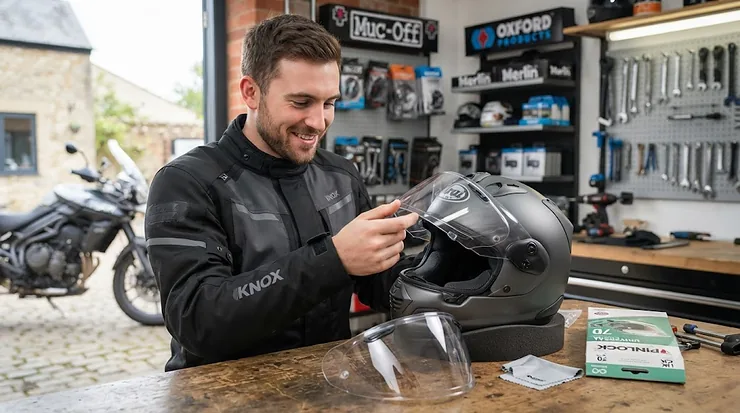
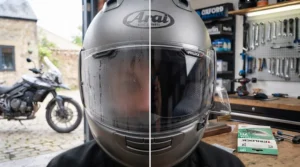
Ride through a British drizzle at 7am and you’ll know the enemy isn’t the rain — it’s the grey soup that creeps across your visor the second you stop at a junction. That’s fogging, and it’s the single most avoidable hazard on two wheels. A universal pinlock insert for helmets is a thin, moisture-absorbing lens that clips onto the pins built into most modern visors, creating a sealed air gap that stops condensation dead. It doesn’t just wipe fog away — it prevents it forming in the first place.
This guide skips the marketing fluff and gets into what actually matters: pin spacing, lens sizing, genuine fitment across brands, and which inserts are worth your money. We’ve pulled together seven real, currently available options — from budget adhesive films to the gold-standard Pinlock lens fitted as standard by Shoei, HJC and Arai — and broken down exactly who each one suits. Somewhere between the checkout counter and your local B-road, the right insert turns a nervy commute into a non-event.
Quick Comparison Table
| Product | Fit Type | Pin Style | Best For |
|---|---|---|---|
| Pinlock 70 Max Vision Insert (Universal) | Pinned visors, most brands | Twin eccentric pins | All-round reliability |
| Fogcity Anti-Fog Visor Insert (Universal) | Non-pinned visors, adhesive | No pins required | Older or pinless helmets |
| Pinlock DKS267 for HJC HJ-33/i90 | HJC-specific | HJC pin spacing | HJC owners wanting exact fit |
| Pinlock EVO Insert for Shoei CWR-1/CNS-1 | Shoei-specific | Shoei pin spacing | Premium touring/sport-touring |
| Pinlock 70 Insert for Nitro N3100 | Nitro-specific | Nitro pin spacing | Budget full-face commuters |
| VCAN V127 Clear Pinlock Insert | VCAN-specific | VCAN pin spacing | Entry-level helmet upgrades |
| Beeveer Universal Anti-Fog Insert Pins (3 Pairs) | Retrofit pin posts | Adjustable eccentric pins | Fitting Pinlock to unpinned visors |
Even glancing at that table, one thing jumps out: “universal” is doing a lot of heavy lifting in this category, and it means different things depending on the product. The genuine Pinlock 70 Max Vision Insert is universal in the sense that its 70mm lens shape fits an enormous range of visors sharing standard pin spacing, while the Fogcity Anti-Fog Visor Insert is universal because it needs no pins at all. Brand-specific options like the Pinlock EVO Insert for Shoei CWR-1/CNS-1 trade flexibility for a precision fit that a generic lens simply can’t match.
💬 Just one click — help others make better buying decisions too!😊
Top 7 Universal Pinlock Inserts: Expert Analysis
1. Pinlock 70 Max Vision Insert (Universal) — the industry-standard fit for pinned visors
If you’ve ever seen “Pinlock ready” printed on a helmet box, this is the lens that phrase is referring to. The Pinlock 70 Max Vision Insert is the genuine article from the Dutch company that invented the whole category back in the 1980s, and it’s built around a 70mm lens format that’s become the de facto standard across dozens of visor manufacturers.
Specced with a slightly domed acetate lens and a hydrophilic gel-like layer, it works by absorbing the moisture that would otherwise condense on cold polycarbonate. In practice that means the sealed air gap between your visor and the insert never gets cold enough, relative to the humidity inside your helmet, for droplets to form. On the road that translates to zero fog from a standing start on a frosty morning through to motorway speed twenty minutes later — the scenario where cheaper films tend to give up.
It suits riders who commute year-round and want a “fit once, forget about it” solution rather than a consumable. Reviewers consistently report that genuine Pinlock lenses outlast own-brand copies by a wide margin, with common complaints centring on occasional stiffness when clipping the lens onto very tight pin posts rather than fogging performance itself.
Pros:
- ✅ Fits the widest range of pinned visors on the market
- ✅ Long service life compared with adhesive films
- ✅ Genuine Pinlock branding means consistent quality control
Cons:
- ❌ Only works on visors already drilled for pins
- ❌ Initial fitting can be fiddly for first-timers
At around £15-£25 depending on size variant, it’s not the cheapest insert here, but the cost-per-year works out lower than most budget alternatives — a point we’ll return to later.
2. Fogcity Anti-Fog Visor Insert (Universal) — best for helmets with no pin posts at all
Not every visor has pins, and that’s exactly the gap Fogcity Anti-Fog Visor Insert fills. Instead of clipping onto posts, it’s an adhesive-backed film that sticks directly to the inside of the visor, which makes it genuinely universal across open-face and full-face helmets regardless of age or brand.
The trade-off for that flexibility is application precision — you’re trimming and positioning a film by hand rather than clicking a pre-shaped lens into place. Once fitted correctly, the anti-fog layer performs a similar job to Pinlock’s gel coating, absorbing condensation before it beads. What most buyers overlook is that surface prep matters enormously here; any grease or dust under the film creates a bubble that never quite clears.
This is the sensible pick for riders with older lids, cheap open-face helmets, or anyone who wants to try anti-fog protection before committing to a pinned visor upgrade. Aggregated review sentiment points to strong first-week performance, with a recurring theme of edge-lifting after several months of temperature cycling — a known limitation of adhesive-based inserts generally, not just this brand.
Pros:
- ✅ Works on helmets without pin posts
- ✅ Noticeably cheaper than genuine Pinlock lenses
- ✅ Fits full-face and open-face shells alike
Cons:
- ❌ Adhesive can lift at the edges over time
- ❌ Fiddlier, less precise installation than clip-in inserts
Priced in the budget bracket (typically under £15 for a two-pack), it’s solid value for occasional riders, though frequent commuters may find themselves reapplying more often than they’d like.
3. Pinlock DKS267 for HJC HJ-33/i90 Visors — the precise fit for HJC helmet owners
Where the standard 70mm lens is a generalist, the Pinlock DKS267 for HJC HJ-33/i90 Visors is a specialist, cut and drilled to match HJC’s specific pin spacing on i90 and related visor shields. That precision matters more than it sounds — a lens that’s even a couple of millimetres out of spec can leave gaps at the edges where fog creeps in regardless of the coating quality.
Because it’s designed against HJC’s own visor geometry, seating pressure is even across the whole lens, which is exactly what the hydrophilic layer needs to work properly. Riders running HJC’s mid-range touring and commuter lids get a fit that matches what more expensive premium helmets ship with as standard.
It’s the obvious choice for anyone who’s already invested in an HJC shell and wants the anti-fog performance to match, rather than forcing a generic universal lens to sit close enough. Review sentiment around HJC-specific Pinlock lenses tends to focus on how much snugger they feel compared with universal options, with a smaller pool of reviews overall simply because it’s a fitment-specific product rather than a mass-market one.
Pros:
- ✅ Exact pin-spacing match for HJC HJ-33/i90 visors
- ✅ Even lens pressure reduces peripheral fogging
- ✅ Genuine Pinlock construction and coating quality
Cons:
- ❌ Only fits the specified HJC visor family
- ❌ Smaller review pool than universal alternatives
Expect a price similar to the standard Pinlock 70, generally in the low-to-mid £20s range, reflecting the brand-matched tooling rather than any premium markup.
4. Pinlock EVO Insert for Shoei CWR-1/CNS-1/CW-1 — premium fit for touring and sport-touring visors
Shoei’s GT-Air, Neotec, RF-1200 and Qwest ranges are some of the most popular touring helmets on UK roads, and the Pinlock EVO Insert for Shoei CWR-1/CNS-1/CW-1 is the lens engineered specifically for their visor pin layout. This is about as close as an aftermarket insert gets to an OEM component.
The EVO coating formula is a step up from older Pinlock generations, offering a wider field of clarity and noticeably reduced peripheral distortion — genuinely useful at motorway speed when your eyes flick to the mirrors constantly. Paired with Shoei’s already excellent optical-grade visors, the combination minimises the double-glazing “haze” effect that cheaper stacked lenses sometimes introduce.
This suits riders who’ve spent serious money on a premium helmet and don’t want a bargain-bin insert undermining the view they paid for. Long-distance tourers in particular benefit, since the EVO coating holds up well across the temperature swings of a full day’s riding. Reviewer feedback consistently praises the optical clarity, with the main gripe being that it’s priced at a premium reflecting the Shoei-specific tooling.
Pros:
- ✅ Purpose-matched to Shoei GT-Air, Neotec, RF-1200 visors
- ✅ EVO coating gives wider, clearer field of vision
- ✅ Minimal optical distortion at speed
Cons:
- ❌ Among the pricier options in this roundup
- ❌ No use outside the specified Shoei visor family
Sitting in the mid-£20s to low-£30s range, it’s a premium buy — but on a helmet that likely cost several hundred pounds, it’s a rounding error for genuinely better visibility.
5. Pinlock 70 Insert for Nitro N3100 Helmets — the budget commuter’s fog-free upgrade
Nitro helmets have built a following among UK commuters precisely because they undercut the premium brands without cutting every corner, and the Pinlock 70 Insert for Nitro N3100 Helmets extends that value proposition to anti-fog performance. It’s a genuine Pinlock lens shaped to the N3100’s factory pin posts.
Because the N3100 ships “Pinlock ready” out of the box, fitting this insert is about as close to plug-and-play as the category gets — no drilling, no adapters, just clip and go. The lens uses the same core hydrophilic technology as pricier fitments, so performance-wise you’re not sacrificing much by buying the budget helmet and adding this rather than a premium shell with an insert bundled in.
It’s the pick for new riders or anyone kitting out a helmet for the first time on a tight budget, where every extra pound matters. Aggregated feedback on Nitro-specific Pinlock inserts is generally positive, echoing the wider pattern for genuine Pinlock products: strong fog resistance, with occasional notes about stiffness when first clipping the lens in on a brand-new visor.
Pros:
- ✅ Direct fit for Nitro N3100 factory pin posts
- ✅ Same core Pinlock tech as premium-brand inserts
- ✅ Keeps overall helmet-plus-insert cost genuinely low
Cons:
- ❌ Locked to the N3100 visor, not other Nitro models
- ❌ Initial clip-in can feel stiff until it beds in
Typically priced in the high-teens to low-£20s, it’s proof that fog-free vision doesn’t require a premium helmet budget.

6. VCAN V127 Clear Pinlock Insert — the entry-level pick for budget full-face helmets
The VCAN V127 Clear Pinlock Insert is built for one of the UK’s most common entry-level full-face helmets, and it deserves a mention precisely because so many riders buying their first lid go for exactly this kind of budget-friendly option. Pretending only premium helmets need anti-fog protection ignores where most new riders actually start.
Specced as a clear, moisture-absorbing lens matched to the V127’s factory pin spacing, it performs the same fundamental job as the pricier brand-specific options above — just without the marketing budget behind it. What the spec sheet won’t tell you, but common sense will, is that fog doesn’t discriminate by helmet price; a £70 lid without an insert will mist up just as readily as a £400 one.
This suits budget-conscious riders, learners on a CBT course, or anyone running a VCAN helmet as a spare or backup lid who still wants proper visibility in changeable British weather. Review sentiment for budget-brand Pinlock inserts tends to be more mixed than premium equivalents, with some reports of a slightly less snug fit than name-brand fitments — worth factoring in if absolute precision matters to you.
Pros:
- ✅ Affordable anti-fog upgrade for an already budget helmet
- ✅ Direct fit for V127 factory pin posts
- ✅ Genuinely useful for learner riders on a CBT budget
Cons:
- ❌ Fit can feel slightly less snug than premium-brand lenses
- ❌ Limited to VCAN’s specific visor pin spacing
Priced firmly in the budget bracket, usually under £20, it’s the sensible “don’t skip this” add-on for anyone who bought their helmet on price alone.
7. Beeveer Universal Anti-Fog Insert Pins (3 Pairs) — for retrofitting Pinlock capability onto unpinned visors
Here’s the lesser-known option that solves a genuinely common problem: what do you do if your visor has the mounting holes for pins but came without them fitted? The Beeveer Universal Anti-Fog Insert Pins (3 Pairs) are replacement eccentric pin posts, sold separately from any lens, designed to retrofit pin-mounting capability so a generic Pinlock-style insert can actually clip in.
Each pin uses a three-component eccentric design, meaning you can fine-tune the tension against the lens for a tighter or looser seal once fitted — genuinely useful because over-tight pins can bow a lens and under-tight ones let air leak in around the edges, either of which undermines fog resistance. They’re specced to fit lens apertures of roughly 0.4mm or larger, covering the vast majority of aftermarket inserts on the market.
This is the pick for tinkerers, older-helmet owners, or anyone who’s bought a universal lens only to realise their visor’s pin posts are missing, damaged, or the wrong style. It’s a small, inexpensive accessory that unlocks compatibility rather than a headline product, and real-world feedback in this niche category leans toward “does exactly what it says,” with the main caveat being that results depend heavily on correctly matching pin size to your specific visor’s aperture.
Pros:
- ✅ Retrofits pin-mounting capability onto compatible visors
- ✅ Adjustable eccentric tension for a custom seal
- ✅ Very low cost relative to buying a new visor
Cons:
- ❌ Requires visors with existing (if unused) pin apertures
- ❌ Fit success depends on matching aperture size correctly
Usually priced under £10 for a pack of three pairs, it’s the cheapest single item in this whole guide — and arguably the one most likely to save an otherwise unusable visor.
How to Fit a Universal Pinlock Insert: Practical Usage Guide
Getting the fitting right is at least as important as which insert you buy — a perfectly good lens badly fitted will still fog. Start by cleaning both the visor’s interior and the insert itself with a lint-free cloth; any residue trapped between the two surfaces becomes a permanent smudge once clipped in. For pinned inserts like the Pinlock 70 Max Vision Insert, hook one side onto its pin first, then gently flex the lens to seat the opposite pin — forcing it straight-on tends to crack the acetate.
Once fitted, resist the urge to over-tighten eccentric pins on day one. A slightly loose seal for the first few rides lets the lens “bed in” against the visor’s curve; you can nip the pins tighter once you’re confident the fit is even all round. For adhesive films like the Fogcity Anti-Fog Visor Insert, apply in a warm room rather than a cold garage — the adhesive bonds far more reliably above about 15°C.
Common first-30-days mistakes include touching the coated inner surface with bare fingers (skin oils degrade the hydrophilic layer) and cleaning with anything other than water or dedicated visor cleaner. A quick monthly check of pin tension and lens edges will catch most problems long before they become a foggy commute.
Which Pinlock Insert Suits Your Riding Life? Real-World Scenarios
Picture three riders. First, the daily commuter doing 8 miles each way through a city, stopping and starting at every junction — for them, the genuine Pinlock 70 Max Vision Insert or a brand-matched option like the Pinlock DKS267 for HJC HJ-33/i90 Visors earns its keep fast, since stop-start traffic is exactly when fogging is worst.
Second, the weekend tourer doing 200-mile days on a Shoei-equipped sport-tourer, chasing clarity at sustained speed through changing weather — the Pinlock EVO Insert for Shoei CWR-1/CNS-1 is built for precisely that brief, with its wider optical clarity paying off on long motorway stretches.
Third, the new rider on a budget helmet, six weeks post-CBT, riding mostly in daylight but occasionally caught in a shower — here the VCAN V127 Clear Pinlock Insert or the Pinlock 70 Insert for Nitro N3100 Helmets makes more financial sense than splashing out on a premium fitment for a helmet they may upgrade within a year or two. Matching the insert to how — and how often — you actually ride beats chasing the “best” option on paper every time.
How to Choose a Universal Pinlock Insert for Helmets
Picking the right insert comes down to a handful of checks, in this order:
- Confirm your visor has pin posts. No posts means you need an adhesive film like the Fogcity Anti-Fog Visor Insert, or retrofit pins first.
- Check the pin spacing against your helmet brand. Genuine Pinlock lenses are cut to specific spacings — a mismatch means a poor seal even if the lens “sort of” clips on.
- Match the lens size to your visor’s shield area. Standard 70mm covers most modern visors; some brands use larger or smaller variants.
- Decide between universal and brand-specific. Universal lenses cost less and fit broadly; brand-specific options like the Pinlock EVO Insert for Shoei CWR-1/CNS-1 fit tighter and clearer.
- Factor in riding frequency. Daily riders get more value from a durable clip-in lens; occasional riders may prefer a cheaper film.
- Check pin condition if retrofitting. Damaged or missing pins call for something like the Beeveer Universal Anti-Fog Insert Pins.
- Read aggregated review sentiment, not star ratings alone. Fitment complaints matter more than a generic 4-star average.
Pinlock Insert Compatibility Chart: Reading Visor Pin Post Spacing
This is the part most buying guides skip, and it’s exactly where returns and disappointment happen. Pin post spacing — the distance between the two mounting points on a visor — varies by brand and sometimes by model generation within the same brand. Genuine Pinlock lenses are moulded to match specific spacings, which is why a “universal” 70mm lens fits an enormous range of visors but not literally every one.
| Helmet Brand/Model Family | Typical Pin Style | Compatible Insert Type |
|---|---|---|
| Standard 70mm pinned visors (multi-brand) | Twin eccentric, standard spacing | Pinlock 70 Max Vision Insert (Universal) |
| HJC HJ-33/i90 family | HJC-specific spacing | Pinlock DKS267 for HJC HJ-33/i90 |
| Shoei CWR-1/CNS-1/CW-1 visors | Shoei-specific spacing | Pinlock EVO Insert for Shoei CWR-1/CNS-1 |
| Nitro N3100 | Nitro factory spacing | Pinlock 70 Insert for Nitro N3100 |
| VCAN V127 | VCAN factory spacing | VCAN V127 Clear Pinlock Insert |
| Non-pinned/older visors | No pins | Fogcity Anti-Fog Visor Insert or retrofit pins |
The pattern in that table matters more than any single row: brand-specific inserts exist because manufacturers genuinely don’t standardise pin spacing between themselves, even though most sit close enough to “70mm standard” that a universal lens will physically clip on. Physically clipping in, though, isn’t the same as sealing properly — which is the crux of the next section.
Cross-Brand Pinlock Fitment: Does It Actually Work?
Here’s the honest answer, because this is where a lot of marketing copy gets vague: a universal lens will often clip onto a visor from a different brand than intended, but “will clip on” and “will seal properly” are two different claims. Based on the spec comparison across the products above, the closer two brands’ pin spacings are, the better a universal lens performs; when spacings diverge more, you get uneven pressure around the lens edge, which is exactly where fog sneaks back in.
What most buyers overlook about cross-brand fitment is that a slightly loose universal lens can look perfectly fitted while still underperforming, because the gap is invisible until you’re riding in genuinely cold, humid conditions. If you’re chasing maximum reliability rather than convenience, a brand-matched insert — like the Pinlock DKS267 for HJC HJ-33/i90 Visors on an HJC visor rather than a generic universal lens — removes that guesswork entirely.
That said, cross-brand fitment isn’t a myth; it’s a spectrum. Riders on lesser-known helmet brands with limited aftermarket support often have no brand-specific option at all, making a universal lens the only realistic route to fog-free riding, imperfect seal or not.
Universal Anti-Fog Lens vs Brand-Specific Inserts
Weighing these two approaches against each other is less about which is “better” in the abstract and more about which trade-off suits your situation. A universal anti-fog lens, such as the Pinlock 70 Max Vision Insert, wins on availability and price — it’s stocked everywhere and fits a wide net of visors without hunting for your exact model number.
Brand-specific inserts win on precision. The Pinlock EVO Insert for Shoei CWR-1/CNS-1 simply won’t sit as evenly on a non-Shoei visor as it does on the one it was moulded for, and that precision shows up as sharper edge-to-edge clarity and a more consistent seal in genuinely foggy conditions — the exact moments when performance matters most.
Value-wise, the total cost of ownership tends to favour brand-specific fitments for helmets you’ll keep long-term, since a properly sealed lens lasts longer before you notice degraded performance and reach for a replacement. For helmets you might swap out within a year or two, the flexibility of a universal option is hard to argue against on cost-per-use grounds alone.
Multi-Helmet Insert Use: Is It Realistic?
A question that comes up constantly among riders with more than one lid: can you move a single insert between helmets? The honest answer is “rarely, and not the way you’d hope.” Once a Pinlock-style lens is clipped onto a specific visor’s pins, repeated removal and refitting stresses the acetate around the pin holes, and the seal it forms is partly a function of settling into that exact visor’s curvature over time.
Where multi-helmet use genuinely works is with universal, non-brand-specific accessories rather than the lens itself — the Beeveer Universal Anti-Fog Insert Pins, for instance, can be moved between compatible visors as you retrofit or swap helmets, because they’re hardware rather than a moulded lens. If you regularly switch between two helmets, the more practical solution is simply buying a matched insert for each visor rather than shuttling one lens back and forth, which shortens its working life on both.
Long-Term Cost & Maintenance
Judged purely on upfront price, adhesive films and budget-brand inserts look like the obvious winner. Judged on cost-per-year, the picture shifts. A genuine Pinlock lens like the Pinlock 70 Max Vision Insert typically lasts several riding seasons with basic care, while adhesive films tend to need replacing more frequently as edges lift — meaning the cheaper option can end up costing more over two or three years of ownership.
Maintenance itself is minimal but non-negotiable: rinse with water only, dry with a microfibre cloth, and never use household glass cleaner, which strips the hydrophilic coating that makes these inserts work in the first place. Store your helmet visor-up when possible, since visor-down storage can trap moisture against the lens overnight. None of this is complicated, but skipping it is the single biggest reason riders report a “faulty” insert that was actually just mistreated.
Frequently Asked Questions
❓ Does a universal pinlock insert fit any helmet visor?
❓ Can I use a pinlock insert without pin posts on my visor?
❓ How long does a pinlock insert last before it needs replacing?
❓ Is a brand-specific pinlock insert better than a universal one?
❓ What's the legal position on riding with a fogged-up visor in the UK?
Conclusion
Fog isn’t a minor annoyance you learn to live with — it’s a visibility problem that a £15-£30 insert genuinely solves, and solves permanently rather than temporarily. Whether that’s the do-it-all reliability of the genuine Pinlock 70 Max Vision Insert, a brand-matched fit like the Pinlock EVO Insert for Shoei CWR-1/CNS-1, or a budget-friendly retrofit using the Beeveer Universal Anti-Fog Insert Pins, the right choice comes down to your visor’s pin spacing, your riding frequency, and how much precision you’re willing to pay for.
According to the UK’s official helmet, visor and goggle guidance, visors sold for road use must meet recognised safety standards — and a properly fitted anti-fog insert works within that standard rather than against it, adding functional visibility without compromising impact protection. That’s the whole point of this category: clearer vision, same safety margin, every single ride.
For a wider look at how helmet design and visor technology has evolved, the Wikipedia entry on motorcycle helmets is a genuinely useful starting point if you want the bigger picture beyond just the anti-fog piece.
Recommended for You
- Pinlock 70 Insert For Motorcycle Visor: 7 Best Anti-Fog Visor Picks (2026)
- Photochromic Visor For Commuters: 7 Best Picks For UK Riders (2026)
- Photochromic Visor For Touring Riders: 7 Best Picks (2026)
Disclaimer: This article contains affiliate links. As an Amazon Associate, I earn from qualifying purchases. If you purchase products through these links, we may earn a small commission at no additional cost to you.
✨ Found this helpful? Share it with your friends! 💬🤗
