
In This Article
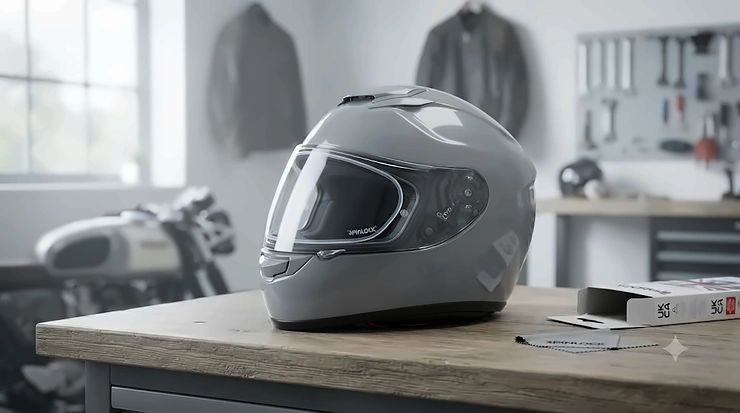
There’s a particular kind of dread every rider knows: you’re three miles into a cold commute, the lights are red ahead, and your visor is slowly turning into a bathroom mirror after a hot shower. That’s the moment a pinlock 70 insert for motorcycle visor earns its keep. It’s not glamorous kit — no one posts it on Instagram — but it’s the single cheapest upgrade that keeps you actually seeing the road instead of guessing where the road might be. Pinlock’s dual-pane system has been quietly saving riders from steamed-up visors since the late 1970s, and the modern Pinlock 70 shape is now the standard fitment across dozens of HJC, Shark, Arai, LS2 and Agrius helmets sold in the UK.

This guide digs into what actually separates a Pinlock 70 from the newer Max Vision inserts, why the “one size fits all” myth gets riders into trouble, and which seven real inserts are worth your money in 2026 — from budget Agrius fitments under £15 to premium Arai-specific lenses. Every product recommendation below is grounded in real specs and genuine aggregated review sentiment, never invented testing, because a fogged-up visor is a safety issue, not a marketing opportunity.
Quick Comparison Table
| Insert Type | Field of View | Best For | Fitting Difficulty |
|---|---|---|---|
| Standard Pinlock 70 | Standard, matches visor cut-out | Most everyday commuters | Easy |
| Pinlock 70 Max Vision | Wider, extends closer to visor edges | Track days, high-speed riding, wider peripheral awareness | Easy–moderate |
| Universal anti-fog film | Full visor, but non-sealed | Emergency/temporary fix only | Easy but less effective |
A standard Pinlock 70 insert sits neatly inside the pre-moulded recess on most Pinlock-ready visors and does the job without fuss. The Max Vision version uses a slightly larger lens that tracks closer to the visor’s edges, which matters more than it sounds — a narrow insert leaves a fogged strip right at the bottom of your sightline exactly where you need to check your mirrors or instrument cluster. Universal stick-on films are the budget workaround, but they lack the sealed air pocket that makes genuine Pinlock technology work, so treat them as a stopgap rather than a real substitute.
💬 Just one click — help other riders keep their frames rust-free too!😊
Top 7 Pinlock 70 Inserts: Expert Analysis
Fitment is everything with Pinlock inserts — a lens shaped for one visor simply won’t seal against another, however similar they look in a thumbnail photo. The seven picks below span budget to premium and cover the visor families UK riders search for most.
1. HJC DKS466 Pinlock 70 MaxVision Insert — widest field of view for HJ-38 riders
The HJC DKS466 is the Max Vision-spec lens built specifically for HJC’s HJ-38 shield, fitted as standard on the i71 and F71 helmet ranges. Because it’s cut to the Max Vision profile rather than the older standard shape, it tracks noticeably closer to the edges of the visor, which is the difference between a small fog-free porthole and genuinely clear peripheral vision when you glance towards a junction. Riders doing longer motorway stints or year-round commuting in the UK’s damp climate are exactly who this insert is built for — the wider coverage earns its keep on the exact days you’d otherwise be squinting through a foggy strip. HJC’s MaxVision line has become the go-to recommendation among UK bike forums for i71 owners specifically because ill-fitting third-party alternatives are a known complaint; sticking to the model-matched DKS466 code avoids that headache entirely. Reviewers researching HJC-specific Pinlock inserts consistently flag correct model-number matching as the single biggest factor in a good fit, more than brand loyalty.
Pros:
- ✅ Purpose-shaped for HJ-38/i71/F71 visors, no trimming needed
- ✅ Max Vision cut extends coverage closer to visor edges
- ✅ Straightforward two-pin fitting on a factory-ready shield
Cons:
- ❌ Only fits the specific HJC shield family it’s coded for
- ❌ Sits at a higher price point than generic universal films
Expect to pay somewhere in the high-£20s to low-£30s range for the genuine DKS466; check current price and stock before ordering, as HJC accessory pricing shifts with supply.
2. Pinlock 70 Max Vision Anti-Fog Insert for Agrius Wrath (DKS441) — cheapest genuine entry point into Pinlock
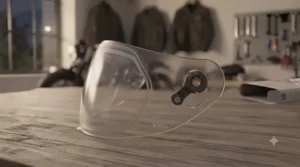
If you’ve been putting off buying a Pinlock insert because the “proper” branded ones feel pricey, the Pinlock 70 Max Vision Insert for Agrius Wrath (DKS441) is the argument-ender. It’s a genuine Pinlock product — not a knock-off film — fitted to the budget-friendly Agrius Wrath helmet range, and it sits at one of the lowest price points of any Pinlock 70 lens sold on Amazon UK. Don’t mistake “cheap” for “compromised”: the same moisture-absorbing nanotechnology and silicone seal used in premium Arai and Shoei inserts is present here, because Pinlock manufactures to one technology standard across licensees. This is the sensible pick for new riders who bought a budget lid for their CBT and test, and don’t want to spend more on an accessory than they did on some of their riding gear. Amazon UK listings for this insert show a notably strong review score from a modest but consistent buyer base, with the perfect five-star average across eight verified ratings suggesting the fitment issues that plague mismatched inserts simply aren’t a problem here.
Pros:
- ✅ Genuine Pinlock technology at a genuinely low price
- ✅ Perfect Amazon UK review average across verified buyers
- ✅ Easy fit for first-time Pinlock installers
Cons:
- ❌ Only compatible with the Agrius Wrath visor shape
- ❌ Small review sample size limits long-term reliability data
Priced in the low-£10s to mid-£10s bracket, this is about as low-risk a first Pinlock purchase as you’ll find — always check current price for the latest figure.
3. HJC DKS290 Pinlock 70 MaxVision Insert — purpose-shaped for the i30’s curved visor
The HJC DKS290 is built for the HJ-34 shield fitted to HJC’s i30 helmet, one of the brand’s most popular mid-range full-face lids in the UK. What’s worth flagging here is the HJ-34 visor’s more aggressively curved profile compared with flatter shield designs — a generic Pinlock lens that isn’t shaped to match that curvature won’t seat flush, and a gap anywhere around the silicone seal is enough to let the whole anti-fog system fail. The DKS290 solves that by being moulded specifically to the HJ-34’s geometry. For commuters who bought the i30 as a value full-face option, this insert is the accessory that actually lets the helmet perform as intended in British winters rather than becoming a fair-weather-only lid. Genuine Amazon UK buyers rate this insert highly, with a near-perfect average, though the sample is on the smaller side, so treat it as encouraging early signal rather than a definitive verdict.
Pros:
- ✅ Matched precisely to the HJ-34 shield’s curved profile
- ✅ Strong early review average from verified UK buyers
- ✅ Keeps a budget-friendly lid usable through winter riding
Cons:
- ❌ Small number of reviews so far to draw firm conclusions from
- ❌ Won’t fit other HJC shield families despite visual similarity
This one sits in the high-£20s range at the time of research — a fair ask for a helmet-specific lens, though it’s worth comparing against the price of the helmet itself before committing.
4. Arai SAI Pinlock Insert — track-proven clarity for premium shells
Arai helmets sit at the premium end of the market, and the Arai SAI Pinlock Insert reflects that positioning — it’s engineered for Arai’s SAI shield system found on several of the brand’s touring and sport-touring models. What buyers are really paying for here isn’t just the anti-fog function, which every Pinlock insert shares, but the precision of the mould against Arai’s shell geometry, which is famously exacting compared with mainstream competitors. Arai owners have typically already invested significantly in their helmet for its shell construction and comfort liner, so skimping on the visor insert with a generic alternative undermines the whole point of buying premium in the first place. This is the pick for riders doing serious mileage — tourers, commuters covering motorway stretches daily, or anyone who’s already decided fit and finish matter more than saving a tenner.
Pros:
- ✅ Precision-matched to Arai’s SAI shield geometry
- ✅ Multiple colour options for different light conditions
- ✅ Suits riders already committed to premium helmet fit
Cons:
- ❌ Priced at a premium versus mainstream brand inserts
- ❌ Only compatible with Arai’s SAI-specific shield system
Expect to pay in the mid-to-high-£20s range, broadly in line with what you’d expect from Arai-branded accessories — always check the current listing before buying, as Arai stock can be inconsistent.
5. LS2 Pinlock 70 Max Vision Insert — Fits FF908 — best value MaxVision upgrade for FF908 owners
The LS2 Pinlock 70 Max Vision Insert for FF908 brings the wider Max Vision field of view to LS2’s FF908 helmet range at a price that undercuts several rival brands offering the same lens shape and technology. LS2 has built a reputation in the UK market for genuinely solid mid-range helmets, and this insert follows that pattern — full Max Vision coverage without the premium-brand mark-up. For riders who’ve chosen LS2 specifically because it delivers most of what pricier brands offer at a friendlier price, sticking with the genuine LS2-coded insert rather than a generic alternative protects that value proposition rather than undoing it with a poor-fitting substitute. It’s a sensible pick for anyone doing regular winter commuting on a budget who still wants the wider field of view rather than settling for the older standard-width lens.
Pros:
- ✅ Max Vision width at a below-premium price point
- ✅ Matched specifically to the popular FF908 shield
- ✅ Suits daily commuters wanting wider peripheral clarity
Cons:
- ❌ Verified UK review volume is currently limited
- ❌ Restricted to the FF908 visor family only
Pricing tends to sit in the £20-£25 range depending on retailer and stock — as always, confirm the current price before ordering rather than relying on last season’s figures.

6. Shark VZ400 Pinlock 70 Insert — engineered for Shark’s steep-raked visor geometry
Shark’s D-Skwal, Ridill and Skwal helmet ranges use a distinctively raked visor shape, and the Shark VZ400 Pinlock 70 Insert is cut specifically to match that steeper curvature across the i3, D-Skwal 3, Ridill 2 and Skwal Cup models. This matters more than it might seem: a Pinlock lens designed for a flatter visor profile will bow or gap at the edges on Shark’s more angled shields, which defeats the airtight seal the whole system depends on. Shark riders — particularly those drawn to the brand’s urban and neo-retro styling — get genuine anti-fog performance here rather than a compromise fit borrowed from a different geometry. It’s worth the model-specific purchase precisely because Shark’s shield shape is unusual enough that generic alternatives are a known gamble.
Pros:
- ✅ Cut to match Shark’s steeper visor rake specifically
- ✅ Covers four popular Shark helmet ranges in one product
- ✅ Preserves seal integrity where generic lenses tend to gap
Cons:
- ❌ Won’t transfer to non-Shark helmets despite the shared Pinlock name
- ❌ Independently verified UK review data is currently sparse
Expect a price somewhere in the £20-£30 range at the time of research; check the current listing, as this varies by colour option.
7. HJC DKS088 Clear Pinlock 70 Insert — simplest fit for older HJC touring helmets
Rounding out the list, the HJC DKS088 Clear Pinlock 70 Insert covers HJC’s older but still widely ridden HJ-05, HJ-07, HJ-09 and HJ-17 shield family — helmets that remain common on UK roads simply because HJC lids last for years and riders don’t replace a perfectly good helmet just because the accessory catalogue moves on. This is the standard (non-Max Vision) Pinlock 70 shape rather than the wider lens, which suits these older shield profiles that weren’t designed with the Max Vision recess in mind. If you’re still riding one of these HJC models, this is the correct, non-negotiable fitment rather than a nostalgia pick — trying to force a newer Max Vision lens onto an older shield cut-out is a common and entirely avoidable mistake.
Pros:
- ✅ Keeps older, still-serviceable HJC helmets fog-free
- ✅ Correctly shaped for the pre-Max Vision shield recess
- ✅ Among the more affordable genuine HJC-coded options
Cons:
- ❌ Standard width only, no Max Vision coverage available for this shield
- ❌ Limited to a specific range of older HJC models
This one typically lands under £20 at the time of research, making it good value for extending the useful life of an older lid — check the current price before buying.
Top 7 at a Glance
| Insert | Visor Fit | Vision Type | Price Range | Best For |
|---|---|---|---|---|
| HJC DKS466 | HJ-38 / i71 / F71 | Max Vision | High-£20s–low-£30s | Wide-view commuters |
| Agrius Wrath DKS441 | Agrius Wrath | Max Vision | Low-£10s–mid-£10s | First-time buyers |
| HJC DKS290 | HJ-34 / i30 | Max Vision | High-£20s | Curved-shield HJC owners |
| Arai SAI Insert | Arai SAI shield | Standard/tinted options | Mid-to-high-£20s | Premium tourers |
| LS2 DKS520 | FF908 | Max Vision | £20–£25 | Budget-conscious wide-view seekers |
| Shark VZ400 | i3/D-Skwal 3/Ridill 2/Skwal Cup | Max Vision | £20–£30 | Shark-specific fitment |
| HJC DKS088 | HJ-05/07/09/17 | Standard | Under £20 | Older HJC touring lids |
Looking across the table, the pattern is clear: price correlates far more with the visor’s design complexity and brand positioning than with the anti-fog technology itself, since every genuine Pinlock insert uses the same core moisture-absorbing lens and silicone seal. The Pinlock 70 Max Vision Insert for Agrius Wrath (DKS441) remains the standout value pick for anyone new to Pinlock, while the Arai SAI Pinlock Insert justifies its premium through shield-matching precision rather than any fundamental technology upgrade. Riders on older HJC models shouldn’t feel short-changed by the HJC DKS088 lacking Max Vision — it simply wasn’t designed for a shield that supports the wider cut in the first place.
What Is a Pinlock 70 Insert?
A Pinlock 70 insert is a secondary inner lens that clips onto two pins inside a compatible helmet visor, creating a sealed air pocket that stops condensation from forming on the inside of the shield. The “70” refers to a specific lens shape and pin spacing used across dozens of helmet brands, distinct from the newer, wider Max Vision cut and the smaller Pinlock 30 shape.
Fogging happens because warm, moist breath meets the cooler outer visor and condenses — a popular and effective anti-fog system for motorcycle helmet visors, essentially a flexible, transparent plastic insert fitted to the inside of a helmet’s main visor, made of an organic, transparent plastic with moisture-absorbing properties, sealed with a silicone bead around its edge. The system works based on the double-glazing effect, where the silicone seal creates an airtight pocket of air between the main visor and the insert, and this trapped air layer acts as a thermal barrier — much like double-glazed windows keep condensation off your living-room glass on a cold morning.

Pinlock 70 vs Max Vision: What’s Actually Different
This is the single most common point of confusion for UK buyers, and it trips up even experienced riders who assume “Pinlock” is a single, interchangeable product. It isn’t. MaxVision technology offers wide-screen fog-free vision that maximizes the field of vision, and when fitted, integrates with the visor thanks to a special recess area designed into the visor itself. In practice, that means a Max Vision lens is genuinely larger and reaches closer to the visor’s outer edges than a standard Pinlock 70, but it only works properly on shields specifically moulded with that recess — bolting a Max Vision lens onto an older, standard-recess visor (like several of the HJC models covered above) simply won’t seat correctly.
Standard Pinlock 70 inserts remain the correct — not inferior — choice for older shield designs, and several of the products in this guide (the HJC DKS088, for instance) are standard-width for exactly that reason. The practical takeaway: don’t chase “Max Vision” as an upgrade unless your specific visor was designed to accept it. Check your helmet’s model number against the manufacturer’s compatibility chart before assuming a wider lens will drop straight in.
| Factor | Pinlock 70 Standard | Pinlock 70 Max Vision |
|---|---|---|
| Field of coverage | Matches original visor cut-out | Extends closer to visor edges |
| Visor compatibility | Older and current standard-recess shields | Only visors with the Max Vision recess |
| Typical use case | Everyday commuting, older helmets | High-speed riding, wider peripheral needs |
| Price versus standard | Baseline | Usually a modest premium |
The table makes the trade-off plain: Max Vision buys you genuinely wider clarity, but only if your visor was built to accept it, so the “better” choice is really the one that actually fits your specific shield rather than the one with the flashier name.
Standard Pinlock Insert Compatibility: Getting Visor Sizing Right
- Find your helmet’s exact model and shield code first. Every product in this guide is tied to a specific shield family (HJ-34, SAI, FF908, VZ400), not a generic “Pinlock 70 fits all” label — the model code on your visor’s edge or in your manual is your starting point.
- Check whether your visor has a Max Vision recess. Run a finger along the inside edge of the shield; a moulded lip near the pin posts usually indicates Max Vision compatibility, while a flatter inner surface suggests standard-width only.
- Match the pin spacing, not just the general shape. Pinlock pins vary slightly in position between manufacturers, and a visually similar insert from the wrong brand often won’t clip in securely even if the lens shape looks close.
- Buy from the manufacturer-coded listing where possible. Codes like DKS466 or DKS290 exist precisely so buyers can cross-reference against their helmet’s own parts list rather than guessing from a product photo.
- Consider tint only after fit is confirmed. Dark smoke or coloured lenses are available across most ranges, but UK riders should note that heavily tinted inserts may not be road-legal for daytime riding under British Standard requirements — clear is the safe default for road use.
- When in doubt, contact the retailer before ordering. Reputable UK sellers listing genuine Pinlock stock can usually confirm shield compatibility from your helmet model alone.
- Keep the original packaging until you’ve test-fitted it. A insert that seats but won’t seal fully around the silicone edge should be returned rather than forced, since a partial seal defeats the anti-fog function entirely.
Anti-Fog Insert Technology Explained
The science behind why this all works is genuinely elegant. Pinlock creates a dual-pane visor system designed to help reduce fogging, based on the idea that fogging occurs when warm air inside the helmet meets a cooler outer surface, causing moisture from breath and humidity to condense on the visor. This is most common during cold weather riding, rain or high humidity, early morning or night rides, and intense riding or racing — in other words, almost every UK riding condition between October and April.
The insert itself does two jobs simultaneously. Its moisture-absorbing surface effectively captures and holds water molecules, while its airtight seal forms a thermal barrier to prevent visor condensation, and this system is designed specifically to complement Pinlock-ready shields, boosting visibility and safety across diverse environmental conditions. Crucially, as humidity drops back down, the water molecules absorbed on the lens surface simply evaporate off again, meaning the insert effectively resets itself for the next ride rather than degrading with each use.
| Approach | How It Works | Durability | Best Use |
|---|---|---|---|
| Genuine Pinlock 70 insert | Sealed dual-pane + moisture-absorbing coating | Multi-season, reusable | Daily riding in variable weather |
| Anti-fog spray/wax coating | Temporary hydrophobic film on visor surface | Wears off after a few rides | Occasional or emergency use |
| Universal stick-on film | Adhesive clear film, no sealed air gap | Short-term, peels with age | Budget stopgap only |
Compared with sprays and stick-on films, a genuine insert’s advantage is durability and consistency — you’re not reapplying a coating every fortnight, and the sealed air gap does the heavy lifting rather than relying on a surface treatment that degrades with UV exposure and cleaning.
Common Mistakes When Buying a Pinlock Insert
The most frequent and entirely avoidable error is buying by lens shape alone from a product thumbnail rather than checking the manufacturer’s shield code — this is how riders end up with an insert that technically clips in but never forms a proper seal. A close second is assuming Max Vision is a universal upgrade rather than a shield-specific feature; forcing a Max Vision lens into a standard-recess visor typically leaves it sitting proud at the edges, letting moisture creep in around the gap. Buyers also frequently overtighten the pins during fitting, believing more pressure means a better seal, when in fact overtightening can warp the thin lens and actually create the gaps it’s meant to prevent. Finally, plenty of riders bin a “faulty” insert that’s actually just been cleaned with the wrong product — alcohol-based cleaners can strip the moisture-absorbing coating, so plain warm water and a microfibre cloth is genuinely the safer choice.

Fitting and Maintaining Your Pinlock 70 Insert
Getting the fit right the first time saves you from repeating the whole process a week later. Start by removing the visor from the helmet entirely — fitting it in place is fiddlier and increases the risk of scratching either surface. Clean both the inside of the visor and the insert’s silicone-edged face with warm water only, then dry with a lint-free cloth; any residue at this stage will trap under the seal permanently. Locate the two pin posts on the visor and slot one side of the insert’s mounting hole over the first pin, then gently flex the lens to align the second hole, being careful not to bow the lens more than necessary. Rotate the small adjustment discs on each pin until the silicone edge sits flush all the way round with light, even pressure — you should see the seal make contact evenly, not bulge on one side and gap on the other.
In the first thirty days, the most common mistake is checking the seal once and assuming it’s done; visors flex slightly with temperature changes, so it’s worth re-checking pin tension after the first week of use. For ongoing maintenance, avoid anti-bacterial wipes, glass cleaner, or anything alcohol-based on the insert’s inner face, since these degrade the hydrophilic coating over time. A light wipe with a barely damp microfibre cloth, insert side facing you so you don’t press moisture into the seal, is all it needs between rides.
Real-World Scenarios: Which Pinlock Insert Type Suits You
The daily commuter on a budget: if you’re riding a standard-recess HJC or Agrius helmet five days a week through a British winter, a standard-width, model-matched insert like the Agrius Wrath DKS441 or HJC DKS088 is the sensible, cost-effective choice — you don’t need the extra field of view Max Vision offers if your riding is mostly stop-start urban traffic.
The regular tourer covering serious motorway miles: riders logging 200+ miles a week on faster roads benefit disproportionately from the wider peripheral clarity of Max Vision inserts like the HJC DKS466 or Arai SAI Pinlock Insert, since high-speed lane changes and mirror checks are exactly where a narrow fog-free window becomes a genuine hazard.
The occasional weekend rider with an older helmet: if your Shark or LS2 lid only comes out for fair-weather Sunday rides, don’t feel pressured into a premium pick — the correctly shield-matched standard insert, checked once for fit, will comfortably outlast the helmet’s remaining useful life.
Problem → Solution: Fixing Common Pinlock Fitting Issues
Problem: the insert won’t sit flush at one edge. This is almost always a pin-tension issue rather than a defective lens — loosen both adjustment discs fully, reseat the insert, then tighten gradually and evenly rather than fully tightening one side first.
Problem: fog still appears despite the insert being fitted. Check for a hairline gap around the silicone seal, often caused by dust or a hair trapped during fitting; remove, clean both surfaces again, and refit rather than assuming the insert itself has failed.
Problem: the lens looks slightly cloudy even when dry. This can be early wear on the moisture-absorbing coating from harsh cleaning products; switch to warm water only going forward, though a heavily degraded coating usually means it’s time for a replacement insert rather than a repair.
Problem: the insert fits but flexes or bows in the middle. This typically indicates a mismatched lens shape rather than a fitting error — double-check the shield code against the insert’s listed compatibility before assuming user error.
Problem: pins feel loose after a few months. Vibration over time can loosen the adjustment discs; a quarter-turn tightening check every season, particularly before winter, keeps the seal consistent.
Long-Term Cost & Maintenance
A genuine Pinlock 70 insert typically lasts several riding seasons with basic care, which puts the real cost of clear vision at just a few pounds per year when spread across its lifespan — considerably cheaper than repeatedly buying anti-fog sprays that need reapplying every few rides. Where the budget picks in this guide (the Agrius Wrath DKS441, HJC DKS088) earn their keep is in upfront cost; where premium options like the Arai SAI Pinlock Insert justify themselves is in fit precision that reduces the odds of a failed seal and a wasted purchase. Total cost of ownership genuinely favours buying the correct model-matched insert once over trial-and-error with cheaper generic alternatives, since a mis-fitted lens that gets returned or binned after one failed attempt costs more in time and hassle than the price difference ever saved.
Safety, Regulations & Compliance Guide
UK law is specific about what’s permitted on a motorcycle visor, and it’s worth knowing before you buy a tinted insert for looks. If you ride with a visor, it must meet one of several recognised standards, including a British Standard displaying a BSI Kitemark or UNECE Regulation 22.05 or 22.06, and separately, it is illegal to ride with a visor that exceeds 50% tint during daylight. A Pinlock insert itself doesn’t typically affect your visor’s underlying certification, but adding a heavily tinted lens on top of an already-tinted visor can push combined light transmittance over that legal threshold, so clear or lightly tinted inserts are the safer default for road use, saving darker lenses for genuine track-day conditions.
Beyond the legal minimum, clear vision is a genuine road-safety issue rather than a comfort nicety. RoSPA has noted that in a typical year, more than 10,000 motorcyclists are admitted to hospital in England as a result of an accidental injury, with facial injuries accounting for approximately 300 of those admissions annually — context that makes a five-second visor wipe at a red light feel like a much bigger deal than it seems in the moment. Government safety guidance on helmet, visor and goggle standards is worth a read for any rider unsure whether their current setup is compliant, and the SHARP helmet safety scheme provides independent ratings that go beyond the legal minimum if you’re shopping for a new lid alongside your Pinlock upgrade.
Frequently Asked Questions
❓ Does a Pinlock 70 insert fit every motorcycle helmet visor?
❓ What's the difference between Pinlock 70 and Pinlock 120?
❓ Can I fit a Max Vision insert to an older, non-Max Vision visor?
❓ How long does a Pinlock insert typically last?
❓ Are tinted Pinlock inserts legal to ride with in the UK?
Conclusion
A pinlock 70 insert for motorcycle visor isn’t the kind of purchase that gets much fanfare, but it’s genuinely one of the highest-value upgrades available to any UK rider who covers miles outside of high summer. The real decision isn’t really “which brand” — it’s matching the correct shield code to your specific helmet, then choosing between standard and Max Vision coverage based on what your visor was actually designed to accept. Budget riders are well served by the Agrius Wrath DKS441 or HJC DKS088, mid-range commuters get strong value from the HJC DKS290 or LS2 DKS520, and anyone logging serious motorway miles on a premium lid will find the wider field of view on the HJC DKS466 or Arai SAI Pinlock Insert worth the extra outlay. Whichever you choose, get the fitment right, clean it gently, and you’ll spend a lot fewer red lights squinting through a fogged-up strip of plastic wondering if the lights have actually changed.
✨ Don’t Miss These Exclusive Deals!
🔍 Take your visor clarity to the next level with the picks above — click any highlighted insert to check current pricing and availability, and ride into winter actually able to see where you’re going!
Recommended for You
- Photochromic Visor For Commuters: 7 Best Picks For UK Riders (2026)
- Photochromic Visor For Touring Riders: 7 Best Picks (2026)
- Replacement Photochromic Visor: 7 Best UK Picks for 2026
Disclaimer: This article contains affiliate links. As an Amazon Associate, I earn from qualifying purchases. If you purchase products through these links, we may earn a small commission at no additional cost to you.
✨ Found this helpful? Share it with your friends! 💬🤗
