
In This Article
What is a mesh intercom for motorcycle group touring? It is a helmet communication system in which every rider’s unit both talks and relays, so the whole pack stays connected as bikes spread out, swap places or briefly disappear. Unlike a Bluetooth chain, no single rider is a weak link, and the group can grow well beyond four.

It is, in essence, a wireless mesh network bolted to your helmet. Every unit is a node, so audio hops from bike to bike and quietly routes around gaps. Simple idea. Surprisingly hard to get right at 70mph in a crosswind.
Here’s why it matters now. Anyone who has led eight bikes through a Cotswolds roundabout on hand signals knows the sinking feeling of checking the mirrors and seeing nothing. Bluetooth chains fix some of that, then snap the moment one rider stops for fuel. Mesh keeps the conversation alive. And 2026 has been a big year. In August, Cardo’s free Mesh Boost update lifted its group size from 15 riders to 31, while Sena’s flagship pushed Mesh 3.0 and a cellular fallback called Wave into the mainstream.
A quick word on method. I haven’t strapped these units to my own lid for this guide. It’s built from manufacturer specifications, independent UK tests (chiefly Bennetts BikeSocial) and the themes that recur in genuine buyer reviews, and I’ll flag where evidence is thin. Seven units follow, from budget to flagship, plus the practical bits listings leave out: setup, dropouts, range and the law.
Quick Comparison: Best Mesh Intercom for Motorcycle Group Touring
Here’s the whole field on one screen. Range and group-size figures are manufacturer claims, and prices are ranges that may vary, so check current price before buying.
| Product | Mesh system and group size | Claimed range | Price range | Best For |
|---|---|---|---|---|
| Cardo Packtalk Edge | Cardo DMC 2nd gen; up to 31 riders after Mesh Boost | 1.6km rider-to-rider; up to 8km across a group | £300–£360 | Premium all-round touring |
| Cardo Packtalk Neo | Same DMC 2nd gen | Same | £250–£300 | Cheapest way into Cardo mesh |
| Cardo Packtalk Pro | Same DMC 2nd gen | Same | £360–£410 | Remote or solo tourers wanting crash detection |
| Sena 60S | Mesh 3.0 (Mesh 2.0 mode); Group Mesh up to 24; Open Mesh | 2km; up to 8km with six or more riders | £300–£360 | Groups wanting a cellular Wave fallback |
| Sena 50S | Mesh 2.0; Group Mesh up to 24; nine-channel Open Mesh | 2km; up to 8km with six or more riders | £230–£330 | Mixed Sena Mesh 2.0 groups |
| Sena Spider ST1 | Mesh 2.0, mesh-only; Group Mesh up to 24 | 2km; up to 8km with six or more riders | £150–£210 | Budget Sena mesh |
| Fodsports FX10C | Own mesh standard; ten channels | Maker’s claims vary, 500m–2km | £100–£130 | Tight budgets, identical-unit groups |
Read the table in two passes. First, ask which ecosystem your group already lives in, because mesh is brand-bound: a Cardo Packtalk Neo and a Sena 50S will never form one network. Second, notice how far the price drops. The Sena Spider ST1 and Fodsports FX10C buy you mesh for roughly a third to a half of a flagship’s cost, minus the extras. Treat every range figure as a best case, because independent tests land lower.
💬 Just one click — help others make better buying decisions too!😊
Top 7 Mesh Intercoms for Motorcycle Group Touring: Expert Analysis
Seven real units, one honest verdict each. Every entry explains what the specs mean on the road, not just what they say on the box.
1. Cardo Packtalk Edge — magnetic mount, polished all-rounder
The party trick is the magnetic Air Mount: offer the unit up to the bracket and it snaps into place, with a mechanical lock behind the magnets so it won’t wander off at motorway speeds.
Inside are Bluetooth 5.2, 40mm JBL speakers and an IP67 seal, which in plain English means rain and spray shouldn’t trouble it. Cardo claims 13 hours per charge, yet Bennetts BikeSocial measured roughly nine hours while streaming music at full volume. Treat 13 hours as an intercom-and-light-music figure and pack a cable for multi-day tours.
Based on the spec sheet, this is the “fit it and forget it” pick. After August 2026’s Mesh Boost, group size jumps from 15 to 31 riders, so a growing club won’t outgrow it. One quirk: in Bennetts’ 2022 test only four riders could talk at once, and a fifth got a beep until the line cleared. Wind-noisy helmets can hog the channel.
Reviewers consistently praise the audio and voice control. Recurring niggles are occasional false voice-command triggers and a fiddly charging-port flap.
Pros:
- ✅ Superb JBL audio and reliable voice commands
- ✅ Self-healing mesh with a secure magnetic mount
- ✅ Easy over-the-air updates via Cardo Connect
Cons:
- ❌ Real-world battery falls short of the 13-hour claim
- ❌ Mesh only works with other Cardo units
Expect an RRP in the mid-£300s, with street prices often lower (check current price). It’s worth it if your whole group is happy to go Cardo.
2. Cardo Packtalk Neo — cheapest route into Cardo’s mesh
Cardo built the Cardo Packtalk Neo to deliver flagship-class mesh without flagship pricing. It shares the same second-generation Dynamic Mesh Communication, including Mesh Boost’s 31-rider groups, Public Mesh and Remote Grouping.
Cardo quotes 13 hours of battery, IP67 sealing, Bluetooth 5.2 and “Hey Cardo” voice control in a slim, antenna-free body. Speakers are a grey area. Retailer listings describe 40mm JBL drivers, while Cardo’s own buying guide talks the audio down against its JBL-equipped siblings, so confirm the current spec before ordering.
Honestly, the saving is the story. Mesh performance matches its pricier siblings, so what you give up is polish (no magnetic mount, less audio finesse), not connectivity. Across an eight-bike club, tens of pounds per rider soon pays for a weekend’s fuel.
I couldn’t verify a deep pool of UK owner reviews for this model. One marketplace buyer weighing it against a cheaper rival said the budget unit was fine for the money but advised the Cardo if you can stretch. Cardo also promotes warranty cover of up to three years.
Pros:
- ✅ Same second-generation mesh as pricier Cardos
- ✅ Price saving multiplies across a whole club
- ✅ Slim, antenna-free design with voice control
Cons:
- ❌ Audio and mounting less refined than the flagships
- ❌ Mesh only works with other Cardo units
Roughly £250–£300, so it’s the strongest value pick for committed Cardo groups (check current price).
3. Cardo Packtalk Pro — crash detection for remote tourers
Crash Detection is the headline. Sensors, the Cardo Connect app and Cardo’s cloud work together to send an alert with GPS location to a nominated contact after a significant impact.
The Cardo Packtalk Pro also brings 45mm JBL speakers, Auto On/Off and the magnetic Air Mount, with the same 13-hour claim, IP67 sealing and second-generation mesh as its siblings. Auto On/Off sounds trivial until you’ve ridden twenty miles wondering why nobody answers.
Here’s the analytical catch. In a convoy of eight, your mates are the crash detection, so the feature matters more to solo tourers or riders who often trail the pack. Bennetts’ reviewer said he was sceptical of its value and performance, so treat it as a bonus rather than a lifeline. Mesh behaviour is the same as the cheaper Cardos.
Reviewers place this unit at the premium end for audio and finish, and one independent comparison judged Cardo’s mesh slightly more seamless in group management than Sena’s. The price is the usual complaint.
Pros:
- ✅ Only Cardo with crash detection and emergency alerts
- ✅ Largest JBL speakers in the Cardo range
- ✅ Auto On/Off removes start-of-day faff
Cons:
- ❌ Priciest Cardo of the three
- ❌ Crash detection value questioned by some reviewers
Expect £360–£410 (check current price). Only worth the premium if you often ride alone or at the back.
4. Sena 60S — Mesh 3.0 plus cellular Wave backup
Where Cardo chases the cleverest local mesh, the Sena 60S adds a safety net: Wave Intercom, an app that carries conversation over your phone’s mobile data when mesh falls out of range.
Specs worth translating: Mesh 3.0 with a Mesh 2.0 fallback you must switch manually (the two versions aren’t directly compatible), Bluetooth 5.3, IPX7 waterproofing and second-generation Harman Kardon speakers. Sena claims up to 17 hours of mesh talk time. In Bennetts BikeSocial’s review, battery lasted around 12.5 hours streaming music at full volume.
Wave is the touring story. The reviewer held a clear call with a friend more than 20 miles away, using only a few megabytes of data. The catch is that riders on other brands drop out when your unit falls back to mesh. There’s also a newer Sena 60S EVO variant with Bose-tuned audio on the same platform.
Bennetts praised audio quality but flagged a bulky body and mount quirks, including only one adhesive mount. UK retailer reviews are mostly positive, though at least one 2026 buyer called it disappointing and others grumble that spare mounts and speakers are pricey.
Pros:
- ✅ Mesh plus Wave gives cellular range extension
- ✅ Strong Harman Kardon audio, even through earplugs
- ✅ IPX7 waterproofing and over-the-air updates
Cons:
- ❌ Only one adhesive mount supplied
- ❌ Native mesh connects only with other Sena units
Roughly £300–£360 RRP, with dealers often cheaper (check current price). Strong value if Wave matters to you.
5. Sena 50S — nine-channel Open Mesh veteran
The Sena 50S popularised one-press Open Mesh with nine channels, which Sena likens to CB radio. Your group can hop to channel two and leave strangers on channel one.
It runs Mesh 2.0 over Bluetooth 5, offers Group Mesh for up to 24 riders, and claims 2km rider-to-rider and up to 8km with six or more riders spaced about a mile apart. One review of the mesh system noted six riders can talk simultaneously on one channel. Sena’s own comparison puts mesh battery life at around 11 hours.
The analytical case: Mesh 2.0 is the common language of Sena’s older kit (30K, 50R, Spider range), so this is the safest buy when mates already own those units. The newer 60S can talk to it in Mesh 2.0 mode. Two caveats: it lacks the full waterproof rating of newer Senas, and its speakers have been criticised as quiet next to the 60S.
A UK retailer lists a 4.7 average from roughly 30 reviews. Owners praise app setup and sound that beats the older 30K; the main gripe is hiding the wires during fitting.
Pros:
- ✅ Proven Mesh 2.0 compatibility across Sena’s range
- ✅ Jog dial easy to use with gloves
- ✅ Open Mesh channels let sub-groups split off
Cons:
- ❌ Not fully waterproof like newer Senas
- ❌ Speakers quieter than the 60S generation
Around £230–£330, so it’s good value at street prices well below RRP. Check availability, as Sena’s focus has moved to the newer family.
6. Sena Spider ST1 — mesh-only budget entry
The Sena Spider ST1 strips the formula to essentials. It’s mesh-only, with Bluetooth reserved for your phone and GPS, and a jog dial for control.
It runs Mesh 2.0 with Group Mesh for up to 24 riders and multi-channel Open Mesh, and it’s compatible with Sena’s 50S, 50R and (once updated) 60S. The trade-off is that it cannot make a plain Bluetooth intercom link to non-mesh units, so everyone must be mesh-capable.
On range, Bennetts reported that paired with a 50S it was the furthest the reviewer had seen on any intercom, running out of straight, line-of-sight road before reaching the claimed 2km. That’s one test on one road, but it suggests budget needn’t mean short-range.
A UK retailer shows a 4.5 average from around 70 reviews, with the recurring complaint being the lack of Bluetooth connection to non-mesh headsets. US reviews are more mixed, so check the retailer’s returns policy and bench-test on arrival.
Pros:
- ✅ Cheapest route into Sena’s mesh ecosystem
- ✅ Impressive range in Bennetts’ test
- ✅ Compatible with 50S, 50R and updated 60S
Cons:
- ❌ No Bluetooth intercom with non-mesh units
- ❌ Older Mesh 2.0 platform without Wave
Around £150–£210 (check current price). Excellent value for groups that will all go Sena.
7. Fodsports FX10C — budget mesh on its own standard
The Fodsports FX10C is the cheapest unit here, and it only talks to other FX10Cs. That sentence decides whether it suits you.
The maker quotes Bluetooth 5.0, ten mesh channels and IP65 protection, and claims unlimited riders in mesh mode while recommending 10 to 15. Range claims are inconsistent: a 2,000m headline in places, 500m to 1,000m elsewhere on the maker’s own site. Plan on the lower figure.
Analytically, it’s a closed ecosystem. If two mates already own Cardo or Sena, the budget advantage evaporates. For a new group buying together, eight units cost broadly what three flagship units would, which is a serious argument.
Marketplace reviews describe good value, with speakers the usual weak spot. One buyer of four units reported one dropping out of mesh mode after a few months, fixed by a factory reset, and another received a goodwill replacement base. Maker blogs are promotional, so weigh them accordingly.
Pros:
- ✅ Lowest cost per rider by a distance
- ✅ Ten mesh channels for sub-groups
- ✅ Music and GPS audio alongside intercom (maker claim)
Cons:
- ❌ Speaker quality draws criticism
- ❌ Mesh works only with other Fodsports units
Roughly £100–£130, a straight conversion of the maker’s US list price. UK listings vary, so check current price.
✨ Ready to Ditch the Hand Signals?
🔍 Take your next touring weekend to the next level with the intercoms above. Click on any highlighted product name to check current pricing and availability on Amazon UK. Pick one ecosystem, buy it for everyone, and your group will finally hear the “fuel in two miles” call. 🏍️
Practical Usage Guide: Setting Up a Mesh Group Before Ride Day
A mesh network is only as good as the prep behind it. Do this the weekend before you go, not on a petrol-station forecourt on day one.
- Update at home. Bring every unit to current firmware via Cardo Connect or the Sena Motorcycle app. Sena’s Mesh 3.0 and 2.0 don’t talk natively, so a Sena 60S must be switched to Mesh 2.0 when others run older kit. On Cardo, installing Mesh Boost deletes saved DMC groups, so rebuild yours afterwards.
- Pair your phone first. Do it before the helmet goes on, never at speed.
- Build the group. Cardo’s Remote Grouping lets one rider share a link that other units join automatically once in range. Sena riders invite each other into Group Mesh.
- Do a car-park test. Wander apart with visors down and confirm everyone hears everyone.
- Tame the mics. Wind noise that keeps microphones open can hog the line. Adjust mic position and use the mute command when you’re not talking.
- Charge like a tourer. Cardo says 20 minutes of fast charging buys roughly two hours, and a Sena 60S needs more than half a battery to accept an over-the-air update.
Maintenance is light: check firmware monthly, dry the USB port after wet rides, and re-test after changing helmets.
Real-World Scenarios: Matching Kit to Your Group
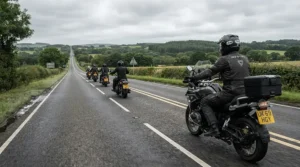
Picture three very different groups, each with its own budget, terrain and riding frequency.
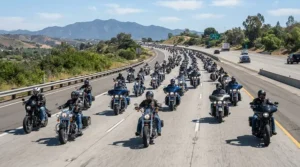
The eight-bike club (monthly rides, ten days in the Alps each summer). Nobody wants a unit that’s outgrown in a year. Standardise on the Cardo Packtalk Neo for most riders and perhaps a Cardo Packtalk Edge for the road captain. Mesh Boost’s ceiling leaves room to grow, and Remote Grouping helps when members start from different towns. Open mesh communication for touring riders, via Public Mesh, adds fun at ferry queues, though both sides must switch it on.
The four mates on a budget (weekend runs, Peak District and Wales). Four Sena Spider ST1 units should land around £600–£840 and give you Group Mesh privacy. Just remember there’s no Bluetooth fallback.
The mixed-brand friends (two Cardo, two Sena). Native mesh won’t bridge them. The Sena 60S‘s Wave works with other brands over cellular data, as Bennetts demonstrated with a Cardo, but only while there’s signal, and non-Sena riders drop off when it falls back to mesh. The honest advice is to standardise if you can.
Problem → Solution Guide: Fixing the Usual Group-Ride Gremlins
Four snags crop up on almost every tour. Each has a fix.
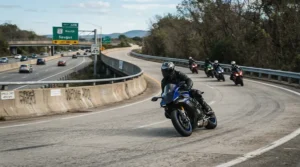
- The pack splits at a junction. Mesh relays through the riders in between, so keep each rider within range of at least one other and nominate a tail-end rider. When the group re-forms, riders reconnect as they come back into range.
- Wind noise hogs the line. With four speakers at once on the Cardo Packtalk Edge (as tested in 2022), a fifth rider gets bumped. Reposition the mic and use the mute voice command.
- A mate is on another brand. Use universal Bluetooth pairing for a two-rider link. Bennetts paired a Sena 60S with a Cardo Packtalk Edge this way, or bring a Bluetooth rider into a Sena mesh via a “bridge” if they stay near the Sena rider.
- Mesh won’t connect after an update. Bennetts’ fix on the Sena 60S was toggling Mesh 3.0 off and on in the app. One Fodsports FX10C buyer was told by the maker to hard reset.
How to Choose a Mesh Intercom for Motorcycle Group Touring
Start with the group, not the gadget. Work through these steps in order.
- Lock the brand first. Mesh doesn’t cross brands, so one ecosystem for everyone.
- Count your riders. Cardo now allows 31, Sena’s Group Mesh 24, and Open Mesh is near-unlimited.
- Check helmet fit. Flip-fronts and full-faces need the right mic and mount. The Sena 60S ships one adhesive mount, so budget for spares.
- Judge battery honestly. Aim for 13 claimed hours for touring, expecting less at full volume.
- Decide how private you want to be. Open modes are social, while private channels keep chatter yours.
- Check waterproofing. Cardo quotes IP67, the Sena 60S IPX7 and the Fodsports FX10C IP65.
- Price the whole group. Multiply by riders, then add spares, and see the cost table later.
Dynamic Mesh Intercom for Large Groups: How Capacity Really Works
A dynamic mesh intercom for large groups sounds like pure upside, but capacity and conversation aren’t the same thing. Cardo claims the largest private mesh at 31 riders; Sena’s Group Mesh stops at 24, while its Open Mesh channels have no practical limit but are open to anyone in range. Bennetts’ 2022 test found only four riders could talk at once on the Cardo Packtalk Edge, while a review of Sena’s mesh noted six simultaneous talkers.
| Feature | Cardo DMC 2nd gen (Cardo Packtalk Edge, Cardo Packtalk Neo, Cardo Packtalk Pro) | Sena Mesh (Sena 60S, Sena 50S, Sena Spider ST1) | Fodsports FX10C |
|---|---|---|---|
| Private group size | Up to 31 | Group Mesh up to 24 | Maker recommends 10–15 |
| Open mode | Public Mesh | Open Mesh, near-unlimited | Mesh channels |
| Channels | Private groups plus Public Mesh | Nine on Mesh 2.0 (newer listings say six) | Ten |
| Simultaneous speakers | Four (2022 test) | Six per channel | Not stated |
| Cross-brand mesh | No | No (Wave bridges via cellular) | No |
| Best For | Big clubs wanting self-healing groups | Touring groups wanting Open Mesh plus Wave | Tight budgets, identical-unit groups |
The headline numbers flatter everyone. A 31-rider group isn’t 31 people chatting, it’s a few talkers and many listeners, so agree etiquette before you leave. If your touring club is large, Cardo’s ceiling and Sena’s Open Mesh are both viable, but they solve different problems.
Open Mesh Communication for Touring Riders — and When to Choose Private Channels
Open mesh communication for touring riders
Open mesh communication for touring riders is the “just press one button” mode. Sena’s Open Mesh defaults on and connects everyone in range, and Cardo’s Public Mesh, added in August 2026, lets nearby users talk without pairing. It suits rallies, ferry queues and spontaneous chatter with oncoming riders. The trade-off is that anyone nearby can join, and both sides must opt in on Cardo.
Private channels
For your actual group, private channels are the better default. Sena’s Group Mesh is invite-only for up to 24 riders; Cardo’s private groups scale to 31. On Sena’s Open Mesh you can also hop between nine channels, like CB radio, which is a handy way to split sub-groups without leaving the network. Newer Sena listings quote six Open Mesh channels, so check the spec sheet if channel count matters.

Rider Dropout and Rejoin: What Happens When the Pack Splits
Rider dropout and rejoin is where mesh earns its money. On a Bluetooth chain, one rider peeling off for fuel silences everyone behind them. On mesh, the network routes around the gap and the straggler rejoins automatically when back within range of any rider, with no button presses.
Reality is a little messier. In Bennetts’ range test of the Cardo Packtalk Edge, reconnection of the mesh was less solid until the rider was about 600m back, well inside the claimed range. Sena’s Sena 60S also reconnects automatically, though the reviewer noted noisy audio as the signal failed.
Wave adds a cellular route. Riders added as friends reconnect automatically while the call stays active, but strangers who leave a one-mile radius disconnect and don’t return on their own. The practical lesson: don’t wait for the edge of range before assuming rider dropout and rejoin will sort itself out. If a mate vanishes, slow down and let the mesh heal.
Range Extension: What the Claimed Miles Really Mean
Range extension is mesh’s other superpower: each rider relays the signal, so five miles across a group is possible where two riders alone manage a mile. Sena’s conditions are specific: a minimum of six riders at roughly one-mile intervals for the full 8km. Cardo claims 1.6km rider-to-rider and 8km across the group.
Independent tests land lower. In Bennetts BikeSocial’s range test, the Cardo Packtalk Edge reached just short of 1,100m against the claimed 1,600m, and the Sena 60S managed just under 750m on mesh in a separate test. Carbon helmets, weather, traffic, buildings and even head turns all reduce range.
For serious range extension, think relay and cellular. Space riders so each can hold a link with at least one other, and consider Wave for cellular range extension on a Sena 60S. Cardo’s cellular intercom is still in development with no date.
Mesh vs Bluetooth Intercoms: When Each Makes Sense
Bluetooth is still perfectly good for pairs and pillions. Mesh wins when groups get bigger or less orderly.
| Criterion | Mesh | Bluetooth intercom |
|---|---|---|
| Group size | Up to 24–31 private, more on open channels | Usually 2–4 |
| If a rider drops out | Network routes around them; they rejoin | Chain breaks for riders behind |
| Riding order | Free to change | Must stay in order |
| Cost | Higher per unit | Cheaper (e.g. Cardo Spirit HD-class units, roughly £110–£140) |
| Best For | Clubs and tours of 5+ riders | Couples, pillions, 2–4 friends |
For couples or small, tight groups, Bluetooth is simpler and cheaper. Once you pass four riders or ride in a looser pack, mesh stops being a luxury and becomes the sensible option. Remember mesh also requires a unit per rider, so compare total group cost, not single-unit prices.
Long-Term Cost & Maintenance: What a Group Really Pays
Single-unit prices mislead. A six-rider group multiplies everything, and extras add up.
| Product | Single-unit range | Six-rider cost | Value verdict | Best For |
|---|---|---|---|---|
| Cardo Packtalk Edge | £300–£360 | £1,800–£2,160 | Premium polish | Committed Cardo clubs |
| Cardo Packtalk Neo | £250–£300 | £1,500–£1,800 | Best Cardo value | Cost-conscious Cardo groups |
| Cardo Packtalk Pro | £360–£410 | £2,160–£2,460 | Niche premium | Solo or remote tourers |
| Sena 60S | £300–£360 | £1,800–£2,160 | Wave adds flexibility | Mixed-signal touring |
| Sena 50S | £230–£330 | £1,380–£1,980 | Proven Mesh 2.0 | Existing Sena groups |
| Sena Spider ST1 | £150–£210 | £900–£1,260 | Cheap Sena mesh | Budget Sena groups |
| Fodsports FX10C | £100–£130 | £600–£780 | Lowest cost | Identical-unit buyers |
The gap between the cheapest and dearest six-rider group is well over £1,500, which buys a lot of fuel. Spares matter too: Bennetts noted Sena 60S speakers sell separately for around £70 and a boom-mic clamp kit costs well over £100. Cardo promotes warranty cover of up to three years, while the Sena 60S EVO adds a limited lifetime warranty on the main unit, so check current terms.
Safety, Law and Hearing: A UK Guide
Mesh intercoms are legal tools, but the law cares about control. Rule 149 of the Highway Code bans hand-held phone use while riding, but allows hands-free equipment as long as you keep proper control of the vehicle. Using hands-free can still distract, so this isn’t legal advice, just sensible practice.
Cardo’s own guidance is to set up and pair before the helmet goes on, use voice control rather than buttons at speed, and keep volume low enough to hear ambient road sounds. Keep firmware current, and don’t re-pair while moving.
Hearing matters on long motorway days. Bennetts found the Sena 60S drives well through earplugs with no noticeable distortion, and the reviewer could still hear emergency services. Fit earplugs, keep volume sensible, and treat the intercom as a conversation tool, not a concert.

FAQ: Mesh Intercom Questions UK Riders Ask
❓ Can a Cardo rider and a Sena rider share one mesh group?
❓ Is a mesh intercom worth it for a group of three or four bikes?
❓ Does the Sena Wave app work with Cardo intercoms?
❓ What's the cheapest mesh intercom for motorcycle group touring that still works well?
❓ Do I need to update my intercom before a UK group tour?
Conclusion: Choose One Ecosystem, Then Ride Together
The best mesh intercom for motorcycle group touring isn’t one product, it’s one ecosystem that every rider shares. If you want polish, the Cardo Packtalk Edge is the safest premium choice, while the Cardo Packtalk Neo delivers the same mesh for less. The Sena 60S is the pick if cellular Wave range extension and Mesh 3.0 appeal, and the Sena 50S or Sena Spider ST1 serve groups already in Sena’s world. On a tight budget, the Fodsports FX10C is the cheapest route, provided everyone buys it too. For solo or trailing riders, the Cardo Packtalk Pro adds crash detection, though reviewers question its value.
Whichever you choose, update at home, test in the car park and agree on etiquette. A dynamic mesh intercom for large groups only works if the group has a plan.
✨ Ready to find your group’s perfect mesh intercom?
🔍 Click any highlighted product name above to check current pricing and availability on Amazon UK, then ride together, not just near each other. 🏍️
Recommended for You
- Bluetooth Intercom For Group Rides With Slow Riders: 7 Best (2026)
- Low Profile Bluetooth Intercom For Open Face Helmets: 7 Best (2026)
- Intercom For Modular Flip Front Helmets: 7 Best Buys (2026)
Disclaimer: This article contains affiliate links. As an Amazon Associate, I earn from qualifying purchases. If you purchase products through these links, we may earn a small commission at no additional cost to you.
✨ Found this helpful? Share it with your friends! 💬🤗
