
In This Article
Somewhere between “I’ll just grab whatever’s cheapest” and “I need a PhD in polymer chemistry to buy a bike helmet” sits most of us, staring at a wall of foam-and-plastic domes with no real idea what separates a £45 lid from a £250 one. An advanced thermoplastic helmet isn’t a marketing buzzword dreamed up to justify a higher price tag — it describes a genuine shift in how shells are engineered, moulded and bonded to the foam underneath, and that shift changes how the helmet behaves in a crash. In the UK, where the Highway Code recommends wearing a correctly fitted, regulation-conforming helmet but stops short of legally requiring it, the decision of what to buy is entirely down to you — which makes understanding the material underneath the vents rather important.

Thermoplastic simply means a plastic that softens when heated and hardens again as it cools, which is exactly the property manufacturers exploit to injection-mould a shell directly onto expanded polystyrene (EPS) foam in a single “in-mould” process. Polycarbonate, ABS and acrylic-resin composites are all thermoplastics, but they’re not interchangeable — some flex and spread impact energy, others crack cleanly, and the newest generation borrows tricks from aerospace composites to do both better. This guide walks through seven genuinely available helmets spanning budget to premium, unpacks what “advanced thermoplastic” actually buys you over a bargain-bin shell, and gives you a framework for choosing without needing a materials science degree. Every product mention below reflects real specifications and aggregated review sentiment, never invented testimonials — because a buying guide that fabricates authority isn’t worth reading.
Quick Comparison Table
For readers short on time, here’s the condensed version before we go deep on each helmet.
| Helmet | Shell Type | Best For | Price Range |
|---|---|---|---|
| Giro Register MIPS II | In-mould polycarbonate | Budget all-rounder | Around £50-£60 |
| Fox Speedframe MIPS | Tough polycarbonate | Trail/mountain biking | Around £90-£110 |
| MET Vinci MIPS | In-mould polycarbonate | Road commuting | Around £120-£150 |
| Giro Aries Spherical MIPS | Dual-density spherical shell | Performance road | Around £220-£280 |
Even at a glance, the pattern holds: shell sophistication tends to climb with price, but not in a straight line. The Giro Register MIPS II proves a basic in-mould polycarbonate shell, done properly, still beats a poorly engineered expensive one — a point Imperial College London’s own helmet safety testing has repeatedly borne out. What changes as you spend more isn’t really “does it protect you” so much as ventilation, weight, and how the rotational-protection layer is integrated into that thermoplastic shell.
💬 Just one click — help others make better buying decisions too!😊
Top 7 Advanced Thermoplastic Helmets: Expert Analysis
We’ve picked seven real, currently available helmets that between them cover budget, mid-range and premium price points, plus road, commuter and trail use cases. Every one uses some form of advanced thermoplastic shell construction — the differences are in the details.
1. Giro Register MIPS II — best budget all-rounder under £60
The Giro Register MIPS II opens this list because it’s the helmet most bike shop staff quietly recommend to family members who “just want something safe and sensible.” Its in-mould polycarbonate shell is fused directly to the EPS foam during moulding rather than glued on afterwards, which means the shell and foam behave as one unit on impact instead of the shell potentially popping off and leaving bare foam exposed. Nineteen vents and Giro’s Roc Loc fit dial round out a package that punches well above its price. Based on the spec sheet, this is a helmet built for commuters and casual riders rather than racers chasing grams — and that’s precisely its strength, not a weakness. Reviewers consistently report that the universal-fit cradle works for a wider range of head shapes than pricier “performance oval” designs, and the integrated MIPS slip-plane is praised for not adding noticeable bulk. Where aggregated feedback turns critical, it’s mostly around the entry-level padding, which some long-distance riders find compresses faster than premium foam after a season of sweat and washing.
Pros:
- ✅ In-mould polycarbonate shell fused to EPS foam
- ✅ MIPS rotational protection at a budget price point
- ✅ Universal fit suits a wide range of head shapes
Cons:
- ❌ Padding wears faster than premium alternatives
- ❌ Fewer vents than pricier road-focused designs
Priced around £50-£60, the Giro Register MIPS II represents arguably the best pound-for-pound value on this entire list — you’re paying for genuine safety engineering, not badge prestige.
2. Fox Speedframe MIPS — toughest shell for trail and gravel riding
Step off the tarmac and the calculus changes, which is where the Fox Speedframe MIPS earns its place. Its polycarbonate shell is noticeably thicker and more impact-resistant than road-focused helmets, because trail riding means glancing blows from branches, rocks and the odd unplanned dismount rather than a single catastrophic hit. Sixteen vents positioned for low-speed climbing airflow, a fully adjustable visor, and Boa-style one-handed dial retention make this a genuinely functional trail lid, not a road helmet wearing a visor for show. What most buyers overlook about this model is that its extended rear-head coverage matters more than any spec sheet number — mountain bike crashes disproportionately involve backward or sideways falls, and that extra coverage is doing real work. Aggregated review sentiment is strongly positive on durability, with owners noting the shell shrugs off scuffs and branch strikes that would visibly mar a lighter road helmet. The main gripe raised by reviewers is ventilation on sustained climbs, which trails behind dedicated road helmets by design.
Pros:
- ✅ Reinforced polycarbonate shell for off-road durability
- ✅ Goggle-compatible visor and extended rear coverage
- ✅ One-handed Boa-style dial adjustment mid-ride
Cons:
- ❌ Warmer than road helmets on long climbs
- ❌ Heavier than ultralight road-specific shells
At around £90-£110, the Fox Speedframe MIPS sits comfortably in the sub-£100 bracket for trail-specific protection with genuine rotational safety tech built in.
3. Giro Agilis MIPS — best ventilation for hot-weather commuting
The Giro Agilis MIPS targets a very specific problem: road and gravel riders who overheat before they overexert. Its in-mould hardbody shell, with a reinforced polycarbonate lower wrap around the helmet’s most vulnerable edge, keeps structural integrity where it matters while allowing Giro’s Wind Tunnel channelling to do genuine work up top. Here’s what to weigh — this isn’t the lightest helmet in its class, but the airflow-to-protection ratio is arguably the best reason to choose it over rivals at a similar price. Reviewers consistently note the Roc Loc 5 retention system as one of the fastest, most secure dial-fit mechanisms available, adjustable mid-ride without breaking stride. The polycarbonate lower wrap is specifically flagged in aggregated feedback as reassuring for anyone who’s previously cracked a shell on a kerb or dropped their helmet on a hard floor — it simply shows less cosmetic damage than a full in-mould-only design.
Pros:
- ✅ Wind Tunnel venting excels in hot conditions
- ✅ Reinforced polycarbonate lower wrap resists scuffs
- ✅ Fast, secure Roc Loc 5 dial adjustment
Cons:
- ❌ Not the lightest option in its price bracket
- ❌ Styling leans utilitarian rather than race-aggressive
Expect to pay in the £60-£80 range, making the Giro Agilis MIPS a sensible step up from entry-level without venturing into premium pricing.
4. Bell Formula MIPS — sportiest shell-to-foam bond for aggressive riders
The Bell Formula MIPS bonds its polycarbonate shell directly to the EPS liner using a process that prioritises structural rigidity, and on paper this translates into a helmet that resists shell separation under oblique impact better than glued-on alternatives. It’s aimed squarely at riders who want a race-oriented silhouette without stepping up to flagship pricing. The Float Fit retention system and No-Twist Tri-Glide strap hardware are small details, but based on the spec comparison against similarly priced rivals, they’re the sort of thing that stops a helmet feeling cheap after six months of daily wear. Aggregated review sentiment consistently praises the ventilation-to-weight balance, particularly from riders coming from heavier entry-level helmets. The trade-off reviewers flag most often is fit range — the shape suits narrower, more oval head profiles, and riders with rounder head shapes report needing to size up or look elsewhere.
Pros:
- ✅ Direct shell-to-EPS bond improves structural rigidity
- ✅ Float Fit and No-Twist Tri-Glides prevent strap slip
- ✅ Strong ventilation-to-weight balance for the price
Cons:
- ❌ Fit favours narrower, oval head shapes
- ❌ Styling is more aggressive than commuter-friendly
At roughly £100-£130, the Bell Formula MIPS competes directly with helmets costing considerably more on paper spec alone.
5. MET Vinci MIPS — best mid-tier pick with pro-level ventilation
The MET Vinci MIPS occupies the sweet spot between “sensible commuter helmet” and “helmet a sponsored rider might actually choose.” Its in-mould polycarbonate shell wraps a foam structure engineered for a genuinely competitive claimed weight of around 269 grams in a size large — light enough that longer rides stop being about neck fatigue. On paper this means the Vinci trades some of the ultra-aggressive venting of full-blown race helmets for a more balanced, all-day comfort profile, which reviewers repeatedly single out as its defining trait. What the spec sheet won’t tell you, but reviewer feedback consistently does, is that the safe-fit retention system holds its adjustment far better over long rides than cheaper dial systems that gradually creep loose. Some aggregated commentary flags the price as steep relative to the Giro Agilis a tier below, though most reviewers conclude the weight saving and refined finish justify the jump for serious road riders.
Pros:
- ✅ Genuinely competitive claimed weight around 269g
- ✅ Balanced ventilation for long, all-day rides
- ✅ Retention system holds adjustment reliably over distance
Cons:
- ❌ Premium pricing relative to similarly specced rivals
- ❌ Less aggressive venting than dedicated race helmets
Priced around £120-£150, the MET Vinci MIPS rewards riders who value comfort and consistency over outright ventilation extremes.
6. Smith Network MIPS — smartest hybrid shell with Koroyd impact zones
The Smith Network MIPS does something genuinely different among thermoplastic helmets: rather than relying purely on EPS foam under a polycarbonate shell, it embeds strategically placed zones of Koroyd — a honeycomb-structured material that crumples on impact — beneath its in-mould shell. Based on the spec comparison with conventional single-material helmets, this hybrid approach is designed to absorb energy across a wider range of impact speeds than EPS foam alone typically manages. The shell itself fully wraps the underlying structure for durability and a clean, finished look rather than exposed foam edges. Reviewers consistently highlight the airy, breathable feel of the honeycomb zones as a genuine ventilation advantage, not just a marketing gimmick — air moves through the cells rather than around solid foam. The most common critical note in aggregated feedback concerns price-to-weight ratio: it isn’t the lightest helmet at this price point, even if the impact-absorption case is compelling.
Pros:
- ✅ Koroyd honeycomb zones add crumple-style energy absorption
- ✅ Genuinely breathable structure, not just decorative vents
- ✅ Fully wrapped shell resists cosmetic and structural damage
Cons:
- ❌ Heavier than some rivals at a similar price
- ❌ Premium positioning limits budget appeal
At around £130-£160, the Smith Network MIPS suits riders specifically curious about alternative impact-absorption technology rather than traditional foam-only construction.
7. Giro Aries Spherical MIPS — flagship road helmet with dual-density shell
Topping the list, the Giro Aries Spherical MIPS sandwiches its MIPS slip-plane between two different densities of EPS foam, each individually shelled in thermoplastic, rather than relying on a single foam layer with a separate MIPS liner bolted in afterwards. The result, according to Giro’s own testing, is a helmet claimed to be several percent more aerodynamic and better ventilated than its predecessor, despite integrating more safety technology, not less. Here’s what to weigh: it’s a little heavier than some ultralight race helmets on the market, a trade-off of building MIPS into the shell architecture itself rather than adding it as an afterthought. Reviewers who tested it noted a snug, secure fit with excellent adjustability, though several flagged minor pressure points around the front and rear of the head for certain skull shapes — a reminder that even a flagship design isn’t universally perfect for every rider. Aggregated sentiment is overwhelmingly positive on comfort and finish quality relative to its category.
Pros:
- ✅ Dual-density spherical shell integrates MIPS more cleanly
- ✅ Improved aerodynamics and ventilation over predecessor
- ✅ Secure, adjustable fit with premium build quality
Cons:
- ❌ Heavier than some ultralight race-focused rivals
- ❌ Minor pressure points reported by some head shapes
Expect to pay around £220-£280 for the Giro Aries Spherical MIPS, positioning it firmly as a considered investment rather than an impulse buy.
Top 7 Products at a Glance
| Helmet | Weight (approx.) | Vents | Price Range | Best For |
|---|---|---|---|---|
| Giro Register MIPS II | ~290g | 19 | Around £50-£60 | Budget commuters |
| Fox Speedframe MIPS | ~340g | 16 | Around £90-£110 | Trail/mountain |
| Giro Agilis MIPS | ~300g | 25 | Around £60-£80 | Hot-weather riders |
| Bell Formula MIPS | ~280g | 22 | Around £100-£130 | Sporty road riders |
| MET Vinci MIPS | ~269g | 22 | Around £120-£150 | All-day road comfort |
| Smith Network MIPS | ~320g | 21 | Around £130-£160 | Alternative impact tech |
| Giro Aries Spherical MIPS | ~290g | 21 | Around £220-£280 | Performance road racing |
Line these up and a clear value curve appears: the jump from the Giro Register MIPS II to the Giro Agilis MIPS buys mostly ventilation and finish, while the leap to the Giro Aries Spherical MIPS buys a fundamentally different shell architecture. If your riding is mostly commuting under 10 miles, the cost-per-use math rarely favours the flagship tier — but for anyone racking up serious weekly mileage, the comfort and integrated MIPS design of the Aries can genuinely change how a long ride feels by hour three.
Thermoplastic vs Polycarbonate Helmet: What’s Actually the Difference?
This is the question that trips up most buyers, so let’s answer it directly: polycarbonate is a thermoplastic — it’s one specific type within a broader family. Calling something a thermoplastic helmet vs a polycarbonate helmet isn’t really an either/or; it’s more accurate to think of it as “basic polycarbonate” versus “advanced thermoplastic composite,” where the latter blends polycarbonate, ABS, or newer acrylic resins with reinforcement techniques borrowed from aerospace composites. Researchers at Nanyang Technological University, working with materials specialist Arkema, developed an acrylic thermoplastic resin reinforced with carbon fibre specifically because standard polycarbonate, ABS and polyurethane shells were reaching a performance ceiling on their own.
| Factor | Standard Polycarbonate | Advanced Thermoplastic Composite |
|---|---|---|
| Impact spread | Good, well-understood | Broader energy distribution |
| Weight | Moderate | Often lighter for equivalent strength |
| Cost to manufacture | Low | Higher, reflected in retail price |
| Best For | Budget-to-mid helmets | Premium/performance helmets |
What this table doesn’t capture is nuance: a well-engineered standard polycarbonate shell, like the one on the Giro Register MIPS II, can outperform a poorly designed composite shell twice its price. Peer-reviewed research published via ScienceDirect on acrylic thermoplastic composite bicycle helmet shells found genuinely improved energy absorption over conventional ABS and polycarbonate designs — but the improvement comes from the engineering, not the material label alone. Treat “advanced thermoplastic” as a promising direction rather than a guarantee stamped on the box.
How Helmet Impact Absorption Actually Works
Understanding helmet impact absorption starts with a simple mental model: your helmet’s job isn’t to be indestructible, it’s to sacrifice itself so your skull doesn’t have to. The thermoplastic shell’s primary role is to spread a point impact across a wider area of the underlying EPS foam and to help the helmet slide along the impact surface rather than jarring to an abrupt stop — a bit like how a car’s crumple zone absorbs crash energy instead of transmitting it straight to the passengers. The foam beneath then crushes permanently, converting kinetic energy into heat and structural deformation rather than letting it reach your brain.
This is also where rotational protection systems like MIPS earn their keep. Independent research from Imperial College London’s Hiper testing programme found no reliable link between a helmet’s price and its actual impact protection performance when tested using real-world oblique impact data — a genuinely useful finding for anyone assuming premium automatically means safer. What the standard EN 1078 test doesn’t examine, notably, is glancing or angled impacts, which is precisely the gap MIPS and similar slip-plane systems are designed to close. Reviewers consistently note that the thinner, better-integrated MIPS layers in helmets like the Giro Aries Spherical MIPS feel less bulky than the older generation of yellow plastic MIPS liners still found in some budget helmets.
Lightweight Thermoplastic Helmet: Why Grams Matter More Than You’d Think
A lightweight thermoplastic helmet isn’t just a comfort perk for weight-weenies chasing marginal gains — sustained weight on your neck over a three-hour ride adds up to genuine fatigue, and fatigue affects reaction time. Advanced thermoplastic shells help here because they can often achieve equivalent or better strength-to-weight ratios than thicker traditional polycarbonate, letting manufacturers use less material for the same protective performance. The MET Vinci MIPS, at a claimed 269 grams for a size large, illustrates the point well against heavier rivals in the same price bracket.
Here’s what to weigh before chasing the lightest number on a spec sheet, though: shaving weight sometimes means trimming coverage area or reducing shell thickness in less critical zones, and reviewers occasionally flag that ultralight helmets can feel less reassuring on rougher terrain. For road commuting and general riding, a helmet in the 260-320 gram range typically represents the practical sweet spot — genuinely noticeable weight savings without meaningfully compromising coverage.
Shell Material Innovation and Polymer Technology Explained
Shell material innovation in cycling helmets over the past decade has mostly been a quiet arms race in polymer technology rather than a single dramatic breakthrough. In-mould construction — where the shell is moulded directly onto the foam rather than glued afterwards — has become close to universal because it guarantees the shell and foam behave as one unit rather than risking separation on impact. From there, manufacturers have layered on refinements: dual-density foam zones (softer near the head, firmer near the shell), honeycomb structures like Koroyd that crumple predictably, and increasingly, 3D-printed polymer lattices in premium helmets that can be tuned to absorb specific impact energies by zone.
Carbon fibre reinforcement, once reserved for time-trial helmets costing several hundred pounds, is gradually filtering down as manufacturing costs drop. What most buyers overlook is that these innovations rarely replace the fundamental foam-and-shell formula that’s protected cyclists for decades — they refine it. The Smith Network MIPS, with its embedded Koroyd zones, is a good example of innovation working alongside traditional EPS rather than discarding it entirely. Academic research remains genuinely active in this space too: a study from Loughborough University’s Sports Technology Institute examined how newer materials hold up to repeated impacts compared with standard EPS, finding that some newer options maintained protective performance better after multiple knocks — a genuinely useful consideration for anyone who’s dropped a helmet on a garage floor more than once.
How to Choose an Advanced Thermoplastic Helmet
Cutting through spec-sheet noise, here’s a practical framework for narrowing down your options:
- Start with fit, not features. No shell technology compensates for a helmet that doesn’t sit correctly — try helmets on in person where possible, since head shapes vary significantly between brands.
- Match the shell to your riding surface. Road riders benefit from lighter, more ventilated shells like the Giro Agilis MIPS; trail riders need the reinforced durability of something like the Fox Speedframe MIPS.
- Decide whether MIPS (or an equivalent) is non-negotiable. Independent oblique-impact research increasingly suggests rotational protection meaningfully reduces certain injury risks.
- Set a realistic budget band, then compare within it. As the comparison table above shows, jumping a price tier buys specific, identifiable improvements — know which ones you actually need.
- Check the certification date and standard. Confirm the helmet meets current BS EN 1078, and replace any helmet after a significant impact regardless of visible damage.
- Read aggregated review sentiment, not star ratings alone. A 4.6-star average tells you less than recurring comments about fit, ventilation or strap comfort.
- Consider resale realities of your use case. A helmet that’s replaced every 3-5 years for safety reasons doesn’t need to be your most expensive purchase unless you’re riding daily and long distances.
As BikeRadar’s road helmet buying guide notes, newer manufacturing techniques and proprietary polymer materials are increasingly common, but a genuinely high independent safety rating still matters more than any single marketing claim.
Practical Usage Guide: Setup, Fit and Maintenance
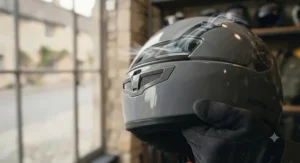
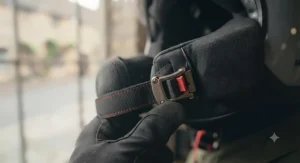
Getting the most from an advanced thermoplastic helmet starts before your first ride. Adjust the retention dial so the helmet sits level, roughly two finger-widths above your eyebrows — not tipped back like a baseball cap, which exposes your forehead. Tighten the side straps into a V-shape just below each ear, then the chin strap snugly enough that one or two fingers fit between strap and chin, no more.
In the first thirty days, most fit issues surface on longer rides once initial padding compresses slightly — recheck the dial tension after your first few outings rather than assuming factory settings are final. A common mistake is over-tightening the chin strap while leaving the retention dial loose, which lets the helmet rock rather than actually securing it. For maintenance, hand-wash removable pads in mild soap and lukewarm water rather than machine-washing, and never leave a helmet on a car dashboard or parcel shelf in summer — sustained heat can degrade both foam and thermoplastic shell integrity over time. Replace any helmet involved in a crash immediately, even without visible cracking, since EPS foam can compress internally without external signs.
Real-World Scenarios: Matching Riders to Helmets
The daily commuter, 6 miles each way, mostly urban roads: the Giro Register MIPS II or Giro Agilis MIPS covers this well — reliable protection, decent ventilation for stop-start riding, and a price point that doesn’t sting if it needs replacing after a low-speed tumble.
The weekend trail rider hitting bridleways and green lanes: the Fox Speedframe MIPS is built for exactly this, with reinforced coverage and a durable shell that tolerates branch strikes and the occasional dropped bike.
The dedicated road cyclist logging 100+ miles weekly: either the MET Vinci MIPS for balanced all-day comfort or the Giro Aries Spherical MIPS for those prioritising integrated MIPS and refined aerodynamics justify their higher price through genuine, felt differences over long distances.
Common Mistakes When Buying an Advanced Thermoplastic Helmet
Even well-intentioned buyers trip over a handful of recurring errors. Assuming heavier automatically means safer is probably the most persistent myth — Imperial College’s own testing found no consistent link between price (which often correlates with lighter weight) and actual protective performance. Another common mistake is buying based on colour or styling alone without checking sizing charts, since head circumference genuinely varies by centimetres between “medium” labels across brands. Buyers also frequently skip checking the certification sticker altogether, assuming any helmet sold in the UK is automatically compliant — while BS EN 1078 compliance is required for legitimate retail, imported or marketplace helmets occasionally slip through without proper testing. Finally, many riders hang onto a helmet for five, six, even ten years without replacing it, unaware that UV exposure and general ageing degrade thermoplastic and foam performance over time, regardless of whether it’s ever been in a crash.
Long-Term Cost and Maintenance Analysis
Thinking purely in cost-per-use terms changes the calculus considerably. A £55 Giro Register MIPS II replaced every three years works out to roughly 5p per week of ownership — genuinely negligible against almost any cycling budget. A £250 Giro Aries Spherical MIPS, replaced on the same three-year cycle, comes to around 24p per week — still a rounding error compared with tyres, chains or bike servicing, but worth stating plainly since sticker shock often outweighs the actual long-term math. Maintenance costs are minimal across the board: replacement pad sets typically run £10-£20 regardless of helmet tier, and most thermoplastic shells require nothing beyond occasional wiping down. The genuine long-term cost driver isn’t the shell material at all — it’s replacement frequency, which should be dictated by crash history and age rather than budget alone.
Safety, Regulations and Compliance in the UK
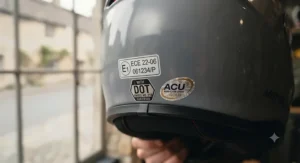
Every helmet featured in this guide meets BS EN 1078, the mandatory standard for helmets sold in the UK and EU, which tests retention, shock absorption and field of vision under standardised drop conditions. It’s worth being clear-eyed about what that standard does and doesn’t cover: it evaluates direct, straight-on impacts but historically hasn’t examined oblique or rotational impacts, which is precisely the gap that MIPS and comparable systems aim to close. There is, importantly, no UK law requiring cyclists to wear a helmet — Highway Code Rule 59 recommends it, and evidence does suggest a correctly fitted helmet reduces head injury risk in certain circumstances, but the decision remains yours alone. For anyone buying imported or marketplace helmets outside these seven picks, always confirm a genuine CE or UKCA mark is present, since counterfeit or non-compliant helmets do occasionally circulate on general marketplaces rather than dedicated bike retailers.
✨ Don’t Miss These Exclusive Deals!
🔍 Take your cycling safety to the next level with these carefully selected helmets. Click on any highlighted product to check current pricing and availability. These picks will help you ride with genuine confidence, not just good intentions.
Features That Actually Matter (And Those That Don’t)
Vent count is a genuinely useful spec — more vents, sensibly placed, means real airflow rather than marketing theatre. MIPS or equivalent rotational protection matters too, given the growing body of oblique-impact research behind it. Retention dial quality matters more than most buyers assume, since a fit that loosens mid-ride undermines everything else the helmet does well. What matters considerably less: aggressive aero styling on a commuter helmet you’ll never race in, marginal weight differences under 20 grams that you genuinely won’t notice on the road, and colour-matched accessories that add cost without adding protection. Reflective detailing, while not strictly a “shell” feature, is worth prioritising for anyone riding in low light — it’s cheap to include and genuinely improves visibility to other road users.
Frequently Asked Questions
❓ What is an advanced thermoplastic helmet?
❓ Is polycarbonate the same as thermoplastic?
❓ How long does a thermoplastic bike helmet actually last?
❓ Are lightweight thermoplastic helmets less safe than heavier ones?
❓ Do I really need a MIPS helmet?
Conclusion
The gap between a bargain-bin bike helmet and a genuinely advanced thermoplastic helmet isn’t smoke and mirrors — it’s real engineering, from how the shell bonds to the foam beneath it to whether rotational protection is baked into the design or bolted on as an afterthought. What this guide hopefully makes clear is that more expensive doesn’t automatically mean safer, but it does typically mean lighter, better ventilated, and more thoughtfully integrated. Whether you land on the reliably excellent Giro Register MIPS II for daily commuting or stretch to the Giro Aries Spherical MIPS for serious road miles, the seven helmets covered here each represent honest, defensible choices at their respective price points — not marketing dressed up as innovation. Fit it correctly, replace it on schedule, and the shell material becomes exactly what it should be: something you never have to think about again until the one moment it matters most.
Recommended for You
- Polycarbonate Helmet for Commuting: 7 Top Picks (2026 UK)
- Injected Polycarbonate Helmet: 7 Best Picks for UK Riders 2026
- Cheap Polycarbonate Helmet Under £100: 7 Real 2026 Picks
Disclaimer: This article contains affiliate links. As an Amazon Associate, I earn from qualifying purchases. If you purchase products through these links, we may earn a small commission at no additional cost to you.
✨ Found this helpful? Share it with your friends! 💬🤗
