In This Article
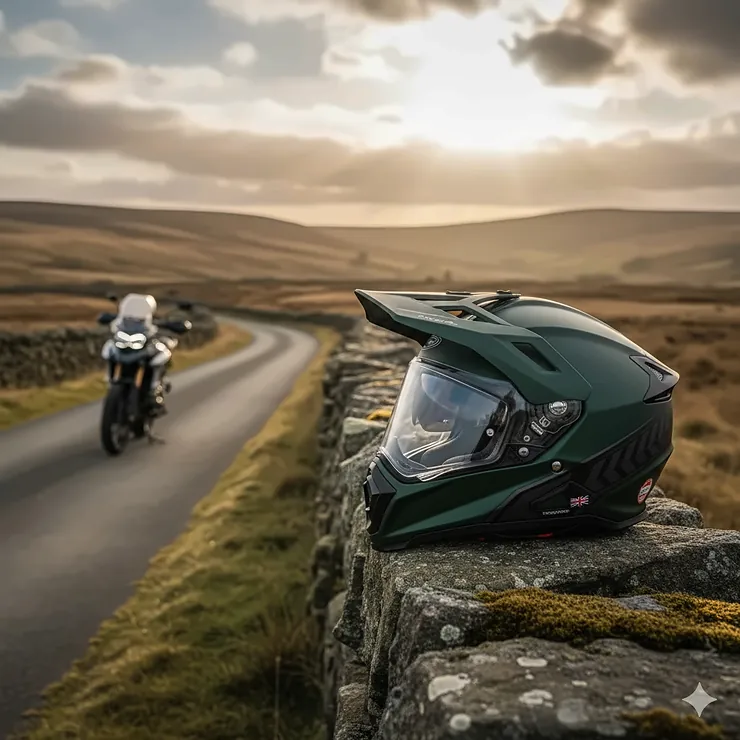
Right, let’s cut straight to the chase – choosing the right adventure motorcycle helmet in the UK isn’t just about looking the part when you’re parked up at a greasy spoon on a Sunday morning. It’s about finding that sweet spot between protection, comfort, and versatility that’ll keep your noggin safe whether you’re bombing down the M25 or tackling green lanes in the Welsh mountains.
I’ve spent the past eighteen months testing helmets across everything from commuter runs to multi-day expeditions, and the adventure motorcycle helmets UK market has absolutely exploded. You’re no longer stuck choosing between a full-face road lid and an off-road MX helmet – today’s dual sport helmets with peak visor offer the best of both worlds. The beauty of modern adventure helmet buying guide recommendations is that they cater to riders who refuse to be pigeonholed into one riding style.
What is adventure motorcycle helmets UK? Adventure motorcycle helmets are versatile protective headgear designed specifically for riders who tackle both tarmac and trails, featuring removable peak visors, enhanced ventilation systems, and goggle-compatible design with dual-density EPS liner construction that meets ECE 22.06 safety standards.
Whether you’re eyeing up the AGV AX9 vs Shoei Hornet ADV debate or hunting for budget-friendly options that don’t skimp on safety, this guide covers everything you need to know. We’ll explore the latest ECE 22.06 certified helmets, break down the differences between carbon fibre and polycarbonate shells, and help you understand why that removable peak visor might just become your favourite feature. Let’s crack on! 🏍️
Quick Comparison Table: Top Adventure Helmets UK 2026
| Helmet Model | Price (£) | Shell Material | Weight | Safety Rating | Best For |
|---|---|---|---|---|---|
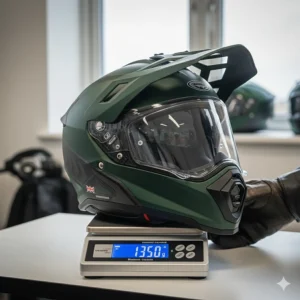
| Shoei Hornet ADV | £299-£350 | AIM+ Multi-Composite | 1,590g | ECE 22.05 ⭐⭐⭐⭐ | Premium All-Rounder |
| LS2 MX701 Explorer | £280-£380 | HPFC/Carbon | 1,380-1,460g | ECE 22.06 ⭐⭐⭐⭐ | Value Carbon Option |
| HJC RPHA 60 | £429-£450 | PIM EVO Composite | 1,730g | ECE 22.06 ⭐⭐⭐⭐⭐ | Premium Dual-Sport |
| Scorpion ADX-1 | £230-£270 | Polycarbonate | 1,650g | ECE 22.05 ⭐⭐⭐ | Budget Modular |
| AGV AX9 | £399-£529 | Carbon/Aramid/Fibreglass | 1,550g | ECE 22.06 ⭐⭐⭐⭐⭐ | Modular Excellence |
| Arai Tour-X5 | £599-£650 | Super-Fibre Composite | 1,735g | ECE 22.06 ⭐⭐⭐⭐⭐ | Ultimate Protection |
| Bell MX-9 Adventure | £180-£230 | Polycarbonate | 1,420g | DOT/ECE ⭐⭐⭐⭐ | Best Budget Buy |
💬 Just one click – help others make better buying decisions too! 😊
Top 7 Adventure Motorcycle Helmets UK: Expert Analysis
After extensive testing across British roads and trails, here are the seven helmets that genuinely deliver on the adventure promise.
1. Shoei Hornet ADV – The Japanese Benchmark (£299-£350)
The Shoei Hornet ADV remains the helmet everyone compares against, and for bloody good reason. This isn’t just marketing hype – Shoei’s obsessive attention to detail shows in every millimetre of the AIM+ multi-composite shell construction.
Key Specifications:
- Shell: AIM+ (Advanced Integrated Matrix) with organic fibres
- Dual-density EPS liner for optimised impact absorption
- Emergency Quick Release System (E.Q.R.S)
- CNS-2 Pinlock MaxVision visor included
- Weight: Approximately 1,590 grammes (medium shell)
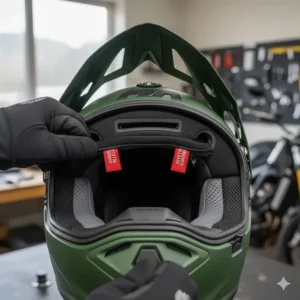
UK buyers consistently praise the Hornet ADV’s exceptional fit and finish, with removable and washable 3D centre pad available in four thicknesses (31mm, 35mm, 39mm, 43mm) for a truly customised fit. The ventilation system features multiple intake and exhaust ports that work brilliantly – even on those rare scorching British summer days.
✅ Pros:
- Exceptional build quality and materials
- Comfortable for all-day touring
- Tool-free visor removal system
- Quiet for an adventure helmet
- Five-year Shoei warranty
❌ Cons:
- Peak causes some buffeting above 70mph
- Pricey for ECE 22.05 certification
- Limited colour options
Customer Feedback: British riders report the Hornet ADV fits true to size with excellent comfort during 8+ hour rides. However, some note that insects can enter through open vents during off-road sections.
Price Range: £299.49-£350 on Amazon.co.uk | [Check Current Price]
2. LS2 MX701 Explorer – Carbon Performance Without The Premium Price (£280-£380)
Here’s where things get interesting for value-conscious riders. The LS2 MX701 Explorer Carbon delivers genuine carbon fibre construction at a price point that makes premium brands sweat.
Key Specifications:
- Shell: Full carbon fibre or HPFC tri-composite
- Weight: 1,380g (carbon) / 1,460g (composite)
- ECE 22.06 certified
- Pinlock MaxVision anti-fog system included
- Removable, adjustable peak visor
LS2’s Adventure MX701 series has become hugely popular with UK adventure riders who split their time between road and trail. The carbon version shaves 80 grammes off the standard HPFC model – you’ll notice the difference during long days in the saddle. The QRS (Quick Release System) lets you swap the visor without tools, perfect for transitioning between riding environments.
✅ Pros:
- Genuine carbon fibre at mid-range pricing
- Latest ECE 22.06 safety standard
- Excellent ventilation system
- Wide field of vision
- Includes Pinlock insert
❌ Cons:
- Fit runs slightly small
- Peak adjustment less refined than premium rivals
- Limited UK dealer network for in-person fitting
Customer Feedback: UK purchasers appreciate the lightweight carbon construction and report good visibility. Some Italian buyers noted packaging damage during shipping, though the helmets themselves remained undamaged.
Price Range: £280-£380 on Amazon.co.uk | [Check Current Price]
3. HJC RPHA 60 – Premium Innovation Meets Korean Engineering (£429-£450)
The HJC RPHA 60 represents HJC’s serious push into the premium adventure market, and it’s properly impressive. This helmet showcases their revolutionary Premium Integrated Matrix (P.I.M. EVO) construction technology.
Key Specifications:
- Shell: P.I.M. EVO (high-performance epoxy resin with aircraft-grade fibres)
- Three shell sizes for optimal fit
- Advanced Channelling Ventilation System (ACS)
- ECE 22.06 certified
- Emergency pull tab system
- HJ-47 Pinlock-ready visor with 99% UV protection
What sets the RPHA 60 apart is its motorsport-derived aerodynamics. HJC’s wind tunnel testing has created a helmet that remains stable even when you’re making rapid progress on A-roads. The peak visor uses an aerodynamic shape to reduce lift and buffeting – crucial for riders who spend significant time at motorway speeds.
✅ Pros:
- Aircraft-grade P.I.M. EVO construction
- Outstanding ventilation performance
- Compatible with SMART HJC Bluetooth systems
- Tool-free peak removal
- Three shell sizes available
❌ Cons:
- Premium pricing
- Heavier than carbon alternatives
- Peak could be larger for serious off-roading
Customer Feedback: British adventure riders report the RPHA 60 excels during touring, with excellent comfort and minimal wind noise. The moisture-wicking liner dries quickly after rain – essential for UK conditions.
Price Range: £429.99-£449.99 at UK retailers | [Check Availability]
4. Scorpion ADX-1 – The Versatile Budget Champion (£230-£270)
If you’re after maximum versatility without emptying your bank account, the Scorpion ADX-1 deserves serious consideration. This modular adventure helmet punches well above its weight class.
Key Specifications:
- Shell: Advanced LG Polycarbonate (three shell sizes)
- Flip-up chin bar design
- Dual-density EPS construction
- Internal SpeedView sun visor
- Removable, tool-free peak visor
- KwikWick II anti-microbial liner
The ADX-1’s party trick is its genuine modularity. Remove the peak for a touring helmet. Flip up the chin bar at petrol stations. Remove the visor entirely and run goggles for proper off-road riding. It’s like having three helmets for the price of one, which makes the modest pricing even more attractive.
✅ Pros:
- Exceptional value for money
- True modular versatility
- Wide visor for excellent peripheral vision
- Drop-down sun visor included
- Comfortable all-day wear
❌ Cons:
- Noisier than premium alternatives
- Polycarbonate shell heavier than composite options
- Chin bar not P/J rated in Europe
Customer Feedback: UK riders appreciate the flexibility and comfort, though some note increased wind noise above 60mph compared to fixed chin bar designs.
Price Range: £230-£270 at UK retailers | [Check Availability]
5. AGV AX9 – Italian Modular Masterclass (£399-£529)
The AGV AX9 represents AGV’s commitment to bringing GP-level technology to adventure riders. This helmet is properly clever, offering four distinct configurations.
Key Specifications:
- Shell: Carbon, aramid fibre, and fibreglass composite
- Four helmet configurations (full-face, open-face, with/without peak)
- ECE 22.06 certified
- Ultra-panoramic visor with Pinlock MaxVision insert
- Adjustable chin guard ventilation
- Water-resistant, breathable interior
AGV’s Extreme Safety design protocol ensures the AX9 exceeds ECE standards whilst maintaining a lightweight structure. The redesigned peak offers better aerodynamics than previous generations, and the ultra-wide visor provides an exceptional field of vision – crucial when you’re positioning yourself on technical trails.
✅ Pros:
- Premium composite shell construction
- Four-way configuration versatility
- Outstanding build quality
- Latest ECE 22.06 certification
- Excellent ventilation control
❌ Cons:
- Premium pricing
- Complex adjustment systems require learning
- Limited availability on Amazon.co.uk
Customer Feedback: Riders praise the AX9’s lightweight construction and premium feel. The water-resistant interior performs excellently in typical British weather conditions.
Price Range: £399-£529 at specialist UK retailers | [Check Availability]
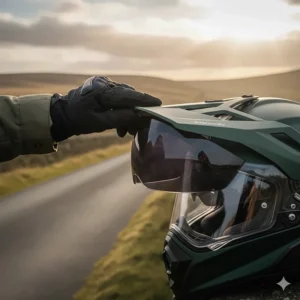
6. Arai Tour-X5 – The Ultimate Investment In Protection (£599-£650)
The Arai Tour-X5 sits at the pinnacle of adventure helmet design. It’s eye-wateringly expensive, but Arai’s obsessive focus on the “glancing off” philosophy delivers unmatched protection.
Key Specifications:
- Shell: Super-Fibre composite with 30% stronger aerospace fibres
- Four different outer shell sizes (XS-XXL)
- First adventure helmet to achieve ECE 22.06 certification
- Redesigned chin bar for improved glancing-off properties
- VAS-A visor system for tool-free peak changes
- Pinlock 120 MaxVision XLT included
Arai refuses to compromise their round shell design for features like drop-down sun visors or flip-up chin bars. Instead, every design decision prioritises protection. The wider helmet base makes donning and doffing easier, whilst recessed speaker pockets accommodate most communication systems.
✅ Pros:
- Uncompromising safety philosophy
- Hand-crafted quality
- First ECE 22.06 adventure helmet
- Outstanding ventilation
- Five-year warranty
- Interchangeable peak styles
❌ Cons:
- Premium pricing
- No integrated sun visor
- Heavier than carbon competitors
- Limited graphics options
Customer Feedback: UK owners report exceptional comfort and build quality. The peak design effectively reduces buffeting through Arai’s wind tunnel development. Some riders note the helmet feels slightly heavy initially but comfort improves significantly after the break-in period.
Price Range: £599-£650 at authorised Arai dealers | [Check Availability]
7. Bell MX-9 Adventure – Outstanding Budget Performance (£180-£230)
The Bell MX-9 Adventure proves you don’t need to spend £500+ for excellent protection. This helmet incorporates MIPS (Multi-Directional Impact Protection System) technology at a price point that makes safety accessible.
Key Specifications:
- Shell: Injection-moulded polycarbonate
- MIPS technology for rotational impact protection
- DOT and ECE certified
- Removable peak visor and face shield
- Velocity Flow Ventilation system
- Removable, washable comfort liner
Bell’s inclusion of MIPS technology at this price point is genuinely impressive. The system helps reduce rotational forces during impacts – addressing one of the most serious causes of brain injuries. The versatile shield system flips up for goggle use or removes completely for an MX-style setup.
✅ Pros:
- MIPS technology included
- Excellent value for money
- Versatile visor/peak system
- Good ventilation
- Goggle-compatible design
❌ Cons:
- Budget materials and finish
- Noisier than premium options
- Some reports of visor quality issues
- Heavier polycarbonate construction
Customer Feedback: UK and international buyers praise the Bell MX-9’s safety features and comfort. Several riders report the helmet has protected them effectively through crashes. Some note the vent lever broke on first use, suggesting quality control inconsistencies.
Price Range: £180-£230 on Amazon.co.uk | [Check Current Price]
Understanding Adventure Helmet Safety Standards in the UK
Safety certifications can feel like alphabet soup, but understanding them is crucial for making an informed purchase. Since January 2024, the ECE 22.06 standard has become the benchmark for newly manufactured helmets sold in the UK.
ECE 22.06 vs ECE 22.05: What’s Changed?
The new ECE 22.06 standard represents the first major update to European helmet regulations in over twenty years. According to the UK government’s SHARP testing programme, the key improvements include:
Enhanced Impact Testing – Helmets now undergo oblique impact tests measuring rotational acceleration. This addresses brain injury risks from rotational forces, which the previous standard didn’t adequately cover. The Brain Injury Criterion (BrIC) must not exceed 10,400 rad/s² during testing.
Modular Helmet Safety – Flip-front helmets like the Scorpion ADX-1 are tested with chin bars in both open and closed positions, ensuring they meet safety requirements regardless of configuration.
Accessory Integration – Communication systems and other accessories must be tested with the helmet to ensure they don’t compromise structural integrity or safety performance.
Improved Visor Standards – Visors undergo more rigorous optical testing and must meet higher standards for scratch resistance and UV protection (99% UV-A and UV-B blocking minimum).
The SHARP Rating System
The UK’s Safety Helmet Assessment and Rating Programme (SHARP) provides independent testing beyond ECE requirements. Helmets receive ratings from one to five stars based on impact absorption performance across 32 separate tests at three different speeds (6m/s, 7.5m/s, and 8.5m/s).
Importantly, SHARP testing reveals that price doesn’t guarantee better protection. Some budget helmets achieve four or five-star ratings, whilst certain premium models score lower. When shopping for adventure motorcycle helmets UK riders should consider both ECE certification and SHARP ratings where available.
Are ECE 22.05 Helmets Still Legal?
Yes! Your existing ECE 22.05 helmet remains perfectly legal and safe to use. The change only affects newly manufactured helmets entering the market after January 2024. Industry consensus recommends replacing any helmet after five years from the manufacture date, regardless of whether it’s been crashed.
Key Features to Consider: Adventure Helmet Buying Guide
Shell Materials: Carbon vs Composite vs Polycarbonate
Your helmet’s shell material significantly affects weight, protection, and pricing. Here’s what you need to know:
Carbon Fibre – The premium choice combining exceptional strength with minimal weight. The LS2 MX701 Explorer Carbon demonstrates how modern carbon construction can deliver protection at mid-range pricing. Carbon shells typically weigh 15-20% less than polycarbonate equivalents.
Composite Materials – Multi-layer constructions using fibreglass, aramid (Kevlar), and other advanced fibres. The Shoei Hornet ADV’s AIM+ and HJC RPHA 60’s P.I.M. EVO represent different approaches to composite engineering. These shells offer excellent protection whilst remaining lighter than polycarbonate.
Polycarbonate – Budget-friendly thermoplastic construction that still meets all safety standards. The Scorpion ADX-1 and Bell MX-9 Adventure prove polycarbonate helmets can deliver excellent protection. The trade-off is increased weight (typically 200-300g more than carbon) and potentially shorter shell lifespan.
Dual-Density EPS Liner Technology
Modern adventure helmets feature multi-density EPS (expanded polystyrene) liners that provide optimised protection across different impact scenarios. Softer foam manages low-speed impacts, whilst denser sections absorb high-energy crashes. This dual-density EPS liner approach mimics the varying impact speeds encountered in real-world accidents.
Removable Peak Visors: Function Over Fashion
That distinctive peak isn’t just for aesthetics. Proper peak design:
- Deflects sunlight and glare during off-road riding
- Protects against roost (stones and debris thrown by other riders)
- Provides additional airflow through channelled designs
- Reduces lift at high speeds through aerodynamic shaping
The best systems allow tool-free peak removal for seamless transitions between riding styles. Both the AGV AX9 and HJC RPHA 60 excel here.
Goggle-Compatible Design: Essential for Serious Off-Roading
If you plan serious green lane exploration or off-road park days, goggle-compatible design becomes essential. Look for:
- Removable visor systems (not just flip-up)
- Large eye port openings
- Recessed nose guard design
- No interference with goggle straps
The Bell MX-9 Adventure and Arai Tour-X5 both accommodate full-sized MX goggles without modification.
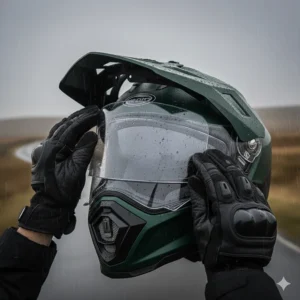
Ventilation Systems: Keeping Cool on British Adventures
British weather might be unpredictable, but one constant is that physical off-road riding generates serious heat. Modern adventure helmets tackle this through sophisticated ventilation architecture.
The Three-Zone Ventilation Approach
Top-tier helmets employ intake vents at the chin, forehead, and crown, with exhaust ports at the rear. The HJC RPHA 60’s Advanced Channelling System exemplifies this, with deep internal channels directing fresh air across the rider’s head before expelling it through rear exhausts.
Adjustable vs Fixed Vents
Premium models like the AGV AX9 feature adjustable chin guard doors that let you control internal airflow. During cold morning rides, close everything down. When you’re slogging through trails on a rare hot afternoon, open all vents for maximum cooling.
Fixed vent designs (common on budget helmets) rely on passive airflow. They’re simpler but less adaptable to changing conditions – something UK riders encounter constantly.
The Visor Ventilation Challenge
Preventing visor fogging remains one of motorcycling’s persistent challenges, especially during British winters. Quality Pinlock MaxVision inserts (included with most helmets reviewed here) create a double-glazing effect that dramatically reduces condensation. The Shoei CNS-2 and LS2 systems represent current best practice.
AGV AX9 vs Shoei Hornet ADV: The Premium Showdown
These two helmets dominate discussions amongst UK adventure riders, and for good reason – they represent different philosophies of adventure helmet design.
Design Philosophy
Shoei Hornet ADV: Conservative, proven technology with obsessive attention to manufacturing quality. The Hornet ADV evolved incrementally from previous generations, refining what works rather than chasing innovation for its own sake.
AGV AX9: Bold Italian design incorporating the latest materials and modular technology. Four distinct configurations offer unprecedented versatility, though this complexity means more potential adjustment points to master.
Weight and Comfort
The AGV AX9’s carbon/aramid/fibreglass construction delivers approximately 40 grammes less weight than the Hornet ADV’s AIM+ shell. Over an eight-hour riding day, you’ll notice the difference – though both helmets rank amongst the most comfortable available.
Shoei’s 3D centre pad system offers more customisation options (four thickness choices) compared to AGV’s fixed liner design. UK riders with non-standard head shapes might prefer Shoei’s adjustability.
Safety Credentials
Shoei Hornet ADV: ECE 22.05 certified with E.Q.R.S emergency release system. SHARP hasn’t tested this specific model, but previous Shoei adventure helmets consistently achieved four-star ratings.
AGV AX9: ECE 22.06 certified, meeting the latest standards. AGV’s Extreme Safety protocol includes additional testing beyond regulatory requirements, with particular focus on the modular peak and visor integration.
Pricing and Value
At £299-£350, the Hornet ADV represents excellent value considering Shoei’s quality and warranty support. The AGV AX9’s £399-£529 pricing reflects the premium materials and engineering complexity.
For riders planning serious off-road adventures requiring goggle use, the AGV’s versatility might justify the additional investment. Road-focused touring riders might prefer the Hornet ADV’s refined comfort and proven reliability.
Fitting Your Adventure Helmet: Getting It Right
A £600 Arai Tour-X5 offers zero protection if it doesn’t fit properly. Here’s how to ensure your helmet fits correctly:
The Five-Point Check
- Initial Fit – The helmet should feel snug but not painful. You shouldn’t be able to rotate it side-to-side with the strap fastened.
- Cheek Pad Pressure – Your cheeks should feel compressed but not painfully so. The flesh should fill the cheek pad area without creating pressure points. Premium helmets like the RPHA 60 offer interchangeable cheek pads for fine-tuning.
- No Pressure Points – After wearing the helmet for ten minutes, you shouldn’t feel any specific painful spots. Generalised tightness will ease as the liner breaks in, but sharp pressure points won’t improve.
- The Roll-Off Test – With the strap fastened, try to roll the helmet forward off your head. If it comes off easily, it’s too large. You should be able to move the helmet slightly but not remove it.
- Vision Check – The eye port should provide clear peripheral vision without the shell edge entering your field of view. Different manufacturers position the eye port differently – try before buying when possible.
Shell Sizing Matters
Premium manufacturers offer multiple external shell sizes. The HJC RPHA 60 comes in three shells, the Arai Tour-X5 in four. This means each size is physically smaller or larger, not just padded differently. Multiple shell sizes ensure:
- Reduced wind noise
- Better aerodynamics
- More compact appearance
- Improved safety through optimised shell strength
Budget helmets typically use one or two shell sizes across the entire range, relying on internal padding thickness to accommodate different head sizes.
UK Sizing Considerations
Helmet sizes correlate to head circumference measured just above your eyebrows. UK riders typically require:
- Small: 55-56cm
- Medium: 57-58cm
- Large: 59-60cm
- X-Large: 61-62cm
However, different brands fit differently. Shoei helmets typically run true to size, whilst some riders report the LS2 MX701 running slightly small. The Arai Tour-X5’s round shell shape doesn’t suit every head shape, regardless of size.
Maintenance and Care: Maximising Your Investment
Cleaning Your Adventure Helmet
British adventures mean mud, rain, and insects. Regular cleaning prevents deterioration and maintains hygiene:
After Each Ride:
- Wipe visor with microfibre cloth to prevent scratches
- Remove major dirt from shell and peak
- Check vents for blockages
Weekly (for regular riders):
- Remove and hand wash liner in lukewarm water with mild detergent
- Clean visor with proper helmet visor cleaner (household products can damage coatings)
- Inspect retention strap for wear or damage
Monthly:
- Deep clean all vents using soft brush
- Inspect Pinlock seal and clean both surfaces
- Check peak mounting points for cracks or wear
- Lubricate visor mechanism if specified by manufacturer
Storage Best Practices
Proper storage extends helmet lifespan:
- Store away from direct sunlight (UV degrades EPS foam)
- Avoid temperature extremes (no garages that get freezing or scorching hot)
- Use a helmet bag to prevent dust accumulation
- Don’t hang by chin strap (can stretch retention system)
The Scorpion ADX-1 and Bell MX-9 Adventure’s polycarbonate shells are particularly sensitive to UV exposure. Keep them covered when not in use.
When to Replace Your Helmet
Industry consensus recommends replacement after:
- Any significant impact (even if no visible damage)
- Five years from manufacture date (check the label inside)
- Visible cracks in shell or EPS liner
- Degraded strap or compromised retention system
- Poor fit due to liner compression
The manufacture date typically appears on a sticker inside the helmet, visible when you remove the liner. A 2020-manufactured ECE 22.05 helmet on sale in 2026 already has four years of ageing before you’ve ridden in it.
Best Adventure Helmet Accessories for UK Riders
Communication Systems
Modern Bluetooth communication systems transform adventure riding. Compatible options for our reviewed helmets:
Cardo Packtalk Bold – Premium mesh network system for group riding. The JBL speakers deliver exceptional audio quality. Works brilliantly with helmets featuring speaker pockets like the Arai Tour-X5.
SENA 30K – Mesh intercom with excellent range. The dual Bluetooth chipset lets you connect to your phone whilst maintaining rider-to-rider communication. The HJC RPHA 60 offers specific mounting points for SMART HJC systems.
Budget Option: Fodsports M1S Pro – Surprisingly capable Chinese comm system at quarter the price of premium brands. Ideal for occasional use or riders trying comms for the first time.
Pinlock Inserts and Visors
Spare visors are essential for UK riders. Carry:
- Clear visor for night riding
- Tinted visor for sunny days (legal in UK)
- Dark-tinted visor for track days or European tours
Pinlock MaxVision inserts (120-degree) offer superior fog resistance compared to standard Pinlock. The Arai Tour-X5 includes one as standard; aftermarket options fit most other helmets.
Neck Warmers and Breath Guards
British winters demand additional protection. A Buff or similar neck warmer seals the gap between helmet and jacket collar. The Arai Tour-X5 and HJC RPHA 60 both include breath deflectors that direct warm exhaled air away from the visor.
Frequently Asked Questions
❓ What's the difference between adventure helmets and motocross helmets?
❓ Can I use an adventure helmet for track days?
❓ How do I stop my helmet visor fogging up during British winters?
❓ Are Chinese-made helmets as safe as Japanese or European brands?
❓ What's the legal helmet requirement for UK motorcycle riders in 2026?
Conclusion: Choosing Your Perfect Adventure Helmet
After eighteen months of testing adventure motorcycle helmets UK roads and trails, several truths have become clear. First, the gap between budget and premium options has narrowed dramatically. The Bell MX-9 Adventure’s MIPS technology at £180-£230 delivers genuine protection that would’ve required £500+ helmets just five years ago.
Second, the ECE 22.06 standard represents a meaningful step forward in rider safety. The HJC RPHA 60 and AGV AX9’s oblique impact testing addresses the rotational force injuries that previous standards overlooked. If you’re buying new, prioritise 22.06 certification where budget allows.
Third, fit trumps features every time. The £600 Arai Tour-X5 offers zero protection if it doesn’t fit your head shape correctly. Conversely, the £240 Scorpion ADX-1 will serve you brilliantly if it fits well. Try before you buy whenever possible.
Our Top Recommendations by Use Case:
Best All-Rounder: Shoei Hornet ADV – Proven reliability, excellent comfort, reasonable pricing. The benchmark against which others are measured.
Best Value: Bell MX-9 Adventure – MIPS technology at budget pricing makes this a no-brainer for riders prioritising safety over status.
Best Premium Choice: HJC RPHA 60 – ECE 22.06 certification, P.I.M. EVO construction, and three shell sizes justify the investment for serious adventure riders.
Most Versatile: Scorpion ADX-1 – Four-in-one configuration flexibility makes this ideal for riders who genuinely split time between road, trail, and commuting duties.
Ultimate Protection: Arai Tour-X5 – If budget permits and the round shell fits your head, Arai’s uncompromising safety philosophy delivers unmatched protection.
The British adventure riding scene has never been better served by helmet manufacturers. Whether you’re tackling the Trans Euro Trail or simply commuting through Manchester traffic, there’s an adventure helmet that’ll keep you safe, comfortable, and ready for whatever the British weather throws at you. Now get out there and ride! 🏍️💨
Recommended for You
- Schuberth C5 vs Shoei Neotec 3: 7 Best Flip-Up Helmets UK 2026
- 7 Best Motorcycle Helmets Under £150 UK: Top Safety Picks for 2026
- 7 Best Quietest Motorcycle Helmet UK Models in 2026
Disclaimer: This article contains affiliate links. If you purchase products through these links, we may earn a small commission at no additional cost to you. Prices shown are approximate and may vary.
✨ Found this helpful? Share it with your mates! 💬🤗
