
In This Article
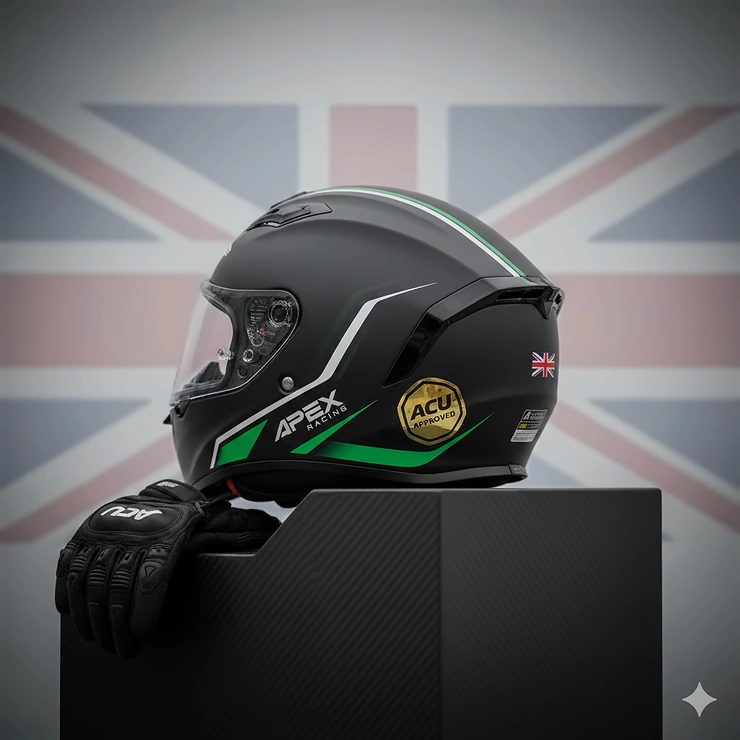
Ever pulled up to your first track day only to be turned away at scrutineering because your helmet didn’t have that little gold sticker? Happened to my mate Dave at Brands Hatch last summer, and trust me, the drive home wasn’t pleasant. ACU approved motorcycle helmets aren’t just fancy accessories – they’re your ticket to hitting those circuits legally and safely.
The Auto-Cycle Union (ACU), established in 1903, governs motorcycle sport across Great Britain. Their Gold standard represents some of the most rigorous helmet testing available, going beyond basic road requirements. Whilst ECE 22.06 keeps you legal on public roads, ACU Gold approval is mandatory for track days and competitive events on tarmac surfaces. According to the UK Government’s SHARP testing programme, ACU certification specifically evaluates helmets under race conditions – think higher speeds, smoother surfaces, and different impact scenarios than your typical roundabout incident.
What sets these helmets apart? They’ve undergone independent testing by the ACU, demonstrating they can withstand the extreme forces experienced during high-speed racing. The official ACU documentation confirms that only helmets bearing the distinctive gold sticker are permitted for road racing, sprints, drag racing, and hill climbs. This guide cuts through the marketing waffle to bring you seven brilliant options currently available in the UK, from budget-friendly choices around £80 to premium carbon-fibre masterpieces exceeding £700.
Quick Comparison Table
| Helmet Model | Price Range (£) | Weight | Shell Material | SHARP Rating | Best For |
|---|---|---|---|---|---|
| MIDA MV-151 | £74-£89 | 1,400g | HPTT Composite | Not tested | Budget track days |
| LS2 FF353 Rapid II | £95-£135 | 1,350g | HPTT | 3 stars | Value seekers |
| HJC RPHA 11 | £349-£519 | 1,300g | P.I.M. Plus Composite | 3 stars | Mid-range performance |
| AGV K6 | £379-£499 | 1,255g | Carbon-Aramid | 5 stars | Premium lightweight |
| AGV K6 S | £440-£589 | 1,255g | Carbon-Aramid | 5 stars | Advanced sport touring |
| Shoei X-SPR Pro | £649-£849 | 1,250g | AIM+ Composite | Not yet tested | Professional racing |
| Arai RX-7V Evo | £849-£1,024 | 1,450g | Super Fibre | 5 stars | Ultimate protection |
💬 Just one click – help others make better buying decisions too! 😊
Top 7 ACU Approved Motorcycle Helmets: Expert Analysis
1. MIDA MV-151 – Best Budget Track Day Helmet
The MIDA MV-151 proves you don’t need to remortgage the house for ACU Gold approval. Available on Amazon.co.uk for £74-£89, this full-face helmet punches well above its weight class. It meets both ACU Gold standards for track use and ECE 22.06 for road legality, making it perfect for riders taking their first steps onto the circuit.
Key Specifications:
- HPTT lightweight construction (High-Performance Thermoplastic Technology)
- Dual visor system (clear and dark tinted included)
- Quick-release visor mechanism
- Removable, washable interior lining
UK buyers consistently praise its value proposition. One Amazon reviewer noted: “ACU Gold sticker approved at an affordable price. Very comfortable and the visor seal is great.” The helmet features a comprehensive ventilation system with chin air intake vents and rear exhaust ports, though don’t expect wind-tunnel-optimised airflow at this price point.
Pros:
✅ Exceptional value – ACU Gold approval under £90
✅ Includes both clear and tinted visors
✅ ECE 22.06 road legal throughout Europe
Cons:
❌ Heavier than premium alternatives (1,400g)
❌ Basic ventilation compared to higher-end models
2. LS2 FF353 Rapid II – Outstanding Value for Money
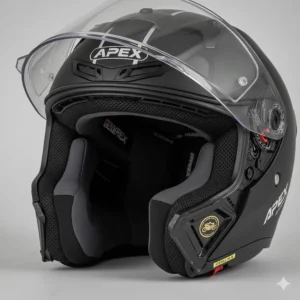
The LS2 FF353 Rapid II represents one of the best-value full-face helmets from an established international manufacturer. Priced between £95-£135 on Amazon.co.uk, it’s earned ACU Gold approval whilst maintaining LS2’s reputation for affordability without compromising safety fundamentals.
Key Specifications:
- ECE 22.06 certification with ACU Gold approval
- HPTT shell construction (two shell sizes)
- Pinlock Max Vision ready visor
- SHARP 3-star safety rating
Customer feedback from UK riders highlights impressive comfort levels. According to Amazon reviews: “Brilliant helmet for the price, great to see a budget helmet with recessed pockets for speakers and headsets.” The laser-cut 3D foam interior provides excellent fitment without hot spots, whilst the multi-density EPS liner offers superior impact absorption.
Pros:
✅ Excellent build quality from trusted manufacturer
✅ Speaker pockets for communication systems
✅ Very competitive pricing for ACU Gold approval
Cons:
❌ Some riders report tight fit around cheek area
❌ Wind noise noticeable above 70mph
3. HJC RPHA 11 – Premium Features, Sensible Price
HJC’s flagship RPHA 11 delivers race-spec technology at a price that won’t empty your wallet. Available from UK retailers between £349-£519 depending on graphics, this helmet represents the sweet spot between performance and affordability. It’s worn by professional racers and carries full ACU Gold certification.
Key Specifications:
- P.I.M. Plus composite shell (carbon and aramid reinforcement)
- Three shell sizes for optimised fit
- RapidFire tool-less visor removal system
- Emergency Quick Release cheek pads (EQRS)
The RPHA 11 achieved a SHARP 3-star rating, which whilst not the highest, reflects its focus on track-specific protection rather than general road crash scenarios. As Bennetts BikeSocial’s review explains, “the helmet meets ECE22.05, comes with an ACU Gold approval sticker so is accepted for UK racing.” At just 1,300g, it’s remarkably light for a composite helmet.
Pros:
✅ Excellent ventilation with multi-point system
✅ Premium build quality with 5-year warranty
✅ Wide visor aperture for excellent visibility
Cons:
❌ Can be noisy at motorway speeds
❌ Tighter fit may not suit round head shapes
4. AGV K6 – Lightweight Champion
The AGV K6 stands as one of the lightest full-face road helmets globally, weighing just 1,255g in medium. Priced £379-£499 at Moto Central and specialist UK retailers, it brings MotoGP-developed technology to everyday riders. Its ACU Gold approval and SHARP 5-star rating make it exceptional for both track days and spirited road riding.
Key Specifications:
- Carbon and aramid-fibre shell construction
- Four shell sizes (XS to XXL)
- 190° horizontal field of view
- Integrated Ventilation System (IVS)
According to Moto Central’s product specifications, the K6 “exceeds the stringent ECE 22.06 standard by a significant margin.” UK buyers appreciate its refined ergonomics and optical-class 1 visor with 100% Pinlock MaxVision anti-fog system. The helmet’s collarbone-safe profile demonstrates AGV’s commitment to comprehensive rider protection.
Pros:
✅ Exceptionally lightweight reduces neck fatigue
✅ SHARP 5-star safety rating
✅ Premium Italian design and build quality
Cons:
❌ Higher price point than competitors
❌ May feel snug initially (breaks in over time)
5. AGV K6 S – Advanced Sport-Touring Excellence
The AGV K6 S takes everything brilliant about the K6 and refines it further. Available from UK retailers at £440-£589, it’s the updated model offering 36% more safety than ECE 22.06 requirements demand. This helmet earned its ACU Gold approval through extensive independent testing, making it suitable for everything from track days to continental touring.
Key Specifications:
- Advanced carbon-aramid shell (four sizes)
- Ritmo and Shalimar premium fabric interior
- DrySpeed moisture-wicking technology
- Integrated spoiler for aerodynamic stability
One standout feature is the glasses-friendly fit with specially designed cheek pads that don’t pressure temples. UK customers on Moto Central report: “The K6 S is crafted with a carbon and aramid fibre shell, ensuring it is the lightest full-face road helmet in the world.” The helmet’s 1,255g weight makes it ideal for extended track sessions without neck strain.
Pros:
✅ Superior safety margins beyond certification
✅ Optimised for glasses wearers
✅ Excellent ventilation with five front vents
Cons:
❌ Premium pricing
❌ Not FIM certified (ACU Gold only)
6. Shoei X-SPR Pro – Professional-Grade Performance
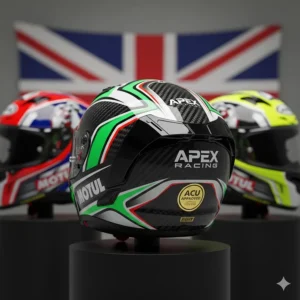
When Marc Márquez chooses a helmet, you pay attention. The Shoei X-SPR Pro represents the pinnacle of Japanese helmet engineering, priced £649-£849 at UK retailers. It carries both FIM homologation and ACU Gold approval, making it legal for professional racing worldwide. This isn’t just a track helmet – it’s the track helmet.
Key Specifications:
- AIM+ multi-composite shell (four shell sizes)
- Seven intake vents, six exhaust outlets
- CWR-F2R race visor with Pinlock EVO
- FIM and ECE 22.06 certified
According to Custom Lids UK, the X-SPR Pro achieved “ECE 22.06 FIM Race Homologation ACU Gold Approved for UK Trackdays.” At 1,250g, it’s one of the lightest helmets available whilst maintaining Shoei’s legendary build quality. The integrated spoiler and vortex generators reduce drag by 3% compared to its predecessor, whilst the rear stabiliser provides confidence-inspiring stability at speed.
Pros:
✅ FIM homologation for professional racing
✅ Exceptional aerodynamics tested in Shoei’s wind tunnel
✅ Emergency Quick Release System (EQRS) included
Cons:
❌ Significant investment required
❌ May be over-specified for casual track days
7. Arai RX-7V Evo – Ultimate Protection Philosophy
Arai’s RX-7V Evo costs £849-£1,024, making it the most expensive option here. However, that premium buys you Arai’s unique safety philosophy: stronger, rounder, smoother. The helmet’s ACU Gold approval comes alongside a SHARP 5-star rating, demonstrating exceptional all-round protection. It’s handmade in Japan to exacting standards that have made Arai legendary among serious riders.
Key Specifications:
- Super Fibre laminate shell (five shell sizes)
- Peripheral belt reinforcement system
- Variable axis system (VAS) for deflection
- Fully customisable interior padding
Whilst heavier at 1,450g, the RX-7V Evo’s weight distribution is superb. Moto Central UK stocks this model with “rigorous safety standards, ensuring superior protection for both track and road use.” The helmet’s rounder shell shape is specifically designed to glance off rather than catch during impacts – Arai’s decades-old design principle that remains relevant today.
Pros:
✅ Handcrafted Japanese quality
✅ SHARP 5-star and ACU Gold approved
✅ Five shell sizes for optimal fit
Cons:
❌ Premium pricing at £1,000+
❌ Heavier than carbon alternatives
Understanding ACU Gold Certification Standards
ACU Gold approval isn’t just another sticker to collect. Governed by the Auto-Cycle Union, this certification indicates a helmet has passed rigorous independent testing specifically designed for motorsport conditions. Unlike ECE 22.06, which focuses on typical road accidents, ACU testing evaluates helmet performance during high-speed track crashes.
What Makes ACU Gold Different?
The primary distinction lies in testing methodology. According to the official ACU documentation, Gold-approved helmets must demonstrate superior protection for “Road Racing, Sprints, Drag Racing, Hill Climb and any speed events held wholly or part on bound metalled surfaces.” This means the helmet faces impacts at higher velocities and onto smoother, harder surfaces than standard road scenarios.
The UK Government’s SHARP programme explains: “On a race track, a rider may be going much faster and will crash onto a road that is smooth and free of obstacles. For this reason, ACU and SHARP conduct different types of tests.” It’s not that one standard is better – they’re designed for different purposes.
Legal Requirements for UK Track Days
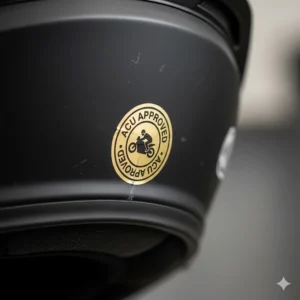
Here’s something many riders misunderstand: ACU Gold approval is mandatory for motorcycle track days on tarmac in the UK, but it’s NOT required for road riding. For public roads, you need either BS 6658:1985 or ECE 22.05/22.06 certification. Most modern helmets carry ECE certification, making them road-legal throughout Europe.
However, arrive at Donington Park or Silverstone for a track day without that gold ACU sticker, and you’re heading home disappointed. Event organisers strictly enforce this requirement for insurance and safety reasons. Some marshals may be lenient with well-known premium brands, but why risk it?
How to Choose Your Perfect ACU Approved Helmet
Head Shape Compatibility
Not all helmets fit all heads. British riders typically have intermediate oval head shapes, but individual variation is significant. AGV helmets generally suit intermediate ovals, whilst Arai tends towards rounder fits. HJC falls somewhere between. Never buy a helmet based solely on reviews – your mate’s perfect fit might give you a splitting headache after 20 minutes.
Visit a specialist retailer and try multiple brands. The helmet should feel snug without pressure points, and you shouldn’t be able to rotate it significantly on your head. Cheek pads will compress slightly during the first few weeks, so a slightly tight initial fit often proves ideal.
Weight vs Protection Balance
Lighter helmets reduce neck fatigue during extended track sessions, but weight alone doesn’t tell the whole story. A 1,500g helmet with perfect weight distribution can feel more comfortable than a poorly balanced 1,250g model. Carbon-fibre construction typically offers the best strength-to-weight ratio, hence its prevalence in premium helmets.
The AGV K6 and K6 S demonstrate this brilliantly at just 1,255g, whilst the Arai RX-7V Evo’s 1,450g feels lighter than its numbers suggest due to exceptional engineering. For track days involving multiple 20-minute sessions, every 100g matters.
Ventilation Requirements
Track riding generates serious heat. You’re working harder physically, adrenaline’s pumping, and you’re likely wearing full leathers in British summer “sunshine.” Adequate ventilation transforms the experience from sweaty misery to focused enjoyment.
Look for helmets with multiple intake vents (forehead, chin, crown) and exhaust ports at the rear. The Shoei X-SPR Pro’s seven intake vents and six outlets represent the gold standard, whilst budget options like the MIDA MV-151 offer basic but functional airflow. Remember: vents only work when moving – sitting in pit lane queues will still be toasty regardless.
Visor Quality and Features
Your visor is your window to the world at 150mph. Pinlock anti-fog inserts are essential for UK conditions – our climate ensures visor fogging at the worst possible moments. Most helmets in our selection include Pinlock preparation, with several providing the insert in the box.
Quick-release visor mechanisms deserve attention too. HJC’s RapidFire system allows tool-less visor changes trackside, perfect when weather conditions shift mid-day. The Shoei X-SPR Pro’s CWR-F2R visor features a 2D shape specifically designed for easy tear-off application during racing.
Safety Features Beyond Basic Certification
Emergency Quick Release Systems (EQRS)
Modern ACU approved helmets increasingly incorporate EQRS features, allowing emergency responders to remove cheek pads quickly after accidents. This enables safer helmet removal without excessive neck movement. The HJC RPHA 11, Shoei X-SPR Pro, and AGV models all include this potentially life-saving technology.
According to J&S Accessories’ safety guide, these systems “ensure swift and secure helmet removal during emergencies” without compromising the helmet’s structural integrity during normal use.
Multiple Shell Sizes
Premium manufacturers produce helmets in multiple shell sizes rather than simply varying internal padding thickness. The Shoei X-SPR Pro uses four shell sizes, whilst Arai RX-7V Evo employs five. This ensures each helmet size maintains optimal proportions and safety characteristics.
Cheaper helmets often use just one or two shells across all sizes, meaning XS and XXL versions look identical externally. Multi-shell construction provides better aerodynamics, reduced weight for smaller sizes, and improved safety through optimised impact absorption.
Material Technology
Shell materials significantly impact performance. Budget-friendly HPTT (High-Performance Thermoplastic Technology) found in the MIDA MV-151 and LS2 FF353 offers solid protection at accessible prices. Mid-range P.I.M. composites in the HJC RPHA 11 blend fibreglass with carbon and aramid for enhanced strength.
Premium carbon-aramid construction (AGV K6/K6 S) or Shoei’s AIM+ multi-composite represent the cutting edge, providing exceptional strength-to-weight ratios. Arai’s Super Fibre laminate takes a different approach, prioritising shell strength and roundness over outright weight savings.
Track Day Preparation Checklist
✅ Verify ACU Gold sticker presence – Check it’s firmly attached and legible
✅ Inspect helmet condition – No cracks, modifications, or excessive wear
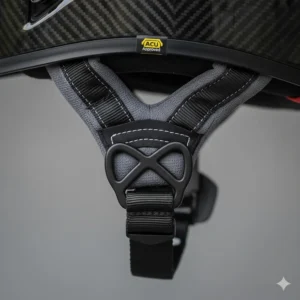
✅ Test retention system – D-ring or ratchet should secure firmly
✅ Clean visor thoroughly – Inside and out, plus Pinlock if fitted
✅ Pack spare visor – Weather changes rapidly in the UK
✅ Check ventilation operation – All vents should open/close smoothly
✅ Verify age suitability – Most organisers require helmets under 5-7 years old
Common Scrutineering Issues
Event scrutineers check helmets for compliance, and certain issues guarantee rejection. Modifications void ACU approval immediately – no drilling speaker holes or cutting ventilation slots. Paint jobs are generally acceptable for composite shells, but thermoplastic helmets can be damaged by certain solvents.
Excessive wear also raises red flags. Deeply scratched visors, compressed or degraded liner foam, or loose retention systems suggest the helmet’s protective capabilities have diminished. When scrutineers doubt a helmet’s condition, they’ll remove the ACU sticker, and it stays removed.
Maintenance Tips for Longevity
Cleaning Best Practices
Interior liners in all our featured helmets are removable and washable – use this feature! Hand-wash with mild soap and lukewarm water, then air-dry completely. Never tumble-dry or use harsh chemicals that could degrade foam or fabric.
For shells, warm water and microfibre cloths work brilliantly. Avoid petrol station forecourt cleaners containing harsh chemicals that damage thermoplastic materials. The official ACU guidance specifically warns: “helmets manufactured from this material may be seriously damaged by substances such as petrol, paint, adhesives, cleaning agents.”
Storage Recommendations
Store helmets in cool, dry locations away from direct sunlight. UV exposure degrades shell materials and accelerates liner deterioration. Helmet bags protect against dust and scratches, with most premium options including one as standard.
Never leave helmets on motorcycle mirrors – they’ll fall, and even minor drops can cause invisible internal damage. Dedicated helmet hooks or shelves are worth the investment.
When to Replace
Manufacturers typically recommend replacement after five years regardless of use, as materials degrade over time. After any significant impact, replacement is mandatory – the helmet has done its job by absorbing energy, likely compromising future protection.
Visible cracks, compressed liner foam, loose shell sections, or damaged retention systems all indicate immediate replacement necessity. Your brain’s worth more than a few hundred quid.
ACU Approved Helmets vs ECE 22.06 Standards
Certification Comparison
| Standard | Testing Focus | UK Road Legal | Track Day Legal | Geographic Scope |
|---|---|---|---|---|
| ECE 22.06 | Road accidents | ✅ Yes | ⚠️ Varies | European Union |
| ACU Gold | Racing conditions | ❌ No* | ✅ Yes | UK motorsport |
| SHARP | Impact protection | ✅ Yes | ❌ No | UK only |
| FIM | Professional racing | ❌ No* | ✅ Yes | Worldwide |
*ACU Gold helmets typically also carry ECE certification for road legality
Why Multiple Standards Exist
Different riding environments demand different protection approaches. ECE 22.06 testing simulates typical road crashes – moderate speeds, impact onto tarmac with obstacles like kerbs. SHARP expands on this with multiple impact points and retention system testing.
ACU Gold specifically addresses track scenarios: higher speeds, impacts onto smooth race circuits, and conditions where aerodynamic stability matters enormously. FIM certification takes this further, setting requirements for professional Grand Prix racing.
Budget vs Premium Comparison
| Price Range | Shell Material | Weight Range | Typical Features | Best For |
|---|---|---|---|---|
| £70-£150 | HPTT/Basic composite | 1,350-1,450g | Basic vents, standard visor | Budget track days, beginners |
| £300-£500 | P.I.M./Carbon-glass blend | 1,250-1,350g | Multiple vents, Pinlock ready, EQRS | Serious enthusiasts |
| £600-£1,000+ | Carbon-aramid/Super Fibre | 1,200-1,300g | Premium vents, FIM option, top materials | Professional/advanced riders |
Frequently Asked Questions
❓ Do I need ACU Gold approval for every UK track day?
❓ Can I use my ACU approved helmet for regular road riding in the UK?
❓ How long does ACU Gold approval remain valid on a helmet?
❓ What's the difference between ACU Gold and ACU Silver approval?
❓ Can I add an ACU Gold sticker to my existing helmet?
Conclusion: Making Your Track Day Dreams Reality
Choosing ACU approved motorcycle helmets needn’t be overwhelming. Whether you’re investing £80 in the MIDA MV-151 for your first track experience or splashing out £1,000 on the Arai RX-7V Evo for serious racing, the critical factor is finding proper fit combined with appropriate safety certification.
Your priorities should rank in this order: correct fit, ACU Gold approval, comfort features, then aesthetics. The prettiest helmet in the world offers zero protection if it doesn’t fit properly or lacks the golden ticket for track access.
For most UK riders tackling regular track days, the sweet spot lies between £300-£500. The HJC RPHA 11 and AGV K6 deliver exceptional performance here, offering premium materials and features without premium price tags. Budget-conscious riders shouldn’t overlook the LS2 FF353 Rapid II – it’s proven, reliable, and properly certified.
Those pursuing lap times seriously or progressing towards racing should consider the Shoei X-SPR Pro or AGV K6 S. Their FIM homologation and advanced features justify the investment for committed riders. Meanwhile, the Arai RX-7V Evo represents the ultimate expression of helmet engineering for those who accept no compromise.
Remember: even the most expensive helmet becomes worthless if stored improperly, cleaned with damaging chemicals, or used beyond its serviceable life. Invest wisely, maintain diligently, and that ACU Gold sticker will see you through countless brilliant track days.
✨ Don’t Miss These Exclusive Deals!
🔍 Take your track riding to the next level with these carefully selected ACU approved motorcycle helmets. Click on any highlighted product to check current pricing and availability on UK retailers and Amazon.co.uk. These helmets will help you create authentic racing experiences whilst keeping your head properly protected!
Recommended for You
- 7 Best ECE 22.06 Helmets UK 2026
- 7 Best Waterproof Motorcycle Helmets UK 2026
- 7 Best Anti Fog Motorcycle Helmets UK 2026
Disclaimer: This article contains affiliate links. If you purchase products through these links, we may earn a small commission at no additional cost to you. Prices shown are approximate and may vary.
✨ Found this helpful? Share it with your mates! 💬🤗
