In This Article
Picture this: you’re 400 kilometres into your Scottish Highlands adventure, and your helmet feels like it’s compressing your skull into a walnut. The visor’s fogging up, wind noise is screaming in your ears, and you’d trade your left pannier for a more comfortable lid. Sound familiar? You’re not alone, mate.
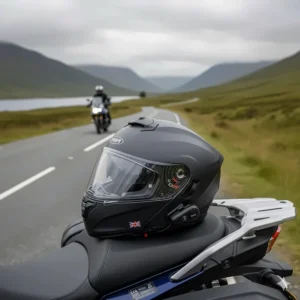
Choosing the right motorcycle helmets for touring transforms those gruelling eight-hour motorway slogs into genuinely enjoyable experiences. After covering thousands of kilometres across British motorways, continental routes, and everything in between, I’ve learnt that touring helmets aren’t just about protection—they’re about arriving at your destination without a pounding headache and actually remembering the journey fondly.
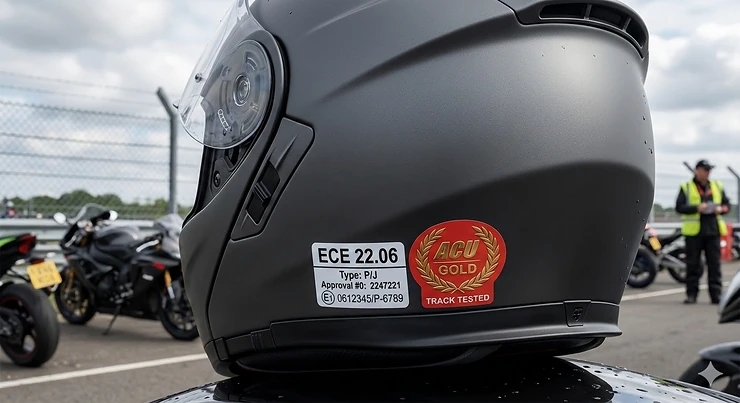
What exactly makes motorcycle helmets for touring different from your standard sports lid? These specialised helmets prioritise all-day comfort over razor-sharp aerodynamics, feature comprehensive ventilation systems for varying weather conditions, include integrated sun visors for changing light, and offer compatibility with communication systems for navigation and intercom use. According to the UK government’s SHARP testing programme, modern ECE 22.06 certified helmets provide significantly enhanced protection compared to previous generations, with improved oblique impact testing that better simulates real-world crash scenarios.
Whether you’re planning a week-long European tour or simply commuting 100 kilometres daily, this guide covers everything from budget-friendly options at £139.99 to premium German engineering at £539.99. Let’s find your perfect touring helmet.
Quick Comparison Table
| Helmet Model | Price Range (£) | Weight (Medium) | Key Feature | Best For |
|---|---|---|---|---|
| LS2 Storm III | £139.99-£159.99 | 1,600g | Budget-friendly ECE 22.06 | Value seekers |
| HJC i90 | £129.99-£235.29 | 1,720g | Modular convenience | Glasses wearers |
| Schuberth C5 | £338.86-£539.99 | 1,660g | Quietest on market | Premium touring |
| AGV Tourmodular | £449.99+ | 1,590g | Italian craftsmanship | Style + safety |
| Arai Quantic | £499.99+ | 1,650g | First ECE 22.06 helmet | Maximum protection |
| Shoei GT-Air 3 | £529.99+ | 1,700g | Drop-down sun visor | All-round excellence |
| LS2 Challenger II | £180-£220* | 1,500g | Lightweight fibre composite | Long-distance comfort |
💬 Just one click – help others make better buying decisions too! 😊
Top 7 Motorcycle Helmets for Touring: Expert Analysis
1. Shoei GT-Air 3: The Sport-Touring Benchmark
The Shoei GT-Air 3 represents decades of Japanese engineering refinement, and it shows. This helmet has become the default choice for discerning UK touring riders who demand premium quality without compromise. Starting at £529.99, it’s a significant investment, but one that pays dividends across thousands of kilometres.
Shoei’s Advanced Integrated Matrix (AIM) shell construction delivers exceptional impact protection whilst maintaining a comfortable weight of approximately 1,700 grammes for a medium size. The helmet meets the rigorous ECE 22.06 safety standard, offering measurably superior protection compared to older certifications. Its drop-down QSV-2 sun visor provides full-spectrum UV protection—absolutely brilliant when riding through the morning sun on the M5 or battling afternoon glare along coastal routes.
What genuinely impresses about the Shoei GT-Air 3 is its ventilation system. Multiple intake and exhaust vents work together to maintain airflow even during stationary traffic, crucial for those sweltering summer days stuck on the M25. The 3D Max-Dry interior lining wicks moisture effectively and remains comfortable even after eight hours in the saddle.
UK customers particularly appreciate the helmet’s compatibility with the Shoei SRL3 Bluetooth system by Sena, which integrates seamlessly without external bulk. Alternatively, the Cardo Packtalk adaptor (£19.99) provides clean mounting for riders preferring that ecosystem.
Pros:
✅ Exceptional build quality and comfort
✅ Excellent ventilation for UK weather
✅ Quiet operation reduces fatigue
Cons:
❌ Premium pricing
❌ No integrated sun visor on entry models
UK Availability: Widely available through Amazon.co.uk, Motolegends, Infinity Motorcycles, and authorised Shoei retailers nationwide.
2. Schuberth C5: German Engineering Excellence
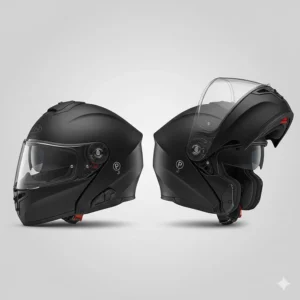
The Schuberth C5 isn’t just a modular helmet—it’s a statement about what touring helmets can achieve when engineering takes priority over cost-cutting. Priced between £338.86-£539.99 depending on finish and retailer, this German masterpiece has earned its reputation as potentially the quietest helmet on UK roads.
Schuberth spent over 20,000 engineering hours developing the C5, including 200+ hours in their dedicated wind tunnel. The result? An astonishing 85 dB(A) noise level at 100 km/h on a naked bike—roughly equivalent to city traffic heard from inside a car. For riders battling motorway wind noise and tinnitus concerns, this represents a game-changing advancement.
The Direct Fiber Processing (DFP) glass-fibre shell, reinforced with carbon fibre, achieves remarkable strength whilst keeping weight reasonable at approximately 1,660 grammes (size 59). As the first Schuberth modular with P/J homologation, you can legally ride with the chin bar raised throughout Europe—perfect for those fuel stop convenience moments or riding through congested towns on scorching days.
The SC2 communication system (sold separately) integrates perfectly, using modern mesh technology for superior group riding connectivity. UK riders praise the helmet’s custom-fit options, with interchangeable head liners and multiple cheek pad thicknesses allowing personalised comfort—essential for those marathon riding days.
Pros:
✅ Industry-leading noise reduction
✅ P/J dual homologation
✅ Customisable fit system
Cons:
❌ Premium price point
❌ Communication system sold separately
UK Availability: Available through Amazon.co.uk, Motolegends, Urban Rider, and specialist motorcycle retailers with free UK delivery on most platforms.
3. Arai Quantic: The Safety Pioneer
The Arai Quantic holds a special place in motorcycling history as the very first helmet certified to the demanding ECE 22.06 standard. Starting at £499.99+, this Japanese-manufactured helmet represents Arai’s unwavering commitment to maximum protection above all else.
Constructed using Arai’s Peripherally Belted e-Complex Laminate Construction (PB e-cLc), the shell distributes impact forces exceptionally well whilst maintaining a hand-built quality that’s immediately apparent. The Arai Quantic weighs approximately 1,650 grammes and features an impressively smooth, round shell designed to ‘glance off’ impacts rather than catching on surfaces—a philosophy Arai has maintained for decades.
What truly distinguishes this helmet is its ventilation system: 13 ports total (7 intake, 6 exhaust) including the innovative 3D Arai logo duct. Even at motorway speeds, airflow remains excellent without excessive noise. The VAS Max Vision visor comes with a Pinlock insert as standard, virtually eliminating fogging issues during those damp British mornings.
UK riders need to understand that the Quantic deliberately omits features like drop-down sun visors and integrated communication systems. Arai’s engineering team believes any interruption to shell integrity compromises safety—a polarising stance, but one backed by their exceptional SHARP 4-star rating and decades of racing pedigree.
Pros:
✅ First ECE 22.06 certified helmet
✅ Exceptional ventilation system
✅ Hand-built quality construction
Cons:
❌ No integrated sun visor
❌ Double-D ring fastener slower with gloves
UK Availability: Authorised Arai dealers only, including Motolegends, Infinity Motorcycles, and selected specialist retailers. Beware of counterfeit products—genuine Arai helmets come in white boxes with blue stripes.
4. HJC i90: Modular Value Champion
The HJC i90 proves you don’t need to mortgage your house for serious touring capability. Priced between £129.99-£235.29 on Amazon.co.uk, this South Korean modular offers remarkable features at genuinely accessible pricing—perfect for riders building their touring setup on sensible budgets.
Constructed from advanced polycarbonate composite using CAD technology, the HJC i90 achieves a reasonable weight of approximately 1,720 grammes whilst meeting ECE 22.05 certification standards (ECE 22.06 version expected soon). The dual P/J homologation means you’re legally covered riding with the chin bar raised—brilliant for those service station coffee stops or navigating congested town centres during summer months.
The RapidFire shield system enables tool-free visor changes in seconds, essential for riders swapping between clear and tinted visors based on conditions. UK buyers particularly appreciate the integrated sun visor with anti-fog coating, though some report occasional fogging in extreme conditions. The helmet’s preparation for HJC’s Smart Bluetooth 10B and 20B systems (co-developed with Sena) provides clean integration without external bulk.
Comfort-wise, the removable, washable Supercool interior uses moisture-wicking, antibacterial fabric that remains fresh across multi-day tours. Glasses wearers consistently praise the generous space and easy on/off access the modular design provides—no more fumbling with specs during helmet removal after exhausting riding days.
Pros:
✅ Exceptional value for money
✅ P/J dual homologation
✅ Glasses-wearer friendly design
Cons:
❌ Heavier than premium alternatives
❌ Occasional sun visor fogging reported
UK Availability: Widely available through Amazon.co.uk, Sportsbikeshop, and motorcycle retailers nationwide with free delivery options.
5. AGV Tourmodular: Italian Style Meets Function
The AGV Tourmodular brings Italian design flair to the touring segment whilst delivering serious performance credentials. Starting at £449.99+, this modular helmet from Valentino Rossi’s chosen brand offers the perfect middle ground between premium features and reasonable pricing.
AGV’s carbon-fibre reinforced shell achieves an impressively light 1,590 grammes whilst meeting ECE 22.06 certification—amongst the lightest in the modular touring category. The AGV Tourmodular features integrated sun visor operation, comprehensive ventilation, and AGV’s Ultravision wide field of vision providing 190° horizontal and 85° vertical viewing angles—12.5% better than average helmets.
The micrometric retention system provides quick, one-handed fastening—significantly more convenient than traditional double-D rings, especially appreciated during frequent fuel stops on long-distance tours. UK riders note the helmet runs slightly narrower than Shoei equivalents, making it ideal for intermediate oval head shapes common in European populations.
Communication system compatibility extends to both AGV’s Ark system (developed with Sena) and standard aftermarket units, though integrated mounting requires the optional AGV-specific base unit. The Pinlock-ready visor effectively prevents fogging during British winter riding, whilst the drop-down sun visor deploys smoothly even with thick winter gloves.
Pros:
✅ Lightweight carbon-fibre construction
✅ Ultravision wide field of view
✅ Micrometric quick-release fastener
Cons:
❌ Can run narrow for round head shapes
❌ Chin bar release mechanism requires practice
UK Availability: Available through Infinity Motorcycles, specialist AGV dealers, and selected online retailers. Check official AGV UK stockists for genuine products.
6. LS2 Storm III: The Budget Touring Revelation
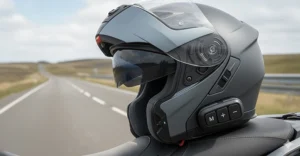
The LS2 Storm III represents astonishing value for touring riders operating on realistic budgets. Starting at just £139.99 for solid colours (£159.99 for graphics), this Spanish-manufactured helmet punches well above its weight class whilst meeting the latest ECE 22.06 safety standard.
Weighing merely 1,600 grammes—lighter than many premium competitors—the LS2 Storm III achieves this through its redesigned KPA (Kinetic Polymer Alloy) outer shell. Don’t let the polycarbonate construction fool you; LS2 helmets consistently achieve respectable SHARP ratings, with previous models scoring 3-4 stars in government testing.
The helmet includes a drop-down sun visor, Pinlock 70 MaxVision anti-fog insert as standard, and comprehensive ventilation with large upper intake working alongside chin vents and rear exhausts. For £140, you’re receiving features that cost £500+ just five years ago—remarkable progress in helmet manufacturing efficiency.
UK customers particularly value the magnetic chin curtain attachment—easily removable when not needed, securely held when required. The removable, washable interior uses hypoallergenic, antibacterial fabric that genuinely remains fresh across extended tours. Bluetooth compatibility exists for LS2’s proprietary systems, though aftermarket units require standard clip mounting.
Pros:
✅ Exceptional price-to-feature ratio
✅ ECE 22.06 certified
✅ Pinlock insert included as standard
Cons:
❌ Basic interior compared to premium options
❌ Limited colour selection
UK Availability: Available through Amazon.co.uk, Moto Central, Sportsbikeshop, and motorcycle retailers nationwide.
7. LS2 Challenger II: Lightweight Distance Champion
The LS2 Challenger II represents LS2’s serious push into premium touring territory. Expected to retail between £180-£220 based on early 2026 UK market indicators, this helmet specifically targets riders covering serious distances who demand comfort without premium pricing.
The High Performance Fibre Composite (HPFC) shell keeps weight down to approximately 1,500 grammes—genuinely impressive for a touring-focused helmet meeting ECE 22.06 standards. The LS2 Challenger II features carefully engineered ventilation with intake and exhaust vents positioned to maintain airflow without creating excessive turbulence or noise.
LS2’s COOLMAX interior lining provides superior moisture-wicking performance compared to standard fabrics, remaining genuinely comfortable across full-day riding sessions. The hypoallergenic, antibacterial properties prevent that musty smell developing during multi-day tours—small details that matter when you’re living in your helmet for 8+ hours daily.
The Pinlock 120XLT MaxVision anti-fog insert comes standard, providing exceptional clarity during British weather’s inevitable rain and temperature variations. The internal sun visor deploys smoothly, offering convenient light management without visor swaps. Early UK rider feedback highlights the helmet’s comfort during extended motorway cruising, with minimal pressure points even after 6-hour stretches.
Pros:
✅ Lightweight at 1,500 grammes
✅ COOLMAX premium interior lining
✅ Pinlock 120XLT MaxVision included
Cons:
❌ Limited UK availability initially
❌ Newer model with fewer long-term reviews
UK Availability: Expected through Amazon.co.uk, Moto Central, and specialist LS2 dealers from Q1 2026.
✨ Don’t Miss These Exclusive Deals!
🔍 Take your touring adventures to the next level with these carefully selected helmets. Click on any highlighted product name to check current pricing and availability on Amazon.co.uk. These helmets will help you create authentic memories your mates will be jealous of!
Understanding ECE 22.06: Why It Matters for UK Riders
The introduction of ECE 22.06 certification in January 2024 represents the most significant advancement in motorcycle helmet safety standards in over two decades. According to the UK government’s SHARP testing programme, this new standard incorporates more realistic testing procedures that better simulate actual crash scenarios riders experience on British roads.
The previous ECE 22.05 standard, whilst effective, hadn’t been updated since 2005. Modern helmet materials, construction techniques, and our understanding of impact physics have evolved dramatically during those 19 years. ECE 22.06 addresses these advancements with several critical improvements.
Oblique Impact Testing Revolution
Perhaps the most significant enhancement involves oblique impact testing—measuring how helmets perform during angled impacts rather than purely perpendicular strikes. Real-world motorcycle accidents rarely involve perfectly straight-on collisions; instead, riders typically experience rotational forces as their helmets contact abrasive road surfaces at angles.
The new standard tests helmets against a bar anvil positioned at an angle with five steel bars covered in abrasive paper, simulating tarmac contact. Helmets must not exceed 10,400 rad/s² rotational acceleration to pass—directly addressing the rotational brain injuries that cause severe trauma in actual crashes.
Enhanced Shell Deformation Standards
ECE 22.06 introduces stricter shell deformation requirements, testing helmets under maximum 630 Newton loads (approximately 64 kilogrammes) from both side-to-side and front-to-back directions. Helmets must deform less than 40 millimetres under maximum load and less than 15 millimetres under minimum 30 Newton load—ensuring shell integrity across varying impact forces.
Modular Helmet Safety Improvements
For touring riders favouring modular helmets, ECE 22.06 brings welcome advancements. Modular helmets now undergo rigorous testing in both closed (full-face) and open (jet) configurations, with chin bar strength testing using 10 kilogramme weights dropped from specified heights. This dual P/J homologation ensures modular helmets provide legitimate protection in both configurations—critical for riders utilising the open-face feature during urban riding or rest stops.
Practical Implications for UK Touring Riders
What does this mean for your next helmet purchase? Firstly, ECE 22.06 helmets offer measurably superior protection compared to older ECE 22.05 models. Whilst your existing 22.05 helmet remains perfectly legal and safe to use, choosing a 22.06 certified helmet when upgrading provides enhanced protection backed by modern testing protocols.
Secondly, the new standard eliminates decorative vents—all ventilation openings must actually function, improving real-world comfort during varying conditions. The standard also mandates that helmets cannot excessively block hearing, ensuring riders maintain situational awareness of surrounding traffic—particularly relevant during defensive riding on crowded British motorways.
Touring Helmet Features That Actually Matter
Ventilation Systems for British Weather
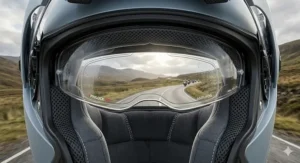
UK weather presents unique challenges—morning rides starting at 8°C can reach 22°C by midday, only to drop again as evening approaches. Effective ventilation isn’t just comfort; it’s safety. Overheating reduces concentration, whilst inadequate airflow causes visor fogging that compromises visibility.
Premium touring helmets feature multiple intake vents (typically chin, forehead, and crown positions) working with rear exhaust ports to create positive airflow. The Arai Quantic‘s 13-port system represents the gold standard, whilst budget options like the LS2 Storm III still provide functional ventilation despite simpler designs.
Adjustability matters enormously—you’ll want maximum airflow during summer motorway cruising but minimal air intrusion during freezing winter rides through Scottish Highlands. Look for vents easily operated whilst wearing thick winter gloves; fiddly controls become frustrating when you genuinely need them.
Noise Management: Protecting Your Hearing
Long-distance riders face a silent threat: wind noise-induced hearing damage. Sustained exposure to 100+ dB levels—common inside helmets at motorway speeds—causes permanent hearing loss over time. The Schuberth C5‘s 85 dB performance represents best-in-class, whilst even budget helmets have improved dramatically compared to older generations.
However, even the quietest helmets still require earplugs for proper hearing protection during extended motorway riding. Modern filtered earplugs reduce harmful wind noise whilst maintaining ability to hear traffic, sirens, and communication systems—essential safety equipment that complements your helmet investment.
Drop-Down Sun Visors vs External Solutions
Integrated drop-down sun visors provide unmatched convenience for touring riders facing variable light conditions. Riding east during morning commutes or west during evening returns means battling low-angle sun glare—exactly when you need sun protection most urgently.
The Shoei GT-Air 3‘s QSV-2 sun visor offers full-spectrum UV protection with simple lever operation, deployable even with thick winter gloves. However, riders should note that Arai deliberately omits internal sun visors, arguing they compromise shell integrity—offering instead their Pro Shade external system for riders requiring sun protection.
Communication System Integration
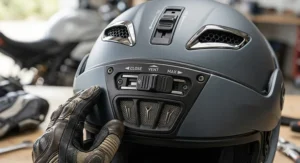
Modern touring increasingly involves navigation apps, music, and group intercoms—all requiring Bluetooth connectivity. Helmets designed with communication integration provide cleaner installations, better speaker positioning, and improved water resistance compared to aftermarket clip-on solutions.
The Schuberth C5 comes pre-wired for the SC2 system with integrated antenna, whilst the Shoei GT-Air 3 offers dedicated SRL3 integration or Cardo Packtalk adapter options. Budget-conscious riders can successfully use standard aftermarket systems on most helmets, though installation requires more effort and aesthetic compromises.
Weight Considerations for Extended Tours
Every 100 grammes matters when you’re wearing a helmet for 8+ hours daily across week-long tours. The LS2 Challenger II at 1,500 grammes versus the HJC i90 at 1,720 grammes represents a 220-gramme difference—seemingly minor, but genuinely noticeable across extended periods.
Lighter helmets reduce neck strain and fatigue, though absolute weight tells only part of the story. Weight distribution, centre of gravity, and how the helmet balances on your head shape significantly affect perceived comfort. This emphasises the critical importance of trying helmets personally before purchasing—reading reviews helps, but your actual head shape determines real-world comfort.
Choosing the Right Shell Size and Fit
Understanding Head Shapes and Helmet Compatibility
Human heads broadly categorise into three shapes: round oval, intermediate oval, and long oval. British riders predominantly feature intermediate oval shapes, though individual variation exists significantly. Manufacturers design helmets around specific head shapes, explaining why a perfectly-sized Arai might feel uncomfortable whilst a Shoei of identical circumference fits beautifully.
The Shoei GT-Air 3 typically suits intermediate oval shapes, whilst the Arai Quantic runs slightly rounder. The AGV Tourmodular favours narrower, more intermediate-to-long oval shapes. This isn’t about quality—it’s about geometric compatibility between your skull and the helmet’s internal shape.
Proper Measuring and Sizing Technique
Measure your head circumference approximately 2.5 centimetres above your eyebrows, wrapping a flexible tape measure around the widest part of your head. Note the measurement in centimetres, then consult manufacturer-specific sizing charts—a medium from Shoei differs from a medium from HJC.
When trying helmets, expect a snug initial fit that might feel slightly tight. The interior lining will compress approximately 15-20% during the first 20 hours of wear. However, any specific pressure points causing discomfort after 5-10 minutes indicate poor shape compatibility—that helmet isn’t for your head shape, regardless of size adjustments.
Multiple Shell Sizes: Why They Matter
Premium manufacturers like Arai and Shoei produce helmets in multiple outer shell sizes rather than using a single shell with varying interior padding. The Arai Quantic uses different shell sizes for XS-M and L-XXL, ensuring optimal proportions across the size range.
Why does this matter? Larger riders wearing smaller shells suffer from disproportionately bulbous helmets with poor aerodynamics, whilst smaller riders in oversized shells experience excessive wind buffeting and noise. Multiple shell sizes provide better proportions, improved aerodynamics, and enhanced safety across all sizes—justifying some of the premium pricing.
Maintenance and Longevity: Protecting Your Investment
Helmet Lifespan and Replacement Guidelines
Helmet manufacturers recommend replacement every 5 years regardless of crash history or visible wear. Why? The expanded polystyrene (EPS) liner gradually degrades through UV exposure, temperature cycling, and material ageing—even if never worn. A helmet sitting in your wardrobe for four years has only one year of effective life remaining, regardless of pristine condition.
Check manufacture dates by removing interior lining to reveal the date sticker—critical when buying “new” stock that’s been sitting on shop shelves for extended periods. That bargain ECE 22.05 helmet manufactured in 2020 and sold in 2026 provides minimal remaining service life despite being technically unused.
Cleaning and Care for Extended Service Life
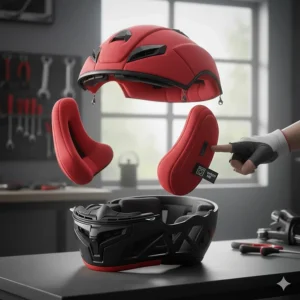
Regular cleaning extends helmet life whilst maintaining comfort and hygiene. Remove and wash interior liners monthly using mild soap and lukewarm water—never machine wash, as agitation damages the fabric structure. The Schuberth C5‘s removable, washable interior simplifies this process considerably.
Clean outer shells using dedicated helmet cleaners or mild soap solution—never use petroleum-based products, which degrade the shell material. Visor scratches compromise visibility; replace scratched visors rather than attempting to polish them. Store helmets away from direct sunlight and extreme temperatures, preferably in the provided helmet bag to minimise dust accumulation and UV exposure.
When to Replace After Impact
Any impact sufficient to compress the EPS liner requires immediate helmet replacement, regardless of external appearance. Even dropping your helmet from handlebar height onto concrete warrants replacement—the EPS absorbs impact energy by compressing, and once compressed, it cannot provide full protection again.
Insurance often covers helmet replacement after accidents—contact your insurer before disposing of damaged helmets, as they may require inspection. Never purchase second-hand helmets; you cannot verify their impact history, and that £100 saving isn’t worth risking permanent brain injury.
Budget Planning: Matching Helmets to Your Touring Style
Entry-Level Touring (£130-£250)
The LS2 Storm III and HJC i90 dominate this category, offering genuinely capable touring performance at accessible pricing. These helmets suit riders building their touring setup, weekend warriors covering 500-1,000 kilometres monthly, or those simply preferring sensible spending.
Don’t assume budget helmets mean compromised safety—modern manufacturing ensures even £140 helmets meet rigorous ECE 22.06 standards. You’ll sacrifice premium interior materials, advanced noise reduction, and boutique fit-and-finish, but core protective capability remains excellent.
Mid-Range Touring (£250-£400)
This segment currently features limited options, representing a gap in the UK market. The Schuberth C5 occasionally appears on sale within this range, representing exceptional value when available. Riders in this category often choose premium-brand previous-generation models—last year’s Shoei GT-Air 2 at £350 provides 90% of the GT-Air 3’s capability at significant savings.
Premium Touring (£400-£550+)
The Shoei GT-Air 3, Arai Quantic, Schuberth C5, and AGV Tourmodular represent the pinnacle of touring helmet development. These helmets suit serious long-distance riders covering 10,000+ kilometres annually, riders for whom absolute comfort justifies premium investment, or those simply demanding the best available protection and quality.
Premium pricing delivers measurably superior noise reduction, exceptional build quality, advanced materials, comprehensive ventilation systems, and outstanding long-term comfort. For riders spending 50+ hours monthly in their helmet, the investment makes genuine financial sense—dividing £530 across 5,000 kilometres equals merely £0.11 per kilometre of superior comfort and protection.
Comparing Modular vs Full-Face for Touring
Modular Advantages
Modular helmets like the HJC i90 and Schuberth C5 provide unmatched convenience for touring riders. Flip up the chin bar at fuel stops, easily consume water without complete helmet removal, accommodate spectacles without fumbling, and enjoy improved ventilation during urban riding or scorching conditions.
For riders wearing prescription glasses, modular helmets eliminate the awkward glasses-juggling during helmet removal—genuinely transformative for spectacle-dependent riders. The ability to communicate clearly at petrol stations or border crossings whilst maintaining head protection proves invaluable during extended European tours.
Full-Face Benefits
Pure full-face designs like the Arai Quantic and Shoei GT-Air 3 offer structural simplicity—no moving parts means fewer potential failure points. They’re typically quieter than modular equivalents due to absence of chin bar seals, often lighter despite similar protection levels, and provide slightly superior aerodynamics at high speeds.
The Arai Quantic‘s one-piece construction eliminates the modular helmet’s inherent compromise—any moving mechanism introduces complexity and potential weak points. For riders prioritising absolute maximum protection and minimal weight, full-face designs retain advantages despite modular helmets’ improving capabilities.
The Verdict for UK Touring
Modern P/J homologated modular helmets like the Schuberth C5 essentially match full-face protection when chin bars remain closed—ECE 22.06 testing confirms this. The convenience factor genuinely enhances touring experiences, particularly during multi-day trips involving frequent stops.
However, personal preference remains paramount. Some riders find modular mechanisms and additional weight objectionable, whilst others consider the convenience transformative. Test both styles during extended rides before committing to your touring helmet choice.
FAQ: Your Touring Helmet Questions Answered
❓ What makes motorcycle helmets for touring different from sports helmets?
❓ How often should I replace my touring helmet?
❓ Are modular helmets as safe as full-face helmets for touring?
❓ What's the best helmet weight for long-distance touring?
❓ Do I need a premium helmet for touring, or are budget options sufficient?
Conclusion: Your Perfect Touring Helmet Awaits
Choosing motorcycle helmets for touring ultimately balances protection, comfort, features, and budget against your specific riding requirements. The LS2 Storm III delivers astonishing value for budget-conscious riders, the HJC i90 provides modular convenience without premium pricing, whilst the Schuberth C5 represents the pinnacle of noise reduction and German engineering excellence.
For riders demanding absolute maximum protection, the Arai Quantic‘s pioneering ECE 22.06 certification and hand-built quality justify its premium pricing. The Shoei GT-Air 3 offers exceptional all-round capability with proven reliability, whilst the AGV Tourmodular brings Italian style to serious touring credentials. The LS2 Challenger II emerges as an exciting new lightweight option combining premium features with accessible pricing.
Remember that the “best” touring helmet is the one fitting your head shape correctly, suiting your riding conditions, and providing features you’ll actually use daily. That £540 premium helmet delivers poor value if it doesn’t fit properly, whilst a £140 mid-range option that’s comfortable for your specific head shape represents brilliant value.
Visit authorised dealers for professional fitting, try multiple brands and models, and wear test helmets for at least 10-15 minutes to identify pressure points. Your touring helmet represents the most critical piece of motorcycle safety equipment—invest the time to choose correctly, and you’ll enjoy thousands of comfortable, protected kilometres across UK roads and beyond.
✨ Don’t Miss These Exclusive Deals!
🔍 Take your touring adventures to the next level with these carefully selected helmets. Click on any highlighted product to check current pricing and availability on Amazon.co.uk. These helmets will help you create authentic touring memories whilst keeping you supremely protected!
Recommended for You
- 7 Best Motorcycle Helmets for Summer UK 2026
- 7 Best Motorcycle Helmets for Commuting UK 2026
- 7 Best Motorcycle Helmets with Removable Liner 2026 UK
Disclaimer: This article contains affiliate links. If you purchase products through these links, we may earn a small commission at no additional cost to you. Prices shown are approximate and may vary. All helmets mentioned meet UK safety standards and are available through Amazon.co.uk or authorised UK retailers at time of publication.
✨ Found this helpful? Share it with your mates! 💬🤗
