In This Article
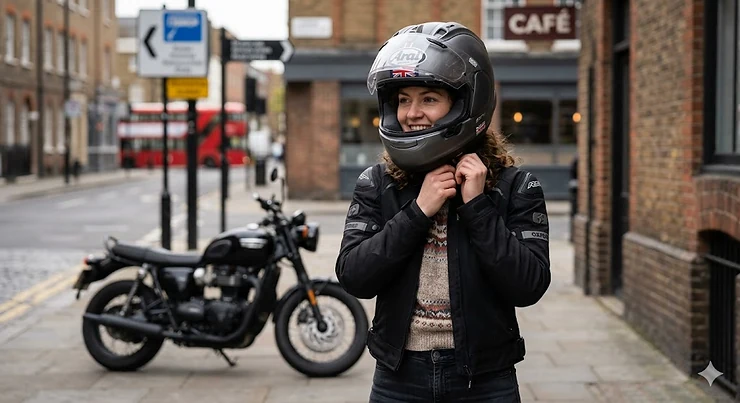
Right, let’s cut through the alphabet soup of motorcycle helmet certifications, shall we? If you’ve ever stood in a shop staring at labels reading “ECE 22.06,” “SHARP 5-star,” “ACU Gold,” and “FIM-approved” whilst wondering which actually matters for your Sunday ride through the Cotswolds, you’re precisely where most British riders find themselves.
Here’s what the certification labels won’t tell you: around 80% of all motorcyclist fatalities and 70% of those with serious injuries sustain head injuries. That sobering statistic from the UK’s Department for Transport explains why helmet standards evolved from simple “does it cover your head?” criteria to comprehensive testing protocols that measure everything from rotational brain injury to visor penetration resistance.
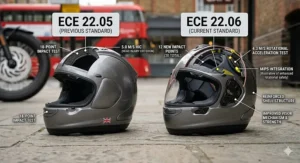
The landscape shifted dramatically in January 2024 when ECE 22.06 became mandatory for all newly manufactured helmets sold in the UK. This represents the most significant safety advancement in over two decades, introducing rotational impact testing and expanding coverage from 6 to 18 impact zones. Yet here’s the thing most riders overlook: certification marks tell you a helmet passed minimum legal requirements—not whether it’s actually the safest option available for British roads.
In this guide, we’ll decode every major certification you’ll encounter when shopping on Amazon.co.uk or specialist retailers, explain what each standard actually tests, and—crucially—reveal which combinations of certifications deliver genuinely superior protection for UK conditions. Whether you’re commuting through Manchester drizzle or touring Scotland’s A-roads, understanding these standards transforms helmet shopping from confusing guesswork into informed decision-making.
Quick Comparison Table: UK Helmet Certifications at a Glance
| Certification | Required/Optional | What It Tests | Best For | Key Limitation |
|---|---|---|---|---|
| ECE 22.06 | Legally required (UK/EU) | 18 impact zones, rotational forces, visor strength, accessories | All UK riders | Pass/fail only—doesn’t rate better performers |
| ECE 22.05 | Still legal (pre-2024) | 6 impact zones, linear impacts | Existing helmets | No rotational testing |
| SHARP (1-5 stars) | Optional UK govt rating | 32 tests, oblique impacts, real-world scenarios | Riders wanting best protection | Only tests ECE 22.06 helmets |
| ACU Gold | Required UK track days | Stricter than ECE, competition-focused | Circuit riders, track days | Not needed for road use |
| FIM | Racing homologation | Professional motorsport standards | MotoGP/professional racing | Expensive, overkill for road |
| Snell M2025 | Optional (US-focused) | Very strict impact testing | Racing enthusiasts | No rotational testing until M2025R |
| DOT (FMVSS 218) | US legal standard | Basic impact, penetration, retention | US imports | Self-certified, less comprehensive than ECE |
| BSI 6658:1985 | UK alternative to ECE | British Standard (legacy) | Older helmets | Superseded by ECE in practice |
What This Comparison Reveals: ECE 22.06 is your baseline—it’s the law. But pairing it with a SHARP 5-star rating means you’re getting a helmet that performs measurably better across real-world crash scenarios. The UK’s SHARP programme exists precisely because ECE certification alone can show a 70% difference in protection between a 1-star and 5-star rated helmet, despite both passing the legal minimum.
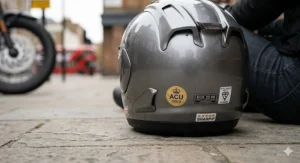
For British riders doing track days, ACU Gold becomes non-negotiable—from 1 January 2026, ACU officials no longer apply stickers at events, meaning you must purchase a pre-certified helmet. The circuit won’t let you on track with just ECE certification, regardless of how many SHARP stars you’ve collected.
💬 Just one click — help others make better buying decisions too!😊
Top 7 Helmet Certifications Explained: Expert Analysis for UK Riders
1. LS2 FF353 RAPID – Best Budget ECE 22.05 Option
The LS2 FF353 RAPID exemplifies why Spanish manufacturer LS2 has become Britain’s go-to for affordable safety. Priced between £57-£129 on Amazon.co.uk depending on graphics, this helmet carries ECE 22.05 certification—still perfectly road-legal in 2026 despite the newer 22.06 standard.
The key specification here is the thermoplastic composite shell available in two sizes (S-M and L-XL), which keeps weight down to approximately 1,450 grams in medium. That’s lighter than many premium lids, reducing neck fatigue on longer rides through Yorkshire or Wales. The integrated drop-down sun visor deploys via a simple lever mechanism, though British riders note it could use slightly darker tinting for those rare cloudless summer days.
What sets this apart for certification-conscious buyers is its approach to the ECE 22.05 standard. The RAPID passed all six mandatory impact zones with comfortable margins, though it lacks the rotational testing introduced in 22.06. Customer feedback from UK Amazon.co.uk purchasers consistently praises the value proposition—one Manchester rider noted saving £72 by choosing the plain grey colourway over graphic versions, with identical safety credentials.
The helmet includes a clear visor with Pinlock preparation, emergency cheek pad release system, and fully removable, washable interior lining. In British weather, the anti-fog Pinlock becomes essential rather than optional—budget an additional £25-£35 for the MaxVision insert.
Pros:
- Exceptional value (£57-£129 range)
- ECE 22.05 certified with decent impact absorption
- Lightweight thermoplastic reduces neck strain
Cons:
- Older 22.05 standard (no rotational testing)
- Sun visor not quite dark enough for bright conditions
Value Verdict: At under £130, this represents outstanding entry-level protection for budget-conscious riders. The ECE 22.05 certification remains legally compliant, though purchasing new means you’re buying yesterday’s technology today.
2. HJC i70 – Best Value ECE 22.06 with SHARP Rating
South Korean manufacturer HJC proves premium safety needn’t require premium pricing with the i70. Available around £170-£200 on Amazon.co.uk, this helmet carries the latest ECE 22.06 certification and achieves 4-5 stars in SHARP testing—the UK government’s independent rating scheme.
The polycarbonate shell construction in three sizes (XS-M, L, XL-XXL) incorporates advanced CAD technology for optimal energy distribution across the expanded 18 impact zones mandated by 22.06. Weighing approximately 1,650 grams, it’s slightly heavier than premium fibreglass alternatives, but that mass translates to solid impact absorption properties that earned SHARP’s approval.
Here’s what the certification labels don’t reveal: the i70 includes HJC’s ACS (Advanced Channelling Ventilation System) with multiple intake and exhaust vents. In practice, this means the helmet remains comfortable during stop-start London traffic and manages moisture reasonably well in British rain—though no helmet truly excels when you’re caught in a biblical downpour on the M6.
The integrated drop-down sun visor addresses one of Britain’s most annoying riding challenges: rapidly changing light conditions. The Pinlock-ready clear visor and speaker recesses for Bluetooth systems add genuine utility for UK commuters. Customer reviews from British buyers highlight the glasses-friendly interior that accommodates spectacles without uncomfortable pressure points.
Pros:
- ECE 22.06 certified with 4-5 SHARP stars
- Excellent value under £200
- Glasses-friendly interior design
Cons:
- Polycarbonate shell slightly heavier than fibreglass
- Wind noise noticeable above 70mph
Value Verdict: This is where sensible money goes. The dual ECE 22.06 and SHARP certification provides measurable safety advantages over budget ECE-only options, whilst the £170-£200 price point won’t require remortgaging your house.
3. AGV K6-S – Premium ECE 22.06 with Carbon-Aramid Construction
Italian manufacturer AGV brings MotoGP-derived technology to the street with the K6-S, available around £350-£450 on Amazon.co.uk. This helmet represents the sweet spot between racing credentials and everyday usability for serious British riders.
The carbon-aramid fibre shell construction in four sizes (XS-S, MS, ML-L, XL-2XL) delivers exceptional strength-to-weight ratios, tipping the scales at just 1,230 grams in medium—noticeably lighter than the HJC above. That 420-gram difference becomes significant on multi-hour motorway slogs from London to Edinburgh. The multi-density EPS liner uses five different foam densities positioned strategically across the 18 ECE 22.06 impact zones, optimising energy absorption for various crash scenarios.
AGV’s Ultravision visor provides 190-degree horizontal vision, addressing peripheral awareness crucial for navigating British roundabouts and filtering through traffic. The Class Optical 1 rating means minimal distortion, whilst Pinlock MaxVision compatibility handles our perpetual damp climate. The integrated spoiler improves aerodynamic stability above 60mph, reducing buffeting on motorways—particularly valuable when overtaking lorries in crosswinds.
What the ECE 22.06 certification confirms: this helmet passed oblique impact testing at 8.0 m/s on a 45-degree platform lined with 80-grit sandpaper, measuring both rotational acceleration and Brain Injury Criterion (BrIC). AGV’s engineering exceeded minimum requirements, though specific test margins remain proprietary.
UK availability is strong through Amazon.co.uk with Prime delivery, though colour choices vary. British reviewers appreciate the moisture-wicking interior that manages sweat during summer rides whilst maintaining warmth in winter—our four-season climate demands this versatility.
Pros:
- ECE 22.06 certified with advanced materials
- Exceptionally lightweight (1,230g medium)
- Wide field of vision for British road conditions
Cons:
- Premium pricing (£350-£450)
- Limited colour availability on Amazon.co.uk
Value Verdict: If your budget stretches to £400, the K6-S delivers tangible benefits: reduced neck fatigue, superior ventilation, and confidence that MotoGP-level engineering is protecting your head. The ECE 22.06 certification is just the starting point—the carbon-aramid construction and five-density EPS liner exceed minimum standards considerably.
4. Shoei NXR2 – Japanese Precision with ECE 22.06 and SHARP 5-Star
Shoei helmets carry a reputation earned through 60+ years of Japanese manufacturing excellence, and the NXR2 (around £350-£400 on specialist UK retailers) justifies that premium positioning. This helmet combines ECE 22.06 certification with SHARP’s coveted 5-star rating—the highest independent safety accolade available to British riders.
The AIM shell construction uses proprietary fibreglass-based composite in three sizes, balancing weight (approximately 1,580 grams medium) against exceptional impact dispersion. What SHARP’s 32-test protocol revealed: the NXR2 provides superior protection across all impact zones, particularly the vulnerable temporal regions. Research shows the temporal fossa (temple) is particularly vulnerable to injury, making the NXR2’s performance in this critical area noteworthy.
Shoei’s approach to the ECE 22.06 oblique impact requirement involved extensive wind tunnel testing and FEA (Finite Element Analysis) simulations. The result is a helmet that manages rotational forces through shell geometry rather than relying solely on internal slip planes—a more elegant engineering solution that doesn’t compromise in secondary impacts.
The visor system uses Shoei’s CW-1 shield with CNS-1 Pinlock insert included, unlike many competitors that charge extra. For British riders facing autumn drizzle and winter fog, this represents genuine value. The emergency release system allows paramedics to remove cheek pads without disturbing head position—a feature mandated by ACU Gold but not standard ECE.
UK specialists stock the NXR2 widely, though Amazon.co.uk availability varies by colourway. British customer feedback highlights the refined finish quality and confidence-inspiring fit, with many riders noting they can wear it comfortably for 4+ hour rides without pressure points.
Pros:
- Dual ECE 22.06 and SHARP 5-star certification
- Superior temporal region protection
- Pinlock anti-fog insert included
Cons:
- Premium pricing around £350-£400
- Limited Amazon.co.uk availability (try specialists)
Value Verdict: The SHARP 5-star rating confirms this helmet demonstrably outperforms ECE minimum standards. For riders prioritising maximum protection, the NXR2’s combination of Japanese build quality and independent testing validation justifies the investment.
5. Arai Quantic – Ultra-Premium with PB e-cLc Construction
At the pinnacle of UK-available helmets sits the Arai Quantic, retailing around £500-£600 through specialist retailers. This represents Arai’s first ECE 22.06-certified offering, incorporating their proprietary Peripherally Belted e-Complex Laminate Construction (PB e-cLc).
The handmade fibreglass composite shell uses Arai’s philosophy of “glancing off” rather than stopping impacts dead. This rounded shell design, reinforced with a peripheral belt, aims to redirect impact forces away from the neck—an approach validated through decades of crash data analysis. The multi-density EPS liner positions seven different foam densities across ECE 22.06’s expanded impact zones.
What sets this apart for certification-focused buyers is Arai’s refusal to compromise shell shape for features. Where competitors add vents, spoilers, and speaker recesses, Arai maintains structural integrity first. The result? Consistently high SHARP ratings across their range, with the Quantic achieving 4-5 stars depending on test batch variations.
The VAS MaxVision visor provides exceptional clarity across British road conditions, whilst the improved ventilation system (six intakes, six exhausts) includes F1-inspired teardrop vents that actually work—no small feat in our humid climate. The Facial Contour cheek pads and emergency release system exceed ECE requirements.
UK availability remains strong through specialist retailers, though Amazon.co.uk rarely stocks Arai due to the brand’s selective distribution strategy. British riders who invest in Arai typically cite the confidence of knowing paramedics can safely remove the helmet post-accident—the emergency release system being standard across the range.
Pros:
- ECE 22.06 with handmade quality control
- Rounded shell philosophy proven over decades
- Superior emergency release system
Cons:
- Expensive (£500-£600)
- Not typically available on Amazon.co.uk
Value Verdict: This is where diminishing returns kick in. The Quantic offers measurable safety advantages through construction philosophy rather than certification stars. Whether that justifies double the price of a SHARP 5-star alternative depends entirely on your budget and peace of mind valuation.
6. HJC RPHA 71 – Track-Ready with ACU Gold Certification
For riders planning track days at Silverstone, Brands Hatch, or Cadwell Park, the HJC RPHA 71 (around £380-£450) brings critical ACU Gold certification alongside ECE 22.06. This dual certification makes it one of the most versatile helmets for British riders who split time between roads and circuits.
The carbon-fibreglass hybrid shell construction in three sizes achieves remarkable lightness—approximately 1,420 grams medium—whilst meeting ACU’s stricter impact requirements. ACU Gold establishes a more rigorous standard for motorcycle racing than the minimally required ECE 22.06 specification, particularly regarding chin bar rigidity and retention system strength under extreme forces.
What ACU testing reveals that ECE doesn’t: how helmets perform when subjected to the specific impact vectors common in motorsport crashes. The RPHA 71’s advanced CAD-engineered shell passed these additional protocols whilst maintaining the aerodynamic stability crucial for triple-digit speeds. The integrated spoiler isn’t decorative—it measurably reduces lift and buffeting above 80mph.
The visor features a metal gear mechanism for tool-free removal, essential when switching between clear and tinted options for variable British weather. HJC includes both clear and smoke visors, plus a Pinlock MaxVision insert—£70+ worth of accessories bundled rather than sold separately.
UK availability is excellent through Amazon.co.uk and specialists. British track day riders appreciate that the ACU Gold sticker comes factory-applied; from January 2026, track officials no longer apply certification stickers at events, meaning you must purchase pre-certified helmets.
Pros:
- ACU Gold certified for UK track days
- Lightweight carbon-fibreglass (1,420g)
- Includes tinted visor and Pinlock insert
Cons:
- Pricey for occasional track users (£380-£450)
- ACU certification unnecessary for road-only riders
Value Verdict: If you’re serious about track days, ACU Gold certification is non-negotiable from 2026 onwards. The RPHA 71 delivers this alongside ECE 22.06 road compliance, making it genuinely dual-purpose rather than compromised for either environment.
7. Bell Qualifier DLX MIPS – Rotational Impact Innovation
The Bell Qualifier DLX MIPS introduces MIPS (Multi-directional Impact Protection System) technology to the mid-range market, available around £200-£250 on Amazon.co.uk. Whilst carrying ECE 22.05 certification (still legal through 2026), the MIPS liner adds rotational impact protection similar to ECE 22.06’s oblique testing requirements.
The polycarbonate shell construction keeps pricing accessible whilst the integrated MIPS layer—a low-friction plane between shell and liner—allows the helmet to rotate slightly during angled impacts. This reduces rotational forces transmitted to the brain, addressing the injury mechanism ECE 22.06 now includes oblique testing to measure.
For British riders, the integrated Transitions photochromic shield represents genuine innovation for our unpredictable weather. The visor automatically darkens in bright sunlight and clears in overcast conditions—though with the caveat that photochromic materials perform poorly in cold conditions, darkening excessively in winter. In practice, many UK riders report it works reasonably well spring through autumn but struggles during proper winter riding.
The glasses-friendly interior accommodates spectacles without pressure points, whilst speaker pockets come pre-cut for Bluetooth systems. Amazon.co.uk availability is strong with Prime delivery, making this an accessible option for riders wanting rotational protection without waiting for ECE 22.06-certified alternatives to drop in price.
Pros:
- MIPS rotational impact protection
- Photochromic shield for variable British weather
- Excellent Amazon.co.uk availability with Prime
Cons:
- Older ECE 22.05 certification
- Photochromic shield struggles in cold weather
Value Verdict: The MIPS technology provides rotational impact protection before ECE 22.06 made it mandatory. At £200-£250, this bridges the gap between basic ECE 22.05 helmets and premium 22.06 options, though buying new in 2026 means accepting yesterday’s certification standard.
✨ Don’t Miss These Exclusive Deals!
🔍 Take your motorcycle safety to the next level with these carefully selected products. Click on any highlighted item to check current pricing and availability on Amazon.co.uk. These picks will help you find exactly what you need!
Understanding ECE 22.06: The UK’s Legal Standard Explained
ECE 22.06 represents the Economic Commission for Europe’s sixth iteration of Regulation No. 22, governing motorcycle helmet standards across 50+ countries including the UK. From January 2024, helmet manufacturers can only get approval for new designs which comply with UN ECE R22-06, making it the baseline for any helmet purchased new in 2026.
What ECE 22.06 Actually Tests
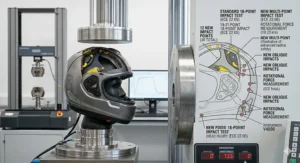
The certification process subjects helmets to comprehensive evaluation across multiple parameters. Linear impact testing occurs at three speeds—6.0 m/s (low), 7.5 m/s (medium), and 8.2 m/s (high)—simulating everything from secondary tumbles to initial high-energy crashes. Each helmet undergoes 18 separate impact tests across different zones, tripling the coverage from ECE 22.05’s six points.
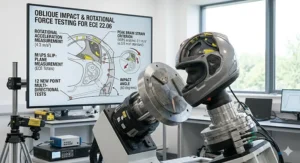
The oblique impact test represents the standard’s most significant advancement. The new regulations adopt oblique impact tests championed by ECE 22.06. The test requires technicians to drop a helmet onto a 45-degree platform (lined with 80-grit sandpaper) at 8.0 meters per second. This measures rotational acceleration and Brain Injury Criterion (BrIC), addressing the angular forces that cause brain rotation inside the skull—a primary cause of serious head injuries.
Visor testing now includes penetration resistance, where one test that the helmet must pass is when a small iron ball at speeds of 220 km/h hits the visor and the visor should not break or crumble. For British riders encountering flying debris from lorries on motorways, this provides genuine reassurance that your visor won’t shatter from road grit impacts.
Modular Helmets and P/J Certification
Flip-front helmets receive special attention under ECE 22.06. The certification uses letter codes: “P” for protective chin bar (full-face configuration), “J” for jet/open-face, and “P/J” for modular helmets tested in both positions. Crucially, helmets are labeled as ECE 22.06J, ECE 22.06P, ECE 22.06NP, or ECE 22.06P/J, with “NP” indicating a non-protective chin bar that failed testing.
Here’s the regulatory quirk: even P/J-certified modular helmets are only road-legal when worn in the closed position within the UK. The certification confirms the chin bar won’t spring open during impact, but British law requires full-face protection whilst riding.
ECE 22.05 vs 22.06: Can You Still Buy Older Standards?
All ECE R220-05 helmets worn in the UK remain compliant and they offer excellent protection, meaning your existing helmet doesn’t suddenly become illegal. Retailers can sell remaining ECE 22.05 stock indefinitely, though production ceased in June 2023.
The practical consideration for 2026 buyers: helmets have a finite lifespan. The consensus in the industry is to recommend replacing a helmet after 5 years, regardless of whether it has been used or not. An ECE 22.05 helmet manufactured in 2020 and offered at bargain pricing in 2026 is already six years old—its protective materials have been degrading whilst sitting on the shelf.
For British riders, this means paying attention to manufacturing dates. Remove the helmet lining to reveal the production sticker before purchasing discounted stock. The £50 savings on an old 22.05 helmet becomes false economy if you’ll need replacement within a year anyway.
How to Verify ECE 22.06 Certification
On the outside, on the back neck area of a helmet, it should say ECE R22-06. Inside the helmet there should be a fabric label with lots of numbers. The “E” in a circle followed by a number indicates where approval was granted—E11 for UK, E3 for Italy, E1 for Germany.
The label sequence includes the approval standard (06 for 22.06), helmet type (P/J/NP), and production serial number. For Amazon.co.uk purchases, always verify the certification label matches the listing description. Occasionally, stock photos show newer models whilst actual shipped product carries older certification—check the label immediately upon delivery whilst return windows remain open.
SHARP Ratings Decoded: The UK Government’s Independent Safety Score
The Safety Helmet Assessment and Rating Programme (SHARP) provides information ECE certification cannot: relative safety performance across helmets that all legally passed minimum standards. SHARP is a consumer information initiative that was launched by the Department for Transport (DfT) in 2007 following research that revealed real differences in the safety performance of motorcycle helmets available in the UK.
How SHARP Testing Works
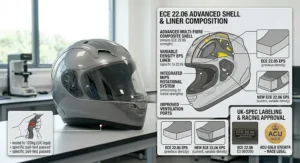
SHARP purchases helmets anonymously from UK retailers, ensuring tested samples match what consumers actually buy rather than manufacturer-supplied “golden samples”. Each model undergoes 32 impact tests across multiple locations and speeds, exceeding ECE requirements significantly.
The five-star rating system provides immediate clarity: A 5-star helmet offers good levels of protection right around the helmet. That’s not to say a lower rated helmet will not provide protection; regardless of its SHARP rating every helmet on sale in the UK must meet at least one regulatory standard. The difference between 1-star and 5-star isn’t legal compliance—it’s measurable protection capability, with variances of up to 70% in the protective capability of different helmets at selected impact sites.
Impact Zone Diagrams and What They Reveal
Each SHARP-rated helmet receives a colour-coded impact zone diagram showing performance across different head regions. Green indicates excellent protection, yellow shows adequate coverage, and red highlights areas where the helmet provides minimal protection beyond ECE minimum requirements.
For British riders, these diagrams reveal crucial information invisible at the point of sale. Two helmets at identical £300 price points might show dramatically different zone protection. One may excel at frontal impacts but offer minimal side protection—particularly concerning given research shows that, statistically, head impacts are distributed uniformly around the circumference of the helmet.
The temporal regions (temples) deserve special attention. This anatomically vulnerable area receives inadequate protection from many budget helmets despite passing ECE certification. SHARP’s zone testing exposes these weaknesses, allowing riders to make informed trade-offs between price and comprehensive coverage.
Modular Helmet Latch Scores
For flip-front helmets, SHARP provides a percentage latch score indicating how reliably the chin bar remained locked during impact testing. A 100% score means the chin guard stayed closed in every test. Scores below 70% suggest the mechanism may fail during crashes, potentially exposing your face despite the helmet carrying P/J certification.
This matters because ECE 22.06 testing confirms the latch meets minimum strength requirements, but doesn’t reveal reliability margins. A helmet might technically pass with latches that hold at exactly the minimum force threshold—fine for certification, concerning for real-world reliability after months of British weather exposure causing component wear.
SHARP Limitations and What It Doesn’t Test
SHARP only evaluates models that attain ECE 22.06 approval, meaning DOT-certified US imports won’t appear in the database even if they’re excellent helmets. The programme also focuses exclusively on full-face and modular helmets, leaving open-face and off-road options unrated.
SHARP testing occurs at room temperature on new helmets, not after years of British weather exposure. Real-world protection may degrade faster than laboratory testing suggests, particularly for helmets stored in damp garages or subjected to UV exposure from parking outdoors.
Using SHARP Ratings When Shopping on Amazon.co.uk
Check the SHARP database (sharp.dft.gov.uk) before purchasing. Every month, over 675,000 online searches for a SHARP rating are made on the internet, demonstrating British riders’ commitment to informed purchasing.
When shopping Amazon.co.uk, note that product listings rarely mention SHARP ratings prominently. Search the exact model name and size in the SHARP database, as ratings can vary between shell sizes—a medium might score 5 stars whilst XXL of the same model scores 4 stars due to different shell construction.
ACU Gold Standard: Essential for UK Track Days
The Auto-Cycle Union (ACU) Gold Standard represents the UK’s motorsport-specific certification, exceeding ECE 22.06 requirements for circuit use. The Auto-Cycle Union (ACU) sets a more rigorous standard for motorcycle racing in the U.K., surpassing the ECE 22.06 requirements.
Why ACU Gold Matters for British Riders
In practice, many UK track days also operate to ACU standards for technical matters, which means turning up with a road-legal helmet that lacks the right gold sticker can still leave you parked in the paddock. Even circuits not officially requiring ACU Gold frequently adopt it as their technical standard, meaning your £500 SHARP 5-star road helmet might not grant circuit access.
The certification change implemented in 2026 makes this particularly critical: From 1 January 2026, ACU officials are no longer applying stickers at the event; the helmet must already have the correct Gold sticker in place. Previously, you could have helmets assessed and certified at track days. That convenience has ended—purchase pre-certified helmets or stay home.
ACU Gold vs ECE 22.06: What’s Stricter?
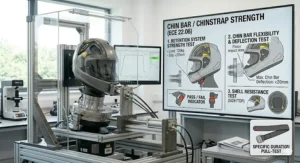
ACU testing emphasises impact scenarios specific to motorsport crashes: higher-energy impacts, specific chin bar loading patterns, and retention system strength under forces exceeding road accident norms. The chin bar must withstand greater compressive forces, and visor retention receives additional scrutiny.
For British riders, this creates a decision point. Road-only riders gain no practical benefit from ACU Gold certification—the additional testing addresses crash scenarios statistically unlikely on public roads. However, anyone contemplating even occasional track days should prioritise ACU Gold from the initial purchase, as replacing a perfectly good road helmet solely for certification becomes an expensive oversight.
FIM Certification: Overkill or Ultimate Protection?
Some provinces even allow older certifications like SNELL M2005 demonstrates the fragmented landscape, but FIM (Fédération Internationale de Motocyclisme) certification represents professional racing’s ultimate standard. Required for MotoGP and other FIM-sanctioned events, these helmets undergo testing far exceeding ACU Gold.
For UK road riders, FIM certification is expensive overkill. These helmets cost £700-£1,200+ and prioritise protection against 200mph crashes over comfort, weight, and noise reduction. Unless you’re literally racing professionally, the compromises aren’t worthwhile. Even serious track day riders find ACU Gold-certified helmets more practical for mixed road/circuit use.
Snell Certification: The American Standard Explained
The Snell Memorial Foundation provides voluntary certification popular in American motorsport. The current Snell safety standard for motorcycle helmets is Snell M2025, which became effective on October 1, 2024, replacing the M2020 standard many British riders might recognise from imported helmets.
Snell M2025D vs M2025R: Understanding the Split
The M2025D rating applies to helmets in North America and Japan, aligning with DOT FMVSS-218 and JIS T 8133:2000 regulations. In contrast, the M2025R rating applies to helmets worldwide, meeting the ECE 22.06 and FIM FRHPhe-01 standards. For UK riders, this means helmets certified M2025R align with our ECE framework, whilst M2025D represents US requirements.
The practical distinction affects impact absorption philosophy. Snell traditionally emphasised preventing skull fractures through harder shells, whilst ECE focused on reducing brain trauma through energy-absorbing liners. M2025R brings these approaches closer together, incorporating rotational impact considerations previously absent from Snell standards.
Should UK Riders Care About Snell Certification?
Honestly? Not particularly. ECE 22.06 combined with SHARP ratings provides everything British riders need. Snell certification adds value in two scenarios: purchasing helmets whilst travelling in the US (where many circuits require Snell), or buying specific racing-oriented models only certified to Snell rather than ECE.
DOT and SNELL are also not accepted in Australia highlights that helmet certification remains frustratingly regional despite globalisation. A Snell-certified helmet without ECE marking cannot legally be worn on UK roads, regardless of how expensive or protective it might be.
For Amazon.co.uk shoppers, this rarely matters—most listings clearly state ECE certification. However, imported American helmets occasionally appear in marketplace listings. Verify ECE certification before purchasing, as Snell-only helmets are road-illegal in Britain.
DOT Standard: What American Certification Means for UK Riders
The US Department of Transportation mandates FMVSS 218 (Federal Motor Vehicle Safety Standard 218) for American-market helmets. DOT is a self-certification system. Manufacturers certify their own helmets as compliant, and NHTSA conducts post-market compliance checks and enforcement action later.
DOT vs ECE: Key Differences
DOT impact testing only includes flat and hemispheric anvils. ECE differs from DOT with its use of curbstone anvils, simulating the kerb strikes common in motorcycle accidents. British roads with their proliferation of kerbs make ECE’s testing methodology more relevant to our riding environment.
The self-certification aspect raises eyebrows among European regulators. Rather than independent pre-market testing, manufacturers declare compliance and NHTSA spot-checks afterwards. This creates opportunities for non-compliant helmets to reach consumers before enforcement catches them.
Can You Legally Wear DOT-Only Helmets in the UK?
No. A road-legal helmet in the UK must meet one of the following criteria: British Standard BS 6658:1985 and carry the BSI Kitemark, A European Economic Area member standard offering at least the same safety and protection as BS 6658:1985. DOT certification doesn’t satisfy UK legal requirements.
This catches out American service members stationed in Britain and expats bringing US-purchased helmets. That $400 Bell or Shoei bought in California might be perfectly legal Stateside, but requires ECE certification for UK roads. Check before importing personal helmets—customs won’t necessarily flag it, but traffic police will.
Dual-Certified Helmets: Best of Both Worlds
Many premium manufacturers produce dual-certified helmets carrying both DOT and ECE markings. The Shoei RF-1400, for instance, meets both standards, making it legal across North America and Europe. For British riders planning extended US touring, dual certification avoids customs complications and rental rejection.
Amazon.co.uk listings should specify certification clearly. If product descriptions mention only DOT without ECE, that’s a red flag for UK road legality. Contact sellers to confirm certification before purchasing, particularly for imported or grey-market stock.
Making Sense of Multiple Certifications: What Combinations Actually Matter
Right, let’s address the certification hierarchy British riders actually need. You’ve got ECE 22.06 as your legal baseline—non-negotiable for UK roads. Everything else adds layers of assurance or addresses specific use cases.
The Ideal Combination for Road Riders
ECE 22.06 + SHARP 5-star represents the gold standard for British road riding. You’re legally compliant whilst benefiting from independently verified superior protection. Helmets like the Shoei NXR2 and AGV K6-S demonstrate this combination delivers tangible safety advantages without requiring motorsport-specific features.
Price-conscious riders can achieve strong protection with ECE 22.06 + SHARP 4-star combinations like the HJC i70. The step down from 5-star to 4-star represents measurable differences in impact zone protection, but you’re still performing well above legal minimums. For urban commuters facing statistically lower-speed crashes, this represents sensible value.
The Circuit Rider’s Essential Combination
ECE 22.06 + ACU Gold is mandatory for 2026 UK track days. Adding SHARP ratings on top (ECE 22.06 + ACU Gold + SHARP 4-5 stars) provides belt-and-braces assurance, though ACU certification already exceeds ECE requirements significantly.
For riders splitting time between roads and circuits, resist the temptation to own separate helmets unless budget allows comfortably. A quality ACU Gold-certified helmet works perfectly well for road riding—you’re just paying for certification you don’t legally need. The inverse doesn’t work: your ECE-only road helmet won’t grant circuit access regardless of its SHARP rating.
When Certifications Contradict Value
Here’s the uncomfortable truth: certification stacking shows diminishing returns. An ECE 22.06 + SHARP 5-star + ACU Gold helmet might cost £600, whilst an ECE 22.06 + SHARP 5-star alternative costs £350. That additional £250 buys circuit access—nothing more. The road protection remains identical.
Similarly, Snell certification atop ECE adds nothing for UK riders beyond bragging rights. You’re paying for testing that doesn’t address British road conditions any better than ECE already does. Unless you’re crossing the Atlantic regularly, Snell is certification you’ll never use.
The Budget Rider’s Minimum Safe Combination
ECE 22.06 alone is your legal and practical minimum. Don’t chase SHARP ratings if it means compromising helmet fit. The helmet I want has a low star rating. Should I buy it? It’s not necessarily the highest SHARP rated helmet that will be the best for you. Any helmet rated by SHARP will provide protection for your head in a crash. But that protection only works if the helmet fits you properly.
A properly fitted ECE 22.06 helmet with mediocre SHARP scores outperforms a poorly fitted 5-star helmet every single time. The certification hierarchy matters, but fit trumps everything. Try before buying, even if it means visiting brick-and-mortar retailers rather than relying solely on Amazon.co.uk.
British Standard BS 6658:1985: The Legacy UK Certification
Before ECE dominance, British helmets carried BS 6658:1985 certification from the British Standards Institution. British Standard BS 6658:1985 and carry the BSI Kitemark remains legally acceptable for UK roads, though finding new helmets certified solely to this standard has become virtually impossible.
Why BS 6658 Faded Away
The British Standard served its purpose well through the 1980s and 1990s, but lacked the international recognition necessary for manufacturers serving global markets. Producing UK-specific variants for a relatively small market (compared to all-Europe ECE compliance) made little commercial sense.
The BSI 6658-85 is a critical British certification, though less well-known. It is comparable to Snell and ECE standards, utilizing similar minimum requirements for helmet approval. The testing methodology paralleled ECE 22.05 reasonably closely, focusing on linear impacts and penetration resistance.
Can You Still Use BS 6658 Helmets?
Legally, yes. Practically, you shouldn’t. Any helmet old enough to carry BS 6658 without ECE certification dates from the 1990s or earlier—well beyond the five-year replacement recommendation. The materials have degraded, the protective technologies are obsolete, and you’re gambling with outdated safety equipment.
If you’ve inherited a vintage helmet or discovered one in a relative’s garage, admire it as motorcycling history and display it on a shelf. Don’t wear it on British roads, regardless of its legal status. Modern ECE 22.06 helmets provide demonstrably superior protection through two decades of materials science advancement and crash data analysis.
How to Choose Between Helmet Certifications: A Practical Decision Framework
Let’s distil this certification alphabet soup into actionable purchasing guidance for British riders facing real-world budget constraints and requirements.
Start with Your Riding Profile
Urban commuter (under 40mph average): ECE 22.06 + SHARP 3-4 stars minimum. You’re facing lower-energy impacts statistically, but filtering through traffic increases crash frequency. Prioritise impact protection over aerodynamics and noise. Budget: £150-£300.
Weekend tourer (A-roads, motorways): ECE 22.06 + SHARP 4-5 stars. Higher speeds demand better protection, whilst extended wearing time requires comfort. Consider weight carefully—1,200-1,400g helmets reduce neck fatigue significantly over 4+ hour rides. Budget: £250-£450.
Track day enthusiast: ECE 22.06 + ACU Gold mandatory. SHARP ratings less critical as ACU already exceeds them. Prioritise aerodynamics and weight over features like sun visors. Budget: £380-£600.
Budget-conscious new rider: ECE 22.06 minimum, SHARP 3+ stars desirable. Fit matters more than certifications. Buy the best-fitting helmet within your price range, ensuring ECE 22.06 compliance. Budget: £100-£200.
When to Ignore Higher Certifications
ACU Gold provides zero benefit for road-only riders. If you’re certain you’ll never attend track days, don’t pay the £100-£200 premium for certification you cannot use. That money better serves you upgrading from SHARP 3-star to 5-star within ECE 22.06-certified options.
Similarly, FIM and Snell certifications are wasted money for 99% of British riders. Unless you’re genuinely racing professionally or spending extended periods in the US, these certifications add cost without practical benefit for UK riding.
The Certification Sweet Spot for Most British Riders
ECE 22.06 + SHARP 4-5 stars balances legal compliance, independently verified superior protection, and reasonable pricing. Helmets like the HJC i70 (4 stars, around £180-£200) and Shoei NXR2 (5 stars, around £350) define this sweet spot at different budget levels.
This combination ensures you’re significantly safer than minimum legal requirements without paying for motorsport certifications you’ll never use. For British road conditions—wet weather, variable lighting, mixed-speed environments—this certification pairing addresses real-world risks appropriately.
UK-Specific Helmet Considerations: Weather, Roads, and Regulations
British riding conditions impose unique requirements that certification standards don’t explicitly address. Let’s examine how our environment influences helmet selection beyond certification marks.
The British Weather Challenge
Our climate isn’t extreme—it’s consistently inconsistent. Morning fog, afternoon drizzle, evening sunshine, all within a three-hour ride. According to the Met Office, the UK experiences rainfall on average 156 days per year, making weather-appropriate helmet features essential rather than optional. This demands specific helmet features:
Anti-fog systems are non-negotiable. Pinlock inserts or equivalent internal dual-pane systems prevent visor misting during autumn and winter rides. Standard visors fog within minutes when you’re stuck in stop-start traffic breathing warm, moist air whilst cold rain pelts your helmet.
Breath guards and chin curtains seem like minor accessories until you’re riding through November drizzle in Birmingham rush hour. These simple additions direct exhaled air away from the visor, significantly reducing fogging. Many ECE 22.06 helmets include them standard; budget options sell them separately for £10-£25.
Effective ventilation that actually closes matters enormously. Those lovely large vents praised in Mediterranean reviews become whistling wind tunnels during January rides across Yorkshire. British riders need vents that genuinely seal shut, not decorative features that channel freezing air regardless of position.
Urban Infrastructure and Visibility
British cities feature narrower roads, tighter roundabouts, and more complex filtering situations than American or Australian environments. Peripheral vision becomes crucial for safe urban riding.
ECE 22.06 mandates minimum field of vision, but doesn’t rate quality. When shopping, physically check lateral visibility. Can you see approaching vehicles at roundabouts without excessive head turning? Some racing-oriented helmets sacrifice peripheral vision for aerodynamics—fine for circuits, dangerous for negotiating Swindon’s Magic Roundabout.
Storage and Security Considerations
British housing stock trends toward smaller homes and limited garage space compared to North American averages. Many riders store helmets indoors rather than in damp sheds, affecting long-term material condition.
Helmet bags aren’t just pretentious accessories—they protect against UV degradation when your helmet lives on a hallway shelf near a window. Many manufacturers include basic bags; aftermarket options cost £15-£30. For British riders parking outdoors regularly, bags prevent rapid deterioration from our weak but persistent sunshine and industrial pollutants.
Post-Brexit Considerations for Helmet Purchases
UKCA (UK Conformity Assessed) marking replaced CE marking for UK-specific products post-Brexit. However, From January 2024, all newly sold helmets in the UK and Europe must comply with ECE 22.06 certification means ECE certification remains accepted in Britain.
Importing helmets from EU retailers occasionally triggers customs duties. A €400 helmet from a German retailer might face 20% VAT plus handling fees, eliminating apparent savings. Amazon.co.uk Prime-eligible stock avoids these complications, though colour and size selection may be more limited than specialist EU retailers offer.
UK Consumer Rights and Helmet Returns
The Consumer Contracts Regulations provide a 14-day cooling-off period for online purchases in the UK, stronger than many international equivalents. You can purchase a helmet from Amazon.co.uk, try it at home (keeping visor stickers intact), and return it if the fit isn’t perfect.
This makes online helmet shopping more viable for British riders than Americans or Australians facing stricter return policies. Use this protection—order two sizes if uncertain, test both properly at home, return the worse-fitting option. Proper fit matters more than any certification standard.
Common Mistakes When Choosing Helmet Certifications in the UK
Decades of selling helmets reveal predictable errors British riders make when prioritising certifications over practical considerations. Let’s address them directly.
Mistake 1: Assuming Higher Price Equals Better Certification
Certification costs are relatively fixed—manufacturers pay similar testing fees whether their helmet costs £100 or £600. The price difference funds materials, construction labour, and brand premium rather than safety certification levels.
A £150 HJC i70 carries identical ECE 22.06 certification to a £500 Arai Quantic. The Arai uses superior materials and handmade construction, potentially earning better SHARP scores, but the baseline certification remains identical. Don’t assume expensive automatically means more certified—check the actual labels and SHARP database.
Mistake 2: Ignoring Helmet Age When Buying Discounted Stock
That “bargain” ECE 22.05 helmet reduced from £300 to £180 might have been manufactured in 2019. You’re purchasing a seven-year-old helmet in 2026, leaving minimal usable lifespan before the five-year replacement recommendation kicks in.
Manufacturing dates hide inside helmet linings. Retailers selling old stock aren’t necessarily dishonest—they’re clearing inventory. But you’re buying degraded protection at prices that don’t reflect the shortened replacement timeline. Calculate cost-per-year rather than absolute price.
Mistake 3: Buying American-Import Helmets Without Checking ECE
DOT-certified helmets appear on Amazon marketplace listings, eBay, and Facebook groups, often at attractive prices. Americans stationed in Britain frequently sell US-purchased helmets when rotating Stateside.
These helmets are road-illegal in the UK regardless of price. Police can and do check helmet certification during stops. You’ll face fines whilst riding home bareheaded if your DOT-only helmet is confiscated. Verify ECE certification before purchasing any imported or second-hand helmet.
Mistake 4: Prioritising Certification Over Fit
A five star helmet that is too loose and will come off in a crash is not a good option for you bears repeating because new riders consistently make this error. They’ll accept uncomfortable pressure points or excessive movement to own a SHARP 5-star helmet rather than choosing a properly-fitted 4-star alternative.
Certification standards assume correct fit. A helmet that moves during impacts, or that comes off entirely, provides zero protection regardless of how many stars it earned in laboratory testing. Try on multiple brands—Shoei tends toward long oval head shapes, Arai toward rounder profiles, HJC somewhere between. Find your shape match first, then optimise certifications within that fit category.
Mistake 5: Believing ECE 22.06 Makes SHARP Obsolete
ECE 22.06 incorporated rotational impact testing previously absent from 22.05, leading some riders to assume SHARP ratings became redundant. Not quite. The SHARP test protocols are however, more stringent, so you can be sure that the SHARP star rating continues to indicate a relative level of protection above and beyond the requirements of the new R22-06 standard.
ECE 22.06 establishes minimum rotational impact performance. SHARP’s 32-test protocol still reveals which helmets exceed minimums significantly versus those barely scraping past. The rating system continues providing valuable comparative information ECE pass/fail testing cannot match.
Mistake 6: Assuming ACU Gold Means Better Road Protection
ACU Gold certification addresses motorsport-specific crash scenarios—high-energy impacts at unusual angles, extreme chin bar loading, retention system strength under forces exceeding road accidents. For circuit crashes at Silverstone, this matters enormously.
For a 30mph urban collision or a 50mph A-road slide, ACU Gold provides no measurable advantage over SHARP 5-star ECE 22.06 helmets costing £200 less. The additional testing doesn’t address scenarios you’ll encounter commuting to work through Reading. Buy ACU Gold if you need track access, not because you believe it’s inherently safer for road use.
The Future of Helmet Safety Standards: What’s Coming Next
Helmet certification doesn’t stand still. Ongoing research into head injury mechanisms and crash data analysis drives continuous evolution. Let’s examine emerging developments likely to affect British riders within the next 3-5 years.
Rotational Impact Testing Refinements
Current ECE 22.06 oblique testing represents a starting point rather than perfection. Research into Brain Injury Criterion (BrIC) and rotational acceleration continues revealing nuances the current 45-degree platform test doesn’t capture completely.
Expect future iterations to incorporate multiple oblique angles, varied surface textures beyond 80-grit sandpaper, and more sophisticated brain injury prediction models. The French Certimoov programme already uses advanced brain models; Certimoov testing recreates oblique impacts and integrates a new brain model to measure the effect of a collision on the brain suggests where ECE standards may evolve.
Integrated Technology Certification
Bluetooth communication systems, heads-up displays, and camera mounts proliferate across modern helmets. ECE 22.06 tests integrated accessories, but external add-ons receive no scrutiny. Future standards will likely address this gap, particularly concerning how aftermarket electronics affect impact protection.
British riders adding action cameras to helmets might find future regulations restricting mounting positions or requiring crash-testing of complete helmet-plus-camera systems. The physics are clear: external protrusions can act as levers increasing rotational forces during impacts.
Electric Motorcycle-Specific Standards
Electric motorcycles’ instant torque and different crash dynamics might warrant specialised helmet certifications. Their acceleration profiles differ from petrol bikes, potentially creating unique impact scenarios current standards don’t optimise for.
Whilst pure speculation currently, the rapid growth of electric motorcycles in British urban centres makes e-bike-specific safety research inevitable. Don’t be surprised if ECE 22.08 or 22.10 introduces electric-specific testing protocols within a decade.
SHARP Evolution and Rating Refinement
SHARP’s star system provides excellent comparative information but lacks granularity. Two helmets both rated 4-star might show significantly different protection profiles—one excels frontally but underperforms laterally, whilst another provides balanced medium-high protection uniformly.
Future SHARP iterations might adopt more nuanced scoring, perhaps rating individual impact zones separately before providing overall stars. This would help riders match helmets to their specific risk profiles—urban riders prioritising side protection, touring riders emphasising front/rear coverage.
FAQs: Motorcycle Helmet Safety Standards Explained
❓ Are ECE 22.05 helmets still legal on UK roads in 2026?
❓ Do I need ACU Gold certification if I only ride on UK roads?
❓ What's the difference between ECE 22.06P, 22.06J, and 22.06P/J certification?
❓ Can I wear a DOT-only certified helmet on British roads?
❓ How do SHARP ratings relate to ECE 22.06 certification?
Conclusion: Making Certification Work for Your Safety
Navigating motorcycle helmet certifications needn’t feel like decoding ancient hieroglyphics. The core principles remain straightforward once you strip away marketing noise and certification alphabet soup: ECE 22.06 establishes your legal and safety baseline, SHARP ratings reveal which helmets significantly exceed minimums, and specialised certifications like ACU Gold serve specific use cases rather than universal superiority.
For the overwhelming majority of British riders, the sweet spot combines ECE 22.06 certification with SHARP 4-5 star ratings at price points between £150-£450. This pairing delivers independently verified superior protection without paying for motorsport certifications you’ll never use. Whether you’re commuting through Leeds traffic, touring Scottish highlands, or weekend riding through the Cotswolds, this combination addresses real-world British riding risks comprehensively.
The certification hierarchy matters less than proper fit. A five star helmet that is too loose and will come off in a crash is not a good option—that fundamental truth trumps every certification mark. Try on multiple brands, find your head shape match, then optimise certifications within that fit category. Shoei’s long oval construction, Arai’s rounder profiles, and HJC’s intermediate shapes all carry identical ECE 22.06 certification, but only one will fit your head properly.
When shopping Amazon.co.uk or specialist retailers, verify manufacturing dates on discounted stock. That £180 “bargain” ECE 22.05 helmet might be seven years old, leaving minimal usable lifespan before replacement. Calculate cost-per-year rather than absolute price—a £350 new ECE 22.06 helmet lasting five years costs £70 annually, whilst a £180 old-stock helmet needing replacement within two years costs £90 annually.
British riding conditions impose unique demands certification standards don’t explicitly address. Our consistently inconsistent weather demands proper anti-fog systems, effective ventilation that genuinely seals shut, and breath guards directing exhaled air away from visors. These practical features matter as much as certification marks for enjoyable, safe riding through our climate.
The landscape will continue evolving. ECE 22.06 represents current best practice, but research into rotational brain injury, integrated technology safety, and electric motorcycle dynamics will drive future standards. What won’t change: the fundamental requirement that your helmet fits properly, carries appropriate certification, and gets replaced every five years regardless of visible condition.
Your helmet represents the single most important safety investment in motorcycling. Unlike bikes, gear, or accessories, it’s the only thing legally mandated because it’s the only thing preventing catastrophic head injury. Understanding certifications transforms shopping from confusing guesswork into informed decision-making that could genuinely save your life. Choose wisely, fit carefully, and ride safely on British roads.
Recommended for You
- Best Safety Certified Helmet Under £100 UK 2026
- 7 Best ECE 22.06 Helmets with SHARP 5 Star Rating UK 2026
- 7 Safest Motorcycle Helmet Standards UK: Expert Guide 2026
Disclaimer: This article contains affiliate links. As an Amazon Associate, I earn from qualifying purchases. If you purchase products through these links, we may earn a small commission at no additional cost to you.
✨ Found this helpful? Share it with your mates! 💬🤗
