In This Article
Finding a safety certified helmet under £100 that genuinely protects your head might seem like wishful thinking, but the UK market in 2026 offers something rather remarkable: properly tested, ECE 22.06-approved helmets at prices that won’t empty your wallet. What most new riders don’t realise is that the legal minimum safety standard is identical whether you spend £50 or £500—the difference lies in comfort, weight, and features, not the fundamental ability to protect your brain.
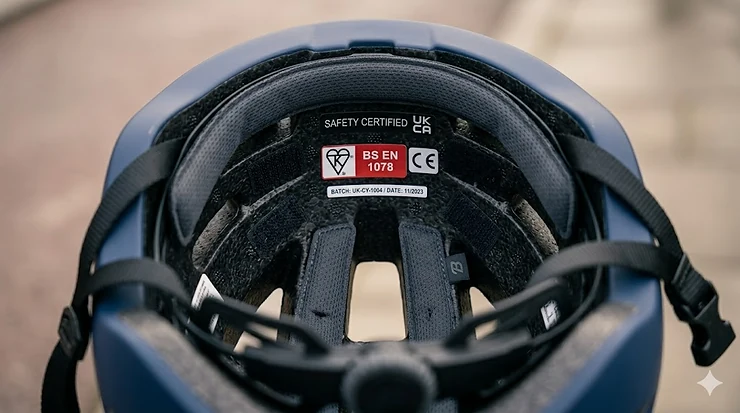
The introduction of ECE 22.06 certification represents the biggest advancement in motorcycle helmet testing since 2000, including oblique impact testing that simulates rotational forces experienced during real-world crashes. Even affordable ECE 22.06 helmets now offer protection that would have been considered premium just five years ago. For UK riders completing their CBT, commuting through Manchester’s rain, or simply needing a spare lid for the occasional weekend ride, this guide identifies the genuinely worthwhile options available on Amazon.co.uk right now—each one delivering legitimate safety certification without the premium price tag.
The clever bit? Many budget helmets now incorporate SHARP 4-star or even 5-star ratings, proving that you needn’t sacrifice protection to stay within a modest budget. Whether you’re navigating London’s congestion zone or tackling country lanes in the Peak District, these cheap certified motorcycle helmets provide the essential safeguarding every rider deserves.
Quick Comparison: Top Safety Certified Helmets Under £100
| Helmet Model | ECE Rating | SHARP Stars | Price Range | Best For | Key Feature |
|---|---|---|---|---|---|
| HJC C10 | 22.06 | 4★ | £75-£95 | New riders, CBT | First ECE 22.06 under £100 |
| LS2 FF353 Rapid II | 22.06 | 4★ | £70-£90 | Daily commuting | HPTT construction, 1,300g |
| Shox Apex | 22.06 | Not rated | £40-£55 | Budget buyers | Most affordable 22.06 option |
| ViPER RSV95 | 22.06 | Not rated | £65-£85 | Track day riders | Dual ECE + ACU Gold approval |
| Caberg Drift | 22.05 | 3★ | £85-£100 | Style-conscious | Composite fibre construction |
| AGV K1 | 22.05 | 5★ | £90-£100 | Sport riders | AGV racing heritage, 5★ SHARP |
| MT Thunder 3 SV | 22.05 | 4★ | £80-£95 | All-rounders | Internal sun visor included |
From the comparison above, the HJC C10 and LS2 FF353 Rapid II emerge as the standout choices if you’re prioritising the latest safety standards—both offer ECE 22.06 certification and SHARP 4-star ratings for under £90. However, if you’re on an absolutely rock-bottom budget and simply need legal road protection, the Shox Apex at around £45 represents astonishing value, even if it lacks SHARP testing data. Track day enthusiasts should note that only the ViPER RSV95 carries ACU Gold approval at this price point—rather essential if you’re planning circuit sessions at Brands Hatch or Donington Park.
💬 Just one click — help others make better buying decisions too!😊
Top 7 Safety Certified Helmets Under £100: Expert Analysis
1. HJC C10 — The Budget Benchmark
According to Bennetts BikeSocial’s comprehensive helmet guide, the new C10 is the first ECE 22.06-certified helmet that we’ve seen under £100, making it a wise buy for anyone on a budget. South Korean manufacturer HJC has essentially democratised the latest safety technology, offering oblique impact protection and enhanced testing that was exclusively premium territory just months ago.
What makes this particularly relevant for UK buyers is the CAD-designed polycarbonate shell that comes in multiple sizes (3XS to 2XL), ensuring proper fit across the broadest range of head sizes you’ll find at this price. The ACS (Advanced Channelling Ventilation System) pulls air from front to back—genuinely useful when you’re stuck in traffic on the M25 during a rare British heatwave. At around £80-£90, you’re getting a helmet that younger riders can grow into (it fits children as well as adults) and one that handles our damp climate reasonably well thanks to the Class A optical visor.
UK riders on Amazon.co.uk consistently praise its value proposition, with several noting it’s “the only ECE 22.06 helmet you can actually afford on a CBT budget.” The SHARP 4-star rating confirms what the price suggests: this isn’t cutting corners on protection, just on premium materials and fancy features you probably don’t need for your first year of riding.
Pros:
✅ First ECE 22.06 helmet under £100
✅ SHARP 4-star safety rating
✅ Exceptional size range (3XS-2XL) suits families
Cons:
❌ Polycarbonate shell heavier than composite alternatives
❌ Basic visor mechanism lacks tool-free quick-release
Value Verdict: Around £80-£90 represents the sweet spot for entry level certified protection—you’re paying for genuine safety advancement, not marketing hype.
2. LS2 FF353 Rapid II — Spanish Engineering at Asian Prices
Spanish manufacturer LS2’s FF353 Rapid II uses High Pressure Thermoplastic Technology (HPTT) to achieve something rather clever: a lightweight 1,300g shell that meets ECE 22.06 standards whilst costing £70-£90. That’s roughly 150g lighter than most budget lids, which translates to noticeably less neck strain during longer rides—particularly relevant if you’re commuting 30-40 minutes each way through Birmingham or Leeds.
The laser-cut hypoallergenic foam interior eliminates the usual break-in discomfort, whilst the included dark visor (on certain Amazon.co.uk listings) saves you £20-£30 you’d otherwise spend separately. For British weather, that tinted visor proves invaluable during the three days of summer we occasionally enjoy. The quick-release visor system operates smoothly even with winter gloves, though some UK reviewers note the ratchet mechanism feels slightly less robust than premium alternatives.
UK customers on Amazon praised its comfort during mid-distance journeys, with one reviewer noting they were “amazed that Amazon was doing this grey one for only £57″—though current pricing sits slightly higher in the £70-£90 range depending on colourway. The SHARP 4-star rating validates LS2’s engineering philosophy: maximum protection for minimum expenditure.
Pros:
✅ Lightweight 1,300g construction reduces neck fatigue
✅ Free dark visor included (model-dependent)
✅ Laser-cut foam provides immediate comfort
Cons:
❌ Visor mechanism less durable than premium options
❌ Sizing runs slightly small—order up if between sizes
Value Verdict: The £70-£90 range positions this as the lightest budget SHARP rated helmet you’ll find—worth the premium over the Shox if daily comfort matters.
3. Shox Apex — Rock-Bottom ECE 22.06 Compliance
The Shox Apex represents the absolute floor for ECE 22.06 certification, available from £40-£55 on Amazon.co.uk. At this price, you’re essentially paying for the legal minimum with a modern safety standard attached—but that’s not necessarily a criticism. For riders completing their CBT, keeping a spare helmet for pillion passengers, or simply needing temporary protection whilst saving for something better, the Apex delivers exactly what it promises: road-legal safety without pretence.
The lightweight ABS shell features an aerodynamic spoiler (mostly cosmetic at road speeds), whilst the multi-point ventilation system provides adequate airflow through British summers. The micrometric buckle allows fine adjustment—genuinely useful for achieving secure fit without the fiddly nature of double-D rings when you’re learning. What you sacrifice at this price is refinement: expect more wind noise above 60mph, basic padding that won’t last five years, and a visor that scratches more readily than premium alternatives.
For UK context, this helmet makes sense for specific situations: new riders who’ll likely upgrade within 12 months, delivery riders needing multiple lids, or experienced motorcyclists wanting a cheap spare for mates who “fancy a go on the back.” It’s not SHARP-tested, but it meets the same ECE 22.06 requirements as helmets costing triple the price.
Pros:
✅ Most affordable ECE 22.06 helmet available
✅ Micrometric buckle easier for beginners than D-rings
✅ Adequate ventilation for UK climate
Cons:
❌ No SHARP testing data available
❌ Wind noise noticeable above 60mph
❌ Basic materials won’t age gracefully
Value Verdict: At £40-£55, this is emergency budget protection—adequate for new rider budget helmets but upgrade when finances allow.
4. ViPER RSV95 — The Track Day Budget Option
The ViPER RSV95 occupies a unique niche: dual certification with both ECE 22.06 and ACU Gold rating for £65-£85. If you’re planning track days at Silverstone, Cadwell Park, or any ACU-governed event, this represents the cheapest entry ticket—most ACU Gold-approved lids start around £150. That gold sticker matters: arrive without it and you’re watching from the car park, regardless of how expensive your road-legal helmet might be.
The polycarbonate shell provides robust protection whilst the multi-point venting system ensures adequate airflow during spirited riding. Two vent options included in the box allow appearance customisation—a nice touch at this price. The Pinlock 30 Ready visor accepts anti-fog inserts, though you’ll need to purchase the insert separately (around £15-£20). UK track day enthusiasts particularly appreciate the RSV95’s versatility: one helmet serving both road commuting and circuit sessions saves considerable expense.
What British buyers should note: ACU regulations changed recently, and whilst this carries Gold approval, always verify current requirements before booking any track day. The helmet weighs approximately 1,350g, which feels substantial during longer sessions but acceptable for occasional circuit use.
Pros:
✅ Dual ECE 22.06 + ACU Gold certification
✅ Versatile for road and track use
✅ Pinlock 30 Ready for British fog conditions
Cons:
❌ No SHARP testing data
❌ Heavier than dedicated track helmets
❌ Pinlock insert sold separately
Value Verdict: For £65-£85, this is the maximum safety minimum budget option if track riding features in your plans.
5. Caberg Drift — Composite Construction on a Budget
Italian manufacturer Caberg’s Drift brings composite fibre construction (carbon, kevlar, fibreglass blend) to the sub-£100 bracket, typically priced £85-£100 on Amazon.co.uk. At approximately 1,350g for a medium, it’s lighter than similarly priced thermoplastic alternatives, which translates to reduced neck fatigue during day-long rides through the Cotswolds or Scotland.
The SHARP 3-star rating reflects average side impact protection—not class-leading, but perfectly adequate for road use. What you’re really paying for here is the step up in materials and the internal sun visor, which proves invaluable on British roads where weather changes every 20 minutes. The Pinlock-ready main visor accepts anti-fog inserts, rather essential given our climate, though like most budget options, you’ll purchase this separately.
UK owners consistently mention the Drift’s refined feel compared to pure budget helmets—better quality padding, smoother visor operation, and build quality that doesn’t feel like it’ll disintegrate after one season. It’s ECE 22.05 certified (the older standard, still legal), so if you’re specifically seeking ECE 22.06, look elsewhere. However, the Drift represents a sensible middle ground: better than rock-bottom budget, cheaper than premium, with composite construction usually reserved for £200+ helmets.
Pros:
✅ Composite fibre construction at budget price
✅ Internal sun visor included
✅ Refined build quality exceeds price point
Cons:
❌ SHARP 3-star rating (average protection)
❌ ECE 22.05 (older standard, still legal)
❌ Single shell size limits optimal fit range
Value Verdict: £85-£100 buys you materials upgrade—worth it if you’re keeping this helmet for 3-5 years rather than upgrading within months.
6. AGV K1 — Racing Heritage Meets Budget Reality
AGV’s K1 brings MotoGP pedigree to the £90-£100 price bracket, offering SHARP 5-star rating—the maximum possible score. That’s genuinely impressive: the same test rating as helmets costing £400+, achieved through clever thermoplastic design rather than exotic materials. Italian manufacturer AGV supplies helmets to Valentino Rossi and countless other racers, and whilst the K1 isn’t race-spec, the engineering knowledge filters down.
The sportsbike-focused design features a wide visor aperture for excellent visibility, produced in two shell sizes with four EPS liner densities to optimise fit across the XS-2XL size range. British riders praise its surprisingly quiet operation—unusual for a racing-inspired lid where noise suppression typically takes backseat to aerodynamics. The Pinlock-ready visor requires separate insert purchase (£20-£25), but that 5-star SHARP rating justifies the investment.
What UK buyers should consider: this helmet prioritises aggressive riding position over upright commuting. If you’re on a sportsbike tackling A-roads rather than slogging through city traffic, the K1’s aero benefits shine. However, touring riders might find the racing fit less comfortable during all-day rides. At £90-£100, you’re paying slight premium over basic options, but that SHARP 5-star rating represents measurably superior protection in the government’s independent testing.
Pros:
✅ SHARP 5-star maximum safety rating
✅ AGV racing heritage and engineering
✅ Surprisingly quiet for sportsbike design
Cons:
❌ ECE 22.05 (older standard, still legal)
❌ Racing fit less comfortable for upright riding
❌ Pinlock insert not included
Value Verdict: £90-£100 for SHARP 5-star protection represents exceptional value—the safety rating alone justifies this choice.
7. MT Thunder 3 SV — The All-Rounder
The MT Thunder 3 SV from Spanish manufacturer MT Helmets delivers comprehensive features at £80-£95: drop-down internal sun visor, Max Vision wide visor, removable washable lining, and adjustable venting. That’s essentially the complete checklist most riders want, assembled into one budget package. The SHARP 4-star rating confirms solid protection, whilst ECE 22.05 certification (still legal, just not the newest standard) keeps it road-legal across the UK.
What makes this particularly suitable for British riders is the internal sun visor—no fumbling with separate tinted visors when weather changes mid-ride, which happens roughly every 30 minutes in Britain. The Max Vision visor provides broader peripheral vision than budget alternatives, genuinely useful when checking mirrors in heavy traffic. The removable lining means you can actually wash out the accumulated sweat and grime from our damp climate, extending the helmet’s usable life.
UK Amazon.co.uk reviews highlight its versatility: equally at home for daily commuting, weekend rides, or occasional longer tours. The build quality sits noticeably above rock-bottom budget helmets whilst remaining well under £100. At 1,400g (approximate), it’s not featherweight, but the comprehensive feature set compensates for the modest weight penalty.
Pros:
✅ Internal sun visor eliminates separate visor purchases
✅ SHARP 4-star rating
✅ Comprehensive features for the price
Cons:
❌ ECE 22.05 (older standard)
❌ Heavier than premium alternatives
❌ MT brand less established in UK than HJC/AGV
Value Verdict: £80-£95 delivers the most complete feature package—ideal for riders wanting one helmet that handles everything.
Understanding UK Helmet Safety Standards: What ECE 22.06 Actually Means
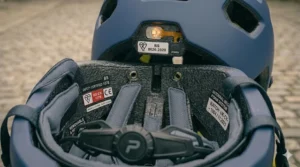
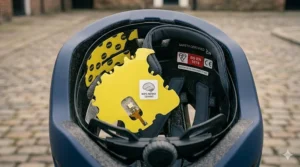
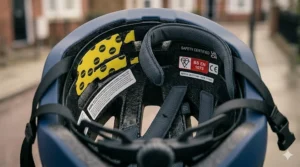
The shift from ECE 22.05 to ECE 22.06 represents more rigorous testing including oblique impact assessments that simulate rotational forces—addressing brain injury mechanisms largely ignored by previous standards. For UK riders, this matters because ECE 22.06 requires independent laboratory testing before sale, with approved labs testing helmets first before they can carry the E-mark sewn into the strap or liner.
The practical difference? ECE 22.06 helmets undergo testing at multiple speeds (6.0m/s, 7.5m/s, 8.2m/s) across 18 impact points rather than the previous 6, plus additional chin bar testing for full-face designs. Accessories like Bluetooth intercoms are now tested with the complete helmet—addressing the real-world scenario where most riders fit communication systems.
SHARP ratings add another layer: the UK government’s independent testing scheme awards 1-5 stars based on performance exceeding ECE requirements. Crucially, SHARP provides 1-5 star safety ratings for helmets, claiming to help riders choose helmets that exceed the minimum safety requirements. A SHARP 5-star budget helmet can genuinely outperform a SHARP 3-star premium lid in crash protection—price doesn’t guarantee safety.
For British riders purchasing on Amazon.co.uk, prioritise ECE 22.06 certification for new helmets, though 22.05 remains perfectly legal under UK law. SHARP ratings offer valuable comparison data, but remember: fit matters more than stars. An ill-fitting 5-star helmet provides less protection than a properly-fitted 3-star alternative.
Budget vs Premium: What You Actually Sacrifice Under £100
The uncomfortable truth about cheap certified motorcycle helmets is this: you’re not sacrificing fundamental crash protection when buying ECE-certified budget options. What you lose is comfort, weight, noise suppression, and longevity. A £50 helmet and a £500 helmet both meet the same legal minimum—the premium lid just makes the experience far more pleasant.
Weight represents the most noticeable difference. Budget polycarbonate shells weigh 1,400-1,600g versus 1,200-1,300g for composite alternatives. That 200-300g difference strains your neck during hour-long motorway slogs. Premium helmets use carbon fibre, kevlar, or fibreglass to shave weight whilst maintaining strength—materials that simply don’t fit £100 budgets.
Noise levels separate budget from premium. Cheaper helmets whistle, rumble, and transmit road noise that premium aerodynamics eliminate. Above 70mph, budget lids become genuinely fatiguing. Earplugs solve this (always wear them regardless of helmet price), but the difference remains stark.
Build quality longevity matters for multi-year ownership. Budget helmet padding compresses faster, visor mechanisms wear quicker, and paint scratches more readily. If you’re keeping your helmet for five years, premium durability justifies higher cost. If you’re upgrading within 18 months, budget makes perfect sense.
For UK riders on Amazon.co.uk, the calculation is simple: budget helmets provide adequate protection for new riders, commuters accepting some discomfort, or anyone needing temporary coverage. Premium helmets reward experienced riders logging serious miles who value comfort and refinement. Both keep you safe; one makes the journey far more pleasant.
How to Choose the Right Budget Helmet for British Riding
Step 1: Prioritise ECE 22.06 Over Everything New riders often obsess over brand names or fancy features whilst ignoring the fundamental question: does this helmet meet the latest safety standard? ECE 22.06 certification should be non-negotiable for new purchases in 2026. The enhanced oblique impact testing specifically addresses brain injury mechanisms that ECE 22.05 largely ignored.
Step 2: Verify SHARP Rating If Available Not every budget helmet receives SHARP testing, but when ratings exist, they provide invaluable comparison data. A SHARP 4-star budget helmet genuinely outperforms a SHARP 2-star expensive alternative in government crash testing. Don’t assume price equals protection—verify the actual safety data.
Step 3: Measure Your Head Properly British riders consistently purchase wrong sizes, compromising safety and comfort. Measure circumference 2.5cm above eyebrows using soft tape. Most brands publish size charts—follow them precisely. Between sizes? Order both from Amazon.co.uk (free returns), wear each for 30 minutes at home, and return the worse-fitting option.
Step 4: Consider Your Actual Usage Pattern CBT riders who’ll upgrade within 12 months need different helmets than daily commuters keeping theirs for five years. Track day enthusiasts require ACU Gold approval. Touring riders prioritise comfort over weight savings. Match the helmet to your genuine usage, not aspirational riding you’ll never actually do.
Step 5: Factor British Climate Requirements Anti-fog visors aren’t optional accessories in Britain—they’re essential survival equipment. Pinlock compatibility matters more here than sun-baked climates. Internal sun visors eliminate the faff of swapping tinted visors when weather changes mid-ride. Removable washable linings combat the inevitable damp, sweaty accumulation our weather creates.
Step 6: Understand What You’re Sacrificing Budget helmets trade comfort and refinement for affordability whilst maintaining safety standards. Accept more wind noise, heavier weight, and basic materials. If these compromises prevent you riding, spend more. If they’re annoying but tolerable, save your money for better tyres or advanced riding courses—both improve safety more than premium helmets.
Common Mistakes When Buying Budget Helmets
Assuming All ECE Certification Is Equal New riders often think “ECE certified” guarantees identical protection across all helmets. Wrong. ECE 22.05 and ECE 22.06 differ significantly in testing rigour. SHARP ratings then differentiate helmets within each standard. Always verify which ECE version and check for SHARP data—don’t assume certification alone tells the complete story.
Buying Based on Amazon Reviews Alone UK Amazon.co.uk reviews provide valuable real-world feedback, but reviewers rarely crash-test helmets. Someone praising comfort hasn’t necessarily experienced the helmet’s protective capability. Combine customer reviews with objective SHARP ratings and ECE certification data for complete picture.
Ignoring Fit for Price The cheapest helmet that fits properly outperforms the most expensive helmet that doesn’t. British riders with oval head shapes struggle with round-internal helmets regardless of price. Spend time achieving correct fit—pressure-point-free, snug without pain, minimal rotation when turning your head. Return anything that doesn’t fit perfectly, even if it’s the cheapest option available.
Forgetting UK-Specific Requirements Some budget helmets on Amazon.co.uk are grey imports designed for other markets. Verify 230V compatibility if purchasing helmet with built-in electronics (rare under £100, but exists). Confirm ECE certification rather than DOT-only American models. Check that included visors meet UK legal requirements for light transmission.
Underestimating Wind Noise Impact Budget helmet aerodynamics generate significant wind noise above 60mph. New riders often tolerate this initially, then find it genuinely fatiguing on longer rides. Always use earplugs—they’re essential even with premium helmets and utterly critical with budget alternatives. Preventing hearing damage costs £5 for decent plugs, far less than treating tinnitus.
Skipping the At-Home Fit Test Amazon.co.uk’s returns policy allows proper at-home evaluation. Wear your new helmet for 30-60 minutes whilst watching television or reading. Pressure points that seem minor initially become unbearable after 90 minutes on the motorway. Any discomfort during static wear multiplies tenfold when riding. Return without hesitation if fit isn’t perfect.
Real-World Performance: Budget Helmets in British Conditions
British weather tests helmets differently than Mediterranean or Scandinavian climates. Our combination of persistent damp, moderate temperatures, and frequent rain creates specific challenges that budget helmets handle with varying success.
Wet Weather Visor Performance Budget helmet visors fog more readily than premium alternatives. The basic anti-scratch coating many use provides minimal anti-fog properties. Pinlock compatibility becomes essential rather than optional—budget without Pinlock support essentially guarantees fogged vision during autumn and winter rides. Even basic Pinlock inserts (£15-£20) transform budget helmet usability in British damp.
Cold Weather Comfort Budget helmet padding provides less insulation than premium materials. Expect colder ears and foreheads during winter rides, particularly on motorways where wind penetration increases. This isn’t dangerous, just uncomfortable—layer up with balaclavas or invest in wind-blocking chin curtains (£10-£15). The money saved on budget helmets easily covers these accessories.
Rain Performance Cheaper visor seals leak more readily during heavy rain. You’ll experience water ingress around visor edges during biblical downpours—the sort Britain specialises in. Premium helmets seal better, but budget alternatives remain perfectly usable with slight moisture tolerance. If you’re caught out, crack the visor slightly to equalise pressure and reduce leak severity.
Summer Heat Management Budget helmet ventilation systems move less air than premium designs. During rare British heatwaves (all three days annually), budget lids feel noticeably hotter. The solution: slower speeds when possible, more frequent breaks, and realistic expectations. You’re not touring Spain in 40°C heat—British summers rarely exceed 25°C, making budget ventilation adequate if unspectacular.
Long-Distance Comfort Budget helmet weight (1,400-1,600g) causes more neck fatigue than premium alternatives (1,200-1,300g) during multi-hour rides. For 30-minute commutes, the difference barely registers. For day-long tours covering 300+ miles, that extra 200-300g accumulates into genuine discomfort. Match your helmet choice to realistic riding patterns—if you’re not actually touring Scotland for a week, don’t optimise for scenarios you’ll never encounter.
Maintenance Tips to Maximise Budget Helmet Lifespan
Weekly Quick Clean (5 Minutes) Wipe visor with microfibre cloth and plain water after each ride. British roads coat visors with road grime, salt spray, and bug residue that degrades cheaper coatings faster than premium alternatives. Regular gentle cleaning prevents buildup that requires aggressive scrubbing later.
Monthly Deep Clean (20 Minutes) Remove and hand-wash liner and cheek pads using mild detergent. British weather creates damp, sweaty conditions perfect for bacteria growth. Budget helmet linings lack antibacterial treatments common in premium alternatives, making regular washing essential. Air dry completely before reinstalling—never use heat, which degrades foam.
Quarterly Visor Inspection Budget visors scratch more readily than premium alternatives. Inspect for scratches compromising vision, particularly around edges where cheaper materials wear fastest. Replace at first sign of optical distortion—scratched visors reduce night vision and cause eye strain. Replacement visors cost £15-£25, far less than accidents caused by compromised vision.
Biannual Storage Check Store helmets in cool, dry locations away from direct sunlight. British damp encourages mould growth in padding whilst UV degrades cheaper plastics faster than premium materials. Use helmet bags (£10-£15) to protect from dust and moisture. Never store heavy objects on top—budget shells dent more easily than premium alternatives.
Immediate Post-Crash Action Replace any helmet involved in crash, regardless of visible damage. Budget helmet construction conceals internal damage more than premium alternatives—micro-cracks in cheap ABS compromise protection without external indication. The £50-£100 replacement cost is trivial compared to brain injury risk from compromised helmet.
Five-Year Replacement Rule Budget helmet materials degrade faster than premium alternatives. Plastics become brittle, foam loses energy absorption, and adhesives fail. Regardless of condition or usage, replace budget helmets every five years—sooner if heavily used. Premium helmets might stretch to seven years; budget alternatives don’t. Mark purchase dates inside helmet using permanent marker.
Frequently Asked Questions
❓ Are budget helmets as safe as expensive ones in the UK?
❓ What's the difference between ECE 22.05 and ECE 22.06 helmets?
❓ Do I need a SHARP 5-star helmet, or is 4-star adequate?
❓ Can I use my helmet on UK track days if it's only ECE certified?
❓ How often should I replace a budget motorcycle helmet in the UK?
Conclusion: Protection Doesn’t Require Premium Prices
The UK market for safety certified helmets under £100 has matured remarkably. ECE 22.06-approved options like the HJC C10 and LS2 FF353 Rapid II deliver genuine safety advancement without the premium markup, whilst SHARP 5-star helmets like the AGV K1 prove that maximum protection needn’t cost hundreds.
For new riders completing CBT, daily commuters navigating British weather, or anyone needing legitimate protection on modest budgets, these seven helmets represent genuinely worthwhile choices. You’ll sacrifice comfort, weight, and refinement compared to premium alternatives, but the fundamental crash protection remains identical when ECE and SHARP ratings match.
The clever bit is understanding what you’re actually buying. Budget helmets trade premium materials and features for affordability whilst maintaining legal safety standards. If those compromises prevent you riding or cause genuine discomfort, spend more—but if they’re tolerable annoyances, redirect that money toward better tyres, advanced training, or simply more fuel for actually riding.
British riders deserve protection that doesn’t bankrupt them. These affordable ECE 22.06 helmets deliver exactly that: certification you can trust, safety standards that genuinely protect, and prices that leave money for the riding that actually matters.
Recommended for You
- 7 Best ECE 22.06 Helmets with SHARP 5 Star Rating UK 2026
- 7 Safest Motorcycle Helmet Standards UK: Expert Guide 2026
- 7 Best British Standard BS 6658 Helmets UK 2026 – Road Legal Guide
Disclaimer: This article contains affiliate links. As an Amazon Associate, I earn from qualifying purchases. If you purchase products through these links, we may earn a small commission at no additional cost to you.
✨ Found this helpful? Share it with your mates! 💬🤗
