

In This Article
There’s a particular kind of silence that ruins a group ride. You’re three bikes deep on the A487 hugging the Welsh coast, someone spots a layby with a view worth stopping for, and the only way to communicate that is wild hand-waving, a foot stamped on the road, or — worst of all — everyone just riding past it because nobody could say “oi, pull in here.” A decent intercom helmet setup fixes that instantly, turning a convoy of strangers into something closer to a coordinated unit.
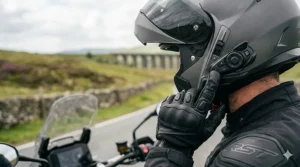
The best intercom helmet for UK riders isn’t necessarily the flashiest one on the shelf. It’s the one that survives a Pennine downpour, pairs with your mate’s three-year-old headset without a fight, and doesn’t need a PhD to operate with thick winter gloves on. Whether you’re after a helmet for group rides communication on weekend club runs, a long-range intercom system for touring Europe, or simply something that lets you hear sat-nav directions over a screaming exhaust, this guide rounds up seven genuinely good options available on Amazon UK, breaks down what actually matters, and points out a few traps that catch out first-time buyers. Right, kettle on — let’s get into it.
Quick Comparison Table
| Product | Best For | Riders Connected | Tech | Price Range (UK) |
|---|---|---|---|---|
| Cardo Packtalk Edge | Premium mesh touring | Up to 15 | DMC Mesh 2.0 | £280–£550 |
| Cardo Packtalk Neo | Value mesh group rides | Up to 15 | Mesh 2.0 | £200–£320 |
| Sena 50S | Audiophile mesh riders | Unlimited mesh group | Harman Kardon sound | £280–£400 |
| Cardo Freecom 4X | Reliable Bluetooth comms | Up to 4 | Bluetooth + JBL 40mm | £150–£250 |
| Cardo Spirit HD | Budget two-rider pairs | Up to 2 | Bluetooth | £90–£150 |
| LEXIN B4FM | Best-value group starter | Up to 10 (best at 4) | Bluetooth + FM | £70–£140 |
| Fodsports FX8 Pro | Cheapest mesh entry point | Up to 10 | Mesh | £90–£180 |
A quick read of that table tells its own story: mesh systems like the Packtalk Edge and Sena 50S sit at the top because they let an entire group chatter away without anyone needing to be “paired” directly — brilliant for touring groups where riders drift in and out of range. The Cardo Freecom 4X and Spirit HD, by contrast, are simpler Bluetooth units that suit smaller crews or couples who mostly want music and sat-nav with the option of chatting to one riding buddy. If your budget is doing most of the deciding, the LEXIN B4FM and Fodsports FX8 Pro punch well above their price tags, though don’t expect them to match the audio clarity of the JBL-equipped Cardo units.
💬 Just one click — help others make better buying decisions too!😊
✨ Don’t Miss These Exclusive Deals!
🔍 Take your group riding to the next level with these carefully selected intercom systems. Click on any highlighted product to check current pricing and availability on Amazon.co.uk — these picks will help you find exactly what suits your riding style.
Top 7 Intercom Helmets & Communication Systems — Expert Analysis
1. Cardo Packtalk Edge
The Cardo Packtalk Edge is widely regarded as the gold standard for mesh communication, and it’s easy to see why once you’ve used the “Hey Cardo” voice control on a wet A-road where touching buttons with soaked gloves is a recipe for dropping your bike. Its DMC Mesh 2.0 tech connects up to 15 riders automatically — no manual pairing rituals at every fuel stop — and the 40mm JBL speakers genuinely hold their own against motorway wind noise at 70mph.
What most UK buyers overlook is the USB-C charging port, a small but very welcome upgrade from older micro-USB Cardo units, especially if you’re already carrying a USB-C cable for your phone. In British conditions, the IP67 waterproofing earns its keep through autumn and winter — though a few owners note the magnetic mount clips can be fragile, so handle with care when swapping helmets.
✅ Pros: Excellent mesh range, voice control works reliably, waterproof to a high standard
❌ Cons: Premium price, mount clips feel a bit delicate
Price range: £280–£550 depending on whether you buy single, duo, or with extra helmet kits — superb value verdict for serious touring groups, less so if you only ride solo.
2. Cardo Packtalk Neo
Think of the Cardo Packtalk Neo as the Edge’s slightly older, slightly cheaper sibling — still running Mesh 2.0, still connecting up to 15 riders, but without quite the same polish on voice commands. For most weekend riders pottering around the Peak District or doing a club run from Sheffield to the coast, that’s a distinction without much difference.
The 40mm HD speakers deliver clear, punchy audio for sat-nav prompts and music, and natural voice operation means you’re not fumbling for buttons on a roundabout near Manchester’s notorious ring road. Reviewers consistently praise how quickly the mesh network re-establishes itself after going through tunnels or built-up areas with lots of interference — a genuinely useful trait given how often UK roads duck under railway bridges.
✅ Pros: Strong mesh performance, comfortable speaker fit, solid battery life
❌ Cons: App occasionally needs a firmware nudge, slightly bulkier than newer Cardo units
Price range: £200–£320 — arguably the sweet spot for riders who want Edge-level connectivity without quite the Edge-level bill.
3. Sena 50S
If audio quality is your priority, the Sena 50S — with sound tuned by Harman Kardon — is the one to beat. The bass response is noticeably richer than rivals, which matters more than you’d think when you’re trying to make out lyrics over a 600cc parallel-twin at speed. The jog dial control is a particular highlight: even with thick winter gloves on a freezing morning commute through Leeds, you can adjust volume or skip tracks by feel alone.
One thing the spec sheet won’t tell you: the 50S isn’t quite as waterproof as Cardo’s offerings, so if you’re regularly riding in proper British monsoon conditions, a few extra precautions around seals and connectors are worth taking. Mesh intercom performance for group coordination remains excellent, connecting seamlessly with other 50-series units across a touring group.
✅ Pros: Outstanding audio via Harman Kardon, intuitive jog dial, long battery life
❌ Cons: Water resistance is good rather than exceptional, pricier than the Neo
Price range: £280–£400 — a strong pick for riders who spend as much time listening to podcasts as chatting to mates.
4. Cardo Freecom 4X
Not everyone needs (or wants) a sprawling mesh network. The Cardo Freecom 4X is built for riders who want dependable Bluetooth intercom for up to four people — say, a small touring group doing the North Coast 500 — without the added complexity. Its 40mm JBL speakers and live-sound, always-connected design mean conversations feel natural rather than walkie-talkie-ish, with a claimed range of around 1.2km that holds up impressively well on open moorland roads.
The 13-hour battery life genuinely covers a full day’s ride from Cardiff to the Lakes with charge to spare, and the two-year warranty offers peace of mind if British weather does eventually find a way in. Cross-brand connectivity with Sena units (via the Cardo Connect app, on units with the 5.2 Bluetooth chip) is a thoughtful touch for mixed-brand riding groups.
✅ Pros: Excellent sound for the price, long battery life, cross-brand pairing
❌ Cons: No mesh networking for larger groups, controls take a little getting used to
Price range: £150–£250 — particularly good value when bought as part of a Freecom 4X & Spirit HD bundle for couples.
5. Cardo Spirit HD
Cardo’s budget-focused Spirit HD is the unit I’d point a new rider towards if their first question is “do I really need all the fancy mesh stuff?” Honestly — probably not, at least not yet. The Spirit HD pairs with one other rider, includes FM radio, and delivers surprisingly good audio quality for its price bracket, which sits well below its mesh-equipped siblings.
For a couple commuting through London traffic or doing short weekend blasts, this is plenty. What it lacks in group-scale ambition it makes up for in simplicity: fewer menus, fewer firmware updates to fuss over, and a control layout that’s genuinely intuitive on day one. It’s not the loudest or longest-range option here, but for two riders who mainly want to chat and occasionally share a Spotify playlist, it’s hard to argue with.
✅ Pros: Affordable, decent audio for the price, simple to operate
❌ Cons: Limited to pairing with one other unit, range trails behind the Freecom 4X
Price range: £90–£150 — a sensible starting point before committing to the mesh ecosystem.
6. LEXIN B4FM
The LEXIN B4FM has been a budget favourite for years, and the 2026 version still earns its keep. It supports up to 10 riders (LEXIN themselves recommend optimising for groups of four), runs on a Qualcomm chip for a notably stable connection, and throws in a built-in FM radio — handy for catching the Radio 2 traffic updates on a grim Monday commute around the M25.
IP67 waterproofing means it shrugs off proper British drizzle, and the glove-friendly jog dial is a genuine win for anyone who’s ever tried jabbing at tiny buttons at 50mph in November. The 800mAh battery delivers roughly 15 hours of talk time, which comfortably covers a day trip from Bristol to Bath and back with a stop for a pub lunch. Don’t expect Cardo-level audio richness, but for the price, the clarity for conversation is more than acceptable.
✅ Pros: Genuinely good value, glove-friendly controls, solid 10-rider claimed connectivity
❌ Cons: Audio lacks the bass depth of premium units, app interface feels a bit dated
Price range: £70–£140 for a single unit — among the cheapest credible entry points into group communication.
7. Fodsports FX8 Pro
Rounding out the list is the Fodsports FX8 Pro, a mesh-capable system aimed squarely at budget-conscious riders who still want the “join and chat automatically” convenience of mesh networking. It supports group communication for up to 10 riders, includes GPS-linked features in its companion app, and is waterproof enough for typical UK riding — though I wouldn’t fancy its chances in a full-on ford crossing during a flash flood.
What stands out for UK buyers is the double-pack option, which makes it one of the most affordable ways for two riders to get genuine mesh connectivity rather than simple point-to-point Bluetooth. Stereo music sharing is a nice bonus for long motorway slogs up the A1. Build quality doesn’t quite match Cardo or Sena, and the companion app can be a touch fiddly on first setup, but as an introduction to mesh comms for a small riding club on a budget, it’s a sensible shout.
✅ Pros: Mesh networking at a budget price, double-pack value, stereo music sharing
❌ Cons: App setup can be fiddly, build quality feels noticeably cheaper than premium brands
Price range: £90–£180 for a double pack — the cheapest genuine mesh option on this list.
Practical Usage Guide: Getting the Most From Your Intercom Helmet
Setting up a new intercom system on a damp Tuesday evening in the garage is nobody’s idea of fun, but a few habits make a real difference. First, always do your initial pairing indoors, in a dry spot — condensation on contacts during setup is a surprisingly common cause of “it just won’t connect” complaints. Once paired, run a short test ride around the block before committing to a long trip; intercom range can vary noticeably depending on helmet shape and how the unit sits against the shell.
For storage between rides, especially if you live in a flat or terraced house with limited space, most units fit neatly inside the helmet itself once removed from the clamp — just make sure the unit is fully dry first, as trapping moisture inside a helmet bag is a fast track to a mouldy lining. During the wetter months, a quick wipe-down of charging ports with a dry cloth before plugging in prevents the slow corrosion that catches out a lot of owners by spring. Finally, update firmware via the companion app every few months; manufacturers regularly patch Bluetooth stability issues that are particularly noticeable in built-up UK areas with heavy wireless interference.

Real-World Scenarios: Which Intercom Helmet Suits You?
The London commuter weaving through Zone 2 traffic on a daily basis probably doesn’t need mesh networking for 15 riders — a Cardo Spirit HD or single LEXIN B4FM covers occasional chats with a riding partner and gets sat-nav prompts through clearly over bus engine noise, all for under £150.
The touring club from the Cotswolds doing quarterly weekend runs across Wales or the Lakes is the prime audience for mesh systems. A group splitting the cost of Cardo Packtalk Neo or Edge units means riders can drift apart on twisty roads and reconnect automatically — no faffing about re-pairing every time someone stops for a photo of a particularly photogenic sheep.
The retired couple in the Peak District riding two-up on relaxed Sunday outings would do well with a Cardo Freecom 4X & Spirit HD bundle — strong audio for music and conversation, without the complexity (or cost) of managing a wider mesh network neither of them needs.
How to Choose the Best Intercom Helmet in the UK
- Decide how many riders you’ll realistically connect with. If it’s mostly one other person, a Bluetooth pair like the Spirit HD is plenty; for clubs and touring groups, mesh is worth the premium.
- Check waterproofing ratings honestly. IP67 or better matters more here than almost anywhere else in Europe — British rain doesn’t politely wait for a gap in your ride.
- Test glove compatibility before buying if you can. Jog dials (Sena, LEXIN) tend to outperform flush buttons (some Cardo models) when wearing winter gloves.
- Factor in cross-brand pairing if your riding group uses a mix of Cardo and Sena — not all units talk to each other smoothly.
- Think about battery life relative to your typical ride length. A day trip from Manchester to Scarborough and back is a different proposition to a quick blast around the ring road.
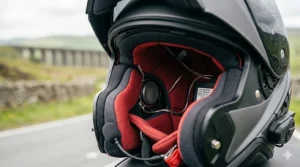
- Confirm helmet compatibility — full-face, modular, and open-face helmets all have different speaker pocket shapes, and not every unit fits every lid without a bit of foam-trimming.
- Set a realistic budget tier and stick to it — the jump from a £100 unit to a £300 one buys you mesh networking and better audio, but won’t transform a mediocre helmet into a comfortable one.
Intercom Systems vs Built-In Helmet Speakers Alone
A surprising number of riders assume that simply bolting any aftermarket speakers into their helmet achieves the same thing as a proper intercom system — it doesn’t. Standalone speakers without an intercom unit give you music and phone calls at best, with zero rider-to-rider communication. The intercom unit is what handles the actual mesh or Bluetooth handshake between riders, the noise-cancelling microphone, and the controls.
That said, the speakers themselves matter enormously. Units like the Sena 50S and Cardo Packtalk Edge ship with 40-45mm drivers that noticeably outperform the smaller speakers bundled with budget units like the LEXIN B4FM, particularly for bass and clarity at motorway speeds. If you’ve already got a helmet with decent speaker cutouts from a previous setup, it’s sometimes worth pairing a budget intercom brain with premium aftermarket speakers — a hybrid approach that splits the difference between cost and audio quality nicely.
What to Expect: Real-World Performance in British Conditions
Manufacturer claims about range and battery life are usually tested in fairly ideal conditions — open roads, mild weather, line-of-sight. British reality involves narrow lanes hemmed in by hedgerows, sudden downpours, and the kind of urban interference you get cycling — sorry, riding — through somewhere like central Birmingham with dozens of competing Bluetooth signals nearby.
Expect mesh range to drop noticeably in built-up areas; the 5-mile claims on premium Cardo units realistically translate to something closer to 500m-1km in towns, climbing back towards advertised figures on open moorland or motorway stretches. Battery life also takes a hit in cold weather — a unit rated for 13 hours might deliver closer to 10-11 hours on a properly chilly February ride. None of this makes these units bad value; it just means budgeting a little extra charge buffer and not panicking if your mesh group briefly drops out passing through a town centre — it’ll reconnect.
Common Mistakes When Buying an Intercom Helmet
The most frequent mistake is buying units from different brands and assuming seamless pairing — while cross-brand compatibility has improved (Cardo and Sena now offer some interoperability via their apps), it’s not universal, and mixed groups should check compatibility before everyone orders separately. Another common slip-up is underestimating wet-weather impact: a unit rated “water-resistant” rather than properly waterproof can struggle after repeated exposure to genuine British downpours, not just light drizzle.
Buyers also sometimes overlook helmet fitment entirely, assuming a unit advertised as “universal” will slot neatly into any lid — modular and open-face helmets in particular sometimes need extra padding adjustments. Finally, going for the cheapest possible mesh unit purely for the “mesh” label, when a simpler Bluetooth pair would actually suit a two-rider setup better and cost considerably less, is a false economy that crops up more often than you’d think.
UK Regulations, Safety Standards & Legal Requirements
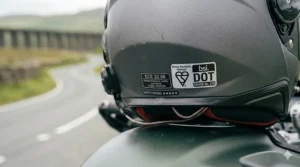
It’s worth remembering that an intercom system is an accessory — the helmet itself is the legal requirement, and UK law states that helmets must meet British Standard BS 6658:1985 with a BSI Kitemark, or an equivalent EEA standard. From January 2024, new helmet designs are approved against the updated UN ECE R22-06 standard, which offers meaningfully better protection than the older R22-05 spec it replaces — worth checking if you’re buying a new lid alongside your intercom upgrade.
The SHARP scheme, run by the Department for Transport, independently rates helmets from one to five stars based on impact testing, and is a genuinely useful resource before fitting any intercom unit — drilling or adhering accessories to a helmet can, in rare cases, affect its protective structure, so always follow the manufacturer’s recommended mounting points. The Highway Code doesn’t explicitly ban intercom use, but riders remain responsible for maintaining full control and awareness — so treat any audio system as a convenience, not a distraction.
Long-Term Cost & Maintenance in the UK
A premium mesh system like the Cardo Packtalk Edge represents a fairly serious outlay, but the cost-per-ride drops sharply for anyone doing regular weekend or touring miles — spread across two or three seasons, it works out at pennies per outing for a feature that genuinely improves group safety and enjoyment. Replacement parts (mounts, ear speakers, charging cables) are widely available through Amazon.co.uk and official Cardo/Sena UK distributors, generally with next-day delivery for Prime members.
Battery degradation is the main long-term consideration — most units retain decent capacity for 2-3 years of regular use before noticeable drop-off, at which point a replacement unit (rather than a battery swap, since most aren’t user-serviceable) is usually the practical option. Budget units like the LEXIN B4FM and Fodsports FX8 Pro have lower upfront cost but tend to need replacing sooner, so factor that into any like-for-like comparison rather than just looking at the initial price tag.
FAQ
❓ What is the best intercom helmet for group rides in the UK?
❓ Do motorcycle intercoms work in the rain?
❓ Can Cardo and Sena intercoms connect to each other?
❓ How long does delivery take for intercom helmets on Amazon UK?
❓ Is a motorcycle intercom legal to use while riding in the UK?
Conclusion
If there’s one takeaway from all this, it’s that “best” depends almost entirely on how many people you’re talking to and how wet you’re prepared to get along the way. For touring groups and clubs, mesh systems like the Cardo Packtalk Edge or Sena 50S are worth the investment — the seamless reconnection alone saves a surprising amount of roadside faffing. For couples and smaller crews, the Cardo Freecom 4X or Spirit HD deliver excellent audio without unnecessary complexity, and if budget is the deciding factor, the LEXIN B4FM and Fodsports FX8 Pro prove that decent group communication doesn’t have to break the bank.
Whatever you choose, prioritise genuine waterproofing, glove-friendly controls, and battery life that comfortably outlasts your longest typical ride — British weather and British roads have a habit of testing all three sooner than you’d expect.
Recommended for You
- 7 Best Mesh Intercom Motorcycle Helmets UK 2026 (Tested)
- 7 Best Intercom Ready Motorcycle Helmets UK 2026
- Best Motorcycle Vlogging Helmet UK 2026: Top 7 Picks Reviewed
Disclaimer: This article contains affiliate links. As an Amazon Associate, I earn from qualifying purchases. If you purchase products through these links, we may earn a small commission at no additional cost to you.
✨ Found this helpful? Share it with your mates! 💬🤗
