In This Article
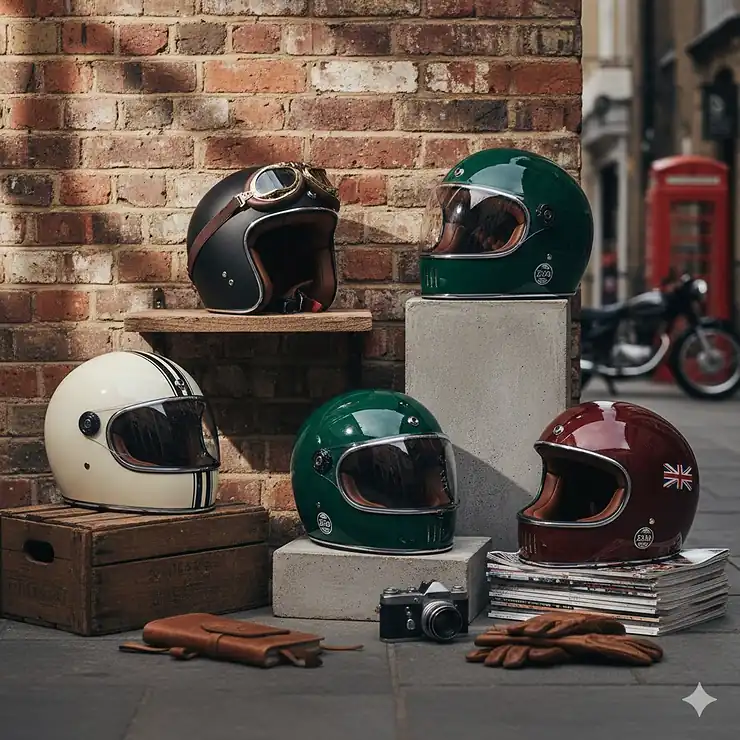
Picture this: you’re cruising down a sun-drenched British country lane on your café racer, the wind in your face, turning heads at every junction. But there’s a catch – modern helmets often clash horribly with that classic aesthetic you’ve worked so hard to achieve. Enter retro motorcycle helmets: the perfect marriage of vintage styling and contemporary safety standards.
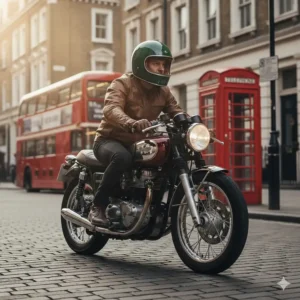
Retro motorcycle helmets have experienced a remarkable renaissance over the past decade. What was once a niche market dominated by dodgy, non-road-legal “nostalgia lids” has transformed into a thriving industry offering properly certified helmets that wouldn’t look out of place in a 1960s Grand Prix. These helmets embrace the design language of motorcycling’s golden era – clean lines, minimalist profiles, and timeless colourways – whilst incorporating modern materials like advanced fibreglass composites, multi-density EPS liners, and ECE 22.06 certification.
Whether you’re riding a Triumph Bonneville, a Royal Enfield, or even a modern retro like the Kawasaki Z900RS, finding the right helmet is crucial. You need something that complements your bike’s aesthetics whilst providing the protection demanded by UK road regulations. This comprehensive guide examines seven outstanding retro motorcycle helmets available on Amazon.co.uk, covering everything from budget-friendly options to premium investment pieces.
Quick Comparison Table: Top Retro Motorcycle Helmets
| Helmet Model | Style | Safety Rating | Weight | Price (£) | Best For |
|---|---|---|---|---|---|
| Bell Custom 500 | Open face | ECE/DOT | 1,200g | £79.99-£189.99 | Classic styling enthusiasts |
| HJC V10 | Full face vintage | ECE 22.06 | 1,450g | £218-£300 | Modern safety seekers |
| ViPER RSV19 | Open face jet | ECE 22.06 | 1,250g | £69.95-£89.99 | Budget-conscious riders |
| HJC V31 | Open face 3/4 | ECE 22.06 | 1,300g | £189-£249 | Integrated sun visor fans |
| Biltwell Bonanza | Open face | DOT | 1,150g | £135-£175 | Lightweight comfort |
| STTTBD Retro Half | Half shell | ECE approved | 950g | £59.99-£79.99 | Urban commuting |
| RHBDDHV Retro Half | Half shell | ECE 22.06 | 980g | £54.99-£69.99 | Value seekers |
💬 Just one click – help others make better buying decisions too!😊
✨ Don’t Miss These Exclusive Deals!
🔍 Take your riding experience to the next level with these carefully selected helmets. Click on any highlighted product to check current pricing and availability on Amazon.co.uk. These helmets will help you achieve that authentic vintage look whilst keeping you properly protected!
Top 7 Retro Motorcycle Helmets: Expert Analysis
1. Bell Custom 500 – The Original Icon
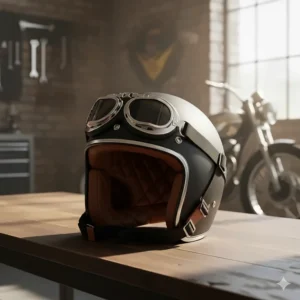
The Bell Custom 500 isn’t just a retro helmet – it’s the retro helmet. Originally launched in 1954, this legendary lid has been refined continuously whilst maintaining its unmistakable silhouette. Available on Amazon.co.uk for £79.99-£189.99, the Bell Custom 500 represents outstanding value for an authentic piece of motorcycling heritage.
Constructed from a lightweight fibreglass composite shell available in five different sizes, the Bell Custom 500 features IONIC+ padding that manages moisture whilst fighting odour-causing bacteria. The custom-quilted, contrast-stitched interior exudes quality, whilst the integrated 5-snap pattern allows easy attachment of bubble shields, visors, and other accessories. UK riders particularly appreciate its dual ECE and DOT certification, ensuring compliance with British road regulations.
Customer feedback from UK buyers consistently praises the Custom 500’s comfortable fit and timeless aesthetic. One Brighton-based rider noted: “Fits like a glove after the break-in period. Gets compliments everywhere I ride.” The helmet weighs approximately 1,200 grams – slightly heavier than some competitors – but many riders find this reassuring rather than cumbersome.
Pros:
✅ Authentic 1954 design lineage
✅ Multiple shell sizes for better fit
✅ Extensive accessory compatibility
Cons:
❌ No integrated sun visor
❌ Limited ventilation for hot weather
2. HJC V10 – Vintage Style Meets Modern Engineering
If you want full-face protection without sacrificing retro aesthetics, the HJC V10 is absolutely brilliant. Priced at £218-£300 depending on the graphic, the HJC V10 represents Korean manufacturer HJC’s impressive entry into the vintage helmet market.
This helmet features an advanced fibreglass composite (AFC) shell produced in three sizes, ensuring a snug fit across the range. The V10 meets the latest ECE 22.06 standards and incorporates clever modern touches like emergency quick-release cheek pads (identified by red tabs for first responders), a tool-free visor replacement system, and Smart HJC Bluetooth compatibility.
UK reviewers on Amazon consistently award the HJC V10 five stars, with many commenting on its surprisingly light weight (approximately 1,450g) and excellent build quality. The ACS (Advanced Channelling System) ventilation works admirably, though it’s optimised more for British spring weather than Mediterranean heat. The clear HJ-41 visor comes with 99% UV protection and is Pinlock-ready for fog-free riding.
Specifications:
- Shell: Advanced fibreglass composite (3 sizes)
- Certification: ECE 22.06, ACU Gold pending
- Visor: HJ-41 with anti-scratch coating
Pros:
✅ Full-face protection with vintage aesthetics
✅ Emergency release system
✅ Bluetooth-ready design
Cons:
❌ Higher price point
❌ Limited colour options in UK market
3. ViPER RSV19 – Best Budget Retro Helmet
The ViPER RSV19 punches well above its £69.95-£89.99 price point. This open-face jet helmet from British brand Viper represents exceptional value whilst maintaining ECE 22.06 certification – crucial for UK road legality.
Constructed from high-quality polycarbonate, the ViPER RSV19 weighs just 1,250 grams and features both a curved outer visor and a retractable inner smoke visor – a genuinely useful feature for British weather. The dual-visor system can be operated single-handedly, and both visors exceed ECE 22.06 anti-scratch requirements. The removable, moisture-wicking liner makes maintenance straightforward, whilst the ratchet fastener buckle allows quick, secure fastening.
Available on Amazon.co.uk in multiple colourways including Solid Matte Titanium and Italy Flag graphics, UK customers frequently praise the RSV19 for its comfort and build quality. A Manchester-based commuter reported: “Beautifully made, great fit following the size guide. Excellent value.” The helmet fits XS through XL head sizes, making it accessible for most riders.
Key Features:
- Weight: 1,250g ± 50g
- Dual visor system (clear + smoke)
- Sizes: XS, S, M, L, XL
Pros:
✅ Outstanding value for money
✅ Integrated dual visor system
✅ ECE 22.06 certified
Cons:
❌ Polycarbonate shell (vs fibreglass)
❌ Basic interior compared to premium helmets
4. HJC V31 – Premium Open-Face Experience
The HJC V31 takes the open-face formula and elevates it considerably. Priced at £189-£249, this 3/4 helmet from HJC features an advanced fibreglass composite shell and a genuine leather-and-suede interior that feels absolutely premium.
What sets the HJC V31 apart is its integrated 3-position sun shield with anti-scratch coating. This deploys smoothly and offers genuine protection in changing British light conditions – no more squinting into low winter sun. The helmet includes goggle strap holders for those who prefer the classic look, whilst speaker pockets accommodate Bluetooth systems.
UK riders particularly appreciate the V31’s build quality. The shell construction uses CAD technology for optimal weight distribution, resulting in a helmet that weighs approximately 1,300 grams but feels lighter. The fibreglass composite provides superior impact absorption compared to polycarbonate alternatives whilst remaining comfortable for all-day wear. ECE 22.06 certification ensures full road legality.
Specifications:
- Shell: Advanced fibreglass composite
- Interior: Leather and suede
- Certification: ECE 22.06
Pros:
✅ Integrated sun visor system
✅ Premium interior materials
✅ Goggle strap compatibility
Cons:
❌ Less facial protection than full-face
❌ Limited availability in some sizes
5. Biltwell Bonanza – Californian Cool
The Biltwell Bonanza brings West Coast style to British roads. Available through UK retailers for £135-£175, this injection-moulded ABS helmet weighs a featherlight 1,150 grams, making it one of the most comfortable options for extended riding.
The Bonanza features a custom-shaped EPS safety shell and a hand-stitched, removable, washable liner with moisture-wicking brushed Lycra panels. The open-cell foam padding provides excellent breathability – particularly appreciated during British summer rides. The nylon neck strap features plated steel D-rings and showcases Biltwell’s trademark anvil branding.
Whilst the Biltwell Bonanza carries DOT certification rather than ECE (important note: DOT-only helmets require additional ECE certification for UK road legality, so verify before purchasing), many riders appreciate Biltwell’s commitment to low-profile styling. The helmet’s slimline design looks fantastic and photographs beautifully. Snap buttons on the brow accept Biltwell bubble shields and other accessories.
Key Features:
- Ultra-lightweight: 1,150g
- Injection-moulded ABS shell
- Hand-stitched removable liner
Pros:
✅ Exceptionally lightweight
✅ Excellent breathability
✅ Low-profile aesthetic
Cons:
❌ DOT certification (check ECE compliance)
❌ Higher price vs similar spec helmets
6. STTTBD Retro Half Shell – Urban Practicality
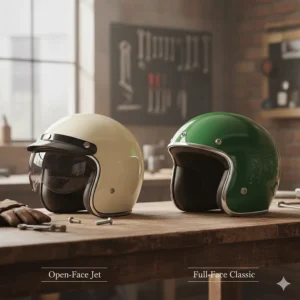
For city riders and scooter enthusiasts, the STTTBD Retro Half Shell offers practical protection at £59.99-£79.99. This ECE-approved half helmet combines classic retro styling with modern safety features, perfect for urban commuting.
The helmet features a high-quality ABS outer shell providing the first layer of protection, backed by shock-absorbing EPS material that effectively reduces weight whilst maintaining safety. The third layer features a comfortable suede interior liner. At approximately 950 grams, it’s genuinely lightweight and barely noticeable during short urban trips.
UK Amazon customers report positive experiences with the STTTBD helmet, particularly for daily commuting. The glasses-fixing strap prevents eyewear from slipping – a thoughtful touch for riders who wear spectacles. The mesh chin strap maximises comfort and softness. Whilst half helmets naturally offer less protection than full-face or 3/4 options, they excel for slow-speed urban riding where maximum visibility and minimal bulk are priorities.
Specifications:
- Weight: Approximately 950g
- Shell: High-tech ABS polymer
- Certification: ECE approved
Pros:
✅ Extremely lightweight
✅ Excellent visibility
✅ Affordable pricing
Cons:
❌ Minimal face/jaw protection
❌ Limited weather protection
7. RHBDDHV Retro Half Face – Best Value Option
The RHBDDHV Retro Half Face helmet represents astonishing value at £54.99-£69.99. ECE 22.06 certified and available on Amazon.co.uk, this half helmet proves you don’t need to spend a fortune for road-legal retro styling.
The helmet features an innovative lotus leaf membrane visor that causes water and dirt to bead off immediately – genuinely useful in British rain. Constructed from robust ABS with EPS cushioning, the RHBDDHV offers respectable protection for urban and suburban riding. The removable, breathable liner keeps riders comfortable and can be easily washed to maintain hygiene.
Weighing approximately 980 grams, this helmet feels substantial without being heavy. UK buyers report that it fits comfortably for daily use, with one London rider commenting: “Perfect for my scooter commute. Light, comfortable, and the water-resistant visor actually works!” The retro half helmet design suits motorcycles, scooters, and cruisers equally well.
Key Features:
- Lotus leaf membrane visor
- Weight: 980g
- ECE 22.06 certified
Pros:
✅ Excellent value for money
✅ Innovative water-resistant visor
✅ Latest ECE 22.06 certification
Cons:
❌ Half-shell offers limited protection
❌ Basic interior compared to premium options
Understanding Vintage Open Face Helmets ECE Approved
Open-face helmets represent the classic retro aesthetic, offering maximum visibility and that authentic vintage riding experience. However, not all open-face helmets are created equal, and ECE approval is absolutely crucial for UK road legality.
What Does ECE Approval Mean?
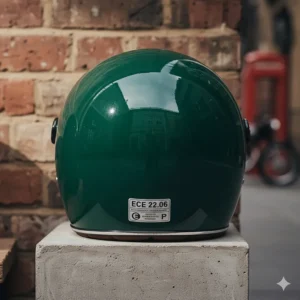
ECE (Economic Commission for Europe) Regulation 22 is the UK’s mandatory safety standard for motorcycle helmets. The latest version, ECE 22.06, came into effect in January 2024 and introduces significantly more rigorous testing than its predecessor. Despite the “European” name, ECE is actually a United Nations standard used globally.
ECE 22.06 testing includes impact absorption at multiple speeds, oblique impact tests (measuring rotational forces that can cause brain injuries), chin strap strength testing, and visor/accessory compatibility checks. Helmets must pass these tests across various temperature conditions and demonstrate consistent performance across different shell sizes.
Benefits vs Traditional Full-Face Helmets
| Aspect | Open Face | Full Face |
|---|---|---|
| Weight | Lighter (950-1,300g) | Heavier (1,400-1,800g) |
| Visibility | Excellent peripheral vision | Restricted by chin bar |
| Ventilation | Superior airflow | Variable, often better |
| Protection | Face/jaw exposed | Complete coverage |
| Style | Classic retro look | Modern or vintage options |
| Noise | Higher wind noise | Better noise insulation |
Open-face helmets excel in urban environments where speeds are lower and visibility is paramount. They’re perfect for café racer aesthetics and provide unmatched comfort during short to medium rides. However, they offer significantly less facial protection in an accident. Statistics from the UK Department for Transport indicate that facial injuries are substantially more common amongst open-face helmet wearers.
Bell Custom 500 vs Biltwell Bonanza: The Classic Showdown
These two helmets represent American retro heritage at its finest, but which should UK riders choose?
Design Philosophy
The Bell Custom 500 traces its lineage directly to 1954, when Bell founder Roy Richter created the original 500 series. Every curve and contour references this heritage, with Bell having made only evolutionary refinements over 70 years. The result is a helmet that looks genuinely period-correct on any classic motorcycle.
The Biltwell Bonanza, conversely, represents a more contemporary interpretation of retro styling. Launched in the 2000s, Biltwell approached vintage design with modern eyes, creating a slimmer, lighter profile that some riders find more flattering. The Bonanza’s aesthetic references late-1970s and early-1980s racing lids rather than 1950s originals.
Construction Comparison
Shell Materials:
- Bell Custom 500: Fibreglass composite (5 shell sizes)
- Biltwell Bonanza: Injection-moulded ABS (3 shell sizes)
Fibreglass generally offers superior impact absorption and longevity compared to ABS, though modern ABS formulations have closed this gap considerably. The Bell’s five shell sizes ensure better fit proportions, whilst the Bonanza’s three sizes with varying padding thicknesses represent a more economical approach.
Price & Value Analysis
| Feature | Bell Custom 500 | Biltwell Bonanza |
|---|---|---|
| UK Price | £79.99-£189.99 | £135-£175 |
| Shell Material | Fibreglass | ABS |
| Weight | 1,200g | 1,150g |
| Certification | ECE/DOT | DOT (verify ECE) |
| Shell Sizes | 5 | 3 |
| UK Availability | Excellent | Limited |
The Bell Custom 500 generally offers better value, particularly at the lower end of its price range. UK availability through Amazon.co.uk and major retailers is excellent. The Biltwell Bonanza requires more careful sourcing and verification of ECE compliance for UK road legality.
Both helmets accept similar accessories including bubble shields, visors, and peaks. The Bell’s 5-snap pattern is more standardised, whilst Biltwell uses proprietary snap positions that limit cross-brand compatibility.
Café Racer Helmet Recommendations for 2026
The café racer scene has exploded in the UK, with everyone from Ace Café regulars to Instagram poseurs seeking the perfect lid to complement their modified Triumphs and Nortons. Here’s what works.
Full-Face Options for Serious Riders
The HJC V10 stands as the undisputed champion for café racer aesthetics with full-face protection. Its slightly aggressive profile, reminiscent of 1970s Grand Prix helmets, pairs beautifully with café racers whilst providing ECE 22.06 protection. The clean lines and minimal branding ensure it won’t date quickly.
Alternative: The Bell Bullitt (not extensively covered here but worth mentioning) offers similar vintage full-face styling at a premium price point. Available through specialist UK retailers, it provides slightly more authentic 1960s styling than the HJC.
Open-Face for the Purists
For that classic “wind in your face” experience, the Bell Custom 500 remains unbeatable. Pair it with classic goggles (Biltwell Moto 2.0 or 100% Barstow work brilliantly) for an aesthetic that would fit perfectly at Goodwood Revival.
The HJC V31 offers a more modern take with its integrated sun visor – practical for British riding where you might encounter bright sunshine, overcast skies, and rain all within an hour.
Style Matching Guide
Naked Café Racers (Triumph Thruxton, Royal Enfield Continental GT):
- Bell Custom 500 with bubble shield
- HJC V10 in solid colours
Full-Faired Bikes (Ducati SportClassic, Norton Commando):
- HJC V10 in racing graphics
- Bell Custom 500 with race stripes
Minimalist Builds (custom Yamaha XS650, Kawasaki W800):
- Biltwell Bonanza in matte finishes
- Bell Custom 500 in flat black
Classic Styling Aesthetics: What Makes a Helmet Look Retro?
Retro motorcycle helmets achieve their vintage appeal through specific design elements that distinguish them from contemporary lids. Understanding these details helps riders make informed choices.
Shell Shape & Profile
Round vs Oval:
Classic helmets typically feature rounder shell shapes compared to modern aerodynamic designs. This circular profile references 1950s-1970s construction techniques when shells were hand-laid fibreglass formed over basic moulds. Contemporary helmets often feature more complex, CAD-designed shapes optimised for aerodynamics.
Low-Profile Design:
Vintage helmets sit closer to the head with less bulk than modern full-face helmets. This sleeker profile looks better photographically and creates better proportions on classic motorcycles. Manufacturers achieve this through thinner shell walls and more compact EPS liners – though modern safety standards ensure protection isn’t compromised.
Graphics & Colourways
Period-Correct Colours:
- Solid colours: Black, white, silver, cream
- Racing colours: British Racing Green, Italian red, French blue
- Metalflake finishes: Gold, silver, bronze
- Two-tone combinations: Black/cream, blue/white, red/gold
Graphics Approach:
Authentic vintage styling favours minimal graphics – perhaps simple pin-striping, national flag stripes, or small manufacturer badges. Contrast this with modern helmets featuring complex multi-colour graphics, sponsors’ logos, and intricate patterns.
Hardware Details
Chin Straps:
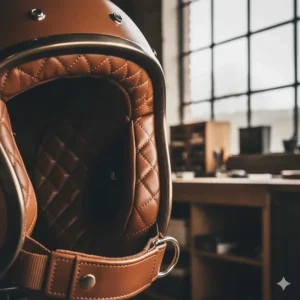
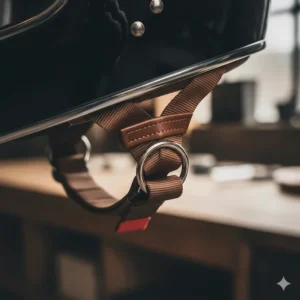
Classic double-D ring closures provide the most authentic look. Modern ratchet buckles work better functionally but lack vintage appeal. Premium retro helmets often feature quilted or leather chin straps rather than modern nylon webbing.
Snap Buttons:
Exposed snap buttons for visor attachment immediately signal vintage design. Modern helmets typically use integrated mounting systems that disappear into the shell. The Bell Custom 500’s 5-snap pattern has become iconic in retro helmet design.
Bubble Shield Compatibility Across Brands
Bubble shields represent the quintessential retro accessory, transforming basic open-face helmets into instantly recognisable vintage machines. However, compatibility varies significantly between brands.
Universal vs Proprietary Systems
Bell Custom 500 5-Snap Pattern:
The industry standard. Bell’s 5-snap configuration (three snaps across the top, two at the temples) has been adopted by numerous manufacturers. This means bubble shields from brands like Biltwell, DMD, and 70s often fit Bell helmets without modification.
Biltwell Snap Positions:
Biltwell uses proprietary snap placement that doesn’t perfectly align with Bell positions. Whilst some shields can be forced to fit, this stresses the mounting points and may compromise safety. Biltwell strongly recommends using Biltwell-specific shields.
HJC Integrated Systems:
Neither the V10 (full-face) nor V31 (open-face with integrated visor) accepts bubble shields in the traditional sense. The V31’s integrated sun visor system eliminates the need for external shields, though some riders miss the classic aesthetic.
Shield Types Explained
Standard Bubble:
Classic half-dome profile extending from forehead to chin. Provides excellent wind protection and that iconic 1960s look. Available in clear, tinted, or mirrored finishes. UK regulations require clear or lightly tinted (transmitting >50% light) for road use.
Flat Shield:
Minimal curve, sits closer to face. More ’70s aesthetic than bubble shields. Offers less wind protection but provides a cleaner, more minimalist look. Popular with custom bike builders.
Flip-Up Visor:
Hinged design allowing quick opening without removal. Practical for urban riding when you need to flip up at traffic lights. Less authentic-looking but more functional for daily use.
UK Legal Requirements
All visors used on UK roads must meet either BS 4110:1979 or ECE Regulation 22.05/22.06. Certified visors display appropriate marks. Tinted visors transmitting less than 50% visible light are illegal for road use and marked “Daylight use only.”
Vintage-Inspired Colorways: Choosing Your Perfect Finish
Colour choice dramatically impacts how your retro helmet appears on your motorcycle. Here’s how to select finishes that enhance rather than clash with your bike’s aesthetics.
Solid Colour Strategies
Gloss Black:
The safe choice that works with absolutely everything. Gloss black helmets pair with any bike colour and won’t show age as quickly as lighter colours. However, they can look slightly bland without interesting graphics or accessories. Works brilliantly with silver or chrome-heavy motorcycles.
Matte Black:
More contemporary than gloss but increasingly popular in retro circles. Matte finishes photograph beautifully and provide a stealthier aesthetic. Maintenance requires special cleaners; standard polish will ruin the finish. Perfect for murdered-out café racers and flat-painted customs.
Cream/Ivory:
Classic vintage colour that screams 1960s motorsport. Cream helmets look stunning on British bikes (Triumph, Norton, BSA) but show dirt readily. Requires regular cleaning to maintain that pristine appearance. Consider pairing with brown leather or tan accessories for cohesive styling.
British Racing Green:
Brilliant choice for UK riders on British motorcycles. Deep, rich green paired with cream or gold pin-striping creates an unmistakably British aesthetic. Works less well with non-British bikes unless the motorcycle shares the colour.
Two-Tone Combinations
Racing Stripes:
Central stripe running front-to-back never goes out of style. Classic combinations include:
- White stripe on black
- Black stripe on cream
- Gold stripe on British Racing Green
- Red/white/blue for Union flag inspiration
Horizontal Splits:
Upper and lower helmet halves in contrasting colours. More ’70s than ’60s but equally valid. Common combinations: black over silver, white over red, cream over brown.
Metallic & Special Finishes
Metalflake:
Properly executed metalflake finishes look absolutely sensational in sunlight. Gold and silver metalflake particularly suit custom bikes and show machines. However, these finishes are expensive (often £100+ premium) and difficult to repair if scratched.
Candy Paint:
Translucent colour over metallic base creates depth impossible with solid colours. Candy apple red, candy blue, and candy gold represent peak custom aesthetics. Again, expensive and difficult to maintain but undeniably eye-catching.
How to Choose the Right Retro Motorcycle Helmet
Selecting the perfect retro helmet involves balancing aesthetics, safety, comfort, and budget. Here’s your systematic approach.
Step 1: Determine Your Primary Use
Daily Commuting:
Prioritise comfort, weight, and practicality. Open-face helmets with integrated sun visors (like the HJC V31) work brilliantly. Consider weather protection – Britain’s unpredictable climate favours helmets that accommodate face shields.
Weekend Riding:
You can emphasise aesthetics more heavily. Ultra-lightweight options like the Biltwell Bonanza become viable. Pair with quality goggles for that authentic café racer experience.
Mixed Use:
Full-face vintage styling (HJC V10) offers the best compromise. You get period aesthetics with maximum protection and weather coverage.
Step 2: Measure Your Head Correctly
Wrap a tape measure around your head approximately 2.5cm above your eyebrows, crossing the widest part of the back of your skull. Note the measurement in centimetres. Compare against manufacturer sizing charts – these vary between brands.
Important: Head shape matters as much as size. Oval heads fit HJC and Bell well. Rounder heads may prefer Shoei or AGV sizing. Try before buying whenever possible, or order from retailers with easy returns.
Step 3: Understand Safety Certifications
ECE 22.06:
Current UK legal requirement for new helmets. All helmets on this list either meet this standard or its predecessor (22.05, still legal to wear). Look for the ECE label on the helmet or chin strap showing “E” followed by a number in a circle.
DOT:
American standard, generally considered less stringent than ECE. DOT-only helmets (like some Biltwell models) require verification of ECE compliance before use on UK roads.
SHARP:
UK government testing programme rating helmets 1-5 stars based on impact performance beyond minimum ECE requirements. Valuable additional information but not a legal requirement.
Step 4: Consider Shell Material
Fibreglass Composite:
Premium option offering excellent impact absorption and longevity. Used in Bell Custom 500, HJC V10, HJC V31. Slightly heavier but worth the weight for improved protection.
Polycarbonate:
Modern thermoplastic offering good protection at lower cost. Used in ViPER RSV19 and budget options. Lighter but may not age as gracefully as fibreglass.
ABS:
Injection-moulded plastic used in Biltwell Bonanza. Durable and cost-effective. Modern ABS formulations perform admirably in testing despite being less prestigious than fibreglass.
Step 5: Factor in Accessories & Comfort
Visors & Shields:
Will you use bubble shields? Ensure compatibility with your chosen helmet. Check local retailers for accessory availability – the coolest helmet is useless if you can’t get replacement parts.
Bluetooth Systems:
Some retro helmets (HJC V10, V31) offer Bluetooth compatibility. Consider whether you need music, GPS, or intercom functionality. Installing aftermarket systems in vintage helmets can be challenging.
Padding & Liners:
Removable, washable liners are essential for UK riding. Our weather means sweaty summer rides and winter condensation. Cheap helmets with fixed liners become unbearably grotty quickly.
Step 6: Set Your Budget Realistically
| Price Range | Expectations | Examples |
|---|---|---|
| Under £80 | Basic protection, decent styling | ViPER RSV19, RHBDDHV |
| £80-£150 | Solid build quality, good features | Bell Custom 500, STTTBD |
| £150-£250 | Premium materials, excellent comfort | HJC V31, Biltwell Bonanza |
| £250+ | Top-tier construction, advanced features | HJC V10, Bell Bullitt |
Remember: expensive doesn’t automatically mean safer. SHARP testing reveals budget helmets often match or exceed premium models in crash protection. Pay for comfort, features, and aesthetics beyond the minimum safety threshold.
Price Range & Value Analysis for UK Riders
Understanding what you’re paying for helps make informed decisions in the retro helmet market.
Budget Segment (Under £100)
Best Value: ViPER RSV19 (£69.95-£89.99)
The ViPER RSV19 represents remarkable value in the budget segment. ECE 22.06 certification, dual visor system, and respectable build quality make it tough to beat at this price. Perfect for new riders testing the waters or experienced riders wanting a spare helmet.
Runner-Up: RHBDDHV (£54.99-£69.99)
Even cheaper whilst maintaining ECE 22.06 certification. The innovative water-resistant visor adds genuine utility. However, the half-shell design offers minimal protection, limiting its appeal for anything beyond urban commuting.
Mid-Range (£100-£200)
Best All-Round: Bell Custom 500 (£79.99-£189.99)
The lower end of this bracket gets you into genuine heritage territory. The Bell Custom 500‘s fibreglass construction, multiple shell sizes, and proven track record justify the investment. This is the sweet spot for most UK riders seeking authentic vintage styling with solid protection.
Premium Alternative: HJC V31 (£189-£249)
At the higher end of mid-range, the V31 offers integrated sun visor convenience and premium interior materials. The advanced fibreglass shell and ECE 22.06 certification provide peace of mind, whilst the suede-and-leather interior feels genuinely special.
Premium Segment (£200+)
Top Choice: HJC V10 (£218-£300)
Full-face protection with vintage aesthetics doesn’t come cheap, but the HJC V10 delivers. Advanced features like emergency cheek pad release, tool-free visor changes, and Bluetooth compatibility justify the premium. The latest ECE 22.06 certification and fibreglass shell ensure maximum safety.
Cost of Ownership Considerations
Replacement Parts:
- Visors: £20-£50
- Bubble shields: £30-£80
- Interior padding: £15-£40
- Chin straps: £10-£25
Maintenance Costs:
Quality retro helmets properly maintained last 5-7 years before requiring replacement. Budget £20-30 annually for cleaning products, visor replacements, and minor repairs. Premium helmets often have better parts availability, potentially extending usable life.
Insurance Value:
Some UK insurance providers offer modest discounts for SHARP 4-5 star helmets. Check your policy – the savings might offset helmet cost over time.
Proper Fitting & Sizing Guide for UK Riders
A helmet can only protect you if it fits correctly. Here’s how to ensure perfect sizing.
The Two-Finger Rule
Place two fingers between your eyebrows and the helmet’s front edge – this gap should be minimal. Next, check chin strap tension: two fingers should fit comfortably but snugly between strap and chin. Finally, attempt to rotate the helmet side-to-side – movement exceeding 2cm indicates poor fit.
Head Shape Categories
Intermediate Oval:
Most common head shape. Length slightly exceeds width. Brands that fit well: HJC, Bell, LS2.
Round Oval:
Width nearly equals length. Better fits: Shoei, AGV, Arai. May struggle with Bell and HJC sizing.
Long Oval:
Length significantly exceeds width. Schuberth and Shark fit well. Most common issue with standard sizing.
Common Fitting Mistakes
Mistake 1: Buying Too Large
New helmets should feel almost uncomfortably tight. Interior padding compresses 15-20% over the first 20 hours of wear. A comfortable new helmet becomes loose and unsafe after break-in.
Mistake 2: Ignoring Pressure Points
Hot spots during initial fitting won’t disappear. Sharp pressure indicates poor head shape match. Try different brands rather than sizing up – a larger helmet won’t eliminate shape mismatch.
Mistake 3: Neglecting Cheek Pad Assessment
Cheeks should be firmly compressed without jaw movement restriction. You should be able to chew comfortably. Many manufacturers offer different cheek pad thicknesses for fine-tuning.
Break-In Period
Quality helmets require 15-20 hours of riding for interior padding to conform to your head shape. Initial tightness is normal and necessary. However, persistent pain or headaches after 5+ rides indicates poor fit – exchange for different size or brand.
UK-Specific Fitting Resources
Motorcycle dealerships across the UK offer professional fitting services. Many J&S Accessories and Sportsbike Shop locations provide expert fitting advice. Worth visiting even if you ultimately purchase online – knowledge gained ensures correct size selection.
Maintenance & Care Tips for Longevity
Proper maintenance extends helmet life whilst ensuring continued protection and comfort.
External Shell Care
Cleaning:
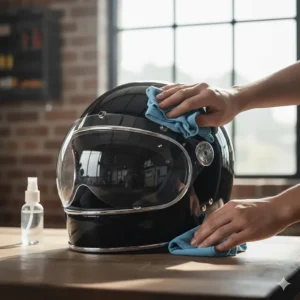
Use warm water with mild soap or dedicated helmet cleaner. Avoid household cleaners containing ammonia, petroleum distillates, or alcohol – these degrade shell materials. Microfibre cloths prevent scratching. For stubborn insect debris, lay wet paper towels over area for 10 minutes to soften before wiping.
Matte Finishes:
Require special matte-specific cleaners. Regular polish ruins the finish permanently. Use dedicated products like Muc-Off Matte Finish Detailer.
Scratches & Chips:
Minor scratches on gloss finishes can be reduced with cutting compound and polish. Deep scratches and chips compromise structural integrity – consider professional assessment or replacement.
Interior Maintenance
Regular Cleaning:
Remove and wash interior padding every 2-3 weeks during regular use. Hand wash in lukewarm water with mild detergent. Air dry completely – never use artificial heat sources which can degrade foam. Allow 24 hours drying time.
Odour Control:
Between deep cleans, spray helmet interior with antibacterial spray designed for motorcycle gear. Ventilate thoroughly after rides to prevent moisture accumulation that breeds bacteria.
Padding Replacement:
Replace cheek pads and interior padding every 18-24 months for optimal fit and hygiene. Most manufacturers sell replacement kits £20-50. Regular replacement maintains proper fit as padding naturally compresses with use.
Visor Care
Scratch Prevention:
Never wipe dry visors – trapped grit causes scratching. Always use water or visor cleaner with soft cloths. Carry microfibre cloth and visor cleaner spray when touring.
Anti-Fog Treatment:
Pinlock inserts (if compatible) provide best fog prevention. Alternatively, apply anti-fog treatment every 5-7 days during winter. Quality products like Nikwax Visor Proof last longer than budget alternatives.
Replacement Schedule:
Replace visors when scratches obstruct vision or coating deteriorates. Budget £20-50 depending on helmet model. Original manufacturer visors fit better than aftermarket alternatives.
Storage Best Practices
Location:
Store in cool, dry place away from direct sunlight. UV exposure degrades shell materials and causes paint fading. Avoid damp garages or sheds – condensation damages interior padding and electronics (if fitted).
Protection:
Use dedicated helmet bag or box. Prevents dust accumulation and accidental damage. Never place heavy objects on helmet – even minor compression can affect shell integrity.
Positioning:
Store on shelf or dedicated helmet holder rather than hanging from chin strap. Strap suspensions stretches over time, affecting retention system performance.
When to Replace
Age:
Replace helmets every 5-7 years regardless of apparent condition. Plastics and adhesives degrade over time even without obvious signs. Check manufacturing date on interior label.
Impact:
Replace immediately after any significant impact, even without visible damage. Internal EPS liner may be compromised. Minor drops from handlebar height typically okay, but when in doubt, replace.
Visible Damage:
Cracks, deep scratches, or loose components indicate replacement time. Don’t compromise safety for aesthetics or economy.
FAQ: Your Retro Motorcycle Helmet Questions Answered
❓ Are retro motorcycle helmets as safe as modern helmets?
❓ Can I legally ride with an open-face helmet in the UK?
❓ What's the difference between DOT and ECE certification?
❓ How should a retro helmet fit properly?
❓ Are expensive retro helmets worth the extra money?
Conclusion: Finding Your Perfect Retro Helmet
Choosing the right retro motorcycle helmet ultimately comes down to balancing your priorities across safety, style, comfort, and budget. The UK market in 2026 offers unprecedented choice, with manufacturers finally understanding that riders needn’t sacrifice protection for aesthetics.
For riders seeking the most authentic vintage experience, the Bell Custom 500 remains unbeatable. Its direct lineage to 1954, fibreglass construction, and extensive accessory ecosystem make it the default choice for purists. Pair it with quality goggles and a bubble shield, and you’ll achieve that timeless café racer aesthetic whilst benefiting from modern ECE certification.
Those prioritising safety without abandoning retro styling should seriously consider the HJC V10. This full-face helmet proves that vintage aesthetics needn’t mean compromised protection. The latest ECE 22.06 certification, emergency release system, and advanced fibreglass construction provide peace of mind, whilst the classic silhouette ensures your Instagram feed remains on point.
Budget-conscious riders will find exceptional value in the ViPER RSV19. At under £90, this open-face helmet punches well above its weight with ECE 22.06 certification, dual visor system, and respectable build quality. It’s proof that you needn’t spend a fortune to look good and stay protected on British roads.
Whatever helmet you choose, remember that proper fit trumps every other consideration. The coolest-looking helmet in your size won’t protect you if it doesn’t fit correctly. Take time to measure accurately, understand your head shape, and don’t hesitate to try multiple brands before committing. The UK’s excellent return policies make this exploration risk-free.
British motorcycling culture has always celebrated individuality and style. Modern retro helmets allow us to embrace our motorcycling heritage whilst benefiting from decades of safety innovation. Whether you’re threading through London traffic on a Royal Enfield or carving Welsh mountain roads on a Triumph, there’s never been a better time to look good whilst staying safe.
Recommended for You
- Best Full Face Helmets Under £200 UK | Expert Reviews 2026
- Best Commuter Motorcycle Helmets UK 2026
- 7 Best Sports Touring Helmets UK 2026
Disclaimer: This article contains affiliate links. If you purchase products through these links, we may earn a small commission at no additional cost to you. Prices shown are approximate and may vary.
✨ Found this helpful? Share it with your mates! 💬🤗
