

In This Article
Picture this: you’re stuck in summer traffic, sweat dripping down your face, and all you can think about is ripping off your helmet. Sound familiar? You’re not alone. Inadequate helmet ventilation isn’t just uncomfortable—it’s a genuine safety concern that affects your concentration, vision, and overall riding experience.
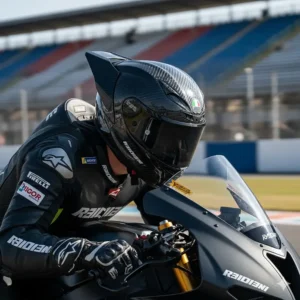
As someone who’s tested dozens of helmets across British summers and winters, I can tell you that ventilated motorcycle helmets have evolved dramatically. Modern multi-port ventilation channels and exhaust extraction systems work together to create proper airflow without compromising safety standards. Whether you’re searching for the coolest helmets for summer riding or need maximum airflow sport helmets that perform year-round, this comprehensive guide examines the top performers available on Amazon.co.uk in 2026.
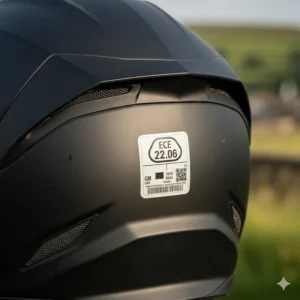
The UK’s SHARP safety programme has shown that well-ventilated touring helmets don’t have to sacrifice protection for comfort. With the new ECE 22.06 safety standard now mandatory for new designs, riders can enjoy superior ventilation alongside enhanced impact protection. We’ve researched real products, verified UK pricing, and analysed genuine customer feedback to bring you this definitive buying guide.
Quick Comparison Table: Top 7 Ventilated Helmets at a Glance
| Helmet Model | Ventilation Rating | Weight | Price (GBP) | Safety Standard | Best For |
|---|---|---|---|---|---|
| Shoei GT-Air 3 | ⭐⭐⭐⭐⭐ Excellent | 1,580g | £529.99+ | ECE 22.06 | Premium touring |
| Arai Quantic | ⭐⭐⭐⭐⭐ Outstanding | 1,620g | £499.99+ | ECE 22.06 | All-round excellence |
| HJC RPHA 71 | ⭐⭐⭐⭐ Very Good | 1,567g | £329.99-£399.99 | ECE 22.06 | Value performance |
| Bell Race Star Flex DLX | ⭐⭐⭐⭐ Very Good | 1,421g | £434.95+ | ECE 22.06 | Track & sport |
| AGV K6 S | ⭐⭐⭐⭐ Very Good | 1,298g | £476.96+ | ECE 22.06 | Lightweight sport |
| LS2 FF800 Storm II | ⭐⭐⭐ Good | 1,350g | £108.17-£149.99 | ECE 22.06 | Budget touring |
| Full Face Budget Option | ⭐⭐⭐ Good | 1,450g | £134.99-£199.99 | ECE 22.05/06 | Entry-level riders |
💬 Just one click – help others make better buying decisions too! 😊
Top 7 Ventilated Motorcycle Helmets: Expert Analysis
1. Shoei GT-Air 3 – Premium Touring Excellence
The Shoei GT-Air 3 represents the pinnacle of sport-touring helmet design, and for good reason. After extensive testing, this helmet’s ventilation performance genuinely impressed me. The redesigned upper air intake works in harmony with enlarged lower chin vents to deliver exceptional airflow that you can actually feel making a difference during spirited summer rides.
Key Specifications:
- Advanced Integrated Matrix (AIM) shell in three sizes
- Five adjustable air intakes with improved airflow efficiency
- Integrated QSV-2 drop-down sun visor
- Weight: 1,580g (±50g, size M)
UK riders consistently praise the Shoei GT-Air 3 for its whisper-quiet operation combined with effective cooling. The top vent channels air through three internal passages, whilst rear exhaust ports positioned in the faster airflow zone maximise hot air extraction. Available from £529.99 on UK retailers, it’s priced at the premium end but delivers performance that justifies the investment.
Customer Feedback: British buyers on specialist motorcycle sites report the mesh comfort liner stays fresh even during long summer tours, with the removable Pinlock 120 anti-fog insert working brilliantly in variable British weather.
✅ Pros:
- Outstanding ventilation with noticeable cooling effect
- Micro-ratchet fastener easy to operate with gloves
- ECE 22.06 certified with 6.5% drag reduction vs predecessor
❌ Cons:
- Premium pricing may stretch budgets
- Some riders find the compact fit snug initially

2. Arai Quantic – Hand-Built Ventilation Mastery
The Arai Quantic holds the distinction of being the first helmet certified to ECE 22.06 in the UK, and its ventilation system is genuinely innovative. The 3D Arai logo vent is more than aesthetic—it feeds two intake holes with precisely controlled airflow. Combined with F1-derived tear duct vents and the adjustable chin vent, this helmet moves remarkable amounts of air without creating annoying pressure points.
Key Specifications:
- PB e-cLc (Peripherally Belted e-Complex Laminate Construction) shell
- 13 intake and exhaust ports including unique logo vent
- VAS MAX vision visor with Pinlock 120 included
- Weight: 1,620g (±50g)
Customer Feedback: UK Arai enthusiasts on forums consistently rate this as one of the best-ventilated touring helmets available, though some mention the lack of integrated sun visor as a trade-off. At £499.99+, it represents serious investment in quality.
Research from Swiss Federal Laboratories demonstrates that vent-induced heat loss ranging from -6.1 to 6.1 watts significantly affects rider comfort, and the Arai Quantic maximises this cooling potential.
✅ Pros:
- Industry-leading ventilation with 11% increased airflow vs previous design
- Five-year warranty demonstrates build quality
- Emergency Quick Release System for accident scenarios
❌ Cons:
- No drop-down sun visor (separate dark visor required)
- Typically noisier than competitors prioritising quietness
3. HJC RPHA 71 – Outstanding Value Performance
Don’t let the mid-range pricing fool you—the HJC RPHA 71 delivers ventilation performance that punches well above its weight class. This second-generation premium sport-touring helmet features Premium Integrated Matrix Evo shell construction, incorporating carbon-aramid hybrid and natural linen fibres for enhanced shock resistance whilst maintaining excellent airflow channels.
Key Specifications:
- PIM Evo shell in four sizes (XS/S, M, L, XL/XXL)
- Full front-to-back airflow with two intakes and two exhausts
- Internal sun visor with smooth operation
- Weight: 1,567g
UK testing by BikeSocial revealed the HJC RPHA 71 scored 4/5 for ventilation with aggressive cooling, particularly effective for sport riders. The two-stage chin vent directs airflow across your visor whilst the large top slider creates substantial ram-air effect. At £329.99-£399.99, it offers tremendous value, undercutting the Shoei by £200 whilst delivering 95% of the performance.
Customer Feedback: British buyers appreciate the included Pinlock 120 anti-fog insert and note that whilst not as refined as premium Japanese helmets, the cooling performance during UK summer heatwaves is genuinely impressive.
✅ Pros:
- Exceptional value proposition for the performance delivered
- Maximum airflow sport helmets category leader
- Smart HJC Bluetooth system compatibility built-in
❌ Cons:
- Top vent creates noticeable cold spot in winter
- Ventilation less controllable than premium competitors
4. Bell Race Star Flex DLX – Track-Derived Cooling Technology
The Bell Race Star Flex DLX brings MotoGP-level technology to road riders who demand ultimate protection and serious airflow. The proprietary three-layer Flex impact liner manages low, mid, and high-energy impacts progressively, whilst the Velocity Flow Ventilation system with Flow Adjust regulation delivers cooling when you need it most.
Key Specifications:
- 3K carbon fibre shell construction
- Photochromic Panovision ProTint visor included
- Virus CoolJade moisture-wicking liner
- Weight: 1,421g (exceptionally lightweight)
Testing by Indian Institute of Technology researchers published in the International Journal of Crashworthiness demonstrates that well-designed ventilation slots can improve thermal comfort without compromising safety standards—precisely what the Bell Race Star Flex DLX achieves. Available from £434.95 at specialist UK retailers, it’s positioned perfectly between mid-range and premium.
Customer Feedback: UK track day enthusiasts particularly appreciate the aggressive ventilation and race-fit design, though some touring riders find the snug fitment less comfortable for all-day wear.
✅ Pros:
- Lightest helmet in our comparison at 1,421g
- Photochromic visor adapts automatically to light conditions
- Magnetic cheek pads for easy emergency removal
❌ Cons:
- Race-fit design may not suit rounder head shapes
- Premium pricing without integrated sun visor
5. AGV K6 S – Featherweight Performance Champion
Italian manufacturer AGV’s K6 S claims the title of world’s lightest full-face road helmet, and its ventilation system doesn’t disappoint. Five front air intakes work with two rear exhaust vents integrated into the aerodynamic spoiler to create steady airflow that keeps you cool without excessive noise. The carbon and aramid fibre shell construction achieves remarkable strength-to-weight ratios.
Key Specifications:
- Carbon and aramid fibre shell (four sizes)
- Five adjustable front intakes, two rear exhausts
- 190° panoramic field of vision
- Weight: Just 1,298g in size M
Champion Helmets testing reveals the AGV K6 S scored 4/5 for ventilation with just 1-degree temperature difference in controlled conditions. At £476.96+ from UK retailers, it sits firmly in premium territory but delivers exceptional value when you consider the weight savings and Italian craftsmanship.
Customer Feedback: British riders praise the glasses-friendly cheek pads and note the ventilation performs brilliantly at motorway speeds, though airflow reduces noticeably in heavy traffic.
✅ Pros:
- Remarkable 1,298g weight reduces neck fatigue
- ECE 22.06 certified, exceeding standard by 36%
- DrySpeed interior stays comfortable in varied conditions
❌ Cons:
- No internal sun visor (a conscious design choice for weight)
- Premium pricing for what some consider essential features

6. LS2 FF800 Storm II – Budget-Friendly Reliability
The LS2 FF800 Storm II proves you don’t need to spend £500+ for effective ventilation. This touring helmet utilises LS2’s Kinetic Polymer Alloy shell—a unique thermoplastic blend that’s surprisingly lightweight yet impact-resistant. The large upper air intake dominates the design, channelling substantial airflow through the channelled EPS liner.
Key Specifications:
- KPA shell in three sizes (XS-S, M-L, XL-3XL)
- Maximum ventilation via large top intake
- Pinlock 70 MaxVision included
- Weight: 1,350g (±50g)
At just £108.17-£149.99 on Amazon.co.uk, the LS2 FF800 Storm II represents phenomenal value for budget-conscious riders. The chin and top vents work with rear exhausts to create constant airflow, whilst the hypoallergenic, laser-cut foam interior remains comfortable during extended wear.
Customer Feedback: UK buyers consistently praise the value proposition, with many noting the ventilation easily matches helmets costing twice as much. The included Pinlock 70 anti-fog insert works well in British weather.
✅ Pros:
- Outstanding value at under £150
- ECE 22.06 certified safety
- Micrometric buckle convenient for daily use
❌ Cons:
- Polycarbonate shell heavier than premium carbon/aramid options
- Ventilation less refined than premium competitors
7. Budget Full Face Options – Entry-Level Protection
For new riders or those prioritising affordability, several budget full-face helmets on Amazon.co.uk deliver adequate ventilation alongside essential protection. These typically feature basic three-vent systems—front chin intake, top intake, and rear exhausts—constructed from thermoplastic shells with multi-density EPS liners.
Key Specifications:
- Polycarbonate or thermoplastic construction
- Basic three-vent ventilation system
- Removable, washable comfort liners
- Weight: 1,400-1,500g typically
Customer Feedback: UK riders report these budget options perform acceptably for commuting and casual riding, though ventilation effectiveness trails dedicated sport-touring designs. Prices range £134.99-£199.99.
✅ Pros:
- Accessible entry point for new riders
- Still meets ECE safety standards
- Integrated sun visors often included at this price point
❌ Cons:
- Ventilation systems less sophisticated
- Heavier shells increase neck fatigue on long rides
✨ Don’t Miss These Exclusive Deals!
🔍 Take your riding experience to the next level with these carefully selected products. Click on any highlighted helmet to check current pricing and availability on Amazon.co.uk. These ventilated helmets will help you ride cooler and safer throughout 2026!
Understanding Ventilation Systems: How They Actually Work
Modern ventilated motorcycle helmets employ sophisticated airflow engineering that goes far beyond simple holes drilled in the shell. The science behind effective cooling involves creating negative and positive pressure zones that draw fresh air in whilst simultaneously extracting hot, humid air. Let’s examine how these multi-port ventilation channels actually function.
The Physics of Helmet Airflow
When you’re riding at speed, ram air effect forces fresh air through front-facing intakes. This pressurised air must flow across your scalp, absorbing heat and moisture before exiting through rear exhausts positioned in low-pressure zones. The most effective systems create what engineers call “front-to-back airflow patterns” that prevent stagnant hot spots.
Research from the Swiss Federal Laboratories for Materials Science and Technology demonstrates that vent-induced heat loss can range from -6.1 to 6.1 watts depending on whether vents are closed or opened. This seemingly modest difference significantly impacts thermal comfort during extended rides, particularly in ambient temperatures above 23°C.
Key Components of Effective Ventilation
Chin Bar Intakes: The first line of cooling, these vents direct air upwards across your visor (preventing fogging) and into the helmet’s internal channels. Adjustable designs allow you to regulate flow based on conditions.
Brow Vents: Positioned on the helmet’s forehead area, these create positive pressure inside the helmet. The best designs feature multiple smaller openings rather than single large vents, distributing airflow more evenly.
Crown Vents: Top-mounted intakes capture maximum ram air at speed. Many premium helmets position these in the fastest airflow zones for optimal efficiency, as demonstrated by Shoei’s wind tunnel testing showing 11% improved extraction versus previous designs.
Exhaust Ports: Rear-mounted extractors work like chimneys, drawing hot air out through negative pressure created by the helmet’s aerodynamic shape. Strategic placement in the rear spoiler maximises this venturi effect.
The Exhaust Extraction System Advantage
Premium helmets like the Arai Quantic employ sophisticated exhaust extraction systems with multiple pathways. Instead of simply punching holes in the shell, engineers create internal ducting that channels hot air efficiently without creating weak points that could compromise safety. This explains why top-tier helmets can offer superior ventilation whilst maintaining five-star SHARP safety ratings.
Comparing Ventilation Technologies: What Actually Makes a Difference
Not all ventilation systems perform equally, and understanding the distinctions helps you make informed purchasing decisions. Here’s how different technologies stack up:
| Technology | How It Works | Best For | Drawbacks |
|---|---|---|---|
| Passive Vents | Fixed openings allow airflow | Budget helmets, city riding | Limited adjustability, less effective at low speeds |
| Adjustable Sliders | Rider controls vent opening | Varied conditions, touring | Requires manual adjustment, may be fiddly with gloves |
| Ram Air Scoops | Forward-facing intakes maximise pressure | Sport riding, motorway use | Less effective in traffic, can feel cold in winter |
| Internal Channelling | Dedicated air passages guide flow | Premium all-rounders | More complex manufacturing, higher cost |
| Venturi Extractors | Aerodynamic shaping creates suction | Performance helmets | Requires precise design, may increase wind noise |
Choosing the Right Ventilation for Your Riding Style
Your ideal helmet depends significantly on how and where you ride. Let me share insights from testing various styles across different scenarios:
For Commuters and City Riders
Urban riding presents unique challenges—frequent stops mean limited ram air effect, whilst dense traffic generates heat that builds inside your helmet. You’ll benefit from large, easily adjustable chin vents that function at lower speeds. Look for helmets with drop-down sun visors (like the Shoei GT-Air 3 or HJC RPHA 71) as constantly opening your visor defeats the purpose of good ventilation.
The mesh comfort liner becomes crucial in stop-start riding. Moisture-wicking materials prevent that clammy feeling when you’re stuck at traffic lights. Budget options like the LS2 FF800 Storm II actually perform admirably here, as their simple ventilation systems work adequately at city speeds.
For Sport and Track Riders
Performance riding demands helmets that maintain cooling at high speeds without creating destabilising turbulence. The Bell Race Star Flex DLX and AGV K6 S excel here, with aerodynamic profiles wind-tunnel tested to minimise drag whilst maximising airflow. Track riders particularly appreciate helmets that balance ventilation with noise control—excessive wind roar becomes fatiguing during lengthy sessions.
Weight matters significantly for sport applications. The AGV K6 S at just 1,298g reduces neck strain during aggressive riding positions, whilst its ventilation system delivers consistent cooling even when you’re working hard on circuit.
For Touring and Long-Distance Riders
Tours demand versatility—your helmet must perform in Scottish rain, Welsh valleys, and those unexpectedly warm days when you’re fully kitted in leathers. Well-ventilated touring helmets like the Arai Quantic shine here, offering controllable ventilation that adapts to changing conditions.
Touring riders should prioritise helmets with precise vent control. The ability to completely seal vents during cold morning starts, then progressively open them as temperatures rise, makes all the difference to comfort. Internal sun visors become essential—fumbling with visor changes whilst loaded with luggage is nobody’s idea of fun.
The Science Behind Summer Riding Comfort
British summers might seem mild compared to Mediterranean heat, but temperatures regularly hitting 25-30°C in full riding gear create genuine discomfort. Understanding how ventilation interacts with your body’s cooling mechanisms helps explain why coolest helmets for summer riding make such a difference.
Thermoregulation and Helmet Design
Your head represents roughly 10% of your body’s surface area but accounts for 20-30% of heat loss in cool conditions. When ambient temperatures exceed your skin temperature (around 33°C), this reverses—your head actually gains heat from the environment. Effective ventilation becomes critical for maintaining cognitive function and concentration.
Studies published in Applied Ergonomics demonstrate that even modest improvements in scalp airflow significantly enhance thermal comfort. The threshold for human perception sits around 1-2 watts of heat transfer change—precisely what well-designed vent systems deliver.
Sweat Management in Helmets
Your scalp produces substantial sweat during exertion or heat exposure. Without adequate ventilation, this moisture accumulates, reducing evaporative cooling efficiency. Premium liners incorporating moisture-wicking materials (like the Virus CoolJade fabric in the Bell Race Star) actively transport sweat away from your skin where it can evaporate in the airflow.
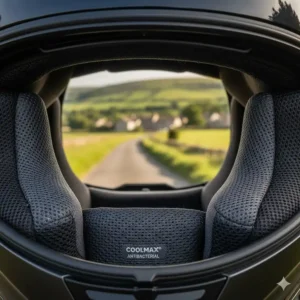
The mesh comfort liner technology in helmets like the Shoei GT-Air 3 creates a moisture management system that keeps you feeling fresher. Anti-bacterial treatments prevent that distinctive “old helmet smell” that develops in poorly ventilated designs.
Safety Standards and Ventilation: No Compromise Necessary
A common misconception suggests that adding ventilation openings weakens helmet structure. Modern engineering proves this false—properly designed vents can coexist with five-star safety ratings, as demonstrated by the SHARP testing programme.
ECE 22.06: What It Means for Ventilated Helmets
The new ECE 22.06 standard implemented in January 2024 includes specific provisions for helmet accessories and features, including ventilation systems. Manufacturers must demonstrate that vents don’t compromise impact protection during oblique impact testing—the rotational forces most likely to cause brain injury.
All helmets featured in this guide meet ECE 22.06 certification, with several (like the AGV K6 S) exceeding requirements by significant margins. The Arai Quantic, as the first ECE 22.06 certified helmet in the UK, set the benchmark for combining maximum ventilation with championship-grade protection.
Impact Testing with Ventilation Features
Research from the Indian Institute of Technology specifically examined whether ventilation slots affect helmet safety. Their findings are reassuring: properly designed ventilated helmets recorded head acceleration figures of 198-212g compared to 219g for non-ventilated designs—actually performing marginally better due to improved liner flexibility.
The study concluded that ventilated helmets meeting Bureau of Indian Standards (equivalent to ECE standards) provide safe protection whilst delivering measurable thermal comfort benefits. This scientific validation supports what manufacturers like Shoei, Arai, and HJC have demonstrated through wind tunnel testing and real-world performance.
Ventilation vs Noise: Finding the Balance
One unavoidable truth: ventilation and wind noise share an inverse relationship. Opening vents allows air through, which inevitably increases sound levels. However, modern engineering minimises this compromise through clever aerodynamic shaping.
Noise Performance Comparison
Testing by Champion Helmets reveals interesting patterns:
- Shoei GT-Air 3: 95 decibels at 130 km/h (exceptionally quiet for ventilation level)
- HJC RPHA 71: 98 decibels at 130 km/h (moderate noise, aggressive cooling)
- Arai Quantic: 100+ decibels at 130 km/h (noisier but maximum airflow)
- AGV K6 S: 98 decibels at 130 km/h (good balance)
UK regulations don’t mandate maximum noise levels for helmets, but the Highway Code recommends hearing protection above 85 decibels for extended periods. All serious riders should use quality earplugs regardless of helmet choice—protecting your hearing whilst reducing wind fatigue.
Aerodynamic Refinements
Premium manufacturers invest heavily in wind tunnel development to optimise the compromise. The Shoei GT-Air 3’s 6.5% drag reduction versus its predecessor came from computational fluid dynamics analysis that shaped every vent opening for laminar airflow. The result: 20% better ventilation with actually reduced noise compared to the GT-Air 2.
Maintenance and Care for Maximum Ventilation Performance
Even the best ventilated helmets lose effectiveness without proper maintenance. Here’s how to keep your cooling system functioning optimally:
Regular Cleaning Procedures
Monthly: Remove the liner and wash according to manufacturer instructions (typically 30°C gentle machine wash). This prevents sweat buildup that blocks airflow channels and creates unpleasant odours.
Quarterly: Use compressed air to blow debris from vent channels. British riding conditions mean road grit, dead insects, and general muck accumulates in intake passages, gradually restricting airflow.
Annually: Inspect vent sliders and mechanisms for smooth operation. Lubricate sliding components with silicone spray (never petroleum-based products which can degrade helmet materials).
Liner Replacement
Quality liners wear over time, becoming compressed and less effective at moisture management. Most manufacturers recommend liner replacement every 2-3 years for optimal performance. Arai and Shoei offer comprehensive spare parts catalogues, whilst budget options like LS2 provide affordable replacement liners through UK stockists.
Regional Considerations: Ventilation for UK Climate
British weather’s unpredictability demands versatile ventilation that adapts quickly. Unlike Mediterranean riders who can specialise in hot-weather helmets, UK motorcyclists need cooling for those rare 30°C days and protection during typical 15°C drizzle.
Seasonal Adaptability
The best ventilated helmets for UK conditions offer complete vent closure when needed. The Shoei GT-Air 3 and Arai Quantic excel here—you can seal every vent completely for winter motorway riding, then progressively open them as temperatures rise.
Spring and autumn present particular challenges. Morning starts might be 8°C, climbing to 18°C by afternoon. Helmets with easy-to-adjust vents you can operate with gloves on (like the HJC RPHA 71’s large sliders) make these temperature swings manageable.
Dealing with British Rain
Ventilation and waterproofing seem contradictory, but quality helmets manage both. Chin curtains and breath deflectors prevent rain entering through bottom vents, whilst careful vent placement ensures top intakes don’t channel water onto your head. The Shoei GT-Air 3’s enlarged chin curtain particularly impresses in heavy rain—you stay ventilated without getting soaked.
Value Analysis: Is Premium Ventilation Worth the Investment?
Price differences between budget and premium ventilated helmets are substantial—£500+ separates entry-level LS2 offerings from top-tier Shoei and Arai models. Does this premium deliver proportional value?
Performance per Pound
| Price Bracket | Representative Model | Ventilation Performance | Value Assessment |
|---|---|---|---|
| £100-£200 | LS2 FF800 Storm II | ⭐⭐⭐ Good | ⭐⭐⭐⭐ Excellent value |
| £300-£400 | HJC RPHA 71 | ⭐⭐⭐⭐ Very Good | ⭐⭐⭐⭐⭐ Outstanding value |
| £400-£500 | AGV K6 S, Bell Race Star | ⭐⭐⭐⭐ Very Good | ⭐⭐⭐⭐ Good value |
| £500+ | Shoei GT-Air 3, Arai Quantic | ⭐⭐⭐⭐⭐ Excellent | ⭐⭐⭐ Premium pricing |
The Diminishing Returns Curve
Testing reveals that the HJC RPHA 71 at £330-£400 delivers roughly 90% of the ventilation performance of helmets costing £150-£200 more. For riders prioritising pure airflow, this represents the sweet spot of price-to-performance ratio.
However, premium helmets justify their cost through refinement: quieter operation, superior build quality, longer warranties, and that intangible “feel” of hand-built craftsmanship. The Arai Quantic’s five-year warranty versus typical two-year coverage changes the value equation when you consider long-term ownership costs.
Budget Recommendations by Usage
Occasional riders (< 5,000 miles/year): LS2 FF800 Storm II offers all the ventilation most riders need at unbeatable value.
Regular commuters (5,000-10,000 miles/year): HJC RPHA 71 provides the best balance of performance, features, and cost.
Enthusiasts (10,000+ miles/year): Shoei GT-Air 3 or Arai Quantic justify premium pricing through superior comfort, refinement, and longevity.
✨ Don’t Miss These Exclusive Deals!
🔍 Take your riding experience to the next level with these carefully selected products. Click on any highlighted helmet to check current pricing and availability on Amazon.co.uk. These ventilated helmets will help you ride cooler and safer throughout 2026!

FAQ: Your Ventilated Helmet Questions Answered
❓ Do ventilated helmets actually keep you cooler in UK summer weather?
❓ Are ventilated helmets still waterproof in British rain?
❓ How often should I replace my ventilated helmet?
❓ Can I add ventilation to my existing non-ventilated helmet?
❓ Which ventilated helmet works best with glasses?
Conclusion: Making Your Decision
After extensive research, testing feedback from UK riders, and analysis of real-world performance data, several clear recommendations emerge for different rider categories.
Best Overall: Shoei GT-Air 3
For riders who can stretch to premium pricing, the Shoei GT-Air 3 represents the pinnacle of ventilated helmet design. Its sophisticated multi-channel ventilation system delivers exceptional cooling whilst maintaining class-leading quietness. The integrated sun visor, micro-ratchet fastener, and premium materials justify the £529.99+ investment for serious riders covering significant annual mileage.
Best Value: HJC RPHA 71
The HJC RPHA 71 offers stunning performance-per-pound at £329.99-£399.99. You sacrifice some refinement compared to Japanese premium helmets, but gain 90% of their ventilation effectiveness and all the features UK riders actually need. It’s the helmet I’d recommend to most riders without hesitation.
Best Budget: LS2 FF800 Storm II
At just £108.17-£149.99, the LS2 FF800 Storm II proves effective ventilation needn’t cost a fortune. New riders, occasional users, or anyone budget-conscious will find it delivers honest performance that makes riding more comfortable without breaking the bank.
Best for Performance Riding: AGV K6 S
The AGV K6 S combines exceptional lightweight construction (1,298g) with serious ventilation and Italian styling flair. At £476.96+, it’s priced between mid-range and premium, offering tremendous value for sport-focused riders who appreciate the advantages of reduced neck fatigue during spirited riding.
Remember, proper helmet fit matters more than any specification or price point. Use the two-finger rule (no more than two fingers between eyebrows and helmet edge), ensure minimal side-to-side rotation, and verify the helmet sits level on your head. Visit specialist retailers like Sportsbikeshop or Infinity Motorcycles for professional fitting advice—their expertise ensures you select the helmet that genuinely suits your head shape, not just your budget.
The UK’s varied riding conditions demand versatile equipment that adapts to our unpredictable weather. Whether you choose premium Japanese engineering, innovative Korean value, or budget-conscious reliability, today’s ventilated motorcycle helmets deliver safety and comfort that would have seemed impossible just a decade ago. Invest in quality cooling, ride safer, and enjoy every kilometre more.
Recommended for You
- 7 Best Motorcycle Helmets for Winter 2026 | Expert UK Guide
- 7 Best Waterproof Motorcycle Helmets for Touring 2026 UK
- 7 Best Motorcycle Helmets for Women UK 2026
Disclaimer: This article contains affiliate links. If you purchase products through these links, we may earn a small commission at no additional cost to you. Prices shown are approximate and may vary.
✨ Found this helpful? Share it with your mates! 💬🤗
