In This Article
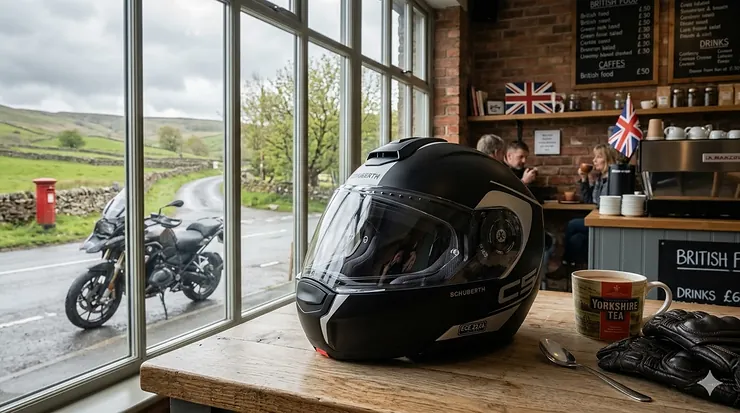
ECE 22.06 modular helmets represent the pinnacle of motorcycle head protection in 2026, combining cutting-edge safety standards with the unmatched versatility of flip-up functionality. If you’re shopping for a modular helmet in the UK this year, understanding the ECE 22.06 certification isn’t just helpful—it’s essential to making an informed decision that could save your life.
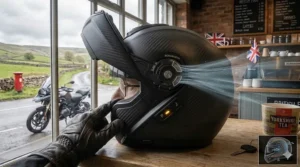
The transition from ECE 22.05 to ECE 22.06 marks the most significant advancement in helmet safety regulations in over two decades. These new standards introduced rigorous rotational impact testing, expanded impact zones (from 6 to 18 test points), and stricter requirements specifically for modular helmets. For flip-front designs, the standard now mandates testing in both open and closed positions, ensuring your helmet provides genuine protection regardless of configuration.
What sets ECE 22.06 modular helmets apart is their P/J dual homologation. The “P” certification confirms the helmet offers full-face protection when closed, whilst the “J” certification proves it’s safe to ride with the chin bar raised. This dual functionality means riders can confidently switch between configurations depending on riding conditions, comfort, or weather, knowing the helmet has been safety-tested for both setups. Whether you’re commuting through London traffic or touring the Scottish Highlands, these helmets adapt to your needs without compromising safety.
In this comprehensive guide, I’ll walk you through the top seven ECE 22.06 modular helmets available on Amazon.co.uk and other UK retailers in 2026, breaking down their features, real-world performance, and value for money. From budget-conscious options starting around £240 to premium carbon fibre designs exceeding £600, you’ll discover which helmet delivers the best chin bar locking mechanism, ventilation, and commuter-friendly features for your specific riding style.
Quick Comparison Table
| Helmet Model | Shell Material | Weight | Price Range (GBP) | P/J Certified | Key Feature |
|---|---|---|---|---|---|
| HJC RPHA 91 | Premium Integrated Matrix EVO | ~1,450g | £450-£550 | ✓ | Lightest premium option |
| Shoei Neotec 3 | AIM Fibre (Advanced Integrated Matrix) | ~1,650g | £589-£679 | ✓ | Superior noise reduction |
| LS2 Advant X | High Performance Fiberglass Composite | ~1,470g | £299-£399 | ✓ | Best value for money |
| AGV Tourmodular | Carbon-Aramid-Glass Fibre | ~1,600g | £449-£529 | ✓ | Excellent chin bar mechanism |
| AGV Street Modular | Thermoplastic | ~1,863g | £239-£279 | ✓ | Budget champion |
| Schuberth C5 | Fibreglass-Organic Fibre | ~1,680g | £519-£599 | ✓ | Premium comfort |
| Nexx X.LifeTour | Carbon-Fibre-Glass | ~1,700g | £359-£429 | ✓ | Excellent ventilation |
💬 Just one click – help others make better buying decisions too!😊
✨ Don’t Miss These Exclusive Deals!
🔍 Take your motorcycle safety to the next level with these carefully selected products. Click on any highlighted item to check current pricing and availability on Amazon.co.uk. These tools will help you create authentic protection your family will trust!
Top 7 ECE 22.06 Modular Helmets: Expert Analysis
1. HJC RPHA 91 – Premium Performance Champion
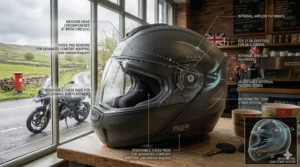
The HJC RPHA 91 represents HJC’s flagship achievement in modular helmet engineering, delivering professional-grade protection in an impressively lightweight package. Built with Premium Integrated Matrix EVO (P.I.M. EVO) shell technology, this helmet blends carbon-aramid, carbon fibre, glass fibre, and natural linen fibres to achieve exceptional shock resistance whilst keeping weight to a minimum.
Key Specifications:
- Shell: Premium Integrated Matrix EVO (P.I.M. EVO)
- Weight: Approximately 1,450g
- ECE 22.06 P/J dual homologation certified
UK riders particularly appreciate the distortion-free HJ-37 face shield and anti-fog coated HJ-V17 sun visor, which provide enhanced visibility in Britain’s unpredictable weather conditions. The Advanced Channeling Ventilation System (ACS) features multiple intake and exhaust vents that keep airflow consistent even during extended motorway rides.
What genuinely sets the RPHA 91 apart is its hidden chin bar locking system. Unlike traditional modular mechanisms that create pressure points, this design allows smooth contact with reduced cheek pressure. The two-way pivot chin bar allows the helmet to be more compact while open, reducing wind noise and air drag significantly. UK commuters who frequently stop at traffic lights will find the mechanism intuitive and secure.
Customer Feedback: British buyers consistently praise the RPHA 91’s comfort during long rides. One Scottish touring rider noted the helmet remained comfortable during an 8-hour ride to the Highlands, with minimal neck fatigue despite the distance. The Smart HJC 21B and 50B Bluetooth compatibility receives particular appreciation from commuters wanting integrated communication.
Pros:
✅ Exceptionally lightweight for a modular design
✅ Superior aerodynamics reduce buffeting at motorway speeds
✅ Excellent visor anti-fog performance in UK weather
Cons:
❌ Premium pricing (£450-£550)
❌ Limited colour options in some UK retailers
Price: £450-£550
Available: Moto Central, Helmet City, SportsBikeShop
2. Shoei Neotec 3 – The Gold Standard
The Shoei Neotec 3 continues Shoei’s legacy of producing helmets that combine Japanese precision engineering with real-world practicality. This third-generation modular helmet incorporates feedback from thousands of touring riders whilst introducing critical updates that address the ECE 22.06 requirements.
Key Specifications:
- Shell: AIM (Advanced Integrated Matrix) fibre and organic fibre construction
- Weight: Approximately 1,650g
- Dual-density EPS liner with enhanced impact protection
The helmet features a centre locking system that significantly reduces wind infiltration, addressing one of the primary complaints about earlier modular designs. The CNS-3C visor incorporates mist-resistant coating as standard, crucial for UK riders battling morning fog and drizzle.
The Neotec 3’s QSV-2 sun visor extends 5mm longer than its predecessor, providing superior coverage against low-angle sun glare—particularly valuable during autumn and spring rides when the sun sits lower on the horizon. British commuters especially appreciate this feature during evening rush hour.
The 360° pivot locking system, crafted from stainless steel, ensures the chin bar remains secure in both open and closed positions. The mechanism operates smoothly even with heavy gloves, essential for UK riders dealing with cold weather gear.
Customer Feedback: UK owners consistently rank the Neotec 3 amongst the quietest modular helmets available. Several British motorcycle instructors have adopted it as their go-to helmet, citing all-day comfort during extended training sessions. The noise-isolating cheek pads effectively block wind noise without feeling claustrophobic.
Pros:
✅ Industry-leading noise reduction for motorway comfort
✅ Seamless Sena SRL communication system compatibility
✅ Exceptional build quality with 5-year warranty
Cons:
❌ Higher price point (£589-£679)
❌ Heavier than carbon-shell competitors
Price: £589-£679
Available: J&S Accessories, SportsBikeShop, Triumph Direct
3. LS2 Advant X – Outstanding Value Leader
The LS2 Advant X delivers premium features at a mid-range price point, making it the standout value proposition for UK riders seeking ECE 22.06 protection without breaking the bank. This helmet’s unique 180-degree modular system allows the chin bar to rotate completely to the rear of the helmet, fundamentally changing the aerodynamic profile when open.
Key Specifications:
- Shell: High Performance Fiberglass Composite (HPFC)
- Weight: Approximately 1,470g
- Advanced Rotational Energy Management (AREM) technology
The Advant X meets ECE 22.06 rotational energy management criteria using LS2’s proprietary AREM technology, testing at multiple impact speeds and angles. Unlike traditional flip-ups where the raised chin bar acts like a sail, the Advant X’s rear-rotation design dramatically reduces wind drag during urban riding.
UK riding instructors have torture-tested this helmet through 20,000+ miles of daily use. One British instructor noted that despite arthritis in his neck, the Advant X doesn’t feel heavy during extended wear, and the reduced drag when riding with the chin bar open makes a significant difference.
The helmet includes a Pinlock MaxVision 120 anti-fog insert—the highest specification available—crucial for Britain’s damp climate. The integrated drop-down sunshield works brilliantly during summer rides with the visor raised and chin bar open, providing versatile sun protection.
Customer Feedback: British buyers particularly value the helmet’s versatility for varied UK riding conditions. The composite fibre shell construction maintains excellent impact protection whilst keeping weight reasonable. Some users note the visor mechanism squeaks slightly when operating, though this doesn’t affect functionality.
Pros:
✅ Exceptional value at £299-£399 price point
✅ Unique 180° chin bar reduces drag when open
✅ Pinlock MaxVision 120 included for superior anti-fog
Cons:
❌ Visor mechanism can develop slight squeak
❌ Chin bar presses on visor seal when fully open
Price: £299-£399
Available: SportsBikeShop, Bennett’s, various UK retailers
4. AGV Tourmodular – Italian Sophistication
The AGV Tourmodular represents AGV’s premium entry into the touring modular market, combining Italian design flair with advanced safety engineering. British reviewers consistently praise the helmet’s superb chin locking mechanism and great sunshield coverage, alongside AGV’s excellent UK customer support network.
Key Specifications:
- Shell: Carbon-Aramid-Glass Fibre composite
- Weight: Approximately 1,600g
- Multi-density EPS with optimised energy absorption
The Tourmodular’s chin bar mechanism represents engineering excellence. The locking system engages smoothly and holds securely without requiring excessive force, making it genuinely practical for daily use. UK commuters appreciate the ability to flip open the chin bar at traffic lights without fumbling with stiff mechanisms.
AGV’s attention to detail shines through in features like the wide-aperture anti-scratch visor that provides excellent peripheral vision—crucial for navigating British roundabouts and busy urban junctions. The internal sun visor offers precise adjustment and doesn’t rattle or drop unexpectedly.
Customer Feedback: UK touring riders highlight the helmet’s comfort during extended rides across varied terrain. The ventilation system performs admirably in British summers without creating excessive wind noise. Several owners note the helmet’s premium feel justifies its price point, with solid construction quality throughout.
Pros:
✅ Excellent chin bar locking mechanism
✅ Superior sunshield coverage and operation
✅ Strong UK dealer network for support
Cons:
❌ Difficult to fit aftermarket intercom systems
❌ Premium pricing (£449-£529)
Price: £449-£529
Available: Moto Central, SportsBikeShop, AGV UK dealers
5. AGV Street Modular – Budget Champion
The AGV Street Modular fills a crucial niche in the UK market: a genuinely affordable ECE 22.06 modular helmet that doesn’t sacrifice essential safety features. Starting at £239 for plain black or white, the Street Modular sits at the cheaper end of the market for flip-fronts whilst maintaining AGV’s reputation for solid chin bar construction.
Key Specifications:
- Shell: Thermoplastic construction
- Weight: Approximately 1,863g
- ECE 22.06 P/J certified with Pinlock MaxVision 70 included
Whilst the thermoplastic shell adds weight compared to composite rivals, AGV’s Extreme Safety design protocol ensures the helmet exceeds basic ECE 22.06 requirements. The P/J homologation means British riders can legally use this helmet with the chin bar open—perfect for urban commuting and short trips.
The helmet includes a Pinlock MaxVision 70 anti-fog insert, providing mid-level fog resistance that handles typical British weather adequately. The visor features a smooth five-stage ratchet mechanism that operates easily with one hand, essential when wearing winter gloves.
Customer Feedback: UK riders appreciate the Street Modular’s straightforward functionality and competitive pricing. Some note the chin bar release catch can feel slightly awkward initially, though most adapt quickly. The helmet’s anti-fog performance receives consistent praise for handling British drizzle effectively.
Pros:
✅ Excellent value for ECE 22.06 certification (£239-£279)
✅ Solid AGV build quality at budget price
✅ Effective anti-fog Pinlock included
Cons:
❌ Heavier than fibre-shell competitors
❌ Chin bar release requires familiarisation
Price: £239-£279
Available: SportsBikeShop, BDLA Motorbikes, UK AGV dealers
6. Schuberth C5 – German Precision Engineering
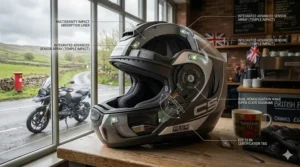
The Schuberth C5 exemplifies German engineering philosophy: meticulous attention to detail, premium materials, and uncompromising quality control. British reviewers particularly appreciate the revised visor mechanism that addresses issues from earlier Schuberth modular helmets, making the C5 one of their favourite flip-front options.
Key Specifications:
- Shell: Fibreglass and organic fibre layered construction
- Weight: Approximately 1,680g
- Dual-density EPS liner with advanced impact protection
The C5’s integrated spoiler and wind-tunnel-engineered aerodynamics provide exceptional stability at motorway speeds—crucial for British riders frequently using dual carriageways and motorways. The visor system incorporates both mist-resistant properties and optimal colour fidelity, ensuring traffic light colours remain clearly distinguishable.
Schuberth’s attention to comfort shows in details like the 3D centre pad and multiple cheek pad thickness options (31mm, 35mm, 39mm). This adjustability helps achieve proper fit—essential given that comfort determines whether you’ll actually wear the helmet on every ride.
Customer Feedback: UK owners consistently highlight the C5’s premium feel and finish. The helmet’s noise reduction impresses even riders accustomed to premium brands. Several British touring riders note the C5 remains comfortable during full-day rides without creating pressure points.
Pros:
✅ Exceptional noise reduction and aerodynamics
✅ Premium build quality with excellent finish
✅ Multiple cheek pad options for custom fit
Cons:
❌ Premium pricing (£519-£599)
❌ Limited colour options in UK market
Price: £519-£599
Available: SportsBikeShop, GetGeared, Schuberth UK dealers
7. Nexx X.LifeTour – Ventilation Excellence
The Nexx X.LifeTour brings Portuguese design innovation to the UK modular helmet market, offering impressive features at a competitive price point. British testers praise the helmet’s very good venting and great sunshield, noting that whilst the chin bar could lock more firmly, the overall package delivers impressive value at £359.99.
Key Specifications:
- Shell: Carbon-Fibre-Glass composite construction
- Weight: Approximately 1,700g
- ECE 22.06 P/J dual homologation certified
The X.LifeTour’s ventilation system stands out as particularly effective for UK summer riding. Multiple intake and exhaust vents create consistent airflow that manages heat build-up without generating excessive wind noise—a difficult balance that Nexx achieves admirably.
The panoramic visor provides excellent visibility, crucial for navigating Britain’s complex road networks and busy junctions. The integrated sun visor offers superior coverage, particularly valuable during low-angle sun conditions that plague British riders during morning and evening commutes.
Customer Feedback: UK riders appreciate the X.LifeTour’s ventilation performance during warmer months. Some note the helmet runs slightly heavy compared to premium carbon options, though the weight distribution prevents neck fatigue. The chin bar locking mechanism, whilst functional, doesn’t feel quite as positive as premium competitors.
Pros:
✅ Excellent ventilation for UK summer riding
✅ Great value at £359-£429 price point
✅ Superior sunshield coverage
Cons:
❌ Chin bar locking could be firmer
❌ Slightly heavier than premium carbon shells
Price: £359-£429
Available: SportsBikeShop, UK motorcycle retailers
Understanding ECE 22.06: What British Riders Need to Know
The ECE 22.06 standard represents a quantum leap forward in motorcycle helmet safety certification, fundamentally changing how helmets are tested and approved for European roads. After 20 years with the ECE 22.05 standard, the new regulations introduce comprehensive testing that better reflects real-world crash scenarios British riders actually face.
What Changed from 22.05 to 22.06?
The transition to ECE 22.06 introduced several critical improvements specifically relevant to UK riders:
Expanded Impact Testing: Test points increased from 6 to 18 locations across the helmet surface, providing comprehensive assessment of impact absorption across the entire shell. This matters because real-world crashes rarely involve perfectly centred impacts—British roads with their roundabouts, junctions, and variable surfaces create diverse collision angles.
Rotational Force Testing: Perhaps the most significant advancement, ECE 22.06 now includes oblique impact testing that measures rotational acceleration. Research shows angled impacts causing brain rotation can cause serious injuries even without significant impact velocity. Given Britain’s mix of urban junctions and rural bends, this testing better represents actual crash dynamics.
Modular Helmet Requirements: The new standard specifically addresses flip-up helmets, testing them in both open and closed positions. For UK commuters who frequently use the flip-up function in urban traffic, this dual testing provides crucial confidence that protection remains consistent regardless of chin bar position.
Accessory Integration Testing: ECE 22.06 mandates testing helmets with their official accessories fitted—including sun visors, communication systems, and any OEM-approved additions. This ensures that Bluetooth systems and other accessories don’t compromise the helmet’s protective capabilities, critical for UK riders who commonly use integrated communications during touring.
P/J Dual Homologation Explained
For modular helmets, the P/J certification represents the gold standard of versatility and safety. Understanding what these letters mean helps UK riders make informed purchasing decisions:
“P” Certification (Protective): This confirms the helmet provides full-face protection when the chin bar is locked in the closed position, offering the same level of impact resistance and safety as a standard full-face helmet. British riders using motorways and A-roads need this confirmation that their modular helmet offers genuine protection at speed.
“J” Certification (Jet): This verifies the helmet is safe to wear with the chin bar in the raised or open position, offering the protection of an open-face helmet. The chin bar must lock securely when open to prevent accidental closure. For UK riders navigating congested urban traffic or stopping frequently, this legal approval for open-chin-bar riding provides valuable flexibility.
Why P/J Matters in the UK: Britain’s varied riding conditions—from motorway commutes to urban stop-start traffic to rural touring—make the versatility of P/J helmets particularly valuable. Being able to legally ride in both configurations means you can raise the chin guard during low-speed urban routes and close it when speed increases, or open the helmet to reduce heat sensation but close it again in case of sudden rain.
UK-Specific Legal Considerations
In the UK, all motorcycle helmets sold must meet British Standard BS 6658:1985 and carry the BSI Kitemark, OR display a mark equivalent to ECE 22.05 or 22.06. From January 2024, new helmets sold in the UK must carry ECE 22.06 certification, though riders can continue using their existing ECE 22.05 helmets legally.
For modular helmets specifically, P/J certification isn’t legally required in the UK—you can ride with a helmet certified only for full-face use. However, riding with the chin bar open on a non-J-certified helmet technically means you’re riding without proper head protection, potentially invalidating insurance claims after an accident.
Post-Brexit Considerations: Following Brexit, UK helmet regulations remain aligned with ECE standards. British retailers stock ECE 22.06 certified helmets, and these certifications remain valid for UK road use. Some helmets also carry UKCA marking alongside ECE certification, providing additional confirmation of UK compliance.
How to Choose Your ECE 22.06 Modular Helmet
Selecting the right modular helmet involves balancing multiple factors specific to your riding style, budget, and physical requirements. Here’s your step-by-step guide to making the best choice for UK conditions:
1. Determine Your Budget Range
ECE 22.06 modular helmets in the UK span a wide price spectrum:
- Budget Range (£200-£300): Options like the AGV Street Modular provide genuine ECE 22.06 protection with essential features. These helmets typically use thermoplastic shells, adding weight but maintaining safety standards. Perfect for occasional riders or those starting out.
- Mid-Range (£300-£450): The sweet spot for most UK riders. Helmets like the LS2 Advant X and Nexx X.LifeTour offer composite shells, advanced ventilation, and premium features without premium pricing. Excellent for regular commuters and weekend tourers.
- Premium Range (£450+): The Shoei Neotec 3, HJC RPHA 91, and Schuberth C5 deliver cutting-edge materials, exceptional comfort, and superior noise reduction. Worth considering if you ride daily or cover significant mileage annually.
2. Prioritise Chin Bar Mechanism Quality
The chin bar mechanism represents the modular helmet’s defining feature. Test these aspects before purchasing:
Locking Security: The mechanism should engage positively without play or rattling. Look for systems where the chin bar locks securely in both open and closed positions, preventing accidental movement during riding. British riders frequently use the flip-up function, making reliable locking essential.
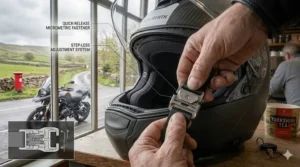
Operation Smoothness: You should be able to operate the release button easily whilst wearing winter gloves—crucial for UK weather conditions. Stiff or fiddly mechanisms become frustrating during daily use.
Open Position Stability: When raised, the chin bar shouldn’t bounce or vibrate. Premium helmets like the AGV Tourmodular excel here, whilst budget options may show slight movement.
3. Assess Ventilation for UK Climate
Britain’s variable weather demands versatile ventilation systems:
Adjustable Intake Vents: Look for multiple intake positions that you can close completely during cold, wet weather or open fully for summer riding. The Nexx X.LifeTour and LS2 Advant X excel in this area.
Effective Exhaust Ports: Rear exhaust vents should actively pull warm, moist air out without creating excessive noise. This prevents visor fogging—critical during British winters.
Chin Bar Venting: Many modular helmets include vents in the chin bar itself. These can be particularly effective but should be closeable for motorway riding to reduce wind noise.
4. Verify Sun Visor Functionality
Internal sun visors prove invaluable for UK riding conditions:
Coverage Area: The visor should extend low enough to block low-angle sun—common during British autumn, winter, and spring when the sun sits closer to the horizon. The Shoei Neotec 3’s extended QSV-2 visor excels here.
Smooth Operation: The deployment mechanism should work smoothly with gloves on. Some helmets use sliders, others buttons—test which you prefer before purchasing.
Optical Clarity: ECE 22.06 requires improved colour fidelity in sun visors, ensuring traffic light colours are recognised more clearly—crucial for safe British urban riding.
5. Consider Weight and Fit
Modular helmets inherently weigh more than full-face designs due to additional mechanisms. However, weight alone doesn’t determine comfort:
Weight Distribution: A heavier helmet with excellent weight distribution (like the LS2 Advant X) often feels more comfortable than a lighter helmet with poor balance.
Shell Sizes: Premium manufacturers offer multiple shell sizes. The Shoei Neotec 3 comes in three shell sizes (XS-M, L, XL-XXL), ensuring the helmet’s physical dimensions match your head size, not just the padding.
Cheek Pad Options: Helmets offering multiple cheek pad thicknesses (like the Schuberth C5) allow fine-tuning for perfect fit—essential because comfort determines whether you’ll wear the helmet every time you ride.
6. Evaluate Noise Levels
Noise reduction matters for both comfort and long-term hearing health:
Wind Noise Sealing: Premium helmets like the Shoei Neotec 3 and Schuberth C5 incorporate advanced sealing around the visor and neck roll to minimise wind noise at motorway speeds.
Aerodynamic Design: Look for features like the HJC RPHA 91’s 3D-engineered low-noise interior that focuses on reducing road noise significantly.
Ventilation vs Noise Trade-off: More ventilation typically means more wind noise. The best helmets balance airflow with acoustic comfort.
7. Check Bluetooth Compatibility
Many UK riders use Bluetooth communication systems:
Integrated Systems: Some helmets (like the Shoei Neotec 3 with Sena SRL) offer purpose-designed integrated systems that maintain the helmet’s aerodynamic profile.
Universal Compatibility: Most modular helmets accommodate aftermarket systems. Check that speaker pockets are appropriately positioned and don’t interfere with fit.
Future-Proofing: Helmets like the HJC RPHA 91 offer compatibility with second-generation Smart HJC Bluetooth systems, ensuring you can upgrade communication technology without replacing the helmet.
ECE 22.06 vs. Other Safety Standards
Understanding how ECE 22.06 compares to other international helmet certifications helps UK riders evaluate imported helmets and understand overall safety performance:
ECE 22.06 vs. DOT (FMVSS 218)
DOT certification is mandatory in the United States for road-legal helmets and involves impact testing, but less strict standards than ECE 22.06. Key differences:
Testing Philosophy: DOT relies on manufacturer self-certification with post-market checking, whilst ECE requires independent laboratory testing before helmets reach market. For UK riders, this makes ECE certification inherently more trustworthy.
Test Coverage: ECE 22.06 tests 18 impact points at varied speeds; DOT tests fewer locations at consistent speeds. ECE better represents real-world crash scenarios on British roads.
Rotational Testing: ECE 22.06 includes rotational impact testing; DOT doesn’t. Given research showing rotational forces cause significant brain injuries, ECE provides more comprehensive protection assessment.
Helmet Features: ECE explicitly includes visor strength, abrasion resistance, buckle testing, and chin strap requirements. These additional tests ensure overall helmet quality beyond pure impact protection.
UK Relevance: Many helmets carry both certifications. If purchasing an imported helmet, ensure it carries at minimum ECE 22.06 marking for UK legal compliance.
ECE 22.06 vs. Snell M2025
Snell certification represents voluntary premium testing beyond government requirements:
Test Rigour: Snell aims at higher energy impacts and severe crash protection, conducting impact tests on six different anvils. This makes Snell-certified helmets particularly suitable for track use.
Shell Rigidity: Snell testing traditionally favours stiffer shells optimised for high-energy impacts. ECE 22.06 broadens the test speed range to include lower-velocity impacts, recognising that extremely rigid shells may perform worse in common, lower-speed crashes.
Availability: Few modular helmets achieve Snell certification due to the inherent mechanical complexity of flip-up designs. Most Snell-certified helmets are full-face sport designs.
UK Application: Snell certification isn’t legally required in the UK. However, helmets carrying both ECE 22.06 and Snell offer assured premium protection for riders wanting maximum safety margins.
ECE 22.06 vs. FIM Racing Homologation
FIM certification targets professional racing rather than road use:
Test Focus: FIM includes oblique impact testing and penetration resistance beyond ECE requirements. FIM testing involves three different impact tests mixing UN ECE testing points with additional points on a flat anvil.
Practicality: FIM-certified helmets prioritise maximum impact protection over comfort features like ventilation or noise reduction. This makes them less suitable for daily UK commuting.
Modular Helmets: FIM certification doesn’t apply to modular helmets—the racing standard focuses on full-face designs only.
UK Relevance: Unless you’re participating in FIM-sanctioned racing, ECE 22.06 provides more appropriate protection for road riding conditions.
SHARP Testing (UK-Specific)
The UK’s SHARP (Safety Helmet Assessment and Rating Programme) provides additional consumer information:
Independent Testing: SHARP is an independent UK testing system run by the Department for Transport that rates helmets from 1 to 5 stars, testing beyond ECE 22.06 requirements including oblique impact tests.
Real-World Value: SHARP testing uses helmets purchased from retailers (not manufacturer samples), providing more realistic performance assessment. The star ratings help UK riders compare helmet safety objectively.
Modular Challenges: SHARP tests fewer modular helmets than full-face designs. When SHARP ratings exist for modular helmets, they provide valuable comparative safety data.
Using SHARP Ratings: A 4 or 5-star SHARP rating alongside ECE 22.06 certification confirms exceptional protection. However, many excellent helmets haven’t undergone SHARP testing—absence of a rating doesn’t indicate inferior safety.
Maintenance and Care for Modular Helmets
Proper maintenance extends your helmet’s lifespan whilst ensuring it continues providing optimal protection. ECE 22.06 modular helmets require specific care due to their mechanical complexity:
Daily Cleaning Routine
After Every Ride:
- Wipe the visor with a microfibre cloth to remove road debris and insects. Never use paper towels or rough materials that can scratch anti-scratch coatings.
- Check the chin bar mechanism for debris or grit. British roads deposit significant amounts of road dirt that can affect mechanical operation.
- Leave the helmet in a well-ventilated area to allow interior moisture to evaporate. Never store in sealed bags whilst damp.
Weekly Deep Clean:
- Remove the liner and cheek pads (all ECE 22.06 modular helmets feature removable liners). Hand wash in lukewarm water with mild soap.
- Clean the shell exterior with purpose-made helmet cleaner or mild soap solution. Avoid household cleaners that can damage paint or degrade shell materials.
- Clean the sun visor deployment mechanism, ensuring smooth operation. Use compressed air to remove accumulated dust.
Visor and Pinlock Maintenance
Visor Care:
- ECE 22.06 requires visors to withstand impacts from steel test bullets travelling at 60 metres per second without bursting. However, scratched visors reduce optical clarity and should be replaced.
- Replace visors every 12-18 months or immediately if significantly scratched. British weather accelerates wear due to frequent temperature changes causing expansion/contraction.
- Check visor locking mechanisms regularly. Loose visors can pop open unexpectedly at speed—dangerous on British motorways.
Pinlock Maintenance:
- Remove and clean your Pinlock insert monthly using only water and mild soap. Chemical cleaners can damage the anti-fog coating.
- Replace Pinlock inserts annually. British climate (high humidity, frequent temperature changes) degrades anti-fog performance faster than drier climates.
- Ensure the Pinlock sits perfectly flat against the visor. Air pockets reduce anti-fog effectiveness and create optical distortion.
Chin Bar Mechanism Care
The chin bar mechanism represents your modular helmet’s critical component requiring specific attention:
Lubrication:
- Apply PTFE-based lubricant (never oil-based) to pivot points every 3-4 months. British weather accelerates mechanical wear through temperature fluctuation and moisture.
- Operate the mechanism through its full range after lubricating, ensuring smooth movement without sticky spots.
Safety Checks:
- Test the locking mechanism before every ride. The chin bar should engage positively with no play or movement when locked.
- Listen for unusual sounds (grinding, clicking) that might indicate worn components or trapped debris.
- If the mechanism becomes stiff or difficult to operate, have it professionally inspected. Forcing a stiff mechanism can damage components.
Storage Best Practices
Optimal Storage Conditions:
- Store in a cool, dry place away from direct sunlight. UV degradation affects shell materials and paint finishes.
- Never hang your helmet from the chin bar—this stresses the mechanism and pivot points over time.
- Use a helmet bag for dust protection, but ensure adequate ventilation to prevent moisture build-up.
Temperature Considerations:
- ECE 22.06 requires helmets to maintain protective properties at minus 20 degrees Celsius. However, extreme temperature cycling (garage to heated room) accelerates material degradation.
- Avoid leaving your helmet in direct sunlight or hot vehicles. Temperatures above 40°C can affect EPS liner properties.
When to Replace Your Helmet
Definite Replacement Scenarios:
- After any impact, even if damage isn’t visible. ECE 22.06 testing demonstrates that EPS liners absorb impact forces through permanent compression—they don’t “bounce back”.
- If the shell shows cracks, delamination, or structural damage.
- If the chin bar mechanism becomes unreliable or won’t lock positively.
- If the retention system (chin strap, D-rings, micrometric buckle) shows wear or damage.
Age-Based Replacement:
- Manufacturers typically recommend replacement after 5-7 years, even without impacts. British climate (humidity, temperature variation, UV exposure) accelerates material ageing.
- Composite shell helmets generally maintain properties longer than thermoplastic designs. However, interior padding, adhesives, and mechanical components degrade regardless of shell material.
Real-World Performance in UK Conditions
Understanding how ECE 22.06 modular helmets perform in specific British riding scenarios helps you choose the right helmet for your needs:
Urban Commuting: London to Leeds
UK city commuting places unique demands on modular helmets:
Stop-Start Traffic: The flip-up function proves invaluable in heavy traffic where you’re frequently stopped. Being able to quickly raise the chin bar for a drink or to speak without removing the helmet makes urban riding more practical.
Air Quality Considerations: British urban air quality can be poor during rush hours. The LS2 Advant X’s 180-degree chin bar rotation, when opened, provides significantly better airflow than traditional flip-ups whilst reducing the “sail effect” that creates neck strain.
Weather Variability: British weather can change dramatically during a commute. Helmets with effective anti-fog systems (like the Shoei Neotec 3’s mist-resistant CNS-3C visor) prevent dangerous visibility loss when transitioning from cold exterior to warm underground car parks or covered areas.
Noise Exposure: Extended urban commuting exposes riders to sustained noise levels. The Shoei Neotec 3 and Schuberth C5’s advanced sealing systems significantly reduce long-term hearing fatigue, crucial for daily riders.
Motorway Touring: Edinburgh to Penzance
Long-distance motorway riding demands different helmet characteristics:
Aerodynamic Stability: At sustained 70mph cruising speeds, helmet stability becomes paramount. The Shoei Neotec 3’s wind-tunnel-engineered aerodynamics and integrated spoiler provide exceptional stability during high-speed touring.
Noise Reduction: Motorway wind noise accumulates over hours. Premium helmets like the Schuberth C5 demonstrate measurable noise reduction advantages during extended motorway use—critical for preventing fatigue during multi-day tours.
Ventilation Balance: Effective ventilation without excessive wind noise represents a difficult balance. The Nexx X.LifeTour’s very good venting system manages heat build-up during summer touring without creating unacceptable noise levels.
Communication Integration: Long tours often involve group riding with communication systems. The HJC RPHA 91’s compatibility with Smart HJC Bluetooth systems allows seamless rider-to-rider communication without compromising helmet integrity.
Rural Riding: Yorkshire Dales and Lake District
Britain’s rural roads present specific challenges:
Variable Weather: Rural British areas experience rapid weather changes. P/J certification allows you to adapt your helmet configuration as conditions change—closing the chin bar when rain starts, opening it during sunny stretches.
Low-Speed Flexibility: Rural touring involves frequent stops at viewpoints, villages, and attractions. The modular design lets you interact with locals, take photos, or simply enjoy the view without removing your helmet entirely.
Variable Lighting: The Shoei Neotec 3’s QSV-2 sun visor, 5mm longer than previous designs, provides superior coverage against low-angle sun glare—common on winding rural roads where tree cover creates constant light variation.
Scottish Highlands: Extended Touring
Scotland’s dramatic riding environment tests helmet versatility:
Extended Wear Comfort: Multi-day Highland tours demand helmets that remain comfortable over extended periods. British riders consistently praise the HJC RPHA 91’s lightweight construction and reduced cheek pressure from its hidden closure system, making it ideal for all-day riding.
Weather Protection: Scottish weather combines cold temperatures, high winds, and frequent rain. Helmets with comprehensive sealing (neck rolls, chin curtains, breath deflectors) maintain comfort in challenging conditions.
Versatility Requirements: Highland tours involve everything from technical mountain passes to sustained motorway riding. P/J-certified modular helmets adapt to varied riding styles throughout a single day.
Frequently Asked Questions
❓ Can I still use my ECE 22.05 modular helmet in the UK in 2026?
❓ What does P/J homologation actually mean for UK riders?
❓ How much should I expect to pay for a quality ECE 22.06 modular helmet in the UK?
❓ Are modular helmets as safe as full-face helmets for UK motorway riding?
❓ How often should I replace the Pinlock insert in my ECE 22.06 modular helmet?
Conclusion: Your Perfect ECE 22.06 Modular Helmet Awaits
Choosing the right ECE 22.06 modular helmet for UK riding conditions ultimately comes down to matching your specific needs with the appropriate features and budget. The seven helmets we’ve explored represent the best options available to British riders in 2026, each excelling in different areas whilst maintaining the enhanced safety standards ECE 22.06 demands.
For Premium Performance: The Shoei Neotec 3 (£589-£679) and HJC RPHA 91 (£450-£550) deliver exceptional quality, with the Shoei offering superior noise reduction for motorway touring whilst the HJC provides lightweight construction at a more accessible price point. Both represent wise investments for riders covering significant annual mileage.
For Outstanding Value: The LS2 Advant X (£299-£399) stands out as the clear winner in the mid-range category. Its unique 180-degree chin bar rotation, premium HPFC composite shell, and included Pinlock MaxVision 120 deliver features typically found in much more expensive helmets. British riding instructors’ 20,000+ mile endorsements confirm its real-world reliability.
For Budget-Conscious Riders: The AGV Street Modular (£239-£279) proves that genuine ECE 22.06 P/J protection doesn’t require premium pricing. Whilst heavier than composite alternatives, its solid construction quality and included Pinlock MaxVision 70 make it an excellent choice for occasional riders or those new to motorcycling.
For Specific Requirements: The Schuberth C5 excels in noise reduction, the AGV Tourmodular offers the best chin bar mechanism, and the Nexx X.LifeTour provides exceptional ventilation. Match these strengths to your primary riding scenarios for optimal satisfaction.
Remember that the best helmet is the one that fits your head properly, matches your riding style, and falls within your budget—because the helmet you’ll actually wear on every ride is infinitely better than the premium model gathering dust at home. All seven helmets reviewed here meet stringent ECE 22.06 standards and provide genuine P/J dual homologation, ensuring your protection whether commuting through Manchester traffic or touring Scottish Highland passes.
Take advantage of UK retailers’ excellent try-before-you-buy policies. Visit stores like Moto Central, SportsBikeShop, or J&S Accessories to test fit multiple models. Pay attention to pressure points during the first 15 minutes of wear—these won’t improve over time and indicate poor fit.
The advancement from ECE 22.05 to 22.06 represents a genuine leap forward in motorcycle safety. By choosing one of these certified modular helmets, you’re equipping yourself with protection engineered for the real-world crash scenarios British riders face. Whether you’re navigating London’s congested streets, touring the Welsh coast, or commuting along Yorkshire’s moorland roads, your ECE 22.06 modular helmet provides the versatility and protection modern UK riding demands.
Recommended for You
- 7 Best ECE 22.06 Helmet Under £200 UK | 2026 Updated Guide
- 7 Best ECE 22.06 Full Face Helmets UK 2026
- 7 Best ECE 22.06 Motorcycle Helmets UK 2026
Disclaimer: This article contains affiliate links. If you purchase products through these links, we may earn a small commission at no additional cost to you. Prices shown are approximate and may vary.
✨ Found this helpful? Share it with your mates! 💬🤗
