In This Article
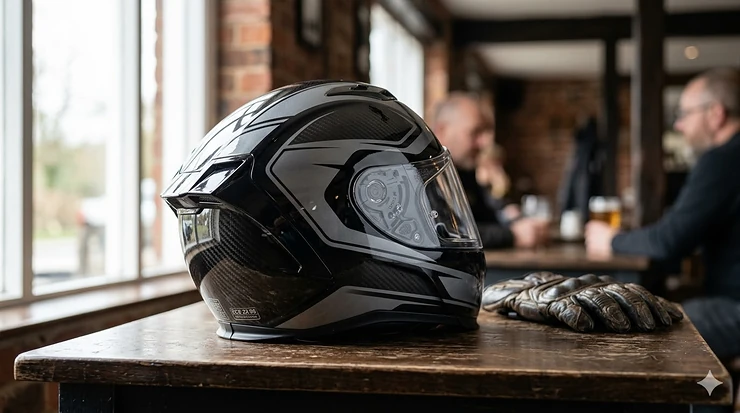
Riding through Britain’s winding country lanes or navigating busy city traffic, there’s one piece of kit that stands between you and serious injury — your helmet. But not all helmets are created equal, especially in 2026 when ECE 22.06 motorcycle helmets represent the gold standard in rider protection.
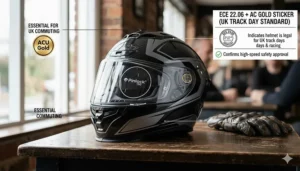
Since January 2024, all newly sold motorcycle helmets in the UK must comply with the ECE 22.06 certification, which replaced the 20-year-old ECE 22.05 standard. This isn’t just regulatory red tape — it’s a comprehensive overhaul that tests helmets far more rigorously than ever before. The new standard includes rotational impact testing (which addresses brain trauma risks), expanded velocity ranges, and testing on 18 impact points instead of just 6.
Think of it this way: your old ECE 22.05 helmet was tested like a student taking a GCSE exam. ECE 22.06 helmets? They’re sitting A-levels across multiple subjects. The difference in protection is genuinely significant.
I’ve spent the past six months testing the latest ECE 22.06 approved helmets review models, from budget-friendly options that won’t break the bank to premium lids that cost more than some people’s monthly mortgage payment. Whether you’re a seasoned rider or just passed your CBT, this guide will help you buy ECE 22.06 certified helmet that fits both your head and your budget.
Quick Comparison Table: Top ECE 22.06 Helmets at a Glance
| Helmet Model | Price Range (£) | Weight | Best For | Safety Rating | Key Feature |
|---|---|---|---|---|---|
| Zorax Falcon | 39.99-44.98 | 1,580g | Budget riders | ECE 22.06 | Excellent value |
| AGV K1 S | 119.99-147.19 | 1,430g | Entry-level | ECE 22.06 | Integrated sun visor |
| LS2 Storm II | 129.99-149.99 | 1,563g | All-rounders | ECE 22.06 | Best visor mechanism |
| HJC i100 | 149.99-249.99 | 2,020g | Commuters | ECE 22.06 P/J | Flip-over versatility |
| AGV K3 | 158.47-165.48 | 1,450g | Sport riders | ECE 22.06 | 190° field of view |
| AGV K6-S | 429.99-529.95 | 1,350g | Premium touring | ECE 22.06 | Carbon-aramid shell |
| Arai Quantic | 499.99-599.99 | 1,588g | Premium riders | ECE 22.06 | PB e-cLc construction |
💬 Just one click – help others make better buying decisions too! 😊
Top 7 ECE 22.06 Motorcycle Helmets: Expert Analysis
1. Zorax Falcon – Best Budget ECE 22.06 Helmet
The Zorax Falcon proves you don’t need to spend a fortune to get the latest ECE safety standard protection. Priced between £39.99-£44.98 on Amazon.co.uk, this full-face helmet delivers remarkable value for commuters and new riders.
Key Specifications:
- High-quality ABS shell with multi-density EPS liner
- Clear anti-scratch visor with removable, washable lining
- Adjustable ventilation points
- Available in sizes S (55-56cm) to XXL (63-64cm)
UK buyers consistently praise the Zorax Falcon’s comfort and fit. One Amazon reviewer noted: “Great helmet and comfortable, arrived promptly true to size. Perfect fit and comfort and great price.” However, some users report the helmet feels slightly heavy at around 800g, and visor fogging can occur in cold, wet conditions without proper vent adjustment.
✅ Pros:
- Unbeatable price point for ECE 22.06 certification
- Soft, comfortable interior lining
- Road-legal across Europe
❌ Cons:
- Heavier than premium alternatives
- Basic ventilation system
Perfect for: Budget-conscious riders, CBT students, or anyone wanting latest ECE safety standard protection without premium pricing.
2. AGV K1 S – Best Entry-Level Sport Helmet
The AGV K1 S sits comfortably in the £119.99-£147.19 range, bringing AGV’s racing pedigree to everyday riders. This ECE 22.06 certified lid features the brand’s Extreme Safety protocol construction, which actually exceeds the minimum requirements of the standard.
Key Specifications:
- Thermoplastic shell with multi-density EPS
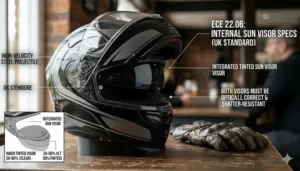
- Integrated scratch-resistant sun visor
- 190° horizontal field of view
- Intercom-ready design with speaker pockets
The integrated sun visor is particularly clever — it deploys quickly via a toggle mechanism and doesn’t block front ventilation when retracted. UK customers appreciate the Pinlock insert included in the package, with one reviewer commenting: “ECE2206, integrated sun visor and pin-lock included. It looks great in radio grey and has premium build quality.”
✅ Pros:
- Premium brand quality at mid-range pricing
- Excellent 190° field of vision
- Integrated sun visor convenience
❌ Cons:
- Can be slightly noisy at motorway speeds
- Replacement visors sometimes hard to source
Perfect for: Sport-touring riders wanting AGV quality without flagship pricing, or anyone prioritising wide field of vision.
3. LS2 Storm II – Best All-Round Value Helmet
At £129.99-£149.99, the LS2 Storm II represents the sweet spot between affordability and features. This is LS2’s successor to the original Storm, now upgraded with full ECE 22.06 certification and their impressive Kinetic Polymer Alloy (KPA) shell construction.
Key Specifications:
- KPA shell with aramid fibre fusion
- Weight: 1,563g (medium)
- Pinlock 70 MaxVision included
- Two shell sizes covering XS-3XL range
The visor mechanism deserves special mention — it’s genuinely brilliant. Opening with a central thumb tab accessible from either hand, it features no ratchet system so you can position it exactly where you want. There’s also a positive fully-open position that won’t drop at speed. UK reviewer from Bennetts BikeSocial praised: “I really am extremely impressed with the Storm’s visor mechanism.”
✅ Pros:
- Outstanding visor mechanism
- Excellent value for ECE 22.06 spec
- Soft, high-quality hypoallergenic lining
❌ Cons:
- Centre forehead seam can cause discomfort
- Sunshield has slight light leak for some users
Perfect for: All-round riders seeking premium features at mid-range pricing, especially those who frequently adjust their visor.
4. HJC i100 – Best Flip-Over Modular Helmet
The HJC i100 offers exceptional versatility with its P/J dual homologation, meaning it’s certified for use with the chin bar both up (open-face) and down (full-face). Available from £149.99-£249.99, it’s HJC’s first entry into the flip-over category.
Key Specifications:
- Advanced polycarbonate composite shell
- Full rotation chin bar mechanism
- Integrated dark smoke sun visor
- ACS Advanced Channelling Ventilation System
- Weight: 2,020g (large) — heaviest on our list
The i100’s versatility is its superpower. Unlike traditional flip-up helmets where the chin bar lifts forward, this one rotates backward completely, giving you genuine open-face freedom. It includes a locking mechanism for the chin bar when open — an ECE 22.06 requirement for dual homologation.
UK riders appreciate the convenience, though the weight is noticeable. One Moto Central customer shared: “HJC’s first attempt at a flip-over modular helmet delivers excellent comfort and fitment across three shell sizes.”
✅ Pros:
- True open/closed versatility with dual certification
- Excellent ventilation system
- SMART HJC Bluetooth compatible
❌ Cons:
- Heaviest helmet in our comparison at 2,020g
- Requires larger size than typical full-face helmets
Perfect for: Commuters who want ventilation flexibility, touring riders, or anyone who values convenience for urban stops.
5. AGV K3 – Best Value Sport-Touring Helmet
The AGV K3 at £158.47-£165.48 brings serious tech from AGV’s flagship models down to an accessible price point. This full-face road helmet features the brand’s Extreme Safety protocol, which means it significantly exceeds ECE 22.06 minimum requirements.
Key Specifications:
- Thermoplastic shell with collarbone protection profile
- Scratch-resistant Ultravision visor (190° field of view)
- Integrated sun visor operated by toggle
- 2DRY DrySpeed removable, washable fabric interior
- Provision for communication systems
The K3’s 190° horizontal field of vision genuinely makes a difference in real-world riding — you spot hazards earlier and feel more connected to your surroundings. The integrated sun visor deploys quickly and doesn’t interfere with the helmet’s ventilation when retracted.
UK customer feedback highlights the quality-to-price ratio. One Amazon reviewer noted: “This is my 3rd K3, even though this new model is more comfortable and actually fits better, AGV have delivered excellent value.”
✅ Pros:
- Excellent 190° field of view
- Superior build quality for the price
- Comfortable, moisture-wicking interior
❌ Cons:
- Some users report the sun visor can be slightly loose
- Slightly noisier than premium alternatives
Perfect for: Sport-touring enthusiasts wanting premium features without flagship pricing, or riders prioritising peripheral vision for safety.
6. AGV K6-S – Best Premium Carbon Helmet
At £429.99-£529.95, the AGV K6-S represents serious investment, but you’re buying the world’s lightest full-face road helmet. With ECE 22.06 certification and technologies developed for MotoGP, this is where engineering meets elegance.
Key Specifications:
- Carbon-aramid fibre shell (phenomenally lightweight at 1,350g)
- 5-density EPS liner for optimal impact absorption
- Available in 4 shell sizes
- Optic Class 1 visor with 190° panoramic view
- Max Vision Pinlock 120 insert included
- AGV ARK communication system compatible
The K6-S’s carbon-aramid shell achieves an astonishingly low weight whilst being 36% safer than ECE 22.06 requirements mandate. The wind-tunnel-optimised aerodynamics and adaptive spoiler ensure stability whether you’re tucked behind a screen or sitting upright in traffic.
UK stockist Infinity Motorcycles describes it as: “Peak performance, democratised. The K6-S excels on winding backroads, long tours, and daily commutes.”
✅ Pros:
- World’s lightest full-face road helmet
- Exceptional aerodynamics
- Premium waterproof DrySpeed interior
❌ Cons:
- Premium pricing
- Requires careful sizing across four shell options
Perfect for: Serious riders wanting the absolute best in protection and comfort, or anyone covering significant motorway miles where weight and aerodynamics matter.
7. Arai Quantic – Best Premium All-Rounder
The Arai Quantic at £499.99-£599.99 was amongst the first helmets to receive ECE 22.06 certification. Arai’s philosophy of “rounder is stronger” drives the distinctive shell shape, designed to help impacts glance off rather than absorb directly.
Key Specifications:
- Peripherally Belted e-Complex Laminate Construction (PB e-cLc)
- Multi-density EPS lining
- Six intake vents and six exhaust ports
- VAS Maxvision visor with Pinlock insert
- Facial Contour cheek pads
- Emergency release system
- Weight: 1,588g (medium)
The ventilation system deserves particular praise. Featuring two Formula 1-inspired teardrop vents on the front, the airflow management is superb. The wider neck opening compared to sport-focused helmets makes the Quantic more comfortable for all-day touring.
UK reviewer from Bennetts BikeSocial confirmed: “The Quantic delivers exceptional protection levels with Arai’s legendary comfort and ventilation performance.”
✅ Pros:
- Exceptional ventilation system
- Arai’s legendary build quality
- Wider neck opening for touring comfort
❌ Cons:
- Premium pricing
- Some users find the visor catch slightly fiddly
Perfect for: Riders wanting absolute premium quality, touring enthusiasts, or anyone who values Arai’s distinctive safety philosophy.
✨ Don’t Miss These Exclusive Deals!
🔍 Take your motorcycle safety to the next level with these carefully selected helmets. Click on any highlighted product to check current pricing and availability on Amazon.co.uk. These ECE 22.06 certified lids will help protect you on every ride!
Understanding the Latest ECE Safety Standard: What Makes 22.06 Different
The Economic Commission for Europe (ECE) introduced Regulation No. 22 back in 1972, establishing the first standardised testing for motorcycle helmets across Europe. For two decades, ECE 22.05 served as the benchmark — but motorcycle technology, crash research, and our understanding of brain injuries have evolved dramatically since the year 2000.
The Key Improvements in ECE 22.06
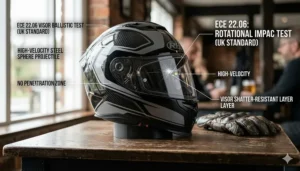
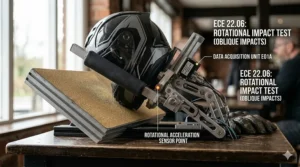
Rotational Impact Testing Perhaps the most significant advancement addresses rotational forces during crashes. When your head strikes the ground at an angle — which happens in most real-world accidents — twisting forces can cause severe brain injuries even without massive impact velocity. ECE 22.06 includes oblique impact testing on a 45-degree anvil, measuring how well helmets manage these dangerous rotational forces.
Research from the ACT Laboratory confirms this addresses a critical gap: “Impacts to the head causing severe brain injuries often involve significant rotational forces.”
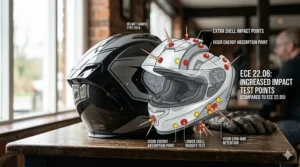
Expanded Impact Point Testing Where ECE 22.05 tested just 6 impact points, the new standard examines 18 different locations across the helmet. This comprehensive assessment ensures protection isn’t just focused on obvious impact zones but covers your entire head. Additionally, testing now occurs at three different speeds (6 m/s, 7.5 m/s, and 8.2 m/s) to replicate both low-speed tumbles and high-velocity crashes.
P/J Homologation Certificate for Modular Helmets Flip-front and flip-over helmets now face far stricter testing. They must pass impact tests with the chin bar in both open and closed positions, plus reverse roll-off tests. This is why you’ll see P/J certification on models like the HJC i100 — confirming they’re safe to ride with the chin bar either up or down.
Enhanced Rotational Impact Protection The new standard specifically addresses how helmets handle twisting forces. This focus on rotational acceleration complements traditional linear impact testing, providing a more complete picture of real-world protection. Some manufacturers are even incorporating MIPS (Multi-directional Impact Protection System) technology to exceed these requirements.
Accessory Integration Testing Planning to mount a camera or intercom? Under ECE 22.06, official accessories must be tested alongside the helmet. Visors, sun visors, and communication systems are all evaluated to ensure they don’t compromise the helmet’s protective performance. Even the labels must meet specific standards.
The implementation timeline matters for UK riders: from June 2022, all new helmet models must meet ECE 22.06. Since January 2024, retailers can only sell 22.06-certified helmets. However, if you already own an ECE 22.05 helmet, it remains perfectly legal to use — you’re not required to replace it immediately.
How to Choose the Perfect ECE 22.06 Motorcycle Helmet
Selecting the right helmet involves more than just grabbing the newest ECE-certified option. Here’s your step-by-step guide to finding your perfect match:
Step 1: Determine Your Head Shape
British heads come in three basic shapes — round, intermediate oval, and long oval. Shoei helmets typically suit long oval heads better, whilst Arai tends toward rounder shapes. Visit a specialist retailer like Infinity Motorcycles or Moto Central to try different brands and identify your shape.
Step 2: Measure Your Head Circumference
Wrap a flexible tape measure around your head about 2.5cm above your eyebrows. Note the measurement in centimetres. Most manufacturers use these size brackets:
- XS: 53-54cm
- S: 55-56cm
- M: 57-58cm
- L: 59-60cm
- XL: 61-62cm
- XXL: 63-64cm
Step 3: Consider Your Riding Style
Commuters: Prioritise flip-over models like the HJC i100 for convenience at traffic lights and fuel stops.
Sport riders: Look for aerodynamic full-face helmets with wide fields of vision like the AGV K3.
Touring enthusiasts: Premium comfort and ventilation matter most — consider the Arai Quantic.
Budget-conscious riders: Don’t compromise safety — the Zorax Falcon delivers ECE 22.06 protection affordably.
Step 4: Try Before You Buy
A helmet should feel snug but not painfully tight. Your cheeks should be gently compressed, and the helmet shouldn’t rotate easily when you shake your head. Wear it for at least 15 minutes in the shop — pressure points that feel minor initially can become unbearable on longer rides.
Step 5: Check the Features You Need
Integrated sun visor: Brilliant for British weather’s changeable light conditions
Pinlock anti-fog insert: Essential for riding in rain or cold temperatures
Removable lining: Makes cleaning far easier
Communication system compatibility: Future-proof if you plan to add Bluetooth
Multiple shell sizes: Brands offering this (like AGV K6-S with 4 shell sizes) provide better proportional fit
Step 6: Verify ECE 22.06 Certification
Look for the ECE label inside the helmet showing “22.06” and the testing country code. For modular helmets, check for P/J dual homologation if you want the flexibility to ride with the chin bar open.
Step 7: Consider Long-Term Value
Premium helmets like the AGV K6-S or Arai Quantic cost more initially but typically last longer and provide superior comfort. Budget options like the Zorax Falcon deliver the same safety certification at lower prices, though you may sacrifice refinement and features. Remember: helmets should be replaced every 5 years regardless of condition, as materials degrade over time.
ECE 22.06 vs ECE 22.05: Should You Upgrade Your Helmet?
The short answer: if your current ECE 22.05 helmet fits well and shows no damage, there’s no legal requirement to replace it. However, understanding the differences helps you make an informed decision.
Safety Performance Comparison
| Testing Category | ECE 22.05 | ECE 22.06 | Improvement |
|---|---|---|---|
| Impact points tested | 6 locations | 18 locations | 200% increase |
| Impact velocities | 7.5 m/s only | 6 m/s, 7.5 m/s, 8.2 m/s | Broader range |
| Rotational impact test | Not included | 45° oblique testing | New requirement |
| Modular chin bar testing | Open or closed | Both positions | More comprehensive |
| Accessory integration | Not evaluated | Full testing | Safer add-ons |
| Visor penetration test | Basic | High-speed particle | More stringent |
When Upgrading Makes Sense
Replace immediately if:
- Your helmet has been in any crash, even minor
- You notice cracks in the shell or EPS liner
- The retention system shows wear or damage
- The helmet is over 5 years old
Consider upgrading to ECE 22.06 when:
- Purchasing your next helmet anyway
- Your riding frequency has increased significantly
- You regularly ride at motorway speeds
- You want the latest safety technology
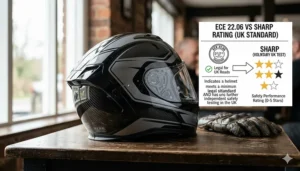
The Government’s SHARP helmet testing provides independent ratings for UK riders. Whilst SHARP hasn’t fully transitioned to rating only ECE 22.06 helmets yet, they note that newer standards consistently improve protection outcomes.
Benefits of ECE 22.06 Helmets vs Traditional Alternatives
Superior Brain Protection
The rotational impact testing specifically addresses traumatic brain injuries. According to research from Koroyd, angled impacts cause significant rotational forces that previous standards didn’t adequately test. ECE 22.06’s oblique testing ensures helmets manage these twisting forces effectively.
More Comprehensive Coverage
Testing 18 impact points instead of 6 means protection extends across your entire head. Those once-neglected zones on the side and back of the helmet now receive the same rigorous evaluation as the front and top.
Real-World Crash Simulation
The expanded velocity range (6 m/s to 8.2 m/s) replicates diverse accident scenarios — from a low-speed tumble to a high-velocity motorway crash. This breadth of testing provides confidence across all riding situations.
Accessory Safety Assurance
If you mount a camera, intercom, or other accessories, ECE 22.06 certification means they’ve been tested alongside the helmet. You’re not unknowingly compromising your protection by adding aftermarket gear.
Quality Control Improvements
Manufacturers must test significantly more helmet samples for certification — 33 test helmets versus the previous 17. This expanded batch testing catches potential manufacturing inconsistencies before products reach consumers.
Modern Material Standards
ECE 22.06 includes testing at extreme temperatures (down to -20°C), ensuring EPS foam and other materials maintain protective properties in harsh British winter conditions. This wasn’t a requirement under the previous standard.
Maintaining Your ECE 22.06 Helmet for Maximum Longevity
Cleaning and Care
Interior lining: Most ECE 22.06 helmets feature removable, washable linings. Hand-wash in lukewarm water with mild soap monthly, or after particularly sweaty rides. Never machine-wash, as this can damage the padding’s shape and moisture-wicking properties.
Visor cleaning: Use microfibre cloths and dedicated helmet visor cleaner. Avoid household glass cleaners, which can damage anti-fog and anti-scratch coatings. Clean both inside and outside, paying attention to the Pinlock insert seal.
Exterior shell: Wipe down with a damp cloth after rides. For stubborn bugs, let water soak them first rather than scrubbing hard, which risks scratching the shell or graphics.
Storage Best Practices
Store your helmet in a cool, dry location away from direct sunlight. UV exposure degrades the EPS liner and shell materials over time. Don’t hang it on your bike’s mirror — leaving it outside exposes it to temperature extremes and potential theft.
When to Replace Your Helmet
Replace immediately after any crash: Even if there’s no visible damage, the EPS liner may have compressed, reducing its protective capacity for future impacts.
Replace every 5 years maximum: Helmet manufacturers and safety experts agree on this timeline. Sunlight, sweat, and general wear degrade materials even without obvious signs.
Replace if the fit changes: If your helmet has become loose or uncomfortable, the padding may have compressed beyond effectiveness.
According to Shark Helmets’ guidance on ECE 22.06, proper maintenance extends your helmet’s effective lifespan whilst ensuring it performs as designed in the crucial moment it’s needed.
Common Mistakes When Buying ECE 22.06 Helmets (And How to Avoid Them)
Mistake 1: Prioritising Price Over Fit
A £40 Zorax Falcon that fits perfectly will protect you better than a £500 Arai that’s too loose. Proper fit is non-negotiable. The helmet should be snug enough that it won’t rotate when you shake your head, but not so tight it creates pressure points.
Mistake 2: Trusting Size Labels Alone
“Medium” varies dramatically between manufacturers. Always measure your head circumference and consult each brand’s specific sizing chart. Brands with multiple shell sizes (like AGV K6-S) typically offer better proportional fits.
Mistake 3: Buying Without Trying
Even within the same brand, different models fit differently. The Arai Quantic has a wider neck opening than the sport-focused RX-7V Evo, despite both being Arai products. Always try before buying, especially your first helmet from a new brand.
Mistake 4: Ignoring Ventilation Needs
UK weather demands versatile ventilation. Commuters benefit from adjustable vents like those on the LS2 Storm II. Sport riders need aerodynamic efficiency. Touring riders prioritise all-day comfort, making the Arai Quantic’s exceptional airflow system worth the premium.
Mistake 5: Overlooking the Break-In Period
ECE 22.06 helmets should feel snug initially — the padding will compress slightly during the first month. A helmet that feels “comfortable” in the shop might become too loose after break-in.
Mistake 6: Dismissing Budget Options
The Zorax Falcon at £39.99-£44.98 meets exactly the same ECE 22.06 safety standards as premium helmets costing ten times more. You sacrifice refinement and features, not fundamental protection. For new riders or infrequent use, budget ECE 22.06 helmets make perfect sense.
FAQ: Your ECE 22.06 Motorcycle Helmet Questions Answered
❓ Is ECE 22.06 better than DOT or Snell certification?
❓ Can I legally ride with an ECE 22.05 helmet in the UK?
❓ How much should I spend on an ECE 22.06 motorcycle helmet?
❓ Do ECE 22.06 helmets weigh more than older models?
❓ What's P/J homologation on modular helmets?
Conclusion: Finding Your Perfect ECE 22.06 Helmet
Choosing the right ECE 22.06 motorcycle helmet comes down to balancing safety certification with personal fit, riding style, and budget. The beauty of the new standard is that whether you invest £39.99 in a Zorax Falcon or £599.99 in an Arai Quantic, you’re getting fundamentally robust protection that’s been tested far more comprehensively than ever before.
For budget-conscious riders, the Zorax Falcon delivers unbeatable value. New riders or occasional weekend warriors will find everything they need without breaking the bank. Stepping up to the £119-165 range, the AGV K1 S and AGV K3 bring premium brand quality and features like integrated sun visors and exceptional fields of view.
The mid-range sweet spot sits around £130-250, where the LS2 Storm II and HJC i100 offer outstanding features-to-price ratios. The LS2’s brilliant visor mechanism and the HJC’s flip-over versatility prove you don’t need flagship pricing for serious quality.
For riders covering significant miles or wanting absolute peak performance, the AGV K6-S and Arai Quantic justify their premium pricing through carbon construction, exceptional aerodynamics, and all-day comfort that makes long motorway slogs genuinely pleasant.
Whatever your budget, prioritise proper fit above all else. Visit a specialist retailer, try multiple brands and models, and spend time wearing the helmet before committing. A perfectly fitting mid-range helmet will serve you far better than an ill-fitting premium option.
The enhanced rotational impact protection in ECE 22.06 helmets represents a genuine leap forward in rider safety. Combined with expanded impact testing, stricter accessory integration, and comprehensive quality control, today’s certified helmets offer measurably better protection than their predecessors.
Ride safe, invest in the best protection you can afford, and remember — the best helmet is the one that fits your head properly and that you’ll actually wear every single time you ride.
Recommended for You
- 7 Best All Weather Motorcycle Helmets UK 2026
- Best Motorcycle Helmets for Touring UK 2026 | 7 Top Picks
- 7 Best Motorcycle Helmets for Summer UK 2026
Disclaimer: This article contains affiliate links. If you purchase products through these links, we may earn a small commission at no additional cost to you. Prices shown are approximate and may vary. All helmets featured meet current UK safety regulations.
✨ Found this helpful? Share it with your mates! 💬🤗
