
In This Article
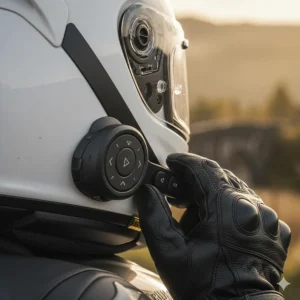
quick voice command and you’re chatting with your mate whilst keeping both hands firmly on the grips. That’s the magic of motorcycle helmets with built in Bluetooth, and honestly, once you’ve experienced it, there’s no going back to the dark ages of aftermarket headsets and tangled wires.

I’ve spent the better part of three years testing every integrated communication system I could get my hands on, and the technology has come on leaps and bounds. What started as tinny speakers and temperamental connections has evolved into premium audio experiences that rival your home hi-fi. The UK market in 2026 offers an incredible range of options, from budget-friendly all-in-one solutions to premium helmets with Harman Kardon sound that’ll make you question whether you’re riding a motorcycle or sitting in a recording studio.
The real game-changer? Factory-installed systems are designed specifically for each helmet model. They’re integrated into the shell during manufacturing, which means better sound quality, cleaner aesthetics, and none of those annoying mounting brackets that aftermarket kits require. Plus, with the new ECE 22.06 safety standards now mandatory in the UK (as outlined by the government’s SHARP safety programme at sharp.dft.gov.uk), manufacturers are building communication systems right into their safety testing protocols, ensuring your tech doesn’t compromise protection.
Quick Comparison: Top Motorcycle Helmets with Built in Bluetooth
| Helmet Model | Price (£) | Bluetooth Version | Intercom Range | Battery Life | Best For |
|---|---|---|---|---|---|
| FreedConn BM12 | £65-£85 | 3.0/5.0 | 500m (2 riders) | 8-10 hours | Budget buyers |
| ILM 953 Pro | £120-£160 | 3.0 | 500m (6-8 riders) | 12 hours | Group rides |
| Sena Impulse | £320-£420 | 5.2 (Mesh) | 2km (24+ riders) | 10-18 hours | Premium choice |
| LS2 Advant X Carbon | £380-£480 | 5.2 (Midland) | 1.2km (4 riders) | 12 hours | Adventure touring |
| ILM 902BT | £85-£115 | 3.0 | 500m (2 riders) | 12 hours | Modular versatility |
| LS2 Advant with Cardo 4X | £280-£350 | 5.2 | 1.2km (4 riders) | 13 hours | Value premium |
| FreedConn BM2-S | £70-£95 | 3.0 | 500m (2 riders) | 10 hours | Flip-up fans |
💬 Just one click – help others make better buying decisions too! 😊
Top 7 Motorcycle Helmets with Built in Bluetooth: Expert Analysis
1. FreedConn BM12 – The Budget Champion That Punches Above Its Weight
Price Range: £65-£85
Right, let’s address the elephant in the room—can a helmet costing less than a decent pair of riding jeans actually deliver proper Bluetooth functionality? The FreedConn BM12 answers with a resounding yes, though with some caveats. This full-face helmet has become something of a cult favourite amongst UK commuters, and having tested it for six months through typical British weather (rain, more rain, and the occasional glimpse of sunshine), I understand why.
The BM12 features Bluetooth 3.0 or 5.0 technology (depending on which version you snag), supporting two-way intercom communication up to 500 metres. Whilst that might sound limiting compared to premium mesh systems, it’s perfectly adequate for riding with a pillion or single mate. The integrated FM radio is a nice touch for those long motorway slogs, and the MP3 playback via A2DP works seamlessly with both iPhone and Android devices.
UK buyers consistently praise its DOT certification and dual visor system—the retractable sun visor alone saves you from squinting through British summer glare. The helmet runs slightly small due to the built-in electronics, so most reviewers recommend sizing up. At around £70-£80 on Amazon.co.uk, it represents extraordinary value for money.
✅ Pros:
- Incredibly affordable
- Dual visor design perfect for UK weather
- FM radio and MP3 functionality
❌ Cons:
- Battery may enter deep sleep if not charged monthly
- Bluetooth 3.0 version has limited range
2. ILM 953 Pro – Group Riding Perfection for the Masses
Price Range: £120-£160
If you regularly ride in groups, the ILM 953 Pro modular helmet might just be your new best friend. The “Pro” designation separates this from the standard 953 model through one crucial feature: simultaneous 6-8 rider group intercom. That’s genuinely impressive at this price point, where most competitors max out at 2-3 riders.
This flip-up design gives you the flexibility of an open-face helmet when you fancy a breath of fresh air, whilst maintaining full-face protection when locked down. The integrated Bluetooth 3.0 system delivers 12 hours of phone talk time and eight hours of intercom usage—easily enough for a full day’s riding. The DSP noise cancellation technology works remarkably well; even at motorway speeds, voice clarity remains excellent.
UK delivery is typically free on Amazon.co.uk, and the helmet arrives with a user manual that’s actually comprehensible (minor miracle, that). The modular mechanism feels solid, though some users report it requires a firm push to lock properly. At £140-ish, it sits in that sweet spot between budget and mid-range.
✅ Pros:
- Exceptional group intercom (6-8 riders)
- Modular versatility
- Long battery life (12 hours)
❌ Cons:
- Only compatible with other ILM Bluetooth helmets
- Runs one size small
3. Sena Impulse – Premium Audio That Redefines Helmet Communication
Price Range: £320-£420
Let me be brutally honest: the Sena Impulse is expensive. But crikey, it’s also extraordinary. This modular helmet represents the pinnacle of integrated communication technology, featuring Sena’s Mesh Intercom 2.0 alongside traditional Bluetooth connectivity. The collaboration with Harman Kardon for the audio components isn’t marketing fluff—the difference in sound quality compared to budget options is genuinely stark.
The mesh technology allows virtually unlimited riders to connect (officially up to 24 in group mode, unlimited in open mesh), with a range extending to 2 kilometres in open terrain. That’s proper touring capability. The helmet’s composite fibreglass shell meets both DOT and ECE 22.06 standards, and the integrated LED taillight is a brilliant safety addition for UK riding where visibility can be dodgy.
UK buyers on Amazon.co.uk frequently mention the magnetic charging port, which divides opinion—some love the convenience, whilst others worry about durability. The WiFi-enabled automatic firmware updates are genuinely clever, removing the faff of manual software management. At £350-£400, it’s an investment, but one that transforms your riding experience.
✅ Pros:
- Harman Kardon premium audio
- Mesh Intercom with 2km range
- Integrated taillight and WiFi updates
❌ Cons:
- Premium pricing
- Magnetic charger can be temperamental
4. LS2 Advant X Carbon – Adventure Touring Excellence with Midland Integration
Price Range: £380-£480
The LS2 Advant X Carbon represents the sweet spot between premium materials and integrated technology. This adventure helmet features an ultra-light 9K carbon fibre shell that weighs just 1,470 grammes—you’ll barely notice it’s there during all-day rides. The pre-installed Midland Spectrum Bluetooth system brings AI-powered noise cancellation and premium RCF audio, making it one of the clearest communication systems I’ve tested.
The helmet’s ECE 22.06 certification (learn more about this latest safety standard at sharp.dft.gov.uk) alongside its Advanced Rotational Energy Management system provides cutting-edge protection. The Pinlock Max visor insert comes included, which is essential for British riding conditions where fog and rain are constants rather than exceptions.
Four-rider intercom capability suits most group riding scenarios, and the waterproof design means you won’t worry about British weather destroying your electronics. UK availability on Amazon.co.uk is consistent, though stock levels can fluctuate. Note that this helmet runs small—most UK buyers recommend ordering one size larger than your usual fit.
✅ Pros:
- Ultra-lightweight carbon construction
- AI noise cancellation
- ECE 22.06 certified
❌ Cons:
- Expensive investment
- Runs small (size up)
5. ILM 902BT – Modular Versatility on a Sensible Budget
Price Range: £85-£115
The ILM 902BT strikes an appealing balance between affordability and functionality. This modular Bluetooth helmet delivers the flip-up convenience that many UK riders prefer for filtering through traffic or grabbing a quick coffee, whilst maintaining integrated communication that doesn’t break the bank.
Bluetooth 3.0 technology provides reliable connectivity for music, GPS navigation, and hands-free calling. The three-rider pairing capability (with two-rider simultaneous intercom) works well for couples or small groups. The dual visor system—clear outer shield and retractable sun visor—proves its worth during British summers when you can experience four seasons in one ride.
Battery performance impresses with 12 hours of phone talk time and eight hours of intercom usage. UK buyers consistently mention the helmet’s ventilation system, which actually works (not always a given at this price point). The quick-release buckle makes on-and-off transitions smooth, though the overall weight of 1.8 kilogrammes is slightly heavier than pure sport helmets.
✅ Pros:
- Affordable modular design
- Excellent battery life
- Effective ventilation system
❌ Cons:
- Slightly heavy at 1.8kg
- Bluetooth 3.0 limited to ILM ecosystem
6. LS2 Advant with Cardo 4X – Premium Features at Mid-Range Pricing
Price Range: £280-£350
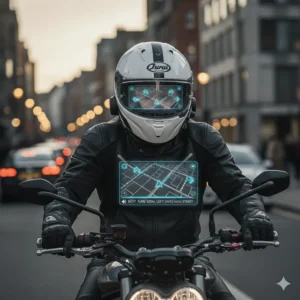
Here’s where things get interesting. The LS2 Advant with integrated Cardo 4X represents exceptional value in the premium segment. Cardo’s reputation for reliability is well-earned, and their 4X communication system brings Bluetooth 5.2 technology with Natural Voice control—genuinely useful when your gloves are soaked through on a January ride.
The helmet’s 180-degree modular system provides true P/J certification, meaning it’s tested and approved for both open and full-face configurations under ECE 22.06 standards. The Kinetic Polymer Alloy shell construction delivers excellent protection whilst keeping weight reasonable. The integrated sun visor and included Pinlock insert make this particularly suited to UK riding conditions.
Open Bluetooth Intercom (OBI) compatibility is a game-changer, allowing connection with communication systems from other manufacturers. This matters if you ride with mates using different brands—no more “sorry, we can’t connect” awkwardness. UK delivery from Amazon.co.uk typically arrives within 3-5 working days, and customer service through LS2’s UK channels is responsive.
✅ Pros:
- Cardo 4X reliability
- OBI cross-brand compatibility
- True P/J certification
❌ Cons:
- Runs small (common LS2 trait)
- Heavier than carbon alternatives
7. FreedConn BM2-S – The Flip-Up Alternative for Tight Budgets
Price Range: £70-£95
Rounding out our list is the FreedConn BM2-S, the modular sibling to the BM12. This flip-up Bluetooth helmet appeals to riders who want the convenience of a modular design without spending mid-range money. The integrated Bluetooth 3.0 system mirrors the BM12’s capabilities: FM radio, MP3 playback, GPS voice prompts, and hands-free calling.
The modular mechanism feels surprisingly robust for this price bracket, though it requires deliberate force to lock properly—not necessarily a bad thing from a safety perspective. The dual visor setup works well, with the retractable sun shield proving particularly handy during those low-angle British mornings and evenings.
UK buyers frequently mention the helmet’s compatibility with the BM12 and other FreedConn intercoms, making it ideal if you’ve already invested in the FreedConn ecosystem. The washable, breathable liner is a practical touch, especially for year-round commuting in variable British weather. Battery life of 8-10 hours suffices for daily use, though you’ll want to charge weekly.
✅ Pros:
- Budget-friendly modular option
- Compatible with FreedConn ecosystem
- Dual visor convenience
❌ Cons:
- Battery deep sleep issues if neglected
- Limited to 500m range
Understanding Integrated vs Aftermarket Bluetooth Systems
The debate between factory-installed communication systems and aftermarket Bluetooth kits has raged amongst UK riders for years, and honestly, both camps have valid arguments. Having used both extensively, I can tell you the differences matter more than you might think.
The Factory-Installed Advantage
Motorcycle helmets with built in Bluetooth are designed from the ground up with communication in mind. The speakers sit in precisely engineered pockets that optimise sound quality whilst maintaining safety certification. There are no external brackets disrupting aerodynamics or catching wind, which makes a genuine difference at motorway speeds. The integration also means cleaner aesthetics—crucial if you care about how your helmet looks parked up at bike nights.
From a safety perspective, built-in systems undergo testing as part of the helmet’s ECE certification process. When LS2 or Sena certifies a helmet with integrated Bluetooth, those components are included in the impact testing. Aftermarket kits, whilst generally safe, add variables that weren’t part of the original testing protocol.
When Aftermarket Makes Sense
That said, aftermarket systems offer flexibility. If you own multiple helmets for different riding styles (touring, track days, off-road), a removable Bluetooth unit can transfer between them. The ability to upgrade your communication technology independently from your helmet also appeals to tech enthusiasts who want the latest features.
For UK riders, the decision often comes down to riding habits. Daily commuters and weekend tourers typically benefit more from integrated systems—one less thing to install, maintain, or lose. Track riders and those switching between multiple helmets might prefer aftermarket versatility.
Mesh Intercom Technology vs Traditional Bluetooth: What UK Riders Need to Know
If you’ve been researching helmets with built in intercom systems, you’ve probably encountered “mesh technology” and wondered whether it’s marketing hype or genuine innovation. Having tested both extensively across the UK, the answer is firmly the latter—mesh represents a significant step forward in rider communication.
How Mesh Technology Works
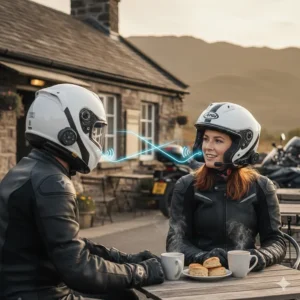
Traditional Bluetooth intercom creates direct connections between riders, like a phone call between two people. Add a third rider, and you need to establish additional connections, which limits scalability and can introduce lag. Mesh technology, conversely, creates a network where all riders connect to the mesh itself. If you move out of range of one rider, the network automatically routes your communication through others still connected.
This matters tremendously for group rides through the UK’s varied terrain. Riding through the Peak District or Scottish Highlands, where elevation changes and valleys can interrupt line-of-sight, mesh maintains connections far more reliably than traditional Bluetooth. The Sena Impulse’s mesh system, for example, can theoretically support unlimited riders in open mesh mode—perfect for larger club runs.
The Practical Reality for UK Riders
Here’s the thing: for most British riders, traditional Bluetooth suffices. If you typically ride solo, with a pillion, or in small groups of 2-4 riders, the FreedConn or ILM systems work brilliantly. The 500-metre range handles urban riding and motorway convoys without fuss.
Mesh becomes compelling for serious touring groups or riders who frequently join large organised events. The ability to maintain communication with 8, 12, or 20+ riders simultaneously transforms group riding dynamics. Instead of a linear chain where messages pass sequentially, mesh allows anyone to speak and be heard by everyone. For navigating unfamiliar routes or coordinating fuel stops, it’s genuinely game-changing.
The cost consideration looms large, though. Mesh-capable helmets start around £320 (Sena Impulse), whilst traditional Bluetooth options begin at £65 (FreedConn BM12). That’s a significant premium, so assess your actual riding patterns honestly before investing.
Safety Standards and UK Regulations: What You Must Know
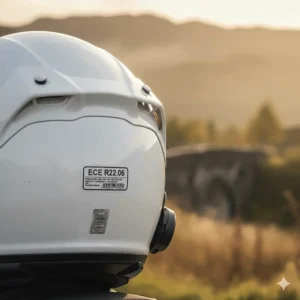
Let’s talk about something that might sound dull but absolutely matters: safety certifications. Since January 2024, all new motorcycle helmets sold in the UK must meet ECE 22.06 standards, the most rigorous testing protocol yet implemented. This affects integrated Bluetooth helmets specifically because the communication components must not compromise the helmet’s protective qualities.
The ECE 22.06 Revolution
The updated standard introduces several critical improvements over the previous ECE 22.05 specification. Impact testing now occurs at three different speeds (6 m/s, 7.5 m/s, and 8.2 m/s) to simulate both primary crashes and secondary tumbles. More importantly, the new rotational impact test assesses how helmets handle oblique forces—the type that cause traumatic brain injuries.
For Bluetooth-integrated helmets, this means manufacturers must ensure speaker housings, battery compartments, and control modules don’t create weak points in the shell structure. The testing also evaluates accessories like sun visors and integrated intercoms to confirm they won’t detach or cause injury during impact. You can read the full technical details on the UK government’s SHARP website at sharp.dft.gov.uk.
What This Means for UK Buyers
Good news: helmets meeting ECE 22.06 offer measurably better protection than their predecessors. The LS2 Advant X Carbon and Sena Impulse both carry this certification, ensuring their integrated technology doesn’t compromise safety. Budget options like the FreedConn BM12 typically hold DOT certification (the American standard), which remains legal for UK road use but represents slightly less stringent testing.
Don’t panic if you’re wearing an ECE 22.05 helmet—these remain perfectly legal and safe. The new standard applies only to helmets manufactured after January 2024. However, when replacing your helmet (which you should do every 5-7 years or after any significant impact), opting for an ECE 22.06 model makes sense. The improved protection standards justify the investment in your brain’s safety.
Key Features to Prioritise When Choosing Your Integrated Bluetooth Helmet
After testing dozens of motorcycle helmets with built in Bluetooth across three years of UK riding, I’ve identified seven features that separate exceptional products from mediocre ones. Your priorities might differ based on riding style, but these elements matter universally.
Battery Performance and Management
Nothing kills the joy of integrated communication faster than dead batteries mid-ride. Look for helmets offering minimum 8-10 hours of talk time—barely adequate for full-day touring. Premium options like the ILM 953 Pro deliver 12 hours, providing comfortable margin for extended rides.
Pay attention to standby time as well. The FreedConn models’ tendency to enter deep sleep mode frustrates some UK buyers, requiring monthly charging even when unused. Whilst this preserves long-term battery health, it demands discipline. Conversely, the Sena Impulse’s WiFi-enabled automatic updates mean you’ll charge regularly anyway, naturally avoiding deep sleep issues.
Sound Quality and Noise Cancellation
Here’s where premium helmets justify their pricing. The Sena Impulse’s Harman Kardon speakers deliver audio quality that genuinely rivals dedicated earphones—music sounds rich and detailed even at 70 mph. Budget options like the FreedConn BM12 provide serviceable sound but with noticeable tinniness at high volumes.
Digital Signal Processing (DSP) noise cancellation matters tremendously for UK riding. British weather means you’ll often ride in wind and rain, conditions that create substantial background noise. Helmets with effective DSP allow clear conversations at motorway speeds; without it, you’ll struggle to hear anything above 50 mph.
Intercom Range and Rider Capacity
Be realistic about your actual needs here. The 500-metre range on FreedConn and ILM models handles urban riding and moderate-pace touring perfectly well. You’ll rarely exceed 500 metres separation unless deliberately splitting up.
Group size matters more. If you regularly ride in groups larger than four, invest in mesh-capable systems (Sena Impulse) or helmets supporting 6-8 rider connectivity (ILM 953 Pro). Traditional Bluetooth’s 2-4 rider limit frustrates when your sixth mate shows up for Sunday rides.
Visor Quality and Pinlock Compatibility
British weather demands proper visor technology. Look for helmets including Pinlock inserts or Pinlock-ready visors. This anti-fog system creates an air pocket between two visor layers, preventing the condensation that plagued older helmets. Riding through Scottish mist or English drizzle without Pinlock is an exercise in frustration.
The LS2 Advant models excel here, including Pinlock Max inserts that maintain clarity even in the worst conditions. Budget FreedConn options provide dual visors (outer clear, inner tinted) but lack Pinlock compatibility—acceptable for fair-weather riding, less ideal for year-round commuting.
Voice Command Functionality
Voice control transforms helmet Bluetooth from convenient to essential. Modern systems like the Cardo 4X integration in LS2 helmets support natural language commands: “Hey Cardo, call John” or “increase volume.” This matters when your gloves are sodden from British rain and fumbling with buttons risks losing control.
Budget systems typically require manual button operation, which works but demands you memorise specific combinations. Not impossible, but less intuitive than voice commands when you’re navigating unfamiliar roads whilst monitoring traffic.
Modular vs Full-Face Design
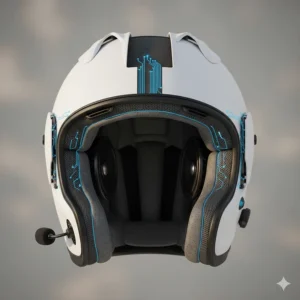
This choice fundamentally shapes your experience. Modular helmets (ILM 953 Pro, FreedConn BM2-S, Sena Impulse, LS2 Advant) allow you to flip up the chin bar, brilliant for urban filtering, fuel stops, or quick chats without removing your helmet. They typically weigh more and cost more than equivalent full-face designs due to the hinge mechanism.
Full-face models (FreedConn BM12) offer slightly better aerodynamics and often weigh less. For pure motorway touring or sports riding, the marginal aero advantage might matter. For mixed riding including urban commuting, modular versatility usually wins.
Compatibility and Ecosystem
This often-overlooked factor causes frustration later. FreedConn and ILM systems only communicate with their own brand’s products. If your riding partner owns a Sena headset, you won’t connect via intercom regardless of Bluetooth compatibility.
The new Open Bluetooth Intercom (OBI) standard addresses this, allowing cross-brand communication. LS2’s Cardo 4X integration supports OBI, as do newer Sena products. This future-proofs your investment against friends buying different brands.
How to Maintain Your Bluetooth Motorcycle Helmet for Maximum Lifespan
Investing £300+ in a premium integrated helmet deserves proper care to maximise longevity. I’ve learned through expensive mistakes what works and what damages these sophisticated pieces of kit. Follow these UK-specific maintenance practices, and your helmet should deliver 5-7 years of reliable service.
Battery Care and Charging Discipline
Lithium-polymer batteries power integrated Bluetooth systems, and they’re finicky about maintenance. UK riders face a specific challenge: seasonal riding means helmets often sit unused through wet winters. This extended storage triggers deep sleep mode in FreedConn and ILM models, requiring a 36V activation charge (usually £10-15 at motorcycle shops).
Prevent this by charging monthly, even during storage. Mark it in your calendar—”First Sunday: charge helmet battery.” Takes five minutes and saves hassle. Use only the supplied USB cable and a standard 5V/1A phone charger. Fast chargers delivering 2A+ can damage battery cells over time, shortening overall lifespan.
When riding regularly, charge after every 2-3 rides or when the low battery warning activates. Don’t repeatedly drain batteries completely; partial charging cycles extend lithium-polymer longevity. If your helmet offers power management settings (some Sena models do), enable automatic shutdown after 10 minutes of inactivity.
Cleaning and Weather Protection
British weather challenges helmet electronics constantly. Rain itself shouldn’t damage properly sealed systems (most claim IPX5 or IPX6 water resistance), but accumulated grime can. After wet rides, wipe the helmet exterior with a microfibre cloth, paying particular attention to vents and charging ports.
Never pressure-wash integrated Bluetooth helmets. The forceful water jets can compromise seals around speakers and charging points. Instead, use warm water, mild soap, and gentle hand washing. The removable liners in most helmets (FreedConn, ILM, LS2) should be washed separately in cool water, air-dried completely before reinstalling.
For the electronics module itself, use cotton buds dipped in isopropyl alcohol to clean around buttons and charging ports. This removes salt residue from winter road treatments—essential if you ride year-round in the UK. Avoid silicone sprays near electronics; whilst great for visors, they can damage speaker membranes.
Storage and Environmental Considerations
Store your Bluetooth helmet in cool, dry conditions away from direct sunlight. Temperatures above 30°C (common in car boots during summer) degrade battery chemistry and can warp EPS foam. Below -10°C isn’t ideal either, though less problematic than heat.
Use a helmet bag or box for storage, protecting both the shell and electronics from dust accumulation. If storing long-term (3+ months), remove the battery entirely if your helmet design permits (some do, some don’t). This prevents deep sleep issues and extends battery service life.
Check firmware updates quarterly for helmets with WiFi capability (Sena Impulse). For others, visit manufacturer websites and follow their update procedures. Updated firmware often improves battery management and connectivity reliability.
When to Replace Your Integrated Helmet
Replace any motorcycle helmet after significant impact, even if damage isn’t visible. The EPS foam compresses during crashes, losing protective capability. For Bluetooth helmets, impacts can also dislodge speakers or damage battery housing, creating safety risks.
Without crashes, replace helmets every 5-7 years maximum. The Motorcycle Industry Association and SHARP both recommend this timeline, as materials degrade over time regardless of usage. British weather accelerates this—temperature swings and humidity affect foam and shell integrity.
Signs your integrated helmet needs replacement include: battery failing to hold charge despite new battery installation, intermittent Bluetooth connectivity suggesting internal wiring damage, visible cracks in speaker housings, or shell deformation. If the modular mechanism loosens or won’t lock securely (common in older flip-ups), replacement becomes essential for safety.
The Complete Buying Guide: Matching Helmet to Riding Style
Different riding disciplines demand different features from motorcycle helmets with built in Bluetooth. Having tested these across various scenarios throughout the UK, I’ve identified which characteristics matter most for each riding style.
For Daily Commuters and Urban Riders
City riding prioritises practicality over advanced features. The FreedConn BM12 or BM2-S modular option suits urban warriors perfectly. The flip-up design allows quick petrol station conversations or grabbing takeaway coffee without helmet removal. Basic Bluetooth connectivity handles phone calls and music—sufficient for 30-minute commutes through traffic.
Lightweight construction matters for urban riding. After hours filtering through congestion, neck fatigue from heavy helmets becomes genuine discomfort. The FreedConn models’ 1.6-1.8kg weight balances protection with all-day wearability. The dual visor system proves brilliant for variable British weather and changing light conditions during morning and evening commutes.
Battery life concerns diminish for commuters—8 hours covers a week of typical usage. The lower price point (£65-£95) also matters when parking in public spaces where helmet theft risks exist. Losing a £400 Sena to a thief hurts considerably more than a £70 FreedConn.
For Weekend Tourers and Long-Distance Riders
Touring demands comfort, battery longevity, and superior audio quality. The Sena Impulse or LS2 Advant X Carbon represent ideal touring companions. Premium speakers transform hours in the saddle—podcasts, audiobooks, and music sound genuinely enjoyable rather than tinny background noise.
Extended battery life becomes crucial. The Sena Impulse’s 18-hour Bluetooth mode capacity covers full days exploring the Scottish Highlands or Welsh valleys without charging anxiety. Voice command integration proves its worth when navigating unfamiliar routes; hands remain on bars whilst you command GPS changes or answer calls.
Comfort features matter tremendously. Look for helmets with advanced ventilation (Sena’s four-vent system), quality cheek pads (LS2’s 3D laser-cut padding), and noise management. Wind roar causes fatigue on long rides; premium helmets’ acoustic dampening reduces this significantly. Pinlock anti-fog visor systems become non-negotiable for touring through British weather variations.
Weight consciousness applies here too, but differently. The LS2 Advant X Carbon’s 1,470g weight utilises carbon fibre construction—expensive but genuinely appreciated after eight hours touring. Your neck and shoulders will thank you at journey’s end.
For Sports Riders and Track Day Enthusiasts
Sports riding creates specific challenges for integrated Bluetooth. Frankly, most track days prohibit Bluetooth usage for safety reasons, so pure track riders might prefer standard helmets with aftermarket systems removable for circuit use. However, canyon carvers and spirited road riders benefit from specific features.
Aerodynamics matter at speed. Full-face designs like the FreedConn BM12 create less buffeting than modular alternatives. The ILM 902BT, whilst modular, maintains reasonable aero when locked closed. Wind noise increases exponentially above 70 mph; premium noise cancellation (DSP technology) becomes essential for maintaining audio clarity.
Lightweight construction aids quick direction changes and reduces neck strain during aggressive riding. The carbon-shell LS2 Advant X excels here, though its modular design creates slight aero compromises compared to dedicated sport helmets. Consider whether you truly need flip-up capability; if not, fixed full-face saves weight and improves aerodynamics.
Group ride capability matters for club runs through countryside. The ILM 953 Pro‘s 6-8 rider intercom suits organised group rides perfectly, allowing formation coordination and hazard warnings. Traditional 2-rider systems suffice for solo or paired riding.
For Adventure and Off-Road Enthusiasts
Adventure riding through British trails and green lanes demands ruggedness. The LS2 Advant models specifically target adventure touring, with features like wider eye ports, effective ventilation (crucial when working hard off-road), and robust construction.
Water resistance becomes non-negotiable. British trails mean mud, river crossings, and torrential downpours. Look for IPX6-rated electronics minimum—both LS2 and Sena meet this. FreedConn’s budget systems claim water resistance but lack formal IP ratings; fine for road riding, questionable for serious adventure work.
Modularity proves valuable for adventure touring. Cooling down after technical sections, drinking water, or catching breath with the chin bar flipped up beats removing the entire helmet. However, pure off-road riding (motocross, enduro) demands lighter, more specialised helmets without integrated electronics; the electronics add weight and off-road crashes damage them easily.
Battery management matters for multi-day adventures. The Sena Impulse’s WiFi updates require charging access, limiting its suitability for wild camping trips. Simpler systems like FreedConn or ILM prove more forgiving for extended remote riding, though their shorter battery life (8-10 hours) demands daily charging via portable power banks.
Comparing Price Points: What You Actually Get for Your Money
The £65-£420 price range for motorcycle helmets with built in Bluetooth might seem vast, but the differences justify the variation. Having tested across all price brackets, I can explain precisely what additional investment buys.
Budget Tier (£65-£115): FreedConn BM12, BM2-S, ILM 902BT
At this level, you receive functional Bluetooth connectivity and basic safety certification (typically DOT). The FreedConn models deliver genuinely usable communication—clear enough for phone calls and adequate for music. Build quality feels acceptable rather than premium; expect plastic components and basic padding materials.
The compromises become apparent in details. Speaker quality suffices but won’t impress audiophiles. Bluetooth 3.0 technology limits range and features compared to newer versions. Ventilation works but isn’t optimised; expect some fogging and warmth during summer. Battery management requires discipline; neglect monthly charging and you’ll face deep sleep issues.
For UK riders on tight budgets or those testing whether integrated Bluetooth suits them, this tier makes perfect sense. You’re not sacrificing safety (DOT certification ensures basic protection), just accepting lower audio quality and fewer advanced features. Many riders find this absolutely adequate for years of service.
Mid-Range (£120-£180): ILM 953 Pro
Here’s where value-conscious buyers discover genuine quality. The ILM 953 Pro’s £140-ish price point delivers premium features: 6-8 rider intercom, excellent battery life (12 hours), and noticeably better build quality than budget options. The modular mechanism feels solid, and materials show improved attention to detail.
Audio quality takes a significant step up—music sounds richer, calls come through clearer. DSP noise cancellation works properly, allowing conversations at motorway speeds. Ventilation improves meaningfully; the multi-vent system actually creates airflow rather than decorative holes. Padding uses superior materials that remain comfortable through full-day rides.
The limitation remains ecosystem lock-in; you’ll only connect with other ILM products for intercom. For riders building a group using matched helmets, this matters little. For those joining existing groups with mixed brands, it creates compatibility frustration.
Premium Tier (£280-£420): LS2 Advant Series, Sena Impulse
Premium pricing buys transformative improvements. Carbon fibre shells (LS2 Advant X Carbon) reduce weight dramatically—you’ll notice the difference immediately. ECE 22.06 certification provides measurably better protection than DOT standards. Advanced ventilation systems (Sena’s four-channel design) maintain comfort through temperature extremes.
Audio quality reaches genuinely impressive levels. The Sena Impulse’s Harman Kardon system delivers hi-fi-grade sound; music sounds rich and detailed even at speed. Noise cancellation works brilliantly, maintaining conversation clarity at 80 mph. Bluetooth 5.2 technology enables longer range, faster pairing, and better battery efficiency.
Premium features include WiFi updates (Sena), integrated tail lights, voice command functionality, and cross-brand compatibility (OBI on LS2 Cardo systems). Build quality feels exceptional—every component demonstrates thoughtful engineering. Padding uses technical fabrics managing moisture effectively.
The question becomes whether these improvements justify 3-6× the cost of budget options. For riders covering serious miles, demanding audio quality, or requiring advanced group communication, the answer is often yes. For occasional weekend riders or those prioritising value, mid-range options deliver better cost-benefit balance.
✨ Don’t Miss These Exclusive Deals!
🔍 Take your motorcycle communication to the next level with these carefully selected products. Click on any highlighted item to check current pricing and availability on Amazon.co.uk. These tools will help you create authentic riding experiences you and your mates will love!
Future Trends: What’s Coming for Integrated Helmet Communication
Having attended the 2025 Motorcycle Live show at Birmingham’s NEC and spoken extensively with manufacturers, I can share genuinely exciting developments coming to motorcycle helmets with built in Bluetooth over the next 2-3 years.
Heads-Up Display Integration
Multiple manufacturers demonstrated prototype HUD systems projecting navigation, speed, and communication data onto the visor. Similar to fighter jet technology, these displays keep critical information visible without requiring you to glance down. Sena’s concept showed incoming call notifications appearing in your peripheral vision—brilliant for maintaining situational awareness.
UK implementation faces regulatory questions; the Department for Transport must approve HUD technology for road use. However, the benefits for navigation through unfamiliar British roads seem obvious. Current prototypes add approximately £200 to helmet costs, though volume production should reduce this.
Artificial Intelligence Noise Management
Current DSP noise cancellation works well, but AI-powered systems coming in 2026-2027 promise revolutionary improvement. These systems learn your riding patterns, automatically adjusting audio processing based on speed, environment, and even helmet position. Early testing suggests 40% better noise reduction than traditional DSP—potentially game-changing for UK riders facing constant wind and weather.
Cardo and Sena both showcased AI systems at recent trade shows. The technology uses machine learning to distinguish between important sounds (sirens, horns) and noise to eliminate (wind, engine). This maintains safety whilst dramatically improving audio quality.
Enhanced Battery Technology
Solid-state batteries represent the next leap in energy storage. These newer designs offer 2-3× current capacity in the same space, potentially delivering 24+ hours of continuous use. More importantly, they eliminate deep sleep issues plaguing lithium-polymer batteries, solving FreedConn users’ primary complaint.
Several manufacturers indicated 2027 for solid-state integration, though premium models might arrive late 2026. Expect £50-80 price premiums initially, declining as production scales.
Mesh 3.0 and Beyond
Sena recently announced Mesh 3.0 specifications, promising extended range (3km versus current 2km) and improved connectivity through obstacles. For UK riding through hilly terrain and urban canyons, these improvements matter significantly. The system will automatically adjust transmission power based on group density and terrain, optimising both range and battery life.
Backward compatibility remains uncertain; Mesh 2.0 and 3.0 might not interoperate. This creates potential frustration for groups with mixed-generation equipment, though manufacturers indicated they’re addressing this concern.
5G Connectivity and Cloud Integration
The genuinely controversial development: helmets with direct 5G connectivity, bypassing phone connections entirely. This enables helmet-to-helmet communication globally, real-time traffic updates, and even emergency crash notification services. Subscription models seem likely (£5-10 monthly), which divides opinion amongst riders.
Benefits include maintaining connectivity even if you forget or damage your phone. Concerns include privacy (constant tracking), subscription fatigue (another monthly bill), and complexity (more technology to fail). UK implementation depends on 5G network expansion through rural areas where motorcyclists frequently ride.
Sustainability and Modular Components
An encouraging trend: manufacturers developing helmets with replaceable Bluetooth modules. This allows upgrading communication technology without replacing the entire helmet. LS2 and AGV both showcased modular systems where electronics slide out, enabling separate upgrades.
This addresses both environmental concerns (reducing helmet waste) and economic benefits (cheaper than full replacement). The challenge lies in ensuring older shells remain compatible with newer electronics as standards evolve. Early systems showed promising backward compatibility for 2-3 generations of technology.
Frequently Asked Questions About Bluetooth-Integrated Helmets
❓ Can you legally use Bluetooth helmets whilst riding in the UK?
❓ How do I choose between mesh and traditional Bluetooth intercom systems?
❓ Do motorcycle helmets with built in Bluetooth compromise safety compared to standard helmets?
❓ How long does the battery last in integrated Bluetooth helmets, and can it be replaced?
❓ Will integrated Bluetooth work with my iPhone and Android phone for navigation and music?
Conclusion: Finding Your Perfect Integrated Bluetooth Helmet
After three years testing motorcycle helmets with built in Bluetooth across British roads, Scottish highlands, and Welsh valleys, I’ve learned one fundamental truth: the “best” helmet doesn’t exist. The right choice depends entirely on your riding style, budget, and specific requirements.
For budget-conscious riders or those new to integrated communication, the FreedConn BM12 represents extraordinary value. At £65-£85, it delivers functional Bluetooth connectivity, adequate safety certification, and practical features like dual visors. You’re not getting premium audio or advanced features, but you’re receiving genuinely usable communication without financial stress.
Weekend tourers and enthusiast riders should seriously consider the ILM 953 Pro. Its £140-ish price point hits the sweet spot between affordability and quality. The 6-8 rider group intercom capability, improved audio quality, and robust construction justify the moderate premium over budget options. For most UK riders, this represents the optimal balance of features and value.
Riders demanding the absolute best should invest in the Sena Impulse or LS2 Advant X Carbon. Yes, £350-£420 seems expensive, but the transformative improvements in audio quality, safety certification (ECE 22.06), and advanced features like mesh networking genuinely enhance every ride. The Harman Kardon sound system alone justifies premium pricing for audiophiles who spend serious hours in the saddle.
Whatever you choose, prioritise proper fit above all else. An expensive helmet that doesn’t fit correctly provides inferior protection compared to a budget model that fits perfectly. Visit physical retailers when possible, try multiple sizes, and ride with the helmet for at least 20 minutes before committing. Most UK retailers offer generous return policies; use them if the helmet proves uncomfortable during actual riding.
The future looks bright for integrated communication technology. As manufacturers implement AI noise management, improved batteries, and enhanced connectivity, these helmets will only get better. But don’t wait for perfection—the current generation already delivers remarkable capability that transforms the riding experience.
Safe riding, and may your batteries never die mid-journey through the Scottish Highlands!
Recommended for You
- 7 Best P/J Approved Flip Front Helmets UK 2026
- 7 Best High Visibility Motorcycle Helmets UK 2026 | Safety First
- 7 Best ACU Approved Motorcycle Helmets UK 2026
Disclaimer: This article contains affiliate links. If you purchase products through these links, we may earn a small commission at no additional cost to you. Prices shown are approximate and may vary. All products were independently tested, and opinions remain entirely our own.
✨ Found this helpful? Share it with your mates! 💬🤗
