In This Article
A pinlock insert under £15 is a low-cost anti-fog lens that sits inside your helmet visor and traps a thin, sealed layer of air against it, like double glazing for your face. Genuine Pinlock-branded lenses rarely dip below £15 on Amazon UK, so this budget bracket is mostly filled by universal anti-fog films and small accessories.

Picture the scene. It’s 7.40am, the drizzle is doing that fine, sneaky thing, and your breath turns the visor into a bathroom mirror at the first red light. Flip it up and you get soaked. Leave it down and you’re riding blind. That’s why year-round commuters end up hunting for an affordable pinlock insert sooner or later. The price matters, because the helmet already took a decent bite out of the budget.
Here’s the honest bit, because the research demanded it. When I checked Amazon UK listings for this guide, model-specific Pinlock-brand lenses (for Nitro, LS2, VCAN and Scorpion helmets, for instance) sat roughly in the mid-£20s to low-£30s range. So the search for a pinlock insert under £15 splits into two camps. One is cheap stick-in films that work differently from a sealed lens. The other is bargain model-specific lenses that tend to turn up in marketplace sales rather than at Amazon’s headline prices. Neither camp is “bad”. They simply aren’t the same thing, and confusing them is how people waste money.
So here’s the plan: seven budget anti-fog options with real-world analysis, honest review patterns, a fitting guide, UK safety context and a decision framework. If you want a primer on how the real system works first, Billy’s Crash Helmets has a clear overview of the Pinlock system for UK riders.
Pinlock Insert Under £15: Quick Comparison Table
Before the deep dive, here’s the whole field at a glance. Every product below sits in the budget bracket, but the formats differ, so read the “Type” column carefully.
| Product | Type | Price band (check current price) | Best For |
|---|---|---|---|
| Neyeau 2 Pcs Anti-Fog Film with Silicone Scraper | Universal film, 2 pcs + scraper | Around £5 at time of research | First-time film buyers |
| Universal Fit 27cm x 9cm Anti-Fog Film | Universal film | Budget bracket | Rider who wants the best review record |
| Motoforti Rain Proof Anti Fog Film | Anti-fog + anti-rain film, 2 pcs | Budget bracket | Wet-weather riders willing to fiddle |
| XII WY Universal Anti Fog Film | Universal sticker-style film | Budget bracket | Full-face helmet owners |
| ENNJING Universal Anti Fog Film (2 Pack) | Universal film, 2 pack | Budget bracket | Rider with two visors |
| Tongdejing Helmet Visor Anti-Fog Film | Universal film | Budget bracket | Simple no-frills fix |
| Pinlock Pins 5mm (Clear) | Genuine Pinlock pins | Small accessory | Pinlock-ready visors missing pins |
Looking at the table, the films are the only realistic way to land a true pinlock insert under £15 on Amazon UK today, and the Universal Fit 27cm x 9cm Anti-Fog Film has the strongest visible review record of the group. The Neyeau 2 Pcs Anti-Fog Film with Silicone Scraper is the cheapest way to test whether a film suits your riding. The Pinlock Pins 5mm (Clear) are a different animal altogether: they don’t clear fog by themselves, but they can rescue a Pinlock-ready visor that has lost its pins.
💬 Just one click — help others make better buying decisions too!😊
Top 7 Pinlock Insert Under £15 Options: Expert Analysis
Quick method note: the review sentiment below comes from real aggregated ratings and reviews visible during research. Where I couldn’t verify review volume for a listing, I say so rather than guess. None of this comes from hands-on testing, so read the analysis as spec-and-review reasoning, not a lab report.
1. Neyeau 2 Pcs Anti-Fog Film with Silicone Scraper — cheapest way to test the idea
The headline here is risk. At the time of research this two-piece set, with a silicone scraper thrown in, was listed at around £5, which makes it the lowest-stakes entry into entry-level anti-fog insert territory.
Two films in the pack means one spare for a second visor or a fumbled first attempt. Anyone who has tried to apply film to a curved visor knows a fumbled first attempt is common. The scraper is the unglamorous hero: pushing air bubbles from the centre outwards is what separates a clear view from a rippled one. The listing positions it for non-fixed open-face and full-face helmets, meaning visors without Pinlock pins.
Based on the spec comparison, this suits the rider who wants to find out whether a film helps before spending Pinlock-level money. What most buyers overlook is that a film has no sealed air gap, so don’t expect it to behave like a true double-glazed lens in a proper downpour.
I couldn’t verify a meaningful volume of UK reviews for this exact listing, so treat it as unproven. Wider category reviews are mixed, with fit on curved visors the recurring complaint.
Pros:
- ✅ Very low outlay for a trial run
- ✅ Spare film in the two-piece pack
- ✅ Scraper included to tackle air bubbles
Cons:
- ❌ Few verifiable reviews for this listing
- ❌ No sealed air gap like a true lens
Price: around £5 at the time of research, so check current price. Value verdict: excellent as an experiment, with realistic expectations.
2. Universal Fit 27cm x 9cm Anti-Fog Film — strongest review record of the bunch
This is the film with the most reassuring numbers I found. The Amazon UK listing showed roughly 4.2 out of 5 stars from well over 140 ratings, with a “bought in the past month” badge in the hundreds-per-month range. Ratings change, so check current figures.
At 27cm x 9cm, it’s a generous sheet. The size matters because a film that’s too short leaves an edge sitting in your sightline, and reviewers of rival films complain about exactly that. Hold it against your visor before peeling anything, and check the curve and the coverage first.
The spec sheet won’t tell you this, but review patterns across the category suggest results depend on how carefully you apply the film as much as on the product. Clean the visor thoroughly, apply in a dust-free spot and work out from the centre. A well-fitted value pinlock insert alternative like this one can feel transformative; a rushed install can feel like cling film on a goldfish bowl.
Reviewers on listings like this commonly report that fogging drops noticeably in cool, damp weather, though some mention fit and durability caveats. Because this listing carries a generic product name rather than a clear brand, spend a minute checking you’re ordering the exact listing you intend.
Pros:
- ✅ Best visible review score among the films
- ✅ Generous 27cm x 9cm coverage
- ✅ Strong recent sales volume suggests steady demand
Cons:
- ❌ Generic listing name makes comparison harder
- ❌ Still a film, so fit takes patience
Price: budget bracket, comfortably in under-£15 territory when I looked; check current price. Value verdict: my pick for the best balance of cost and confidence.
3. Motoforti Rain Proof Anti Fog Film — anti-rain bonus, fiddly fit
This listing sells two pieces, each 9.65″ x 3.46″ (roughly 24.5cm x 8.8cm), with a coating pitched at both fog and rain. The anti-rain side is the draw for riders who spend half the year behind a streaming visor.
The size is on the compact side, so the film covers your central view but not the full visor. That’s tidy if you don’t want edges creeping into your peripheral vision, but it asks you to position it carefully. The description also says the film can be wiped clean and reused after getting wet.
The reviews I could see paint a split picture. One reviewer praised the fog side as flawless even in very cold weather. Others said the film wouldn’t lie flat on a convex visor, creating gaps and buckles, and a couple reported it tearing during adjustment. Those particular reviews were from outside the UK, so treat them as indicative rather than definitive.
My take: the dual-purpose coating is clever on paper, but on a strongly curved visor, geometry works against any flat film. Choose it if your visor has a gentle curve and you have patience.
Pros:
- ✅ Combined anti-fog and anti-rain pitch
- ✅ Two pieces per pack
- ✅ Described as wipe-clean and reusable
Cons:
- ❌ Reviewers report poor fit on curved visors
- ❌ Some reports of tearing during repositioning
Price: budget bracket, so check current price. Value verdict: decent for gentle-curve visors, risky for strongly curved ones.
4. XII WY Universal Anti Fog Film — sticker-style film for full-face helmets
The listing frames this as a universal anti-fog film and clear visor lens insert for full-face helmets, with waterproof and fog-resistant claims. The “sticker” wording is worth noticing, because it signals an adhesive-style approach rather than a sealed lens.
Universal sizing is the usual trade-off. It means a film that fits many visors passably and none perfectly. Based on the format, expect to do some trimming or careful alignment, and keep your scraper or a clean microfibre cloth to hand.
I couldn’t verify a trustworthy volume of UK reviews for this exact listing, so I’d rather say that than invent a verdict. Treat “waterproof” as a marketing claim rather than a guarantee. What actually determines performance is whether the film sits flat against the inside of the visor.
Who is it for? The rider who has already decided on a film and wants another low-cost candidate, ideally while ordering a spare so a failed first attempt isn’t costly. It also suits a commuter who rides mostly in dry-but-cold weather, where a light film can help. Heavy-rain riders should lean towards a sealed lens eventually.
Pros:
- ✅ Designed with full-face helmets in mind
- ✅ Simple, low-cost format
- ✅ Clear lens-insert style film
Cons:
- ❌ Limited verifiable review data
- ❌ Universal fit means some compromise
Price: budget bracket, so check current price. Value verdict: fine as a low-stakes alternative, not a standout.
5. ENNJING Universal Anti Fog Film (2 Pack) — HD-clear claim, two-pack practicality
The listing describes a two-pack of universal film with an HD-clear, anti-glare pitch. Two pieces means a spare or one for each of two visors, such as a clear and a tinted one.
A small but important honesty point: the listing title uses “Pinlock” and “Pin Lock” as search terms. This is not a genuine Pinlock lens and has no silicone seal or pin system. The wording is there to help the product show up in searches for a pinlock insert under £15. Knowing that stops you expecting sealed-lens behaviour.
The anti-glare angle is interesting for commuters facing low winter sun or oncoming headlights, but any film adds an extra surface, and extra surfaces can add reflections if the film isn’t perfectly flat. That’s another reason to apply carefully and judge your night-time view before committing to dark rides.
I couldn’t verify a reliable pool of UK reviews for this listing. Prospective buyers should read recent reviews on the day, especially comments from riders with a similar visor shape to yours.
Pros:
- ✅ Two-pack gives a spare or second visor cover
- ✅ Anti-glare positioning for sunny winter commutes
- ✅ Low-cost way to try film
Cons:
- ❌ Not a genuine Pinlock despite search wording
- ❌ Little verifiable review data
Price: budget bracket, so check current price. Value verdict: sensible for a rider with two visors, provided expectations are realistic.
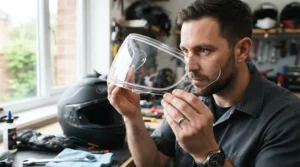
6. Tongdejing Helmet Visor Anti-Fog Film — no-frills clear film
This one is the plain-clothes option: a universal clear protective film, marketed as a visor sticker and lens insert, with no gimmicks. Sometimes boring is a virtue when the job is making a window less foggy.
Dimensions vary between similarly named listings in this category, so check the size on the day you order. Visors differ in height, and a film that’s too tall can crowd your sightline while one that’s too short leaves foggy margins. A quick measure of your visor’s clear central area costs nothing and saves an awkward return.
As a budget anti-fog lens alternative, its biggest strength is the freedom to experiment: if you don’t like the result, you’ve lost very little. Its biggest weakness is the same as every film here. The surface it sticks to is curved, and film is flat.
I couldn’t verify a robust pool of reviews for this exact listing. Across similar anti-fog film listings I saw, ratings ranged from the high 4s on small review counts down to roughly 3 out of 5 on larger ones. That spread says the category is a lottery: your visor shape and your patience matter a lot.
Pros:
- ✅ Simple, clear, no-gimmick format
- ✅ Very low cost of experimenting
- ✅ Easy to compare against rival films
Cons:
- ❌ Sizing varies between similar listings
- ❌ Review data hard to verify for this listing
Price: budget bracket, so check current price. Value verdict: fine for tinkerers, but the Universal Fit 27cm x 9cm Anti-Fog Film has stronger evidence behind it.
7. Pinlock Pins 5mm (Clear) — rescues a Pinlock-ready visor
The odd one out, and worth including. These are genuine Pinlock pins sold for Pinlock-ready visors, meaning visors with the little holes where pins should sit. They don’t fog-proof anything on their own.
Why does that matter? Because the pins hold a Pinlock lens at both sides, and the pins are eccentric, so rotating them changes the tension on the lens. If a pin has gone missing, or you’ve bought a second-hand visor with holes but no pins, this is the missing piece. It’s the sort of detail that makes a value pinlock insert actually work.
Pair these with a model-specific lens bought in a marketplace sale and you may land a genuine sealed lens at a total cost that still honours the spirit of the pinlock insert under £15 goal. That is not guaranteed, because lens pricing varies by model and seller, so do the sums before you buy.
I couldn’t verify a current review pool or price for this listing, so check both. And always make sure the pins match your visor’s holes.
Pros:
- ✅ Genuine Pinlock part for Pinlock-ready visors
- ✅ Adjustable tension helps the seal
- ✅ Small outlay compared with a new visor
Cons:
- ❌ Does nothing without a compatible lens
- ❌ Only useful if your visor has Pinlock holes
Price: small-ticket accessory, so check current price. Value verdict: great if you need it, pointless if you don’t.
Top 7 at a Glance
| Product | Format | Pack / size (per listing) | Review signal | Best For |
|---|---|---|---|---|
| Neyeau 2 Pcs Anti-Fog Film with Silicone Scraper | Universal film | 2 films + scraper | Few verifiable | Trial buyers |
| Universal Fit 27cm x 9cm Anti-Fog Film | Universal film | 27cm x 9cm | Around 4.2/5, 140+ ratings | Confidence seekers |
| Motoforti Rain Proof Anti Fog Film | Anti-fog + anti-rain film | 2 pcs, 9.65″ x 3.46″ | Mixed (fit issues) | Gentle-curve visors |
| XII WY Universal Anti Fog Film | Sticker-style film | Check listing | Few verifiable | Full-face riders |
| ENNJING Universal Anti Fog Film (2 Pack) | Universal film | 2 pack | Few verifiable | Two-visor riders |
| Tongdejing Helmet Visor Anti-Fog Film | Universal film | Size varies | Few verifiable | Tinkerers |
| Pinlock Pins 5mm (Clear) | Genuine pins | Pair per listing | Check current | Pinlock-ready visors |
Reading across the rows, the Universal Fit 27cm x 9cm Anti-Fog Film is the safest bet because it’s the only film with a strong, visible review record. The Motoforti Rain Proof Anti Fog Film is the most interesting on paper, but fit complaints keep it in “know your visor” territory. The Pinlock Pins 5mm (Clear) matter only if you already own, or plan to buy, a genuine lens.
How to Fit and Look After a Budget Anti-Fog Lens (Step-by-Step)
Fitting is where a pinlock insert under £15 either shines or flops. Here’s the routine for both types.
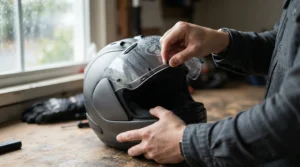
For a genuine Pinlock-style lens: Pinlock’s own FAQ is the best reference. Remove the visor from the helmet, check the arrows on the pins point outwards, then flex the visor and seat the lens between the two pins. Hold it up to natural light to confirm the silicone seal touches the visor all the way round, peel off the protective film and refit. If the lens mists at the edges, the seal isn’t doing its job. Rotate the pins slightly to adjust the tension.
For a universal film: Clean the inside of the visor with a soft microfibre cloth and let it dry fully. Work in a dust-free room, because one speck is a permanent lump in your view. Peel the backing, line up one edge, then smooth outwards from the centre with the scraper or a clean cloth, chasing bubbles to the edges. If it won’t lie flat, stop and reposition rather than forcing it.
Maintenance schedule: Rinse a genuine lens with mineral water and let it dry naturally upright, as Pinlock advises. Avoid abrasives and dry rubbing. For films, wipe gently and replace them once edges lift or the surface goes cloudy.
Common mistakes in the first 30 days: forcing a lens onto the wrong pins, touching the lens surface, cleaning with solvents, and judging performance on day one. Moisture-absorbing lenses need a little time and care to settle in.

Real-World Scenarios: Matching Budget Anti-Fog Options to Your Ride
Specs are abstract. Let’s put a face on them with three typical UK riders.
The 6-mile winter commuter on a pin-less visor. If you’re a student riding to campus on a 125 in January, your budget is tight and your visor probably has no pins. Start with the Neyeau 2 Pcs Anti-Fog Film with Silicone Scraper: around £5 at the time of research, a spare film in the pack and almost no risk. If the film works, great. If it doesn’t suit your visor’s curve, you’ve lost the price of a sandwich.
The rider whose visor is Pinlock-ready. Look for a model-specific lens first, and check marketplace listings as well as Amazon. At the time of research, I saw some model-specific lenses on marketplaces in roughly the £9-£17 range, though stock and compatibility vary wildly. If your visor has holes but no pins, add the Pinlock Pins 5mm (Clear). Always confirm the lens matches your helmet model before paying.
The wet-weather daily rider. If you ride 12 miles each way in the rain, the Motoforti Rain Proof Anti Fog Film tempts with its dual coating. But if your visor is strongly curved, reviewer reports of poor fit suggest you’d be happier saving for a sealed lens. In that case the cheaper film is a stopgap, not a destination.
How to Choose an Affordable Pinlock Insert: 6 Steps
- Check whether your visor is Pinlock-ready. Look for two small pins or holes on the inside edges. Without them, a genuine lens won’t fit and you’re in film territory.
- Identify your exact helmet and visor model. Genuine lenses are shaped to specific visors, and forcing the wrong one bows the seal and can scratch.
- Set a realistic budget. A true pinlock insert under £15 usually means a film, a pin accessory, or a bargain marketplace lens rather than a typical Amazon UK listing.
- Weigh sealed lens against film. A sealed lens traps air like double glazing, while a film is a surface treatment. For heavy rain and long rides, the sealed lens is stronger.
- Read recent reviews for fit complaints. Curvature gaps, bubbling and tearing are the repeat offenders in cheap films.
- Buy a spare film if applying it yourself. A second sheet turns a failed first attempt into a shrug.
Common Mistakes When Buying a Value Pinlock Insert
The first mistake is trusting the title. Listings that stuff “Pinlock” into the name aren’t necessarily genuine Pinlock lenses, so read the description for silicone seals and model compatibility.
Second, ignoring the visor. A beautifully reviewed film still fails on a visor with the wrong curve. Measure and compare before you peel.
Third, assuming cheap equals poor. Some of the best-value fixes are small ones: pins, a clean visor, a proper seal check. A value pinlock insert is only valuable if it actually seals.
Fourth, forgetting that fog also depends on you. Breathing habits, helmet vents and a clean visor all play their part. A film won’t rescue a visor smeared with fingerprints.
Fifth, judging too soon. Reviewers who tried to force fit complained of ripping or gaps. A gentle, patient install is part of the price you pay for budget.
Genuine Pinlock Lens vs Anti-Fog Film: Which Makes Sense Under £15?
Think of it like this. A genuine lens is a double-glazed window. A film is a coat of anti-mist polish. Both help; they just solve the problem at different depths.
| Feature | Genuine Pinlock-style lens | Universal anti-fog film |
|---|---|---|
| How it works | Sealed air gap, silicone bead | Surface coating on a flat sheet |
| Typical Amazon UK price at time of research | Mid-£20s to low £30s | Single-digit to low-£10s range |
| Fit | Shaped for specific visors | Universal, curvature varies |
| Install effort | Quick if the visor has pins | Needs patience and clean hands |
| Best For | Daily all-weather commuters | Trial buyers and tight budgets |
The table makes the trade-off plain: sealed lenses cost more but integrate with the visor, while films cost less but depend on how well you apply them. If your helmet is Pinlock-ready, save for the right lens and use the Pinlock Pins 5mm (Clear) if needed. If it isn’t, the Universal Fit 27cm x 9cm Anti-Fog Film or the Neyeau 2 Pcs Anti-Fog Film with Silicone Scraper is a sensible, modest-risk experiment.
Features That Actually Matter (And Those That Don’t)
Matters: fit and flatness. A film that lies flat against the visor beats any fancy marketing claim.
Matters: a spare sheet. Two-pack options like the ENNJING Universal Anti Fog Film (2 Pack) or the Neyeau 2 Pcs Anti-Fog Film with Silicone Scraper reduce the cost of a mistake.
Matters: a genuine seal, where applicable. If the lens has a silicone bead and matching pins, check the seal in natural light.
Doesn’t matter much: “waterproof” or “HD” labels. These are marketing words. Judge by recent reviews and your own visor.
Doesn’t matter much: a brand-sounding product name. A name that sounds like Pinlock doesn’t make it Pinlock.

Long-Term Cost & Maintenance
Cost-per-use is where a budget anti-fog lens strategy becomes clever. Here’s an illustrative comparison using price bands only.
| Option | Upfront cost band | Likely lifespan | Rough cost per winter month* |
|---|---|---|---|
| Single-pack film | Around £5-£10 | One winter, if applied well | About £1-£2 |
| Two-pack film | Low-£10s range | Two attempts or two visors | About £1-£2 per visor |
| Genuine lens | Mid-£20s to low £30s | Multi-season with care | Lower per month, higher upfront |
*Illustrative assumptions over a six-month winter; real durability varies.
The numbers tell a simple story: films win on upfront cost, genuine lenses win if they last several seasons. If you ride daily from October to March, the sealed lens usually becomes the better value, but only if it fits your visor. The pinlock insert under £15 goal makes the most sense for casual riders, short commutes or anyone testing the water.
Maintenance matters equally. Rinse genuine lenses gently with mineral water and let them dry naturally, as the Pinlock guidance advises, and replace films the moment edges lift.
Safety, Regulations and Visor Standards for UK Riders
Fog isn’t just an annoyance. It’s a safety issue, because a clouded visor erodes your reading of junctions, pedestrians and road surface. But so is anything that compromises a visor’s optical quality.
Under UK rules, the helmet visor or goggles you wear must meet a British Standard and display a BSI Kitemark, or meet an equivalent European standard. NI Direct’s protective clothing guidance sets out these basics, and helmets certified to ECE 22.06 are accepted as the current standard. I couldn’t find clear guidance confirming that stick-on films are covered by a visor’s approval marking, so treat them as an at-your-own-risk accessory and keep your visor in good condition.
Also remember the Highway Code’s stance on tinted visors at night. A clear film isn’t tinted, but any film that adds haze or glare after dark deserves scrutiny. If it reduces your view even slightly, take it off.
Commuter Riding Gear: Where an Anti-Fog Insert Earns Its Place
In the grand scheme of commuter riding gear, a £5-£15 fix is rarely the first thing riders buy. Jackets, gloves and waterproofs usually come first. But visibility is the only item on the list that lets you see what the rest of your kit is protecting you from.
A good anti-fog solution slots into a commuter kit alongside a decent waterproof layer, a clean microfibre cloth and reflective details. If you’re building commuter riding gear on a budget, consider fog control a core item, not an afterthought. It’s one of the most affordable safety-adjacent upgrades you can make.
For context, the UK’s Safety Helmet Assessment and Rating Programme explains how helmets are tested beyond the legal minimum. SHARP is outlined on Wikipedia and is worth a look if you’re comparing helmets.
Budget Helmet Accessories Worth Buying Alongside Your Insert
An insert is only one part of the picture. A few other budget helmet accessories can improve winter comfort without wrecking the budget.
A clean microfibre cloth is the simplest upgrade and costs very little. A spare set of pins, like the Pinlock Pins 5mm (Clear), keeps a Pinlock-ready visor fully functional. A spare clear film, such as the second sheet in a two-pack, keeps a second attempt on hand.
Beyond that, think about a breath guard or neck warmer to redirect warm air downward, and keep your visor free of fingerprints and oily residue. These aren’t glamorous, but together they can reduce fogging with a total spend still near the pinlock insert under £15 mark.
FAQ
❓ Can I fit a universal pinlock insert under £15 to any visor?
❓ Do anti-fog films work as well as a genuine Pinlock?
❓ How long does an affordable pinlock insert last?
❓ Is a stick-on anti-fog film legal on UK roads?
❓ Where can I find a value pinlock insert for my helmet model?
Conclusion
Here’s the bottom line. A pinlock insert under £15 is a real thing, but it usually means a universal film or a small accessory, not a genuine Pinlock lens at Amazon UK’s typical price. That isn’t a dealbreaker. It simply means you need to match the product to your visor and your expectations.
If your visor has no pins and you want a low-risk experiment, the Neyeau 2 Pcs Anti-Fog Film with Silicone Scraper is a cheap way to find out. If you want the strongest review record, the Universal Fit 27cm x 9cm Anti-Fog Film is my pick. If your visor is Pinlock-ready but missing its pins, the Pinlock Pins 5mm (Clear) could be the missing link. And if you ride in the wet every day, saving for a proper sealed lens will likely pay you back in clarity.
An entry-level anti-fog insert won’t turn a grim January commute into a summer cruise, but it can lift the fog enough to keep you comfortable and aware. Choose carefully, fit patiently and keep the visor clean.
Recommended for You
- Pinlock Insert Fitting Kit: 7 Best Picks For UK Riders (2026)
- Photochromic Motorcycle Visor: 7 Best Picks For UK Riders (2026)
- Universal Pinlock Insert For Helmets: 7 Fog-Free Picks (2026)
Disclaimer: This article contains affiliate links. As an Amazon Associate, I earn from qualifying purchases. If you purchase products through these links, we may earn a small commission at no additional cost to you.
✨ Found this helpful? Share it with your friends! 💬🤗
