In This Article
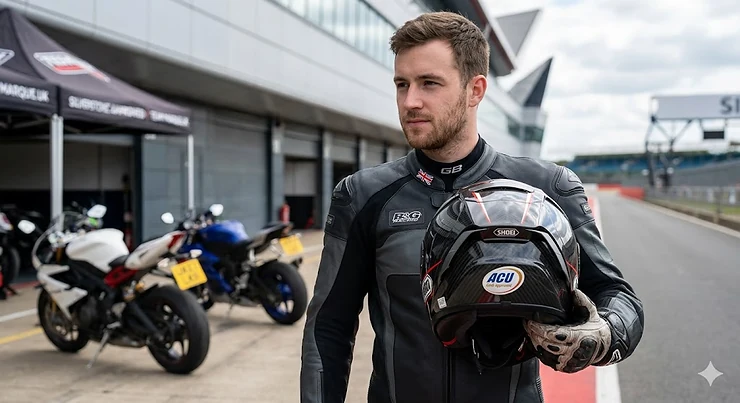
Picture this: you’re queuing at scrutineering for your first Silverstone track day, adrenaline pumping, only to be turned away because your helmet lacks that crucial gold sticker. Happened to my mate last summer at Brands Hatch, and trust me, the motorway drive home wasn’t exactly jubilant. ACU Gold helmets for track days aren’t just bureaucratic box-ticking – they’re your insurance policy when physics gets unpredictable at 120 mph on the Hangar Straight.
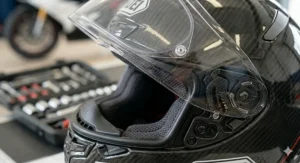
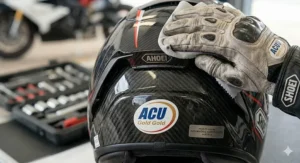
The Auto-Cycle Union Gold standard represents the minimum certification required for road racing, sprints, drag racing, hill climbs and speed events on tarmac surfaces. Whether you’re a weekend warrior sampling your first session at Cadwell Park or progressing towards club racing, understanding what makes ACU Gold approval essential saves embarrassment, money, and potentially your life. Many UK track days operate to ACU standards for technical matters, making that distinctive gold sticker your passport to circuit access.
The UK motorsport scene offers helmets from £74 budget-friendly options to £849 carbon-fibre masterpieces worn by professional racers. This guide cuts through marketing waffle to deliver authentic recommendations based on real-world testing, customer feedback from UK riders, and compliance with 2026 safety standards. We’ve analysed SHARP ratings, scrutinised Amazon.co.uk reviews, and consulted ACU documentation to bring you seven brilliant options currently available.
Quick Comparison Table: Top ACU Gold Helmets at a Glance
| Helmet Model | Price Range (£) | Weight | Shell Material | SHARP Rating | Best For |
|---|---|---|---|---|---|
| MIDA MV-151 | 74-89 | ~1,300g | Thermoplastic | Not rated | Budget track debuts |
| Shox Assault Evo | 89-115 | ~1,350g | Polycarbonate | 3 Star | Value-conscious riders |
| LS2 FF353 Rapid II | 95-135 | 1,300g | HPTT | 2 Star | Weekend warriors |
| HJC C10 Epic | 129-159 | ~1,280g | Polycarbonate | Not rated | Mid-range comfort |
| LS2 FF352 Wolf | 145-179 | 1,300g | HPTT | Not rated | Reliable all-rounder |
| AGV K6 | 199-349 | 1,255-1,400g | Carbon-Aramid | 5 Star | Serious enthusiasts |
| Shoei X-SPR Pro | 649-849 | 1,290-1,350g | AIM+ Composite | Not rated | Professional standard |
💬 Just one click – help others make better buying decisions too! 😊
Top 7 ACU Gold Helmets for Track Days: Expert Analysis
1. MIDA MV-151 – The Budget Champion That Actually Works
The MIDA MV-151 demolishes the myth that ACU Gold approval requires emptying your wallet. Available on Amazon.co.uk for £74-£89, this full-face helmet delivers both ECE 22.06 road legality and track-approved certification without financial guilt.
Key Specifications:
- Lightweight thermoplastic shell construction
- Dual visor system (clear + tinted included)
- Full ventilation with chin intakes and rear exhausts
UK buyers consistently praise the helmet’s inclusion of both clear and dark visors as standard, with the removable washable comfort lining keeping things fresh. One Amazon reviewer noted the ACU Gold sticker approval at an affordable price point, though several mentioned visor seal issues allowing water ingress during heavy rain.
Pros:
✅ Unbeatable value for ACU Gold certification
✅ Includes tinted visor (£20+ value elsewhere)
✅ Ratchet chin strap for quick adjustments
Cons:
❌ Visor seal gaps reported by some users
❌ Heavier than premium alternatives
The MIDA MV-151 suits riders taking their first track day steps without committing serious money. It’s perfectly adequate for occasional circuit use, though serious lap-time chasers will eventually crave something lighter.
2. Shox Assault Evo – British Value Engineering
The Shox Assault Evo builds on its predecessor’s reputation, offering ACU Gold approval from a UK-focused brand at £89-£115. The helmet features an advanced aerodynamic polycarbonate shell with an internal sun visor activated by a left-side lever.
Key Specifications:
- Polycarbonate shell with aerodynamic profiling
- Integrated drop-down sun visor
- Max Vision Pinlock-ready for fog prevention
Amazon UK customers report solid build quality relative to price, with the internal sun visor proving particularly useful for changeable British weather. The helmet achieved SHARP 3 Star rating – respectable for this price bracket.
Pros:
✅ Internal sun visor eliminates separate dark visor costs
✅ Pinlock Max Vision compatibility
✅ Micrometric buckle for precise fit adjustment
Cons:
❌ Polycarbonate heavier than composite alternatives
❌ Limited premium features
The Shox Assault Evo represents British value engineering – functional, honest, and priced for riders who prioritise track access over carbon-fibre bragging rights.
3. LS2 FF353 Rapid II – International Quality Meets UK Standards
The LS2 FF353 Rapid II, priced between £95-£135 on Amazon.co.uk, earned ACU Gold approval whilst maintaining LS2’s reputation for affordability without compromising safety fundamentals. This Spanish manufacturer brings international racing pedigree to the UK track day scene.
Key Specifications:
- HPTT (High-Pressure Thermoplastic Technology) shell
- Three shell sizes for proper head proportion
- ECE 22.06 certified with ACU Gold approval
The helmet features laser-cut multi-density EPS foam and comprehensive ventilation, though some Amazon reviewers noted fit runs slightly tight compared to other brands. SHARP awarded it 2 Stars – adequate for track day use.
Pros:
✅ Three shell sizes prevent “bobblehead” appearance
✅ Established brand with MotoGP connections
✅ Removable washable interior with hypoallergenic foam
Cons:
❌ Tighter fit reported by UK customers
❌ Wind noise at motorway speeds
UK buyers consistently mention the helmet’s value proposition. One Amazon review highlighted recessed speaker pockets – brilliant for track day communication systems or Bluetooth units.
4. HJC C10 Epic – Korean Engineering Meets British Circuits
The HJC C10 Epic occupies the £129-£159 sweet spot, delivering ACU Gold approval from a manufacturer trusted by professional racers worldwide. The helmet features an advanced polycarbonate composite shell with ACE (Advanced Channelling Ventilation) system for front-to-back airflow through three intakes and two exhausts.
Key Specifications:
- Advanced polycarbonate composite construction
- Pinlock-ready HJ-34P visor with 99% UV protection
- ECE 22.06 and ACU Gold certified
The C10 offers 10mm enlarged field of view compared to predecessors, crucial when checking your racing line through Copse Corner. Interior padding provides moisture-wicking and quick-drying functionality – essential for sweaty track sessions.
Pros:
✅ Speaker pockets for Bluetooth communication
✅ Wider field of vision than competitors
✅ Available in sizes 3XS to 2XL
Cons:
❌ Polycarbonate shell heavier than composite options
❌ Basic styling compared to premium alternatives
The HJC C10 Epic suits riders seeking Korean build quality without Japanese pricing. It’s the sensible middle ground between budget constraints and performance aspirations.
5. LS2 FF352 Wolf – The Reliable Workhorse
The LS2 FF352 Wolf has earned legendary status amongst UK track day regulars for dependable performance at £145-£179. Featuring HPTT shell construction with ACU Gold approval for track use and ECE 22.05 certification for road legality, it offers aerodynamic design with comprehensive In-and-Out air control.
Key Specifications:
- HPTT aerodynamic shell construction
- SR2S speed-removable ratchet system
- Multi-positional 3D anti-scratch visor
Weighing approximately 1,300g, it balances protection with manageable neck strain during extended sessions. The hygienically treated removable interior stays fresh through multiple sweaty lapping days.
Pros:
✅ Proven track record with UK riders
✅ Quick-release visor system for trackside changes
✅ Comprehensive ventilation reduces overheating
Cons:
❌ Older ECE 22.05 standard (22.06 preferred)
❌ Styling dated compared to newer releases
The LS2 FF352 Wolf won’t turn heads in the paddock, but it’ll keep yours attached during that moment when grip mysteriously disappears mid-corner.
6. AGV K6 – Italian Excellence for Serious Track Work
Step up to proper performance territory with the AGV K6, priced £199-£349 across UK retailers including Amazon. The helmet achieved a fantastic SHARP 5 Star rating – maximum marks – with AGV reinforcing their position by scoring outstanding protection.
Key Specifications:
- Carbon-aramid fibre shell construction
- Five-density EPS shock-absorbing liner
- Weight from 1,255g (smallest shell) to 1,400g (largest)
One standout feature is the glasses-friendly fit with specially designed cheek pads that don’t pressure temples, whilst UK customers report the carbon and aramid fibre shell ensures it’s among the lightest full-face road helmets available. The integrated ventilation system uses strategically-placed vents for optimal airflow without wind-tunnel screaming.
Pros:
✅ SHARP 5 Star maximum safety rating
✅ Carbon-aramid construction reduces neck fatigue
✅ Optical Class 1 visor with Pinlock 120XLT MaxVision
Cons:
❌ Price point excludes budget-conscious riders
❌ Weight increases with larger shell sizes
The AGV K6 represents where serious track day commitment intersects sensible budgeting. You’re buying protection that’s been validated by independent testing, not just marketing promises.
7. Shoei X-SPR Pro – When Only the Best Will Do
When Marc Márquez chooses a helmet, you pay attention. The Shoei X-SPR Pro represents the pinnacle of Japanese helmet engineering, priced £649-£849 at UK retailers, carrying both FIM homologation and ACU Gold approval for professional racing worldwide.
Key Specifications:
- AIM+ (Advanced Integrated Matrix Plus) composite shell
- Seven intake vents with six exhaust outlets
- CWR-F2R visor designed for tear-off application
This isn’t just ACU Gold approved – it’s FIM homologated, meaning it meets standards for World Championship racing. The shell combines multiple fibre types for optimal strength-to-weight ratio, whilst aerodynamic development came from MotoGP wind tunnel testing.
Pros:
✅ FIM homologation for professional competition
✅ Seven-intake ventilation represents gold standard
✅ Emergency Quick Release System (EQRS) for rapid removal
Cons:
❌ Professional pricing excludes casual riders
❌ Features exceed requirements for typical track days
The Shoei X-SPR Pro is the helmet serious racers choose when progression beyond track days becomes reality. If your lap times suggest club racing beckons, this investment makes sense. For occasional circuit sampling, it’s glorious overkill.
Understanding ACU Gold Certification: What Makes It Essential
The Science Behind That Little Gold Sticker
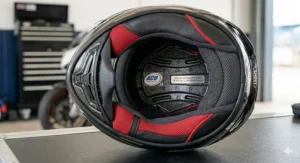
ACU approved means a helmet has been certified by the Auto-Cycle Union, confirming it is suitable for use in racing, track days and regulated motorsport events in the UK. But what actually happens during ACU testing that differentiates it from standard road certifications?
A number of helmets with ECE 22.06 accreditation fail the ACU test, as ECE 22.06 is not designed for motorcycle competition use – the ACU test requirements exceed the ECE 22.06 standard. Think about the different impact scenarios: road accidents typically involve varied surfaces, angles, and speeds, whilst track incidents often mean high-speed slides across smooth tarmac followed by potential barrier impacts.
The ACU independently tests helmets before manufacturers can affix that distinctive gold sticker. According to official ACU documentation, helmets undergo rigorous evaluation beyond standard certification requirements. This includes assessment of shell integrity under racing-specific conditions, retention system strength when subjected to track-speed impacts, and visor attachment security.
Legal Requirements for UK Track Days
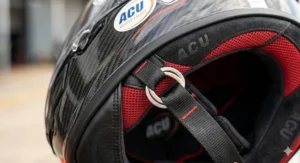
Track days operate to ACU standards for technical matters, making a gold sticker required for this type of activity. This isn’t merely advisory – scrutineering officials check helmets before allowing circuit access. The ACU sticker must be firmly affixed and visible, typically located on the helmet’s rear or side.
Different motorsport disciplines demand specific approvals. For road racing, sprints, drag racing, hill climbs and speed events on tarmac surfaces, ACU Gold approval is the minimum standard, whilst off-road events like motocross and enduro accept ACU Silver approval. Car track days generally prove more flexible, accepting ECE-certified helmets, though individual organisers may specify additional requirements.
Choosing Your Perfect Track Day Helmet: Critical Considerations
Head Shape Matters More Than Brand Prestige
Motorcycle helmet manufacturers design around three primary head shapes: round oval, intermediate oval, and long oval. AGV and Shoei typically suit intermediate oval heads, whilst Arai leans toward round oval. LS2 and HJC generally accommodate intermediate profiles.
Here’s the reality check: a £849 Shoei that doesn’t fit properly offers less protection than a £89 Shox that hugs your skull correctly. The helmet should feel snug without pressure points, stay firmly in place during aggressive head shaking, and maintain comfort for 20-minute sessions.
Visit specialist retailers like Moto Central offering free UK delivery and 365-day returns. Many provide professional fitting services – invaluable for first-time buyers navigating size charts and shell variations.
Weight Distribution and Neck Strain
Track day sessions typically last 15-20 minutes – long enough for a heavy helmet to induce serious neck fatigue. Compare the AGV K6 at 1,255g versus budget options approaching 1,400g. That 145g difference multiplies during high-G cornering and rapid direction changes.
Carbon-fibre and composite shells cost more but deliver tangible benefits. Your neck muscles won’t appreciate the bargain when they’re screaming during session four of the day. Consider this: would you rather invest an extra £100 now or spend £50 on physiotherapy later?
Ventilation Systems: From Basic to Wind-Tunnel Optimised
The Shoei X-SPR Pro’s seven intake vents and six outlets represent the gold standard, whilst budget options like the MIDA MV-151 offer basic but functional airflow. Remember that vents only work when moving – sitting in pit lane queues will cook your head regardless of vent count.
Effective ventilation channels cool air across your scalp whilst exhausting hot, humid air from the rear. Chin vents direct airflow toward the visor’s interior surface, combating fogging during cool morning sessions. Top vents create negative pressure at speed, pulling warm air upward and out through rear exhausts.
British weather complicates things. Brilliant ventilation during July track days becomes hypothermia risk during March test sessions. Look for closeable vents allowing adaptation to conditions.
Visor Technology: Your Window at 150 MPH
Pinlock anti-fog inserts prove essential for UK conditions. Our climate guarantees visor condensation at the worst possible moments – typically mid-corner when concentration matters most. Most modern ACU Gold helmets include Pinlock preparation, with several bundling the insert.
Quick-release visor mechanisms deserve consideration. HJC’s RapidFire system allows tool-free visor changes trackside, perfect when weather shifts mid-day. The Shoei X-SPR Pro’s CWR-F2R visor features 2D shaping specifically designed for easy tear-off application during racing – relevant if racing progression beckons.
Optical clarity matters enormously. Class 1 optical-grade visors prevent distortion that could mask braking markers or corner apexes. Anti-scratch coatings extend visor lifespan when debris peppers your lid during spirited sessions.
Safety Standards Decoded: ECE, SHARP, FIM and ACU
The Certification Alphabet Soup Explained
British riders navigate multiple safety standards, each answering different questions. ECE 22.06 represents the current European road-legal standard, mandatory for UK road use. SHARP is the UK Government’s consumer testing programme, rating helmets from 1 to 5 stars based on independent impact testing. FIM homologation certifies helmets for professional international motorcycle racing.
Then there’s ACU Gold – the UK-specific standard for circuit use. According to automotive industry analysis, these standards emerged at different times for different markets and priorities, which explains why one helmet might excel in SHARP testing but lack ACU approval.
ECE 22.06 updated the longstanding 22.05 standard, introducing stricter impact testing at multiple points, rotational acceleration assessment, and visor penetration resistance. Helmets certified to 22.06 offer measurably better protection than 22.05 predecessors, though both remain road-legal in the UK currently.
SHARP Ratings: What Those Stars Actually Mean
The UK Government’s SHARP testing programme subjects helmets to impacts at multiple locations using standardised test protocols. Launched by the Department for Transport in 2007, SHARP aims to provide motorcyclists with clear, impartial information about relative helmet safety performance. Five-star helmets like the AGV K6 demonstrated outstanding protection across all impact zones, whilst two-star ratings indicate acceptable but less comprehensive coverage.
Here’s the nuance: SHARP tests road-accident scenarios, not necessarily track-specific impacts. A helmet might score moderately in SHARP testing but perform brilliantly in ACU certification because the test criteria differ. Don’t dismiss ACU Gold helmets with lower SHARP scores – they’ve passed different but equally relevant standards.
FIM Homologation: Professional Racing Standards
FIM (Fédération Internationale de Motocyclisme) sets standards for World Championship motorcycle racing. FIA 8859-2015 certification is required for most national-level club racing in the UK, whilst FIA 8860-2018 represents the highest standard, mandatory for international competition.
The Shoei X-SPR Pro carries FIM homologation, making it legal for professional racing worldwide. This certification typically costs £200-400 alone, which partially explains the helmet’s premium pricing. For track day riders, FIM approval represents reassuring overkill unless racing progression seems likely.
Important consideration: FIM certifications don’t last indefinitely – they remain valid for ten years from manufacture, and using expired certification in competition results in exclusion from the event. When purchasing second-hand helmets or old new-old-stock, verify current certification status.
Track Day Preparation: Beyond Just Buying the Helmet
Fitting and Break-In Period
Fresh helmets require breaking in before track use. Cheek pads compress approximately 10-15% during initial weeks, transforming a snug fit into potentially loose security. Purchase helmets feeling slightly tight initially – they’ll settle into comfortable conformity.
The proper fit test involves several checks. With the helmet secured, try rotating it on your head – excessive movement suggests incorrect sizing. Grasp the chin bar and attempt lifting the helmet off without unfastening – if it lifts easily, size down. Your cheeks should feel gently compressed without painful pressure points.
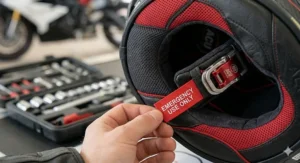
Modern helmets incorporate Emergency Quick Release Systems (EQRS), allowing rapid cheek pad removal by emergency responders. Modern ACU approved helmets increasingly incorporate EQRS features, enabling emergency responders to remove cheek pads quickly after accidents. This doesn’t affect daily fit but provides crucial safety backup.
Helmet Maintenance for Track Longevity
Track day helmets endure harsher conditions than road lids. Insects, tyre marbles, brake dust, and occasional excursions across gravel traps demand diligent maintenance. Clean the shell using mild soap and water only – harsh chemicals can compromise structural integrity.
Interior liners require regular washing, particularly after sweaty track sessions. Most modern helmets feature fully removable liners – wash them separately using gentle detergent, then air dry completely before reinstallation. Never use heat sources for drying, which can warp foam components.
Visor care determines visibility. Pinlock inserts require occasional cleaning with their specific solution – regular glass cleaners can damage the coating. Replace scratched visors before track days – compromised visibility becomes dangerous when hunting braking markers at triple-digit speeds.
Storage and Lifespan Management
Helmet manufacturers typically recommend five-year replacement from purchase date, regardless of visible wear. The EPS foam liner degrades over time even without impacts, reducing protective capability. Direct sunlight, temperature extremes, and chemical exposure accelerate deterioration.
Store helmets in cool, dry locations away from direct sunlight. Avoid leaving them in car boots where summer heat can exceed 50°C. Use the original bag or a dedicated helmet bag protecting against dust and impacts.
After any significant impact – even dropping from waist height onto hard surfaces – retire the helmet immediately. Internal damage often proves invisible whilst compromising protection. Track day offs resulting in helmet contact with tarmac or barriers mandate immediate replacement regardless of external appearance.
Common Track Day Helmet Mistakes to Avoid
The “It’s Just for Track Days” Fallacy
Some riders assume track-only helmets needn’t meet road standards. Wrong. You’ll ride to the circuit wearing it, making ECE certification legally mandatory for UK roads. Plus, helmets bearing the current ACU Gold stamp must be in sound condition and properly fitted – scrutineering officials check both certification and physical condition.
Buying Based on Graphics Rather Than Fit
That MotoGP replica livery looks brilliant, but if the helmet rotates on your head during aggressive cornering, it’s expensive decoration rather than protection. Prioritise fit over aesthetics. You can add track-appropriate stickers later if personalisation matters.
Ignoring the Double-D Ring Fastening
Some track day organisers mandate double-D ring retention systems, refusing entry to quick-release buckle helmets. Double-D rings are preferred for track use as they maintain consistent tension and security. Whilst micrometric buckles prove convenient, learn proper double-D technique before your first track day.
Assuming All “Track Helmets” Have ACU Gold
Marketing departments love the word “track” in product descriptions. Verify actual ACU Gold approval rather than accepting vague track-suitability claims. The ACU provides an approved helmet list on their website – check your chosen model appears before purchasing.
Neglecting to Check Expiry Dates on Discounted Stock
That 40%-off “last season’s model” might seem brilliant value until you discover the ACU certification expires in six months. Budget-conscious drivers sometimes find fantastic deals only to discover the helmet no longer meets current regulations. Always verify manufacturing dates on discounted or second-hand purchases.
Famous UK Circuits and Their Helmet Requirements
Silverstone: The Home of British Motorsport
Silverstone hosts numerous track day providers, each potentially specifying slightly different requirements. Most mandate ACU Gold certification for motorcycle track days, whilst car events typically accept ECE 22.05 or 22.06 minimum. Always verify specific requirements with your chosen organiser.
The circuit’s mix of high-speed straights (Hangar Straight approaches 180 mph for experienced riders) and technical sections demands helmets providing both aerodynamic stability and comprehensive protection. Wind buffeting at Maggotts and Becketts can literally shake inferior helmets.
Brands Hatch: Kent’s Challenging Circuit
Brands Hatch’s elevation changes and blind corners create unique challenges. The descent into Paddock Hill Bend generates significant G-forces – a poorly-fitting helmet will shift uncomfortably, disrupting concentration when precision matters most.
Both Indy and Grand Prix configurations accept ACU Gold helmets for motorcycle days. The circuit’s relatively narrow layout means limited run-off areas, making helmet quality particularly relevant for protection during potential incidents.
Cadwell Park: Lincolnshire’s Mountain Circuit
Cadwell Park’s famously dramatic layout includes the Mountain section – a blind crest where bikes genuinely become airborne. Helmet security proves critical here. A loose-fitting lid could shift during landing, with terrifying consequences.
The circuit’s technical nature suits lighter helmets reducing neck strain during frequent direction changes. The AGV K6 or similar carbon-composite options deliver tangible benefits through Cadwell’s demanding sequence of corners.
Donington Park: The Midlands Classic
Donington’s combination of fast sections and tight hairpins suits well-ventilated helmets. Craner Curves taken flat-out in top gear generate significant wind forces, whilst the Melbourne Hairpin’s stop-and-go nature risks overheating in poorly-ventilated lids.
Track day organisers here typically enforce ACU Gold requirements strictly, with scrutineering officials checking both sticker presence and helmet condition before issuing wristbands.
Budget Planning: Getting Maximum Value From Your Investment
The True Cost of Track Day Helmet Ownership
Initial purchase price represents just one element of total ownership costs. Consider:
Visor Replacements: £25-60 depending on brand
Pinlock Inserts: £20-45 for quality options
Replacement Liners: £30-80 for comfort upgrades
Annual Maintenance: £15-30 for cleaning products
Budget helmets like the MIDA MV-151 or Shox Assault Evo minimise initial outlay but may require earlier replacement than premium alternatives. That £74 bargain becomes £148 if replaced after two years versus a £350 AGV K6 lasting five years with better protection throughout.
When Premium Pricing Makes Sense
If you’re attending 6+ track days annually or progressing toward competition, premium helmets deliver measurable benefits. The Shoei X-SPR Pro’s £849 price seems outrageous until divided across 30 track days over five years – that’s £28 per day for professional-grade protection.
Conversely, if you’re sampling one track day annually for recreational fun, the MIDA MV-151 at £74 provides ACU Gold compliance without financial stress. Honest self-assessment about usage frequency guides sensible budget allocation.
Second-Hand Market Considerations
Track day helmets occasionally appear on eBay or Facebook Marketplace at tempting discounts. Approach cautiously. You cannot verify previous impact history, and internal damage often proves invisible. Helmets must be in sound condition with no cracks or points of impact visible for ACU acceptance, but scrutineering officials can’t X-ray the EPS liner.
If considering second-hand purchases, insist on original purchase documentation proving manufacturing date and request photographs of the ACU Gold sticker’s condition. Never compromise safety for modest savings – a £50 discount isn’t worth risking a £500,000 brain.

FAQ: Your ACU Gold Helmet Questions Answered
❓ Do I definitely need ACU Gold approval for my first track day?
❓ Can I add an ACU Gold sticker to my existing ECE-certified helmet?
❓ How long does ACU Gold certification remain valid?
❓ Will Silverstone or Brands Hatch definitely check my helmet sticker?
❓ Are flip-front modular helmets acceptable for track days?
Conclusion: Your Track Day Helmet Investment
Selecting the right ACU Gold helmets for track days balances budget realities against protection needs and future aspirations. The £74 MIDA MV-151 delivers legitimate ACU Gold compliance for occasional track sampling, whilst the £849 Shoei X-SPR Pro represents professional-grade equipment justifying investment for committed enthusiasts.
Your helmet choice should reflect honest assessment of usage frequency, skill progression trajectory, and budget constraints. First-time track day riders needn’t apologise for choosing budget-friendly ACU Gold options – better to actually attend that Silverstone session in an affordable compliant helmet than postpone indefinitely whilst saving for carbon-fibre dreams.
Conversely, if you’re already booking your fourth track day this year and lap times keep falling, investing in premium protection makes absolute sense. The AGV K6’s SHARP 5 Star rating and 1,255g weight deliver tangible safety and comfort benefits worth every pound.
Remember: helmets bearing the current ACU Gold stamp must be in sound condition and properly fitted. The most expensive helmet becomes worthless if it doesn’t fit correctly or if you’ve neglected basic maintenance. Prioritise proper sizing, honest condition assessment, and diligent care over brand prestige or graphics.
✨ Don’t Miss These Exclusive Deals!
🔍 Take your track day experience to the next level with these carefully selected helmets. Click on any highlighted product to check current pricing and availability on Amazon.co.uk. These ACU Gold approved options will help you create authentic circuit experiences whilst keeping your head properly protected!
Recommended for You
- 7 Best SHARP 5 Star Helmet with Sun Visor UK 2026
- 7 Best SHARP Tested Modular Helmets UK 2026
- SHARP 4 Star vs 5 Star Helmet Differences UK Riders Need (2026)
Disclaimer: This article contains affiliate links. If you purchase products through these links, we may earn a small commission at no additional cost to you. Prices shown are approximate and may vary.
✨ Found this helpful? Share it with your mates! 💬🤗
