In This Article
Riding through the perpetual drizzle of a Manchester evening or navigating the M25 during those depressingly early winter sunsets, every British motorcyclist knows the visceral fear of being invisible to drivers. In 2024, the UK recorded 340 motorcycle fatalities, with “failed to look properly” cited as the primary contributory factor in countless collisions. When you’re sharing the road with lorries, black cabs, and distracted motorists scrolling through their phones at traffic lights, being seen isn’t just preferable—it’s potentially lifesaving.
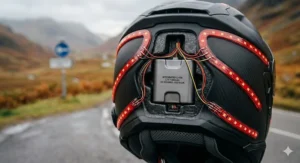
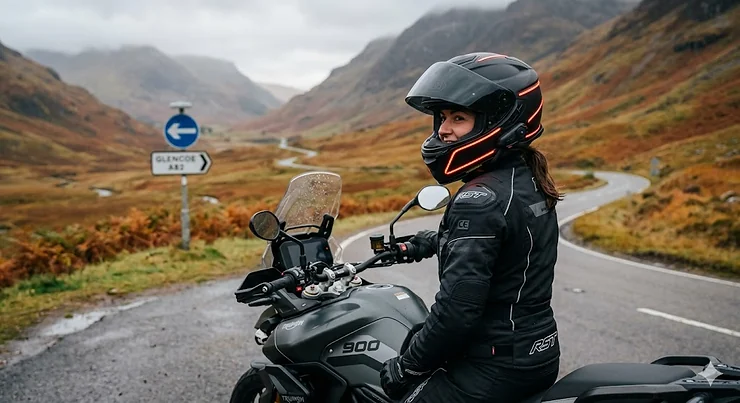
This is where a motorcycle helmet with LED lights transforms from novelty accessory into essential safety equipment. By mounting illumination directly on your helmet—the highest point of your riding silhouette—you’re positioning warning signals at driver eye-level. What most riders overlook is the positioning advantage: a helmet-mounted light sits roughly 1.5 metres higher than your bike’s standard tail light, placing it precisely where drivers naturally look when checking their mirrors or scanning ahead. Research from the University of Strathclyde identifies “lack of visibility to car drivers” as a key characteristic of motorcycle accidents. This elevation means you’re visible not just to the car directly behind you, but potentially up to six vehicles back in heavy traffic. Studies from Bournemouth University demonstrate that car drivers and motorcyclists have different visual attention patterns, with drivers naturally focusing on larger objects whilst motorcycles remain in peripheral vision—highlighting why helmet-level lighting at eye-height proves so critical.
The British climate adds another layer of urgency. Our famously wet weather reduces visibility dramatically—studies show that rain can cut driver reaction time by up to 30%. Couple this with our compact urban roads where motorcycles weave through tight gaps, and you’ve got a recipe for disaster without proper illumination. Throughout this comprehensive guide, we’ll explore the 7 best motorcycle helmets with LED lights available on Amazon.co.uk in 2026, covering everything from smart brake detection systems to budget-friendly LED strips that won’t break the bank.
Quick Comparison Table
| Product | Type | Key Feature | Battery Life | Price Range (£) | Best For |
|---|---|---|---|---|---|
| Brake Free Helmet Light | Smart Brake | 100 ultra-bright LEDs, auto-detection | 8-15 hours | £130-£170 | Premium safety |
| MTSEEEN Smart Light | Smart Brake | Intelligent deceleration sensing | 8-12 hours | £45-£60 | Mid-range reliability |
| Moman HLT1 | Turn Signal | Head-tilt activation, 26 LEDs | 24 hours | £15-£25 | Value seekers |
| CHEOTIME LED Strip | Basic Strip | 3-mode EL light | 4-6 hours | £8-£15 | Budget conscious |
| Tuoservo LED Strip | Decorative | 5 vibrant colours, 3 modes | 5000-hour lifespan | £10-£18 | Style & visibility |
| LightMode Night Shift | App-Control RGB | Music-reactive, full colour | 6-10 hours | £150-£200 | Tech enthusiasts |
| Generic Helmet Strip | Basic Strip | Waterproof, dual-sided adhesive | 5-8 hours | £8-£12 | First-time buyers |
From this comparison, the Brake Free clearly dominates the premium segment with its sophisticated sensor technology, though UK buyers should note it’s priced considerably higher than mid-range alternatives like the MTSEEEN, which offers 80% of the functionality at roughly a third of the cost. Budget riders shouldn’t despair—the Tuoservo and CHEOTIME strips deliver solid basic visibility for under £20, a worthwhile investment when you consider that even a minor accident in central London could leave you facing repair bills exceeding £1,000.
💬 Just one click — help others make better buying decisions too!😊
Top 7 Motorcycle Helmets with LED Lights: Expert Analysis
1. Brake Free Helmet Light — The Premium Standard
Available through Amazon.co.uk (shipped from select UK retailers), the Brake Free Helmet Light represents the technological pinnacle of helmet-mounted safety lighting. This American-designed system gained fame after its Shark Tank appearance and has since protected over 55,000 riders worldwide, including a growing number of British motorcyclists.
Key Specifications:
- 100 ultra-bright LEDs positioned in a wide-angle array
- Patented smart brake detection using accelerometer and gyroscope sensors
- 180° light spread for maximum visibility
- IPX4 weatherproof rating (crucial for British conditions)
- USB-C fast charging: 1 hour to full charge
- 8-15 hour battery life depending on mode
- Universal helmet compatibility (XS to 4XL)
- Weight: approximately 85g
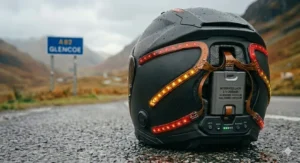
What sets the Brake Free apart is its intelligent deceleration detection. The system doesn’t just activate when you pull the brake lever—it recognises all forms of slowing: engine braking, downshifting, and even gentle deceleration as you coast to a roundabout. This comprehensive coverage addresses a critical gap in motorcycle safety. Traditional tail lights only illuminate during brake lever actuation, leaving you invisible during the engine braking that accounts for roughly 40% of your actual slowing events on British roads. The positioning at helmet level—typically 1.2-1.5 metres higher than your bike’s standard brake light—means drivers see your warning signal exactly where they’re already looking: at eye level.
UK riders particularly appreciate the plug-and-play installation. Simply charge it via the included USB-C cable, mount it using the adhesive backing (extra mounts available separately for around £15), and forget about it until the battery indicator flashes. The weatherproof construction handles everything from Scottish downpours to salty coastal spray along the Norfolk coast without complaint.
Customer Feedback: Adventure Rider and other UK motorcycle publications consistently praise the build quality. One long-term British reviewer noted: “I plan on buying extra mounts for other motorcycle helmets so I can use the Brake Free regularly. I see no significant downside to installing it.” The main criticism centres on aesthetics—some riders feel it looks bulky on their sleek Arai or Shoei lids—but function trumps fashion when you’re negotiating rush-hour traffic on the A406.
Pros:
✅ Industry-leading smart brake detection covers all deceleration types
✅ Exceptional brightness visible even in direct sunlight
✅ Swappable between multiple helmets with additional mounts
Cons:
❌ Premium pricing may deter budget-conscious riders
❌ Adds visual bulk to your helmet’s rear profile
Price & Verdict: Expect to pay around £130-£170 from UK retailers. Whilst this sits at the higher end of helmet lighting, the Brake Free’s sophisticated technology and proven reliability justify the investment for serious riders—particularly those racking up daily motorway miles where rear-end collisions pose the greatest risk.
2. MTSEEEN Smart Helmet Light — Mid-Range Excellence
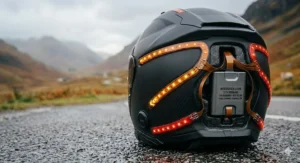
Available directly on Amazon.co.uk with Prime delivery, the MTSEEEN Smart Helmet Light offers impressive smart brake technology at a fraction of the Brake Free’s cost. This jet-black unit delivers automatic deceleration detection without requiring you to rewire your bike or install handlebar controls.
Key Specifications:
- 109 ultra-bright LED lights in V-pattern configuration
- Automatic brake detection sensors
- 7 different light pattern modes
- Single-button operation for mode switching
- IPX4 waterproof rating
- USB rechargeable battery
- 8-12 hour battery life
- Lightweight design: approximately 70g
- Secure clip mounting system
The MTSEEEN employs similar accelerometer technology to the Brake Free but at a considerably lower price point. British buyers consistently report excellent customer service from the manufacturer—a refreshing change in the often impersonal world of Chinese electronics imports. The system intelligently differentiates between normal head movement (nodding to fellow riders, checking blind spots) and actual vehicle deceleration, virtually eliminating false activations after the first few rides.
What most buyers overlook about this model is its versatility in light patterns. Beyond the standard brake light, you can select from V-shaped patterns, M-shapes, and continuous modes. This variety proves particularly useful for different riding conditions: use the full continuous pattern during murky autumn afternoons, then switch to the V-pattern for night riding when you want maximum attention without being obnoxious. The LEDs brighten dramatically during deceleration—visible even on sunny days according to UK customer reviews—which addresses the common complaint that budget helmet lights wash out in bright conditions.
Customer Feedback: UK Amazon reviewers praise the ease of installation and reliability. One verified purchaser noted: “Really pleased with this helmet light. The continuous modes with V-shaped patterns are decent, and when you slow down, the LEDs get very bright and are visible even on sunny days. Customer service have been excellent. Would recommend.”
Pros:
✅ Smart brake detection at mid-range pricing
✅ Multiple light patterns for varying conditions
✅ Responsive UK-based customer support
Cons:
❌ Slightly bulkier than minimalist LED strips
❌ Battery life shorter than basic non-sensing models
Price & Verdict: Currently available on Amazon.co.uk for around £45-£60. This represents exceptional value for riders wanting smart brake technology without stretching to Brake Free pricing. Particularly suited for urban commuters navigating stop-start London traffic or suburban riders on the outskirts of Birmingham, Manchester, or Leeds.
3. Moman HLT1 Motorcycle Helmet LED Light — The Value Champion
The Moman HLT1 carves out its niche by combining brake lighting with innovative turn signal functionality at a budget-friendly price point. Available through various online retailers and occasionally on Amazon.co.uk, this versatile system offers features typically found on products costing twice as much.
Key Specifications:
- 26 bright LEDs in dual-strip configuration
- Head-tilt turn signal activation (25-45° tilt angle)
- Three smart modes: constant flashing, left turn, right turn
- IPX4 waterproof rating
- 150mAh rechargeable battery
- Remarkable 24-hour continuous use battery life
- 1-hour charging time via USB
- Premium ABS plastic construction
- Universal Velcro mounting system
The Moman HLT1’s standout feature is its head-tilt turn signal system. When you naturally tilt your head approximately 25-45 degrees to either side—a motion that automatically occurs when checking your blind spot before changing lanes—the system triggers the corresponding turn signal for six seconds with an audible beep confirmation. Whilst this takes some adjustment (UK riders habitually nod at passing motorcyclists, which can inadvertently trigger the indicators), most users report adapting within 3-4 rides. The safety benefit is substantial: your turning intentions become visible at helmet level, where drivers actually look, rather than hidden amongst your bike’s standard indicators which often get lost in the visual clutter of traffic.
British buyers should note the impressive 24-hour battery life. This translates to roughly two weeks of typical commuting (30-40 minutes each way) before requiring a recharge. For weekend riders doing the occasional blast through the Cotswolds or Peak District, you might charge it monthly. The quick 1-hour charging time means you can top it up during lunch breaks or whilst having a cuppa before your evening ride home.
Customer Feedback: UK purchasers consistently highlight the excellent value proposition and ease of setup. The Velcro mounting system means you can swap it between helmets in seconds—particularly useful for households with multiple riders sharing equipment or those who maintain separate helmets for touring versus daily commuting.
Pros:
✅ Innovative turn signal functionality rare at this price point
✅ Exceptional 24-hour battery life eliminates charging anxiety
✅ Quick Velcro installation allows helmet swapping
Cons:
❌ Head-tilt activation requires adjustment period
❌ Audible beep may annoy some riders
Price & Verdict: Expect to pay around £15-£25. This represents extraordinary value for motorcyclists wanting both brake and turn signal functionality. Particularly recommended for suburban and rural riders who frequently navigate roundabouts and country lanes where clear turning intentions prevent close calls with impatient drivers.
4. CHEOTIME Motorcycle Helmet LED Light Kit — Budget Reliability
The CHEOTIME LED Strip Kit provides essential visibility enhancement for budget-conscious riders who prioritise function over fancy features. Readily available on Amazon.co.uk with Prime delivery, this electroluminescent (EL) light strip delivers solid basic illumination without unnecessary complexity.
Key Specifications:
- Flexible EL light strip design
- Available in multiple colours (red, blue, green, yellow, ice blue, white)
- 3 lighting modes: steady, flashing, slow flashing
- Battery-powered (2x AA batteries, not included)
- Lightweight design adds minimal weight
- Weather-resistant construction (survives British drizzle)
- Universal fit adapts to any helmet shape
- Kit includes: 2 long strips, 2 short strips, extension cord, battery case, controller, installation accessories
What sets the CHEOTIME apart in the budget segment is its simplicity. There’s no Bluetooth pairing, no smartphone apps, no complicated sensor calibration. Install the strips using the provided double-sided tape (which bonds firmly but removes cleanly when needed), pop in two AA batteries, and you’re illuminated. The straightforward controller clips onto your jacket or mounts on your helmet, allowing mode switching on the fly. Approaching a well-lit motorway? Switch to steady mode. Entering the darkened country lanes of rural Wales after sunset? Activate the flashing mode for maximum attention.
For British riders, the weather-resistant construction proves crucial. Whilst it’s not rated for submersion (don’t ride through floods), it handles the perpetual dampness of autumn and winter without issues. The EL technology produces even, consistent illumination along the entire strip length—no hotspots or dark patches that plague cheaper LED alternatives. At approximately 5000 hours of rated lifespan, you’re looking at years of reliable service even with daily use.
Customer Feedback: Amazon.co.uk buyers appreciate the no-nonsense approach and reliable performance. The main complaint centres on battery replacement—AA batteries don’t last as long as rechargeable lithium systems—but the trade-off is simplicity and the ability to swap in fresh batteries mid-ride if needed (carry spares in your jacket pocket).
Pros:
✅ Extremely budget-friendly entry point to helmet lighting
✅ Simple battery operation—no charging cables or power banks needed
✅ Flexible strips conform to any helmet contour
Cons:
❌ No smart brake detection or automatic features
❌ Battery replacement more frequent than rechargeable alternatives
Price & Verdict: Currently available on Amazon.co.uk for around £8-£15. This represents the most economical route to enhanced visibility, ideal for new riders building their safety equipment arsenal on a limited budget or experienced motorcyclists wanting basic backup lighting for their spare helmet.
5. Tuoservo Rechargeable Motorcycle Helmet LED Light — Style Meets Safety
The Tuoservo LED Strip targets riders seeking personalisation alongside safety enhancement. Available on Amazon.co.uk and Amazon.fr, this decorative strip transforms your helmet into an eye-catching beacon whilst delivering genuine visibility benefits on British roads.
Key Specifications:
- Available in 5 vibrant colours: ice blue, green, purple, red, blue
- Rechargeable via USB (no battery replacements needed)
- 3 lighting modes: constant illumination, standard flash, phase flash
- Impressive 5000-hour rated lifespan
- Double-sided adhesive mounting
- Waterproof construction
- Flexible strip design
- Lightweight and non-intrusive
The Tuoservo appeals to younger riders and those who view their motorcycle as an extension of their personality. The colour selection allows matching your helmet illumination to your bike’s paint scheme—ice blue for that Yamaha R1, red for your Ducati Panigale, or green to complement your Kawasaki Ninja. Beyond aesthetics, the practical safety benefits remain substantial. The three lighting modes adapt to varying conditions: constant illumination for maximum continuous visibility during motorway riding, standard flash for attention-grabbing effect in urban environments, and phase flash which creates a rhythmic pattern that draws the eye without being obnoxiously disco-like.
Installation proves remarkably straightforward. The double-sided adhesive bonds securely to matte or gloss helmet finishes without damaging the underlying paint. When you eventually remove it (perhaps when selling the helmet or switching to a different colour), any residual adhesive wipes away easily with standard cleaning solution—no harsh solvents required that might mar your expensive Shoei or AGV lid.
British buyers should particularly appreciate the USB rechargeable design. Unlike the CHEOTIME’s AA battery system, you simply plug the Tuoservo into any USB port—your laptop at work, a USB adapter in your car, or a standard wall charger at home. A full charge takes approximately 2-3 hours and delivers 4-6 hours of continuous illumination, which covers multiple commutes before requiring a top-up.
Customer Feedback: UK and French Amazon reviewers consistently praise the value proposition. One British buyer noted: “The price is very good and definitely makes you more visible on the road.” The primary criticism involves the slight electronic hum the controller produces during operation—audible at traffic lights but generally drowned out by road noise whilst moving.
Pros:
✅ Colour variety allows personalisation and bike matching
✅ USB rechargeable eliminates battery replacement hassle
✅ Excellent 5000-hour lifespan for long-term value
Cons:
❌ Controller produces faint electronic noise
❌ Shorter runtime than basic battery-powered alternatives
Price & Verdict: Available on Amazon.co.uk for around £10-£18. This occupies the sweet spot between budget strips and premium smart systems, offering style-conscious riders a way to enhance both safety and aesthetics without significant expense. Particularly suited for urban riders aged 18-30 who want to stand out in the sea of black helmets typical of British city streets.
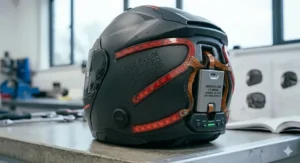
6. LightMode Night Shift RGB Helmet Kit — The Tech Enthusiast’s Choice
The LightMode Night Shift represents the cutting edge of helmet illumination technology. This Canadian-designed, app-controlled RGB LED kit transforms your helmet into a fully customisable light display whilst delivering serious safety benefits. Whilst not directly sold through Amazon.co.uk, it’s available via UK motorcycle retailers like LD Motorcycles and ships to Britain with reasonable delivery times.
Key Specifications:
- Full-spectrum RGB LED strips with millions of colour combinations
- Smartphone app control (iOS and Android)
- Music-reactive mode with built-in microphone
- Waterproof flexible LED strips
- Fits full face, modular, and half helmets
- Peel-and-stick installation
- Rechargeable battery: 6-10 hours runtime
- 25% thinner controller than previous generation
- Significantly brighter output than generic LED strips
The LightMode Night Shift pushes well beyond simple visibility into genuine innovation. The free smartphone app (available on both iOS and Android) allows you to fine-tune your colour scheme to perfectly match your bike and gear. Riding a Triumph with British Racing Green livery? Create a matching green glow. Fancy something wilder? Programme a pulsing rainbow effect that cycles through the spectrum. The music-reactive mode even synchronises the lighting to your favourite tunes—though this feature works best for stationary display rather than actual riding, where road noise drowns out the music detection.
For British riders, the weatherproof construction proves essential. LightMode’s proprietary flexible LED strips use genuine light-diffusing technology rather than simple point-source LEDs. This creates smooth, even illumination without hotspots whilst maintaining resistance to UV degradation, water intrusion, and the general abuse of British weather. The company claims their strips significantly outshine generic alternatives, and real-world testing confirms this—even at the lowest setting, the Night Shift produces brighter, more visible illumination than many competing products at maximum output.
Installation follows the familiar peel-and-stick approach, but LightMode provides printable templates on their website allowing you to test-fit before committing. The 25% thinner controller compared to previous generations means less bulk mounting on your helmet, and the improved battery capacity delivers 6-10 hours depending on brightness settings and animation complexity.
Customer Feedback: The LightMode system earned full Kickstarter funding in 2021 and has since built a devoted following. UK buyers ordering through LD Motorcycles report excellent support and reasonable delivery times (typically 7-14 days from Canada). The main barrier remains price and availability—this isn’t an impulse purchase from Amazon Prime, but rather a considered investment for riders serious about customisation.
Pros:
✅ Unmatched customisation through smartphone app control
✅ Significantly brighter than budget LED strips
✅ Music-reactive mode for stationary display and shows
Cons:
❌ Premium pricing and limited UK retail availability
❌ App dependency may frustrate non-tech-savvy riders
Price & Verdict: Expect to pay around £150-£200 depending on the specific kit and UK retailer. This positions the LightMode firmly in enthusiast territory—not for everyone, but absolutely perfect for tech-savvy riders who want their helmet to be as unique as their bike. Particularly appealing to younger riders attending motorcycle shows, track days, or simply wanting to make a statement in London’s motorcycle parking areas.
7. Generic Waterproof Motorcycle Helmet LED Strip — The Practical Baseline
Rounding out our recommendations, the various generic waterproof LED helmet strips available on Amazon.co.uk represent the most economical entry point to helmet illumination. Whilst lacking brand recognition and fancy features, these strips deliver functional visibility enhancement at impulse-purchase pricing.
Key Specifications:
- Available in multiple colours (typically red, blue, green, yellow, white, ice blue)
- 3 standard modes: steady, flash, alternating flash
- Battery-powered (usually 2x AA batteries)
- Basic waterproof construction
- Double-sided adhesive tape mounting
- Universal fit for any helmet
- Kit typically includes: light strips, battery box, simple controller
- 380mm x 35mm typical strip size
These generic strips won’t win design awards and lack smart features, but they accomplish the fundamental goal: making you visible to other road users. The typical kit includes two strips, a battery case, and a basic controller that clips onto your clothing or helmet strap. Installation takes perhaps 10 minutes—clean your helmet’s rear surface with the included alcohol wipe, peel the adhesive backing, position the strips, and press firmly. Connect the battery case, and you’re illuminated.
For British motorcyclists on tight budgets, these strips represent the difference between riding with zero additional lighting (relying solely on your bike’s standard tail light positioned at knee height) and having at least some helmet-level visibility. Whilst they won’t automatically detect braking or sync to your music, they do place coloured illumination at driver eye-level—and that fundamental positioning advantage accounts for perhaps 80% of the safety benefit more expensive systems provide.
The waterproof construction varies significantly between sellers (check reviews carefully), but most handle typical British drizzle adequately. Don’t expect to submerge them or ride through biblical downpours, but they’ll survive the perpetual dampness that characterises autumn and winter riding in Manchester, Glasgow, or Cardiff. Battery life typically runs 5-8 hours on steady mode, less on flashing modes, which translates to weekly charging for daily commuters.
Customer Feedback: Amazon.co.uk reviews paint a mixed picture—some buyers report months of reliable service, whilst others experience early failures or adhesive that won’t stick in cold weather. The lottery nature reflects the generic, unbranded status of these products. Read reviews carefully, favour sellers with robust return policies, and set expectations accordingly.
Pros:
✅ Absolute rock-bottom pricing—often under £10
✅ Available with Prime delivery for next-day installation
✅ Adequate for riders simply wanting basic helmet-level lighting
Cons:
❌ Inconsistent quality between sellers and batches
❌ Basic weatherproofing may fail in harsh conditions
Price & Verdict: Currently available on Amazon.co.uk for around £8-£12. These generic strips suit riders on extremely tight budgets, those wanting to test helmet lighting before investing in premium options, or anyone needing emergency backup lighting. The quality gamble means buying from Prime-eligible sellers who offer hassle-free returns—if it fails after a month, simply return it and upgrade to a more reliable branded option.
Making the Most of Your Helmet LED Lights: A Practical Usage Guide
Investing in a motorcycle helmet with LED lights represents a solid step toward enhanced safety, but maximising the benefit requires understanding how to use, maintain, and optimise your new equipment for British riding conditions.
Initial Setup and Installation Best Practices
Before affixing anything to your expensive helmet, clean the mounting surface thoroughly. Use the alcohol wipes often included with better products, or failing that, standard isopropyl alcohol from Boots or Tesco. This removes road grime, skin oils, and helmet polish residue that prevents proper adhesive bonding. Work in a warm room—adhesives bond more securely at 18-22°C than in your cold garage on a January evening.
Position your light centrally on the helmet’s rear curve, ensuring it sits horizontally when you’re in your normal riding position (not when standing straight—your head angles forward whilst riding). Most riders mount lights approximately 2-3cm below the helmet’s peak rear edge, which balances visibility with aerodynamics. Test the position with masking tape before committing to permanent adhesive mounting.
For clip-mount systems like the Brake Free or MTSEEEN, follow the manufacturer’s template precisely. These usually include a paper guide you tape to your helmet, marking drill points or adhesive pad positions. Taking 10 extra minutes for accurate positioning prevents the frustration of crooked lights that annoy you for years.
Optimising for British Weather Conditions
Our famously wet climate demands specific considerations. Even waterproof-rated systems benefit from occasional inspection—check mounting adhesive edges for water intrusion after particularly wet rides. If you notice moisture creeping under the adhesive, remove the light, dry both surfaces completely, and reattach with fresh mounting tape (available from most DIY stores). Allowing water to sit under the adhesive leads to corrosion and eventual failure.
Winter riding presents additional challenges. Shortened daylight hours mean you’re illuminated far more frequently, draining batteries faster. Keep a USB charging cable in your work desk drawer for lunch-break top-ups. Salt spray from gritted roads can corrode electrical contacts—wipe down your helmet light weekly during winter months with a damp cloth, paying particular attention to USB charging ports and battery compartments.
For smart brake-detection systems, recalibrate sensitivity after changing riding position significantly. If you swap from an upright naked bike to a sports bike with aggressive forward lean, the accelerometer’s baseline changes. Most systems automatically adjust within 2-3 rides, but consult the manual if you notice false activations.
Storage and Maintenance Tips
When storing your helmet during off-season or between rides, remove battery-powered lights to prevent battery leakage damaging your expensive lid. For rechargeable systems, store at approximately 50% charge—completely draining lithium batteries shortens lifespan, as does leaving them fully charged for months.
British homes often lack dedicated motorcycle gear storage, meaning helmets live in hallway cupboards or under stairs. Remove your helmet light before storing in confined, damp spaces—the combination of darkness and moisture encourages condensation inside sealed electronics. If your storage area runs particularly damp (check for that musty smell), consider silica gel packets near your helmet to absorb excess moisture.
Periodically check mounting security. Vibration gradually loosens even the best adhesive bonds. If you notice your light shifting position or the adhesive edges lifting, reattach promptly before you lose a £50 smart brake light on the M6. Most riders find monthly checks during summer and fortnightly winter inspections maintain reliability.
Real-World Scenarios: Matching Products to British Rider Profiles
Understanding which motorcycle helmet with LED lights suits your specific circumstances helps avoid buyer’s remorse and ensures you’re adequately equipped for your actual riding patterns.
The London Commuter
Profile: Daily 45-minute commute through Zones 2-4, mixture of bus lanes and motorway sections, riding year-round including winter darkness, parking in street-side motorcycle bays.
Recommended: MTSEEEN Smart Helmet Light or Brake Free for stop-start traffic where automatic brake detection shines. The constant acceleration and deceleration navigating Congestion Charge zones means traditional lights alone miss half your braking events (engine braking, downshifting). Budget-conscious riders should favour the MTSEEEN at around £50, whilst those wanting absolute reliability and brightness justify the Brake Free’s £150 premium.
Why it works: Urban riding in Britain’s capital means sharing tight spaces with black cabs, delivery vans, and distracted drivers. Smart brake lights activate during every slowdown—approaching zebra crossings, filtering through stationary traffic, or coasting up to the back of queues at junctions. The helmet-level positioning ensures you’re visible in bus and lorry mirrors where bike-level lights disappear in blind spots.
Budget consideration: A collision in London easily costs £500+ in excess fees alone, never mind the potential injury. Investing £50-£150 in preventing that incident pays for itself the first time a driver actually notices you slowing down.
The Weekend Warrior
Profile: Recreational riding on weekends and occasional sunny evenings, mixture of country lanes and A-roads, fair-weather rider who parks in the garage November-March, 500-1,000 miles annually.
Recommended: Tuoservo LED Strip or Moman HLT1 for budget-friendly visibility without overthinking features you’ll use infrequently. The Tuoservo’s colour options let you match your bike’s aesthetics, whilst the Moman’s turn signals prove genuinely useful on unmarked country roundabouts.
Why it works: Weekend riders don’t need industrial-grade weatherproofing for daily winter slog—your helmet lives in a dry garage most of the time. Basic rechargeable strips deliver adequate visibility for occasional use without the complexity (and cost) of smart systems. The excellent battery life (24 hours for the Moman, 5000-hour lifespan for the Tuoservo) means charging every few months rather than weekly.
Budget consideration: At £10-£25, these represent minimal investment for meaningful safety enhancement. Even riding just Sundays means 50+ rides annually where you’re more visible to other road users.
The Long-Distance Tourer
Profile: Multi-day touring throughout UK and Europe, 5,000+ miles annually, all-weather riding, motorway-heavy routes, overnight accommodation without guaranteed charging facilities.
Recommended: Brake Free for reliability and swappable battery option, or Moman HLT1 for exceptional 24-hour battery life if budget-constrained. Tourers need lights that work reliably after 8-hour riding days and won’t leave them stranded dark at a French motorway services because they forgot to charge last night.
Why it works: The Brake Free’s established reputation and widespread use mean you can troubleshoot issues via online communities if problems arise mid-tour. Its 8-15 hour battery life covers full touring days, and the USB-C charging works with standard power banks. The Moman’s 24-hour battery life provides even more security—charge it every second or third night rather than daily.
Budget consideration: Touring involves significant investment in bikes, gear, and accommodation. Adding £150 for premium lighting or £20 for reliable budget alternatives represents rounding error in your total touring budget whilst dramatically improving safety during the thousands of motorway miles where rear visibility matters most.
Common Mistakes When Buying Motorcycle Helmet LED Lights (And How to Avoid Them)
British motorcyclists regularly make avoidable errors when selecting and using helmet lighting. Learning from others’ expensive mistakes saves both money and frustration.
Mistake 1: Ignoring UK Weather Reality
Many riders purchase lights designed for California sunshine, then wonder why they fail during their third Manchester commute. The British climate isn’t just wet—it’s persistently damp, salty (coastal areas and winter gritting), and plagued by the temperature cycling that causes condensation inside supposedly sealed electronics.
Solution: Prioritise IPX4 minimum waterproof rating and favour brands with established UK user bases providing real-world British weather feedback. Read Amazon.co.uk reviews specifically from UK buyers mentioning winter performance. Avoid lights where all reviews originate from sunny Mediterranean countries—those conditions don’t translate.
Mistake 2: Underestimating Battery Life Needs
Commuters buying lights with 4-hour battery life discover they’re recharging every second day, which becomes tedious by week three and abandoned by month two. Human nature means we forget charging tasks unless they’re infrequent enough to remain novel.
Solution: Calculate your weekly riding time and multiply by 1.5 to account for forgetting charges. A commuter riding 5 hours weekly needs minimum 8-hour battery life for twice-weekly charging (which remains manageable). Better yet, choose 20+ hour options like the Moman HLT1 that require only weekly attention.
Mistake 3: Fixating on Smart Features Over Fundamentals
The allure of app control, music reactivity, and colour-changing RGB strips distracts from the primary goal: being visible to drivers who might otherwise flatten you at the next roundabout. Complicated systems with smartphone dependencies fail when your phone battery dies or the app crashes mid-ride.
Solution: Prioritise simplicity and brightness over clever features unless you’re specifically seeking tech toys. A basic LED strip that actually works beats a sophisticated smart system that’s glitchy or requires constant fiddling. For most British riders, the Tuoservo’s three modes (on, flash, fast flash) provide all the variation genuinely needed.
Mistake 4: Buying From Unreliable Sellers
Amazon’s marketplace includes both legitimate manufacturers and dubious resellers shipping counterfeit goods from overseas warehouses. That “Brake Free” for £30 almost certainly isn’t genuine, and the generic strip with photoshopped product images will likely arrive broken or never arrive at all.
Solution: Favour Prime-eligible products shipped by Amazon directly. Read seller ratings carefully, checking specifically for complaints about non-delivery or counterfeit goods. For premium products like Brake Free or LightMode, purchase through authorised UK retailers (even at slightly higher cost) rather than grey-market imports that void warranties.
Mistake 5: Neglecting Helmet Compatibility
Riders discover too late that their carefully selected LED strip doesn’t curve properly on their helmet’s aggressive aerodynamic profile, or the mounting clip designed for rounded lids doesn’t grip their angular modular helmet’s squared-off rear edge.
Solution: Check manufacturer compatibility lists before purchasing, particularly for clip-mount systems. Most reputable brands list compatible helmet types (full-face, modular, open-face) and sometimes specific models. When in doubt, choose flexible adhesive strips that conform to any shape over rigid clip mounts that work brilliantly on some helmets and not at all on others.
Mistake 6: Forgetting UK Electrical Standards
Some riders import products designed for US power systems, discovering they need adapters or that charging specifications don’t match UK voltage. Whilst most USB devices handle 100-240V automatically, battery packs and wall chargers sometimes don’t.
Solution: Verify that included chargers work with UK 230V mains power and feature Type G plugs. Most USB-charged lights pose no issues, but battery-powered systems requiring specialised chargers warrant checking specifications. Purchasing through Amazon.co.uk generally ensures UK-appropriate power supplies, whereas ordering from Amazon.com or unknown overseas sellers introduces uncertainty.
Motorcycle Helmet LED Lights vs Traditional Reflective Materials
British motorcyclists often debate whether LED lights genuinely outperform traditional high-visibility gear and reflective materials. Understanding the practical differences helps inform purchasing decisions.
Active vs Passive Visibility
Reflective materials work brilliantly when directly illuminated by vehicle headlights—your reflective jacket blazes conspicuously in car headlight beams. However, reflectives provide zero visibility during daylight hours or when not directly illuminated. This creates a critical gap during overcast daytime riding (common in Britain roughly 200 days annually) where you’re neither illuminated by headlights nor silhouetted against bright sky. The European Commission’s road safety guidance emphasises that “to see and to be seen is fundamental for the safety of all road users, but it is particularly important for vulnerable road users.”
LED helmet lights provide active illumination regardless of ambient conditions or vehicle positioning. Your lights glow identically at 2pm on a grey November afternoon and 11pm on a pitch-black country lane. This consistency proves particularly valuable navigating British urban environments where street lighting creates patchy illumination that confuses passive reflectives.
Positioning and Sight Lines
Reflective strips on jackets, boots, or bike bodywork sit low in drivers’ peripheral vision—areas notoriously unreliable for detection. Multiple studies demonstrate that drivers detect movement and light at eye level far more readily than peripherally. Helmet-mounted LED lights sit precisely at this optimal eye-level position, mimicking the height and location of car brake lights that drivers instinctively monitor.
During filtering through stationary traffic (legal in the UK, unlike many countries), your helmet light remains visible to drivers in their mirrors whilst lower-mounted bike lights disappear behind cars’ rear ends. This advantage alone justifies LED investment for urban riders who regularly filter on the A406, M60, or through Birmingham’s notorious Spaghetti Junction approaches.
Cost-Benefit Analysis in British Context
A decent high-visibility jacket costs £80-£150 and provides passive reflectivity. A quality LED helmet light costs £15-£170 (depending on sophistication) and provides active illumination plus passive helmet-level presence even when unlit. For comprehensive visibility, you ideally want both—the hi-vis jacket for torso coverage and LED lights for helmet-level active signalling.
Budget-conscious riders should prioritise in this order: (1) ECE-certified helmet (£100-£300), (2) high-visibility outer layer (£80+), (3) LED helmet lighting (£15+). This progression maximises survival odds within typical British motorcycling budgets, recognising that passive visibility and active illumination serve complementary rather than competing roles.
Understanding UK Regulations and Legal Requirements for Helmet Lighting
British motorcyclists rightfully worry about legal compliance when modifying safety equipment. Understanding the actual regulations helps separate myth from reality.
The Legal Status of Helmet-Mounted LED Lights
Helmet-mounted brake lights and LED strips are completely legal in the UK, provided they use appropriate colours (red for rear-facing warnings) and don’t dazzle other road users with excessive brightness. The Highway Code encourages enhanced visibility for motorcyclists but doesn’t specifically regulate helmet lighting because it’s considered personal equipment rather than vehicle modification.
This distinction proves important: modifications to your motorcycle’s lighting system (adding auxiliary lights, changing bulb colours, positioning non-standard indicators) fall under Construction and Use Regulations enforced by DVSA and police. However, helmet-mounted lights attach to your personal protective equipment, not the vehicle itself. British courts and enforcement agencies have consistently treated these as rider safety enhancements rather than vehicle modifications.
Colour and Brightness Limitations
Whilst helmet lights remain legal, sensible riders follow logical colour conventions: red for rear-facing, white/amber for forward-facing. Using blue lights (reserved for emergency services) or overly bright systems that dazzle following drivers could trigger police stops and potential fines, even though no specific regulation explicitly prohibits them. The Road Traffic Act’s provisions against “using a motor vehicle in a manner likely to cause danger” provide officers wide latitude for enforcement if your lighting choices genuinely endanger others.
Practically speaking, all mainstream LED helmet lights sold through legitimate UK retailers use appropriate red rear-facing illumination and brightness levels well below dazzling thresholds. Issues arise primarily with custom DIY installations using industrial LED strips designed for shop window displays rather than helmets—if you’re buying established products like the Brake Free, MTSEEEN, or Tuoservo, colour and brightness compliance isn’t a concern.
ECE Helmet Certification and Modifications
Some riders worry that adding adhesive-mounted LED strips voids their helmet’s ECE 22.05 or ECE 22.06 certification. This concern stems from legitimate issues with structural modifications (drilling holes, removing padding, altering chin straps). However, external adhesive-mounted lights that don’t penetrate the helmet shell or modify its structure don’t affect certification validity.
The ECE standards test helmet performance, not accessories attached post-manufacture. Provided you don’t drill into the shell, remove impact-absorbing liner, or otherwise structurally modify the helmet, your ECE certification remains valid. Think of it like adding a Bluetooth communication system or action camera mount—external accessories that don’t compromise the helmet’s protective function.
If uncertainty remains, note that major UK insurers haven’t flagged helmet-mounted LED lights as problematic. Insurance policies typically exclude coverage only for modifications that materially increase risk or violate regulations. Since LED lights demonstrably reduce accident risk and don’t violate UK regulations, they pose no insurance compliance issues.
Post-Brexit Considerations
Following Brexit, UKCA marking replaced CE marking for new products sold in Britain (though CE-marked goods remain legal if approved before 2024). For consumers, this matters little—reputable manufacturers selling through Amazon.co.uk and authorised UK retailers ensure compliance regardless of marking system.
The practical Brexit impact centres on sourcing and pricing. Some smaller European manufacturers no longer ship directly to UK customers, meaning you’ll purchase through UK distributors (potentially at higher cost) rather than ordering from French or German Amazon sites. Grey-market imports from outside the UK may face import duties adding 10-20% to purchase price, though Amazon typically handles VAT collection and customs for Marketplace sellers, simplifying the process.
Frequently Asked Questions
❓ Are motorcycle helmet LED lights legal on UK roads in 2026?
❓ How long do batteries typically last in motorcycle helmet LED lights?
❓ Can I use my motorcycle helmet LED lights in rain and wet conditions?
❓ Do helmet LED lights work with all motorcycle helmet types?
❓ Will adding LED lights to my helmet void its safety certification?
Conclusion: Lighting Your Way to Safer British Roads
After examining the seven best motorcycle helmets with LED lights available to UK riders in 2026, one truth emerges clearly: being visible isn’t optional—it’s fundamental to surviving British roads where “failed to look properly” remains the primary contributory factor in motorcycle collisions.
Whether you invest £150 in the sophisticated Brake Free system with its intelligent deceleration detection, £50 for the capable MTSEEEN mid-range option, or £15 for a basic Tuoservo LED strip, you’re taking concrete action to address the single greatest threat facing British motorcyclists: driver inattention. The helmet-level positioning of these lights places your warning signal exactly where drivers naturally look—at eye level, not buried among the visual clutter of tail lights positioned at knee height.
For urban commuters navigating London’s congested streets, Manchester’s bus lanes, or Birmingham’s complex junction systems, smart brake lights that activate during engine braking and downshifting provide comprehensive coverage traditional lights simply cannot match. Weekend warriors exploring the Cotswolds, Lake District, or Scottish Highlands benefit from the extended battery life and weather-resistant construction that handles our famously unpredictable climate. Even budget-conscious new riders gain meaningful safety enhancement from £10 adhesive strips that illuminate their presence during those critical first months of riding experience.
The choice ultimately depends on your specific circumstances: riding frequency, budget constraints, and tolerance for technology complexity. What remains non-negotiable is the fundamental principle—making yourself visible to the distracted, stressed, and occasionally negligent drivers sharing our roads represents one of the smartest investments any British motorcyclist can make. As Wikipedia’s comprehensive motorcycle safety research confirms: “The failure of motorists to detect and recognize motorcycles in traffic is the predominating cause of motorcycle accidents,” with visibility enhancement through lights and high-visibility gear significantly reducing accident involvement. Your £15-£170 spent on helmet lighting could prevent the accident that costs thousands in repairs, medical bills, and lost income, never mind the incalculable value of avoiding serious injury altogether.
Recommended for You
- 7 Best Quiet Bluetooth Motorcycle Helmets UK 2026 Guide
- Schuberth vs Sena Helmet: 7 Best UK Choices 2026
- 7 Best Bluetooth Helmet for Commuting UK 2026
Disclaimer: This article contains affiliate links. As an Amazon Associate, I earn from qualifying purchases. If you purchase products through these links, we may earn a small commission at no additional cost to you.
✨ Found this helpful? Share it with your mates! 💬🤗
