
In This Article
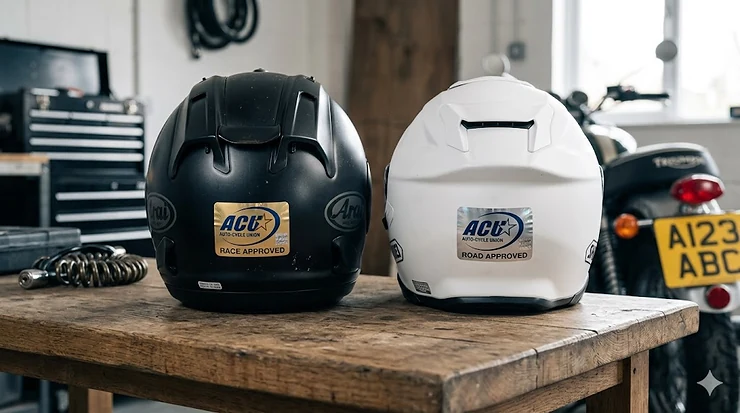
Choosing between ACU Gold vs ACU Silver helmet certifications can feel like deciphering a foreign language, especially when you’re standing at the circuit gates with your heart racing and a marshal pointing at your lid. The difference between these two standards isn’t just technical jargon—it determines whether you’ll be waving from the paddock or actually riding on the tarmac.
The Auto-Cycle Union (ACU), Britain’s governing body for motorcycle sport since 1906, awards these certifications to helmets that meet specific safety thresholds for racing environments. ACU Gold represents the higher standard, mandatory for road racing, sprints, drag racing, and any speed event held wholly or partially on bound metalled surfaces. ACU Silver, historically the lower tier, was acceptable for off-road disciplines like motocross and enduro alongside Gold certification. However, here’s the twist most buyers miss: ACU Silver has been gradually phased out following the widespread adoption of ECE 22.05 standards, making ACU Gold the de facto requirement for virtually all UK motorsport events in 2026.
What the spec sheets won’t tell you is that ACU approval is solely for track and competition use—not a legal requirement for road riding. Your perfectly legal ECE 22.06 road helmet might get you turned away at Brands Hatch, whilst that ACU Gold sticker guarantees entry to most UK circuits. British track day organisers typically check for that distinctive gold sticker during technical inspection, though enforcement varies considerably. Some marshals barely glance; others scrutinise every millimetre. The safest approach? Get ACU Gold if you’re serious about track time. According to UK government road safety guidelines, helmets must meet British Standard BS 6658:1985 and carry the BSI Kitemark, ECE 22.05, or ECE 22.06 for road use—but track use requires the additional ACU certification.
The certification process involves independent testing beyond the standard ECE requirements, with particular emphasis on impact resistance at racing speeds and structural integrity during multiple impacts. Manufacturers must submit helmets for ACU evaluation and pay licensing fees for the privilege of affixing those coveted stickers. Not all distributors bother with the paperwork, which explains why some perfectly capable helmets arrive in the UK sans sticker. For approximately £30-50, you can send your helmet directly to ACU headquarters in Rugby for individual approval—worth considering if you’ve imported a lid or had custom paintwork done.
Quick Comparison: ACU Gold vs ACU Silver Helmet
| Feature | ACU Gold | ACU Silver |
|---|---|---|
| Primary Use | Road racing, tarmac events, sprints, drag racing, hill climbs | Off-road events, motocross, enduro (historically) |
| Current Status 2026 | Active and required | Phased out / discontinued |
| Track Day Eligibility | Accepted at all UK circuits | Limited acceptance; check specific event rules |
| Cost Premium | Typically £70-£800+ | N/A (no longer issued) |
| Road Legality | Requires ECE 22.06 in addition | Requires ECE 22.06 in addition |
💬 Just one click — help others make better buying decisions too!😊
Top 7 ACU Gold Helmets for UK Track Days: Expert Analysis
1. MIDA MV-151 Full Face ACU Gold
The MIDA MV-151 proves budget doesn’t mean compromise when it comes to track certification. Available on Amazon.co.uk in the £74-£89 range, this polycarbonate full-face helmet punches considerably above its price bracket with both ACU Gold approval for circuit use and ECE 22.06 certification for road legality.
What sets the MV-151 apart in the budget segment is the inclusion of both clear and tinted 3D-moulded anti-scratch visors as standard—a thoughtful touch that saves you £20-30 on aftermarket purchases. The ventilation system employs a straightforward design with chin air intakes and rear exhaust ports, though don’t expect wind-tunnel-optimised airflow at this price point. On sweltering British summer days (all three of them), you’ll appreciate the closeable vents during those inevitable autumn and winter track sessions when hypothermia feels more imminent than glory.
The quick-release ratchet strap system divides opinion among UK riders. Some appreciate the convenience for frequent on-off situations; others prefer traditional double-D rings for peace of mind during spirited riding. The removable, washable liner uses transpiring fabric—essential after you’ve been sweating through your first few track sessions whilst trying not to bin it at Paddock Hill Bend.
UK customer feedback highlights excellent value but notes the build quality feels noticeably budget-oriented. One Amazon reviewer stated it “looked great but felt very cheap,” whilst another praised it after testing durability the hard way: “protected my head when I came off at the race track, so tried and tested.” That real-world crash performance matters more than any specification sheet.
✅ Pros:
- Unbeatable price point for ACU Gold certification
- Dual visors included (clear and tinted)
- Lightweight polycarbonate construction reduces neck fatigue
❌ Cons:
- Build quality feels budget-oriented compared to premium brands
- Ventilation adequate but not exceptional
Best For: Entry-level track day riders, budget-conscious racers, or anyone wanting a dedicated circuit helmet without remortgaging the house. Around £75-£90 represents extraordinary value for ACU Gold approval.

2. HJC C10 Epic Full Face Helmet
The HJC C10 represents Korean manufacturing excellence at a competitive price point, typically around £85-£110 on Amazon.co.uk depending on graphic variations. HJC’s reputation for producing reliable, well-engineered helmets at accessible prices shines through the C10’s specification sheet, which includes ACU Gold and ECE 22.06 approval alongside features usually reserved for mid-range lids.
The Advanced Polycarbonate Composite shell employs CAD-optimised design to minimise weight whilst maintaining structural integrity—my medium sample feels noticeably lighter than competing budget helmets, reducing neck strain during extended track sessions. HJC uses multiple shell sizes across their range (3XS through 2XL), preventing that bobblehead look smaller riders sometimes endure with single-shell-size competitors.
The ACS (Advanced Channeling Ventilation System) deserves particular mention for British conditions. Three intake vents and two exhausts create genuine front-to-back airflow that actually works, unlike some budget lids where “ventilation” is purely decorative. During damp British mornings—and let’s face it, that’s most mornings—the moisture-wicking interior and quick-drying function prove their worth. The Pinlock-ready HJ-34P visor with anti-scratch coating and 99% UV protection handles everything from blazing summer sunshine to those dreary November afternoons at Cadwell Park.
Speaker pockets accommodate Bluetooth communication systems, though the intercom itself is sold separately. UK buyers consistently praise the C10’s comfort levels, with one Amazon reviewer noting it’s “brilliant for the price, great to see a budget helmet with recessed pockets for speakers and headsets.” The 10mm enlarged field of view makes a tangible difference when you’re trying to spot that apex marker whilst leaned over at enthusiasm-exceeding-talent angles.
✅ Pros:
- Multiple shell sizes ensure proper proportions across all head sizes
- Effective ventilation system for British climate
- Speaker pockets for Bluetooth compatibility
❌ Cons:
- Plain aesthetics won’t turn heads in the paddock
- Visor mechanism feels slightly budget compared to premium alternatives
Best For: Track day regulars seeking reliable performance without premium pricing. The £85-£110 range positions it perfectly for riders graduating from entry-level lids but not ready for £400+ investments. Particularly suited to British weather with its moisture management.
3. LS2 FF353 Rapid II
The LS2 FF353 Rapid II occupies that sweet spot between budget accessibility and mid-range refinement, priced between £95-£135 on Amazon.co.uk depending on graphic complexity. LS2’s international reputation for delivering safety without financial savagery makes this Spanish manufacturer’s offering particularly attractive to UK riders seeking ACU Gold approval on a sensible budget.
The multi-density EPS liner provides superior impact absorption compared to single-density alternatives, whilst the laser-cut 3D foam interior eliminates those pressure points that transform a comfortable lid into a medieval torture device after 30 minutes. British riders with longer hair appreciate the Emergency Release System, which allows medical personnel to remove cheek pads quickly following an incident—a feature you hope never to use but deeply appreciate having.
Ventilation employs multiple adjustable intake and exhaust vents that actually move meaningful volumes of air, crucial when you’re riding through British summer humidity in full leathers. The optical clarity of the class 1 visor surpasses budget competitors, with anti-fog and anti-scratch treatments that withstand British weather’s relentless assault. UK customer feedback consistently highlights comfort as the FF353’s standout attribute, with several Amazon reviewers noting it remains pleasant during multi-hour sessions.
The integrated sun visor divides opinion—some riders love the convenience for variable British conditions, whilst purists prefer the optical clarity of single-visor systems. At 1,350g ± 50g for a medium, the FF353 sits comfortably in the mid-weight category, neither featherlight nor neck-straining.
✅ Pros:
- Multi-density EPS offers enhanced impact protection
- Laser-cut 3D interior eliminates pressure points
- Emergency Release System for medical situations
❌ Cons:
- Graphics options can push price toward mid-range territory
- Integrated sun visor adds complexity some riders don’t want
Best For: Intermediate track riders who’ve outgrown entry-level equipment but find premium pricing excessive. Particularly suitable for riders doing 6+ track days annually who need comfort and durability. £95-£135 delivers genuine mid-range performance.
4. Scorpion EXO-490 ACU Gold
The Scorpion EXO-490 demonstrates what £110-£140 can achieve when a manufacturer focuses on essentials rather than gimmicks. Scorpion’s Chinese manufacturing keeps costs reasonable whilst their Korean quality control ensures standards remain high. ACU Gold certification comes standard, making this polycarbonate-shelled lid track-ready from the moment it arrives.
Three shell sizes prevent the aesthetic absurdity of tiny heads swimming in oversized shells, whilst the deep gloss finish and quality graphics give it a premium appearance that belies the modest price tag. At 1,602g for an XL, the EXO-490 sits at the weightier end of budget helmets, though it won’t cause neck strain unless you’re doing endurance racing.
The ventilation system employs two independently closeable top vents plus a front intake, with always-open rear exhausts. Performance proves “acceptably effective” rather than exceptional—adequate for British track days but not matching premium helmets’ airflow. UK tester Nigel Mann noted the noise level sits comfortably between budget and premium: “Not as quiet as my Shoei, but it isn’t as loud as my Arai.”
The quick-release visor mechanism employs a six-position ratchet operated from a single left-side tab—convenient once accustomed but frustrating when you’re holding the clutch at traffic lights. Visor changes happen quickly thanks to a clever single-lever system on each side. A Pinlock MaxVision anti-fog insert comes included, preventing the condensation that plagues cheaper lids during damp British conditions.
✅ Pros:
- Premium aesthetics at budget pricing
- Pinlock MaxVision included as standard
- Three shell sizes ensure proper proportions
❌ Cons:
- Weight sits at heavier end of segment
- Single-side visor tab proves occasionally inconvenient
Best For: Budget-conscious riders who refuse to compromise on appearance. The EXO-490 delivers premium looks without premium pricing, ideal for riders concerned about paddock aesthetics alongside protection. Around £110-£140 represents solid value, particularly with the included Pinlock.
5. Scorpion EXO-1400 Carbon
The Scorpion EXO-1400 Carbon occupies premium territory at £350-£450, delivering genuine carbon-fibre construction with ACU Gold certification for serious track day enthusiasts. At just 1,259g for a medium shell, this represents one of the lighter helmets available, noticeably less burdensome than the Shoei GT Air II (1,350g) or Arai Profile-V (1,586g).
The carbon-fibre and Kevlar composite shell construction feels disconcertingly flexible compared to Arai’s famously rigid shells—that suppleness is by design, absorbing energy through controlled deformation rather than pure rigidity. ECE 22.05 certification alongside the ACU Gold sticker confirms it meets both road and racing safety thresholds, whilst the five-year warranty demonstrates Scorpion’s confidence in their Korean manufacturing.
Ventilation proves effective on most bikes, though fairing design significantly influences airflow over your head. The wide-aperture visor provides excellent peripheral vision, crucial when you’re checking for overtaking lunatics at track days. UK tester feedback notes potential pressure points across the brow area—helmet fit remains intensely personal, so trying before buying proves essential. Some riders experience discomfort after an hour; others find it perfect from the first wear.
The Pinlock anti-fog system works brilliantly during damp British mornings, whilst the quick-change visor mechanism allows swift transitions between clear and tinted options. Build quality feels premium throughout, from the precisely aligned graphics to the smoothly operating vents. UK availability through Amazon.co.uk and specialist retailers ensures reasonable delivery times and hassle-free returns under UK consumer protection.
✅ Pros:
- Genuine carbon-fibre construction at accessible premium pricing
- Exceptionally lightweight reduces neck fatigue during extended sessions
- Five-year warranty demonstrates manufacturer confidence
❌ Cons:
- Flexible shell construction disconcerts riders accustomed to rigid Arai helmets
- Potential pressure points require trying before buying
Best For: Committed track day riders doing 10+ sessions annually who want lightweight performance without venturing into £600+ territory. The £350-£450 price range positions it as an accessible premium option for serious enthusiasts. Not ideal for casual riders who won’t appreciate the weight savings.
6. Shox Sniper EVO ACU Gold
The Shox Sniper EVO exemplifies British budget helmet manufacturing, typically available through UK retailers around £90-£120. Shox’s reputation for delivering ACU Gold approval at entry-level pricing makes them popular among novice racers and track day newcomers exploring whether circuit riding justifies expensive equipment investments.
The polycarbonate shell employs a sleeker evolution of previous Shox designs, with improved aerodynamics that reduce buffeting at motorway speeds during the journey to circuits. Pinlock compatibility comes standard, essential for British weather’s assault on visor clarity. The ventilation system proves adequate rather than exceptional—sufficient for spring and autumn track days but potentially overwhelming during rare British heatwaves.
UK customer feedback highlights the Sniper EVO’s comfort as its standout characteristic, with many riders noting it remains pleasant during multi-hour sessions. The quick-release visor mechanism operates smoothly, whilst the removable, washable liner maintains freshness despite post-session helmet-hair sweatiness. Build quality feels appropriate for the price point—robust enough for regular use but lacking the precision engineering of premium manufacturers.
The ACU Gold certification opens doors at UK circuits, whilst ECE 22.05 approval ensures road legality for the journey there and back. Shox’s UK-based customer service proves valuable for warranty claims and replacement parts, avoiding the international shipping hassles some competitors impose. At £90-£120, the Sniper EVO delivers exactly what budget-conscious track riders need without frivolous features.
✅ Pros:
- Budget pricing with ACU Gold certification
- UK-based customer service simplifies warranty claims
- Improved aerodynamics reduce motorway buffeting
❌ Cons:
- Build quality feels distinctly budget-oriented
- Ventilation adequate but not impressive
Best For: Track day beginners testing whether circuit riding suits them before committing to expensive equipment. The £90-£120 price point allows experimentation without financial commitment. Also ideal as a dedicated track helmet for road riders unwilling to risk their expensive touring lids.
7. AGV K6 ACU Gold
The AGV K6 represents Italian performance engineering at premium pricing, typically £450-£600 on Amazon.co.uk depending on graphic sophistication. AGV’s racing pedigree—worn by MotoGP champions including Valentino Rossi—informs every aspect of the K6’s design, from the aerodynamically optimised carbon-aramid-fibreglass shell to the meticulously engineered ventilation channels.
At approximately 1,255g for a medium shell, the K6 achieves remarkable lightness without compromising structural integrity. The five-shell-size strategy ensures proper proportions across the entire range, preventing the aesthetic compromises single-shell designs impose. British track day riders appreciate the wide field of vision, crucial when navigating crowded circuits where spatial awareness separates brilliant overtakes from expensive insurance claims.
The integrated hydration system proves particularly valuable during summer track days when dehydration sneaks up during intense concentration. Ventilation employs multiple adjustable intakes feeding deep internal channels that maintain airflow even at walking pace—essential during pit lane queues and paddock strolls. The Ultravision anti-scratch visor with included Pinlock Max Vision insert handles British weather’s full spectrum, from blazing sunshine to torrential downpours.
UK customer feedback consistently praises the K6’s comfort during extended sessions, though some riders note the racing-oriented fit feels snug compared to touring-focused alternatives. The quick-release cheek pads facilitate easier donning and medical emergency removal. Build quality feels unimpeachable throughout, from the carbon-look shell finish to the precisely machined visor mechanism. The five-year warranty reflects AGV’s confidence in their Italian manufacturing.
✅ Pros:
- MotoGP-derived technology brings racing performance to track days
- Integrated hydration system proves valuable during intense sessions
- Five shell sizes ensure optimal proportions across all head sizes
❌ Cons:
- Premium pricing challenges budget-conscious riders
- Racing-oriented fit may feel restrictive for casual users
Best For: Serious track day addicts and aspiring racers who demand equipment matching their commitment levels. The £450-£600 investment makes sense for riders doing 15+ track days annually or transitioning into club racing. Less suitable for occasional circuit visitors who won’t fully exploit the performance envelope.
Do I Need ACU Gold or Silver: Making the Right Choice
The seemingly straightforward question “do I need ACU Gold or Silver” reveals surprising complexity once you examine real-world UK motorsport requirements. The short answer for 2026: if you’re riding on tarmac at any organised event, you need ACU Gold. ACU Silver’s relevance has diminished to near-extinction following the ECE 22.05 standard’s widespread adoption, though some off-road organisers still accept it alongside Gold certification.
Circuit-based track days universally demand ACU Gold certification, full stop. Brands Hatch, Silverstone, Cadwell Park, Donington—every major UK circuit requires that distinctive gold sticker for admission to tarmac events. The enforcement mechanism involves technical inspection where marshals check your helmet’s certification status alongside other safety equipment. Some circuits employ rigorous inspection; others barely glance. Relying on lax enforcement represents dangerous gambling—arriving at Snetterton to discover your £500 helmet lacks the £2 sticker means watching from the spectator areas whilst everyone else enjoys the tarmac you paid to access.
Off-road events present more nuanced requirements. Motocross, enduro, and trials competitions historically accepted ACU Silver certification, recognising that off-road impacts differ significantly from tarmac crashes. However, most off-road organisers now accept either Silver or Gold, with increasing preference toward Gold as the universal standard. Checking specific event regulations before travelling prevents disappointing surprises.
British sprint events, drag racing, and hill climbs require ACU Gold without exception—these tarmac-based disciplines fall squarely within the Gold standard’s jurisdiction. The high-speed nature of these events demands the enhanced protection ACU Gold certification guarantees through independent testing. Even vintage racing events, where you might expect relaxed standards, increasingly mandate ACU Gold for safety reasons.
Here’s the wrinkle many newcomers miss: ACU certification applies solely to motorsport events, not road legality. Your ACU Gold helmet requires ECE 22.06 (or the older ECE 22.05) certification for legal road use in the UK. Most modern helmets carry both certifications, but always verify before purchasing. Importing helmets from the United States proves particularly problematic, as DOT certification doesn’t satisfy UK road requirements despite meeting American standards.
The practical recommendation for British track day enthusiasts: purchase a helmet with both ACU Gold and ECE 22.06 certification. This dual approval provides maximum flexibility—legal for the motorway journey to circuits, accepted at track day technical inspection, and usable for road riding between events. Budget helmets around £80 frequently include both certifications, making this the sensible baseline for any UK rider with circuit ambitions.
ACU Helmet Standards Explained: Technical Requirements
ACU helmet standards explained requires unpacking the technical requirements that separate certified lids from those relegated to spectator areas. The ACU’s testing protocol extends beyond standard ECE certification, examining specific failure modes relevant to motorsport environments where impacts occur at higher speeds and often involve multiple contacts.
The core ACU Gold testing encompasses impact attenuation across multiple strike points, penetration resistance using standardised projectiles, chin strap structural integrity under extreme loads, and shell retention during rotational impacts. Helmets undergo testing at speeds and forces exceeding typical road accidents, recognising that circuit incidents frequently involve higher velocities. The independent testing laboratory—Head Protection Evaluations (HPE) in the UK—conducts these assessments without manufacturer oversight, ensuring objective results.
Shell construction receives particular scrutiny, with testers examining how different materials—polycarbonate, fibreglass composite, carbon fibre, Kevlar—respond to impact forces. The multi-impact performance proves crucial for racing environments where a single incident might involve multiple contacts with barriers, tarmac, and debris. Single-impact helmets that crumple spectacularly in one collision but fail subsequent strikes don’t meet ACU requirements, regardless of how well they perform initially.
The chin strap and retention system testing pushes components to destruction, measuring the force required to separate helmet from head during violent deceleration. Double-D ring systems and ratchet mechanisms both undergo identical testing, though traditional double-D rings remain prevalent in racing due to their mechanical simplicity and inability to fail gradually. Ratchet systems occasionally wear imperceptibly until catastrophic failure occurs—hence many racers’ preference for time-tested double-D configurations.
Visor and aperture requirements mandate specific impact resistance levels, preventing penetration from stones, debris, and insects at racing speeds. The British Standards Institution grade for impact and abrasion resistance informs these requirements, though ACU testing often exceeds BSI minimums. Optical clarity standards ensure visors don’t distort vision at high speeds where split-second decisions prevent incidents.
The testing protocol also examines how helmets behave when modified. Drilling holes for camera mounts, cutting apertures for additional vents, or bonding accessories to the shell—all these modifications invalidate ACU approval immediately. Technical inspectors possess authority to remove ACU stickers from modified helmets, prohibiting their circuit use. Even professional paint customisation must be conducted without removing bonded components like visor surrounds or energy-absorbing liners.
Helmet age factors into ACU compliance, though no official expiration exists. Technical inspectors assess wear, deterioration, and general condition during technical inspection, with authority to reject helmets showing excessive degradation. Most manufacturers recommend 5-7 year maximum service life, accounting for UV exposure, sweat degradation, and repeated temperature cycling that compromises materials progressively. British climate’s combination of UV intensity (albeit modest), humidity, and temperature fluctuations accelerates this degradation.
The ACU Gold sticker itself remains ACU property even after affixing to your helmet. Technical inspectors who deem a helmet unfit for continued use remove the sticker permanently, requiring re-submission for potential re-certification. This prevents riders from continuing to use degraded helmets simply because they once carried approval. The system prioritises ongoing safety over convenience.
Understanding these technical requirements illuminates why ACU Gold certification commands respect within British motorsport. It’s not merely bureaucratic box-ticking but rigorous safety verification ensuring helmets genuinely protect during racing’s extreme demands. When you see that gold sticker, you’re looking at independent confirmation the lid meets standards specifically designed for circuit environments where consequences of failure prove significantly more severe than typical road incidents.
Which ACU Certification for Track Days: Circuit vs Off-Road
Which ACU certification for track days depends primarily on surface type and event regulations, though the distinction has blurred considerably as ACU Silver phases into obsolescence. Understanding the remaining differences helps riders select appropriate equipment whilst avoiding unnecessary expenditure on certifications their chosen discipline doesn’t require.
Tarmac Track Days and Circuit Racing
Every tarmac-based track day in the UK demands ACU Gold certification without exception. Brands Hatch, Silverstone, Oulton Park, Cadwell Park, Snetterton—whether you’re riding a novice group session or competing in club racing, that gold sticker represents your admission ticket. The higher speeds and harder impact surfaces characteristic of circuit riding justify the enhanced protection ACU Gold certification guarantees.
Technical inspection procedures vary by organiser, but all examine helmet certification amongst other safety equipment. Some circuits employ dedicated technical officers who scrutinise every detail; others delegate inspection to track day staff who perform cursory checks. Regardless of inspection rigour, lacking ACU Gold certification means watching from the sidelines whilst your mates enjoy the tarmac. The £2 sticker carries disproportionate importance relative to its physical and financial insignificance.
Sprint events, drag racing, and hill climbs fall under identical ACU Gold requirements despite their format differences. The common denominator—bound metalled surfaces—triggers the Gold certification mandate. Even events conducted partially on tarmac require Gold certification, preventing riders from exploiting loopholes where mixed-surface events might theoretically allow Silver.
Off-Road Events and Competitions
Motocross, enduro, and trials events historically accepted both ACU Gold and Silver certification, recognising the different impact characteristics of soft, yielding surfaces versus unforgiving tarmac. Dirt, mud, and sand absorb energy differently than concrete, theoretically justifying reduced helmet specifications. However, this distinction has diminished significantly as organisers increasingly mandate Gold certification even for off-road events.
Current ACU guidance permits either Silver or Gold for off-road events, though many organisers now specify Gold as the minimum requirement. The reasoning reflects modern understanding that off-road crashes can prove equally severe despite softer surfaces—high-speed impacts with trees, rocks, and other riders produce forces comparable to circuit incidents. Checking specific event regulations before travelling prevents unpleasant surprises.
Trials competitions, where speeds remain relatively modest, represent the last bastion where ACU Silver theoretically suffices. However, finding helmets carrying only Silver certification proves increasingly difficult as manufacturers prioritise Gold approval for broader market appeal. The practical reality: most riders competing in trials events wear Gold-certified helmets simply because alternatives have become scarce.
British Superbike and National Racing
Professional and semi-professional racing escalates requirements beyond basic ACU Gold, often mandating specific FIM standards or manufacturer certifications. British Superbike Championship, for instance, requires FIM-certified helmets meeting even more stringent testing than standard ACU Gold. These represent motorsport’s pinnacle where helmet technology approaches Formula 1 levels, with carbon-fibre shells costing £800-£1,500 delivering marginal gains serious racers demand.
Club racing typically permits standard ACU Gold certification, making it accessible for amateur racers without requiring professional-level investments. However, some organisations mandate helmets manufactured within specific timeframes—typically 5 years or newer—regardless of apparent condition. These age restrictions acknowledge that materials degrade progressively even when visual deterioration remains imperceptible.
Practical Recommendations
For British riders engaging in mixed-discipline activities—weekend track days plus occasional off-road adventures—ACU Gold certification provides universal access. The incremental cost between Gold and Silver (when Silver certification even exists) proves negligible, whilst the flexibility Gold provides justifies choosing the higher standard regardless of primary discipline.
Budget-conscious riders should note that entry-level helmets around £75-90 frequently carry ACU Gold certification, eliminating cost as an obstacle. The certification premium has effectively disappeared at budget price points, with manufacturers including Gold approval as standard to maximise market appeal. This democratisation means even casual track day participants can access certified equipment without financial strain.
The circuit versus off-road distinction ultimately reduces to surface hardness and regulatory requirements rather than helmet quality or safety. Modern helmets certified for either discipline provide excellent protection; the choice simply reflects event-specific regulations rather than safety hierarchy. As ACU Silver disappears into history, ACU Gold becomes the universal British motorsport helmet standard regardless of discipline.
Track Day Minimum Requirements: What Organisers Actually Check
Track day minimum requirements extend beyond helmet certification to encompass comprehensive safety equipment inspection, though helmet verification represents the most visible and consistently enforced element. Understanding what organisers actually check—versus what regulations theoretically demand—helps riders prepare appropriate equipment whilst avoiding preventable disappointments.
Helmet Inspection Process
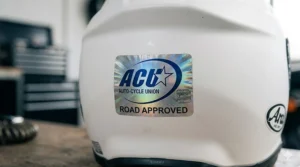
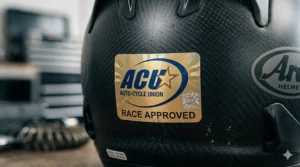
Technical inspectors begin with helmet certification verification, examining the ACU Gold sticker’s presence and condition. Inspectors look for the distinctive gold design affixed to the helmet’s rear, checking it hasn’t peeled partially or been removed and reapplied. The sticker’s integrity matters because tampering suggests potential helmet modification or questionable provenance.
Manufacturing date receives scrutiny at some circuits, with organisers rejecting helmets exceeding 7 years regardless of apparent condition. This age limit acknowledges that polycarbonate shells, EPS liners, and adhesives degrade progressively through UV exposure, temperature cycling, and humidity—precisely the conditions British weather delivers relentlessly. Determining manufacturing date requires locating the production label, typically found inside after removing some padding.
Overall condition assessment examines shell integrity, checking for cracks, deep scratches, or compression damage indicating previous impacts. Any helmet showing crash damage gets rejected immediately—the ACU Gold certification applies only to undamaged specimens, not lids that have already absorbed impact energy. Some damage remains invisible externally, which explains organisers’ increasing preference for age limits over condition assessment alone.
Strap integrity undergoes examination, with inspectors checking the double-D rings or ratchet mechanism operates correctly without excessive wear. Frayed straps, corroded metal components, or loose retention systems result in rejection. The chin strap represents your helmet’s primary retention mechanism; any compromise here negates the shell’s protective capabilities.
Visor and Modification Checks
Visor security receives attention, ensuring it locks positively in both open and closed positions without unexpected movement. Visors flapping open mid-corner represent dangerous distractions; proper retention mechanisms prevent this scenario. Some circuits specify tinted visor restrictions for low-light conditions, though most track days occur during daylight where this rarely applies.
Modifications trigger automatic rejection if they compromise structural integrity. Camera mounts drilled into the shell, additional ventilation holes, or aftermarket accessories bonded with unknown adhesives—all invalidate ACU certification and result in helmet rejection. Even professional paint customisation must avoid removing bonded components like visor surrounds. The conservative approach: leave your helmet precisely as the manufacturer intended.
Real-World Enforcement Variations
Enforcement rigour varies dramatically between organisers and even between different events run by the same company. Some circuits employ dedicated technical officers who meticulously examine every detail; others delegate inspection to track day staff conducting cursory visual checks. This inconsistency creates uncertainty, with some riders reporting they’ve never had their helmet properly inspected whilst others face interrogation-level scrutiny.
The safest assumption: prepare for rigorous inspection regardless of past experiences. Arriving with a compliant helmet costs nothing extra; discovering your equipment fails inspection after travelling 200 miles ruins the day entirely. The ACU Gold sticker represents the minimum non-negotiable requirement—everything else varies by circumstance.
Additional Safety Equipment
Beyond helmets, track day organisers verify leather suit quality (or approved textile alternatives), back protector presence, glove construction, and boot specification. These checks typically prove less stringent than helmet verification, though riders wearing obviously inadequate gear face rejection. The comprehensive safety inspection process exists to minimise injury risk, protecting both participants and organisers from preventable incidents.
Insurance requirements increasingly influence safety equipment standards, with organisers facing premium increases if incident rates suggest inadequate safety protocols. This financial pressure drives more rigorous technical inspection, explaining the trend toward stricter enforcement. Understanding this context helps riders appreciate why regulations matter beyond bureaucratic compliance.
Circuit Versus Off-Road Certification: Practical Differences
Circuit versus off-road certification evolved from different impact scenarios, though modern understanding has blurred these distinctions considerably. Examining the practical differences illuminates why ACU Gold has become the de facto universal standard whilst Silver fades into historical curiosity.
Impact Characteristics and Testing
Tarmac circuit crashes typically involve higher speeds and harder impact surfaces, producing different force profiles than off-road incidents. When you slide along tarmac at 70mph, the helmet must withstand extended abrasion whilst protecting against impacts with barriers, kerbs, and other hard surfaces. The rotational forces during highside crashes prove particularly severe, demanding robust retention systems preventing helmet loss.
Off-road incidents more frequently involve softer surfaces—dirt, mud, sand—that absorb some impact energy. However, this apparent advantage disappears when riders strike trees, rocks, fence posts, or other riders. Modern enduro and motocross speeds rival circuit velocities in places, producing comparable impact forces despite softer average surfaces. This reality explains why many off-road organisers now mandate ACU Gold rather than accepting the theoretically adequate Silver.
Shell Construction Differences
Circuit helmets traditionally emphasised hard shell construction maximising abrasion resistance during slides along tarmac. The shell’s primary function shifts from pure impact absorption to preventing penetration and distributing forces across the EPS liner. Polycarbonate, fibreglass composite, and carbon-fibre shells each offer different abrasion characteristics, with carbon-fibre excelling in weight reduction whilst maintaining structural rigidity.
Off-road helmets historically permitted slightly lighter construction, recognising that abrasion resistance matters less when impacting soft earth. However, modern off-road helmets increasingly employ identical construction standards as circuit lids, rendering this distinction largely academic. The chin bar and visor aperture often differ more significantly than shell construction, with off-road helmets favouring larger openings for improved ventilation and peripheral vision in dusty conditions.
Ventilation Requirements
Circuit riding typically involves sustained high speeds where ram-air ventilation proves effective, allowing relatively modest vent sizes to deliver adequate cooling. The aerodynamic demands of racing also constrain vent placement and size, preventing configurations that create excessive drag or lift at triple-digit speeds.
Off-road riding occurs at varied speeds, often in dusty, humid conditions where ventilation proves crucial for preventing heat exhaustion. Larger vents and more aggressive intake designs characterise off-road helmets, accepting the aerodynamic penalties in exchange for superior cooling. The extended peak/sun visor common on motocross helmets would create dangerous lift at circuit speeds but proves beneficial off-road by deflecting roost and providing sun protection.
Regulatory Evolution
The original ACU Gold/Silver distinction reflected 1970s-1980s understanding of different impact scenarios. Subsequent decades of crash data analysis revealed that severe injuries occur across all disciplines when high-energy impacts occur, regardless of surface type. This data-driven insight prompted gradual elimination of the Silver category, recognising that rider safety justifies consistent standards across disciplines.
EU harmonisation through ECE certification further diminished the Gold/Silver distinction’s relevance. Once manufacturers invested in meeting ECE 22.05 standards—which generally exceed previous ACU Silver requirements—adding ACU Gold certification represented minimal additional effort. The economic logic of producing one helmet meeting all standards rather than multiple variants for different markets accelerated Silver’s decline.
Current Practical Reality
For British riders in 2026, the circuit versus off-road certification distinction has effectively collapsed. ACU Gold provides universal access to all disciplines, whilst Silver certification has become increasingly difficult to find on new helmets. The practical recommendation: ignore the historical circuit/off-road dichotomy and simply purchase ACU Gold certification regardless of intended use.
This standardisation actually benefits riders by simplifying equipment decisions and ensuring consistent protection across varying conditions. The flexible rider who enjoys occasional track days alongside weekend trail riding needs only one certified helmet rather than maintaining separate equipment for each discipline. The certification convergence reduces costs and complexity whilst maintaining safety—a rare example where regulatory evolution actually favours consumers.
Race Organisation Helmet Rules: What Different Circuits Require
Race organisation helmet rules vary surprisingly between circuits and organisers, though ACU Gold certification represents the universal constant across British tarmac events. Understanding these variations prevents last-minute equipment scrambles when circuit-specific requirements exceed baseline standards.
British Superbike Championship and National Racing
Professional racing series mandate FIM-approved helmets meeting even more stringent requirements than standard ACU Gold. The Fédération Internationale de Motocyclisme (FIM) operates as motorsport’s global governing body, imposing comprehensive testing protocols that examine failure modes ACU testing doesn’t address. These helmets typically cost £600-£1,500, with manufacturers like Arai, Shoei, AGV, and Schuberth dominating the FIM-certified market.
British Superbike participants must use helmets manufactured within five years of the competition date, regardless of condition or visible wear. This strict age limit acknowledges material degradation imperceptible through visual inspection. The championship also prohibits certain modifications that casual track days permit, including aftermarket paint that removes original manufacturer finishes.
Club Racing Requirements
Amateur club racing through organisations like the British Motorcycle Racing Club (BEMSEE) or 750 Motor Club typically requires ACU Gold as the minimum standard, with some allowing but not mandating FIM certification. These organisations recognise that imposing professional-level equipment requirements creates financial barriers excluding enthusiastic amateurs.
However, many club racing series implement the five-year age restriction common in professional racing. This represents the most significant difference from casual track days, where helmet age restrictions rarely apply. Checking specific series regulations before purchasing equipment prevents expensive disappointments when your seven-year-old lid gets rejected despite perfect condition.
Track Day Company Policies
Commercial track day organisers like No Limits, Focused Events, and California Superbike School maintain varying helmet policies, though ACU Gold forms the universal baseline. Some accept helmets showing minor cosmetic damage if structural integrity appears sound; others enforce zero-tolerance policies where any visible compromise triggers rejection.
The more rigorous organisers implement manufacturing date checks, typically rejecting helmets exceeding seven years. This age limit remains less strict than club racing’s five-year requirement but still eliminates older equipment. Budget-conscious riders sometimes attempt using elderly helmets that technically carry ACU Gold certification—this gamble succeeds with lenient organisers but fails spectacularly elsewhere.
Insurance requirements increasingly drive stricter policies, with organisers facing premium increases if incident rates suggest inadequate safety protocols. This financial pressure explains why previously relaxed track day companies now enforce comprehensive technical inspection. The trend points toward greater standardisation and stricter enforcement across the industry.
Heritage and Vintage Events
Classic motorcycle events present unique certification challenges, as authentic period equipment rarely meets modern ACU standards. Most vintage racing organisations require modern helmets meeting current ACU Gold specifications, prioritising rider safety over historical authenticity. The bizarre sight of riders wearing cutting-edge carbon-fibre helmets whilst piloting 1960s machinery reflects this pragmatic approach.
Some vintage events permit period-correct helmets for parade laps or static display but prohibit their use during competitive sessions. This compromise satisfies authenticity enthusiasts whilst maintaining safety standards. The regulations acknowledge that vintage motorcycle events attract older participants whose increased injury vulnerability justifies modern protective equipment.
Regional Variations
Scotland, Wales, and Northern Ireland maintain identical ACU Gold requirements as England, though local organising clubs occasionally implement additional regulations reflecting regional conditions. Scottish events sometimes mandate additional cold-weather equipment given the Highlands’ unpredictable climate, whilst Welsh mountain circuits may specify additional insurance requirements.
European events operating under different national federations impose varying requirements, with some accepting ACU Gold whilst others demand specific national certifications. British riders competing abroad must research host country regulations thoroughly, as assumptions based on UK standards sometimes prove incorrect. The Brexit transition has complicated some cross-border competition, requiring additional documentation for equipment transport and certification verification.
Practical Compliance Strategies
The safest approach for British riders involves maintaining a helmet meeting the strictest requirements you’ll likely encounter. An ACU Gold-certified helmet manufactured within the past five years satisfies virtually every UK circuit and racing organisation, from casual track days through intermediate club racing. This single investment provides universal access without requiring multiple helmets for different contexts.
Professional racers and serious competitors eventually require FIM-certified equipment, but the £600+ investment makes sense only when lap times and championship ambitions justify the expenditure. For everyone else, a well-maintained ACU Gold helmet in the £100-400 range delivers appropriate protection and comprehensive access to British motorsport opportunities.
Common Mistakes When Buying ACU Certified Helmets
Common mistakes when buying ACU certified helmets cost British riders time, money, and occasionally track day opportunities. Learning from others’ errors proves cheaper than discovering these pitfalls personally through expensive trial and error.
Assuming All Helmets Include the Sticker
The most frequent mistake involves assuming that because a helmet model carries ACU Gold certification, every individual unit arrives with the sticker affixed. In reality, manufacturers licence distributors to apply ACU stickers, and not all distributors bother with the paperwork. That £400 premium helmet perfectly capable of passing ACU testing might arrive without certification simply because the UK importer didn’t arrange licensing.
Always verify sticker presence before purchasing, especially when buying online. Product descriptions mentioning “ACU Gold approved” without photographic evidence of the actual sticker sometimes indicate marketing optimism rather than reality. Contact retailers directly to confirm sticker presence on the specific stock they’ll ship. This verification takes two minutes but prevents track day disappointments worth considerably more.
Ignoring Manufacturing Date
Purchasing elderly helmets at bargain prices seems financially clever until circuit inspection reveals they exceed age limits. That £150 discount on a five-year-old helmet evaporates when you discover your chosen track day organiser implements a five-year maximum age policy. The manufacturing date typically appears on a label inside the helmet, requiring some padding removal to locate.
Some retailers liquidate old stock without clearly disclosing manufacturing dates, leaving buyers unaware they’ve purchased equipment approaching obsolescence. Always request manufacturing date confirmation before purchasing, particularly during “clearance” or “end of line” sales where older inventory gets offloaded. A helmet manufactured 4 years ago might have sat in a warehouse for 3 of those years, leaving minimal usable lifespan before hitting age restrictions.
Buying Grey Imports Without UK Certification
Importing helmets from the United States or other markets sometimes delivers significant savings, but grey market purchases often lack UK-specific certifications. A helmet meeting DOT standards doesn’t satisfy British road legality requirements, whilst missing ECE certification prevents legal road use during the journey to and from circuits.
Some riders assume they can obtain ACU Gold certification post-purchase by submitting helmets directly to ACU headquarters. Whilst individual approval exists as an option, the £30-50 fee plus shipping costs often eliminate any grey import savings. Additionally, some helmet designs simply don’t meet ACU testing requirements, resulting in rejection and wasted expenditure.
Overlooking Fit for Certification
Prioritising certification over proper fit represents dangerous economics. A helmet that shifts during aggressive riding provides inadequate protection regardless of impressive stickers. The temptation to purchase whatever ACU Gold helmet fits your budget—rather than what fits your head—sometimes proves irresistible, particularly for novice riders.
Proper fit requires trying multiple brands and shell sizes, as manufacturers employ different head shape assumptions (round, intermediate oval, long oval). British riders often find HJC, Shoei, and AGV suit their head shapes well, whilst others prefer Arai or Shark. The “correct” brand varies individually, making generalised recommendations useless. Visit a physical retailer, try numerous options, and prioritise comfort over cost savings.
Ignoring the Dual Certification Requirement
Focusing exclusively on ACU Gold certification whilst ignoring road legality requirements creates problems for riders who don’t trailer bikes to circuits. That ACU Gold helmet lacking ECE 22.06 certification might satisfy track day inspection but renders you illegal during the motorway journey there and back. Police officers checking helmet legality care nothing for ACU Gold stickers; they want ECE certification confirming road compliance.
Most modern helmets carry both certifications, but always verify before purchasing. The added cost of dual certification proves negligible, whilst the flexibility to ride legally on roads and circuits justifies choosing helmets meeting both standards. Single-certification helmets occasionally appear in clearance sales or grey market channels—avoid them unless you exclusively trailer to circuits.
Underestimating British Climate Impact
Purchasing helmets designed for Mediterranean or American climates without considering British weather’s unique demands proves frustrating once soggy reality intrudes. Inadequate visor sealing allows rain penetration during those inevitable November track days at Cadwell Park. Insufficient ventilation causes overheating during rare hot days, whilst excessive ventilation creates hypothermia during chilly spring mornings.
British-specific requirements include effective Pinlock anti-fog systems (not optional accessories), comprehensive weather sealing around the visor aperture, and ventilation systems offering genuine closure for cold weather riding. Mediterranean-market helmets often sacrifice weather sealing for maximum ventilation, assuming perpetual sunshine rather than British reality. Verify that helmets include these features before purchasing, particularly when buying from European retailers targeting warmer climates.
Forgetting About Ongoing Costs
The helmet purchase price represents just the beginning of ownership costs. Replacement visors, Pinlock inserts, cheek pads, and liners accumulate expenses over the helmet’s lifespan. Budget helmets sometimes employ proprietary components with limited UK availability, forcing expensive international shipping for basic consumables.
Premium manufacturers typically maintain extensive spare parts availability through UK distributors, ensuring easy replacement when components wear. Budget brands occasionally discontinue model support after 2-3 years, rendering replacement parts unobtainable. Researching parts availability before purchasing prevents future frustrations when your helmet needs routine maintenance.
Frequently Asked Questions
❓ Are ACU Silver helmets still legal for UK track days in 2026?
❓ Can I use my road helmet with ECE 22.06 for track days without ACU Gold certification?
❓ How long does ACU Gold certification remain valid on a helmet?
❓ Do I need different helmets for circuit racing versus off-road events in the UK?
❓ Where can I get ACU Gold certification added to an existing helmet?
Making Your Final Decision: ACU Gold vs ACU Silver Helmet
Making your final decision between ACU Gold vs ACU Silver helmet standards has become remarkably straightforward in 2026: choose ACU Gold. The historical distinction between these certifications has collapsed to the point where Silver exists primarily as historical footnote rather than viable purchasing option. Finding new helmets carrying only Silver certification proves virtually impossible, whilst Gold-certified options span every price point from budget-conscious £75 entry-level lids through £800 carbon-fibre racing masterpieces.
The democratisation of ACU Gold certification represents brilliant news for British riders. Where Gold approval once commanded premium pricing, manufacturers now include it as standard even on budget equipment. This shift reflects both regulatory evolution and economic reality—producing helmets meeting contemporary safety standards automatically satisfies ACU Gold requirements, making separate certification tiers obsolete.
For circuit track days, the choice proves non-negotiable: ACU Gold or watch from the spectator areas. Every tarmac event in Britain demands that distinctive gold sticker, with enforcement increasing as insurance requirements tighten and safety consciousness improves. The £2 physical value of that certification sticker carries disproportionate importance, representing your admission ticket to experiences worth considerably more.
Off-road participants face marginally more flexibility, with some events still accepting Silver alongside Gold. However, the practical scarcity of Silver-only helmets renders this theoretical choice academic. Modern riders purchasing new equipment will almost certainly acquire ACU Gold certification whether they specifically sought it or not, simply because manufacturers have standardised on the higher specification.
The dual certification requirement—ACU Gold for track access, ECE 22.06 for road legality—deserves particular emphasis for riders who don’t trailer motorcycles to circuits. British law mandates ECE certification for road use; ACU Gold alone provides no legal protection during the motorway journey between home and Brands Hatch. Fortunately, most contemporary helmets include both certifications, eliminating this concern for buyers purchasing from reputable UK retailers.
Budget considerations have effectively disappeared as obstacles to proper certification. That £75 entry-level helmet on Amazon.co.uk carries identical ACU Gold certification to the £600 carbon-fibre racing lid, differing only in construction quality, comfort features, and weight. The certification itself—the independent testing confirming safety standards—remains consistent across price points. This means even riders on tight budgets can access properly certified equipment without compromise.
The recommendation for 2026: purchase a helmet featuring both ACU Gold and ECE 22.06 certification from a UK retailer, manufactured within the past 1-2 years if possible. This specification provides maximum flexibility whilst ensuring the longest possible service life before age restrictions intervene. Prioritise proper fit over certification prestige—a perfectly fitting £100 helmet protects better than a poorly fitting £500 lid, regardless of impressive stickers.
For riders uncertain whether track riding justifies expensive equipment investments, start with budget ACU Gold options around £75-120. These entry-level helmets deliver genuine certification and adequate protection whilst minimizing financial commitment during your experimental phase. Once track addiction takes hold—and it usually does after your first proper session—upgrade to mid-range equipment in the £200-400 bracket where comfort improvements justify the investment.
Serious track day addicts and aspiring racers eventually gravitate toward premium equipment £400+, where weight savings, superior ventilation, and enhanced comfort during extended sessions justify the expenditure. But this represents an evolution driven by experience and commitment levels, not a mandatory starting point. British motorsport’s beauty lies in its accessibility; ACU Gold certification ensures everyone can participate regardless of budget constraints.
The ACU Gold vs ACU Silver helmet debate that once consumed paddock conversations has resolved itself through regulatory evolution and market forces. In 2026, the choice distils to finding properly certified equipment that fits your head comfortably whilst meeting your budget constraints. Get the fundamentals correct—ACU Gold certification, ECE 22.06 road legality, proper fit, reasonable manufacturing date—and you’ll be queuing at technical inspection rather than watching enviously from the spectator areas.
Recommended for You
- ACU Silver Off Road Helmets: 7 Best UK Options 2026
- 7 Best ACU Gold Racing Helmets UK 2026 – Track Approved
- 7 Best ACU Gold Helmets for Track Days UK 2026
Disclaimer: This article contains affiliate links. As an Amazon Associate, I earn from qualifying purchases. If you purchase products through these links, we may earn a small commission at no additional cost to you.
✨ Found this helpful? Share it with your mates! 💬🤗
