In This Article
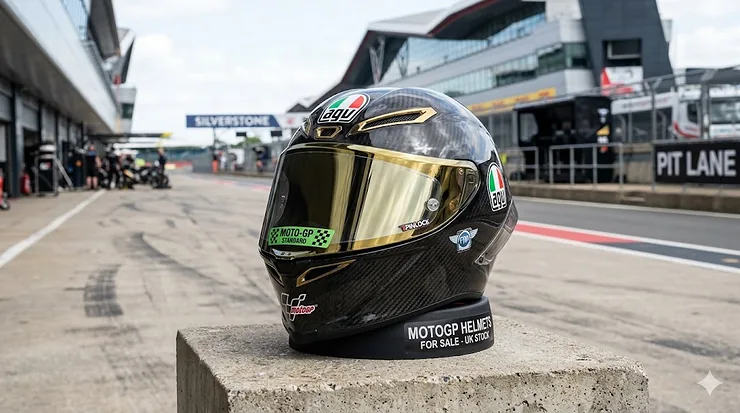
What separates a Sunday ride from a Grand Prix grid isn’t just talent—it’s the kit. MotoGP standard helmets for sale have transformed from exclusive race-day equipment into accessible technology for British riders who demand championship-level protection. The 2026 season brings mandatory FIM FRHPhe-02 homologation, meaning the exact helmets protecting Marc Márquez and Pecco Bagnaia through 200mph corners are now available on Amazon.co.uk, often for less than you’d spend on a weekend trackday.
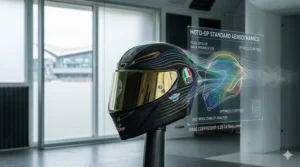
The real revelation? These aren’t just safer—they’re genuinely better to ride in. FIM FRHPhe-02 testing includes angled anvil impacts simulating glancing blows, hemispherical impact tests measuring brain response to curved surfaces, and Skull Fracture Criterion analysis—assessments that street helmet standards simply don’t address. For UK riders battling narrow A-roads, unpredictable roundabouts, and the ever-present threat of diesel spills in the rain, this matters rather more than marketing brochures suggest. Whether you’re commuting through Manchester traffic or carving up the Cat and Fiddle on a Sunday, the helmets worn by professional riders offer a level of rotational impact protection that could make the difference when things go sideways—quite literally.
Quick Comparison Table: MotoGP Standard Helmets UK 2026
| Model | Construction | Weight | FIM Certified | Price Range (£) | Best For |
|---|---|---|---|---|---|
| AGV Pista GP RR | 100% Carbon Fibre | 1,484g | ✅ FRHPhe-02 | £1,400-£1,700 | Pro-level track days |
| Shoei X-SPR Pro | AIM+ Fibreglass | 1,442g | ✅ FRHPhe-02 | £650-£800 | All-round performance |
| HJC RPHA 1 V2 Carbon | PIM+ Carbon-Glass Hybrid | 1,511g | ✅ FRHPhe-02 | £550-£700 | Value-conscious racers |
| Arai RX-7X | PB-SNC2 Composite | 1,557g | ✅ FRHPhe-02 | £700-£850 | Ultimate comfort |
| AGV K1 S | Thermoplastic | 1,500g | ❌ (ECE 22.06 only) | £130-£175 | Budget MotoGP styling |
| Scorpion EXO-R1 Air Carbon | Carbon Composite | 1,300g | ✅ FRHPhe-02 | £500-£650 | Lightweight performance |
| Bell Race Star DLX | 3K Carbon | 1,350g | ❌ (Track-focused) | £450-£600 | American alternative |
💬 Just one click — help others make better buying decisions too!😊
Top 7 MotoGP Standard Helmets for Sale: Expert Analysis
1. AGV Pista GP RR – The Professional’s Choice
The AGV Pista GP RR isn’t merely inspired by MotoGP—it’s the identical helmet Valentino Rossi, Jack Miller, and Pol Espargaró wore whilst carving up circuits at terrifying speeds. The 100% carbon fibre shell weighs just 1,484 grammes in size M, available in four shell sizes from XS to XXL for optimal fit. According to the UK’s SHARP helmet safety testing programme, which performs over 30 impact tests per helmet model, carbon construction doesn’t automatically guarantee superior protection—but when combined with FIM FRHPhe-02 certification, it represents the pinnacle of available technology.
The detachable PRO spoiler has been wind-tunnel optimised for enhanced stability even at extremely high speeds, though you’ll notice the benefit well below triple-digit velocities. What the spec sheet won’t mention: this helmet is loud. Testing reveals 107 decibels—the only lid that arrives with earplugs in the box, and for good reason. The Ultravision visor provides a panoramic 190-degree horizontal view, brilliant for spotting lorries emerging from blind junctions on British B-roads.
The Microsense inner liner features 2Dry technology that genuinely wicks sweat during aggressive riding, whilst the anti-bacterial treatment keeps things fresh despite our damp climate. There’s proper provision for glasses wearers—small grooves in the cheek pads accommodate spectacles without pressure points. Amazon.co.uk stocks multiple colourways, though availability fluctuates. Most retailers offer free UK delivery on orders over £25, with Prime members securing next-day delivery where stock permits.
Best for: Track day enthusiasts and riders who demand absolute top-tier protection with genuine MotoGP DNA.
Pros:
✅ Identical to actual MotoGP race helmets—FIM FRHPhe-02 certified for professional racing
✅ Exceptionally lightweight carbon construction reduces neck strain on long rides
✅ Wind-tunnel proven aerodynamics deliver genuine high-speed stability
Cons:
❌ Brutally loud at 107 decibels—earplugs mandatory for any extended riding
❌ Premium pricing reflects professional-grade construction
Price: Around £1,400-£1,700 depending on graphic design. Check current pricing on Amazon.co.uk as seasonal variations apply.
2. Shoei X-SPR Pro – Marc Márquez’s Survivor
When Marc Márquez walks away from yet another 150mph highside, he’s wearing a Shoei X-SPR Pro. That’s rather more convincing than any marketing copy. The AIM+ fibreglass composite shell is available in four outer shell sizes (XS-S, M, L, XL-XXL) and weighs 1,442 grammes in medium—69 grammes lighter than the HJC RPHA 1, which you’ll appreciate three hours into a Scottish Highland tour.
All sizes from XS-XL have been FIM approved, meeting both FIM homologation and the latest European ECE 22.06 standards. For British riders, this dual certification matters: ECE 22.06 is legally required for road use, whilst FIM approval confirms you’re wearing protection that’s passed the most rigorous impact testing available. The helmet features Shoei’s Personal Fitting System, allowing you to customise the interior with additional pads for a properly snug, race-worthy fit.
Ventilation is exceptional—possibly too effective during British winters. The four forehead vents operated by three independent sliders, plus two chin bar vents, create airflow that can feel rather bracing on a damp February morning in Yorkshire. However, come summer riding or track days, you’ll appreciate the 50% improvement over comparable models. The CWR-F2R visor includes mist-retardant treatment and arrives with a Pinlock lens in the box—essential given our climate.
UK retailers stock the X-SPR Pro widely, with Moto Central, J&S Accessories, and SportsBikeShop all offering free delivery on orders over £25. Amazon.co.uk availability varies by colourway, but plain colours remain consistently stocked.
Best for: Road riders wanting genuine MotoGP protection with superior all-day comfort and proven crash survivability.
Pros:
✅ Worn by Marc Márquez—proven protection through countless high-speed crashes
✅ Exceptional ventilation system keeps you cool even in British summer heat
✅ Shoei’s Personal Fitting System allows precise comfort customisation
Cons:
❌ Perhaps too well-ventilated for cold, wet British winter riding
❌ Visor mechanism can feel slightly notchy compared to Arai’s buttery smoothness
Price: Around £650-£800 for plain colours, with graphic designs adding £100-£200. Check current availability on Amazon.co.uk.
3. HJC RPHA 1 V2 Carbon – The Value Champion
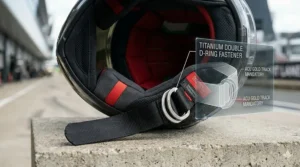
The HJC RPHA 1 V2 Carbon proves you don’t need to spend four figures for genuine FIM-approved protection. The RPHA 1 V2 Carbon conforms to the new FIM FRHPhe-02 programme with a titanium double D-ring fastener—tougher and lighter than steel, shaving precious grammes whilst maintaining security. At 1,511 grammes, it’s competitive with helmets costing double.
The PIM+ construction includes carbon and carbon-glass hybrid fabric for enhanced shock-resistant performance, creating a helmet that’s noticeably stiffer than budget alternatives when you tap the shell. HJC’s Advanced Channeling Ventilation System employs five intake vents and four rear exhausts—more than most competitors. Testing reveals it maintains neutral temperature (no warmer inside than ambient), matching helmets at twice the price.
What most UK buyers overlook: this helmet scores as the second-quietest race lid tested, at 100 decibels. That’s 7 decibels quieter than the AGV Pista GP RR, making it genuinely wearable for road riding without earplugs—though you’d still be wise to use them on motorways. The Silver Cool interior features anti-bacterial fabric with moisture-wicking properties that cope admirably with British drizzle and the inevitable helmet hair sweat.
The HJ-35 visor offers an impressively wide field of view with tear-off preparations (tear-offs and Pinlock included), whilst the tool-less visor system allows quick changes. UK availability through Amazon.co.uk remains strong, with multiple graphic options typically in stock.
Best for: Track day regulars and fast road riders who want FIM protection without the Arai/Shoei premium.
Pros:
✅ Genuine FIM FRHPhe-02 certification at roughly half the price of competitors
✅ Surprisingly quiet at 100 decibels—second best amongst racing helmets tested
✅ Five-year warranty demonstrates HJC’s confidence in construction quality
Cons:
❌ Slightly heavier than carbon rivals, though not noticeably so in real-world use
❌ Interior quality doesn’t quite match the sumptuous feel of premium Japanese brands
Price: Around £550-£700 depending on graphic design. Excellent value proposition. Check Amazon.co.uk for current stock.
4. Arai RX-7X – The Comfort King
If you’ve an Arai head, you know it immediately. The Arai RX-7X represents Japanese helmet-making philosophy at its purest: function over flash, protection above all. The PB-SNC2 fibre shell is available in five outer shell sizes, weighing 1,557 grammes in medium—slightly heavier than carbon alternatives, but Arai’s singular focus is ensuring that rounded R75 shell maintains integrity during impact, with all aerodynamic appendages designed to break away cleanly.
Ventilation performance is excellent, with clever touches like brow vents and visor aperture exhaust ports drawing air from inside the aperture out through side exhaust ports. The two-position chin vent can direct airflow either toward your mouth or across the inside of the visor—particularly useful for demisting during damp British mornings. With all vents closed, the helmet remains comfortable without feeling stuffy, aided by the visor aperture vents which remain perpetually open.
The fit is famously snug—it requires more of a tug to get it over your head than the touring-oriented Quantic. This tightness serves a purpose: at speeds exceeding 200mph on track, looser helmets push back against the rider’s face or start shaking in buffeting wind. Whether such race-focused fit benefits road riding is debatable, though the secure feeling proves confidence-inspiring when hustling through Welsh mountain passes.
UK retailers including Helmet City and SportsBikeShop stock the RX-7X with free delivery over £25. Amazon.co.uk availability can be patchy for specific colourways, though plain options typically remain in stock.
Best for: Riders prioritising ultimate comfort and fit over outright lightness, particularly those who’ve historically fitted Arai well.
Pros:
✅ Five shell sizes ensure optimal fit across the full size range
✅ Exceptional ventilation with intelligent airflow design for British conditions
✅ Legendary Arai build quality with five-year warranty backing
Cons:
❌ Heavier than carbon competitors at 1,557g—noticeable on very long rides
❌ Race-snug fit may feel restrictive for casual road riding compared to touring helmets
Price: Around £700-£850. Premium pricing reflects handcrafted Japanese quality. Check Amazon.co.uk for availability.
5. AGV K1 S – The Budget MotoGP Gateway
Not everyone needs—or wants—a £1,500 race replica. The AGV K1 S delivers MotoGP-inspired styling and genuinely competent protection for roughly what you’d spend filling your tank twice. Developed using AGV’s MotoGP experience, the K1 S brings race-proven aerodynamics to everyday riders, weighing 1,500 grammes with ECE 22.06 certification providing enhanced safety.
The high-resistance thermoplastic shell lacks the exotic cachet of carbon fibre, but it’s perfectly adequate for road use. The wind-tunnel-tested aero spoiler delivers genuine high-speed stability, whilst the panoramic Ultravision visor offers a massive 190-degree horizontal field of view—identical to the flagship Pista GP RR. That expansive visibility proves brilliant for navigating British roundabouts and spotting white van drivers pulling out from side roads.
Five front air vents and two rear extractors provide 50% more airflow than comparable budget helmets, making the K1 S surprisingly effective during summer riding. The Dry-Comfort interior is soft, removable, and washable—essential given the inevitable British rain will leave you damp at some point. There’s proper accommodation for glasses, whilst the helmet comes prepared for communication systems.
What you’re sacrificing versus FIM-certified rivals: the K1 S isn’t approved for professional racing (ECE 22.06 only), weighs slightly more, and uses budget-tier materials. For track day enthusiasts progressing beyond Novice group, you’ll eventually want something more substantial. For road riders wanting that MotoGP aesthetic without the professional-grade price tag, it’s rather difficult to fault.
Best for: Budget-conscious riders wanting MotoGP styling and solid ECE 22.06 protection for road use.
Pros:
✅ Exceptional value at £130-£175—less than most trackday entry fees
✅ Identical 190-degree Ultravision visor to £1,500+ AGV flagships
✅ MotoGP-derived aerodynamics provide genuine stability at motorway speeds
Cons:
❌ Thermoplastic construction heavier than carbon/fibreglass competitors
❌ Not FIM-certified—fine for road, inadequate for serious track progression
Price: Around £130-£175. Remarkable value. Widely available on Amazon.co.uk with Prime delivery.
6. Scorpion EXO-R1 Air Carbon – The Lightweight Contender
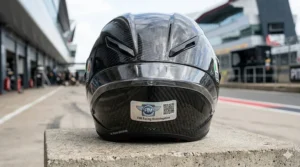
The Scorpion EXO-R1 Air Carbon occupies an intriguing niche: proper carbon construction with FIM certification, yet priced between budget and premium tiers. The carbon composite shell in three outer shell sizes weighs just 1,300 grammes—amongst the lightest race helmets tested. That featherweight feel becomes apparent immediately, particularly if you’re transitioning from a 1,600g+ touring helmet.
Interestingly, the EXO-R1 Air proved the quietest racing helmet tested at 98 decibels—exceptional for a lid with aggressive ventilation. Those extra two decibels of silence versus the HJC RPHA 1 represent a genuinely noticeable audible difference. UK riders logging serious motorway miles will appreciate the reduced wind roar, though earplugs remain advisable for hearing preservation.
The Advanced Channeling Ventilation system channels air effectively, maintaining neutral temperature during testing—no warmer inside than ambient air. However, the Scorpion scored surprisingly weak on features: not wind-tunnel tested, poorly equipped liner compared to competitors. The interior feels noticeably less plush than Japanese premium brands, whilst the lack of wind-tunnel validation raises eyebrows given the price point.
UK availability through specialist retailers remains steady, though Amazon.co.uk stock can be inconsistent. When available, free delivery typically applies on orders over £25.
Best for: Riders prioritising low weight and quiet operation over interior luxury.
Pros:
✅ Exceptionally lightweight at 1,300g—noticeably less fatiguing on long rides
✅ Quietest racing helmet tested at 98 decibels—genuinely impressive
✅ FIM FRHPhe-02 certified for professional racing use
Cons:
❌ Interior quality disappoints compared to premium Japanese competitors
❌ Lacks wind-tunnel testing despite race-focused positioning
Price: Around £500-£650. Mid-tier pricing for carbon construction. Check Amazon.co.uk availability.
7. Bell Race Star DLX – The American Alternative
Bell’s Race Star DLX brings American engineering to the MotoGP-standard conversation. The 3K carbon construction comes in five outer shell sizes—the most size options available, weighing approximately 1,350 grammes in medium. Those five shell sizes ensure riders at both extremes of the size spectrum get properly optimised protection, rather than wearing an XL shell with thick padding or an XS shell stretched thin.
The helmet’s party trick: somehow achieving the same internal temperature as ambient air whilst maintaining aggressive ventilation—matching helmets costing significantly more. Bell’s Velocity Flow ventilation system employs strategic intake and exhaust placement to maximise airflow without excessive noise. Testing revealed it’s one degree cooler inside than outside temperature—a genuine achievement for a full-face race lid.
However, the Race Star DLX lacks FIM homologation, limiting it to trackday use rather than professional competition. For UK riders, this distinction matters less unless you’re progressing to club racing. The helmet meets ECE 22.06 standards for road legality, which covers most use cases. Build quality feels solid, though the American sizing can run slightly different to European brands—trying before buying proves particularly important.
UK availability through Amazon.co.uk varies, with better stock levels at specialist American motorcycle gear importers. Shipping costs and potential post-Brexit import duties can affect final pricing.
Best for: Riders wanting five shell-size precision and excellent ventilation, comfortable with non-FIM certification.
Pros:
✅ Five outer shell sizes—more than any competitor for optimal fit
✅ Exceptional thermal performance keeps you cool in British summer heat
✅ 3K carbon construction balances weight and protection effectively
Cons:
❌ Not FIM-certified—adequate for trackdays but not professional racing
❌ American sizing can differ from European norms—try before buying essential
Price: Around £450-£600. Check Amazon.co.uk for current availability and potential import considerations.
How to Choose MotoGP Standard Helmets for Sale in the UK
Selecting the right MotoGP-grade helmet requires understanding what actually matters versus marketing fluff. The single most important criterion: proper fit. A £1,700 AGV Pista GP RR that wobbles on your head provides less protection than a £200 helmet that fits snugly. Visit a retailer with multiple brands—Arai, Shoei, AGV, and HJC all use different internal shapes. Your head might be perfectly suited to one brand whilst another feels uncomfortable immediately.
Shell material hierarchy: Full carbon fibre (AGV Pista GP RR, Scorpion EXO-R1) offers maximum lightness with excellent impact absorption. Fibreglass composites (Shoei X-SPR Pro, HJC RPHA 1) provide outstanding protection at moderate weight with better value. Thermoplastic (AGV K1 S) delivers adequate safety for road use at budget pricing but weighs more. For British riding conditions, consider that carbon helmets typically cost £500+ more than fibreglass—that difference funds rather a lot of track time or protective clothing.
FIM certification reality check: Do you actually need it? If you’re competing in FIM-sanctioned championships, absolutely—it’s mandatory from 2026. For trackday enthusiasts in Novice or Intermediate groups, ECE 22.06 certification suffices at most UK circuits. Club racing organisers increasingly require FIM approval, though policies vary. Road riders gain the benefit of superior rotational impact protection, but ECE 22.06 helmets still provide excellent safety for considerably less money.
Weight considerations for UK riding: Every 100 grammes matters during three-hour slogs up the M6. The difference between a 1,300g Scorpion and a 1,557g Arai feels negligible initially but compounds over distance. However, lighter isn’t always better—proper fit and comfort trump marginal weight savings. A perfectly-fitted 1,500g helmet causes less fatigue than a loose 1,300g lid that shifts during riding.
Noise levels and British motorways: Racing helmets prioritise airflow over silence. The AGV Pista GP RR’s 107 decibels borders on painful without earplugs, whilst the Scorpion EXO-R1’s 98 decibels remains tolerable for shorter rides. For UK riders spending significant time on motorways, prioritise helmets scoring under 100 decibels or budget for quality earplugs. Long-term hearing damage isn’t reversible—those extra decibels add up over thousands of miles.
Ventilation in British weather: Aggressive race-spec ventilation excels during summer track days but proves rather less welcome during February commutes through Lancashire drizzle. Helmets like the Shoei X-SPR Pro offer comprehensive vent control, allowing you to close everything during winter and open fully during summer. Fixed-vent designs (common on budget replicas) leave you freezing six months of the year.
Shell sizes matter more than you’d think: Premium manufacturers offer 4-5 shell sizes, ensuring your medium helmet uses a medium shell rather than a large shell with thick padding. Cheaper helmets often use just 2-3 shells, meaning XS and XXL sizes suffer compromised aerodynamics and safety performance. This particularly affects British riders at size extremes.
Common Mistakes When Buying MotoGP Standard Helmets
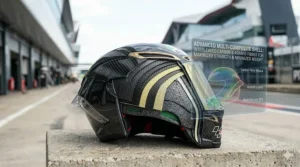
Assuming MotoGP branding equals MotoGP protection. The helmet market floods with “MotoGP-inspired” lids that share nothing beyond aesthetics with actual race equipment. Genuine FIM FRHPhe-02 certification appears on a sewn label on the chin strap—if you can’t find it, you’re not buying a proper race helmet. Marketing photos of Valentino Rossi don’t substitute for actual homologation. UK buyers should verify FIM certification through manufacturer websites before purchasing, particularly when shopping online where examining physical labels proves impossible.
Ignoring UKCA marking requirements. Post-Brexit, helmets sold in Great Britain should carry UKCA (UK Conformity Assessed) marking rather than just CE marking. Many MotoGP helmets still carry ECE 22.06 (European standard), which remains accepted in the UK, but future regulatory changes could affect this. Northern Ireland follows different rules under the Protocol, potentially accepting CE marking that mainland UK doesn’t. When purchasing expensive helmets, verify the certification markings match your location’s requirements.
Buying the wrong size to access graphics you prefer. Manufacturers often release limited-edition graphics in restricted size runs. Riders desperate for a particular Rossi replica sometimes purchase Medium when they need Large, reasoning “it’ll break in.” It won’t. An improperly sized helmet provides catastrophically reduced protection, regardless of FIM certification. That stunning Misano 2021 graphic means nothing if the helmet rotates during impact. Prioritise fit over aesthetics—always.
Underestimating British weather impact on helmet choice. Racing helmets with aggressive ventilation feel brilliant during August track days at Brands Hatch but border on unbearable during January commutes through Manchester rain. Those massive chin vents that cool you at Silverstone channel freezing water directly onto your face during winter downpours. UK riders need helmets with comprehensive vent control—fully closeable for winter, fully openable for summer—rather than permanently-open race-spec ventilation.
Neglecting to budget for essential accessories. That £700 Shoei X-SPR Pro seems reasonably priced until you add a tinted visor (£60-£80), Pinlock anti-fog insert (£30-£40 if not included), and communication system preparation (£50-£100). Suddenly you’re approaching £900+ total investment. Factor these costs before purchasing. Some manufacturers include Pinlock lenses and tear-offs; others charge extra for everything.
Assuming Amazon.co.uk stock equals full UK availability. Major helmet manufacturers often restrict Amazon.co.uk to basic colourways, reserving limited editions and replica graphics for authorised dealers. If Amazon shows only plain black available, check SportsBikeShop, Moto Central, or J&S Accessories—they frequently stock graphics Amazon doesn’t carry. However, beware grey-market imports with US specifications (DOT certification instead of ECE) or incorrect voltage for heated visors.
Forgetting about helmet lifespan and replacement costs. Manufacturers recommend replacing helmets every 5-7 years regardless of crashes, as materials degrade. That £1,500 AGV Pista GP RR represents £250 annually over six years—suddenly less shocking. Budget helmets at £130 seem economical until you’re replacing them every five years anyway. Factor long-term costs: premium helmets often include longer warranties and better replacement part availability in the UK.
What to Expect: Real-World Performance in British Conditions
Wet weather reality: Racing helmets prioritise track performance over British drizzle management. Those generously-sized vents that cool you beautifully during summer trackdays become water ingress points during autumn downpours. The AGV Pista GP RR’s aggressive ventilation channels rain directly into the helmet unless you’ve closed all vents and fitted a chin curtain. Riders commuting through Birmingham’s infamous rain should expect some moisture intrusion—it’s physics, not poor design.
The Pinlock anti-fog insert becomes absolutely essential in British conditions. Morning fog, evening drizzle, and the inevitable condensation from breathing all conspire to obscure your visor. Premium helmets like the Shoei X-SPR Pro include Pinlock lenses in the box; budget options charge extra. Either way, budget £30-£40 for a quality Pinlock if not included—it’s worth more than any aero spoiler for UK riding.
Winter commuting challenges: That snug, race-focused fit that inspires confidence at Donington Park feels rather less comfortable during February commutes when you’re layering a balaclava underneath. The Arai RX-7X’s famously tight fit becomes genuinely restrictive with winter gear, whilst the slightly roomier HJC RPHA 1 accommodates thermal layers more gracefully. British riders using helmets year-round should try them on whilst wearing typical winter underlayers, not just a summer t-shirt in the shop.
Wind noise increases noticeably at motorway speeds, particularly during winter when you’ve closed all vents and rely on neck roll sealing. The Scorpion EXO-R1 Air’s 98 decibels feels civilised initially but compounds over a three-hour M1 slog. Quality earplugs (Alpinestars, EarPeace, or custom-moulded) prove essential for hearing preservation—the extra £20-£50 investment matters far more than helmet colour schemes.
Summer performance on British roads: MotoGP helmets genuinely shine during warm weather riding. The Shoei X-SPR Pro’s comprehensive ventilation transforms stop-start traffic from sweaty misery into tolerable discomfort. Those four independently-controlled brow vents allow precise airflow adjustment—crack them open slightly for urban riding, fully open for motorway speeds, closed completely for cold mornings.
However, ventilation effectiveness depends heavily on speed. At 30mph through town, even aggressive vents provide minimal cooling. At 70mph on motorways, the same vents create impressive airflow. Track riding at 100mph+ reveals why MotoGP riders appreciate this design—the cooling proves genuinely effective. Road riders spending significant time in urban traffic might find touring helmets more comfortable despite inferior on-paper specifications.
Track day revelation: This is where MotoGP-standard helmets justify their existence. The difference between a road helmet and FIM-certified race lid becomes immediately apparent at 100mph+ through Paddock Hill Bend. Aerodynamic stability prevents head buffeting, lightweight construction reduces neck fatigue, and superior peripheral vision helps spot that optimistic overtake attempt in your blind spot.
The mandatory Skull Fracture Criterion testing and rotational impact protection built into FIM FRHPhe-02 standards provide genuine additional safety during track riding’s higher-consequence environment. Whether this justifies £1,500+ for occasional trackday riders remains debatable, but the performance difference is tangible rather than imaginary.
Long-term durability in UK climate: Damp British weather accelerates helmet degradation. Interior liners absorb moisture despite “washable” marketing claims, eventually developing that distinctive musty smell. The AGV K1 S’s Dry-Comfort interior copes admirably for 2-3 years before requiring replacement, whilst premium Arai liners maintain freshness longer thanks to superior materials and anti-bacterial treatments.
Visor mechanisms suffer particularly badly—road salt, diesel residue, and general British grime accumulate in the pivot points. Quick-release systems (Shoei, AGV) allow easier cleaning than traditional screw-mounted visors, extending mechanism life. Budget six-monthly visor mechanism cleaning with proper motorcycle-specific lubricants, not WD-40 which attracts more dirt.
MotoGP Standard Helmets vs Traditional Road Helmets
Protection philosophy differences: Traditional road helmets optimise for a broader range of impacts across varied crash scenarios—low-speed urban accidents, glancing blows from cars, pavement strikes. MotoGP-standard helmets focus intensely on high-speed impacts and rotational forces encountered during racing crashes. FRHPhe-02 testing includes angled anvil tests simulating glancing blows, hemispherical impact tests for curved surfaces, and Skull Fracture Criterion measuring skull crack risk—assessments beyond standard ECE 22.06 requirements.
For British road riding, this creates an interesting paradox: racing helmets provide superior protection in worst-case scenarios (high-speed crashes, rotational impacts) but may sacrifice some optimisation for typical road accidents (car door strikes, low-speed tumbles). The practical difference remains difficult to quantify—both helmet types provide excellent protection when properly fitted.
Comfort and features trade-offs: Road helmets prioritise all-day wearability, incorporating sun visors, quieter aerodynamics, and versatile ventilation. The Shoei Neotec 3 modular touring helmet weighs similar to the X-SPR Pro but includes a flip-up chin bar, internal sun visor, and significantly quieter operation. Racing helmets sacrifice these conveniences for aerodynamic purity and minimum weight.
UK riders covering serious distances should honestly assess priorities. If you’re logging 300+ miles weekly commuting through Birmingham traffic, that internal sun visor and modular convenience might matter more than theoretical high-speed stability you’ll rarely exploit. Conversely, riders splitting time between spirited weekend rides and monthly track days benefit immensely from race-spec aerodynamics and lightweight construction.
Price-performance reality: Traditional road helmets offer remarkable value. The Shoei GT-Air 3 touring helmet provides excellent ECE 22.06 protection, internal sun visor, Bluetooth preparation, and superb comfort for around £500-£600—less than most FIM-certified race helmets whilst arguably delivering more practical utility for British road riding. Racing helmets command premium pricing for specialised performance most riders rarely fully exploit.
However, for enthusiasts prioritising ultimate protection and track day capability, the price differential feels justified. Knowing you’re wearing the same helmet protecting MotoGP champions through 200mph crashes provides tangible confidence, whether rational or not. UK riders should honestly assess how much they’ll actually use race-specific features before spending £1,500+.
Versatility considerations: Racing helmets excel narrowly—high-speed riding on smooth tarmac. Road helmets perform adequately across broader scenarios—urban commuting, touring, all-weather riding. The AGV Pista GP RR at Silverstone feels transcendent; the same helmet navigating London traffic during rush hour feels unnecessarily aggressive and rather loud.
British riders using one helmet for everything should seriously consider whether racing specifications actually enhance their typical riding. That said, the psychological benefit of wearing genuinely superior protection shouldn’t be dismissed—feeling safer often translates to more confident, smoother riding regardless of measurable performance differences.
FIM Homologation Explained: What UK Riders Need to Know
Understanding FIM FRHPhe-02 certification: FIM FRHPhe-02 helmet standard became mandatory in 2026 FIM championships, with helmets requiring both ECE 22-06 certification and successful completion of all FIM helmet standard tests. This represents a significant evolution from FRHPhe-01, incorporating lessons from real-world racing crashes and advancing beyond traditional helmet testing methodologies.
The certification isn’t merely stricter—it’s fundamentally different. Traditional testing drops helmets straight down onto flat anvils, measuring linear impact forces. FRHPhe-02 adds rotational impact testing, recognising that most real crashes involve glancing blows that twist the head violently. For UK road riders, this rotational protection addresses scenarios like being sideswiped by cars pulling out from junctions—disturbingly common on British roads.
Current FIM-certified helmets available in UK: Approved circuit racing helmets include the Arai RX-7X FIM Racing#2, AGV Pista GP RR FIM Racing#2, HJC RPHA 1 V2 Carbon, Scorpion EXO Race Air, Shark Aeron GP, and Just1 J-GP R. UK availability varies significantly—AGV, Arai, Shoei, and HJC stock readily through Amazon.co.uk and specialist retailers, whilst Shark and Just1 require hunting through European importers or specialist track gear suppliers.
Critically, not all sizes of FIM-certified models carry actual FIM homologation. Manufacturers submit specific sizes for FIM testing—typically M and L—then extrapolate certification across the full size range. The FIM homologation label sewn onto the chin strap confirms your specific helmet passed testing. UK buyers should verify this label’s presence rather than assuming model-wide certification.
Legal requirements for UK road use: FIM certification alone doesn’t make a helmet road-legal in the UK. You need ECE 22.06 (or the older ECE 22.05 for now) certification for legal road use in Great Britain. Fortunately, most FIM helmets carry dual certification—ECE 22.06 for road legality plus FIM FRHPhe-02 for racing. However, some track-only helmets lack ECE certification, making them illegal for road use despite superior protection.
Post-Brexit, helmets sold in Great Britain should display UKCA marking, though ECE certification remains accepted during the transition period. Northern Ireland follows different rules, potentially accepting CE-marked helmets under the Protocol. When purchasing expensive helmets online, verify certification markings match your location’s requirements to avoid legal complications during roadside checks or insurance claims after accidents.
Do you actually need FIM certification? Honest answer: most UK riders don’t strictly need it. If you’re competing in FIM-sanctioned championships (MotoGP, WorldSBK, British Superbike), it’s mandatory from 2026—non-negotiable. Club racing organisations increasingly require FIM homologation, though policies vary by sanctioning body and class. Trackday organisers generally accept ECE 22.06 helmets unless you’re in advanced groups at certain circuits.
For pure road riding, FIM certification provides enhanced protection but isn’t legally required. The superior rotational impact testing and stricter construction standards offer genuine safety benefits, particularly for spirited riding where high-speed crashes become more likely. Whether that justifies £500-£1,500 premium over excellent ECE 22.06 road helmets depends entirely on individual priorities and budgets.
Future regulatory landscape: The FIM continues evolving standards based on crash data analysis. FRHPhe-03 development is underway, likely incorporating even more stringent rotational impact requirements and potentially mandating MIPS-style slip-plane technology. UK riders purchasing expensive FIM-certified helmets should anticipate 5-7 year useful life before newer standards render them obsolete for professional competition—though they’ll remain perfectly adequate for road use and trackdays.
Long-Term Cost & Maintenance in the UK
True cost of ownership analysis: That £1,500 AGV Pista GP RR seems eye-watering initially, but over a six-year lifespan represents approximately £250 annually. Factor in included accessories—the Pista includes tear-off kit, hydration system preparation, interior customisation kit, and vent covers worth £100+ separately. Suddenly the value proposition improves, though it’s still hardly budget-friendly.
Budget alternatives require different calculations. The £160 AGV K1 S costs £27 annually over six years, but you’ll likely replace the interior padding (£50-£70), upgrade the visor (£40-£60), and add a Pinlock insert (£30-£40)—total investment approaching £300, or £50 annually. The premium helmet’s initial sting hurts more, but ongoing costs remain lower thanks to superior materials and comprehensive initial equipment.
Replacement parts availability in UK: Premium Japanese and Italian manufacturers maintain excellent UK parts support. Shoei and Arai visors, interior padding, and mechanisms stock readily at SportsBikeShop, J&S Accessories, and Amazon.co.uk. Replacement parts typically arrive within 2-3 days via standard delivery, next-day with Prime membership. This matters more than you’d imagine—when your visor mechanism fails on Wednesday, having replacement parts Friday means weekend riding proceeds as planned.
Budget brands struggle with UK parts availability. Finding replacement cheek pads for less-common models often requires ordering from European distributors, adding shipping costs and 1-2 week delays. Factor this inconvenience when comparing helmet prices—premium pricing includes premium support infrastructure.
Crash replacement considerations: UK insurance policies typically cover helmet replacement after accidents, though you’ll need to claim through comprehensive coverage and potentially pay your excess. Keep your helmet purchase receipt—insurers require proof of original value for replacement. Premium helmets qualify for manufacturer crash replacement discounts (typically 30-50% off a new identical model), whilst budget helmets rarely offer such programmes.
Given British weather and road conditions, minor drops and parking mishaps occur distressingly frequently. That £1,500 helmet tumbling off your bike onto concrete represents genuine financial pain, even with insurance coverage. Budget-conscious riders might prefer £500-£700 mid-tier helmets as more palatable replacement costs when inevitabilities occur.
Interior maintenance reality: British humidity accelerates interior degradation. Even “washable” liners accumulate funk after 12-18 months of regular use, particularly if you’re commuting through urban traffic. Hand-washing helps but doesn’t fully restore freshness—bacteria and mould establish themselves in foam layers beyond surface fabrics.
Premium helmets with removable, fully-replaceable interiors (AGV, Shoei, Arai) allow economical refreshing every 2-3 years for £50-£100. Budget helmets often feature partially-removable interiors, making thorough cleaning impossible and complete replacement expensive. Over six years, that extra £200 upfront for premium construction saves £100+ in interior replacement costs whilst providing superior comfort throughout.
Visor degradation and replacement cycles: UK road grime, diesel residue, and general filth accelerate visor wear. Expect to replace visors every 18-24 months with regular road riding, sooner if you’re commuting daily through London traffic. Premium helmets’ quick-release visor mechanisms allow tool-free swaps in 30 seconds; budget designs require screwdrivers and frustration.
Replacement visor costs vary dramatically: AGV charges £60-£80, Shoei similar, whilst budget brands might charge £30-£40. However, premium visors typically include optical-class clarity, better scratch resistance, and Pinlock preparation—features budget replacements lack. Over six years, replacing six budget visors at £35 each (£210) approaches the cost of four premium visors at £70 each (£280), but premium visors provide superior vision quality throughout.
Track day damage considerations: Racing helmets excel on track but suffer more abuse there. Dropped helmets in pit lanes, clipped windscreens during crashes, and general track-day chaos accelerate wear. Riders logging 10+ track days annually should budget for accelerated helmet replacement—potentially every 3-4 years rather than 6-7 for pure road use.
Track crashes often necessitate immediate replacement regardless of visible damage. Modern helmets sacrifice themselves protecting your head—internal EPS foam compresses during impact, providing one-time protection but reducing effectiveness thereafter. FIM regulations mandate helmet replacement after any significant impact, a rule worth following even for non-professional track riders. That seemingly-undamaged helmet after your Paddock Hill Bend tumble has likely absorbed considerable energy and requires replacement.
FAQ: MotoGP Standard Helmets for Sale UK
❓ Which FIM helmet do MotoGP riders actually use in 2026?
❓ Are MotoGP replica helmets legal on UK roads?
❓ How much should I spend on a MotoGP-standard helmet in the UK?
❓ Do I need FIM certification for UK track days?
❓ How long do MotoGP helmets last in British weather?
Conclusion: Choosing Your Championship-Level Protection
The 2026 MotoGP season brings genuinely accessible professional-grade protection to British riders. Whether you’re investing £1,500 in the AGV Pista GP RR that Valentino Rossi trusted through countless crashes, or £160 in the AGV K1 S that borrows MotoGP aerodynamics for road riding, you’re accessing technology that didn’t exist outside professional racing a decade ago.
The sweet spot for most UK riders? The Shoei X-SPR Pro at around £650-£800 delivers Marc Márquez-proven protection with Japanese build quality and genuine all-day wearability. It’s not the lightest (HJC RPHA 1), not the quietest (Scorpion EXO-R1), and not the cheapest (AGV K1 S)—but it’s exceptional across every criterion that matters. For serious track day enthusiasts with budget flexibility, the AGV Pista GP RR represents the absolute pinnacle, albeit at eye-watering cost and ear-splitting volume.
Budget-conscious riders shouldn’t dismiss the AGV K1 S. Yes, it lacks FIM certification. Yes, it’s heavier than carbon alternatives. But for £130-£175, you’re acquiring MotoGP-derived aerodynamics, ECE 22.06 protection, and that panoramic Ultravision visor in a package that won’t devastate your wallet when inevitably dropped in a car park. It’s perfectly adequate for road riding and novice track days, allowing you to invest savings in riding instruction or track time—arguably more beneficial than exotic helmet materials.
Whatever you choose, prioritise fit above all else. That £1,700 flagship providing 4mm of wobble delivers less protection than a £200 budget helmet fitting snugly. Visit physical retailers, try multiple brands, and accept that your head might simply not suit certain manufacturers. The best MotoGP-standard helmet isn’t the most expensive or technologically advanced—it’s the one that fits your head shape perfectly, matches your riding style appropriately, and provides genuine confidence when you’re pushing through that challenging corner wondering if you’ve got enough lean angle left.
British roads present unique challenges: unpredictable weather, diesel-slicked roundabouts, and white van drivers who genuinely don’t see motorcycles. FIM FRHPhe-02’s rotational impact protection addresses real-world crash scenarios we’d rather not contemplate but must acknowledge. Whether that justifies premium pricing remains individual assessment, but knowing you’re wearing championship-level protection certainly doesn’t hurt your confidence when navigating the morning commute through Birmingham traffic.
✨ Recommended for You
- 7 Best FIM Racing Helmets UK 2026: Pro Safety Tested
- ACU Gold vs ACU Silver Helmet: 7 Best Picks UK 2026
- ACU Silver Off Road Helmets: 7 Best UK Options 2026
Disclaimer: This article contains affiliate links. As an Amazon Associate, I earn from qualifying purchases. If you purchase products through these links, we may earn a small commission at no additional cost to you.
✨ Found this helpful? Share it with your mates! 💬🤗
