

In This Article
There’s a specific kind of quiet that settles over a long motorway stretch once you’ve found a genuinely good touring lid — no buffeting, no rattle, just the low thrum of the engine and, if you’ve fitted the right kit, a podcast or a mate’s voice coming through crystal clear. That’s the promise of a fibreglass touring helmet with speakers, and it’s a bigger deal than it sounds. A fibreglass shell flexes and absorbs impact energy differently to injection-moulded plastic, generally allowing manufacturers to use less material for the same protection — which usually means a lighter, quieter lid on your head for the six-hour ride to the coast.

“Speakers” in this context almost always means recessed pockets built into the EPS liner, shaped to hold thin, flat intercom speakers flush against your ears without pressure points. Some helmets go further and arrive with the electronics already fitted from the factory; others are simply “prepared” or “ready” for a third-party system you buy separately. Knowing which one you’re actually getting matters enormously before you spend three figures on a lid.
As Wikipedia’s overview of helmet construction explains, premium-price helmets tend to be built from fibreglass reinforced with Kevlar or carbon fibre, sitting above the outer EPS foam layer that does the real work of absorbing an impact — which is exactly why shell material is worth understanding before you compare speaker systems.
This guide draws on genuine UK retail listings, manufacturer specifications and aggregated owner feedback rather than invented reviews. We’ve covered seven real helmets spanning a genuine touring helmet under £300 through to premium fibreglass-composite options from Shoei, Schuberth, HJC and AGV, with honest analysis of who each one actually suits. All UK helmets sold for road use must meet the safety standards set out under UK motorcycle helmet law, and every model below is built with that baseline in mind before we even start talking about comfort or connectivity.
Quick Comparison Table
| Helmet | Shell Type | Style | Best For |
|---|---|---|---|
| Bell SRT Modular | Fibreglass composite | Modular flip-front | Best fibreglass modular touring helmet under £300 |
| Shoei GT-Air | Fibreglass (AIM) | Full-face touring | Premium sport-touring with integrated speaker system |
| HJC RPHA 90S | Composite fibre (fibreglass/aramid) | Modular flip-front | Lightest premium modular on this list |
| Schuberth E1 | Fibreglass | Modular/adventure crossover | Dual-purpose touring and off-road riders |
| AGV Tourmodular | Composite fibre (fibreglass) | Modular touring | Long-distance comfort with Cardo-ready pockets |
| Viper RSV777 | Fibreglass | Flip-front enduro/touring | Best budget genuine fibreglass shell |
| Viper RSV171 BL+ 3.0 | Thermoplastic resin | Modular flip-front | Factory-fitted Bluetooth speakers out of the box |
A quick honesty note on that last row: the Viper RSV171 BL+ 3.0 isn’t fibreglass — its shell is thermoplastic resin — but its factory-fitted speakers and intercom make it too relevant to leave out for anyone specifically hunting Bluetooth helmet compatibility rather than shell material. Every other lid here genuinely uses a fibreglass or fibreglass-blend composite shell, and that distinction matters more than marketing copy often lets on, so we’ve flagged it plainly rather than fudging the spec sheet.
💬 Just one click — help others make better buying decisions too!😊
Top 7 Fibreglass Touring Helmets with Speakers: Expert Analysis
1. Bell SRT Modular — best fibreglass modular touring helmet under £300
The Bell SRT Modular is the helmet that keeps coming up whenever “genuine fibreglass without the premium price tag” gets mentioned, and the spec sheet backs that reputation up. Its fibreglass composite shell comes in two sizes, weighs a fairly typical 1,550-1,750g depending on size, and — crucially for anyone building a Bluetooth setup — includes recessed EPS speaker pockets designed around third-party intercom units rather than an afterthought bolt-on.
Based on the spec comparison against similarly priced polycarbonate modulars, the fibreglass shell is the standout differentiator here: it’s genuinely one of very few helmets under £300 using this shell material rather than injection-moulded plastic. The Panovision visor with Class 1 optics offers a noticeably wider field of view than budget competitors, and the included Pinlock-ready lens with a 120 insert is a thoughtful touch that many rivals charge extra for. What most buyers overlook is the drop-down internal sun visor’s coverage, which multiple owners note is genuinely usable rather than a token gesture.
Aggregated UK retailer reviews consistently praise the SRT Modular’s fit for round-oval head shapes and its glasses-friendly liner recess, while a recurring theme in feedback is that it runs slightly bulky compared with helmets a size up in other brands — worth trying before committing if you can.
Pros:
- ✅ Genuine fibreglass composite shell at a sub-£300 price point
- ✅ Panovision visor with wide Class 1 optics field of view
- ✅ Recessed speaker pockets ready for third-party intercoms
Cons:
- ❌ No dual P/J homologation for riding with chin bar raised
- ❌ Runs bulky compared with some size-equivalent rivals
Typically priced between £249 and £299, the Bell SRT Modular represents arguably the strongest value fibreglass pick on this entire list — check current price before buying, as retailer promotions shift regularly.
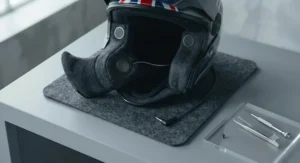
2. Shoei GT-Air — best premium fibreglass touring helmet with integrated speakers
Shoei’s AIM shell construction — a hand-laid blend of fibreglass and organic fibres — sits at the technical heart of the Shoei GT-Air, and it’s precisely this shell that lets Shoei build in the cutaway panels needed for a genuinely seamless communicator fit. Rather than generic speaker pockets, the GT-Air is engineered around Sena’s SRL system specifically, with pull-away side panels that let you slot the controller flush into the shell and a rear compartment for the battery pack.
Here’s what to weigh up: this level of integration comes at a real cost, both financially and in terms of flexibility, since buyers wanting a different comms brand will find the recesses sized specifically for Sena hardware rather than a universal fit. On paper, though, the payoff is considerable — reviewers consistently rate the GT-Air among the quietest helmets they’ve tested, a genuinely important factor for anyone planning to listen to music or take calls at motorway speed, where wind roar typically drowns out lesser intercom setups.
The internal QSV-1 sun visor deploys with one hand and covers a wider drop than many rivals, while the 3D Max-Dry liner is fully removable and includes generous glasses grooves. Owner sentiment aggregated across UK retailers is overwhelmingly positive on comfort and quietness, with the most common criticism being underwhelming low-speed airflow through the chin vent.
Pros:
- ✅ AIM fibreglass shell purpose-built around Sena speaker integration
- ✅ Consistently rated among the quietest touring helmets available
- ✅ Wide-drop internal sun visor operable with one gloved hand
Cons:
- ❌ Speaker recesses are Sena-specific, limiting other comms brands
- ❌ Weak low-speed chin ventilation reported by multiple owners
Expect to pay roughly £430–£520 depending on graphic and retailer, and the Shoei GT-Air earns its premium price through genuinely class-leading noise suppression and comms integration rather than badge value alone.
3. HJC RPHA 90S — best lightweight composite-fibre modular for long days
HJC’s Premium Integrated Matrix shell blends fibreglass with aramid fibres — the same family of material as Kevlar — to produce what’s genuinely one of the lightest premium modular helmets on the market, and the HJC RPHA 90S wears that engineering well. At roughly 1,569g, it’s noticeably lighter than most rivals in its price bracket, a difference that becomes very apparent on hour six of a touring day when neck fatigue starts creeping in on heavier lids.
Based on the spec sheet, the substantial internal sunshield and six-position Pinlock-ready visor point to a helmet designed specifically around long-distance comfort rather than short commuter hops. The dual homologation allows secure riding with the chin bar raised, adding genuine versatility for warm-weather touring or quick fuel stops. What the spec sheet won’t tell you outright is how fiddly the metal visor release button can feel with thick winter gloves on — a minor but real friction point reviewers flag consistently.
For Bluetooth helmet compatibility, the RPHA 90S is built around HJC’s own Smart 10B communication system, giving a clean, purpose-fitted installation for riders happy to stay within the HJC ecosystem rather than mixing and matching third-party units.
Pros:
- ✅ One of the lightest composite-fibre modular helmets available
- ✅ Six-position, Pinlock-ready visor with substantial sunshield
- ✅ Dual P/J homologation for open chin bar riding
Cons:
- ❌ Tighter than average fit — sizing up is often recommended
- ❌ Metal visor release button fiddly to operate in thick gloves
Priced around £399–£449, the HJC RPHA 90S justifies its premium positioning primarily through weight savings that genuinely matter on longer rides rather than flashy extras.
4. Schuberth E1 — best dual-purpose fibreglass adventure-touring crossover
Where most helmets on this list commit fully to either road touring or off-road adventure styling, the Schuberth E1 deliberately splits the difference. Its fibreglass shell, integral sun visor and modular flip-front chin bar are lifted from Schuberth’s road-touring know-how, while the removable peak and goggle-compatible eyeport borrow from genuine adventure-helmet design — a combination that suits riders who genuinely alternate between motorway slabs and green-laning at weekends.
On paper, this means one helmet doing the job that would otherwise need two separate lids in your collection, which has real value both financially and in terms of garage space. The optically correct visor and adjustable peak reduce buffeting at speed better than many pure adventure helmets manage, a detail that reflects Schuberth’s road-focused engineering pedigree bleeding into a more versatile shape.
Schuberth’s own communication modules — the SC1 and SC2 — are designed to integrate cleanly with the E1’s speaker recesses, following the same purpose-built philosophy as Shoei’s Sena partnership. Aggregated owner feedback highlights the E1’s quietness for an adventure-style helmet as a standout strength, alongside praise for how easily the peak and visor swap between road and off-road configurations.
Pros:
- ✅ Genuinely dual-purpose fibreglass shell for road and green-lane use
- ✅ Removable peak with goggle-compatible eyeport for off-road days
- ✅ Notably quiet for an adventure-style modular design
Cons:
- ❌ Requires Schuberth’s own SC1/SC2 modules for full integration
- ❌ Premium price for what is a niche crossover use case
Pricing generally runs £400–£480, and the Schuberth E1 rewards riders who genuinely need one helmet to cover both touring and adventure riding rather than committing to either extreme.
5. AGV Tourmodular — best composite-fibre pick for dedicated long-distance touring
AGV built the Tourmodular with one explicit brief: produce a touring lid, not a sportsbike helmet wearing a touring badge. The composite fibre shell — AGV’s own fibreglass-based construction — reflects that focus throughout, paired with a chin bar mechanism and internal sun visor tuned specifically around multi-hour comfort rather than track-day aggression.
What most buyers overlook about this model is how the shell shape has been optimised around reducing helmet buffeting at a seated, upright touring posture rather than the tucked-in racing crouch most sportsbike-derived helmets are shaped for — a genuinely meaningful difference if your riding position sits more toward adventure or naked-bike upright than sportsbike lean-forward. The recessed speaker pockets are built around Cardo’s communicator range, following the now-familiar pattern of premium brands partnering with a specific comms manufacturer for a cleaner fit.
Reviewer sentiment across UK retail sources consistently praises the Tourmodular’s stability at motorway speed and its genuinely spacious interior for riders wearing glasses, while noting the price sits toward the upper end of the modular touring category even before adding Cardo hardware.
Pros:
- ✅ Shell and aerodynamics tuned specifically for upright touring posture
- ✅ Cardo-ready speaker pockets for clean communicator integration
- ✅ Spacious, glasses-friendly interior praised in owner feedback
Cons:
- ❌ Premium pricing before factoring in Cardo comms hardware
- ❌ Less suited to sportier, forward-leaning riding positions
Expect to pay in the £350–£450 range, and the AGV Tourmodular is the strongest pick here specifically for riders whose main priority is genuine multi-hour touring comfort over sporty versatility.

6. Viper RSV777 — best budget genuine fibreglass touring helmet
Proving that a real fibreglass shell doesn’t automatically mean a premium price tag, the Viper RSV777 undercuts every other fibreglass model on this list by a wide margin while still delivering the material honestly rather than dressing up plastic as something grander. Its ECE 22.05 approved fibreglass shell, Pinlock-ready visor and internal retractable sun visor cover the fundamentals that matter for genuine touring use, not just commuting.
Based on the spec sheet, the through-flow air venting and micrometric retention system are sensible, unglamorous features that quietly matter more on a six-hour ride than any amount of flashy graphics — steady airflow and a strap that doesn’t need constant readjustment both reduce fatigue meaningfully over distance. What the spec sheet won’t tell you is how the RSV777 compares on refinement to premium fibreglass rivals: it’s honestly a step down in fit-and-finish polish, and that’s a fair trade-off given the price gap.
The helmet doesn’t come with a built-in Bluetooth system, but its shell and liner accommodate aftermarket clamp-on intercom units without issue, making it a sensible base for riders wanting to add their own comms setup rather than being locked into a manufacturer’s proprietary system.
Pros:
- ✅ Genuine fibreglass shell construction at a genuinely budget price
- ✅ Pinlock-ready visor plus retractable internal sun visor included
- ✅ Accommodates aftermarket Bluetooth units without shell modification
Cons:
- ❌ Fit-and-finish noticeably behind premium fibreglass competitors
- ❌ No factory-fitted speakers — third-party intercom purchased separately
At roughly £130–£160, the Viper RSV777 stands out as the most accessible genuine fibreglass touring helmet on this list, and honestly represents excellent value for riders prioritising shell material over refinement.
7. Viper RSV171 BL+ 3.0 — best factory-fitted Bluetooth speakers, thermoplastic shell
Worth including with full honesty rather than stretching the truth: the Viper RSV171 BL+ 3.0 uses a thermoplastic resin shell rather than fibreglass, so anyone shopping purely on shell material should look elsewhere on this list. What it does offer, uniquely among these seven helmets, is a genuinely factory-fitted Blinc Bluetooth system complete with two HD stereo speakers already installed and wired — no separate intercom purchase, no aftermarket fitting required.
On paper, this means intercom-ready helmet shopping becomes genuinely plug-and-play: charge it, pair it, ride. The system supports up to 650m intercom range in direct line of sight, roughly eight hours of talk-time battery life, and handlebar remote control compatibility, putting it well ahead of budget clamp-on alternatives for out-of-box convenience. The retractable dark smoke internal sun visor and Pinlock-ready outer visor round out a genuinely sensible touring specification.
Real customer feedback aggregated from UK retailers is mixed but broadly positive — several owners report the fitted-from-new pairing process working flawlessly straight out of the box, while others note the side-mounted control button can become less responsive after a year or so of regular use, and that the charging port cover needs removing to plug in reliably.
Pros:
- ✅ Genuinely factory-fitted Bluetooth with two HD stereo speakers
- ✅ Up to 650m intercom range and roughly 8 hours of battery life
- ✅ No separate intercom purchase or aftermarket fitting needed
Cons:
- ❌ Thermoplastic resin shell, not fibreglass, despite the touring spec
- ❌ Some owners report control button reliability issues after a year
Typically priced around £180–£220 with the Bluetooth system included, the Viper RSV171 BL+ 3.0 is the pick for riders who value plug-and-play intercom convenience above shell material — just go in with accurate expectations about what it’s made from.
Full Comparison: Shell, Price and Speaker Setup
| Helmet | Shell Material | Approx. Price | Speaker/Comms Setup |
|---|---|---|---|
| Bell SRT Modular | Fibreglass composite | £249–£299 | Recessed pockets, third-party ready |
| Shoei GT-Air | Fibreglass (AIM) | £430–£520 | Sena SRL-integrated cutaways |
| HJC RPHA 90S | Composite fibre | £399–£449 | HJC Smart 10B-ready |
| Schuberth E1 | Fibreglass | £400–£480 | Schuberth SC1/SC2-ready |
| AGV Tourmodular | Composite fibre | £350–£450 | Cardo-ready pockets |
| Viper RSV777 | Fibreglass | £130–£160 | Aftermarket clamp-on compatible |
| Viper RSV171 BL+ 3.0 | Thermoplastic resin | £180–£220 | Factory-fitted Blinc Bluetooth |
Looking at the spread here, the Bell SRT Modular stands out as the clearest value proposition for anyone wanting genuine fibreglass without spending premium-brand money, while the Shoei GT-Air and AGV Tourmodular justify their higher prices through deeper comms integration and refinement rather than the shell material alone. If a touring helmet under £300 is the hard constraint, only the Bell SRT Modular, Viper RSV777 and Viper RSV171 BL+ 3.0 genuinely qualify — worth keeping that shortlist in mind before falling for a premium model outside budget.

Practical Usage Guide: Fitting and Setting Up Your Helmet Intercom
Getting speaker placement right starts before you even switch anything on. Most speaker pockets are recessed into the EPS liner at roughly ear height, but head shape varies enough that a genuinely snug fit sometimes needs thin adhesive foam shims to bring the speaker flush against your ear without a gap — a five-minute job that noticeably improves audio clarity, particularly at motorway speed where wind noise otherwise swallows quieter dialogue.
For helmets prepared for third-party intercoms rather than factory-fitted, always check the specific unit’s compatibility with your shell’s cutaway shape before buying, since a controller sized for one brand’s recess rarely sits flush in another’s. Once fitted, run the wiring neatly through any built-in channels rather than taping cable across the liner — loose wiring is a common cause of crackling audio and can create an uncomfortable pressure point over a long ride.
Maintenance matters here too: speaker foam and microphone sponges absorb sweat and moisture over a season of use, and replacing them periodically both improves hygiene and keeps audio quality from degrading. In the first month of ownership, the most common mistake new intercom users make is cranking volume too high on the first ride to compensate for wind noise, rather than addressing wind noise at the source through a properly sealed neck roll and correctly fitted speakers.
Real-World Scenarios: Which Fibreglass Touring Helmet Suits You?
The weekend tourer on a tight budget. If you’re covering genuine touring miles but don’t want to spend premium-brand money, the Bell SRT Modular delivers a real fibreglass shell and comms-ready pockets for under £300 — the strongest value combination on this entire list.
The rider who wants zero setup hassle. For anyone who’d rather not research compatible intercom units, the Viper RSV171 BL+ 3.0 ships with Bluetooth and speakers already fitted and wired, trading fibreglass construction for genuine out-of-box convenience.
The dedicated long-distance sport-tourer. Riders regularly covering 300-mile-plus days who prioritise noise suppression and refined comms integration above budget should look toward the Shoei GT-Air or AGV Tourmodular, both of which reward the higher outlay with genuinely reduced fatigue over distance.
How to Choose a Fibreglass Touring Helmet with Speakers
Picking sensibly among fibreglass touring helmets with speakers comes down to matching genuine priorities to spec, rather than assuming the most expensive option is automatically correct for your riding.
- Confirm the shell material honestly. “Composite” and “advanced” in product names don’t always mean fibreglass — check the actual spec sheet rather than the marketing name.
- Decide between factory-fitted and prepared. Factory Bluetooth costs less hassle; prepared pockets cost less money but need a separate intercom purchase.
- Check comms brand compatibility. Premium helmets are often tuned around one specific comms manufacturer — confirm before buying if you already own a unit.
- Weigh internal sun visor coverage. Touring in variable UK light benefits enormously from a genuinely wide-drop internal sun visor, not just a token tint.
- Consider shell size count. More shell sizes generally mean a more proportional fit across the size range rather than a bulky small helmet.
- Factor in Pinlock inclusion. A helmet with Pinlock genuinely included in the box saves £15–£25 versus buying the insert separately.
- Budget realistically for your comms system. A touring helmet under £300 plus a decent third-party intercom can still land close to premium-helmet pricing overall.
Independent safety data from the government-run SHARP helmet rating scheme is well worth checking against any shortlist before you buy, since star ratings vary meaningfully even within helmets marketed at similar price points (more on this in the FAQ below).
Fibreglass Modular Touring Helmet: What the Shell Actually Buys You
A fibreglass modular touring helmet combines two distinct engineering choices: a composite shell material, and a flip-front chin bar mechanism. The fibreglass element typically allows a lighter shell for equivalent protection compared with injection-moulded polycarbonate, though the difference varies by specific construction — some fibreglass blends, like the one in the Bell SRT Modular, still weigh more than premium composite-fibre alternatives such as the HJC RPHA 90S, so shell material alone isn’t the whole weight story.
The modular chin bar adds genuine touring convenience — flipping up for a chat at a fuel stop or a quick sandwich without fully removing the helmet — but it also introduces a hinge and locking mechanism that pure full-face helmets don’t need to engineer around. This is precisely why dual P/J homologation, allowing legal riding with the chin bar raised, matters as a genuine feature to check rather than an assumed given; not every modular on this list includes it.
Bennetts BikeSocial’s guide to choosing a motorcycle helmet makes a similar point about composite shells generally allowing more shell sizes across a size range, which is worth cross-checking against any modular helmet’s spec sheet before you buy rather than assuming a fibreglass badge automatically means a more compact fit.
Fibreglass Touring Helmet Sun Visor: Why Internal Beats External
An internal sun visor built into a fibreglass touring helmet works via a slider or button that raises and lowers a tinted lens between the outer visor and your eyes, rather than requiring you to swap or flip up a separate external tinted shield. The practical advantage is speed and safety: dropping the internal visor takes a single gloved motion at speed, whereas fumbling with an external tinted visor swap genuinely isn’t something to attempt while riding.
Coverage varies meaningfully between models, and this is exactly the kind of detail that separates a genuinely useful touring feature from a token one. The Shoei GT-Air‘s QSV-1 system and the HJC RPHA 90S‘s substantial sunshield both earn specific praise in owner feedback for covering enough of the eye line to remain useful even with the sun low on the horizon — a common UK riding scenario during early morning or evening touring stints, when a shallow-drop visor on cheaper helmets leaves you squinting under the tint’s edge.

Bluetooth Helmet Compatibility: Prepared vs Factory-Fitted Explained
Bluetooth helmet compatibility splits broadly into three categories, and understanding which one you’re buying prevents a genuinely common and frustrating mismatch. “Prepared” or “ready” helmets, like the Bell SRT Modular and Viper RSV777, include recessed speaker pockets sized for generic clamp-on units but no electronics — you buy and fit your own intercom separately. “Brand-integrated” helmets, such as the Shoei GT-Air, HJC RPHA 90S, Schuberth E1 and AGV Tourmodular, are engineered around one specific manufacturer’s communicator for a flush, cutaway-matched fit, which delivers the cleanest result but locks you into that ecosystem. “Factory-fitted” helmets, represented here by the Viper RSV171 BL+ 3.0, arrive with the Bluetooth hardware and speakers already installed and wired from the manufacturer.
Group riders in particular should check cross-brand pairing before assuming compatibility — most modern intercom systems support universal Bluetooth intercom pairing regardless of helmet brand, but mesh-specific features sometimes only work fully within the same manufacturer’s ecosystem across the whole riding group.
Common Mistakes When Buying a Touring Helmet Under £300
The most frequent mistake at this price point is assuming “composite” in a product description automatically means fibreglass, when it sometimes refers to a polycarbonate-and-resin blend with different weight and flex characteristics entirely — always check the explicit shell material stated rather than inferring it from marketing language. A second common error is buying a helmet marketed as “Bluetooth ready” while assuming it includes the electronics, then being caught out by an unexpected additional £150–£250 spend on a separate intercom unit.
Many first-time buyers under this budget also overlook shell size count, ending up with a small helmet that looks disproportionately bulky because it shares its outer shell with much larger sizes. Others skip checking SHARP safety ratings entirely, assuming a familiar brand name guarantees a strong result, when star ratings genuinely vary between models from the same manufacturer. Finally, it’s worth remembering that a touring helmet under £300 with a genuine fibreglass shell, like the Bell SRT Modular, still represents real value even against pricier polycarbonate alternatives — cheaper doesn’t automatically mean lower shell quality once you’re comparing like for like.
Long-Term Cost & Maintenance: Getting the Most From Your Helmet
A well-maintained fibreglass touring helmet with speakers can reasonably serve five years of regular use before replacement becomes advisable — the standard interval most manufacturers and safety bodies recommend regardless of visible damage, since EPS foam degrades gradually from UV exposure, sweat and temperature swings even without a crash. Budget for periodic replacement of Pinlock inserts, speaker foam and liner padding across that lifespan, since these wear faster than the shell itself and meaningfully affect comfort and audio quality once tired.
Total cost of ownership genuinely favours investing in a helmet with well-integrated comms from the outset over repeatedly re-fitting aftermarket units into helmets not designed around them — loose-fitting clamp-on intercoms wear connectors and adhesive pads faster through vibration than purpose-built recesses do. Rinsing visors in lukewarm water rather than harsh solvents, storing the helmet in a breathable bag rather than a sealed plastic one, and checking the chin bar mechanism periodically for grit build-up are all free habits that extend working life considerably.
Frequently Asked Questions
❓ Is a fibreglass helmet safer than a polycarbonate one?
❓ Do all touring helmets come with Bluetooth speakers built in?
❓ Can I fit any Bluetooth intercom to a fibreglass touring helmet?
❓ What's the difference between 'intercom-ready' and 'intercom-integrated'?
❓ Is it legal to use a Bluetooth intercom while riding in the UK?
Conclusion
Choosing the right fibreglass touring helmet with speakers ultimately comes down to being honest about what you actually need — genuine shell material, a specific comms brand, or simply plug-and-play convenience — rather than chasing whichever spec sheet reads most impressively. For most UK riders wanting real fibreglass construction without premium pricing, the Bell SRT Modular remains the standout value pick, while the Shoei GT-Air and AGV Tourmodular reward riders covering serious distance with genuinely superior noise suppression and comms integration.
Budget-conscious buyers shouldn’t feel they’re settling for less by choosing the Viper RSV777 — its genuine fibreglass shell at a fraction of premium pricing is honest value done right. And for anyone who simply wants factory-fitted Bluetooth without the research and setup faff, the Viper RSV171 BL+ 3.0 delivers exactly that, provided you go in understanding its shell is thermoplastic rather than fibreglass. Whichever you choose, fit always trumps spec sheet on paper — try before you buy wherever possible, and enjoy the ride with genuinely clear conversation in your ears.
Recommended for You
- Fibreglass Touring Helmet UK: 7 Best Quiet, Comfy Picks 2026
- Sport Helmet Under £250: 7 Brilliant 2026 Picks Ranked
- Fibreglass Sport Motorcycle Helmet UK: 7 Best Picks for 2026
Disclaimer: This article contains affiliate links. As an Amazon Associate, I earn from qualifying purchases. If you purchase products through these links, we may earn a small commission at no additional cost to you.
✨ Found this helpful? Share it with your friends! 💬🤗
