In This Article
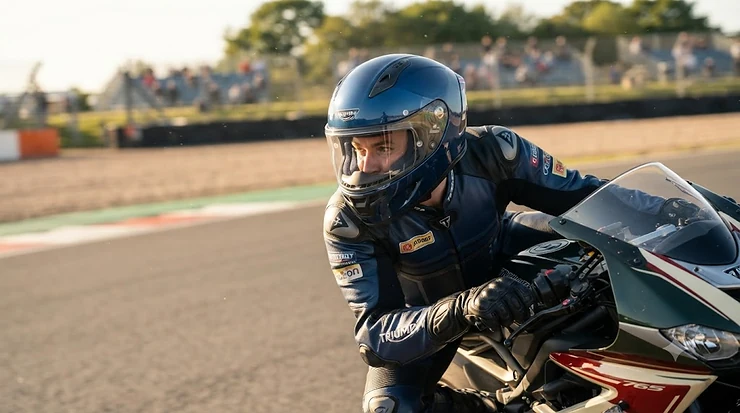
Right, let’s cut through the marketing waffle for a second. Buying a fibreglass sport motorcycle helmet isn’t like picking a phone case — get it wrong and the consequences aren’t “meh, I’ll live with it,” they’re rather more permanent. If you’ve spent any time trawling forums or standing in a helmet aisle turning lids over in your hands, you’ll know the fibreglass composite crowd sits in a strange middle ground: not as showy as carbon, not as cheap as polycarbonate, but arguably the sweet spot for anyone who actually rides hard and wants a fibreglass full face sport helmet that won’t crack a smile — or a skull — under pressure.
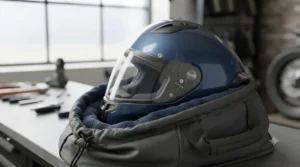
A fibreglass sport motorcycle helmet uses layers of woven glass fibre bonded with resin (sometimes blended with carbon, aramid or kevlar) to form a shell that’s stiffer than plastic yet more forgiving than pure carbon, which can be brittle in certain impact zones. On paper it sounds like a niche material choice. In practice, it’s what most of the helmets worn on British B-roads and trackdays actually use, whether the marketing brochure shouts “composite,” “PIM,” or “AIM” instead of the plainer word “fibreglass.”
We’ve spent time digging through SHARP’s government-run safety database, cross-checking spec sheets against real owner feedback, and comparing seven genuinely available UK helmets so you don’t have to. Below you’ll find honest, sourced analysis — not a copy-paste of Amazon bullet points — covering everything from aerodynamic sport helmet aerodynamic behaviour to fibreglass sport helmet ventilation, ACU approved fibreglass sport helmet requirements for trackdays, and why some lids are noticeably better at wind noise reduction than others. Whether you’re after an aggressive riding position helmet for the circuit or a more forgiving sport touring crossover lid for the commute-then-canyon lifestyle, there’s a fibreglass option built for you.
Quick Comparison Table
| Helmet | Shell | SHARP Rating | Price Range | Best For |
|---|---|---|---|---|
| Arai RX-7V Evo | Fibreglass composite (PB-SNC2) | 5 star | Around £750-£800 | Trackday purists chasing ventilation |
| Shoei NXR2 | Fibreglass composite (AIM) | 5 star | £400-£550 range | Sport touring crossover lid |
| Shark Race-R Pro | Fibreglass composite | 5 star | £450-£500 range | Aggressive riding position sportsbike use |
| HJC RPHA 11 | Fibreglass/aramid composite | 3 star | Around £250-£280 | Budget-conscious track-styled riders |
| Shark Spartan RS | Fibreglass composite | 4 star | £300-£360 range | Everyday aggressive street styling |
| Caberg Drift Evo | Fibreglass composite | 4 star | Under £220 | First fibreglass helmet on a budget |
| HJC FG-ST | Fibreglass | 5 star | Under £220 | Best value 5-star fibreglass all-rounder |
Looking at the spread above, it’s obvious that price and SHARP rating don’t move in lockstep — the HJC FG-ST matches the flagship Arai RX-7V Evo‘s 5-star result at roughly a quarter of the cost, which tells you shell material alone isn’t the whole safety story. What you’re really paying the extra money for further up the table is refinement: shell-size variety, ventilation complexity, and long-term comfort, not necessarily raw protection. If your budget tops out around £250, the HJC FG-ST and Caberg Drift Evo deserve serious attention before you assume you need to spend £500-plus.
💬 Just one click — help others make better buying decisions too!😊
Top 7 Fibreglass Sport Motorcycle Helmets: Expert Analysis
1. Arai RX-7V Evo — best ventilation for serious trackday riders
The Arai RX-7V Evo opens this list because it’s the helmet most track-focused riders default to when budget genuinely isn’t the deciding factor. Arai’s PB-SNC2 shell blends layered fibres and resin with a peripheral belt borrowed from F1 technology, and independent testing puts weight at around 1,584-1,650g depending on shell size — not the lightest lid here, but Arai prioritises its “glancing off” shell geometry over shaving grams. The Type 12 diffusers and IC Duct5 intakes deliver a reported 10%+ airflow increase over the previous generation, which in practice means this is one of the coolest helmets you can wear in a full-face racing tuck.
Riders with a longer, narrower head shape tend to get on best with the Arai RX-7V Evo, and reviewers consistently note that the ventilation genuinely lives up to the claims — though that airflow comes paired with noticeably more wind noise than rivals, so earplugs aren’t optional here. Several owners have also flagged the side-mounted visor latch as fiddly with winter gloves, a fair trade-off given the shell’s five-time-inspected build quality.
Pros:
- ✅ Class-leading ventilation for hot trackday sessions
- ✅ SHARP 5-star rating with proven glancing-off shell design
- ✅ Hand-built in Japan with a 5-year warranty
Cons:
- ❌ Noticeably noisier than most rivals on this list
- ❌ Visor latch mechanism is fiddly with thick gloves
At around £750-£800, the Arai RX-7V Evo sits at the top of this list on price, but for riders chasing outright track performance the value case still stacks up — check current price before buying, as retailers regularly run seasonal offers.
2. Shoei NXR2 — best sport touring crossover lid
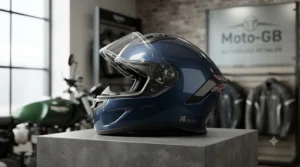
If the Arai above feels too race-focused, the Shoei NXR2 is what most UK sports-touring riders should actually be looking at. Its AIM fibreglass-based composite shell (built across three separate shell sizes) keeps a medium helmet down to a claimed 1,365g, and Shoei’s own wind-tunnel testing has clearly paid off — this is one of the quieter fibreglass sport helmets on the market, a genuine rarity in a category dominated by loud race replicas.
What most buyers overlook about the Shoei NXR2 is that despite its aggressive sporting looks, the multi-density EPS liner and refined aerodynamics make it just as happy on a three-hour motorway slog as a Sunday morning canyon run. Reviewers consistently describe it as exceptionally comfortable over long distances, with the eight-position ratchet visor and included Pinlock Evo insert both earning praise. One recurring niggle noted by owners is the visor occasionally self-closing under wind pressure or hard bumps — worth testing before you commit to a long tour.
Pros:
- ✅ Genuinely quiet for a sports-oriented fibreglass shell
- ✅ Three shell sizes for a more tailored fit
- ✅ SHARP 5-star rating with EQRS emergency cheek pad removal
Cons:
- ❌ No drop-down sun visor included
- ❌ Visor can self-close slightly in strong headwinds
Priced in the £400-£550 range depending on graphic, the Shoei NXR2 is arguably the benchmark all-rounder fibreglass full face sport helmet for UK riders who split their time between commuting and weekend blasts.
3. Shark Race-R Pro — best for an aggressive riding position
The Shark Race-R Pro was developed directly from Shark’s MotoGP and WSBK programme, and it shows in the fit: this is a helmet designed to be worn tucked in, chin near the tank, not sat bolt upright at 30mph. SHARP classifies its shell as composite fibre, and it’s one of only a handful of helmets on this list to score the maximum 5-star safety rating, putting it in genuinely elite company for shell protection.
Based on the spec comparison, what sets the Shark Race-R Pro apart from cheaper aggressive-fit helmets is the wide visor aperture combined with a surprisingly well-controlled noise profile for something this track-oriented — reviewers have specifically called out how comfortable and reasonably quiet it stays over long circuit sessions, which isn’t something you can say about every race replica. The shell comes in just two sizes, so extreme head sizes (very small or very large) may find the fit less refined than the four-shell-size Arai above.
Pros:
- ✅ SHARP 5-star rating, tied for the best on this list
- ✅ Wide visor aperture aids visibility in a race tuck
- ✅ Compatible with Shark’s own comms and quick-change visor system
Cons:
- ❌ Only two shell sizes, less tailored fit at size extremes
- ❌ Aggressive fit isn’t ideal for upright commuting positions
At around £450-£500, the Shark Race-R Pro competes directly with the Shoei NXR2 on price but leans harder into track-ready ergonomics, making it the better pick if your riding position is genuinely aggressive rather than occasional.
4. HJC RPHA 11 — best budget track-styled sport helmet
HJC’s Premium Integrated Matrix shell blends fibreglass, carbon and aramid layers to hit a claimed weight of around 1,250-1,300g, undercutting several premium rivals on this list despite costing roughly a third of the Arai’s price. The wind-tunnel-tested profile and integrated rear spoiler give the HJC RPHA 11 a genuinely aerodynamic sport helmet aerodynamic silhouette that looks — and largely performs — like helmets costing much more.
Here’s what the spec sheet won’t tell you outright: the HJC RPHA 11 scored only 3 stars in SHARP’s independent testing, specifically losing points in side-impact protection, a result worth weighing carefully against its low price. Reviewers do praise the excellent visor ratchet system and the useful “just-open” demisting position, and most describe noise levels as average for the sports category rather than class-leading. It’s ACU Gold stickered from the factory, so it’s ready for trackday scrutineering without extra paperwork.
Pros:
- ✅ Genuinely lightweight for its price point
- ✅ ACU Gold approved straight out of the box
- ✅ Excellent, glove-friendly visor mechanism
Cons:
- ❌ Only 3-star SHARP rating, weaker side-impact result
- ❌ Ventilation is adequate rather than exceptional
At roughly £250-£280, the HJC RPHA 11 is tempting for budget-conscious riders chasing race-replica looks, but safety-focused buyers may prefer stepping up to the 4 or 5-star helmets elsewhere on this list.
5. Shark Spartan RS — best everyday aggressive street styling
The Shark Spartan RS takes the racing DNA of Shark’s GP helmets and reshapes it for road use, wrapping a composite fibre shell in bold, custom-inspired styling with a perforated faux leather lining. SHARP rates it at 4 stars, a solid mid-table result, and its £349.99 RRP puts it firmly in the mid-range bracket rather than budget or flagship territory.
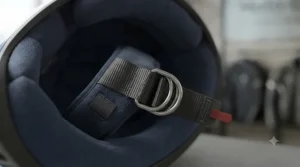
What most buyers overlook about the Shark Spartan RS is that despite the aggressive shell shape, Shark hasn’t sacrificed everyday usability — the double-D fastener, six available sizes (XS to XXL), and Pinlock-ready visor all point to a helmet designed for daily riding rather than pure circuit work. Aggregated reviewer sentiment on Shark’s road-focused fibreglass range generally highlights comfortable long-term fit and decent build quality, though as with most Shark helmets, trying before buying is strongly advised given the brand’s distinctly different head-shape philosophy compared with Arai or Shoei.
Pros:
- ✅ Bold, distinctive styling that stands out from generic sport lids
- ✅ SHARP 4-star rating at a genuinely mid-range price
- ✅ Six sizes available, including extremes (XS and XXL)
Cons:
- ❌ Shark’s fit profile suits rounder heads, less so long-oval shapes
- ❌ Not as track-focused as the Race-R Pro above
Sitting in the £300-£360 range, the Shark Spartan RS is a strong pick for riders who want sportsbike attitude on the school run and the shopping trip, not just on track.
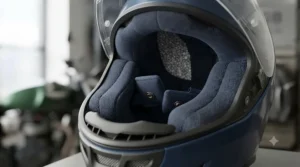
6. Caberg Drift Evo — best first fibreglass helmet on a tight budget
Italian maker Caberg built the Caberg Drift Evo through its racing department, and the composite fibre shell — a blend of fibreglass, kevlar and carbon — punches well above its RRP of £199.99. It’s one of the few sportsbike-oriented helmets at this price point to include an integrated drop-down sun visor, a feature usually reserved for touring-focused lids costing considerably more.
Reviewers consistently note that the Caberg Drift Evo feels lighter on the head than its on-paper weight suggests, and the single large chin vent plus crown and rear exhaust vents do a genuinely good job of managing airflow for the price bracket. The main recurring complaint across owner feedback is the tilting visor mechanism, which several riders have described as less refined than rivals — something to physically test before committing if visor smoothness matters to you. Caberg’s one-year warranty is also notably shorter than the five-year cover offered by HJC, Arai and Shoei.
Pros:
- ✅ Rare inclusion of a drop-down sun visor at this price
- ✅ SHARP 4-star rating, strong result for a sub-£200 lid
- ✅ Genuinely composite fibreglass shell, not plastic
Cons:
- ❌ Visor tilt mechanism feels less polished than pricier rivals
- ❌ Only a one-year manufacturer warranty
Under £220, the Caberg Drift Evo is arguably the best-value entry point into fibreglass composite protection for riders upgrading from a polycarbonate first helmet.
7. HJC FG-ST — best value 5-star fibreglass all-rounder
Closing out this list is a genuine value story: the HJC FG-ST uses a proper fibreglass shell (not a carbon blend) and still achieves SHARP’s maximum 5-star safety rating, putting it in a very select group of helmets to hit top marks regardless of price. At an RRP around £199.99, that’s an outstanding safety-to-cost ratio, and it’s a helmet independent reviewers have specifically flagged as worth checking whenever safety is the top priority.
Based on the spec comparison, what the HJC FG-ST sacrifices to hit this price is refinement rather than protection — it’s built in just two shell sizes, so fit at the extremes won’t be as tailored as pricier rivals, and reviewers describe it as reasonably rather than exceptionally quiet. It does, however, come with a Pinlock Max Vision anti-fog insert included in the box and a three-stage internal sun visor, both unusual inclusions at this price. HJC backs it with the same 5-year warranty as its pricier RPHA-series stablemates.
Pros:
- ✅ SHARP 5-star rating matching helmets 3-4x the price
- ✅ Includes Pinlock anti-fog insert and internal sun visor
- ✅ Full 5-year HJC warranty despite the budget price
Cons:
- ❌ Only two shell sizes limit fit precision
- ❌ Noise insulation is average, not class-leading
At under £220, the HJC FG-ST deserves to be near the top of anyone’s shortlist who wants proven fibreglass sport helmet safety without a flagship price tag.
Practical Fibreglass Helmet Care & Maintenance Guide
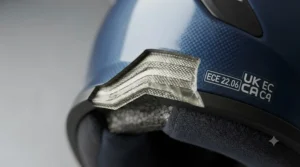
Getting a good fibreglass sport motorcycle helmet is only half the job — looking after it properly is what keeps that SHARP rating meaningful five years from now. In the first month, resist the urge to leave your new lid baking on the tank in direct sun or stored in a hot garage; UV exposure and heat cycling gradually degrade both the resin bond in the shell and the EPS liner’s shock-absorbing properties, according to manufacturer guidance from Arai and others.
Clean the visor with lukewarm water and a microfibre cloth only — never household glass cleaner, which can react badly with anti-scratch and Pinlock-ready coatings. The removable liner in most helmets on this list should be hand-washed with mild soap, never machine-washed or tumble-dried, and left to air-dry away from direct heat. A common first-30-days mistake is over-tightening the retention strap “to be safe” — a genuinely well-fitted fibreglass shell shouldn’t need excessive strap tension to stay secure; if it does, the shell size is probably wrong for your head.
Finally, remember that a fibreglass shell that’s taken any meaningful impact — even one that looks cosmetically fine — should be retired. Unlike a dented car panel, EPS liner compression is largely invisible from the outside, and Arai’s UK guidance specifically notes a fibreglass helmet’s expected working life is around seven years from manufacture even without a crash, due to natural material degradation.
Real-World Rider Scenarios: Which Fibreglass Sport Helmet Fits You?
If you’re a weekend trackday rider on a modern supersport, chasing lap times a few Saturdays a year, the Arai RX-7V Evo or Shark Race-R Pro make the most sense — both are built around an aggressive riding position and prioritise ventilation and shell strength over everyday convenience features like sun visors.
If you’re commuting five days a week and adding a proper ride-out most weekends — the classic sport touring crossover lid buyer — the Shoei NXR2 is the strongest match here, balancing sporting looks with genuine long-distance comfort and reduced wind noise.
If you’re a newer rider upgrading from your first budget polycarbonate helmet and want a genuine fibreglass step up without spending £400+, both the Caberg Drift Evo and HJC FG-ST solve that problem convincingly, the latter in particular offering SHARP’s top rating on a realistic first-proper-helmet budget.
How to Choose a Fibreglass Sport Motorcycle Helmet
What is a fibreglass sport motorcycle helmet? It’s a full-face helmet whose outer shell is built from woven glass fibre layers bonded with resin — often blended with carbon or aramid for extra strength — offering a lighter, more impact-absorbing alternative to polycarbonate while typically costing less than full carbon fibre shells.
Choosing the right one comes down to a handful of genuinely important criteria:
- Check the SHARP rating first, not the shell material. As SHARP’s own guidance explains, shell material alone doesn’t predict safety performance — a 5-star fibreglass helmet can outperform a lower-rated carbon one.
- Match the fit to your head shape, not the brand hype. Arai and Shoei generally suit longer, narrower heads; HJC and Shark tend to suit rounder profiles — try before you buy wherever possible.
- Decide how aggressive your actual riding position is. A race-replica aggressive riding position helmet feels wrong worn upright in traffic for an hour.
- Weigh ventilation against noise. Helmets with the best fibreglass sport helmet ventilation, like the Arai above, often trade some quietness for airflow.
- Confirm ACU approval if you’re trackday-bound. Not every ECE 22.06 helmet passes the ACU’s additional test — check the model specifically.
- Budget for a Pinlock insert if it’s not included. Several helmets here include one; others don’t, and it’s a real-world cost difference worth factoring in.
- Set a replacement timeline. Even undamaged fibreglass shells have a working life of around seven years from manufacture.
Fibreglass Full Face Sport Helmet vs Carbon Fibre vs Polycarbonate
The material debate causes more confusion than it should. A fibreglass full face sport helmet uses layered glass fibre and resin, giving a shell that flexes very slightly on impact to help spread energy — Arai’s entire safety philosophy is effectively built around this controlled flex and “glancing off” behaviour. Carbon fibre shells are typically lighter for the same strength, but the material can behave more rigidly at the point of impact, which is one reason several carbon-shelled helmets on the market haven’t scored higher than their fibreglass composite siblings in SHARP testing.
Polycarbonate (thermoplastic) sits at the budget end, moulded rather than laid up by hand, and while modern polycarbonate helmets like some in HJC’s range can still score well on SHARP, they’re generally heavier and less refined than composite fibreglass equivalents at a similar safety rating. The practical upshot for buyers: don’t assume carbon automatically means safer, and don’t dismiss fibreglass as old-fashioned — several of the highest SHARP-rated helmets on this list, fibreglass among them, outperform pricier carbon options in real crash testing data.
Fibreglass Sport Helmet Aerodynamic Design: What Actually Matters
Aerodynamic sport helmet aerodynamic performance isn’t just about looking fast — it directly affects rider fatigue, stability, and even safety at speed. Rear spoilers, like those on the HJC RPHA 11 and Caberg Drift Evo, are designed to reduce lift and buffeting when tucked in, while smoother shell profiles (Arai’s signature approach) aim to reduce turbulence-generated noise and drag simultaneously.
What most buyers overlook is that aerodynamics only work as designed at the riding position they were engineered for — a race-tucked helmet like the Shark Race-R Pro can actually create more buffeting when worn upright in traffic, because the airflow hits the shell at an angle it wasn’t optimised for. If most of your riding is upright commuting punctuated by occasional spirited rides, a more neutral profile like the Shoei NXR2‘s will likely feel more stable day-to-day than a pure race spoiler design.
Fibreglass Sport Helmet Ventilation: Cooling Systems Explained
Fibreglass sport helmet ventilation systems work by channelling air through intakes at the chin, brow and crown, across ducted channels moulded into the EPS liner, and out through rear exhaust vents — often integrated into the spoiler itself. The Arai RX-7V Evo‘s Type 12 diffuser system represents the most sophisticated version of this on our list, claiming a 10%+ airflow improvement over its predecessor.
Here’s what the spec sheet won’t tell you: more vents don’t automatically mean better cooling. Poorly channelled ventilation can actually increase turbulence and noise without meaningfully lowering head temperature, which is precisely why simpler systems like the Caberg Drift Evo‘s three-vent layout can perform respectably despite looking basic on a spec list next to Arai’s multi-diffuser setup.
ACU Approved Fibreglass Sport Helmet: Track Day and Racing Requirements
If you’re planning UK trackdays or club racing, an ACU approved fibreglass sport helmet isn’t optional — it’s the minimum standard for scrutineering on tarmac circuits in Britain, awarded via the Gold sticker system administered by the Auto-Cycle Union. Crucially, ACU Gold approval is a separate, additional test beyond the legally required ECE 22.06 standard — a helmet can be perfectly road-legal without carrying it, so always check the specific model, not just the brand, before booking track time.
Of the seven helmets featured here, the HJC RPHA 11 and Shark Race-R Pro are both commonly supplied with ACU Gold stickers as standard from UK distributors, reflecting their track-oriented design briefs — but stock and stickering can vary by retailer batch, so confirm with the seller before your trackday if this matters to you. Any modification to a fibreglass shell, including drilling for aftermarket cameras or comms brackets, will invalidate ACU approval, something worth remembering before you reach for a power drill.
Aggressive Riding Position Helmet: Fit for Sportsbike Ergonomics
An aggressive riding position helmet is shaped and vented specifically for a rider tucked forward, chin near the tank, eyes looking up through the top of the visor aperture — not sat bolt upright. This is why Arai’s VAS visor system lowers the pivot point specifically to widen the field of view in a full tuck, and why the Shark Race-R Pro‘s wide visor aperture matters more to circuit riders than commuters.
The trade-off reviewers consistently flag is comfort at low speed and upright posture: helmets optimised this heavily for a race crouch can feel less settled and slightly more prone to buffeting when ridden upright in town, simply because the aerodynamics and eyeline were engineered around a completely different head angle.
Wind Noise Reduction: Why Some Fibreglass Helmets Are Quieter
Wind noise reduction comes down to shell smoothness, visor seal quality, and internal padding density around the ears and cheeks — not simply how “aerodynamic” a helmet looks. The Shoei NXR2 stands out on this list specifically for its quietness, a result Shoei achieves partly through refined cheek pad and ear padding geometry rather than shell shape alone.
Reviewers consistently note that this is one of the most subjective categories in helmet testing — rider head shape, bike fairing, screen height and riding speed all change perceived noise dramatically, which is why the same helmet can be called “whisper quiet” by one owner and “surprisingly loud” by another. What’s consistent across sourced reviews, though, is that ventilation-heavy helmets like the Arai RX-7V Evo trade measurable quietness for airflow — earplugs are a genuine safety accessory, not an optional extra, with any of the helmets on this list.
Sport Touring Crossover Lid: When Comfort Matters as Much as Speed
A sport touring crossover lid is designed to satisfy two conflicting briefs at once: sporting performance for spirited riding, and genuine comfort for multi-hour motorway stints. The Shoei NXR2 is the clearest example here, deliberately built to feel at home on a three-hour ride as much as a Sunday morning blast, according to sourced reviewer testing across several thousand miles of use.
What most buyers overlook when shopping this category is that a genuine crossover lid usually means compromise on both ends — it won’t be quite as track-focused as the Arai RX-7V Evo or as touring-plush as a dedicated adventure helmet, but for riders who genuinely split their time between the two disciplines, that middle ground is exactly the point.
Common Mistakes When Buying a Fibreglass Sport Motorcycle Helmet
The single biggest mistake is buying by brand reputation alone rather than checking the specific model’s SHARP rating — as this list shows, a 3-star flagship-branded helmet can score worse than a budget alternative from a less glamorous name. A close second is skipping the in-store fitting session; head shape compatibility, not just circumference, is what actually determines comfort and safety over hundreds of miles, and online-only buyers frequently end up returning helmets that “should” have fitted on paper.
Riders also commonly underestimate replacement costs — visors, Pinlock inserts and liners all wear out and need periodic replacement, and not every helmet includes a spare visor or anti-fog insert in the box, a real difference in total cost of ownership between models on this list. Finally, buying a helmet purely for ACU Gold approval without checking whether you’ll actually use it on track is a wasted premium; road riders don’t need it, and it shouldn’t be the deciding factor over comfort and fit.
Long-Term Cost & Maintenance
Total cost of ownership for a fibreglass sport motorcycle helmet extends well beyond the sticker price. Replacement visors typically run £30-£70 depending on brand, Pinlock inserts £15-£25 if not included, and liners (where sold separately) another £30-£50. Helmets bundled with a Pinlock insert and spare visor from the outset, like the HJC FG-ST and Shoei NXR2, therefore offer better real-world value than their headline price alone suggests.
Warranty length matters more than riders often realise: the five-year cover on the Arai RX-7V Evo, Shoei NXR2 and both HJC helmets on this list compares favourably against the Caberg Drift Evo‘s single year. Given that manufacturer guidance puts a fibreglass shell’s working life at around seven years from manufacture regardless of warranty, budgeting for eventual replacement — rather than assuming indefinite use — is the financially honest way to plan.
Safety, Regulations and Compliance Guide
By law, every motorcycle helmet sold and worn in the UK must meet ECE 22.05 or the newer ECE 22.06 standard, or the older British Standard BS 6658:1985 with a BSI Kitemark. All seven helmets featured here meet at least ECE 22.05, with several — including the Arai, Shark Race-R Pro and both HJC models — already updated to the stricter ECE 22.06 standard, which adds oblique impact testing for rotational forces that the older standard doesn’t cover.
Beyond the legal minimum, SHARP’s independent, government-funded rating system tests each helmet across multiple impact zones and speeds, going further than the legally required baseline. As SHARP itself explains, the star rating reflects protection above and beyond the ECE minimum, which is exactly why two legally compliant helmets can still differ meaningfully in real crash performance — a distinction this comparison has tried to make clear throughout.
FAQ
❓ What's the difference between fibreglass and composite fibre helmets?
❓ Is a fibreglass helmet safer than a carbon fibre one?
❓ Do I need ACU approval for a UK trackday?
❓ How long does a fibreglass motorcycle helmet last?
❓ Are fibreglass sport helmets noisy?
Conclusion
There’s no single “best” fibreglass sport motorcycle helmet — there’s the best one for how and where you actually ride. If you’re chasing lap times and can stomach the noise, the Arai RX-7V Evo‘s ventilation and shell pedigree are hard to beat. If you want one helmet that handles both the commute and the canyon carving, the Shoei NXR2‘s sport touring crossover lid credentials make it the more sensible daily companion. And if budget is the deciding factor, don’t overlook the HJC FG-ST — a genuine SHARP 5-star result at a price that undercuts nearly everything else on this list.
What all seven share is a genuine fibreglass or fibreglass composite shell, independently tested rather than marketing-department claimed, and real aggregated owner feedback backing up the spec sheets. Whichever you choose, prioritise fit and SHARP rating over brand name alone — your head will thank you on the ride home.
Recommended for You
- Fibreglass Motorcycle Helmet 2026: 7 Lids Worth Your Money
- Carbon Racing Helmet 2026: 7 FIA & MSA Approved Picks
- 7 Best Lightweight Carbon Helmet Women Picks for 2026 Rides
Disclaimer: This article contains affiliate links. As an Amazon Associate, I earn from qualifying purchases. If you purchase products through these links, we may earn a small commission at no additional cost to you.
✨ Found this helpful? Share it with your friends! 💬🤗
