

In This Article
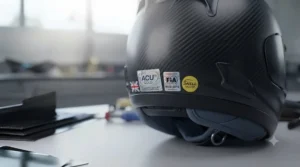
Buy the wrong crash helmet for road driving and you’ll probably never notice. Buy the wrong one for the circuit, and a scrutineer will send you home before you’ve turned a wheel. A carbon racing helmet is a full-face motorsport helmet with a shell built from woven carbon fibre (sometimes blended with Kevlar or fibreglass), homologated to FIA or Snell standards for use with a head-and-neck restraint. That’s the 40-second answer. The longer answer is that “carbon” on a helmet box isn’t a marketing sticker — it’s a genuine engineering trade-off between weight, rigidity, and the amount of money leaving your bank account.

If you’ve spent any time on a grid, you’ll know why weight matters so much here. Every gram sitting on top of your neck gets multiplied by lateral g-force through every corner, lap after lap, session after session. A lighter shell means less fatigue by lap twenty, which usually means fewer mistakes late in a race. That’s the entire pitch behind carbon over fibreglass or polycarbonate — not vanity, physics.
This guide walks through seven real, currently sold carbon racing helmets spanning entry-level circuit kit through to Formula-grade 8860 helmets, explains what the FIA and Motorsport UK homologation stickers actually mean for your eligibility to compete, and gives you a genuinely useful framework for matching a helmet to the racing you actually do — not the racing you’ll do “one day.” We’ve drawn on manufacturer specifications, official homologation documentation, and the aggregated themes that come up again and again in owner and reviewer feedback, always flagged honestly as such rather than presented as first-hand testing.
Quick Comparison Table
| Helmet | Shell Material | Approval | Best For |
|---|---|---|---|
| Bell GP3 Carbon | Carbon fibre | FIA 8859-2015 / Snell SA2020 | Budget entry into carbon |
| Sparco Air Pro RF-5W | Carbon-Kevlar/fibreglass | FIA 8859-2015 / Snell SA2020 | Value-focused club racers |
| Stilo ST5 GT Carbon | Medium-tensile carbon | FIA 8859-2015 / Snell SA2020 | Customisable club-to-national |
| Bell RS7 Carbon | Carbon fibre | FIA 8859-2015 / Snell SA2020 | HP7 tech at a lower cost |
| Simpson Carbon Bandit | Ultra-light carbon fibre | FIA 8859-2020 / Snell SA2020 | Lightest all-round option |
| Sparco Prime RF-10 Supercarbon | Carbon fibre | FIA 8860-2018 / Snell SA2020 | Serious circuit and single-seater |
| Arai GP-7 SRC Carbon | Hand-laid SRC carbon | FIA 8860-2018 | Top-tier single-seater racing |
Look at that table and a pattern jumps out immediately: everything below the Sparco Prime is FIA 8859-rated, and everything at the very top is 8860-rated — the standard that most club and national racers will genuinely need versus the standard that only top-flight, FIA-sanctioned single-seater and GT series actually require. Paying for 8860 protection you don’t need is common, and it’s an expensive habit; paying for a used helmet with an expired homologation sticker is worse, because a scrutineer will bench you regardless of how good the shell looks.
💬 Just one click — help others make better buying decisions too!😊
Top 7 Carbon Racing Helmets: Expert Analysis
Coverage below spans budget, mid-range and flagship options, plus a couple of lesser-known-but-genuinely-good picks that don’t get the attention Arai and Bell soak up. Each helmet is homologated for motorsport use — none of these are novelty carbon-look lids for road riding.
1. Bell GP3 Carbon — best entry point into FIA-legal carbon
The GP3 Carbon shares its aerodynamic shell and duckbill spoiler option with Bell’s flagship HP7, just without some of the more exotic (and costly) layup refinements. That inheritance matters in practice: the front chin spoiler measurably reduces buffeting and lift in open-cockpit cars, something budget helmets in composite shells often can’t offer at all. The shell carries FIA 8859-2015 and Snell SA2020 approval, with factory-fitted FHR posts, so a HANS device bolts straight on without drilling.
Bell’s double-screen anti-fog (DSAF) visor and 14-point ventilation system are the standout practical features here — worth calling out because visor fogging mid-race is one of those problems that sounds minor until it happens to you at 90mph. Based on the spec sheet, the GP3 Carbon is built for club racers, karters stepping up to cars, and anyone entering circuit racing who wants a genuine FIA-legal carbon shell without paying for features aimed at professional single-seater teams.
Reviewers consistently note the fit runs true to Bell’s sizing chart and that the interior padding holds up well over a season, though a smaller minority mention the standard visor tear-off posts feel like an afterthought compared with dedicated race visors. If you can’t verify aftermarket accessory compatibility for your specific championship, check with your scrutineer before race day.
Pros:
- ✅ Shares HP7 aerodynamic shell design at a lower cost
- ✅ Factory-fitted FHR posts for HANS compatibility
- ✅ Strong 14-point ventilation reduces visor fogging
Cons:
- ❌ Lacks the higher 8860 homologation for top-tier series
- ❌ Standard tear-off posts feel basic next to rivals
Prices for the GP3 Carbon typically sit in the £700-£900 range depending on visor and spoiler configuration — always check current price before ordering, since motorsport retailers adjust regularly. As a value verdict: for anyone racing under Motorsport UK’s national permit structure, this is arguably the smartest carbon helmet on the list.
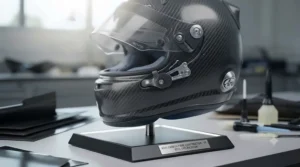
2. Sparco Air Pro RF-5W — best value carbon-Kevlar hybrid
Sparco doesn’t market the Air Pro RF-5W as a pure carbon shell, and that’s worth being upfront about — it’s a carbon-Kevlar reinforced fibreglass construction. What most buyers overlook is that this hybrid approach often delivers better impact energy dissipation per pound spent than a thin, all-carbon shell at the same price point, because Kevlar’s tensile strength complements carbon’s stiffness rather than competing with it.
The wide eye-port design works equally well in closed-cockpit saloons and open-wheel cars, and the six rear ventilation ducts plus chin-bar grilles genuinely shift more air than you’d expect from a helmet at this price. It carries FIA 8859-2015 and Snell SA2020 approval with factory-fitted HANS posts included as standard — no separate purchase required, which isn’t always the case at this end of the market.
Aggregated feedback from UK motorsport retailers who stock the Air Pro RF-5W points to a comfortable, slightly narrower fit than Bell, with washable interior linings that reviewers say hold their shape well after repeated race weekends. A recurring theme in the same feedback is that colour options thin out quickly once a new model year lands, so buyers wanting a specific finish should check current availability early.
Pros:
- ✅ Carbon-Kevlar layup improves impact energy management
- ✅ Wide eye-port suits both saloon and open-wheel use
- ✅ HANS posts included, not sold separately
Cons:
- ❌ Heavier than the pure-carbon options on this list
- ❌ Popular colourways sell out fast between restocks
At around £350-£450, this is comfortably the most accessible genuinely race-legal helmet here. On a value verdict: for a first season of circuit racing or a track-day driver planning to go competitive, it’s hard to beat the entry cost against the protection level.
3. Stilo ST5 GT Carbon — most customisable club racer’s helmet
Stilo built the ST5 GT line around one core idea: the helmet is a platform, not a finished product. Side-mounted ports let you integrate an intercom, forced-air system, or drinking system — or all three simultaneously — without any wiring hanging awkwardly below the shell. For rally co-drivers and endurance racers who need reliable radio communication for hours at a time, that integration is a genuine practical advantage most single-purpose helmets simply can’t match.
The medium-tensile carbon shell comes in two shell sizes (a smaller one for XS-M, a larger one for L-XXL), which means Stilo can keep weight down across the whole size range rather than stretching one shell over every head circumference — a common compromise elsewhere. Weight sits around 1,290g for the small shell, which on paper puts it among the lighter FIA 8859-rated helmets on the market. It’s homologated to FIA 8859-2015 and Snell SA2020.
Here’s what the spec sheet won’t tell you, but owner reports suggest: the taller eye-port genuinely helps in low, reclined single-seater seating positions where a standard eye-port can clip your upward field of view. A common complaint in user reviews is that Stilo’s sizing runs slightly smaller than Arai or Bell, so first-time buyers are strongly advised to use Stilo’s own size chart rather than assuming their usual size carries across.
Pros:
- ✅ Side ports integrate intercom, air and hydration systems
- ✅ Two shell sizes keep weight down across all head sizes
- ✅ Taller eye-port suits reclined single-seater positions
Cons:
- ❌ Runs smaller than Bell or Arai — measure carefully
- ❌ Communication accessories add meaningfully to total cost
Expect a price in the £900-£1,100 range for the base carbon shell, before intercom or hydration extras. Given the customisation ceiling, this is the pick for drivers who know they’ll upgrade their in-car electronics over time rather than replace the whole helmet.
4. Bell RS7 Carbon — HP7 tech without the HP7 price
The RS7 Carbon is, by Bell’s own description, built on the same lightweight carbon shell and design language as the range-topping HP7, including the optical-grade DSAF double-screen anti-fog visor and the same 14-intake ventilation system. Where it differs is largely in the finishing and accessory ecosystem rather than raw protective performance, which is precisely why it represents such strong value relative to the flagship model above it.
Available with or without a duckbill chin spoiler, the RS7 Carbon lets buyers choose aerodynamics to match their car — the spoiler earns its keep in open-cockpit single-seaters where lift and buffeting are real handling factors, but it’s arguably unnecessary in a closed saloon. FIA 8859-2015 and Snell SA2020 approval covers the vast majority of UK club and national racing requirements without needing to step up to 8860.
Reviewers who’ve run the RS7 alongside the pricier HP7 commonly report the two feel near-identical in the seat, with any difference being more about finish and resale prestige than actual comfort or protection. If genuine hands-on comparison data between the two models can’t be independently verified for every configuration, that’s a reasonable data point rather than a marketing claim to take entirely at face value.
Pros:
- ✅ Shares HP7 shell and DSAF visor technology
- ✅ Optional duckbill spoiler tuned for open-cockpit cars
- ✅ Strong resale value within the Bell ecosystem
Cons:
- ❌ Duckbill spoiler adds negligible benefit in closed cars
- ❌ Accessories and visor options sold separately add up
Pricing typically lands in the mid-£1,000s depending on spoiler and visor configuration. For drivers who want Bell’s flagship feel without the flagship invoice, this is the value verdict that makes the most sense.
5. Simpson Carbon Bandit — lightest all-rounder for oval and circuit
Simpson built the Carbon Bandit around a straightforward goal: strip weight from its already well-regarded Bandit shell using an Italian-sourced ultra-lightweight carbon fibre weave, assembled in the US. The result sits around 1,300-1,500g depending on size — roughly 30% lighter than the standard composite Bandit — while carrying Snell SA2020 certification and FIA 8859-2020 compliance, plus M6 terminal mounts for HANS integration.
Based on the spec comparison with other helmets on this list, the Carbon Bandit’s multi-use design philosophy stands out. Simpson markets it explicitly for stock car, oval and circuit use rather than specialising narrowly for one discipline, which suits drivers who compete across disciplines within a season — a genuinely common pattern in UK grassroots motorsport where the same driver might do sprints, circuit races and the odd hillclimb.
What most buyers overlook about American-market helmets like this is the Snell-first design philosophy, since Snell SA2020 carries more regulatory weight in the US than the UK, where FIA 8859 takes precedence. The dual certification here means it’s usable on both sides of the Atlantic, but UK racers should always confirm with their specific championship organiser that the FIA 8859-2020 rating (rather than just the Snell sticker) satisfies their series regulations before buying.
Pros:
- ✅ Around 30% lighter than the standard composite Bandit
- ✅ Dual Snell SA2020 and FIA 8859-2020 certification
- ✅ Genuinely versatile across oval, stock car and circuit use
Cons:
- ❌ Snell-first heritage means UK buyers must double-check FIA validity
- ❌ Smaller UK dealer network than Bell, Arai or Stilo
Expect a price range of roughly £600-£800 depending on importer and configuration. The value verdict: if your season spans multiple disciplines, this is one of the few helmets here genuinely designed for that variety rather than specialising in one.
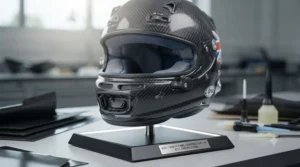
6. Sparco Prime RF-10 Supercarbon — flagship 8860 protection on a realistic budget
Step up to FIA 8860-2018 homologation and prices generally jump sharply — except the Prime RF-10 Supercarbon is priced noticeably below several rivals carrying the same top-tier approval. The radically shaped carbon shell is engineered specifically to withstand the more severe impact testing regime that 8860 demands, which includes tougher penetration resistance and stricter energy management limits than the 8859 standard most club racers use.
The practical upshot of 8860 homologation is straightforward: it’s required for FIA-sanctioned single-seater categories, and it’s the standard serious GT and endurance drivers increasingly choose even when their series doesn’t strictly mandate it, simply because it’s the higher bar. Factory-fitted FHR posts, a removable interior lining, and drink-system compatibility round out the feature set, putting it in genuine competition with helmets costing considerably more.
Reviewers consistently flag the Prime RF-10 as offering 8860-level protection at a price that undercuts the segment, though a recurring theme is that replacement visors and accessories can be harder to source quickly from UK stock than for Arai or Bell, occasionally meaning a wait during peak season. If you’re planning to race internationally, that’s worth weighing against the up-front saving.
Pros:
- ✅ FIA 8860-2018 homologation at a below-segment price
- ✅ Factory FHR posts and drink-system compatibility included
- ✅ Genuinely competes with pricier flagship 8860 helmets
Cons:
- ❌ UK aftermarket accessory availability lags behind Arai/Bell
- ❌ Radical aero shaping suits open-cockpit cars more than saloons
Pricing typically falls in the £2,300-£2,600 range once converted and imported — still a meaningful saving against comparable 8860 helmets from other premium brands. For drivers stepping up to FIA-sanctioned single-seater racing on a tighter budget, this is arguably the smartest flagship purchase on the list.
7. Arai GP-7 SRC Carbon — the benchmark for top-tier single-seater racing
The GP-7 SRC sits at the top of this list for a reason: Arai’s proprietary SRC (Super Racing Carbon) weave is engineered to flex on impact rather than splinter or shatter the way conventional carbon fibre can, transferring impact energy into a multi-density inner shell instead of concentrating it at the point of contact. That’s a genuinely different engineering approach from most competitors, not just a marketing distinction, and it’s a major reason this helmet meets the demanding FIA 8860-2018 standard used across Formula 1 feeder categories, WEC and WRC.
Ventilation runs to five inlets and two enlarged crown outlets, and the lever-operated visor mechanism is specifically designed to work smoothly even with thick racing gloves on — a small detail that matters enormously mid-pit-stop. The helmet ships without top vents pre-fitted, instead including a full kit of ducts so drivers can configure airflow to their exact seating position, alongside Arai’s PED aerodynamic spoiler kit and factory HANS/FHR posts.
Here’s what most spec sheets won’t tell you: Arai’s own literature explicitly warns that the GP-7 SRC is homologated only up to size Large, with the GP-6RC as the alternative for X-Large heads — worth checking before you fall in love with this model. Owner and reviewer feedback aggregated across specialist motorsport retailers consistently praises Arai’s fit and long-session comfort, a reputation the brand has built over decades, though the flexible SRC shell is sometimes described as feeling less rigid to the touch than composite alternatives, which is by design rather than a flaw.
Pros:
- ✅ SRC carbon weave flexes rather than shatters on impact
- ✅ FIA 8860-2018 homologation for top-tier series
- ✅ Glove-friendly lever visor mechanism for pit stops
Cons:
- ❌ Not homologated above size Large
- ❌ Among the most expensive helmets on this list
Prices generally sit in the £3,800-£4,300 range, reflecting its position as genuine Formula-adjacent equipment rather than club-level kit. Reserve this one for drivers who are either contractually required to run 8860 or who simply want the best currently homologated protection money can buy.
Practical Usage Guide: Setup, Fit and First 30 Days
Getting a carbon racing helmet race-ready starts before you ever put it on. First, check the homologation label under the interior padding at the crown — confirm the standard (8859 or 8860), the issue date, and that HANS/FHR anchor points match your restraint system exactly; never drill new holes yourself, since this voids the homologation instantly.
Fitting comes next. A correctly sized racing helmet should feel snug enough that your cheeks compress slightly and the helmet doesn’t rotate when you grip the chin bar and twist — looser is not more comfortable, it’s less protective. In the first thirty days, expect the interior foam to pack down slightly as it moulds to your head shape; many drivers mistakenly buy a size up to compensate for initial tightness, then find the helmet too loose once broken in.
A common first-month mistake is over-tightening the chin strap to the point of restricting jaw movement, or under-tightening it so it doesn’t hold the helmet down under harness load in an impact. Clean the interior lining after every few sessions using manufacturer-approved products only — solvents and standard detergents can degrade fire-retardant Nomex linings. Store the helmet in its bag, shell-down or on a proper stand, never resting on the visor, and keep it away from direct sunlight and high heat, both of which accelerate shell and foam degradation over a homologation period that typically runs five to ten years depending on standard.
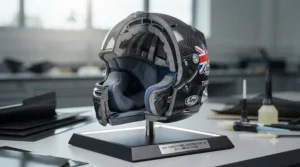
Which Carbon Racing Helmet Suits Your Racing Career Stage?
Picture three different drivers on the same club racing weekend. The first is a 24-year-old doing her first season in a 1.4-litre saloon championship on a tight budget, racing perhaps eight weekends a year — for her, the Sparco Air Pro RF-5W or Bell GP3 Carbon covers her FIA 8859 requirement without overspending on protection levels she doesn’t yet need.
The second is a 40-year-old accountant who’s raced club level for six years and is stepping up to a national single-seater series that mandates HANS and rewards every gram saved through the season. He’s the Stilo ST5 GT Carbon or Bell RS7 Carbon buyer — established enough to want the lighter shell and communication integration, not yet at the level where 8860 is mandatory.
The third is a 19-year-old junior single-seater racer being scouted for an FIA-sanctioned feeder series, where 8860 homologation isn’t optional — it’s a regulatory entry requirement. For him, the Sparco Prime RF-10 Supercarbon offers a realistic budget route into 8860, while a well-backed team might specify the Arai GP-7 SRC Carbon outright. Matching the helmet to where you genuinely are in your racing, not where you hope to be in five years, saves real money without compromising legal eligibility today.
Your Carbon Racing Helmet Decision Framework
If budget is your primary constraint and you’re racing under national FIA 8859 rules, choose the Sparco Air Pro RF-5W or Bell GP3 Carbon, because both deliver full homologation without paying for features aimed at professional single-seater teams. If you need integrated communications or hydration for long stints, choose the Stilo ST5 GT Carbon, because its side-port system is purpose-built for exactly that. If your series mandates FIA 8860, choose between the Sparco Prime RF-10 Supercarbon for value or the Arai GP-7 SRC Carbon if budget genuinely isn’t the deciding factor, because both meet the higher standard but at markedly different price points.
How to Choose a Carbon Racing Helmet
What is the best way to choose a carbon racing helmet? Start by confirming your series’ minimum homologation requirement with your scrutineer or championship regulations, then work through these criteria in order:
- Confirm required homologation (FIA 8859 vs 8860) with your event organiser before shopping — this eliminates most of the field immediately.
- Measure your head circumference properly and check it against the specific brand’s size chart, since Stilo, Arai and Bell all size differently.
- Decide whether you need HANS/FHR compatibility — almost all modern circuit racing now requires it, so factory-fitted posts save cost and hassle.
- Weigh ventilation needs against your car type — open-cockpit cars benefit from spoiler kits and different airflow than closed saloons.
- Consider accessory integration (intercom, hydration, forced air) if you compete in longer format events like endurance or rally.
- Check the manufacture date against your series’ expiry rules, since FIA homologations typically run five to ten years from date of manufacture, not date of purchase.
- Set a realistic budget band based on your actual competition level rather than your aspirational one, then buy the best-reviewed helmet within that band.
Common Mistakes When Buying a Carbon Racing Helmet
The single most common mistake is buying based on standard alone without checking size — a helmet that’s technically FIA 8860 rated does you no favours if it’s loose enough to rotate under impact. A close second is assuming Snell certification alone satisfies UK requirements; as UK motorsport bodies explain clearly, Motorsport UK’s own guidance makes clear that safety equipment must carry the correct standard label for your specific discipline, and FIA homologation generally takes precedence over Snell in UK and European competition.
Buyers also frequently overlook expiry dates on second-hand helmets, assuming a good-looking shell is still legal — cracked shells or homologations that have lapsed will be rejected at scrutineering regardless of cosmetic condition. Finally, many first-time buyers pick a helmet based purely on brand reputation without checking whether that specific model carries the homologation their series actually requires, since brands like Bell and Sparco sell both 8859 and 8860 rated helmets side by side.
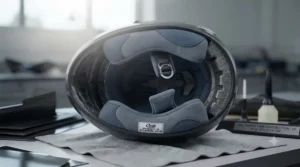
Carbon Racing Helmet vs Fibreglass and Composite Helmets
The core material difference comes down to strength-to-weight ratio. As explained on Wikipedia’s overview of carbon-fibre-reinforced polymer, carbon composites combine high tensile strength with significantly lower density than glass-fibre alternatives, which is precisely why racing helmet manufacturers favour it for weight-sensitive applications like motorsport headgear.
| Factor | Carbon Shell | Fibreglass/Composite Shell |
|---|---|---|
| Typical weight | 1,150g-1,500g | 1,500g-1,800g |
| Typical price range | £350-£4,300 | £150-£600 |
| Neck fatigue over long races | Lower | Higher |
| Value for occasional track days | Often overkill | Usually sufficient |
That weight gap of roughly 300-400 grams sounds small until you multiply it by lateral g-force across a 40-minute race, which is where the neck fatigue difference genuinely shows up in lap times toward the end of a stint. For occasional track-day drivers doing a handful of sessions a year rather than a full championship, a well-made composite helmet is frequently the more sensible purchase — carbon’s advantages compound with racing frequency, and if you’re not racing every weekend, you may simply never accumulate enough fatigue-reduction benefit to justify the price gap.
MSA Approved and FIA Homologation Explained
“MSA approved” is a phrase that still circulates widely even though the Motor Sports Association rebranded to Motorsport UK some years ago — functionally, it means the same thing today: a helmet carrying a valid standard label recognised in the current Motorsport UK Blue Book. For most UK club and national racing, that means FIA 8859-2015 or the newer 8859-2024 standard, both of which the FIA’s own safety equipment and homologation pages define in detail, including the full list of currently recognised standards and their expiry dates.
FIA 8860, by contrast, is the “Advanced Helmet” tier reserved for FIA-sanctioned top-flight series such as Formula 1, Formula 2, WEC and WRC, featuring smaller eye ports for structural strength and considerably more rigorous impact testing. A driver competing purely in UK club racing almost never needs an 8860 helmet, and buying one purely for prestige is one of the more expensive mistakes a newcomer can make. When in doubt, always check your specific championship’s supplementary regulations rather than assuming a higher standard is automatically the safer or more compliant choice for your event.
Carbon Track Day Helmets vs Full Motorsport Homologated Helmets
Not every carbon helmet on a shelf is intended for wheel-to-wheel racing, and this distinction trips up a lot of newcomers moving from track days into competition. A carbon track day helmet used for arrive-and-drive sessions or non-competitive circuit driving doesn’t legally require FIA or Snell motorsport homologation at all — a good motorcycle-style full-face helmet meeting road safety standards is often perfectly legal for that purpose, provided the circuit’s own rules don’t state otherwise.
The moment you enter competitive circuit racing under a Motorsport UK permit, though, that all changes. Full motorsport homologated equipment — the helmets covered throughout this guide — becomes mandatory, alongside compatible race suits, gloves and boots that carry their own separate standard labels. This matters enormously for anyone buying circuit racing equipment for the first time: don’t assume a helmet that’s fine for a relaxed track day automatically clears you for a race license test, because it very likely won’t. If you’re planning to progress from track days into licensed competition, buying FIA-homologated kit from day one saves you replacing everything within a season.
Long-Term Cost and Maintenance of Carbon Racing Helmets
Total cost of ownership on a carbon racing helmet isn’t just the purchase price — it’s the purchase price divided by however many seasons you’ll realistically use it before homologation expiry forces a replacement. An £800 helmet used across five seasons of national FIA 8859 homologation validity works out to roughly £160 a season before accessories, which compares very favourably against replacing a cheaper composite helmet every two or three seasons as it wears out.
Maintenance costs are modest but real: visor replacements every season or two, interior lining refreshes, and eventual accessory upgrades like intercom systems if you move into rally or endurance formats. The genuine long-term saving with carbon comes from durability and resale value rather than sticker price — a well-maintained carbon helmet from a recognised brand retains meaningfully more resale value than a budget composite equivalent, because buyers in the used market specifically search for carbon models by name.
Frequently Asked Questions
❓ Is a carbon racing helmet worth it for club racing?
❓ What's the difference between FIA 8859 and FIA 8860?
❓ Do I need MSA approval or FIA approval for UK circuit racing?
❓ How long does a carbon racing helmet homologation last?
❓ Can I use a carbon track day helmet for competitive racing?
Conclusion
Choosing a carbon racing helmet really comes down to answering one honest question before anything else: what does your actual racing calendar require, not what would look impressive in the paddock. Club racers running national FIA 8859 events are genuinely well served by the Bell GP3 Carbon or Sparco Air Pro RF-5W, both of which put full legal protection within reach without overpaying for features built for Formula-adjacent competition. Drivers stepping into more demanding series with communication or hydration needs will get real, everyday value from the Stilo ST5 GT Carbon’s customisable platform, while anyone genuinely racing under FIA 8860 rules has two credible routes in the Sparco Prime RF-10 Supercarbon and the benchmark Arai GP-7 SRC Carbon.
Whichever you choose, verify the homologation label matches your championship’s current regulations before race day, get the fit checked properly rather than guessing from a size chart alone, and remember that the lightest, most expensive helmet on the shelf isn’t automatically the right one for the racing you’re actually doing this season.
Recommended for You
- Carbon Composite vs Full Carbon Helmet: 7 Top 2026 Picks
- Carbon Composite Helmets UK 2026: 7 Best Picks Reviewed
- Best Arai Carbon Helmet UK 2026: 7 Top Picks Reviewed
Disclaimer: This article contains affiliate links. As an Amazon Associate, I earn from qualifying purchases. If you purchase products through these links, we may earn a small commission at no additional cost to you.
✨ Found this helpful? Share it with your friends! 💬🤗
