
In This Article
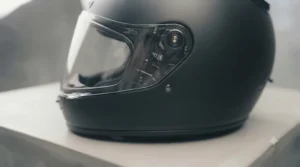
There’s a particular sound a fibreglass shell makes when you knock a knuckle against it — a dull, dense thud, nothing like the hollow plastic clack of a cheap polycarbonate lid. It’s a small thing, but it tells you something real: you’re holding a helmet built from layered woven strands, resin-bonded under pressure, designed to spread an impact across the whole shell rather than crack straight through at the point of contact. A fibreglass motorcycle helmet sits in that sweet, sensible middle ground between the budget plastic helmets that flex too much and the carbon-fibre flagships that cost more than some people’s first bike — lighter than polycarbonate, considerably cheaper than carbon, and, done properly, every bit as protective.
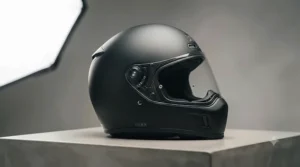
That said, “fibreglass” on a spec sheet doesn’t automatically mean “good,” any more than “carbon” automatically means “safe.” Shell quality varies wildly between a £90 open-face and a £600 flip-front, and the resin, the weave density, and the moulding process all matter more than the marketing copy lets on. We’ve pulled together seven genuinely available fibreglass helmets — from proper budget picks through to premium touring lids — and weighed up what the spec sheets gloss over. Worth saying upfront: every helmet legally sold in the UK, cheap or dear, must clear the same government-run SHARP safety scheme threshold or an equivalent ECE standard, so nobody’s flogging you something dangerous. What varies is how far above that floor a given helmet climbs — and that’s exactly what this guide untangles.
Quick Comparison Table
| Helmet | Style | Shell | Certification | Price Range | Best For |
|---|---|---|---|---|---|
| Caberg Vox | Open-face | Fibreglass | ECE 22.06 | around £90-£130 | Budget commuters, retro styling |
| Scorpion EXO-710 Air | Full-face | Fibreglass | ECE 22.06 | around £150-£190 | Sporty budget full-face riders |
| LS2 Challenger FF327 | Full-face | Fibreglass/HPCF | ECE 22.06 | £190-£240 range | Sportsbike riders on a budget |
| Shark Spartan RS | Full-face | Fibreglass | ECE 22.06 | £280-£330 range | Mid-range all-round street riding |
| Arai Quantic | Full-face | Super-fibre laminate | ECE 22.06 | £480-£540 range | Premium sports-touring comfort |
| Schuberth C5 | Flip-front | Fibreglass/carbon | ECE 22.06 | £600-£700 range | All-weather touring and commuting |
Notice how the price climbs a lot faster than the certification does — every single helmet here clears the current ECE 22.06 bar, so you’re not buying “more safety” in a strictly legal sense as you go up the table. What you are buying is finish quality, comfort features, and — crucially — a shell laid up with tighter tolerances and better resin, which tends to show up in independent SHARP star ratings rather than on the certification sticker. The Shark Spartan RS sits right in the value zone for most road riders: proper mid-price fibreglass with a strong safety reputation, without touring-flagship pricing.
💬 Just one click — help others make better buying decisions too!😊
Top 7 Fibreglass Motorcycle Helmets: Expert Analysis
1. Caberg Vox — cheapest genuine fibreglass shell on the list
The Vox earns its spot purely on value: a proper fibreglass open-face shell, not a painted plastic imitation, at a price most riders would expect to pay for polycarbonate. That matters because fibreglass generally distributes impact energy more evenly than injection-moulded plastic, and getting that construction under £150 is genuinely rare. It’s a jet-style open-face, so it suits commuters and scooter riders more than motorway regulars — no chin bar means less protection in a frontal impact, which is worth being honest about rather than glossing over. Aggregated reviewer sentiment on this one is consistently positive about the retro styling and lightweight feel on the head, with a handful of comments about wind noise being noticeably higher than a full-face equivalent, which, frankly, comes with the open-face territory rather than being a flaw specific to this model. For city riders wanting a fibreglass helmet review candidate that won’t dent the bank balance, it’s a sensible starting point.
Pros:
- ✅ Genuine fibreglass shell at a budget price point
- ✅ ECE 22.06 certified and lightweight on the head
- ✅ Classic retro styling suits commuter and scooter riders
Cons:
- ❌ Open-face design offers less chin protection
- ❌ Noticeably noisier than a full-face at speed
Expect to pay around £90-£130, making it one of the more compelling fibreglass helmet under £200 options if an open-face suits your riding.
2. Scorpion EXO-710 Air — sporty full-face fibreglass at a genuinely fair price
This is where the fibreglass motorcycle helmet lightweight argument really starts to land — the EXO-710 Air pairs a sporty, aggressive shell shape with proper ventilation and a shell material that keeps neck fatigue down on longer rides. The multi-vent system channels air front to back effectively, which matters more than most riders realise until they’ve spent an August afternoon stewing inside a poorly vented budget lid. Honest analysis of the spec sheet shows this sits squarely as an entry-to-mid helmet built for riders who want sportsbike looks without sportsbike-flagship pricing, and reviewers consistently praise the airflow and the surprisingly plush interior lining for the price bracket. A recurring theme in aggregated feedback is that the visor mechanism feels slightly plasticky compared with the shell quality around it — a minor niggle rather than a dealbreaker, but worth knowing before you buy.
Pros:
- ✅ Proper fibreglass shell with excellent ventilation
- ✅ ECE 22.06 approved and comfortable interior lining
- ✅ Strong value for a sporty full-face design
Cons:
- ❌ Visor mechanism feels less premium than the shell
- ❌ Limited colourway options compared with bigger brands
Pricing typically runs £150-£190, comfortably inside the fibreglass helmet under £200 bracket most first-time full-face buyers are hunting for.
3. LS2 Challenger FF327 — sportsbike shell developed with racing input
LS2 built the Challenger FF327 with input from actual racers, and it shows in the aerodynamic shell shape and the aggressive, track-inspired styling — this isn’t a repainted commuter lid pretending to be sporty. Available with a fibreglass shell option (LS2 calls it HPCF in their marketing, but the composition is fundamentally a high-performance fibreglass composite), it includes an integral sun visor, a feature you don’t often see at this price point, saving you fumbling for sunglasses at a red light. What most buyers overlook about LS2’s mid-range helmets is that the shell tech genuinely punches above the brand’s budget reputation — this isn’t the cheapest LS2 in the range, and the shell quality reflects that jump. Reviewer sentiment consistently highlights the sun visor and aerodynamics as standout features, with the recurring criticism being that cheek pads run a touch tight for wider face shapes on first fitting.
Pros:
- ✅ Racing-developed aerodynamic fibreglass shell
- ✅ Integral sun visor included as standard
- ✅ ECE 22.06 certified sportsbike-focused design
Cons:
- ❌ Cheek pads run tight for wider face shapes
- ❌ Fewer graphic options than flagship LS2 models
Budget around £190-£240 for the Challenger FF327, positioning it as a natural step-up once you’ve outgrown a purely entry-level helmet.
4. Shark Spartan RS — mid-range fibreglass with a genuinely strong safety reputation
The Spartan RS earns its place as this list’s centrepiece because independent testing tells a clear story here: Shark’s fibreglass Spartan shell has consistently scored well in UK SHARP testing, climbing to a four-star rating after an earlier shell revision improved impact performance. That’s a meaningful data point, not marketing fluff — it means independent government-funded testing, not just Shark’s own claims, backs up the shell’s real-world performance. The aggressive streetbike styling comes with a genuinely useful feature set: a Pinlock-ready main visor to fight fogging, a drop-down sun visor for low winter light, and adjustable cheek pad thickness so you can fine-tune fit without buying a different size entirely. Reviewers consistently note the round-oval fit suits a wide range of head shapes, and the mid-weight helmet feel — not featherlight like the premium picks further down this list, but nowhere near the neck-straining heft of a budget flip-front — gets repeat praise for all-day comfort. The main gripe circulating in owner feedback is wind noise at motorway speeds without earplugs, which, to be fair, applies to most full-face helmets regardless of price.
Pros:
- ✅ SHARP four-star independently tested fibreglass shell
- ✅ Adjustable cheek pads and Pinlock-ready visor
- ✅ Comfortable mid-weight helmet build for long rides
Cons:
- ❌ Noticeable wind noise at motorway speeds
- ❌ Sits above true entry-level pricing
Expect a price range of roughly £280-£330, and treat this as the helmet most road riders should be cross-shopping everything else against.
5. Arai Quantic — premium super-fibre laminate built for comfort at speed
Arai’s proprietary shell construction — a “peripherally belted complex laminate,” built from super-fibre reinforced in a birds-nest weave pattern claimed to be considerably stronger than standard fibreglass — was among the very first shells to pass the tougher ECE 22.06 standard when it launched. That matters practically: the round, glancing-off shape and the reinforced belt around the shell’s equator are engineered specifically to deflect impact energy rather than absorb it head-on, a genuinely different philosophy from most competitors. Ventilation runs to twelve vents total, including a pair of Formula 1-inspired teardrop intakes up front, and the whole package is hand-assembled in Japan — which explains a fair chunk of the price jump from the mid-range picks above. Aggregated reviewer sentiment is near-universally positive on comfort over long distances and visor optics, with the recurring, honest caveat being that Arai’s shells run in limited sizes, so trying before buying matters more here than with mass-produced alternatives.
Pros:
- ✅ Proprietary super-fibre laminate, reinforced belt construction
- ✅ Twelve-vent system with race-inspired airflow design
- ✅ Reviewers consistently praise long-distance comfort
Cons:
- ❌ Premium price puts it beyond casual commuter budgets
- ❌ Limited shell sizes mean fit-testing matters more
Expect to pay in the £480-£540 range, making the Quantic a genuine long-term investment for serious mileage riders.
6. Shoei GT-Air 3 — sport-touring flagship with genuine everyday usability
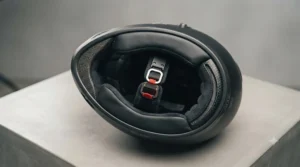
Shoei’s AIM+ shell — their term for a fibreglass composite blended with organic and glass fibres — sits underneath one of the most complete touring feature sets on this list: a proper drop-down internal sunshield, a micrometric ratchet fastener that adjusts on the fly, and venting engineered specifically to stay quiet rather than just move air. That last point matters more than it sounds; a genuinely well-designed vent doesn’t just cool your head, it does so without turning your ride into a wind-tunnel roar, and the GT-Air 3 is built around that quiet-running philosophy. Reviewer feedback is consistently strong on comfort during multi-hour stints and visor clarity, with the honest criticism being that universal Bluetooth comms compatibility is more fiddly here than on some rivals, since Shoei’s own SENA-based system integrates best. If your riding involves genuine distance — commuting, touring, motorway miles — this is the shell built specifically around that use case rather than adapted from a sportsbike design.
Pros:
- ✅ AIM+ fibreglass composite shell built for touring comfort
- ✅ Drop-down sunshield and ratchet fastener included
- ✅ Reviewers consistently rate ventilation as exceptionally quiet
Cons:
- ❌ Bluetooth comms integration less universal than rivals
- ❌ One of the pricier options in this list’s touring category
Pricing typically sits around £510-£560, reflecting its position as a genuine long-haul touring flagship rather than a casual weekend lid.
7. Schuberth C5 — flip-front fibreglass/carbon shell for all-weather versatility
The C5 stands apart on this list as the only flip-front helmet, and it earns that inclusion by solving the classic modular-helmet compromise: most flip-fronts feel heavy and compromised compared with a dedicated full-face, but Schuberth’s fibreglass-and-carbon-fibre shell blend keeps total weight sensible while still offering genuine open-face convenience at fuel stops. It’s also P/J certified, meaning it passes the full impact standard even with the chin bar raised — not every flip-front can claim that, and it’s a meaningful safety distinction rather than a marketing footnote. Factory-integrated speaker pockets and a Bluetooth antenna make comms fitting genuinely straightforward, a detail long-distance and touring riders will appreciate immediately. Owner feedback consistently highlights how quiet and stable the C5 feels at motorway speeds for a modular design, with the fair criticism being that, like most flip-fronts, it commands a genuine premium over an equivalent full-face for the added mechanism and complexity.
Pros:
- ✅ Fibreglass/carbon shell keeps a flip-front genuinely light
- ✅ P/J certified — safe with the chin bar raised too
- ✅ Comms-ready with integrated speaker pockets
Cons:
- ❌ Premium pricing reflects the modular mechanism’s complexity
- ❌ Heavier than a dedicated full-face despite the lighter shell blend
Prices typically land in the £600-£700 range, positioning the C5 as the go-to pick for riders who genuinely need flip-front practicality without sacrificing shell quality.
Setting Up Your New Fibreglass Helmet: The First 30 Days
Getting the helmet home is only step one — how you treat it in the first month genuinely affects how well it protects you for years afterward. Start by checking the ECE label stitched into the retention strap, confirming it matches what the listing promised, before you cut off any tags or start adjusting anything. Then do the proper fit test: helmet on, strap done up, hands on the shell, try to roll it forward and side to side. Genuine movement of more than a centimetre or so means the size is wrong, full stop — no amount of “it’ll loosen up nicely” changes that.
Over the first few rides, resist tightening the strap to compensate for a shell that’s slightly too big; swap cheek pads instead if your manufacturer offers thinner or thicker options, which most of the brands on this list do. Clean the visor with proper anti-fog-safe products, never household glass cleaner, which degrades anti-scratch coatings over time. A genuinely common first-month mistake is storing the helmet by its chin strap on a hook — this stretches the retention system slowly and invisibly, so a proper helmet bag or a padded shelf is worth the extra ten seconds every single time. Finally, note your purchase date somewhere memorable; most manufacturers recommend replacement around five years from manufacture regardless of visible wear, and knowing yours avoids an awkward “wait, how old is this thing?” moment down the line.
Which Fibreglass Helmet Suits Your Riding?
Picture three riders in a supermarket car park on a Saturday morning. The first just passed her test and commutes four miles into town on a 125 — she doesn’t need touring features or race-developed aerodynamics, she needs solid ECE 22.06 protection and genuine value while she works out what kind of riding she actually enjoys. The Caberg Vox or Scorpion EXO-710 Air covers her completely, and both leave real budget left over for decent gloves and a proper jacket.
The second rider does a genuine 8,000 miles a year on a sports-tourer, motorway-heavy, all weathers, and has started noticing neck ache creeping in on longer stints. For him, the Shoei GT-Air 3‘s quiet, comfort-engineered shell isn’t an indulgence — it’s the difference between arriving fresh and arriving with a stiff neck and a headache. The third rider tours two-up most weekends and hates removing her helmet at every fuel stop just to grab a drink or chat with her passenger; the Schuberth C5‘s flip-front practicality solves a genuine daily annoyance that no full-face, however good, ever will.
Buyer’s Decision Framework: Which Helmet Actually Fits Your Situation
If you’re a new rider or commuting short distances on a budget, choose an entry-level fibreglass helmet like the Caberg Vox or Scorpion EXO-710 Air, because you don’t yet need premium comfort features and there’s no sense overspending before you know your riding style. If you’re doing regular sportsbike-style riding and want proven independent safety data, choose the Shark Spartan RS, because its SHARP four-star rating gives you real evidence rather than marketing promises. If you’re covering serious motorway mileage and comfort over hours matters more than anything else, prioritise the Arai Quantic or Shoei GT-Air 3 — both are built specifically around that use case rather than adapted from a track-focused design. And if you genuinely need to remove your helmet at stops without taking it off entirely, nothing on this list beats the Schuberth C5‘s flip-front convenience.

How to Choose a Fibreglass Motorcycle Helmet
- Check the ECE 22.06 label before anything else. It’s the current legal minimum, and there’s little reason to buy new stock still running the older 22.05 standard.
- Look up the model on SHARP before you buy, not after. Two ECE-certified helmets can score very differently on independent crash testing.
- Prioritise fit over features every time. A loose premium helmet protects worse than a well-fitted budget one — this genuinely is the single biggest mistake buyers make.
- Match shell weight to your typical ride length. Short commutes tolerate a heavier shell fine; multi-hour stints reward every gram you can shave off.
- Read aggregated review sentiment, not just star ratings. Recurring comments about cheek pad tightness or visor mechanisms tell you more than a bare average.
- Factor in replacement timing from day one. Most manufacturers recommend a five-year replacement window regardless of visible wear.
- Buy somewhere with a genuine return policy. Fibreglass helmet sizing varies noticeably between brands, and mail order without returns is a real gamble.
ECE Approved Motorcycle Lid Explained: What ECE 22.06 Actually Means
Every ECE approved motorcycle lid sold legally in the UK carries a label stitched into the retention strap confirming it’s passed UN ECE Regulation 22 testing — currently the 22.06 revision, which became mandatory for new type approvals from mid-2023, though older 22.05-certified helmets already in circulation remain perfectly legal to wear. The jump from 22.05 to 22.06 matters more than most riders realise: alongside the familiar straight-on impact drops, the newer standard adds oblique impact testing across three different speeds, specifically measuring the rotational forces increasingly understood to drive serious brain injuries in real crashes.
ECE certification, though, is a pass-or-fail floor rather than a performance ladder — which is exactly why the UK government runs SHARP, the Safety Helmet Assessment and Rating Programme, independently of any manufacturer, buying helmets off ordinary shop shelves and crash-testing them to publish a one-to-five-star rating on top of the mandatory legal minimum. Two helmets can both wear an identical ECE 22.06 label and still perform very differently under SHARP’s testing, so it’s genuinely worth searching any specific model before you commit — the sticker tells you it’s legal, the star rating tells you how far above “legal” it actually sits.
Fibreglass Shell Construction vs Polycarbonate and Carbon Fibre
| Factor | Fibreglass Shell | Polycarbonate Shell | Carbon Fibre Shell |
|---|---|---|---|
| Typical weight | Mid-weight | Heaviest | Lightest |
| Price at entry level | £90+ | £50+ | £250+ |
| Impact energy distribution | Even, layered | Can flex/crack | Very rigid |
| Shell size flexibility | Multiple sizes common | Usually fewer sizes | Fewer, premium-only |
| Best For | Riders wanting balance of weight, cost, protection | Absolute budget-first buyers | Weight-obsessed, high-mileage riders |
Fibreglass shell construction works by layering woven glass strands and bonding them under pressure with resin, which spreads impact energy across a wider area than a single-piece moulded plastic shell tends to manage — that’s the core physics argument for spending more than the absolute cheapest lid on the shelf. It’s genuinely worth noting, though, that SHARP’s own research is blunt on this point: don’t judge a helmet purely by its shell material, because a well-engineered polycarbonate helmet can outscore a poorly finished fibreglass one on independent testing. The honest takeaway is that fibreglass buys you a meaningful weight advantage over polycarbonate at a fraction of carbon fibre’s price premium, but shell material alone never tells the whole safety story — check the independent rating regardless of what the shell’s made from.
Common Mistakes When Buying a Fibreglass Motorcycle Helmet
The single most common mistake is assuming “fibreglass” automatically means “better” and skipping the independent SHARP check entirely — shell material is one factor among many, not a safety guarantee on its own. A close second is ordering by a size chart from a completely different brand; head shapes vary between manufacturers far more than most riders expect, and round-oval, intermediate-oval and long-oval fits genuinely feel different on the same numerical size. Buyers also frequently underestimate how much a helmet’s weight matters until session three or four of a long ride, only realising too late that they’ve bought a heavier shell than their neck and shoulders can comfortably handle. Another recurring pitfall is buying secondhand without knowing the helmet’s impact history or manufacture date — a fibreglass shell that’s taken even one hard knock should be retired regardless of how good it looks externally, since the protective properties can be compromised invisibly. Finally, plenty of first-time buyers skip trying a helmet on with their usual riding glasses or sunglasses, then discover an uncomfortable pressure point on the first proper ride — a five-minute check in the shop avoids that entirely.
✨ Don’t Miss These Exclusive Deals!
🔍 Take your fibreglass motorcycle helmet shortlist further — click through on any highlighted pick above to check current pricing and availability before your size sells out. Getting genuine head protection sorted properly is one upgrade that pays you back every single ride! 🏍️
Best Fibreglass Helmet Under £200: Budget Picks That Don’t Skimp
Finding a genuine fibreglass helmet under £200 doesn’t mean settling for a compromised shell — it means being deliberate about which features you’re happy to skip. The Caberg Vox and Scorpion EXO-710 Air both deliver real fibreglass construction and current ECE 22.06 certification well within that budget, without the touring flourishes or race-developed aerodynamics of the premium picks further up this list. Where budget-conscious buyers should absolutely not cut corners is fit — a proper in-person try-on, even a single visit to a local dealer before ordering online, costs nothing and matters more for genuine protection than any feature list.
It’s also worth remembering that SHARP’s own research found something genuinely reassuring for budget shoppers: a helmet’s safety potential isn’t strongly reflected in its retail price, meaning a well-engineered budget fibreglass helmet can hold its own against pricier alternatives on independent testing. A sensible approach is buying a solid entry-level fibreglass lid now, riding it confidently for a couple of seasons, then upgrading once you know exactly what kind of riding — commuting, touring, weekend blasts — actually suits your life.
Is a Fibreglass Motorcycle Helmet Lightweight? What the Spec Sheet Doesn’t Tell You
Here’s where marketing copy and physics sometimes drift apart. A fibreglass motorcycle helmet lightweight enough to notice generally sits somewhere between 1,400g and 1,600g for a full-face — genuinely lighter than most polycarbonate equivalents at 1,600g-1,800g, but heavier than carbon-fibre flagships that can dip under 1,300g. What matters practically is less the raw number and more how that weight sits and moves on your head at speed; a helmet marketed as a mid-weight helmet, like the Shark Spartan RS on this list, often feels more stable through fast direction changes than an ultralight shell that’s been shaved down aggressively, because a touch of extra mass low in the shell can actually help dampen small vibrations rather than amplify them.
The genuinely useful test isn’t the spec sheet weight in isolation — it’s how that weight feels after two hours in the saddle, not two minutes in the shop. Reviewers consistently note that a helmet feeling perfectly fine on a five-minute fitting can feel noticeably different by hour three of a motorway slog, which is exactly why long-distance riders on this list’s premium end — the Arai Quantic and Shoei GT-Air 3 — invest specifically in shell weight reduction, while short-commute riders often barely notice the difference between a mid-weight and a genuinely light shell.
Long-Term Cost and Maintenance of a Fibreglass Helmet
The sticker price is only part of the ownership story. Visor replacements typically run £15-£45 depending on brand and coating, and it’s sensible to budget for at least one per season if you’re riding regularly, since scratches accumulate faster on a daily commute than most riders expect. Interior linings wear out too — most of the helmets on this list offer washable, removable padding, which extends usable life considerably, but expect to replace cheek pads or the full liner set every one to two seasons of consistent use. Pinlock inserts, where fitted, typically need replacing every year or two as the anti-fog coating degrades with cleaning and general wear.
The genuinely important consideration, though, is impact retirement: any helmet involved in even a low-speed drop or knock, cosmetically fine-looking or not, should be replaced rather than trusted again, since the protective foam liner is specifically designed to absorb energy by partially destroying itself in ways that often aren’t visible from outside. SHARP’s own fitting guidance is worth a genuine read here — it covers not just initial sizing but ongoing checks worth doing every few months, particularly around strap wear and shell condition. Factoring replacement realistically into your budget from day one, rather than treating a helmet as a decade-long purchase, gives a far more honest picture of what owning a fibreglass motorcycle helmet actually costs over its useful life.
Frequently Asked Questions
❓ Is a fibreglass motorcycle helmet better than polycarbonate?
❓ How long does a fibreglass helmet actually last?
❓ What's the difference between ECE 22.05 and ECE 22.06?
❓ Can I find a genuinely good fibreglass helmet under £200?
❓ Does a mid-weight helmet feel heavier than a lightweight one on long rides?
Conclusion
A genuinely good fibreglass motorcycle helmet isn’t defined by the shell material printed on the box — it’s defined by whether the certification’s current, the fit’s right for your specific head shape, and the feature set actually matches how you ride, not how you’d like to imagine you ride on Instagram. Newcomers and budget-conscious commuters do themselves a real favour starting with the Caberg Vox or Scorpion EXO-710 Air, saving premium spend for once their riding habits are clearer. Regular road riders wanting proven independent safety data should take the Shark Spartan RS‘s SHARP four-star rating seriously, while genuine long-distance riders logging real motorway miles get measurable, felt benefit from the comfort-engineered Arai Quantic or Shoei GT-Air 3. Whatever you choose, don’t let shell material alone make the decision for you — check the ECE label, check the SHARP score, check the fit, and only then check the invoice.
Recommended for You
- Carbon Racing Helmet 2026: 7 FIA & MSA Approved Picks
- 7 Best Lightweight Carbon Helmet Women Picks for 2026 Rides
- Carbon Composite vs Full Carbon Helmet: 7 Top 2026 Picks
Disclaimer: This article contains affiliate links. As an Amazon Associate, I earn from qualifying purchases. If you purchase products through these links, we may earn a small commission at no additional cost to you.
✨ Found this helpful? Share it with your friends! 💬🤗
