In This Article
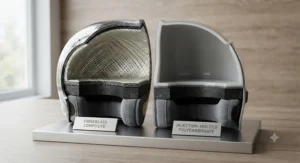
Stand in any bike shop car park long enough and you’ll hear the same argument rumble on, usually between a bloke in full leathers and someone who’s just popped out for milk on a scooter. Fibreglass vs polycarbonate helmet — which one’s actually safer? Here’s the 40-second version: a fibreglass helmet is a composite shell (fibreglass woven with resin, sometimes blended with Kevlar or carbon) that flexes and crushes progressively during impact, while a polycarbonate helmet is a moulded thermoplastic shell that absorbs energy by deforming across a wider, thicker surface. Neither wins outright on safety — UK testing body SHARP has proven cheap polycarbonate lids can out-score expensive composites — but they behave differently, weigh differently, and age differently, and that’s what actually matters once you’re the one wearing it at 70mph on the M6.
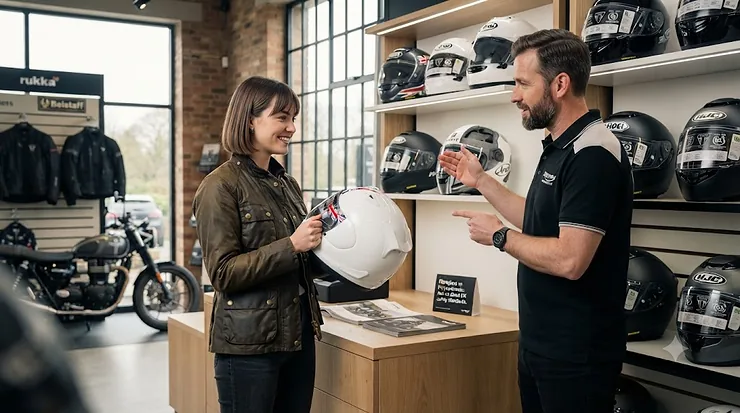
This guide digs into both materials properly: what they’re made of, how they fail in a crash, and — crucially — which real, currently available helmets on amazon.co.uk are worth your money at each price point. We’ve pulled together seven genuine products spanning budget commuter lids to premium touring helmets, cross-referenced against SHARP star ratings and aggregated review sentiment, so you’re not just taking a shop assistant’s word for it. Whether you’re chasing the lightest possible fibreglass shell motorcycle helmet for an eight-hour Alps run or you just need something solid and affordable for the daily commute into town, you’ll find a clear answer here — grounded in real specs, not marketing copy. According to the UK government’s safety equipment guidance, a helmet is a legal requirement for every rider and pillion passenger on UK roads, so getting this choice right isn’t optional — it’s the one piece of kit standing between you and the tarmac.
Quick Comparison Table
| Shell Material | Typical Weight | Impact Behaviour | Typical SHARP Range | Best For |
|---|---|---|---|---|
| Polycarbonate (thermoplastic) | Heavier (thicker moulding needed) | Flexes and bounces back; absorbs energy across a wide surface | 3-5 stars, highly variable by brand | Budget buyers, commuters, back-up helmets |
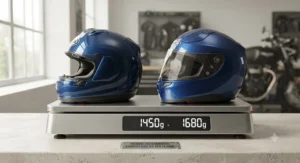
| Fibreglass composite | Lighter (100-200g less typical) | Crushes progressively, shell itself absorbs energy | 4-5 stars, generally strong average | Long-distance touring, all-day comfort, warmer climates |
| Carbon fibre (for context) | Lightest | Very rigid, best at high-speed impacts | 4-5 stars, brand-dependent | Track use, premium touring — outside this guide’s scope |
A quick read of that table and you’d assume fibreglass simply wins — it’s lighter, after all. But weight isn’t safety, and that’s the trap most first-time buyers fall into. SHARP’s own published data shows a spread of scores within every single material category, meaning a badly engineered fibreglass shell can underperform a well-designed polycarbonate one, and vice versa. What the table really tells you is where each material’s strengths lie — polycarbonate for value and low-speed resilience, fibreglass for long-haul comfort and refined impact distribution — not which one is “safer” in isolation.
💬 Just one click — help others make better buying decisions too!😊
Top 7 Fibreglass and Polycarbonate Helmets: Expert Analysis
We’ve picked seven real, currently sold helmets spanning budget, mid-range and premium, split roughly evenly between polycarbonate and fibreglass shells so you can compare like-for-like. Prices are shown as ranges only, since Amazon pricing fluctuates — always check current price and availability before buying.
1. Caberg Duke II — best budget flip-front on a polycarbonate shell
The standout here is versatility: a P/J dual-homologated modular that flips open like a jet helmet or locks down as a full-face, all from one affordable thermoplastic shell. Caberg builds the Duke II from a single-size polycarbonate shell across its whole size range, keeping tooling costs down and passing that saving straight to you. That single-shell approach means an XS wearer gets the same external shell as an XL, which affects the silhouette more than the protection — SHARP’s own manufacturer breakdown found Caberg’s polycarbonate helmets scoring an average of 4.8 out of 5 stars, genuinely one of the best results of any brand in the plastic-shell category.
Who’s this for? Commuters who hate faff — nipping into a shop, grabbing a coffee, or chatting to a mate at the lights without wrestling the whole lid off. Reviewers consistently report the flip mechanism feels sturdy for the price point, though several note wind noise creeps up noticeably once you’re past 50mph with the chin bar down, a common trait of modular helmets generally rather than a Caberg-specific flaw.
Pros:
- ✅ Genuinely versatile flip-front design for town and commute
- ✅ Strong SHARP performance for a polycarbonate shell
- ✅ Budget-friendly entry into dual-homologated helmets
Cons:
- ❌ Single shell size means less refined fit across the range
- ❌ Noticeably more wind noise at motorway speeds
At around £140-£180, the Caberg Duke II is one of the strongest value arguments in this entire guide — check current price on Amazon before deciding.
2. HJC C10 — best entry-level full-face for new riders
What jumps out with the C10 is how much helmet HJC packs into a genuinely entry-level price bracket — a proper full-face polycarbonate shell with a proper ECE-rated visor mechanism, not a stripped-back afterthought. The shell uses HJC’s standard injection-moulded thermoplastic, meaning it’s on the heavier side of this list, but it comes in multiple shell sizes across the range rather than one-size-fits-all, which is unusual generosity at this price.
Realistically, this is the helmet for someone doing CBT this spring who doesn’t yet know if motorcycling is a lifelong habit or a summer phase — solid protection without committing serious money before you’re sure. Aggregated review sentiment across UK retailers points to praise for the clear, distortion-free visor and simple ratchet strap, alongside a recurring note that the interior padding runs slightly warm on long rides — a known trade-off of budget-tier lining foam.
Pros:
- ✅ Multiple shell sizes despite the entry-level price
- ✅ Clear, optically sound visor with smooth ratchet action
- ✅ Simple, low-fuss design ideal for learner riders
Cons:
- ❌ Heavier than most fibreglass alternatives on this list
- ❌ Interior lining runs warm on longer summer rides
Priced in the £90-£130 range, the HJC C10 earns its spot as the sensible first “proper” helmet — always check current price before purchasing.
3. Shark Skwal i3 — best mid-range polycarbonate with standout visibility
The Skwal i3’s party trick is its integrated LED daytime running light strip along the brow — genuinely useful for being seen at dusk, not just a gimmick. Underneath the light show sits a solid polycarbonate shell that Shark has refined over several helmet generations, and the aggregated SHARP data for Shark’s thermoplastic helmets averages around 4 stars, a properly respectable score for the material.
On paper this means you’re getting sports-helmet styling and genuine low-light visibility without stepping up to composite pricing — a smart pick for anyone who commutes through British autumn and winter darkness more often than sunny Sunday blasts. Reviewers frequently mention the LED runs off a replaceable coin battery lasting many months, though a handful note the aggressive sports fit runs tight for wider face shapes, so trying before buying (or checking Shark’s sizing chart carefully) pays off.
Pros:
- ✅ Integrated LED strip genuinely boosts low-light visibility
- ✅ Sporty aerodynamic shape reduces buffeting at speed
- ✅ Strong SHARP average for the thermoplastic category
Cons:
- ❌ Tighter fit that doesn’t suit wider or rounder face shapes
- ❌ LED feature adds a little extra weight up front
Sitting in the £220-£260 range, the Shark Skwal i3 is the pick for riders who want to stand out — literally — without going composite.
4. HJC RPHA 71 — best entry into fibreglass composite construction
This is where the guide crosses into fibreglass territory, and the standout feature is immediately obvious the moment you pick it up: it’s noticeably lighter than the polycarbonate helmets above it despite sitting in a similar price bracket. HJC uses a fibreglass composite shell on the RPHA 71, built across multiple shell sizes, which is exactly the kind of engineering choice you’d expect on a helmet twice the price.
What most buyers overlook about this model is that the weight saving isn’t just about comfort — a lighter shell means less rotational strain on your neck in a low-speed tumble, one of the genuine safety arguments for composite construction. Aggregated reviews consistently praise the ventilation system, which channels air front-to-back effectively even at low motorway speeds, while a recurring complaint concerns the drop-down internal sun visor mechanism feeling slightly plasticky compared with the shell quality around it.
Pros:
- ✅ Genuine multi-shell-size fibreglass composite at a mid-range price
- ✅ Effective ventilation system for warm, stop-start riding
- ✅ Noticeably lighter than comparable polycarbonate helmets
Cons:
- ❌ Internal sun visor mechanism feels less premium than the shell
- ❌ Fewer colourway options than some rival composite helmets
At around £220-£270, the HJC RPHA 71 is arguably the best-value doorway into fibreglass shell motorcycle helmet territory on this whole list.
5. Caberg Drift Evo — best flip-front on a tri-composite shell
The Drift Evo’s standout is combining Caberg’s flip-front practicality with a proper tri-composite shell (a fibreglass-based blend) rather than the polycarbonate used on the cheaper Duke II — a genuine step up in shell engineering for riders who want a modular helmet without the modular weight penalty. The Pinlock-ready visor and dual ventilation system round out a helmet that reads as more “grown-up touring” than “cheap commuter.”
Here’s what to weigh: modular helmets inherently carry more moving parts and a chin-bar hinge that, however well engineered, represents a structural compromise versus a fixed full-face shell — something worth acknowledging honestly rather than glossing over. Reviewers report the hinge mechanism feels reassuringly solid in daily use, and the tri-composite shell’s reduced weight is frequently mentioned as noticeably easing neck fatigue on longer rides compared with polycarbonate flip-fronts.
Pros:
- ✅ Tri-composite shell reduces weight versus polycarbonate modulars
- ✅ Pinlock-ready visor tackles British fog and drizzle
- ✅ Reassuringly solid flip mechanism in daily use
Cons:
- ❌ Modular hinge is an inherent structural trade-off vs full-face
- ❌ Sits toward the upper end of mid-range pricing
Expect to pay in the £230-£290 range for the Caberg Drift Evo — check current price and stock before committing.
6. Shoei NXR2 — best premium fibreglass for all-round performance
The Shoei NXR2’s standout is its AIM+ (Advanced Integrated Matrix Plus) fibreglass composite shell, produced across four separate shell sizes — genuinely rare engineering effort that means an XS rider gets a proportionally smaller, lighter helmet rather than a large shell padded down. SHARP testing has awarded the NXR2 its maximum 5-star rating, putting it firmly among the safest helmets tested in the UK regardless of material.
Based on the spec comparison with cheaper composites on this list, the difference isn’t really about raw protection — SHARP’s own findings show budget polycarbonate helmets can match 5-star composites on paper — it’s about refinement: six intake vents plus four exhaust vents with an integrated insect filter, a beautifully smooth ratchet visor mechanism, and interior padding that’s widely reported to mould to your head shape after 20-30 hours of wear. Aggregated review sentiment is consistently strong on comfort and finish, with the main recurring gripe being that replacement parts (visors, linings) carry a genuinely premium price tag of their own.
Pros:
- ✅ Four shell sizes for a genuinely proportional fit
- ✅ SHARP 5-star rating with excellent ventilation engineering
- ✅ Widely praised long-term comfort once broken in
Cons:
- ❌ Replacement visors and linings are expensive
- ❌ Premium price puts it out of reach for casual riders
At roughly £420-£480, the Shoei NXR2 represents the point where you’re paying for refinement and longevity as much as raw protection.
7. Schuberth C5 — best premium fibreglass modular for touring
The C5’s standout feature is achieving genuine full-face-level rigidity in a flip-front modular fibreglass shell — Schuberth has built its reputation on solving the “modular helmets flex more” problem better than most rivals, and SHARP data on the closely related C4 and C4 Pro models both scored highly, with the C4 hitting a full 5 stars. It’s also aerodynamically developed in an actual wind tunnel, a detail that matters more than it sounds once you’re doing sustained 70mph+ motorway miles.
What the spec sheet won’t tell you, but reviewers note repeatedly, is how quiet this helmet is relative to its modular competitors — a direct result of that wind-tunnel-refined shell shape and tight visor seal, not just thicker padding. This is squarely a touring rider’s helmet: reviewers who log serious mileage highlight reduced fatigue on multi-hour rides, while a smaller number flag that the price sits well above most modular rivals, a fair trade-off only if you’re genuinely covering the miles to benefit from it.
Pros:
- ✅ Wind-tunnel-developed shell reduces noise and buffeting
- ✅ Strong SHARP performance across the closely related C-series
- ✅ Excellent long-distance comfort for serious touring miles
Cons:
- ❌ Among the most expensive modular helmets on the market
- ❌ Overkill for short, low-mileage commuting use
Sitting around £550-£650, the Schuberth C5 is the helmet for riders who measure their year in motorway miles, not weekend potters.
Practical Usage Guide: Breaking In, Cleaning and Maintaining Your Shell
Whichever shell material you land on, the first 30 days set the tone for everything after. Fresh interior padding on both polycarbonate and fibreglass helmets typically feels snug — sometimes uncomfortably so — because the foam hasn’t yet compressed to your head shape. Resist the urge to size up after one wear; most manufacturers, including Shoei and Schuberth, note their linings settle meaningfully within 20-30 hours of actual riding.
Cleaning differs slightly by material. Polycarbonate scratches more readily than fibreglass, so avoid dry-wiping dust off with a cloth — always rinse with lukewarm water first, then use a dedicated visor-safe cleaner rather than household glass cleaner, which can degrade certain plastics and coatings over time. Fibreglass shells tolerate cleaning products slightly better but still benefit from the same rinse-first approach, since grit dragged across the clear coat causes the same fine scratching regardless of what’s underneath it.
The single biggest first-30-days mistake, and one worth flagging honestly: storing a warm, sweaty helmet in a sealed pannier or top box overnight. Trapped moisture breeds odour-causing bacteria fast, and repeated damp cycles can degrade EPS liner performance over years of use. A simple helmet bag with some airflow, or just leaving it on a hook indoors, solves this for free.
Real-World Scenarios: Matching Shell Material to Your Riding Life
The daily commuter — 6 miles into the city centre, five days a week. Here, the case for polycarbonate is genuinely strong, not just a consolation prize for a smaller budget. Short journeys mean weight fatigue barely factors in, low-speed tumbles at junctions are statistically more likely than 70mph motorway incidents, and a Caberg Duke II or HJC C10 delivers real, SHARP-verified protection without tying up money better spent on a chain, lock, or decent wet-weather kit.
The weekend tourer — 150-mile round trips most Saturdays, occasional multi-day trips. This is where fibreglass composites like the HJC RPHA 71 or Caberg Drift Evo start earning their premium over pure practicality. Neck fatigue genuinely compounds over hours in the saddle, and a lighter shell measurably reduces that load, particularly noticeable on the return leg of a long day when concentration matters most.
The serious tourer — thousands of miles a year, motorway-heavy, sometimes multi-country trips. Here the reasoning shifts toward the Shoei NXR2 or Schuberth C5. The extra cost buys wind-tunnel-refined aerodynamics, superior noise control, and proportional multi-shell sizing — all things that matter far more across an eight-hour riding day than a Saturday afternoon blast. If your annual mileage genuinely justifies it, the total cost per mile actually works out lower than replacing a cheaper helmet more frequently.
Problem → Solution: Fixing Common Shell and Fit Issues
Problem: Visor fogs up on damp British mornings. Solution: fit a Pinlock insert if your visor is Pinlock-ready (several helmets on this list, including the Caberg Drift Evo, ship Pinlock-ready or with one included) — it creates a double-glazed air pocket that resists condensation far more effectively than anti-fog sprays alone.
Problem: Helmet feels painfully tight after a few weeks, not before. Solution: this is often swelling from heat and pressure rather than the wrong size — try loosening the retention strap slightly and check padding hasn’t shifted, before assuming you bought the wrong size entirely.
Problem: Persistent wind noise at motorway speed, especially on modular helmets. Solution: check the chin curtain and neck roll are seated correctly first, since a gap here is the single biggest noise culprit; earplugs rated for motorcycle use are also a genuinely sensible addition regardless of helmet quality.
Problem: Small scratches appearing on a polycarbonate visor within months. Solution: switch to a proper visor-specific cleaning spray and microfibre cloth, and store the helmet visor-up or in a bag rather than resting it visor-down on hard surfaces.
Problem: Uncertainty about whether a helmet is still safe after a drop. Solution: if it’s been dropped from any meaningful height onto a hard surface, or been involved in any impact at all, replace it — internal EPS damage is frequently invisible from the outside, regardless of shell material.
Fibreglass Helmet: Is It Worth It?
Genuinely, for most riders doing regular medium-to-long journeys, yes — but not for the reason most people assume. The safety gap between a good fibreglass helmet and a good polycarbonate one, according to SHARP’s aggregated data, is often smaller than the price gap suggests; both materials can and do achieve 5-star ratings. What you’re actually paying for with fibreglass shell motorcycle helmet construction is the weight saving, the refined multi-shell sizing that premium fibreglass manufacturers typically offer, and often better build quality throughout the rest of the helmet — visor mechanisms, ventilation, liner materials.
If your riding is mostly short urban hops, that weight saving matters far less, and the honest answer is a well-reviewed polycarbonate helmet like the HJC C10 will serve you just as safely for considerably less money. If you’re covering serious distance regularly, the cumulative comfort and reduced fatigue from a lighter fibreglass shell like the HJC RPHA 71 genuinely does add up to a safer ride over the course of a long day, since fatigue itself is a safety factor.
Fibreglass Helmet Safety Rating: What SHARP Testing Actually Shows
It’s tempting to assume fibreglass automatically means safer, and SHARP’s own published brand analysis pushes back on that assumption directly. Across their tested fibreglass helmets, SHARP’s testing programme has recorded strong average scores — comfortably above three stars in most brand breakdowns — but individual thermoplastic helmets from brands like Caberg and AGV have posted higher average star ratings than some fibreglass competitors. The material category is a rough guide, not a guarantee.
What actually drives the fibreglass helmet safety rating on any individual model is the specific engineering: EPS liner density and layering, how the shell is laid up during manufacture, and how well the whole assembly performs across SHARP’s range of impact test points rather than just one. This is precisely why every helmet in this guide is referenced against its actual (or closely related model’s) SHARP result rather than a blanket assumption about fibreglass superiority — a genuinely safety-conscious buyer checks the individual model, every time, before assuming material alone tells the whole story.
Thermoplastic vs Composite Shell: The Manufacturing Difference That Matters
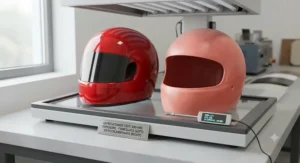
The thermoplastic vs composite shell distinction comes down to how each is actually made, and that manufacturing process shapes everything downstream — weight, cost, and impact behaviour alike. Polycarbonate thermoplastic shells are injection-moulded: molten plastic pumped into a mould under pressure, cooled, and popped out as a finished shape. It’s fast, cheap, and highly repeatable, which is exactly why polycarbonate dominates the budget end of the market.
Composite shells, by contrast, are hand-laid or machine-laid in sheets — layers of fibreglass cloth (sometimes combined with Kevlar or carbon strands) soaked in resin, stacked into a mould, and cured under heat and pressure. It’s a slower, more labour-intensive process that costs more to produce but yields a shell that’s typically lighter for equivalent strength, since the fibre orientation can be engineered directionally rather than relying on uniform plastic thickness. Neither process is inherently “better” for safety in isolation — Wikipedia’s overview of fibre-reinforced plastic explains how composite strength depends heavily on fibre layup quality, meaning a poorly executed composite shell can underperform a well-engineered thermoplastic one, and the reverse holds true too.
Helmet Drop Test: What Happens in the Lab
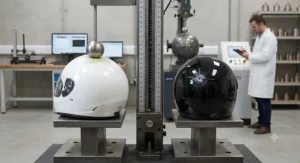
A helmet drop test, in SHARP’s methodology and similar international programmes, involves dropping a helmet fitted to a weighted, instrumented headform from a set height onto an anvil, then measuring the deceleration forces transmitted through to where a rider’s brain would sit. It sounds almost simplistic described that way, but the anvils vary — flat, kerbstone-shaped, and angled surfaces are all used — because real-world crashes rarely involve a single flat impact point.
For a polycarbonate shell, the drop test typically shows the material flexing inward on impact and springing back, spreading force across a broader contact area before the EPS liner takes over the bulk of the energy absorption. A fibreglass shell tends to show more localised cracking or delamination at the impact point in a drop test, absorbing energy through that controlled material failure rather than elastic flex. Both approaches, done well, deliver comparable protection — which is exactly why SHARP publishes star ratings by individual model rather than by shell material category alone.
Shell Deformation on Impact: Why It’s a Feature, Not a Flaw
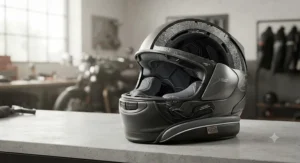
Seeing a cracked shell after a drop understandably alarms a lot of riders, but shell deformation on impact is genuinely part of how both materials are designed to work — not evidence of a cheap or faulty helmet. The shell’s actual job, as most manufacturer engineering documentation explains, isn’t to remain pristine; it’s to prevent penetration and to help spread and reduce the force reaching the EPS liner and, ultimately, your skull.
A fibreglass shell that shows visible cracking after an impact has very likely done exactly what it was engineered to do — that controlled fracture is absorbing energy that would otherwise transfer directly to your head. A polycarbonate shell that flexes and doesn’t crack isn’t “failing to protect you properly” either — it’s using elastic deformation as its energy-absorption mechanism instead. The one universal rule regardless of material: any helmet that’s taken a meaningful impact should be replaced, visible damage or not, because internal EPS compression is frequently invisible from the outside.
How to Choose Between Fibreglass and Polycarbonate
- Work out your typical journey length first. Short urban hops under 30 minutes rarely benefit enough from weight savings to justify a composite premium — polycarbonate genuinely makes more sense here.
- Check the SHARP rating of the specific model, not just the material. A 5-star polycarbonate helmet beats a 3-star fibreglass one every time, regardless of what the shell is made from.
- Consider your climate and typical weather. Fibreglass shells often run slightly cooler in warm conditions due to typically better-engineered ventilation on premium models, though this varies by design, not material alone.
- Factor in your budget honestly, including running costs. Composite helmets often carry pricier replacement visors and linings — worth checking before you commit, not after.
- Think about frequency of drops and knocks. Polycarbonate’s tendency to flex and bounce rather than crack can be genuinely reassuring for riders who store a helmet on a hook in a busy garage or shared hallway.
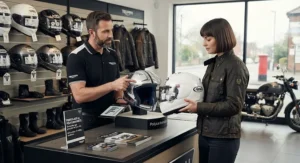
- Try the helmet on for at least 20 minutes in-store if possible. Shell material matters less than fit — an ill-fitting 5-star helmet of either material protects worse than a well-fitting one.
- Match the shell to your annual mileage, not your aspirations. Buy for the riding you actually do, not the touring holiday you might take once a year.
Common Mistakes When Buying a Motorcycle Helmet
The most common mistake, by a wide margin, is buying on shell material reputation alone rather than checking the individual model’s SHARP star rating — as the data above shows, that assumption simply doesn’t hold up consistently. A close second is buying online without ever trying a similar shape in person first; head shapes vary between round oval, intermediate oval and long oval, and a helmet that’s perfect for one shape can be genuinely uncomfortable, or worse, poorly fitting on another, regardless of star rating.
A third recurring error is chasing the lightest possible helmet without considering that weight savings matter far more on long rides than short ones — paying a fibreglass premium for a 10-minute daily commute rarely delivers proportionate value. Finally, plenty of riders skip checking manufacture date entirely; a helmet sitting on a shelf for three years before you buy it has already used up a chunk of its usable lifespan before you’ve even worn it once.
Long-Term Cost & Maintenance: Total Cost of Ownership
Sticker price only tells part of the story. A budget polycarbonate helmet at around £100 that needs replacing every three years due to wear, fading, or simply falling out of comfort works out at roughly £33 a year in helmet cost alone, before accounting for replacement visors or pads. A premium fibreglass helmet at around £450 that comfortably lasts the recommended five-year replacement cycle, with one visor and one set of pads replaced along the way, might land closer to £110-£130 a year once those consumables are factored in.
The maths doesn’t always favour premium — it depends heavily on how hard you ride and how often you actually replace gear versus keep using it past its sensible lifespan. What’s consistent across both materials, though, is that the five-year replacement guideline itself matters more to long-term cost than the shell material choice; buying two cheap helmets across a decade often costs more, and arguably protects less consistently, than one well-maintained premium helmet replaced on schedule.
✨ Ready to compare current prices across all seven helmets?
🔍Head back up to the Top 7 section and check availability before stock changes.
Safety, Regulations and Compliance in the UK
Every helmet sold and worn legally on UK roads must meet specific standards — either British Standard BS 6658:1985 with the BSI Kitemark, or an EEA-equivalent standard such as UNECE Regulation 22, as set out in the UK government’s official helmet regulations guidance. From January 2024, new helmet designs seeking approval must meet the updated ECE R22-06 standard, which SHARP notes involves more realistic real-world impact testing than its predecessor, though existing ECE R22-05 helmets already in circulation remain fully legal to wear.
Shell material has no bearing on legal compliance whatsoever — a polycarbonate helmet meeting ECE R22-06 is just as legal, and just as capable of protecting you to the tested standard, as a fibreglass one. SHARP star ratings sit entirely separate from and above this legal minimum; every helmet legally sold in the UK has already passed baseline safety testing, and SHARP’s stars simply help you compare how much protection beyond that minimum a specific model offers.
Frequently Asked Questions
❓ Is fibreglass or polycarbonate safer for a motorcycle helmet?
❓ Why are fibreglass helmets more expensive than polycarbonate ones?
❓ How long does a motorcycle helmet actually last?
❓ Can a polycarbonate helmet crack like fibreglass?
❓ Do I need to replace my helmet after dropping it on the floor?
Conclusion
There’s no universal winner in the fibreglass vs polycarbonate helmet debate, and if a shop assistant tells you there is, that’s worth a polite raised eyebrow. What actually matters is matching the shell material to how, and how far, you actually ride — a Caberg Duke II or HJC C10 genuinely serves a daily urban commuter just as safely as a premium composite lid, while riders logging serious motorway miles will feel the difference a lighter fibreglass shell like the Shoei NXR2 or Schuberth C5 makes over an eight-hour day.
The one non-negotiable across every price point covered here is checking the individual model’s actual SHARP star rating rather than assuming material alone settles the question — the data simply doesn’t support that shortcut. Buy the helmet that fits your head shape properly, suits your typical journey length, and carries a strong individual safety rating, and you’ll be properly protected regardless of whether the shell started life as woven glass fibre or moulded plastic pellets.
Recommended for You
- Fibreglass Motorcycle Helmet 2026: 7 Lids Worth Your Money
- Carbon Racing Helmet 2026: 7 FIA & MSA Approved Picks
- 7 Best Lightweight Carbon Helmet Women Picks for 2026 Rides
Disclaimer: This article contains affiliate links. As an Amazon Associate, I earn from qualifying purchases. If you purchase products through these links, we may earn a small commission at no additional cost to you.
✨ Found this helpful? Share it with your friends! 💬🤗
