
In This Article
Try this experiment next time you’re in a bike shop: pick up a cheap polycarbonate lid with one hand, then pick up a fibreglass one with the other. The difference is subtle, but it’s there — a sort of density that tells you the shell is doing more work with less material. That’s the whole pitch behind a lightweight fibreglass sport helmet, and it’s why so many riders eventually trade up from their first budget helmet to something built from woven glass fibres and resin rather than moulded plastic.
Fibreglass has been the backbone of proper motorcycle helmets since long before carbon fibre became fashionable, and it remains the material of choice for brands like Shoei, Arai, HJC and Shark when they’re building a helmet that has to be strong, light, and repairable in different sizes without redesigning the whole tooling. A genuinely good lightweight fibreglass sport helmet typically sits somewhere between 1,350g and 1,650g, is homologated to ECE 22.06, and uses a resin-and-fibre composite shell rather than a single-piece thermoplastic moulding. Below, we’ve pulled together seven real helmets on sale right now, spanning budget to flagship, so you can see exactly what your money buys at every level. Independent safety data from the UK’s Department for Transport SHARP scheme backs up several of the claims below, so you’re not just taking a marketing department’s word for it.
Whether you’re commuting on a naked bike, doing track days on a sportsbike, or covering serious miles on a sports tourer, the right shell material changes how your neck feels after three hours in the saddle. Let’s get into it.
What Is a Lightweight Fibreglass Sport Helmet?
A lightweight fibreglass sport helmet is a motorcycle helmet whose outer shell is built from layered fibreglass (often blended with organic fibres, aramid or carbon strands) rather than injection-moulded polycarbonate. Typical weights range from roughly 1,350g to 1,650g, and the material’s strength-to-weight ratio allows manufacturers to use thinner shells without sacrificing the impact resistance needed to pass ECE 22.06 testing.
The “sport” tag usually signals a full-face shape with a tighter, more aerodynamic profile, an aggressive chin bar, and venting tuned for a forward-leaning riding position rather than upright commuting.
Quick Comparison Table
Here’s a snapshot of all seven helmets before we dig into the detail. Weights are manufacturer/tester figures for a mid-size shell and will vary slightly by size, since most of these models use multiple shell moulds.
| Helmet | Shell Material | Weight (approx.) | Price Range | Best For |
|---|---|---|---|---|
| HJC F70 | Fibreglass composite | 1,480-1,550g | £220-£260 range | Budget riders wanting a genuine fibreglass shell |
| Caberg Drift Evo II | Fibreglass | 1,450-1,500g | £280-£350 range | Sports-touring commuters who want a sun visor |
| Scorpion EXO-R1 Air | Ultra-TCT fibreglass composite | 1,350-1,530g | £300-£400 range | Track-day riders on a mid-range budget |
| HJC RPHA 71 | PIM fibreglass/carbon-aramid | 1,567-1,668g | £400-£480 range | All-round sport tourers |
| Shark Race-R Pro | Composite fibre (fibreglass-based) | around 1,660g | £480-£550 range | Racers who want a SHARP 5-star track lid |
| Shoei NXR2 | AIM fibreglass composite | 1,400g | £430-£540 range | Riders who want Shoei’s lightest ECE 22.06 lid |
| Arai RX-7V Evo | PB-SNC2 fibreglass composite | 1,584-1,650g | £550-£790 range | Purists chasing Arai’s flagship shell tech |
Looking at this table, a clear pattern emerges: weight doesn’t scale neatly with price. The Shoei NXR2 undercuts several cheaper helmets on the scales, while the premium Arai RX-7V Evo is actually one of the heavier lids here because Arai deliberately trades a little weight for a softer, more compliant impact liner. If raw lightness is your only priority, start your shortlist with the HJC F70 and Shoei NXR2; if all-day comfort and aerodynamics matter more than the number on the scale, the Arai RX-7V Evo and HJC RPHA 71 deserve a proper look too.
💬 Just one click — help others make better buying decisions too!😊
Top 7 Lightweight Fibreglass Sport Helmets: Expert Analysis
1. HJC F70 — proof fibreglass doesn’t have to cost a fortune
Most helmets under £300 are built from polycarbonate, so finding a genuine fibreglass composite shell at this price point is unusual. The HJC F70 uses HJC’s Advanced Fibreglass Composite construction, which is precisely why it can hit a reasonably competitive weight while still being one of the more affordable helmets on this list.
At 1,480-1,550g depending on shell size, it isn’t the lightest lid here, but it’s noticeably lighter than most polycarbonate helmets at a similar price, and its front-to-back ACS ventilation channel does a solid job of shifting air through the shell on faster roads. Based on the spec sheet and independent SHARP testing, the HJC F70 earned a 4-star safety rating, putting it ahead of plenty of pricier alternatives on pure protection scores.
Reviewers consistently note two things about the HJC F70: the old-fashioned screw-fit visor feels dated next to quick-release systems on rival helmets, and wind noise is on the higher side for the class. What most buyers overlook, though, is that the Pinlock anti-fog insert comes included in the box rather than as a costly extra, which isn’t universal at this price.
Pros:
- ✅ Genuine fibreglass shell well below the usual composite price bracket
- ✅ SHARP 4-star safety rating, ahead of many pricier rivals
- ✅ Pinlock anti-fog insert included as standard
Cons:
- ❌ Visor uses an old screw-fit system, not quick-release
- ❌ Wind noise runs higher than newer sport-touring rivals
Sitting around £220-£260 depending on colourway, the HJC F70 represents genuinely strong value — you’re paying for the material upgrade, not the badge.

2. Caberg Drift Evo II — best British-brand-alternative value pick for touring
Where the F70 majors on price, the Caberg Drift Evo II in its fibreglass configuration leans into comfort and long-distance features. Its fibreglass shell comes in two sizes (small and large), weighing approximately 1,450-1,500g, and the Italian manufacturer has built in an integrated sun visor operated by a side lever — genuinely useful on a helmet aimed at riders who don’t want to be swapping visors at every services stop.
What most buyers overlook about the Caberg Drift Evo II is the SOS Medical ID system: an NFC chip that first responders can scan to pull up emergency contacts and medical details after a crash. It’s a small addition, but on paper it’s the kind of practical thinking that separates a touring-focused fibreglass helmet from a pure track lid. Caberg’s helmets have consistently scored 4- and 5-star ratings in SHARP’s government testing programme, which lends real credibility to the brand’s safety claims.
Aggregated owner feedback on this model tends to praise the quiet cabin and the quick-release cheek pads, while a recurring criticism is that the two-shell-size range means smaller riders end up with a slightly bulkier-looking helmet than they might expect at this price.
Pros:
- ✅ Integrated sun visor operated with one gloved hand
- ✅ SOS Medical ID NFC chip for emergency responders
- ✅ Consistently strong SHARP ratings across the Caberg range
Cons:
- ❌ Only two outer shell sizes, so fit isn’t as finely graduated
- ❌ Heavier than the Carbon version of the same model
Expect to pay in the £280-£350 range, which puts the Caberg Drift Evo II squarely between budget and mid-tier — a sensible middle ground for riders who tour more than they track.
3. Scorpion EXO-R1 Air — MotoGP pedigree on a track-day budget
The Scorpion EXO-R1 Air is the same shape and shell tech worn by riders competing in MotoGP and World Superbike, just without the paddock price tag. Its Ultra-TCT shell blends multiple layers of fibreglass with aramid fibre, and depending on shell size it weighs somewhere between 1,350g and 1,530g — genuinely competitive against helmets costing twice as much.
Here’s what the spec sheet doesn’t fully convey: because Scorpion builds the EXO-R1 Air across three separate shell sizes (XS-M, L, and XL-3XL), smaller-headed riders aren’t stuck wearing a shell built for someone two sizes bigger, which keeps both weight and bulk proportionate. The titanium double-D ring fastener is a genuinely premium touch rarely seen outside race-replica helmets at this price.
Reviewers who’ve put the EXO-R1 Air through track use commonly report that visibility in a race tuck is excellent thanks to a shield port positioned higher than on Scorpion’s older R2000, though some note the helmet runs slightly warm at town speeds because its ventilation is really tuned for airflow at pace, not standing traffic.
Pros:
- ✅ Three shell sizes for a genuinely proportionate fit
- ✅ Titanium double-D ring fastener, unusual at this price
- ✅ Ultra-TCT fibreglass-aramid blend built for track use
Cons:
- ❌ Ventilation is optimised for speed, less effective in slow traffic
- ❌ ECE 22.05 certification on some solid colourways rather than 22.06
Pricing typically sits in the £300-£400 range, and for anyone doing regular track days, this is arguably the strongest cost-per-track-session helmet on this list.
4. HJC RPHA 71 — the sport-touring all-rounder
If you ride everything from a sportsbike to an adventure bike depending on the weekend, the HJC RPHA 71 is built precisely for that inconsistency. Its PIM Evo shell blends carbon-aramid hybrid fibres with fibreglass and natural fibres, and independent scale tests put it at 1,567-1,668g — heavier than several rivals here, but that extra mass buys a four-shell-size range and near-silent cabin manners that lighter helmets sometimes sacrifice.
Based on the spec comparison, what’s easy to miss is that “lighter” doesn’t automatically mean “better experienced” — reviewers who’ve tested the HJC RPHA 71 back-to-back against premium rivals note it comes in barely 10g heavier than the Shoei GT-Air 3 and only around 80g heavier than the Arai Quantic, differences most riders genuinely can’t feel on the road. The RPHA 71 also carries an ACU Gold sticker, which matters if you’re planning track days on a road-legal lid.
A common theme in aggregated feedback is praise for the two-stage ventilation and the wide, easily operated sun visor, while some owners flag that the RPHA 71’s more oval fit shape won’t suit riders with rounder head profiles.
Pros:
- ✅ Four shell sizes for genuinely precise fit
- ✅ ACU Gold approved for UK track day use
- ✅ Excellent noise control for a sport-shaped helmet
Cons:
- ❌ Heavier than several rivals in this list
- ❌ Oval-biased fit shape doesn’t suit every head
Priced from around £400 and running up to £480 for graphics, the HJC RPHA 71 competes directly with helmets costing considerably more.
5. Shark Race-R Pro — the race-replica with a maximum SHARP rating
Originally developed for Shark’s factory racers, the Shark Race-R Pro wears its racing DNA openly. Its composite fibre shell (fibreglass-based, distinct from the pricier Carbon variant) earned a full 5-star rating from SHARP — the highest possible score — and it uses a double-D ring retention system rather than a micrometric buckle, which is standard practice on race-focused lids.
What the spec sheet won’t tell you outright is how much of the Race-R Pro’s character comes from its wind-tunnel-shaped double-blade rear spoiler, designed to cut cyclonic buffeting for riders spending long periods in a full tuck. This isn’t a helmet built with commuting in mind — the Easy Fit glasses channel is a rare concession to everyday practicality on an otherwise track-oriented design.
Reviewers who’ve tested the Race-R Pro consistently describe it as comfortable and reasonably quiet for a full-faired sportsbike helmet, though most agree it’s aimed squarely at head-down riders rather than upright commuters, and the price reflects that specialism.
Pros:
- ✅ Full 5-star SHARP safety rating, the maximum possible score
- ✅ Wind-tunnel-developed spoiler reduces high-speed buffeting
- ✅ Glasses-friendly interior, unusual for a race helmet
Cons:
- ❌ Riding position tuned for a full tuck, less comfortable upright
- ❌ Only available with a double-D fastener, no micrometric option
With an RRP around £499, and the fibreglass version generally undercutting the Carbon variant, the Shark Race-R Pro is a genuine track weapon for sub-£550 money.
6. Shoei NXR2 — the lightest ECE 22.06 helmet Shoei has ever built
Shoei’s own claim is bold: the Shoei NXR2 is the lightest ECE 22.06-rated helmet the brand has ever produced, and at 1,400g across the range, the numbers back it up against most direct competitors. Built from Shoei’s AIM composite — organic fibres bonded with fibreglass — the shell uses four separate outer shell sizes, which is genuinely unusual engineering effort for a helmet outside Shoei’s absolute flagship tier.
Here’s what most buyers overlook: because Shoei tools four shell sizes instead of the industry-typical two or three, someone with a smaller head genuinely gets a proportionately smaller, lighter helmet rather than a big shell padded out to fit. That’s expensive to manufacture and test, which is reflected in the price, but it’s also precisely why the fit-and-finish reputation around Shoei helmets exists in the first place.
Independent reviewers who’ve worn the Shoei NXR2 across multiple bikes report that aerodynamics and stability at speed are excellent, while cheek pads are on the smaller side, making intercom cable routing slightly fiddlier than on some rivals — a minor niggle rather than a dealbreaker.
Pros:
- ✅ Four outer shell sizes for genuinely proportionate fit and weight
- ✅ Lightest ECE 22.06 helmet in Shoei’s current range
- ✅ Multi-density EPS liner across two internal layers
Cons:
- ❌ Smaller cheek pad cavities can complicate intercom fitting
- ❌ Premium price for what is technically Shoei’s mid-tier model
Pricing runs from around £430 for plain colours to roughly £540 for graphics — a genuine investment, but one built on measurable engineering rather than badge value alone.
7. Arai RX-7V Evo — the purists’ racing benchmark
At the top of this list sits the Arai RX-7V Evo, widely regarded within the SHARP-testing and track community as one of the most technically dense fibreglass composite shells on the market. Arai’s PB-SNC2 construction — Peripherally Belted Structural Net Composite — uses a mesh belt across the top of the eye port borrowed from F1 composite engineering, working alongside multiple fibre layers to create what independent reviewers describe as an unusually strong, flex-tolerant shell.
Weighing 1,584-1,650g, it’s genuinely one of the heavier helmets in this list, and Arai doesn’t hide from that trade-off: their philosophy deliberately pairs a tougher outer shell with a softer, more compliant EPS liner, which several long-term owners report as a big part of why the helmet moulds to head shape more readily than firmer, lighter alternatives. The Variable Axis System visor mechanism also makes visor swaps unusually smooth for a race-focused helmet.
Reviewers who’ve tested the RX-7V Evo over extended periods report the ventilation is among the best in its class, though a recurring and fairly consistent complaint across multiple independent tests is that wind noise is higher than rivals — a known trade-off of Arai’s shell philosophy rather than a manufacturing flaw.
Pros:
- ✅ Class-leading ventilation for track and fast road use
- ✅ Softer EPS liner reported to mould comfortably to head shape
- ✅ VAS visor system makes changes unusually quick
Cons:
- ❌ Heavier than most rivals in this price bracket
- ❌ Wind noise runs higher than competing premium helmets
Starting from around £550 for plain colourways and climbing well past £750 for race-replica graphics, the Arai RX-7V Evo is a genuine investment — one that riders who’ve owned several helmets often describe as the one they kept coming back to.
Setting Up and Living With Your New Lightweight Fibreglass Sport Helmet
Getting a fibreglass sport helmet home is only step one — how you set it up in the first 30 days genuinely affects both comfort and longevity. Start with the strap adjustment before you even think about the visor: a double-D ring or micrometric buckle should sit snug enough that you can’t pull the helmet forward off your head, but loose enough that swallowing doesn’t feel restricted.
Next, fit any Pinlock insert correctly. A common first-week mistake is pressing the insert in without first cleaning both surfaces, which traps dust between the layers and causes permanent smearing that no amount of cleaning afterwards will fix. Take the two minutes to do it properly with a microfibre cloth before you ever ride in the rain.
Ventilation controls are worth learning by feel, not sight, since fumbling for a vent lever at 60mph is asking for trouble. Spend five minutes in your driveway opening and closing every vent on models like the HJC RPHA 71 or Scorpion EXO-R1 Air until you can do it blind.
For long-term maintenance, wash the removable liner every few weeks if you commute regularly — sweat degrades the anti-bacterial treatment on liners like those used in the Shoei NXR2 and Caberg Drift Evo II faster than most riders expect. Finally, inspect the shell for stress-whitening or hairline cracks after any drop, however minor; fibreglass is repairable in theory, but no consumer-grade repair matches factory-certified impact performance, so a genuinely dropped helmet from height should be replaced, not patched.
Which Rider Are You? Real-World Scenarios
Picture a university student commuting eight miles into the city centre on a learner-legal 125cc bike, riding five days a week regardless of weather. Budget matters, but so does noise on the motorway slip road they use to shortcut traffic. The HJC F70 suits this rider well — genuine fibreglass construction at a price a student loan can absorb, with a 4-star SHARP rating that beats plenty of pricier polycarbonate alternatives.
Now picture a sports-touring rider in their forties, doing 6,000 miles a year on a mix of B-roads and the occasional cross-Channel trip, prioritising all-day comfort over outright track pace. The HJC RPHA 71 or Caberg Drift Evo II both fit this profile: sun visors for glare on long stretches, quiet cabins for motorway droning, and shell sizing generous enough for comfortable multi-hour stints.
Finally, picture a track-day regular who does four or five circuit days a year on a proper sportsbike, chasing lap times more than commuting practicality. Here, the Scorpion EXO-R1 Air or Shark Race-R Pro make far more sense — both are genuinely track-proven shells with SHARP data to back the safety claims, at a fraction of what an equivalent Arai or Shoei race helmet costs.
Common Problems With Fibreglass Helmets — Solved
Problem: visor fogging in cold weather. Nearly every helmet on this list either includes a Pinlock insert as standard (like the HJC F70) or is Pinlock-ready as an inexpensive add-on. Fit one before winter arrives rather than after your first foggy commute.
Problem: helmet feels loose after a few months. Interior padding compresses with use — this is normal, not a fault. If a helmet like the Shoei NXR2 that fitted snugly at purchase starts to feel loose, check whether the manufacturer sells a thicker replacement cheek pad set before assuming you need an entirely new helmet.
Problem: persistent wind noise at motorway speed. As reviewers repeatedly note with the Arai RX-7V Evo, some noise is baked into a helmet’s aerodynamic profile and can’t be fully engineered out. A well-fitted neck curtain (usually included) and correctly adjusted chin strap reduce turbulence noticeably; earplugs designed for motorcycling handle the rest safely.
Problem: unpleasant odour from the liner. This almost always comes down to washing frequency, not helmet quality. Removable, washable liners — standard across every helmet on this list — should be hand-washed roughly every two to four weeks for daily commuters.
Problem: uncertainty about crash-worthiness after a drop. If a helmet has taken any impact, from being dropped on a hard floor to an actual road accident, replace it. Internal EPS foam absorbs energy by crushing permanently, often without visible external damage, which is precisely why it can’t be reliably reused.
How to Choose a Lightweight Fibreglass Sport Helmet
Choosing between fibreglass sport helmets comes down to seven practical criteria, in roughly this order of importance:
- Certification first. Confirm ECE 22.06 approval before anything else — it’s the current legal minimum in the UK and the newest, most rigorous test standard available.
- SHARP star rating. Independent testing from the government-run SHARP safety programme reveals genuine performance differences that marketing material won’t tell you.
- Shell size count. More outer shell sizes (three or four, as on the Shoei NXR2 and Arai RX-7V Evo) generally means better proportional fit and lower weight for smaller heads.
- Weight versus riding style. Track riders benefit most from every gram saved; touring riders often value ventilation and noise control more than the last 50g of weight.
- Fit shape. Round oval, intermediate oval and long oval head shapes fit different helmet brands differently — always try before you buy where possible, or check a brand’s published fit guidance.
- Ventilation and visor features. Sun visors, Pinlock readiness and vent count matter enormously for commuting and touring use, less so for pure track lids.
- Budget realism. A £250 fibreglass helmet like the HJC F70 genuinely outperforms cheaper polycarbonate options; you don’t need to spend £700 to get real composite benefits.
Common Mistakes When You Buy Fibreglass Motorcycle Helmet
The single most common mistake when you buy fibreglass motorcycle helmet gear is assuming “fibreglass” automatically means “lightest.” As the comparison table above shows, the HJC RPHA 71 and Arai RX-7V Evo are both genuine fibreglass composite helmets, yet both weigh more than several rivals — material alone doesn’t determine final weight; shell size count and internal reinforcement matter just as much.
A second frequent error is buying by brand reputation rather than head shape. Even excellent helmets like the Shark Race-R Pro or Caberg Drift Evo II will feel wrong on a head shape they weren’t designed for, no matter how strong their SHARP rating.
Third, many riders skip checking shell size counts entirely. A helmet built in only two shell sizes, such as the Caberg Drift Evo II, will fit the smallest and largest sizes within each range less precisely than a helmet like the Scorpion EXO-R1 Air, built across three separate shells.
Finally, plenty of buyers overlook that a lower price doesn’t automatically mean lower safety. SHARP testing has repeatedly shown that price and star rating don’t correlate neatly — the HJC F70 scores a genuinely strong 4 stars well below £300, while some considerably pricier helmets score lower.
Fibreglass Full Face Helmet vs Carbon Fibre vs Polycarbonate
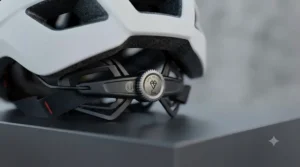
Choosing a fibreglass full face helmet over the alternatives comes down to a fairly simple trade-off triangle: cost, weight and repairability. Polycarbonate shells, found on budget helmets, are the cheapest to manufacture and genuinely tough, but they’re heavier gram-for-gram and typically can’t be produced in as many shell sizes economically. Carbon fibre sits at the opposite extreme — lighter still than fibreglass, often 30-40% lighter in equivalent constructions, but considerably more expensive to produce and, on some helmets, marginally more brittle under specific impact types depending on layup.
A fibreglass full face helmet, as detailed by general materials references such as Wikipedia’s overview of motorcycle helmet construction, occupies the practical middle ground: significantly lighter than polycarbonate, considerably cheaper than carbon, and — crucially — easier and cheaper for manufacturers to produce across multiple shell sizes, which is why brands like Shoei, Arai and HJC lean on fibreglass composites for helmets aimed at serious riders without flagship budgets.
Where this matters practically: the Scorpion EXO-R1 Air and its Carbon sibling share an identical shape and shell size structure, yet the Carbon version costs meaningfully more for a modest additional weight saving. For most road and track-day riders, that premium buys diminishing returns — the fibreglass version already delivers 90% of the weight benefit at a fraction of the cost difference.
Helmet Aerodynamics Explained
Helmet aerodynamics genuinely changes how a ride feels, and it’s easy to underestimate just how much energy your neck absorbs fighting a poorly shaped shell at speed. A helmet with a rounded, low-drag profile — like the wind-tunnel-developed shell on the Shark Race-R Pro — reduces buffeting when you turn your head to check a blind spot, which matters more on a naked or sportsbike than most riders realise until they’ve felt the difference.
Rear spoilers, seen on both the Shark Race-R Pro and Scorpion EXO-R1 Air, aren’t purely cosmetic; they’re designed to smooth airflow separation behind the helmet, reducing the turbulent wake that causes lift and buffeting at higher speeds. What most buyers overlook is that aerodynamics and noise aren’t the same thing — a helmet can be genuinely slippery through the air while still generating noticeable wind noise, exactly the trade-off reviewers repeatedly describe with the Arai RX-7V Evo.
Shell size also plays into this more than people expect. A smaller shell, made possible by multiple mould sizes like those used on the Shoei NXR2, presents less frontal area to the wind and reduces the leverage effect that causes neck fatigue on longer rides — one reason Shoei markets aerodynamic performance as a headline feature of that helmet rather than an afterthought.
Understanding the ECE 22.06 Rating
The ECE 22.06 rating is the current legal safety standard for motorcycle helmets sold across the UK and much of Europe, replacing the older ECE 22.05 standard that had been in place since 2000. Every helmet featured in this guide meets or is available in ECE 22.06-certified form, and it’s worth checking this specifically before buying, since some older stock or specific colourways can still be sold under the previous standard during transition periods.
What actually changed under ECE 22.06? According to theUK government’s own SHARP testing programme, the new standard introduces additional oblique impact testing to measure rotational forces transmitted to the brain, alongside roll-off testing to check whether a helmet stays in place during a crash sequence, and expanded testing of pre-fitted accessories like sun visors and communication systems to confirm they don’t compromise the shell’s protective performance.
For buyers, the practical takeaway is straightforward: an ECE 22.06 label on the retention strap or shell isn’t just a legal box-tick, it represents a genuinely more demanding test regime than the standard it replaced. Every helmet in this guide, from the budget HJC F70 through to the flagship Arai RX-7V Evo, is built and sold to meet this current standard, so certification shouldn’t be the deciding factor between them — real-world fit, weight distribution and ventilation should be.
Long-Term Cost & Maintenance
A lightweight fibreglass sport helmet is rarely a one-off purchase cost; total cost of ownership includes replacement visors, Pinlock inserts, liner replacements and eventual helmet replacement, typically recommended every five years regardless of impact history due to material degradation from UV exposure and sweat.
Budget helmets like the HJC F70 often have cheaper replacement visors, sometimes under £30, while flagship helmets like the Arai RX-7V Evo can see visor replacements exceed £80-100 given the specialised VAS mounting system. This is worth factoring into your buying decision if you ride in conditions that tend to scratch or crack visors frequently, such as gravel-adjacent commuting routes.
Liner replacement costs follow a similar pattern — helmets with more elaborate multi-density EPS systems, like the HJC RPHA 71 and Shoei NXR2, typically charge more for genuine replacement liners than simpler constructions. Over a five-year ownership period, a genuinely premium helmet can cost meaningfully more to maintain than its purchase price alone suggests, even before accounting for the initial price gap over budget alternatives.
Frequently Asked Questions
❓ Is a fibreglass helmet better than a polycarbonate one?
❓ How much does a lightweight fibreglass sport helmet weigh?
❓ Does ECE 22.06 replace ECE 22.05 completely?
❓ Can I fit an intercom to a fibreglass sport helmet?
❓ How long does a fibreglass motorcycle helmet last?
Conclusion
There’s no single “best” lightweight fibreglass sport helmet on this list — there’s a best one for your riding, your budget and your head shape. If you’re commuting on a tight budget, the HJC F70 proves you don’t need to spend £400 to get a genuine fibreglass shell with a strong safety rating. If you’re touring long distances, the HJC RPHA 71 and Caberg Drift Evo II both trade a little extra weight for genuine all-day comfort. And if lap times or race-replica styling matter more than anything else, the Shark Race-R Pro and Arai RX-7V Evo sit at the sharp end of what fibreglass composite engineering can currently do.
What every helmet here shares is honest, verifiable engineering: real ECE 22.06 certification, independently tested SHARP ratings where available, and materials that genuinely justify their place above entry-level polycarbonate helmets. Whichever you choose, check current price and stock on Amazon UK before deciding, since availability and colourways shift regularly.
✨ Don’t Miss These Exclusive Deals!
🔍 Take your search for the perfect lightweight fibreglass sport helmet to the next level with the seven options above. Click on any highlighted helmet to check current pricing and availability. The right shell could make every ride noticeably more comfortable! 🏍️
Recommended for You
- Fibreglass Touring Helmet with Speakers: 7 Best UK Picks 2026
- Fibreglass Touring Helmet UK: 7 Best Quiet, Comfy Picks 2026
- Sport Helmet Under £250: 7 Brilliant 2026 Picks Ranked
Disclaimer: This article contains affiliate links. As an Amazon Associate, I earn from qualifying purchases. If you purchase products through these links, we may earn a small commission at no additional cost to you.
✨ Found this helpful? Share it with your friends! 💬🤗
