

In This Article
Six hours into a wet Tuesday on the A9, your neck will tell you exactly what your helmet is made of. That’s the honest truth about buying a multi-fibre helmet for touring — it’s not really a purchase you make with your eyes, it’s one you make with your neck, your ears, and the top of your spine after the fourth fuel stop. A multi-fibre helmet for touring means a shell built from layered composite materials — typically fibreglass, aramid (the stuff bulletproof vests are made from), and sometimes carbon — bonded together to spread impact energy while keeping weight low enough that eight hours in the saddle doesn’t feel like a neck workout.

Polycarbonate lids do a perfectly respectable job for short hops and commuting, and nobody should feel short-changed wearing one. But once the miles stretch into the hundreds, the maths changes. A composite shell weighing 200-300 grammes less than its polycarbonate cousin doesn’t sound like much until you multiply that saving by every micro-movement your neck makes over a full day of riding. This guide walks through seven genuinely good multi-fibre composite helmet options — budget, mid-range and premium — with honest analysis of what the spec sheets actually mean once you’re living in the lid, not just reading about it.
Quick Comparison Table
| Helmet | Shell Type | Weight (approx.) | Price Range | Best For |
|---|---|---|---|---|
| LS2 Challenger II | HPFC composite | ~1,500g | £180-220 | Budget-conscious tourers |
| Scorpion EXO-1400 Air Carbon | Carbon-reinforced composite | ~1,450g | £280-340 | Value-seekers wanting carbon feel |
| Nexx X.WED3 | Glass-fibre composite | ~1,600g | £280-350 | Adventure-leaning tourers |
| HJC RPHA 91 | Carbon-fibre-reinforced composite | ~1,500g | £350-430 | Modular convenience seekers |
| AGV K6 S | Carbon and aramid composite | ~1,350g | £300-400 | Everyday rider stepping up |
| Shoei GT-Air 3 | AIM+ multi-composite | ~1,540g | £500-600 | Full-face touring purists |
| Shoei Neotec 3 | AIM+ multi-composite | ~1,660g | £650-780 | Premium modular touring |
The spread here tells its own story: you can get a genuinely capable multi-fibre composite helmet from around £180, but the deeper you go into the composite blend — more aramid layers, tighter carbon weave, more shell sizes across the size range — the more you pay, and largely for incremental gains in weight and finish rather than a jump in baseline safety. Every helmet on this list meets ECE 22.06, the current legal minimum for UK roads, so nothing here is a compromise on core protection. Where they differ is in fit precision, ventilation engineering, and how they behave on hour six of a nine-hour day.
💬 Just one click — help others make better buying decisions too! 😊
Top 7 Multi-Fibre Composite Touring Helmets: Expert Analysis
Here’s the lineup, running budget through premium, with the actual reasoning behind why each one earns its place.
1. LS2 Challenger II — best budget entry into true composite construction
The LS2 Challenger II proves you don’t need to spend £500 to get out of polycarbonate territory. Its High Performance Fibre Composite (HPFC) shell keeps weight down to roughly 1,500 grammes, which is genuinely impressive at this price point and noticeably lighter on the neck than budget polycarbonate rivals over a full day. The shell carries ECE 22.06 approval, and LS2’s COOLMAX interior lining does real work here — moisture-wicking fabric that stays fresher than the basic foam-and-fabric linings you’d find on cheaper lids, which matters when you’re eight-plus hours into a multi-day tour and the alternative is a musty, clammy liner by day three.
Based on the spec comparison, this is the helmet for riders who want the fatigue-reducing benefits of composite construction without premium-brand pricing — new tourers building out a kit list, or anyone doing a big one-off trip who isn’t ready to commit £600 to a helmet yet. Reviewers consistently note the ventilation as a genuine strength for the price bracket, with intake and exhaust vents positioned to move air without introducing the buffeting noise cheaper vents sometimes create. The main trade-off reviewers flag is a slightly narrower fit range than pricier rivals, so trying before buying (or checking a detailed size guide) matters more here than usual.
Pros:
- ✅ Genuine composite shell at a properly budget price point
- ✅ COOLMAX lining stays fresh across multi-day tours
- ✅ Well-engineered venting for the price bracket
Cons:
- ❌ Narrower head-shape tolerance than premium rivals
- ❌ Fewer shell sizes means less precise weight distribution
Expect this one to sit around £180-220, and at that price the value case is hard to argue with for anyone touring on a first proper budget.

2. Scorpion EXO-1400 Air Carbon — best carbon feel without the carbon price tag
The Scorpion EXO-1400 Air Carbon takes fibreglass composite construction and reinforces it with carbon fibre, landing in that sweet spot where you get a noticeably lighter, stiffer shell without paying full carbon-helmet prices. What most buyers overlook about this model is that Scorpion doesn’t just slap “carbon” on the box — the reinforcement genuinely reduces flex under load compared with the brand’s standard composite shells, which translates into a helmet that feels more planted at speed and transmits less vibration through to your head on rough motorway surfaces.
Here’s what to weigh: this is a feature-rich helmet built by a manufacturer with a reputation for cramming premium touches — clear visor mechanisms, effective anti-fog inserts, multi-position venting — into a mid-market price. Aggregated owner sentiment on UK retailer sites frequently praises the value equation specifically, with buyers noting it undercuts big-five Japanese brands by a meaningful margin while matching them feature-for-feature on paper. The recurring criticism is that Scorpion’s customer support network in the UK is smaller than Shoei’s or Arai’s, so warranty claims can take longer to resolve.
Pros:
- ✅ Carbon-reinforced stiffness at a mid-range price
- ✅ Feature set rivals helmets costing considerably more
- ✅ Effective multi-position ventilation system
Cons:
- ❌ Smaller UK dealer and support network than rival brands
- ❌ Replacement parts can take longer to source
Price typically sits in the £280-340 range, making it one of the strongest value propositions among true composite touring lids.
3. Nexx X.WED3 — best adventure-leaning multi-fibre helmet for mixed touring
If your idea of touring includes the odd gravel byroad or green lane between motorway stretches, the Nexx X.WED3 deserves serious consideration. Its glass-fibre composite shell (with a Pro carbon-fibre version available for those wanting a further weight cut) includes a drop-down sun-shield built directly into the design, which sounds like a small thing until you’re riding into a low winter sun at 4pm without wanting to fumble for tinted goggles. On paper this means fewer stops and less faff, which adds up across a multi-day trip.
Based on the spec comparison, the standard glass-fibre X.WED3 offers nearly all the practical benefit of the pricier carbon Pro version for touring purposes — the carbon variant mainly shaves grammes and adds cosmetic finish rather than fundamentally changing the ride experience. Reviewers consistently highlight the peak and shell shape as genuinely effective at motorway speeds for an adventure-style helmet, a category that can sometimes suffer from buffeting; this one manages wind noise better than its looks suggest. The most common complaint centres on the visor mechanism feeling slightly fiddly with winter gloves on.
Pros:
- ✅ Integrated drop-down sun-shield saves stops
- ✅ Adventure styling that still behaves on motorways
- ✅ Standard glass-fibre version offers most of the Pro’s benefit
Cons:
- ❌ Visor mechanism can be fiddly with thick gloves
- ❌ Peak adds a touch of wind resistance versus smooth-shell rivals
Standard glass-fibre models typically land around £280-350, with the carbon Pro version pushing past £400.
4. HJC RPHA 91 — best modular multi-fibre composite helmet for convenience
The HJC RPHA 91 brings a carbon-fibre-reinforced composite shell to the modular (flip-front) touring space at a price point well below what you’d typically expect for this level of construction. The weight saving over HJC’s own polycarbonate modular lids is real and noticeable across a full day’s riding — modular helmets carry extra weight in the chin-bar hinge mechanism by design, so starting from a lighter composite base matters more here than on a fixed full-face lid.
What the spec sheet won’t tell you, but reviewers note, is how much the flip-up convenience actually gets used on tour — toll booths, fuel stops, quick chats at services — and the RPHA 91’s mechanism feels solid rather than sloppy, a common weak point on cheaper modulars. It’s ECE 22.06 approved with dual homologation, meaning it’s certified for riding both open and closed, and includes a drop-down sun visor as standard. Aggregated review sentiment consistently flags the ventilation system as a strength, with real airflow rather than just vent-shaped decoration. The main criticism that comes up repeatedly is wind noise at speed with the chin bar up, which is true of essentially every modular helmet but worth knowing before you buy.
Pros:
- ✅ Carbon-reinforced shell at below-expected pricing
- ✅ Dual homologation for open and closed riding
- ✅ Solid-feeling chin-bar mechanism, not sloppy
Cons:
- ❌ Wind noise increases noticeably with chin bar raised
- ❌ Heavier than fixed full-face composite rivals
Expect a price range of roughly £350-430, positioning it as one of the more accessible modular composite options.
5. AGV K6 S — best everyday-to-touring crossover composite helmet
The AGV K6 S is the helmet worth pointing budget-flexible riders toward, because it gets the things that matter day to day genuinely right. The shell is a carbon and aramid fibre blend, which keeps overall weight down to around 1,350 grammes — meaningfully light for a full-face touring-capable lid — and a lighter helmet is one you notice less at the end of a long ride and one that puts less strain on your neck if the worst happens. It carries current ECE 22.06 certification, the eye port is usefully wide for good peripheral vision, and the ventilation moves real air rather than just looking functional on the spec sheet.
Based on the spec comparison, this sits at an interesting crossover point: not purpose-built as a touring helmet the way the Shoei GT-Air 3 is, but light and comfortable enough to cross over from commuting into proper distance riding without buyer’s remorse. Reviewers consistently praise the fit precision and the quality of the interior padding relative to price, with several noting it feels like a helmet punching above its price bracket. The recurring niggle is that the sun visor mechanism sits slightly further forward than some riders expect, taking a ride or two to get used to.
Pros:
- ✅ Carbon-aramid blend keeps weight genuinely low
- ✅ Wide eye port aids peripheral vision on tour
- ✅ Interior quality that outperforms its price bracket
Cons:
- ❌ Sun visor control position takes some acclimatisation
- ❌ Not purpose-built for touring, so extras are lighter-touch
Typical pricing runs from around £300 up to the £400 mark depending on graphic and retailer.
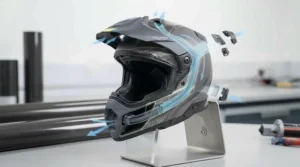
6. Shoei GT-Air 3 — best full-face multi-fibre helmet for long-range comfort
The Shoei GT-Air 3 strikes that rare balance between sporty edge and genuine long-range comfort, and it’s built around Shoei’s AIM+ shell — a multi-composite fibre construction that’s become something of a benchmark in the touring category. What most buyers overlook about this model is how much of the comfort comes not from the shell alone but from the way Shoei pairs it with a genuinely plush, well-vented interior and a neck-roll design that reduces the buffeting that causes fatigue on exposed motorway stretches.
Here’s what to weigh: this is a full-face design rather than modular, so it trades flip-up convenience for a tighter seal, lower wind noise, and — for many riders — a more secure, settled feeling at speed. It carries ECE 22.06 approval and is designed to house intercom systems like the Sena SRL3 seamlessly, avoiding the clunky external mounts that plague cheaper helmets. Reviewers consistently single out the drop-down internal sun shield as optically clearer than most rivals, and the seal around the visor as unusually effective at keeping wind and rain noise down. The trade-off, as with any premium full-face, is the price — and the fact that you lose the practicality of flipping the chin bar up at a fuel stop.
Pros:
- ✅ AIM+ composite shell with class-leading refinement
- ✅ Exceptionally quiet at motorway speeds for a full-face
- ✅ Seamless intercom compatibility for long tours
Cons:
- ❌ No modular flip-front convenience
- ❌ Premium pricing puts it out of budget reach for many
Prices generally sit in the £500-600 range, positioning it firmly as a considered, long-term investment rather than an impulse buy.
7. Shoei Neotec 3 — best premium modular multi-fibre composite helmet
The Shoei Neotec 3 is the helmet most experienced tourers end up recommending to friends, and once you understand why, it’s hard to argue. Built around the same AIM+ multi-composite fibre shell family as the GT-Air 3, it’s lighter than you’d expect from a modular lid — particularly impressive given how sturdy the chin-bar mechanism feels in the hand. The fully integrated internal sun visor is smooth and well-positioned, the ventilation system genuinely moves air rather than just ticking a spec-sheet box, and the interior padding is about as premium as helmet linings get.
Critically for UK riders, it carries ECE 22.06 dual homologation, meaning it’s approved for use both open and closed — not every modular helmet on the market can say that. On paper this means genuine flexibility: ride with the chin bar down on the motorway, flip it up at a fuel stop or in slow traffic, all within the same certified helmet. Wind noise is notably low for a modular design, making long stretches genuinely bearable rather than merely tolerable. Reviewers consistently rank it among the quietest modular helmets available, and Sena SRL3 integration is available as an option for riders wanting clean, clutter-free intercom. The catch, unsurprisingly, is cost — this sits at the top of the composite touring market.
Pros:
- ✅ Dual-homologated for open and closed riding
- ✅ Among the quietest modular helmets on the market
- ✅ Premium interior and refined chin-bar mechanism
Cons:
- ❌ Sits at the very top of the composite price ladder
- ❌ Modular mechanism adds weight versus fixed full-face rivals
Expect to pay somewhere in the £650-780 bracket, positioning it as an investment for riders who know they’ll rack up serious annual mileage.
Top 7 Composite Touring Helmets — Full Comparison
| Helmet | Shell Construction | Weight | Best For | Price Range |
|---|---|---|---|---|
| LS2 Challenger II | HPFC composite | ~1,500g | First-time composite buyers | £180-220 |
| Scorpion EXO-1400 Air Carbon | Carbon-reinforced composite | ~1,450g | Feature-hunters on a mid budget | £280-340 |
| Nexx X.WED3 | Glass-fibre composite | ~1,600g | Mixed-surface adventure touring | £280-350 |
| HJC RPHA 91 | Carbon-reinforced composite | ~1,500g | Flip-front convenience seekers | £350-430 |
| AGV K6 S | Carbon-aramid composite | ~1,350g | Commute-to-tour crossover riders | £300-400 |
| Shoei GT-Air 3 | AIM+ composite | ~1,540g | Full-face long-distance purists | £500-600 |
| Shoei Neotec 3 | AIM+ composite | ~1,660g | Serious annual-mileage tourers | £650-780 |
Lay these seven side by side and a pattern emerges: weight doesn’t fall in a straight line with price, because shell engineering and interior design matter as much as raw material. The AGV K6 S, for instance, is lighter than several helmets costing considerably more, which is a useful reminder that “premium” and “lightest” aren’t automatically the same thing. If your priority is pure comfort-per-pound, start your shortlist from the middle of this table rather than assuming the most expensive option automatically wins.
Practical Usage Guide: Getting the Most From Your New Touring Lid
A composite helmet rewards a bit of care in ways a cheap polycarbonate lid doesn’t really notice either way. First 30 days matter: break in the cheek pads gradually rather than cramming the helmet on for an eight-hour ride straight out of the box — most composite touring helmets have firmer, more precisely shaped padding that softens slightly with use, and riders who skip this step often wrongly conclude the fit is wrong when actually it just needs a week of shorter rides first.
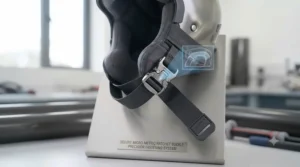
Clean the interior lining regularly if it’s removable — most of the helmets on this list, including the LS2 Challenger II and Shoei GT-Air 3, have washable liners specifically because sweat and road grime degrade foam performance over time, not just the smell. Store the helmet away from direct sunlight and away from petrol fumes when it’s off your head; UV degrades composite resin bonding over years, and petrol vapour can attack certain shell coatings. Check the visor seal and Pinlock insert (if fitted) before any big trip — a fogged visor at 70mph in the rain is a genuinely dangerous distraction, not just an inconvenience. Finally, a common mistake in the first month is over-tightening the chin strap out of habit from an older helmet; composite lids generally fit more precisely around the cheek and jaw, so the strap needs less compensating tension than you might be used to.
✨ Don’t Miss These Exclusive Deals!
🔍 Take your touring kit to the next level with these carefully selected multi-fibre composite helmets. Click through to check current pricing and availability on Amazon.co.uk. The right lid genuinely transforms long-distance riding comfort.
Real-World Scenario: Which Rider Are You?
Picture three riders heading out this summer. First, there’s the weekend warrior — rides 150 miles most Saturdays, occasionally strings together a long bank-holiday loop, budget around £250. The LS2 Challenger II fits this rider well: genuine composite comfort benefits without committing serious money to a helmet used mainly for day trips.
Then there’s the annual big-tour rider — someone who does one serious two-week continental trip a year plus regular weekend riding the rest of the time, comfortable spending £350-450 because the helmet earns its keep across genuinely long days. The HJC RPHA 91 or AGV K6 S both suit this profile, depending on whether flip-front convenience at fuel stops outweighs the slightly tighter seal of a fixed full-face.
Finally, the high-mileage tourer — someone racking up 15,000+ miles a year, much of it multi-day touring, for whom the helmet is essentially a piece of daily-use equipment rather than an occasional purchase. For this rider, the Shoei Neotec 3 or GT-Air 3 justify their price through reduced fatigue compounded across hundreds of riding days a year — the kind of saving that’s genuinely hard to appreciate until you’ve done back-to-back nine-hour days in a lesser helmet and felt the difference in your neck by day three.
Composite Shell Layering Explained
Composite shell layering is the actual engineering behind why these helmets cost more than a basic polycarbonate lid — and it’s worth understanding rather than just taking on faith. Most multi-fibre composite helmets build their shell from alternating layers: a fibreglass base for tensile strength and cost efficiency, aramid fibre woven through for tear resistance and impact spreading, and — in the pricier models like the Scorpion EXO-1400 Air Carbon and HJC RPHA 91 — a carbon fibre layer for additional stiffness at minimal added weight. These layers are bonded with resin under heat and pressure, and the number and arrangement of layers is exactly what separates a £200 composite lid from a £700 one.
What most buyers overlook is that more layers doesn’t automatically mean “safer” in a way SHARP’s testing can measure — every helmet on this list already clears the ECE 22.06 minimum required for UK roads. What extra layering actually buys you is weight reduction and shell stiffness distributed more evenly, which matters more for comfort and fatigue than for baseline crash protection. Shoei’s AIM+ construction, used in both the GT-Air 3 and Neotec 3, is a good example: it’s not “more layers equals more safety,” it’s a specific, patented layering geometry engineered to flex predictably under impact while staying light enough to wear all day. Reviewers and independent testers alike tend to describe the practical difference as felt more in hour six of a ride than in a crash-test lab.
How to Choose a Multi-Fibre Helmet for Touring
Choosing the right multi-fibre helmet for touring comes down to matching shell construction, fit, and features to how you actually ride. Here’s a practical, step-by-step approach:
- Confirm ECE 22.06 certification first. This is non-negotiable on UK roads, and it’s the baseline every helmet on this list clears — never compromise on this to save money.
- Match shell type to your riding style. Fixed full-face composites like the Shoei GT-Air 3 suit committed long-distance riders; modular options like the Neotec 3 or RPHA 91 suit anyone who values flip-front convenience at stops.
- Try before you buy wherever possible. Head shape varies enormously between brands — an Arai-shaped head can feel wrong in a Shoei, and vice versa — so a well-reviewed helmet that doesn’t fit your head shape is the wrong helmet for you specifically.
- Weigh it in your hands, not just on paper. A 150-gramme difference sounds trivial until you’re wearing it for nine hours; ask to hold two helmets side by side if you’re torn between models.
- Check ventilation position, not just vent count. More vents isn’t automatically better — position relative to your riding posture (upright tourer versus sportier lean) determines whether airflow actually reaches you.
- Consider intercom compatibility early. Retrofitting comms to a helmet not designed for it is fiddly and can compromise the seal; helmets like the GT-Air 3 are engineered around specific Sena units from the outset.
- Budget for the whole kit, not just the helmet. A brilliant £600 helmet paired with a poorly fitted jacket collar will still let wind noise and draughts in — think about the system, not just the single item.
Common Mistakes When Buying a Composite Touring Helmet
The single most common mistake is buying on brand reputation alone without checking head-shape compatibility — a five-star SHARP-rated helmet that doesn’t suit your head shape will never feel as safe or comfortable as a slightly lower-rated helmet that fits properly, because a loose or pressure-pointed helmet moves in a crash in ways a snug one doesn’t. Second is assuming “composite” automatically means “premium” — as the LS2 Challenger II demonstrates, genuine composite construction now starts well under £250, so overpaying out of a belief that composite always means expensive is a real and avoidable mistake.
Third, riders regularly underestimate how much noise matters over distance; a helmet that feels fine for a 20-minute test ride can become genuinely fatiguing at motorway speed for six hours, so if you can, ask a dealer about noise specifically rather than just fit. Fourth is ignoring the interior lining’s maintenance requirements — composite shells are genuinely durable, but cheap non-washable liners degrade fast and undermine the whole point of buying a premium shell. Finally, plenty of buyers skip checking replacement parts availability, then discover months later that a scratched visor or torn cheek pad for a less common model takes weeks to source — something worth a two-minute check before you commit.
Multi-Fibre Composite vs Polycarbonate: Which Shell Wins for Touring?
| Factor | Multi-Fibre Composite | Polycarbonate |
|---|---|---|
| Typical weight | 1,350g-1,660g | 1,600g-1,900g |
| Typical price | £180-780 | £70-200 |
| Impact spreading | Excellent, engineered layering | Good, meets minimum standard |
| Longevity of shell material | Very good, resists UV/fuel better | Can degrade faster from petrol/UV |
| Best for | Touring, long-distance, multi-day trips | Commuting, short trips, first helmet |
The core trade-off is straightforward: polycarbonate is a genuinely capable, cost-effective material that easily meets the UK’s legal minimum helmet standard, and there’s no shame in choosing it for a first bike or short commutes. But composite construction earns its price premium specifically through the touring use-case — lower weight reduces cumulative neck fatigue, and the resin-bonded layering tends to hold up better against years of UV and petrol exposure than thermoplastic shells. For anyone doing regular multi-day trips, the composite route pays for itself in comfort even if the baseline crash protection, once both meet ECE 22.06, is closer than the price gap might suggest.

Top Composite Helmets Under £300
Not everyone touring seriously needs to spend £500-plus, and it’s worth being upfront: genuinely good composite construction is now accessible well under £300. The LS2 Challenger II is the clearest example on this list, typically priced £180-220 and offering real HPFC composite benefits — lighter weight, better long-day comfort — without premium-brand pricing. The Scorpion EXO-1400 Air Carbon and the standard glass-fibre Nexx X.WED3 both hover close to, and sometimes dip under, the £300 mark depending on retailer and colourway, particularly during seasonal sales.
| Helmet | Typical Price | Shell Type | Best For |
|---|---|---|---|
| LS2 Challenger II | £180-220 | HPFC composite | Absolute best value composite entry |
| Scorpion EXO-1400 Air Carbon | £280-340 | Carbon-reinforced composite | Feature-rich mid-budget touring |
| Nexx X.WED3 (standard) | £280-350 | Glass-fibre composite | Adventure-style touring on a budget |
Reading this table, the honest verdict is that sub-£300 composite helmets genuinely close most of the comfort gap with premium options — you’re mainly sacrificing brand-name refinement, dealer network size, and the last 10-15% of weight saving, not core protection or basic long-day comfort. At the time of research, prices for all three fluctuate with retailer promotions, so it’s always worth checking current pricing rather than assuming the figures above are fixed.
Touring Comfort: What to Expect on Long-Haul Rides
Touring comfort is less about any single spec and more about how weight, ventilation, noise and fit combine over hours rather than minutes. In practice, expect the first two hours of any ride to feel similar across most of these helmets — differences only really surface from hour three onward, when neck fatigue from weight becomes noticeable and when heat build-up inside a poorly vented shell starts to matter. Riders consistently report that helmets in the 1,350-1,550 gramme range — the AGV K6 S, Scorpion EXO-1400 Air Carbon, and HJC RPHA 91 among them — feel dramatically less tiring by the end of a full riding day than helmets pushing past 1,700 grammes, even when the weight difference sounds small on paper.
Noise is the other big factor in touring comfort, and it’s underrated by first-time buyers who focus purely on weight and price. A helmet that seals well around the neck roll and visor edge — as reviewers consistently note of the Shoei GT-Air 3 and Neotec 3 — genuinely reduces the fatigue that comes from your brain constantly processing wind roar for hours on end, even at legal motorway speeds. What the spec sheet won’t tell you is that touring comfort is cumulative: a helmet that feels absolutely fine for the first 90 minutes can become genuinely wearing by hour six, which is exactly why a proper multi-day test — not just a shop try-on — is the only real way to know if a helmet suits your specific touring style.
Long-Term Cost & Maintenance
Thinking about a composite touring helmet purely on sticker price misses most of the picture. A £600 Shoei GT-Air 3 used for genuine annual touring mileage — say 8,000-10,000 miles a year — works out to a fairly modest per-mile cost once you factor in a realistic five-year usable lifespan (helmets should generally be replaced every five years or after any impact, regardless of visible damage). Compare that with buying a £150 budget lid every 18 months because the liner wears out or the shell degrades from petrol exposure, and the total cost of ownership gap narrows considerably.
Maintenance costs matter too. Replacement Pinlock inserts, visors and liners for mainstream brands like Shoei, HJC and AGV tend to be readily available through UK dealers and Amazon.co.uk, keeping ongoing costs predictable. Less mainstream brands can mean longer waits and higher shipping costs for parts, which is worth factoring into the real long-term cost rather than just the up-front price tag. The genuinely honest takeaway: for anyone touring more than a handful of weekends a year, spending more up front on a composite helmet with strong parts availability tends to work out cheaper — and considerably more comfortable — across a five-year ownership window than repeatedly replacing budget lids.
Safety, Regulations & Compliance Guide
Every helmet featured in this guide meets the UK’s current legal requirement, ECE 22.06 certification, which became the mandatory standard for new helmet approvals from January 2024 onward. Helmets certified to the older ECE 22.05 standard remain perfectly legal to wear in the UK, but 22.06 testing incorporates two additional decades of real-world crash research, including more realistic oblique-impact scenarios that better reflect how motorcyclists are actually injured on the road.
Beyond the legal minimum, it’s genuinely worth checking a helmet’s independent SHARP star rating before buying — the UK government-funded Safety Helmet Assessment and Rating Programme tests helmets across multiple impact zones and rates them from one to five stars, going well beyond what the minimum legal standard requires. Not every helmet on this list has been independently SHARP-tested at the time of writing, and where that’s the case, it’s worth checking the current SHARP database yourself before committing, since new ratings are published regularly. Modular helmets specifically also carry a separate latch-reliability score from SHARP, reflecting how consistently the chin-bar lock stays closed under impact — a detail worth checking for anyone considering the HJC RPHA 91 or Shoei Neotec 3.

Frequently Asked Questions
❓ What is a multi-fibre helmet for touring exactly?
❓ Is a composite helmet actually worth the extra cost over polycarbonate?
❓ How long does a multi-fibre composite motorcycle helmet last?
❓ Are cheaper composite helmets under £300 actually safe for touring?
❓ Does a modular multi-fibre helmet compromise safety versus a full-face?
Conclusion
Picking the right multi-fibre helmet for touring really comes down to being honest with yourself about how you actually ride. If you’re doing the occasional long weekend, the LS2 Challenger II delivers genuine composite comfort without straining the budget. If you’re somewhere in the middle — regular weekend riding plus a serious trip or two a year — the AGV K6 S, Scorpion EXO-1400 Air Carbon, or HJC RPHA 91 all earn their keep through the miles. And if touring is less a hobby and more a lifestyle, the Shoei GT-Air 3 and Neotec 3 justify their price through the kind of compounding comfort you only really appreciate on day four of a nine-day trip.
Whichever you choose, don’t skip the fundamentals: ECE 22.06 certification, a proper fit check, and — where possible — an independent SHARP star rating before you commit. The best multi-fibre helmet for touring isn’t necessarily the most expensive one on this list; it’s the one that fits your specific head shape, matches your riding style, and still feels genuinely comfortable after eight hours in the saddle.
✨ Ready to Gear Up for Your Next Big Ride?
🔍 Compare these seven multi-fibre composite touring helmets side by side and check current pricing and availability on Amazon.co.uk before your next trip. The right lid genuinely changes how far — and how comfortably — you can ride.
Recommended for You
- Aramid Composite Helmet vs Fibreglass: 7 Best UK Picks 2026
- Kevlar Motorcycle Helmet: 7 Best Picks & Buying Guide 2026
- Fibreglass Helmet vs Polycarbonate Helmet: 7 Best Picks for 2026
Disclaimer: This article contains affiliate links. As an Amazon Associate, I earn from qualifying purchases. If you purchase products through these links, we may earn a small commission at no additional cost to you.
✨ Found this helpful? Share it with your friends! 💬🤗
