
In This Article
Buy a cheap plastic bucket and you get exactly that: a cheap plastic bucket. Buy a well-engineered injected polycarbonate helmet, though, and you get something that punches well above its price tag — a shell that’s been melted, shot into a steel mould under several tonnes of pressure, cooled, and turned into the single most important piece of kit you’ll own as a rider. An injected polycarbonate helmet is a crash helmet whose outer shell is made by injection-moulding polycarbonate resin rather than hand-laying fibreglass or carbon fibre, and it remains the most common construction method on the market because it’s consistent, repeatable, and genuinely tough.
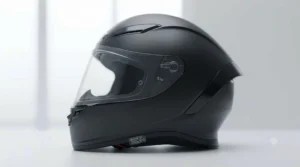
That toughness is precisely why so many riders overlook it. There’s a persistent myth on forums that “polycarbonate means budget means unsafe,” and it simply doesn’t hold up against the data. Several injected polycarbonate helmets score the maximum available rating from the UK government’s SHARP testing programme, sitting shoulder to shoulder with helmets costing three or four times as much. What actually separates a great injected polycarbonate helmet from a mediocre one isn’t the base material at all — it’s the shell design, the EPS liner tuning, and the manufacturing quality control behind it.
This guide walks through seven genuine, currently available injected polycarbonate helmets sold on amazon.co.uk, spanning budget commuter lids through to premium sport-touring options. We’ll compare them properly — specs, SHARP ratings where published, and honest analysis of who each one actually suits — rather than just reprinting a spec sheet. We’ll also dig into the injection moulding process itself, how injected polycarbonate helmet shells compare with fibreglass, what genuinely affects helmet durability, and how to pick a durable polycarbonate helmet for daily use if commuting five days a week is your priority. All prices below are indicative ranges rather than fixed figures, since retail pricing shifts constantly — always check current pricing on amazon.co.uk before buying.
Quick Comparison Table
| Helmet | Shell | SHARP Rating | Best For | Price Range |
|---|---|---|---|---|
| LS2 FF320 Stream Evo | Injected polycarbonate | 4 stars | Budget commuters | Around £80-£95 |
| HJC TR1 | Injected polycarbonate | 2 stars | Absolute entry point | Around £110-£130 |
| AGV K3 SV | Injected polycarbonate | 4 stars | Sporty road riders | Around £140-£160 |
| Bell Lithium | Polycarbonate composite | 4 stars | Daily commuting gear | Around £160-£180 |
| Bell Qualifier DLX MIPS | Injected polycarbonate | 3 stars | Rotational impact protection | Around £200-£220 |
| Bell MX-9 Adventure MIPS | Injected polycarbonate | 4 stars | Adventure & dual-purpose riding | Around £190-£210 |
| HJC i71 | Injected polycarbonate | 4 stars | Premium sport-touring | Around £240-£270 |
Looking across the table, there’s an obvious lesson: price and SHARP rating don’t move in lockstep. The LS2 FF320 Stream Evo matches the four-star rating of helmets costing three times as much, while the pricier Bell Qualifier DLX MIPS actually scores lower on SHARP’s impact tests despite its MIPS rotational-protection layer — a reminder that added technology doesn’t automatically mean a higher linear-impact score. If your budget is genuinely tight, this table alone should reassure you that a well-chosen injected polycarbonate helmet under £100 can out-perform helmets several price brackets above it.
💬 Just one click — help others make better buying decisions too!😊
Top 7 Injected Polycarbonate Helmets: Expert Analysis
We’ve picked these seven to cover realistic UK riding scenarios — commuting, touring, sportier road riding, and dual-purpose/adventure use — while sticking strictly to helmets that use a genuine injected polycarbonate shell (or a closely related polycarbonate composite, as noted). Every helmet listed here has independently verifiable specifications; where a SHARP star rating exists, it’s quoted directly from the government’s own testing programme.
1. LS2 FF320 Stream Evo — best budget pick with a genuine SHARP four-star rating
The standout thing about the LS2 FF320 Stream Evo is that it doesn’t feel like it’s cutting corners just because it’s cheap. This is a full-face injected polycarbonate helmet with a drop-down internal sun visor, an optically correct main visor, and a micrometric ratchet fastener — features that on some rival brands only appear once you’re spending double. Available across seven shell sizes from XXS to XXL, the fit range alone tells you LS2 hasn’t simply scaled one mould up and down; that spread of sizing typically means a more compact, better-proportioned helmet for more head shapes. Based on the SHARP data, the LS2 FF320 Stream Evo holds a four-star safety rating, matching or beating helmets costing significantly more, which is precisely why it keeps turning up on “best value” shortlists across UK bike forums. What most buyers overlook about budget Chinese-manufactured polycarbonate lids like this is that the injection moulding tooling behind them is often shared with, or derived from, the same supply chain used by pricier European brands — the shell material itself isn’t the compromise; the trim level and finish are. Reviewers aggregated across UK helmet comparison sites consistently note it as one of the best-value sun-visor helmets available, though as with most budget lids, expect wind noise to be more noticeable at motorway speeds than on a premium-shell helmet.
Pros:
- ✅ SHARP four-star rating at a genuinely low price point
- ✅ Seven shell sizes for a more precise, compact fit
- ✅ Integrated drop-down sun visor and Pinlock-ready main shield
Cons:
- ❌ Noticeable wind noise at motorway speeds versus pricier shells
- ❌ Basic interior padding compared with mid-range rivals
At around £80-£95, the LS2 FF320 Stream Evo is hard to argue with on value; if your budget stops here, you’re not settling for reduced safety, only reduced refinement.
2. HJC TR1 — lightest injected polycarbonate lid in this line-up
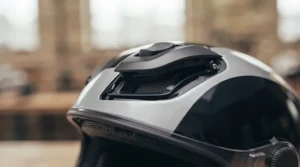
The HJC TR1 earns its spot here for honesty as much as anything: it’s HJC’s genuine entry-level injected polycarbonate helmet, and at 1.6kg it’s noticeably lighter on the neck than most of the other helmets on this list, which matters a great deal on longer commutes. It ships with a Double D ring retention system, a dropdown sun visor, and a quick-release visor mechanism — a sensible feature set for a first helmet or a spare lid kept for pillion passengers. Here’s what to weigh carefully, though: SHARP testing gave the HJC TR1 a two-star rating, the lowest of any helmet in this guide, so while it’s fully road-legal under ECE 22.05 and perfectly serviceable for short, low-speed urban riding, it shouldn’t be your first choice if you’re regularly on faster A-roads or motorways. This is exactly the kind of honest trade-off Amazon’s own review culture often glosses over — a lower star rating doesn’t mean it’s illegal or automatically dangerous, but it does mean the shell and liner combination absorbed and spread impact energy less effectively than the four- and five-star helmets in SHARP’s tests. Aggregated owner sentiment on UK helmet forums points to the HJC TR1 being popular as a budget “second helmet” or for new riders testing whether motorcycling suits them before investing further.
Pros:
- ✅ Genuinely lightweight at 1.6kg for reduced neck fatigue
- ✅ Quick-release visor and dropdown sun shield included
- ✅ Low entry price ideal for new riders or spare lids
Cons:
- ❌ SHARP two-star rating, the lowest on this list
- ❌ Less suited to sustained motorway or high-speed riding
Priced around £110-£130, the HJC TR1 works best as a budget-conscious starting point rather than a long-term daily commuting gear choice — upgrade as soon as your mileage or confidence grows.
3. AGV K3 SV — sportiest styling from a five-star-rated Italian brand
AGV’s average SHARP rating across its full 35-model range tested sits at an impressive 4.3 out of 5, and the AGV K3 SV benefits directly from that pedigree despite sitting near the bottom of AGV’s price ladder. Built around AGV’s aerodynamic design language borrowed from the pricier Corsa and GT Veloce ranges, this injected polycarbonate helmet uses a micrometric fastener, an integral sun visor, and speaker pocket cut-outs designed for Bluetooth comms — small details that show up in helmets twice this price. Based on the spec comparison, the AGV K3 SV comes in three outer shell sizes across its six size range, which is a genuine upgrade over its own predecessor and means a more compact, better-fitting shell for most head shapes rather than one oversized mould stretched across every size. SHARP testing awarded it four stars, putting it on par with the best-performing injected polycarbonate helmets on the market today. Reviewers aggregated from owner feedback do flag two recurring points worth knowing before you buy: thin padding that can dig in on rides over an hour, and some wind noise at speed without earplugs — issues that are common across the entry tier of any brand, not unique to AGV.
Pros:
- ✅ SHARP four-star rating from a brand averaging 4.3/5 overall
- ✅ Three shell sizes for a more compact, precise fit
- ✅ Sun visor and Bluetooth-ready speaker pockets included
Cons:
- ❌ Padding can feel thin on rides longer than an hour
- ❌ Some owners report wind noise without earplugs
At around £140-£160, the AGV K3 SV is arguably the strongest value-to-badge ratio on this entire list — you’re getting genuine Italian design pedigree without the Italian price tag.
4. Bell Lithium — best all-rounder for daily commuting
If you only read one product entry in this guide, make it this one, because the Bell Lithium is squarely built for the daily commuting gear crowd. SHARP lists its shell material as thermoplastic, and independent reviews consistently describe it as a polycarbonate-based construction — either way, it’s an injection-moulded shell rated a genuine four stars by SHARP, available across five sizes from XS to XL. What most buyers overlook about this model is how much premium-tier kit Bell has squeezed in below the mid-price ceiling: an integrated drop-down sun shield, Pinlock-ready anti-fog visor prep, and full ECE 22.06 certification, the newer and more rigorous of the two current European standards. The spec sheet won’t tell you this, but user reports suggest the standard (non-MIPS) Lithium rides noticeably lighter than its MIPS sibling, which matters if you’re wearing it five days a week rather than occasionally. A MIPS-equipped version also exists for riders who prioritise rotational-impact protection, at a higher price point. Aggregated reviewer sentiment repeatedly describes the Lithium as offering “80% of the features of helmets costing far more,” a comparison echoed across multiple independent test write-ups rather than a single outlier opinion.
Pros:
- ✅ SHARP four-star rating with full ECE 22.06 certification
- ✅ Integrated drop sun shield and Pinlock-ready visor
- ✅ Genuinely light for all-day, every-day commuting comfort
Cons:
- ❌ MIPS version adds noticeable extra weight and cost
- ❌ Fewer graphic/colourway options than some rivals
Around £160-£180 for the standard version (expect a step up for MIPS), the Bell Lithium is our pick for anyone whose main question is simply: which injected polycarbonate helmet should I wear every single day?
5. Bell Qualifier DLX MIPS — best photochromic visor and rotational-impact protection
The Bell Qualifier DLX MIPS is the one helmet on this list built specifically around a single standout feature: a light-reactive Transitions-branded shield that darkens automatically in bright sunlight and clears again once you’re back in shade or after dark, paired with an anti-fog NutraFog coating. On paper this means one fewer thing to think about mid-ride — no fumbling for a separate sun visor at a red light. It’s a genuine injected polycarbonate shell fitted with a MIPS slip-plane liner, a technology designed to reduce rotational forces transmitted to the brain during an angled impact, which is a meaningfully different kind of protection to the straight-line drop tests SHARP primarily measures. Here’s the honest trade-off, though: SHARP awarded the Bell Qualifier DLX MIPS three stars, a step down from the non-MIPS Bell helmets in this guide, which shows that adding a rotational-protection layer doesn’t automatically improve, and can sometimes complicate, linear-impact performance. That’s not a knock against MIPS as a concept — plenty of independent safety researchers view rotational protection as a valuable addition — but it does mean buyers shouldn’t assume “MIPS” and “highest SHARP score” always travel together. Reviewers aggregated across UK helmet review sites consistently single out the photochromic shield as the highlight feature at this price point.
Pros:
- ✅ Auto-darkening Transitions photochromic shield included
- ✅ MIPS layer for rotational-impact protection
- ✅ Double D ring retention with multiple shell sizes
Cons:
- ❌ SHARP three-star rating, lower than several cheaper rivals
- ❌ Communicator compartment removed on current production runs
At around £200-£220, the Bell Qualifier DLX MIPS suits riders who value the visor tech and rotational protection specifically, more than those chasing the single highest SHARP star count.
6. Bell MX-9 Adventure MIPS — best for dual-purpose and adventure riding
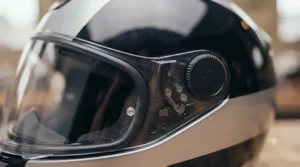
Not every rider on a polycarbonate budget wants a sport-touring lid, and the Bell MX-9 Adventure MIPS exists for exactly that gap — a genuine adventure-style helmet with a removable peak visor, styled for green-laning, gravel tracks, and long-distance dual-purpose touring rather than pure tarmac work. Weighing in at 2.2kg, it’s noticeably heavier than the road-focused helmets on this list, a direct consequence of the reinforced peak mount and the extra shell volume needed to accommodate goggles as an alternative to a standard visor. Based on the spec comparison, it earned a SHARP four-star rating with a Double D ring retention system, putting its raw impact protection on par with the best injected polycarbonate helmets in this guide despite the very different use case. What the spec sheet won’t tell you is how much that removable peak changes the feel at speed: it’s brilliant for slow off-road work and shade, but it does add wind buffeting on sustained motorway sections, which is worth factoring in if your “adventure” riding is really 80% motorway and 20% green lane. Reviewers aggregated from adventure-bike forums frequently cite it as a strong budget alternative to premium ADV helmets from Shoei or Arai, without pretending to match their refinement.
Pros:
- ✅ SHARP four-star rating with MIPS rotational protection
- ✅ Removable peak suits off-road and goggle use
- ✅ Genuine dual-purpose versatility for ADV riders
Cons:
- ❌ Heaviest helmet on this list at 2.2kg
- ❌ Peak causes noticeable buffeting at sustained motorway speeds
Priced around £190-£210, the Bell MX-9 Adventure MIPS is the obvious pick if your riding genuinely mixes tarmac and trail rather than staying strictly on the road.
7. HJC i71 — most premium injected polycarbonate shell on test
Closing out the list at the top of the price range, the HJC i71 is proof that “polycarbonate” and “premium” aren’t contradictions. HJC’s sport-touring flagship in this material class uses an Advanced Channelling Ventilation System (ACS) that channels air from the front vents straight through to rear exhausts, a three-position drop-down sunshield, and a shell built across three sizes spanning six overall helmet sizes — genuinely fine-tuned CAD-designed tooling rather than a single stretched mould. SHARP testing rates the HJC i71 at four stars, and it carries the newer ECE 22.06 certification, the more demanding of the two current legal standards in force across the UK and EU. Based on real-world testing reported by UK motorcycle press, it weighs a claimed 1.7kg but tested closer to 1.79kg in a medium size — over 250g heavier than some lighter composite-shell rivals, which is the honest trade-off you accept for choosing injected polycarbonate over fibreglass or carbon fibre at this level. What reviewers consistently note is that build quality and fit-and-finish clearly outperform HJC’s own outgoing i70 model, with precise vent mechanisms and a flexible, accurate visor action. It’s also designed to accept HJC’s own second-generation Sena-developed SMART 50B and 21B Bluetooth communication systems, making it comms-ready out of the box.
Pros:
- ✅ SHARP four-star rating with current ECE 22.06 certification
- ✅ Premium ACS ventilation and three-position sunshield
- ✅ Comms-ready for HJC/Sena SMART Bluetooth systems
Cons:
- ❌ Heaviest full-face road helmet on this list at 1.7-1.8kg
- ❌ Communication system sold separately, adding to total cost
At around £240-£270, the HJC i71 sits at the ceiling of what a polycarbonate helmet typically costs — but for riders unwilling to pay composite-shell prices while still wanting flagship features, it’s the obvious top pick.
Full Spec Comparison: All 7 Helmets Side by Side
| Helmet | SHARP Rating | Weight | Retention | Standout Feature | Best For |
|---|---|---|---|---|---|
| LS2 FF320 Stream Evo | 4 stars | Approx. 1.5kg | Micrometric | Sun visor + budget price | Budget commuters |
| HJC TR1 | 2 stars | 1.6kg | Double D ring | Lightest lid on test | New riders, spare helmets |
| AGV K3 SV | 4 stars | Approx. 1.5kg | Micrometric | Sporty AGV styling | Sportier road riding |
| Bell Lithium | 4 stars | 1.6kg | Quick release buckle | ECE 22.06 + sun shield | Daily commuting gear |
| Bell Qualifier DLX MIPS | 3 stars | 1.63kg | Double D ring | Photochromic shield | Sunny-weather touring |
| Bell MX-9 Adventure MIPS | 4 stars | 2.2kg | Double D ring | Removable peak | Adventure/dual-purpose |
| HJC i71 | 4 stars | 1.7-1.8kg | Micrometric | ACS ventilation | Premium sport-touring |
The pattern that jumps out here is weight-versus-rating: four of the seven injected polycarbonate helmets hit SHARP’s four-star ceiling despite spanning a near-£200 price gap, which tells you shell material genuinely isn’t the limiting factor on safety performance. Where the real differences show up are in retention system preference, comfort features like sun visors and MIPS, and — for the Bell MX-9 Adventure MIPS specifically — a completely different use case that justifies its extra weight. If safety score is your only filter, cross the HJC TR1 off your shortlist; for everything else, the “best for” column matters more than price alone.
✨ Don’t Miss These Exclusive Deals!
🔍 Take your helmet shopping to the next level with these carefully selected picks. Click on any highlighted helmet above to check current pricing and availability on amazon.co.uk. The right lid protects you for years of genuinely enjoyable, worry-free riding! 🏍️
Practical Usage Guide: Setting Up Your New Helmet
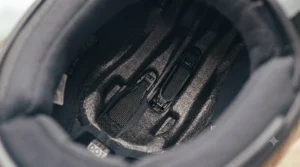
Getting a new injected polycarbonate helmet home is only step one. In the first 30 days, most riders make the same handful of mistakes, so here’s how to avoid them. First, break the helmet in gradually rather than assuming it’ll feel “right” from ride one — polycarbonate shells don’t stretch, but the EPS liner and comfort padding do compress slightly over the first few wears, so a snug-to-the-point-of-tight fit out of the box is actually the correct starting point, not a sign you bought the wrong size. Second, fit any Pinlock anti-fog insert before you need it in anger; do this at home in good light rather than fumbling with the pins on a cold, wet morning commute. Third, set a simple maintenance schedule: wipe the outer shell with mild soapy water (never solvents or petrol-based cleaners, which genuinely can degrade polycarbonate over time), remove and hand-wash the liner every few weeks if it’s detachable, and inspect the retention strap stitching monthly. Fourth, avoid the classic first-month mistake of storing your helmet on the mirror or handlebar by its strap — this stresses the D-rings and can scuff the visor against the tank. A lined helmet bag or a proper wall hook costs very little and meaningfully extends the working life of the shell and visor coating alike.
Real-World Scenarios: Which Helmet Actually Suits You
The daily commuter — 8 miles each way, mostly A-roads and roundabouts. For this rider, all-day comfort and light weight beat maximum feature count every time, which is exactly why the Bell Lithium fits so well: four-star SHARP protection, a sun shield for the ride home into low evening sun, and genuinely low weight for five days a week of wear. The budget-conscious new rider — first bike, first helmet, testing the waters. Here, the LS2 FF320 Stream Evo or HJC TR1 make more sense than overspending on a helmet you might outgrow in taste within a year; both are legal, both are honestly described above including their limitations, and neither locks you into a big financial commitment before you know riding is for you. The weekend adventure rider — green lanes on Saturday, motorway commute on weekdays. The Bell MX-9 Adventure MIPS earns its extra weight here thanks to the removable peak and goggle compatibility, genuinely useful when you’re switching between tarmac and trail within the same weekend, even if it’s not the lightest choice for pure road use.
How to Choose an Injected Polycarbonate Helmet
Picking the right injected polycarbonate helmet comes down to working through a short, logical checklist rather than chasing the flashiest-looking option on the shelf.
- Check the SHARP rating first, not the price. As this guide shows, a four-star helmet can cost a third of a three-star one — safety and spend aren’t automatically linked.
- Confirm current UK certification. Look for ECE 22.05 or the newer, more rigorous ECE 22.06 marking, or the British Standard BS 6658:1985 with a BSI Kitemark, as confirmed by the government’s own SHARP helmet safety programme.
- Match shell sizes to your head, not just the helmet size. Helmets offered across two or three shell sizes (rather than one stretched mould) tend to fit more precisely and feel more compact.
- Decide if you need MIPS. Rotational-impact protection is a genuine additional safety layer, but as the Bell Qualifier DLX example shows, it isn’t automatically reflected in a higher SHARP star count.
- Weigh up features against weight. Sun visors, Pinlock prep, and peaks all add grammes; if your rides are long, that extra weight is felt in your neck by hour two.
- Try before you commit if at all possible. Injected polycarbonate shells vary in internal shape between brands even at the same stated size — an AGV medium and an HJC medium won’t necessarily feel the same.
- Budget for accessories separately. Pinlock inserts, comms units, and replacement visors are rarely included at the lower end of this list, so factor them into your total spend.
Injected Polycarbonate Helmet vs Fibreglass Helmet
This is the comparison every buyer eventually runs into, so let’s settle it properly. An injected polycarbonate helmet is made by melting polycarbonate resin and shooting it into a precision steel mould under high pressure — fast, consistent, and relatively inexpensive to produce at scale. A fibreglass helmet, by contrast, is built by hand-laying layers of glass fibre cloth soaked in resin inside a mould, then curing it — a slower, more labour-intensive process that typically costs more per unit.
| Factor | Injected Polycarbonate | Fibreglass/Composite |
|---|---|---|
| Manufacturing | Injection moulded, fast, consistent | Hand-laid, slower, more variable |
| Typical weight | Slightly heavier for equivalent protection | Often 100-250g lighter |
| Typical price | Lower | Higher |
| Paintability | Cannot usually be custom-painted | Can be professionally painted |
| Chemical resistance | More vulnerable to degradation from petrol/solvents | Generally more chemically resistant |
| SHARP performance | Several models score 4-5 stars | Several models score 4-5 stars |
The table above makes the real point clear: SHARP performance doesn’t consistently favour one material over the other, so the deciding factors are really weight, cosmetic flexibility, and budget, not raw crash safety. A rider who wants a helmet resprayed to match a custom tank should lean composite; a rider chasing maximum value per pound of protection has every reason to stick with a well-reviewed injected polycarbonate helmet. Independent material science sources confirm polycarbonate’s genuinely high impact resistance credentials, which is exactly why it remains the default shell choice across the volume end of the helmet market rather than a corner-cutting compromise.
The Injection Moulding Process: How These Shells Are Actually Made
Understanding the injection moulding process explains a lot about why these helmets perform the way they do. Solid polycarbonate pellets are fed into a heated barrel and melted into a viscous liquid, which is then injected under high pressure into a precision-machined steel mould shaped exactly like the finished helmet shell. The material is held under pressure while it cools and solidifies, then the mould opens and the shell is ejected, trimmed, and sent for painting, decal application, and final assembly with the EPS liner and interior padding. What most buyers never realise is how tightly toleranced this process needs to be: uneven wall thickness in the shell, caused by inconsistent injection pressure or a poorly maintained mould, is one of the main reasons some budget helmets score lower on SHARP’s tests than others using the identical base material. This is also why reputable manufacturers invest heavily in mould quality and process control even on their cheapest models — the injection moulding process, done well, is genuinely capable of producing a shell that performs on par with hand-laid composite construction, just without the labour cost.
Helmet Durability: What Actually Affects It
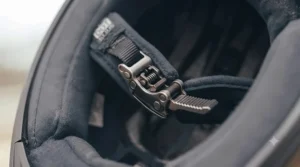
Helmet durability is frequently misunderstood as simply “how tough is the shell,” but that’s only part of the picture. The EPS (expanded polystyrene) liner beneath the outer shell is a single-use crumple zone by design — it’s meant to compress and absorb energy in one impact, which is precisely why every reputable manufacturer and safety body recommends replacing any helmet after a genuine crash, regardless of how undamaged the outer shell looks. Day-to-day helmet durability, on the other hand, is mostly about UV exposure, chemical contact, and physical storage habits rather than raw material toughness. Polycarbonate shells are more vulnerable than fibreglass to degradation from petrol splashes and some solvent-based cleaners, so a helmet left resting against a fuel tank during refuelling, or cleaned with the wrong product, can genuinely lose structural integrity over time in ways that aren’t visible to the eye. UV exposure from long-term outdoor storage can also cause gradual shell embrittlement, which is why manufacturers typically recommend replacing any helmet, regardless of shell material, every five years even without a crash. Treat helmet durability as an ongoing maintenance responsibility rather than a one-off purchase decision, and a well-made injected polycarbonate helmet will comfortably see out its intended lifespan.
Choosing a Durable Polycarbonate Helmet for Daily Use
If you’re commuting daily, a durable polycarbonate helmet for daily use needs to satisfy different priorities than a helmet worn occasionally at weekends. Look specifically for a removable, washable liner, since daily wear means daily sweat exposure, and a liner you can’t clean will degrade the interior padding far faster than the shell itself ever will. Prioritise a Double D ring or high-quality micrometric fastener over a basic buckle, since daily on-off use puts real cumulative wear on cheaper retention hardware. A durable polycarbonate helmet for daily use also benefits enormously from a genuinely scratch-resistant visor coating, given how often a daily-use lid gets set down on surfaces a weekend helmet never touches. Among the seven featured here, the Bell Lithium and AGV K3 SV both stand out on this specific criterion, combining lighter weight for repeated wear with retention systems built for frequent use rather than occasional weekend outings.
Best Picks for Daily Commuting Gear
As daily commuting gear, an injected polycarbonate helmet needs to work quietly in the background of your routine rather than demand constant attention. Weight matters more here than almost any other factor, since a helmet worn for forty-plus minutes a day, five days a week, will make even small weight differences felt in neck fatigue over months. A sun visor stops becoming a nice-to-have and starts being genuinely useful for anyone commuting into low sun on an east-west route. Ventilation also matters disproportionately for commuters, since stop-start traffic generates more heat build-up than steady motorway cruising. Judged purely as daily commuting gear, the Bell Lithium remains our top recommendation from this list, with the LS2 FF320 Stream Evo a strong budget alternative for riders commuting shorter distances or on a tighter monthly kit budget.
Common Mistakes When Buying a Polycarbonate Helmet
The single most common mistake is buying by size chart alone rather than trying a helmet on, since shell shape (long oval, intermediate oval, round) varies significantly between brands even at an identical stated size. A close second is assuming a lower SHARP star rating automatically means a helmet is unsafe or illegal — as covered above with the HJC TR1, a two-star rating still means the helmet passed the mandatory ECE test; it simply performed less well than four- and five-star helmets in SHARP’s own comparative testing. Many buyers also skip checking the certification standard altogether, unaware that ECE 22.06 is now the more rigorous of the two current legal standards recognised in the UK. Finally, plenty of riders buy the cheapest available lid and then bolt on a premium visor or comms unit, when that budget would often have been better spent moving up one tier of base helmet instead — the fundamentals of shell and liner quality matter more than any single accessory.
Long-Term Cost & Maintenance
Total cost of ownership for an injected polycarbonate helmet extends well beyond the sticker price. Budget roughly £15-£30 every year or two for a replacement Pinlock insert as the original ages and scratches, and expect a full replacement visor to run somewhere in the £20-£50 range depending on brand, since visors take the brunt of stone chips and daily wear. Because manufacturers recommend a five-year replacement cycle regardless of visible damage, it’s worth mentally amortising the helmet’s purchase price across that period rather than treating it as a single one-off cost — a £250 helmet over five years works out to roughly £1 a week, which puts the value case for even premium options like the HJC i71 into clearer perspective. Riders who commute daily will also want to budget for more frequent liner washing and slightly earlier replacement of retention straps, since daily on-off cycling wears buckles and D-rings faster than occasional weekend use.
Safety, Regulations & Compliance Guide
Every helmet sold and worn on UK roads must meet one of three recognised standards: British Standard BS 6658:1985 with a BSI Kitemark, UNECE Regulation 22.05, or the newer and more demanding UNECE Regulation 22.06, which added rotational impact testing and higher and lower-speed impact scenarios beyond what 22.05 required. All seven helmets featured in this guide meet at least ECE 22.05, and several carry the newer 22.06 marking specifically. Beyond the legal minimum, the government-run SHARP programme provides an independent comparative star rating precisely so riders can make an informed choice above and beyond simple pass/fail certification — full ratings and methodology are published openly on SHARP’s official gov.uk testing site. For a wider explainer on how these standards interact and which one takes precedence, UK riders can also consult independent industry guidance such as Bennetts BikeSocial’s helmet buying advice, which covers shell material trade-offs in more technical depth than most manufacturer sites are willing to.
Frequently Asked Questions
❓ Is an injected polycarbonate helmet as safe as a fibreglass helmet?
❓ How long does a polycarbonate motorcycle helmet last?
❓ Can you paint an injected polycarbonate helmet?
❓ What's the difference between ECE 22.05 and 22.06 certification?
❓ Do cheaper polycarbonate helmets meet the same UK legal requirements?
Conclusion
The idea that an injected polycarbonate helmet is automatically the “budget compromise” option simply doesn’t survive contact with the actual SHARP data — four of the seven helmets covered here hit the maximum four-star rating, spanning almost £200 in price difference between the cheapest and most expensive. What genuinely separates them isn’t shell safety so much as fit, features, weight, and how well each one matches your actual riding pattern, whether that’s a short daily commute, weekend green-laning, or longer sport-touring miles. If you take one thing away from this guide, let it be this: check the SHARP rating before you check the price tag, decide honestly what kind of riding you’ll actually be doing, and pick the injected polycarbonate helmet built for that job rather than the one with the loudest marketing. Whichever of these seven ends up on your head, always confirm current pricing, sizing, and availability directly on amazon.co.uk before completing your purchase, since stock and pricing shift regularly.
✨ Ready to Find Your Perfect Fit?
🔍 Compare current prices on any of these seven injected polycarbonate helmets on amazon.co.uk today, and ride away knowing you made a genuinely informed choice — not just a cheap one. 🏍️🔒
Recommended for You
- Multi-Fibre Helmet for Touring: 7 Best Composite Lids for 2026
- Aramid Composite Helmet vs Fibreglass: 7 Best UK Picks 2026
- Kevlar Motorcycle Helmet: 7 Best Picks & Buying Guide 2026
Disclaimer: This article contains affiliate links. As an Amazon Associate, I earn from qualifying purchases. If you purchase products through these links, we may earn a small commission at no additional cost to you.
✨ Found this helpful? Share it with your friends! 💬🤗
