In This Article
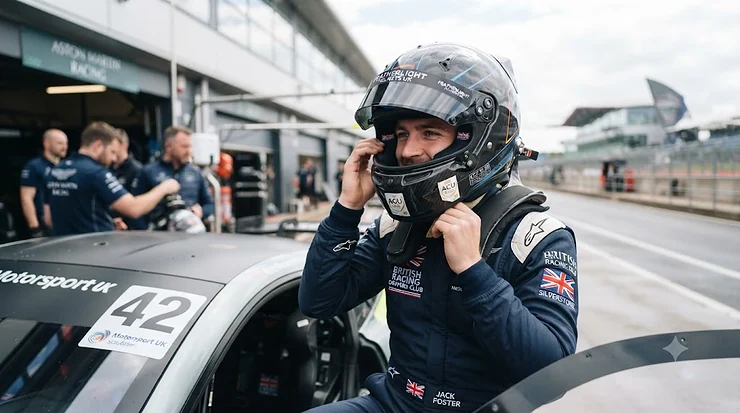
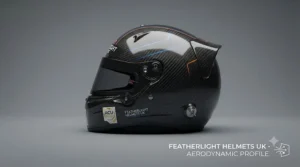
Neck ache at the end of a track day isn’t a badge of honour — it’s usually a sign your lid weighs more than it should. A featherlight racing helmet solves that problem at the source: shave 200-300 grams off your head and every high-speed direction change, every hard braking zone, every long straight tucked in behind the screen gets noticeably easier on your neck and shoulders. That’s not marketing fluff, either — it’s basic physics, since a lighter helmet reduces the rotational forces your neck muscles have to fight against every time you turn your head at speed.
This guide cuts through the spec-sheet noise. We’ve dug into real manufacturer data, independent scale tests, and aggregated rider feedback to line up seven genuine featherlight racing helmet options, from budget-friendly circuit starters to full MotoGP-pedigree flagships. You’ll see actual weights (not just claimed figures), current UK certification status, honest pros and cons, and a proper breakdown of what race helmet certification actually means before you hand over your card details. According to the UK’s government-funded SHARP helmet safety scheme, roughly 80% of motorcyclist fatalities involve head injuries — so getting this purchase right matters more than almost anything else in your kit bag.
Whether you’re chasing your first ACU Gold sticker for a novice track day or upgrading to something with genuine MotoGP-derived aerodynamics, there’s a helmet on this list built for you. Let’s get into it.
Quick Comparison Table
| Helmet | Weight (approx.) | Certification | Price Range | Best For |
|---|---|---|---|---|
| Caberg Drift Evo II Carbon | 1,300-1,400g | ECE 22.06, ACU Gold | £230-£290 | Budget track-day starters |
| AGV K6 S | 1,225-1,255g | ECE 22.06, DOT | £230-£460 | All-round featherlight performance |
| Scorpion EXO-1400 Carbon Air | 1,200-1,260g | ECE 22.05, ACU Gold | £250-£350 | Lightest overall weight |
| HJC RPHA 11 Carbon | 1,250-1,340g | ECE 22.05, ACU Gold | £350-£500 | Ventilation-focused track riders |
| Nolan X-804 RS Ultra Carbon | 1,250-1,460g | ECE 22.06 | £350-£450 | Adjustable, dialled-in fit |
| Shark Aeron GP FIM 2 | 1,410-1,490g | FIM 02, ECE 22.06 | £650-£1,000+ | Serious racers, adaptive aero |
| Shoei X-SPR Pro | 1,442g | ECE 22.06, FIM | £700-£820 | Flagship MotoGP-grade performance |
Looking at the spread above, the Scorpion EXO-1400 Carbon Air and AGV K6 S genuinely compete on weight with helmets costing hundreds more, which is why they anchor the value end of this list. Meanwhile the Shark Aeron GP FIM 2 and Shoei X-SPR Pro trade a little extra mass for dual road-and-race homologation and genuinely race-derived aerodynamics — a fair swap if you’re chasing lap times rather than pence. Budget-conscious riders should note that price doesn’t map neatly onto weight here; the Caberg Drift Evo II Carbon proves you don’t need a four-figure budget to get ACU Gold approval and a sub-1,400g shell.
💬 Just one click — help others make better buying decisions too! 😊
Top 7 Featherlight Racing Helmets: Expert Analysis
1. Caberg Drift Evo II Carbon — best value ACU Gold track helmet
The Caberg Drift Evo II Carbon proves that a sub-£300 helmet can still carry a genuine racing pedigree. Its carbon-and-fibreglass shell comes in two sizes (small: XS-M, large: L-XXL), weighing approximately 1,300-1,400g depending on shell size, and it’s ECE 22.06 approved — the current, tougher European standard that adds rotational-impact testing on top of the older linear tests.
Based on the spec comparison against pricier rivals, what stands out here is the integrated sunshade visor and included Pinlock MaxVision anti-fog lens, both usually reserved for helmets £100-£150 more expensive. The rear spoiler and double-D ring fastening (the racing-preferred closure system) show this was genuinely developed with circuit use in mind, not bolted on as an afterthought. Reviewers consistently note the fit feels secure and doesn’t loosen up over long track sessions, though a small number mention the padding needs a short break-in period.
Pros:
- ✅ ACU Gold approved for UK track days out of the box
- ✅ Integrated drop-down sun visor at a budget price point
- ✅ Pinlock anti-fog lens included, not sold separately
Cons:
- ❌ Fewer colour and graphic options than premium rivals
- ❌ Smaller UK dealer network for spare parts and visors
At around £230-£290 depending on colourway, the Caberg Drift Evo II Carbon represents outstanding value for riders taking their first steps into circuit riding without wanting to gamble £500+ on an unfamiliar discipline.
2. AGV K6 S — best all-round featherlight racing helmet
Built using construction techniques AGV developed for its MotoGP programme, the AGV K6 S is widely regarded as one of the lightest full-face road-legal helmets available anywhere, with a carbon-aramid shell weighing approximately 1,225-1,255g depending on size. That’s genuinely competitive with helmets costing three times as much.
What most buyers overlook about this model is how much the weight distribution matters as much as the raw number — AGV’s wind-tunnel testing means the mass sits centred and low, so it doesn’t feel top-heavy even at motorway speeds. The integrated rear spoiler and aerodynamic shell shape were lifted almost directly from AGV’s MotoGP development programme, and the 190-degree panoramic visor genuinely widens your peripheral awareness in a race tuck. Aggregated review sentiment is strongly positive on comfort and lightness, though several riders with oval (rather than intermediate-oval) head shapes report the fit runs slightly narrow through the temples, and a handful miss having an internal sun visor.
Pros:
- ✅ Genuinely one of the lightest full-face lids on the market
- ✅ MotoGP-derived aerodynamic shell with integrated rear spoiler
- ✅ Wide 190° field of vision for better track awareness
Cons:
- ❌ Best suited to intermediate-to-long oval head shapes
- ❌ Stock padding is firm and needs a short break-in period
UK pricing runs from around £230 for solid colours up to £460 for special graphics, making the AGV K6 S the helmet we’d point most riders towards first — it balances weight, certification and comfort without demanding a flagship budget.
3. Scorpion EXO-1400 Carbon Air — lightest helmet on test
Independent scale tests have repeatedly shown the Scorpion EXO-1400 Carbon Air beating its own claimed weight, with a medium-sized shell measured at roughly 1,259g against a stated target of 1,200g ±50g — genuinely one of the lightest helmets in this entire list. The carbon shell keeps things featherlight while Scorpion’s Airfit system lets you inflate small bladders in the cheek pads for a bespoke, gap-free fit.
Here’s what the spec sheet won’t tell you: that inflatable fit system does double duty as noise reduction, since a snugger seal around the cheeks cuts down on wind roar at speed. The helmet carries an ACU Gold sticker, meaning it’s cleared for UK track days straight out of the box, and reviewers consistently praise the drop-in dark visor for track use alongside the standard clear one. On the downside, the shell has a noticeably more flexible feel under hand pressure than rivals with harder composite layups, which some experienced riders find disconcerting even though it still passes ECE 22.05 testing comfortably.
Pros:
- ✅ Measured weight often beats the claimed spec sheet figure
- ✅ Airfit inflatable cheek pads customise fit and cut noise
- ✅ ACU Gold sticker fitted for UK circuit use
Cons:
- ❌ Shell flexes more than rigid composite rivals like Arai
- ❌ No published SHARP or Snell safety star rating
Prices typically sit in the £250-£350 range for the carbon version, undercutting most rivals here despite genuinely class-leading weight — a strong pick if raw lightness is your top priority.
4. HJC RPHA 11 Carbon — best ventilation for aggressive track riding
HJC’s flagship sports helmet was, in the brand’s own words, built for the racetrack first and the road second, and the HJC RPHA 11 Carbon‘s PIM+ (Premium Integrated Matrix) shell blends carbon fibre, carbon-glass hybrid fabric and aramid to hit a genuinely competitive weight — independently measured at 1,339g complete with visor and Pinlock fitted, against a claimed 1,250g.
Based on the spec comparison, the enlarged eye-port is the standout practical feature: it’s specifically shaped to maximise your field of view when tucked into a racing crouch, which is exactly when standard road-helmet eye-ports start to feel restrictive. The airflow ventilation system, developed in HJC’s own in-house wind tunnel, is rated among the best-performing in its class by independent testers. Reviewers repeatedly highlight how light the helmet feels when picked up next to rivals, and it carries an ACU Gold approval sticker for UK racing use. The honest caveat: the standard RPHA 11 range meets ECE 22.05 rather than the newer 22.06 standard (HJC’s replacement, the RPHA 12, covers 22.06), so riders wanting the very latest rotational-impact testing should factor that in.
Pros:
- ✅ PIM+ carbon shell keeps weight competitive with pricier rivals
- ✅ Enlarged eye-port improves visibility in a race tuck
- ✅ ACU Gold approved and accepted for UK circuit racing
Cons:
- ❌ Certified to ECE 22.05 rather than the newer 22.06 standard
- ❌ Carbon graphic finishes add roughly £100-£150 over plain colours
Expect to pay from around £350 for plain colourways up to £500 for elaborate graphics — solidly mid-range money for a helmet with genuine racetrack development behind it.
5. Nolan X-804 RS Ultra Carbon — best adjustable racing fit
The Nolan X-804 RS Ultra Carbon is the Italian brand’s flagship sports helmet, built with a full carbon-fibre shell and weighing approximately 1,250-1,300g in most independent measurements, though some scale tests have recorded up to 1,460g depending on size and visor configuration. Either way, it sits comfortably in featherlight territory.
What most buyers overlook here is the LAF (Liner Adjustable Fitting) system, which lets you fine-tune the interior padding thickness to your own head shape rather than accepting a one-size compromise — genuinely useful if you’ve struggled to get a snug fit from off-the-shelf helmets before. The removable RAS (Racetrack Aerodynamic Spoiler) was developed using computational fluid dynamics testing and adds measurable high-speed stability, something reviewers who’ve used it on fast circuits like Silverstone’s Hangar Straight consistently report feeling. It’s ECE 22.06 certified from launch, meaning you’re getting the current safety standard without hunting for an updated version. The trade-off is a comparatively bare features list next to premium rivals — there are no built-in speaker pockets for a communication system, for instance.
Pros:
- ✅ LAF adjustable liner fine-tunes fit to the individual rider
- ✅ Removable RAS spoiler adds genuine high-speed stability
- ✅ ECE 22.06 certified from launch, no outdated homologation
Cons:
- ❌ Fewer built-in features than premium rivals (no speaker pockets)
- ❌ Independent scale tests show some variance versus claimed weight
UK pricing typically falls between £350 and £450, positioning the Nolan X-804 RS Ultra Carbon as a strong middle-ground pick between the budget options and the flagship Japanese and French brands.
6. Shark Aeron GP FIM 2 — best active aerodynamics for serious racers
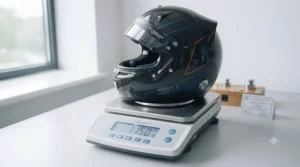
If outright aerodynamic sophistication is what you’re after, the Shark Aeron GP FIM 2 is genuinely unlike anything else on this list. Its headline feature is the A²S (Adaptive Aero System) — a patented rear spoiler with a dynamic flap mechanism that physically adjusts based on your speed and riding position, something Shark developed hand-in-hand with its MotoGP riders. The COVA carbon-and-aramid shell weighs in around 1,410-1,490g depending on the exact variant and visor fitted.
Here’s what the spec sheet doesn’t fully convey: that adaptive spoiler isn’t a gimmick, it’s a genuine attempt to solve the “sail effect” that hurts stability in crosswinds and while cornering at speed, and it carries both FIM 02 homologation (the standard required for many international racing series) and ECE 22.06 approval for road use. The 220-degree field of vision is among the widest of any helmet here, and the “second-skin” interior liner was developed from 3D head scans rather than generic sizing blocks. The obvious catch is price — this sits firmly at the premium end, and elaborate racing graphics push well past the £1,000 mark.
Pros:
- ✅ World-first adaptive A²S spoiler reacts automatically to speed
- ✅ Dual FIM 02 and ECE 22.06 homologation for racing and road
- ✅ Enormous 220° field of vision, among the widest tested
Cons:
- ❌ Among the most expensive helmets in this comparison
- ❌ Premium graphic finishes can exceed £1,000
Expect to pay from roughly £650 for plain colours up to £1,000+ for the racing graphic editions — a serious investment, but one aimed squarely at riders who genuinely compete rather than just look the part.
7. Shoei X-SPR Pro — flagship MotoGP-grade performance
Developed with direct input from MotoGP champion Marc Márquez and tested through roughly 150 shell iterations in Shoei’s own wind tunnel, the Shoei X-SPR Pro sits at the very top of Shoei’s sports and racing range, replacing the long-serving X-Spirit III. It weighs around 1,442g in a medium — heavier than several rivals on this list, which Shoei attributes to the additional material needed to pass the newer ECE 22.06 rotational-impact tests.
Based on the spec comparison, the standout feature isn’t the shell material but the aerodynamic package: seven closable air inlets, six outlets, an integrated spoiler, a rear stabiliser with flaps, and vortex generators combine to deliver a claimed 3% reduction in drag and lift versus its predecessor. Riders who’ve used it across both UK road testing and European track days report the fit feels secure and stable even at genuinely high motorway and circuit speeds, and Shoei’s Personal Fitting Service lets you customise the interior further if the stock fit isn’t quite right. The honest downside is straightforward — this is one of the priciest and, at 1,442g, one of the heavier helmets here, so the “featherlight” tag applies more to feel-in-use than to the number on the scale.
Pros:
- ✅ Co-developed with Marc Márquez for genuine MotoGP pedigree
- ✅ Dual ECE 22.06 and FIM homologation for road and racing
- ✅ Personal Fitting Service available for a bespoke interior fit
Cons:
- ❌ Heavier than several rivals here despite “race” branding
- ❌ Premium pricing puts it beyond most casual track-day budgets
UK pricing generally starts around £700 for solid colours, rising to £820 for the more elaborate replica graphics — a flagship price for what is, on paper and in aggregated rider feedback, a genuinely flagship helmet.
Practical Usage Guide: Setting Up Your Featherlight Racing Helmet
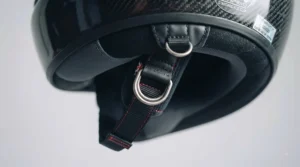
Getting a new lid out of the box is only step one — how you set it up in the first thirty days genuinely affects both comfort and safety. Start by fitting it correctly: a proper race helmet should feel snug enough that your cheeks move slightly when you shake your head, with no gaps at the temples. Most of the helmets above use a double-D ring or micrometric buckle rather than the standard road-bike ratchet system, since race organisers generally require it — practise doing this up with gloves on before your first track day, not in the paddock under time pressure.
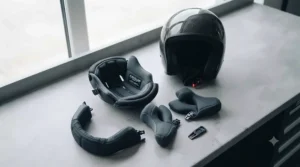
Break-in matters more than riders expect. New cheek pads and crown liners are often firmer than they’ll be after a few sessions, so don’t assume a slightly tight fit on day one means the wrong size — give it two or three wears before deciding. If your helmet has a Pinlock anti-fog insert (most on this list do), fit it before you ever hit the track, not after your visor mists up mid-session. Check the visor seal and tear-off posts if fitted, and inspect the chin strap and D-rings for wear every few months — a compromised strap is a genuine safety issue, not a cosmetic one.
Finally, store the helmet properly: a padded bag out of direct sunlight, never left baking on a dashboard or parcel shelf, since UV exposure and heat both degrade the EPS liner’s impact-absorbing properties over time, even without a visible crash.
Real-World Scenario: Which Rider Are You?
Picture three different riders walking into the same helmet shop. The first is a 24-year-old on a 600cc sportsbike doing their first-ever ACU-regulated track day at a club circuit, working to a budget under £300 and needing an ACU Gold sticker above all else — the Caberg Drift Evo II Carbon fits that brief precisely, delivering the required approval and a genuinely light shell without stretching finances thin.
The second is a weekend club racer doing 15-20 track days a season on a supersport machine, wanting genuine weight savings for long sessions and a bit more certification headroom for future race-licence ambitions — the HJC RPHA 11 Carbon or Nolan X-804 RS Ultra Carbon both suit this profile, offering ACU-recognised approval, strong ventilation and a step up in shell quality over entry-level options, for a mid-range outlay most serious hobbyists can justify.
The third is a national-level circuit racer or extremely committed track-day regular chasing every possible edge, with FIM homologation as a hard requirement for the series they compete in — here the Shark Aeron GP FIM 2 or Shoei X-SPR Pro become the only sensible choices, since their dual road-and-competition certification and race-developed aerodynamics justify the four-figure-adjacent spend for someone whose lap times genuinely depend on it.
Problem → Solution: Common Featherlight Helmet Pain Points
Fogging visors are probably the most common complaint among UK track-day riders, given our climate — the fix is straightforward: fit a genuine Pinlock MaxVision insert (most helmets on this list include or support one) rather than relying on anti-fog sprays, which wear off within a session or two.
Neck fatigue after long track days is exactly the problem this whole guide addresses, but if you’re still feeling it even in a genuinely lightweight lid, check your riding position first — a helmet that’s correct for upright road riding can still feel heavy when you’re tucked in aggressively for extended periods, and core and neck conditioning off the bike genuinely helps here too.
Wind noise on faster circuits and motorway approach roads is another frequent gripe, particularly with helmets that prioritise ventilation over acoustic sealing — the Scorpion EXO-1400 Carbon Air‘s Airfit inflatable cheek pads are a direct solution, letting you dial up the seal specifically for high-speed sessions.
Finally, riders often buy a road-legal ECE 22.06 helmet assuming it’s automatically track-ready, then get turned away at scrutineering — the solution is simply checking for the ACU Gold sticker specifically before you travel to a circuit, since the Auto-Cycle Union’s own guidance confirms road certification alone doesn’t guarantee competition eligibility.
How to Choose a Featherlight Racing Helmet
Choosing the right featherlight racing helmet comes down to working through a handful of criteria in the right order, rather than starting with colour schemes.
- Confirm your certification requirement first. If you’re doing ACU-regulated track days or racing, ACU Gold approval is non-negotiable — check this before anything else, since it eliminates helmets that otherwise look perfect on paper.
- Weigh the actual weight, not just the marketing number. Claimed weights and independently measured weights can differ by 50-100g, so where possible check a review that’s put the helmet on a scale.
- Match the shell material to your budget realistically. Full carbon fibre shells (like the AGV K6 S or Nolan X-804 RS Ultra Carbon) generally shed the most weight but cost more; fibreglass composites offer a reasonable middle ground.
- Try before you buy wherever possible. Head shape (round, intermediate oval, long oval) varies enormously between brands, and no amount of spec-sheet research substitutes for trying a helmet on.
- Check ventilation for your climate and riding style. Track riders in a tucked position need airflow that reaches the top vents even at speed — this is exactly where wind-tunnel-tested designs like the HJC RPHA 11 Carbon earn their keep.
- Factor in visor and Pinlock compatibility. UK weather makes anti-fog inserts close to essential year-round, so confirm Pinlock compatibility is built in, not an aftermarket bodge.
- Budget for the whole system, not just the shell. Spare visors, tinted track lenses, and communication system compatibility all add cost — build these into your total spend from the outset.
Race Helmet Certification Explained: ECE, FIM and ACU Gold
Race helmet certification confuses a lot of first-time track-day riders, largely because road legality and race eligibility are governed by entirely different standards. In the UK, a road-legal helmet must meet British Standard BS 6658:1985 or an equivalent UNECE standard — under the Motor Cycles (Protective Helmets) Regulations 1998, this is a legal requirement for riding on public roads, full stop.
ECE 22.06, the current European standard referenced throughout this guide, is tougher than its predecessor ECE 22.05 in several respects — most notably it adds oblique impact testing that specifically measures rotational forces transmitted to the brain, which older standards largely ignored. Helmets like the AGV K6 S, Shark Aeron GP FIM 2, Shoei X-SPR Pro and Nolan X-804 RS Ultra Carbon carry this newer approval, while the HJC RPHA 11 Carbon and Scorpion EXO-1400 Carbon Air remain certified to the still-legal ECE 22.05.
Track days and competitive racing add a further layer: ACU Gold approval, issued by the Auto-Cycle Union, Britain’s motorsport governing body. This is the minimum standard required for road racing, sprints, drag racing, hill climbs and any speed event held on a bound, metalled surface — a road-legal ECE 22.06 sticker alone doesn’t automatically clear that bar. For international competition, FIM homologation (as carried by the Shark Aeron GP FIM 2 and Shoei X-SPR Pro) goes a step further still, reflecting standards used in MotoGP and World Superbike paddocks. Practically speaking: check your event’s specific requirement before assuming any “race-styled” helmet is actually race-legal.
Aerodynamic Helmet Design: What Actually Reduces Drag
Aerodynamic helmet design isn’t just about looking sleek on the grid — it directly affects stability, fatigue and even lap times at genuinely high speeds. The three features that matter most are shell shape, rear spoilers, and ventilation channelling.
Shell shape determines how air flows around your head at speed; wind-tunnel-refined designs like those on the Shoei X-SPR Pro (developed through roughly 150 shell iterations) and AGV K6 S minimise turbulence rather than simply minimising frontal area. Rear spoilers, meanwhile, tackle a specific problem racers call the “sail effect” — where crosswinds or your own slipstream catch the back of the helmet and try to twist your head sideways. The Shark Aeron GP FIM 2‘s adaptive A²S spoiler is the most sophisticated solution to this on the market, physically reshaping itself according to speed, while the Nolan X-804 RS Ultra Carbon‘s removable RAS spoiler offers a simpler, static equivalent.
Ventilation channelling is the feature riders underrate most. On paper, more vents sound purely like a cooling benefit, but on a helmet developed for a tucked racing position — like the HJC RPHA 11 Carbon — vent placement is engineered around where airflow actually reaches when your head is down and forward, not where it would reach sitting upright. What most buyers overlook is that badly placed vents can actually increase drag by creating turbulence, so more vents isn’t automatically better; wind-tunnel validation is what separates genuine aero engineering from cosmetic scoops.
Top Lightweight Racing Helmets Under £400
If your budget caps out around the £400 mark, you’re not actually giving up much in this category — several genuinely featherlight options sit comfortably under that ceiling.
| Helmet | Weight | Price Range | Best For |
|---|---|---|---|
| Caberg Drift Evo II Carbon | 1,300-1,400g | £230-£290 | Lowest entry cost with ACU Gold |
| AGV K6 S | 1,225-1,255g | £230-£460* | Best weight-to-price ratio |
| Scorpion EXO-1400 Carbon Air | 1,200-1,260g | £250-£350 | Absolute lightest shell |
| HJC RPHA 11 Carbon | 1,250-1,340g | £350-£500* | Track-tuned ventilation |
| Nolan X-804 RS Ultra Carbon | 1,250-1,460g | £350-£450 | Adjustable fit system |
*Solid colours typically stay under £400; graphic finishes can push above this threshold.
The analysis here is fairly clear-cut: the Scorpion EXO-1400 Carbon Air delivers the lowest genuine weight of any helmet under £400, while the AGV K6 S offers the best overall balance of weight, certification and aerodynamic development for the money. Riders specifically prioritising ACU Gold approval on the tightest possible budget should look first at the Caberg Drift Evo II Carbon, which undercuts every other option here while still meeting the current ECE 22.06 standard.
✨ Ready to shave grams off your next track day?
🔍 Take Your Track Days to the Next Level. Ready to stop feeling it in your neck after every session? Click through on any helmet above to check current availability and pricing. The right featherlight racing helmet won’t just protect you — it’ll help you actually enjoy the last lap as much as the first.
Track Day Essentials: Beyond the Helmet
A featherlight racing helmet is the foundation, but it’s one piece of a wider track day essentials kit list that UK circuits will check before letting you on track. A CE-rated leather one-piece or two-piece suit (zipped together) is standard at almost every UK circuit; back protectors, chest protectors and, increasingly, airbag systems are either mandatory or strongly recommended depending on the organiser. Race boots and gloves with hard knuckle and palm protection round out the minimum kit most track day companies require at scrutineering.
Beyond protective gear, a genuine track day essentials checklist should include tyre warmers if you’re running dedicated track rubber, a paddock stand front and rear, a tyre pressure gauge (cold track pressures differ meaningfully from road pressures), and a basic tool roll for on-the-fly adjustments. Many riders overlook hydration and nutrition — a full day of 20-minute sessions in a leather suit under summer sun is genuinely dehydrating, and low blood sugar mid-afternoon is a common, entirely avoidable cause of lost concentration. Finally, check your specific circuit’s noise limits before you arrive; UK tracks increasingly enforce strict decibel caps, and an exhaust that’s fine on the road can get you black-flagged on a noisy circuit like those hosting FIM-regulated national events.
Featherlight Racing Helmet vs Standard Sports Helmet
It’s worth being honest about what “featherlight” actually buys you over a standard sports helmet, since the difference isn’t always dramatic on paper.
| Factor | Featherlight Racing Helmet | Standard Sports Helmet |
|---|---|---|
| Typical weight | 1,200-1,460g | 1,500-1,800g |
| Shell material | Carbon fibre / carbon-aramid | Fibreglass composite / thermoplastic |
| Aerodynamic development | Wind-tunnel tested, race-derived | Often road-focused, less aero testing |
| Typical price | £230-£1,000+ | £100-£350 |
| Best For | Track days, racing, long sessions | Commuting, occasional sports riding |
The analysis here matters more than the raw numbers suggest: a 300-400g weight saving might sound trivial, but distributed around your neck through hours of high-frequency head movement on a circuit, it adds up to genuine fatigue reduction. Standard sports helmets aren’t unsafe — most still meet ECE 22.06 — but they’re rarely wind-tunnel developed to the same degree, and cheaper shell materials mean hitting a similar weight usually isn’t possible at the same price point. For pure road commuting, a standard sports helmet remains perfectly sensible; the extra investment in a featherlight racing helmet only pays off once you’re doing repeated track sessions or genuinely fast road riding where fatigue and aerodynamics start to matter.
Common Mistakes When Buying a Featherlight Racing Helmet
The single biggest mistake is buying on weight alone without checking certification for your intended use — a helmet can be genuinely featherlight and still lack the ACU Gold sticker your track day organiser requires, leaving you paying an entry fee you can’t use.
A close second is skipping the fitting process entirely and buying based on someone else’s size recommendation. Head shapes genuinely differ by brand — what fits an intermediate oval shape (common with AGV and HJC) can feel completely wrong on a rounder head shape, regardless of how the size label reads. Reviewers consistently flag sizing inconsistencies as their biggest post-purchase regret across nearly every brand in this guide.
Riders also frequently underestimate break-in time, judging a helmet as “too tight” after a single wear when the padding simply hasn’t settled yet — give any new lid two or three sessions before deciding it’s the wrong size. Finally, treating claimed weight figures as gospel is a recurring error; as several of the products above demonstrate, independently measured weights can run 50-100g heavier than the marketing spec, so cross-reference where you can rather than buying on the box copy alone.
Long-Term Cost & Maintenance
A featherlight racing helmet’s true cost extends well beyond the sticker price. Most manufacturers recommend replacement every five years regardless of visible damage, since EPS foam and shell adhesives degrade with UV exposure and temperature cycling even without a crash — factor this into your total cost of ownership rather than treating it as a one-off purchase.
Replacement visors are a recurring expense worth budgeting for separately; track riders typically go through clear visors faster than road riders due to stone chips and tear-offs, and dedicated dark/smoke track visors (often included with helmets like the Shark Aeron GP FIM 2) add further cost if bought aftermarket. Pinlock inserts wear out and scratch over a season or two of regular use and typically cost £15-£30 to replace. Cheek pads and liners, meanwhile, are consumable items — most helmets here offer replaceable, washable interiors, which extends usable life considerably compared with sealed-liner budget helmets.
Any helmet that takes a genuine impact, however minor it looks, should be replaced immediately rather than reused — EPS foam crushes on impact to absorb energy and doesn’t return to its original protective state, even if the outer shell shows no visible cracking. Budgeting roughly £50-£100 a year in consumables and eventual replacement, spread across a helmet’s five-year working life, gives a more realistic total-cost picture than the upfront price tag alone.
FAQ
❓ What is a featherlight racing helmet?
❓ Do I need an ACU Gold sticker for a UK track day?
❓ Is a lighter helmet actually safer?
❓ How much should I spend on a featherlight racing helmet under £400?
❓ What's the difference between ECE 22.05 and ECE 22.06 certification?
Conclusion
A featherlight racing helmet isn’t a vanity purchase — it’s one of the few upgrades that measurably reduces fatigue, improves stability at speed, and (provided you check the certification carefully) keeps you legal and eligible for the track days you actually want to attend. Across the seven helmets in this guide, the pattern is consistent: genuine weight savings increasingly come from carbon-fibre and carbon-aramid construction, real aerodynamic development shows up in wind-tunnel-tested shell shapes and spoilers rather than cosmetic scoops, and certification is the one area where cutting corners simply isn’t worth it.
Budget-conscious riders taking their first ACU-regulated track day should start with the Caberg Drift Evo II Carbon; all-rounders wanting the best balance of weight and value should look hard at the AGV K6 S; and anyone chasing genuine competition homologation should budget for the Shark Aeron GP FIM 2 or Shoei X-SPR Pro. Whichever you choose, prioritise a proper fitting session over spec-sheet numbers alone — the lightest helmet in the world isn’t doing its job if it doesn’t sit correctly on your head.
✨ Don’t Miss These Exclusive Deals!
🔍 Take your track riding to the next level with a genuinely featherlight racing helmet from this list. Click through on any highlighted option to check current pricing and availability before your next session — your neck will thank you by lap ten.
Recommended for You
- Lightweight Carbon Helmet: 7 Best Picks for UK Riders in 2026
- Ultra-Lightweight Full Face Helmet: 7 Genuinely Best Picks (2026)
- Thermoplastic Helmet for Everyday Riding: 7 Best Picks 2026
Disclaimer: This article contains affiliate links. As an Amazon Associate, I earn from qualifying purchases. If you purchase products through these links, we may earn a small commission at no additional cost to you.
✨ Found this helpful? Share it with your mates! 💬🤗
