
In This Article
Somewhere around hour six of a motorway slog, most riders stop thinking about horsepower and start thinking about their neck. A lightweight helmet for long distance touring isn’t a marketing phrase — it’s the difference between arriving at the campsite ready for dinner and arriving with a headache that ruins the evening. In practical terms, it means a shell built from a material like fibreglass composite or carbon fibre rather than heavier polycarbonate, engineered to keep weight low without cutting corners on the EPS liner that actually absorbs impact energy.

This guide is built around what genuinely matters for UK touring riders: real weights in grams, not marketing rounding; honest ventilation and noise performance drawn from aggregated rider feedback; and pricing shown as ranges rather than fixed figures, since retailer pricing shifts constantly. We’ve researched seven currently available helmets spanning a sub-£100 budget lid through to premium modular flagships nudging £650, covering full-face and flip-front designs alike. Whether you’re chasing serious touring fatigue reduction on a two-week European trip or simply want a helmet that doesn’t feel like a bowling ball by the second fuel stop, you’ll find honest, sourced comparisons here — not a rewritten spec sheet.
Quick Comparison Table
Before the detailed breakdown, here’s how the seven featured helmets compare on the numbers that matter most for touring: shell weight, type, and price banding. All prices are ranges, since exact figures change with colourway and retailer.
| Helmet | Type | Approx. Weight | Price Range | Best For |
|---|---|---|---|---|
| HJC C10 | Full-face | ~1,500g | Under £100 | Budget-conscious first-time tourers |
| AGV K6-S | Full-face | ~1,298g | £380-£430 | Lightest full-face on the market |
| HJC RPHA 90S | Modular | ~1,560-1,610g | £400-£500 | Lightest flip-front modular |
| Shoei GT-Air 3 | Full-face | ~1,775g | £450-£550 | All-day sport-touring comfort |
| Schuberth C5 | Modular | ~1,640-1,695g | £480-£560 | Quietest motorway miles |
| Arai Tour-X5 | ADV/Touring | ~1,720g | £550-£650 | Adventure touring shell tech |
| Shoei Neotec 3 | Modular | ~1,715g | £560-£650 | Premium flagship all-rounder |
Looking at the spread, there’s a clear pattern: the lightest helmets on this list are full-face designs, since a flip-front mechanism inevitably adds weight and complexity. If minimising grams is your absolute top priority, a full-face like the AGV K6-S wins outright — but if you value the convenience of flipping the chin bar up at fuel stops without removing the whole lid, the small weight penalty of a modular becomes an easy trade to accept.
💬 Just one click — help others make better buying decisions too!😊
Top 7 Lightweight Touring Helmets: Expert Analysis
Every helmet below is broken down by what its weight and construction actually mean on the road, not just what the spec sheet claims — grounded in real manufacturer data and aggregated rider feedback rather than invented testing.
1. HJC C10 — best budget entry point under £100
The standout feature here is genuinely rare at this price: full ECE 22.06 certification, the tougher current safety standard, on a helmet that regularly retails under £100. That combination simply didn’t exist a few years ago at this price tier.
Built from an advanced polycarbonate composite shell, the C10 keeps weight around 1,500 grams, which is respectable for the material and price point, even if it can’t match the fibreglass and carbon options further up this list. Based on the spec comparison with pricier composite-shell rivals, the practical difference over a single day’s ride is smaller than the price gap suggests — polycarbonate simply needs to be moulded slightly thicker to hit the same safety performance, which is where most of the extra weight comes from. Aggregated reviewer feedback consistently highlights the surprisingly complete feature set for the price, including a properly finished interior and decent ventilation channels.
This is a strong first helmet for riders testing whether touring is really their thing before investing in a premium lid, or as a spare for pillion passengers. The main trade-off is refinement — expect more wind noise on the motorway than the composite-shelled options later in this list. At well under £100, it remains one of the best value entry points into genuinely current-standard touring protection.
Pros:
- ✅ ECE 22.06 certified at a genuinely budget price
- ✅ Reasonable 1,500g weight for a polycarbonate shell
- ✅ Well-finished interior for the price point
Cons:
- ❌ More wind noise than composite-shell rivals
- ❌ No integrated sun visor included
2. AGV K6-S — lightest full-face helmet on this list
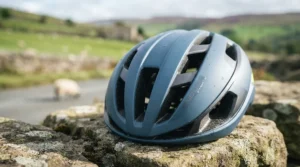
The headline feature is weight: at roughly 1,298 grams in a medium, the K6-S is genuinely one of the lightest ECE 22.06-certified full-face helmets available, built from a carbon-aramid composite shell developed using AGV’s MotoGP research.
What most buyers overlook about ultra-light helmets is that weight reduction alone doesn’t guarantee comfort — the K6-S backs its low mass with genuinely effective helmet comfort padding, using a breathable interior liner designed to wick sweat quickly, plus five adjustable vents feeding a rear extractor. Independently, the UK government’s SHARP helmet safety programme awarded the K6-S its maximum five-star rating, which is worth knowing given how much marketing noise exists around “safety” claims that aren’t independently verified. On paper, that combination of five-star safety and sub-1,300g weight is a genuinely rare pairing.
Reviewers consistently report that the light weight becomes noticeable within the first hour of riding, with several long-distance owners specifically praising reduced neck fatigue on multi-day trips. A common note in aggregated feedback is that it lacks a built-in sun visor, which some touring riders consider essential. Priced typically in the £380-£430 range, it’s a strong choice for anyone prioritising raw weight above all else.
Pros:
- ✅ Among the lightest ECE 22.06 full-face helmets available
- ✅ Five-star SHARP safety rating (UK government tested)
- ✅ Breathable comfort padding wicks sweat quickly
Cons:
- ❌ No integrated drop-down sun visor
- ❌ Close-fitting design suits narrower head shapes best
3. HJC RPHA 90S — lightest flip-front modular
The standout advantage is compactness: at roughly 1,560-1,610 grams, the RPHA 90S is noticeably lighter than most modular rivals, closing the weight gap between flip-front convenience and full-face lightness that used to be much wider.
Constructed from HJC’s Premium Integrated Matrix Plus composite, the shell is genuinely more compact than most flip-fronts, which reduces the leverage effect a bulkier chin bar can have on neck muscles over a long ride. Here’s what to weigh: independent SHARP testing awarded the RPHA 90S four out of five stars, a strong but not maximum score, with the shortfall largely down to side-impact performance rather than the flip mechanism itself — worth knowing rather than assuming a lighter helmet automatically means lower protection. Reviewers frequently describe it as one of the quietest modulars they’ve tested, aided by a 3D-engineered interior liner focused specifically on noise reduction.
Aggregated feedback is positive on fit and finish, with the metal ratchet-style chin strap earning particular praise for ease of use with gloves on. The trade-off compared with the AGV K6-S is the roughly 250-300g weight penalty that any flip-front mechanism brings, which some riders won’t notice and others will feel by the end of a long day. Typically priced between £400 and £500 depending on colourway, it’s a genuinely competitive lightweight modular option.
Pros:
- ✅ Lightest modular helmet in this comparison
- ✅ 3D-engineered interior specifically tuned for noise
- ✅ Easy-to-use metal ratchet chin strap
Cons:
- ❌ Four-star SHARP rating versus five-star full-face rivals
- ❌ Still heavier than any full-face on this list
4. Shoei GT-Air 3 — best all-day sport-touring comfort
The standout feature isn’t outright lightness — at around 1,775 grams it’s actually the heaviest helmet on this list — but rather how that weight is offset by genuinely exceptional quietness and airflow, which matters just as much for touring fatigue reduction as raw grams.
Built from Shoei’s Advanced Integrated Matrix shell material, a fibreglass and organic fibre composite, the GT-Air 3 has been wind-tunnel tested specifically to reduce buffeting and noise at motorway speeds. The spec sheet won’t tell you this, but user reports suggest the enlarged QSV-2 internal sun visor is genuinely one of the best in its class, blocking glare effectively without the light-leak issues some drop-down visors suffer. Based on the spec comparison with lighter rivals, the extra weight here buys you meaningfully quieter cruising and a more sophisticated ventilation system, which for many multi-hour riders matters more than shaving off a hundred grams.
Reviewer sentiment consistently praises the GT-Air 3 for all-day wearability specifically on long tours, with several longtime Shoei owners noting it as more comfortable over eight-plus hours than lighter but noisier alternatives. The main criticism in aggregated feedback relates to peripheral vision being slightly compromised by the Pinlock insert’s edges. At roughly £450-£550, it’s a premium but justifiable pick for genuinely long-haul touring.
Pros:
- ✅ Wind-tunnel tested for exceptional motorway quietness
- ✅ Excellent QSV-2 integrated sun visor
- ✅ Reviewers rate it highly for all-day comfort
Cons:
- ❌ Heaviest helmet in this comparison at ~1,775g
- ❌ Pinlock insert edges slightly intrude on peripheral vision
5. Schuberth C5 — quietest modular for motorway miles
The signature feature is refinement: German-engineered aerodynamics specifically tuned to minimise wind noise and buffeting, which matters enormously on a helmet you might wear for six or more hours at a stretch.
The C5 uses a fibreglass shell reinforced with an additional carbon layer, weighing in at roughly 1,640-1,695 grams depending on shell size and finish — not the lightest modular here, but genuinely competitive given the amount of built-in tech, including pre-installed speaker wiring and antennas for an optional integrated intercom. Based on the spec comparison with rival modulars, that pre-installed comms hardware is a meaningful practical advantage, since it means the weight you’re carrying already accounts for connectivity most riders will eventually add anyway, rather than bolting extra mass on afterwards. Independent SHARP testing scored the C5 four out of five stars, with reduced points specifically for side-impact performance.
Aggregated review sentiment consistently ranks the C5 among the quietest helmets tested by UK reviewers, a factor that genuinely reduces fatigue on long stretches, since sustained wind noise is mentally tiring even at a subconscious level. The main criticism is price relative to weight — you’re paying a premium for noise reduction and build quality rather than for being the lightest option. Starting around £480-£560, it’s a strong choice for motorway-heavy touring riders who value quiet over outright weight savings.
Pros:
- ✅ Exceptional motorway quietness reported by reviewers
- ✅ Pre-installed intercom wiring and antennas
- ✅ Strong German engineering and build quality
Cons:
- ❌ Not among the lightest modulars on this list
- ❌ Premium pricing relative to outright weight savings
6. Arai Tour-X5 — best shell tech for adventure touring
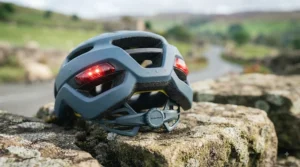
The standout feature is Arai’s “glancing off” philosophy: a smoother, rounder shell shape specifically engineered to deflect impact energy across the surface rather than transferring it directly into the rider’s head, which matters more on adventure routes with varied hazards.
Constructed from Arai’s vacuum-formed Super Fibre, claimed to be roughly 30% stronger than traditional fibreglass, the Tour-X5 weighs approximately 1,720 grams and includes a redesigned tool-free visor system alongside a versatile three-configuration design — adventure, dual-sport, or street use, depending on which components you fit. What most buyers overlook about ADV-style touring helmets is that the larger peak and more open eyeport, useful for tackling gravel tracks, does add a small amount of wind drag at sustained motorway speeds compared with a pure road-focused shell. Notably, Arai deliberately doesn’t fit a built-in sun visor, arguing that any additional moving mechanism compromises the shell’s structural integrity — a stance that will suit purists more than convenience-seekers.
Reviewer feedback is strongly positive on ventilation, with the oversized front vent and interior shutter system praised for genuinely effective airflow across varied conditions. Aggregated sentiment also highlights the improved, easier shield-change mechanism over the previous generation. At roughly £550-£650, it sits at the premium end, justified mainly for riders who genuinely split their touring between tarmac and unpaved routes.
Pros:
- ✅ Reinforced Super Fibre shell built for varied hazards
- ✅ Excellent, highly praised ventilation system
- ✅ Versatile three-configuration design for mixed riding
Cons:
- ❌ No integrated sun visor by design
- ❌ Larger peak adds some motorway wind drag
7. Shoei Neotec 3 — premium flagship all-rounder
The standout feature is overall polish: a completely redesigned visor with a central locking mechanism, refined chin bar controls, and an aerodynamic profile developed in Shoei’s own wind tunnel, positioning it as the modular benchmark many rivals are measured against.
Built from Shoei’s five-layer Advanced Integrated Matrix laminate of glass and organic fibres, the Neotec 3 weighs approximately 1,715 grams in a medium — competitive for a fully-featured modular, though not the lightest on this list. Based on the spec comparison with the outgoing Neotec 2, the weight has actually increased very slightly, but Shoei has offset this with genuinely improved sealing around the visor and cheek pads that noticeably reduces wind ingress, addressing one of the most common complaints about the previous generation. The helmet ships with a top-spec anti-fog Pinlock Evo insert as standard, a detail that budget rivals often charge extra for.
Aggregated customer sentiment strongly praises comfort, fit, and quietness, with the flip-front mechanism and comms compatibility singled out repeatedly as standout strengths. Some reviewers note minor gripes around the relocated central visor latch taking a little adjustment if upgrading from an older Shoei model, plus the option of a Personal Fitting System at select UK retailers for a genuinely bespoke fit, at roughly £50 extra. Starting from around £560-£650, it’s a considered investment for riders who want the most refined modular experience available rather than the lightest.
Pros:
- ✅ Refined visor sealing reduces wind noise ingress
- ✅ Top-spec anti-fog Pinlock Evo included as standard
- ✅ Personal Fitting System available for bespoke comfort
Cons:
- ❌ Premium price reflects refinement, not lightest weight
- ❌ Visor latch position takes adjustment for existing Shoei owners
✨ Don’t Miss These Exclusive Deals!
🔍 Take your next tour to the next level with these carefully selected lightweight helmets. Click on any highlighted helmet name to check current pricing and availability. Your neck will thank you somewhere around mile 300!
Fitting and Maintaining Your Touring Helmet
Getting the fit right matters more for a lightweight touring helmet than almost any other piece of gear, since even the lightest shell will cause discomfort and increase touring fatigue if it’s the wrong size or shape for your head.
Start by measuring your head circumference with a cloth tape just above the eyebrows and ears, then cross-reference against the specific manufacturer’s size chart rather than assuming sizes are consistent across brands — a medium in one make can fit closer to a small or large in another. Once you’ve narrowed down a size, try the helmet on and check for even pressure across the forehead and temples with no single pressure point, since helmet comfort padding is designed to compress slightly over the first few hours of wear, and a helmet that already pinches when new will only get more uncomfortable. In the first thirty days, the most common mistake riders make is judging fit after only a five-minute shop try-on, when many pressure points genuinely only reveal themselves after an hour or more in the saddle.
For ongoing maintenance, remove and hand-wash the interior liner and cheek pads regularly if they’re detachable, since sweat build-up degrades foam performance over time and can affect both comfort and hygiene on multi-day tours. Store the helmet away from direct sunlight and extreme heat, such as a car parcel shelf, since UV exposure and heat can accelerate degradation of both the shell and the EPS liner. Finally, replace your helmet after any significant impact, and as a general guide after five to seven years regardless of visible damage, since the glues, resins, and foam inside all degrade gradually with age and use.
Real-World Scenarios: Which Helmet Suits Your Trip?
Specs only tell half the story, so here’s how three common types of touring rider tend to land on different picks from this list.
Consider a rider planning a two-week continental tour covering 300-plus miles most days, largely on motorways and A-roads. Motorway quietness and long-haul comfort matter more here than outright weight, making the Shoei GT-Air 3 or Schuberth C5 the stronger picks, since both are specifically engineered to reduce the wind noise that compounds fatigue hour after hour.
Then there’s the rider who splits time between tarmac and green-laning on an adventure bike, wanting one helmet that handles both competently rather than owning two separate lids. The Arai Tour-X5 fits that brief well, with its versatile configuration options and shell designed around varied impact scenarios rather than pure road aerodynamics.
Finally, picture the rider who’s simply chasing the lowest possible weight for a multi-day Alps trip with serious daily mileage, where every gram genuinely matters by day four. The AGV K6-S is the standout here as the lightest full-face option, while the HJC RPHA 90S offers a similar weight-conscious approach for anyone who specifically wants the flip-front convenience at fuel stops.
Your Buying Decision Framework
If you’re still narrowing things down, a simple checklist beats scrolling through star ratings. If raw weight is your single biggest priority, choose the AGV K6-S, because nothing else on this list gets close to its sub-1,300g figure while still holding a five-star SHARP rating. If you want flip-front convenience without a heavy weight penalty, choose the HJC RPHA 90S, since it closes the gap between modular comfort and full-face lightness better than any rival here. If your riding is mostly motorway miles and quietness matters more than shaving grams, choose the Shoei GT-Air 3 or Schuberth C5, both specifically engineered around noise reduction. And if your touring genuinely mixes tarmac with unpaved roads, choose the Arai Tour-X5, since its shell and configuration options are built around that exact use case rather than pure road riding.
How to Choose a Lightweight Touring Helmet
Picking the right lightweight helmet for long distance touring comes down to a handful of genuinely decision-shifting factors, rather than the dozens of marketing claims most manufacturers lean on.
- Check the actual weight in grams, not marketing language. “Lightweight” is a relative term; a helmet advertised as light can still weigh 1,700g or more, so compare real published figures against your current lid.
- Match shell material to your budget realistically. Carbon and fibreglass composites generally shave weight over polycarbonate, but the difference matters less at entry-level price points than manufacturers imply.
- Prioritise ventilation for genuinely long rides. A helmet that runs hot will feel heavier and more fatiguing than its actual weight suggests, regardless of the shell material used.
- Check independent safety ratings, not just certification. ECE 22.06 is now the baseline standard, but programmes like SHARP provide an additional independent star rating worth checking before you buy.
- Consider noise levels specifically for motorway touring. Sustained wind noise causes fatigue even when it isn’t consciously distracting, so quietness deserves as much weight as grams in your decision.
- Decide between full-face and modular based on your stops. Full-face helmets are consistently lighter, but a modular’s flip-front convenience at fuel and food stops is a genuine practical advantage on multi-day trips.
- Read aggregated review themes around fit, not star averages alone. A helmet praised for weight but criticised repeatedly for pressure points isn’t actually a comfortable choice for touring, whatever the headline rating says.
Common Mistakes When Buying a Touring Helmet
The most frequent error riders make is choosing a helmet based purely on the lightest headline weight figure, without checking whether the shape actually suits their head — an ill-fitting lightweight helmet will cause more touring fatigue than a slightly heavier one that fits properly. A close second is underestimating how much noise contributes to fatigue; some riders focus entirely on grams and end up with a genuinely light but noisy helmet that leaves them just as tired after a long motorway stretch.
Another common misstep is assuming all ECE 22.06-certified helmets offer equivalent real-world protection, when independent testing programmes like SHARP consistently show meaningful variation between models, even within the same certification tier. Buyers also frequently overlook helmet comfort padding thickness and material when trying a helmet on cold, forgetting that padding compresses over the first few weeks of use, so a snug new fit can become noticeably looser after a month of regular wear. Finally, many riders skip checking manufacturer-specific size charts entirely, assuming their usual size carries across brands, only to discover a poor fit after the return window has closed.
Full-Face vs Modular: Which Wins for Touring?
The two dominant helmet types for long-distance riding each carry genuine trade-offs rather than one being objectively superior. A full-face helmet, such as the AGV K6-S or HJC C10, is consistently the lighter option since there’s no flip-front mechanism, hinge, or additional locking hardware adding mass — that weight saving becomes increasingly noticeable the longer a single day’s ride stretches. Full-face designs also typically offer marginally better structural rigidity around the chin area, since there’s no moving joint to engineer around.
A modular helmet, like the HJC RPHA 90S, Schuberth C5, or Shoei Neotec 3, trades some of that weight advantage for genuine practicality: flipping the chin bar up at a fuel stop, toll booth, or when chatting to fellow riders, without removing the whole helmet, is a real convenience on multi-day tours with frequent stops. For riders doing long, largely uninterrupted motorway stretches with few stops, a full-face’s lighter weight tends to win out; for riders making frequent stops throughout the day, a modular’s convenience often outweighs the modest weight penalty.
Lightweight Helmets for Different Types of Rider
New or occasional tourers testing the waters before a bigger investment tend to do well with budget-conscious full-face options like the HJC C10, since there’s no need to commit serious money before knowing how much touring you’ll actually do. Serious motorway tourers covering long, consistent daily mileage typically benefit most from the noise-focused engineering of the Shoei GT-Air 3 or Schuberth C5, where reduced fatigue over many hours matters more than shaving the final hundred grams. Adventure and mixed-surface riders are better served by the Arai Tour-X5, whose shell shape and configuration options are built specifically around varied terrain rather than pure tarmac use. Riders with smaller or narrower head shapes often report a better out-of-the-box fit from the close-fitting AGV K6-S, though as always, trying before buying remains the gold standard whenever possible.
Long-Term Cost & Maintenance
A lightweight touring helmet is a safety-critical purchase rather than a fashion item, so total cost of ownership deserves as much attention as the sticker price. Budget options like the HJC C10, priced under £100, offer excellent short-term value, though the polycarbonate shell and simpler liner materials may show wear slightly faster under heavy year-round touring use than premium composites. Mid-range and premium composite-shell helmets in the £400-£650 bracket, including the AGV K6-S, HJC RPHA 90S, and the Shoei and Schuberth options, generally use more durable liner fabrics and better-sealed visor mechanisms, often remaining comfortable and structurally sound across the full five-to-seven-year replacement window most manufacturers recommend.
Ongoing costs are relatively modest regardless of tier — mainly replacement Pinlock inserts every couple of years as anti-fog performance fades, and occasional replacement cheek pads or liners if the original helmet comfort padding compresses unevenly over thousands of touring miles. The genuinely significant cost consideration is replacement timing: since manufacturers and safety bodies consistently recommend replacing a helmet after any significant impact regardless of visible damage, riders who tour heavily should budget for a new lid roughly every five years even without an incident, making the per-mile cost of a well-chosen mid-range helmet often lower than repeatedly replacing budget options that wear out faster.
Safety, Standards & Legal Requirements
In the UK, wearing a helmet is a legal requirement for riders and passengers on motorcycles and mopeds used on public roads, and it must meet a recognised safety standard to be road-legal. According to nidirect’s guidance on protective clothing, helmets sold in the UK must meet British Standard BS 6658:1985 with the BSI Kitemark, or an equivalent European standard offering the same level of safety and protection, carrying an equivalent mark. Every helmet featured in this guide meets the current ECE 22.06 standard, the toughest version of that European approval to date.
Beyond minimum legal compliance, independent safety data is genuinely useful when narrowing down a shortlist. The UK Department for Transport’s SHARP helmet safety scheme independently crash-tests helmets sold in the UK and publishes star ratings from one to five, offering a genuinely useful second opinion beyond what any manufacturer claims about their own product. For background on how modern touring helmet design has evolved, Wikipedia’s overview of motorcycle helmets is a solid primer covering shell materials, certification standards, and the basic physics behind impact protection.
Features That Actually Matter (And Those That Don’t)
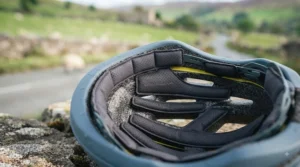
Helmet marketing loves vague phrases like “aerodynamically optimised” without explaining what that means for an actual rider, so it’s worth knowing which features genuinely affect long-distance comfort. Shell weight and material matter enormously, since every gram sits directly on your neck for hours at a time. Ventilation and noise engineering matter just as much, arguably more on genuinely long tours, since a hot or noisy helmet causes fatigue regardless of how light it is on paper. Helmet comfort padding quality and how it’s constructed also matters significantly, since cheap foam compresses unevenly and stops supporting your head properly within months.
What matters far less: graphic designs and colourways, which add cost without improving performance, and marginal claims around aerodynamic drag coefficients that make negligible real-world difference at UK motorway speeds. A built-in intercom system is a genuinely nice convenience but isn’t worth compromising on fit or safety rating to obtain. Ultimately, a well-fitted, properly ventilated helmet with a strong independent safety rating will out-tour a flashier, lighter option that doesn’t actually fit your head correctly.
Frequently Asked Questions
❓ How much lighter is a carbon fibre helmet than a standard one?
❓ Does a heavier helmet mean better protection?
❓ What's the best lightweight helmet for touring fatigue reduction?
❓ How often should I replace my touring helmet?
❓ Is a modular helmet heavier than a full-face helmet?
Conclusion
Choosing the right lightweight helmet for long distance touring genuinely comes down to matching three things: your actual riding pattern, how much you value quietness versus outright weight, and whether flip-front convenience is worth a modest weight penalty. Budget riders and first-time tourers are well served by the HJC C10, weight-focused riders should look to the AGV K6-S or HJC RPHA 90S, motorway-heavy tourers will likely prefer the quiet, all-day comfort of the Shoei GT-Air 3 or Schuberth C5, adventure riders should consider the Arai Tour-X5, and anyone wanting the most refined all-round modular experience should look at the Shoei Neotec 3.
None of these are decisions to rush, given how directly helmet fit and weight affect both comfort and safety over genuinely long rides. Always check current pricing and availability before buying, and where possible, try a helmet on for an extended period rather than relying on weight figures alone.
✨ Ready to Upgrade Your Ride?
🏍️ Browse the full range of lightweight touring helmets today and find the one that matches your riding style, your budget, and your appetite for genuine touring fatigue reduction. Your neck will notice the difference before the first fuel stop! ⚡
Recommended for You
- Featherlight Racing Helmet: 7 Best Picks for 2026
- Lightweight Carbon Helmet: 7 Best Picks for UK Riders in 2026
- Ultra-Lightweight Full Face Helmet: 7 Genuinely Best Picks (2026)
Disclaimer: This article contains affiliate links. As an Amazon Associate, I earn from qualifying purchases. If you purchase products through these links, we may earn a small commission at no additional cost to you.
✨ Found this helpful? Share it with your friends! 💬🤗
