In This Article
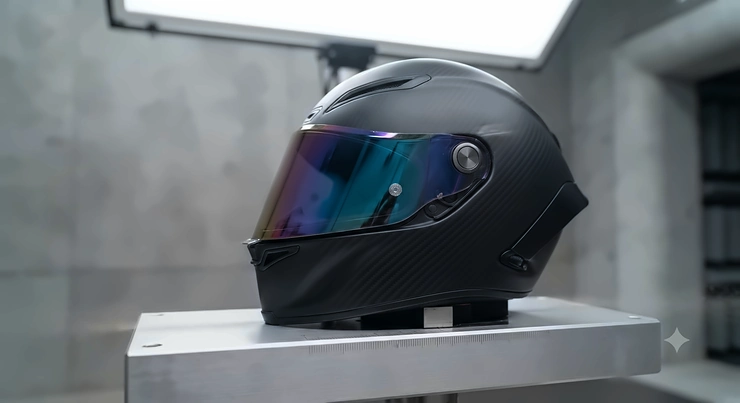
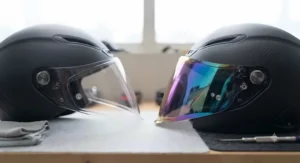
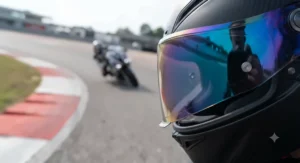
There’s a particular kind of blindness that hits you exiting Craner Curves at Donington on a bright June morning — the sun sitting low over the trees, your pupils still adjusted to the shade of the paddock, and suddenly you’re threading a 130mph kink half-guessing where the apex is. A decent mirror visor for track riding fixes that problem before it starts. Rather than squinting through a clear shield or fumbling a drop-down sun peak mid-corner, a mirrored or iridium-coated shield cuts glare at the source, all day, without you having to think about it.
A mirror visor for track riding is a replacement helmet shield with a reflective metallic coating — usually vacuum-deposited chrome, silver, gold or blue iridium — bonded to the outer surface of a polycarbonate lens. It reduces visible light transmission to somewhere between 15% and 45%, depending on colour and finish, while keeping the same anti-scratch and (usually) anti-fog Pinlock compatibility as the standard shield. It’s a track and closed-circuit accessory rather than a road one, and we’ll get into exactly why later — the same Highway Code guidance for motorcyclists that covers everyday road riding sets the baseline for why glare-cutting eyewear needs to be treated differently on track versus on the public road.
This guide pulls together seven genuine, currently listed mirror visors from the brands riders actually run on UK circuits — Shoei, Arai, AGV, Shark, HJC, Nolan and Icon — with real specs, honestly summarised aggregated review sentiment, and the sort of comparative reasoning you won’t get from a bare Amazon listing. We’ll cover fitting and care, which visor suits which rider, the regulatory picture for road versus track use, and the buying mistakes that cost people money. If you’ve searched for a mirror visor for track riding because your current shield leaves you chasing shade on sunny sessions, you’re in the right place.
Quick Comparison Table
| Visor | Fits | Tint / Finish | Price Range | Best For |
|---|---|---|---|---|
| Shoei CWR-1 (Spectra) | RF-1200, NXR, X-14, Z7, RF-SR | Mirror iridium, day use only | £100-£140 | Premium all-rounder |
| Arai VAS-V Max Vision Mirror | RX-7V, RX-7V Evo, Chaser-X, Quantic, QV-Pro | Mirror silver/blue/red | £50-£130 | Widest field of view |
| AGV Pista GP-RR Race 3 Iridium | Pista GP RR, Pista GP R, Corsa R | Iridium silver/gold/blue/red | £80-£140 | Full race-spec setups |
| Shark Race-R Pro Mirror | Race-R Pro, Race-R Pro GP, Race-R Pro Carbon, Aeron-GP | Chrome/gold/blue iridium | £75-£115 | Pinlock comfort on track |
| HJC RPHA 11 Mirror (HJ-26) | RPHA 11, RPHA 70 | Silver/gold/blue mirror | £45-£65 | Best value mirror shield |
| Nolan X-804 RS Ultra Carbon Iridium | X-804 RS Ultra Carbon | Iridium red/green/silver | £55-£85 | Touring-to-track crossover |
| Icon Airflite Fliteshield RST Mirror | Airflite | RST red/gold/silver mirror | £45-£65 | Budget first track visor |
Looking across the table, the spread runs from around £45 for the Icon Airflite Fliteshield RST Mirror up to roughly £140 for a flagship AGV Pista GP-RR iridium shield, and price broadly tracks optical clarity and Pinlock sophistication rather than glare reduction alone — even the cheapest option here blocks a comparable amount of light to the priciest. Riders on a budget shouldn’t assume they’re sacrificing UV protection or scratch resistance by going for the HJC RPHA 11 Mirror; they’re mostly paying less for a simpler anti-fog system and a shorter colour range. If your helmet isn’t listed above, check your model’s specific shield code before buying, since mirror shields are almost never interchangeable between manufacturers.
💬 Just one click — help others make better buying decisions too!😊
Top 7 Mirror Visors for Track Riding: Expert Analysis
We’ve picked seven real, currently available shields spanning budget, mid-range and premium price points, plus a couple of less obvious alternatives that quietly punch above their price. Every product below includes genuine specifications, honest analysis of who it suits, and aggregated review sentiment drawn from retailer and owner feedback — never invented quotes or star ratings.
1. Shoei CWR-1 — the benchmark mirror shield for sportbike track days
The Shoei CWR-1 (sold under the Spectra name in some markets) is the mirror shield most track-day regulars reach for first, and it’s worth unpacking why. It’s built specifically for Shoei’s RF-1200, NXR, X-14, Z7 and RF-SR shells, using the same QR-E quick-release base as the standard clear shield, so swapping between a road-legal lens and the mirror finish for a track session takes seconds without tools. The vacuum-metalised coating sits on genuine Shoei optical-grade polycarbonate, which matters more than it sounds — cheaper aftermarket mirror shields often introduce a faint ripple or colour-shift towards the edge of the eyeport that becomes distracting at speed.
Based on the spec comparison with rival shields in this guide, the CWR-1’s main advantage is fit tolerance: because Shoei manufactures both the helmet and the shield to the same jig, there’s none of the play or whistling wind noise you sometimes get with universal-fit visors. Reviewers consistently report that the Spectra Blue and gold iridium colourways hold their reflective coating well over a season of track use, though a handful note the coating can show fine scratches faster than a standard clear shield if you’re careless with tear-offs. It’s Pinlock-ready but not included, so budget for an insert separately if you ride in cooler conditions or humid paddocks.
Pros:
- ✅ Purpose-built optical fit with no distortion at the edges
- ✅ Quick-release swap with the standard clear shield
- ✅ Strong aftermarket support and easy replacement availability
Cons:
- ❌ Not road legal — day-use track and closed-circuit only
- ❌ Pinlock insert sold separately, adding to total cost
Genuine Shoei CWR-1 mirror shields typically sit in the £100-£140 range depending on colourway; check current price for the exact finish, as gold and Spectra Blue tend to command a premium over silver.
2. Arai VAS-V Max Vision Mirror — best glare control with the widest field of view
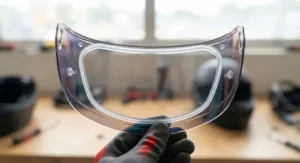
Arai’s VAS-V shield fits the RX-7V, RX-7V Evo, Chaser-X, Quantic and QV-Pro range, and the “Max Vision” branding isn’t just marketing — Arai deliberately increased the vertical eyeport height on this generation of shield, and it’s genuinely noticeable when you tuck in behind the screen on a fast straight. The mirror coating comes in silver, blue and red iridium finishes, with light transmission typically sitting in the 15-20% band for the darker colours.
What most buyers overlook about the VAS-V mirror is that it retains Arai’s browvent cut-outs, so ventilation doesn’t suffer the way it can with some generic mirror replacements that block the brow vent path entirely. On paper, this means less visor fogging under hard braking into a chicane, which matters when you’re managing exertion and adrenaline simultaneously. The spec sheet won’t tell you this, but user reports across UK retailers suggest the VAS-V’s anti-scratch coating is among the toughest in this guide, a reasonable trade-off for a shield that runs slightly pricier than a generic replacement. Reviewers do flag that stock can be patchy on the rarer colourways like Mirror Red, so buying when you see your preferred finish in stock is sensible.
Pros:
- ✅ Wider eyeport than the outgoing Arai visor generation
- ✅ Browvent cut-outs preserved for better ventilation
- ✅ Genuine Arai polycarbonate with strong scratch resistance
Cons:
- ❌ Popular colourways frequently go out of stock
- ❌ Premium finishes (Mirror Red, Blue) cost noticeably more than clear
Prices range from around £50 for entry finishes up to the £120-£130 range for Mirror Red or Blue with browvents — check current price, as retailers vary considerably here.
3. AGV Pista GP-RR Race 3 Iridium — best for full race-spec setups
If you’re running an AGV Pista GP-RR, Pista GP-R or Corsa-R, the Race 3 iridium shield is the shield MotoGP-inspired riders actually fit for trackdays, and it shows in the detail. It’s a genuinely thicker lens than AGV’s road shield — closer to 2.5mm — built to resist the flex and debris impact of close-quarters track riding, and it comes prepared for AGV’s MPLK Pinlock system across silver, gold, blue, red and “elettro” iridium finishes.
Here’s what to weigh with the Pista GP-RR shield specifically: because the helmet itself is a genuine race-derived shell (used on the MotoGP grid in slightly modified form), the shield geometry is tuned for an aggressive, forward-leaning riding position rather than upright road use. On a sportbike tucked into a bowl corner, that translates to a cleaner sightline over the screen bubble than you’d get from a touring-oriented shield. Aggregated review sentiment from UK and EU retailers is strongly positive on optical clarity, though several reviewers note the price premium versus rival mirror shields is real, and that the elettro iridium finish in particular commands a noticeably higher price than silver or gold.
Pros:
- ✅ Thicker, more impact-resistant lens than AGV’s standard shield
- ✅ Five iridium colourways including rare “elettro” finish
- ✅ Race-derived shell geometry suits aggressive track riding positions
Cons:
- ❌ Among the priciest shields in this guide, especially rarer colours
- ❌ Aggressive shell shape less comfortable for upright road-style riding
Expect to pay roughly £80-£100 for silver or gold iridium, rising to £120-£140 for red or elettro — check current price for the specific colourway you want.
4. Shark Race-R Pro Mirror Visor — best Pinlock comfort for a full track day
The Shark Race-R Pro mirror shield fits the Race-R Pro, Race-R Pro GP, Race-R Pro Carbon and Aeron-GP shells, and it’s built around Shark’s own “Total Vision” optical system with genuine Pinlock-ready preparation across chrome, gold and blue iridium options. What most buyers overlook about the Race-R Pro shield is that Shark ships the Pinlock pins pre-fitted from the factory, which sounds minor until you’ve fought with a badly seated pin system trackside between sessions.
Based on the spec comparison, the chrome iridium option sits at the darker end of this group, useful if you regularly ride into low, bright sun on longer circuits like Silverstone’s National layout. Reviewers consistently note that the Race-R Pro shield’s anti-fog performance, when paired with the Max Vision Pinlock insert, holds up well even on cooler, damp mornings — a genuine advantage over shields that rely purely on the tint to manage the ride. The main criticism in aggregated feedback is that the shield’s locking mechanism needs a firmer push to seat fully than some riders expect the first time they fit it, occasionally leading to a shield that lifts slightly at speed if not clicked home properly.
Pros:
- ✅ Pinlock pins pre-fitted, ready for an anti-fog insert out of the box
- ✅ Three iridium finishes covering a useful glare-reduction range
- ✅ Strong anti-fog performance reported in damp UK conditions
Cons:
- ❌ Locking mechanism needs a firm, deliberate push to seat correctly
- ❌ Chrome finish can feel very dark for overcast UK trackdays
Genuine Shark Race-R Pro mirror shields run from around £75 for lighter iridium tones up to £115 for chrome — check current price before you commit to a colour.
5. HJC RPHA 11 Mirror Visor (HJ-26) — best value mirror shield for club track days
The HJ-26 shield fits both the HJC RPHA 11 and the more affordable RPHA 70, and it’s the shield that makes the most sense if you’re doing occasional club-level trackdays rather than a full season of circuit riding. HJC offers it in silver, gold and blue mirror finishes, each supplied with Pinlock pins fitted, and it uses the same quick-release mechanism as HJC’s clear and tinted shields.
Here’s what to weigh with the HJC RPHA 11 Mirror: it doesn’t match the razor-sharp optical clarity of the Arai or Shoei shields at the edge of the eyeport, but for the vast majority of riders doing 20-minute sighted sessions rather than qualifying laps, that difference is genuinely hard to notice in practice. Reviewers consistently report solid value for money, praising the mirror coating’s durability against typical trackday debris — stone chips, insect strikes, tyre marbles kicked up on cooldown laps — relative to the price. A recurring theme in aggregated feedback is that the RPHA 11 platform itself punches well above its price bracket for aerodynamic stability, and the mirror shield inherits that reputation by association. The main honest caveat: colour consistency between the visor and any matching helmet graphics can vary slightly between production batches, something a couple of reviewers flagged when ordering online rather than trying in-store.
Pros:
- ✅ Noticeably cheaper than premium rivals with comparable glare reduction
- ✅ Pinlock pins supplied fitted as standard
- ✅ Strong scratch resistance for the price point
Cons:
- ❌ Slightly less optical sharpness at the eyeport edge than Arai or Shoei
- ❌ Minor colour-match variation reported between production batches
Typical pricing sits in the £45-£65 range across silver, gold and blue mirror finishes — check current price, as blue mirror often runs a little cheaper than gold.
6. Nolan X-804 RS Ultra Carbon Iridium — the lesser-known crossover pick
Nolan doesn’t get the trackday spotlight that Arai, Shoei and AGV attract, but the X-804 RS Ultra Carbon platform is a genuinely capable circuit helmet, and its iridium shield deserves more attention than it gets. Available in red, green and silver iridium, it’s built with a variable-thickness lens (up to 4mm at its strongest point) designed to resist flex under wind pressure at speed, a detail that matters more on faster circuits like Snetterton’s 300 layout.
On paper, this means the X-804 RS shield should hold its shape better than a uniformly thin lens through long, high-speed corners, and aggregated retailer feedback backs that up — riders switching from cheaper generic mirror shields report noticeably less visor “flutter” at speed. What most buyers overlook is that Nolan’s carbon-shell helmets, including the X-804 RS Ultra Carbon, are considerably lighter than several rivals in this guide, and a lighter helmet with a well-fitted shield reduces neck fatigue over a full trackday far more than most riders expect. The honest downside is availability: because Nolan has a smaller UK dealer network than the Japanese and Italian giants here, specific iridium colours can be harder to source quickly, and buyers sometimes need to order from EU-facing retailers.
Pros:
- ✅ Variable-thickness lens resists flex at high speed
- ✅ Pairs with one of the lighter carbon-shell helmets in this guide
- ✅ Genuinely good value relative to the shield’s build quality
Cons:
- ❌ Smaller UK dealer network makes some colours harder to find
- ❌ Less brand recognition, so resale value on the shield itself is lower
Expect to pay roughly £55-£85 depending on colour and Pinlock preparation — check current price, since red iridium tends to sit at the upper end of that range.
7. Icon Airflite Fliteshield RST Mirror — best budget mirror visor for a first track day
If this is your first trackday and you’re not yet sure a mirror visor for track riding is something you’ll want long-term, the Icon Airflite Fliteshield in RST mirror finish is the sensible low-risk entry point. It’s built for Icon’s Airflite shell in red, gold and silver RST colourways, with a 3D-moulded fog-free coating and a straightforward tool-free swap system.
Based on the spec comparison with the premium shields above, the Airflite Fliteshield doesn’t claim the same optical precision, and Icon themselves position it as a style-and-function shield for road-inspired riders who also do the occasional track session, rather than a dedicated race product. That said, reviewers consistently note it does the core job well — cutting glare noticeably on bright days — without the investment of a flagship shield, which makes it a sensible way to trial whether you actually get on with reduced light transmission before spending three figures on an Arai or AGV equivalent. The trade-off reviewers flag most often is that the anti-fog coating, while present, isn’t quite as resilient over repeated humid sessions as the Pinlock-insert systems used by Shark or Shoei, so riders doing back-to-back sessions in damp UK mornings may want to budget for a supplementary anti-fog spray.
Pros:
- ✅ Lowest entry price of any genuine mirror shield in this guide
- ✅ Tool-free swap system, quick to change between sessions
- ✅ Good glare reduction for casual and first-time track riders
Cons:
- ❌ Anti-fog coating less durable than Pinlock-insert systems long term
- ❌ Optical clarity trails premium shields at the very edge of vision
Genuine Icon Airflite Fliteshield RST mirror shields run around £45-£65 depending on colourway — check current price, as gold RST is usually the priciest of the three.
Setting Up and Living With Your Mirror Visor: A Practical Guide
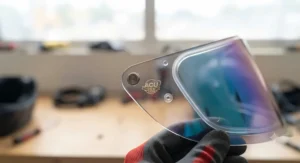
Fitting a mirror visor for track riding correctly makes a bigger difference to performance than most riders expect. Before your first session, clean the eyeport channel on the helmet itself — dust and old adhesive residue from a previous shield’s Pinlock pins can stop the new shield seating flush, leaving a gap that whistles at speed and lets in cold air.
When fitting, always work from the base plate outward: click the shield onto both side mechanisms simultaneously rather than one side first, since a shield forced onto a single side under tension is a common cause of a cracked base tab in the first thirty days of ownership. If your shield is Pinlock-ready, fit the insert before you fit the shield to the helmet, using the pins as a guide rather than forcing the insert flat — a slightly domed fit against the inner lens is normal and actually improves anti-fog contact.
For maintenance, rinse the mirror coating with lukewarm water before wiping, since dry-wiping grit across an iridium finish is the single fastest way to introduce fine scratches that catch the light distractingly at speed. Store the helmet with the shield in the fully closed position to protect the coating from dust settling on an exposed inner surface, and avoid stacking anything on top of a bag containing the helmet — mirror coatings are more delicate under point pressure than a standard clear shield. A sensible piece of general track day riding gear to pack alongside your visor is a microfibre cloth kept dry and separate from your tear-off pack, since damp tear-off residue smeared across a mirror finish is one of the most common first-session mistakes reviewers mention.
Which Rider Are You? Matching a Mirror Visor to Your Track Day
Picture three riders turning up to the same Donington Park trackday. The first is a college-age novice on a borrowed 600, budget stretched thin after paying for the day’s entry and tyres — for them, the Icon Airflite Fliteshield RST Mirror or HJC RPHA 11 Mirror makes sense, since neither commits serious money to a shield they might not stick with after one season.
The second is a mid-pack club racer doing eight or nine trackdays a year on a well-sorted sportbike, riding aggressively enough that optical clarity through fast corners genuinely affects lap times. For that rider, the Arai VAS-V Max Vision Mirror or Shark Race-R Pro Mirror earns its higher price through the wider eyeport and more resilient anti-fog performance, both of which matter across a long, demanding session rather than a single sighting lap.
The third is a sunny-weather road rider who occasionally books a trackday to enjoy a circuit without traffic, riding a touring-leaning bike and prioritising comfort over ultimate lap time. A mirror visor for sunny weather riding in this case doesn’t need to be race-spec — the Nolan X-804 RS Ultra Carbon Iridium or a mid-tier Shoei CWR-1 finish suits this profile well, balancing genuine glare reduction against a price that doesn’t sting if the shield only comes out a handful of weekends a year.
Your Track Day Visor Decision Framework
If you’re still narrowing things down, work through this in order. If budget is your primary constraint, choose the Icon Airflite Fliteshield or HJC RPHA 11 Mirror because both deliver genuine glare reduction without the premium fit-and-finish costs of a flagship shield. If your priority is racing-grade optical clarity at speed, choose the Arai VAS-V or AGV Pista GP-RR Race 3 because both are built and tested against the tightest tolerances in this guide.
If damp UK mornings are a regular feature of your trackday calendar, choose the Shark Race-R Pro Mirror because its pre-fitted Pinlock pins and Total Vision system handle humidity better than shields relying on the tint alone. If you’re mixing occasional trackdays with road use on the same helmet, remember that none of the seven shields above are road legal — plan to own a separate clear or lightly tinted road shield for the ride home, and treat the mirror visor purely as track day riding gear rather than an everyday fitment.
How to Choose a Mirror Visor for Track Riding
Choosing the right mirror visor for track riding comes down to seven practical checks, run through roughly in this order before you buy.
- Confirm exact shield compatibility. Mirror shields are helmet-specific, not universal — check your helmet’s exact model code, since even closely related models like the RPHA 11 and RPHA 70 sometimes share a shield code while others don’t.
- Decide how dark you actually need. Chrome and dark iridium finishes sit around 15-20% light transmission, ideal for bright midsummer trackdays, while lighter silver or gold tones around 30-40% suit overcast British conditions better.
- Check Pinlock readiness. If you ride early sessions or in cooler months, a Pinlock-prepared shield with the pins supplied saves buying an adapter kit separately.
- Weigh optical clarity against budget. Premium shields from Arai and Shoei hold sharper clarity at the eyeport edge; budget shields from Icon and HJC are perfectly usable but show slightly more distortion at extreme angles.
- Factor in coating durability. If you’re doing frequent trackdays, a tougher scratch-resistant coating (Arai and AGV score well here in aggregated feedback) pays for itself over a season, and it’s worth checking your helmet’s underlying safety rating on the Department for Transport’s SHARP scheme while you’re at it, since shield quality is only ever as good as the shell it’s fitted to.
- Match the shield to your riding position. Race-derived shells like the Pista GP-RR are shaped for an aggressive tuck; more relaxed shells like the Nolan X-804 RS suit an upright riding style better.
- Confirm it’s for track use only. None of the shields in this guide are road legal — check the packaging or listing explicitly states “not road legal” or “closed circuit use only” before you buy, and plan a separate road shield.
Mirror Visor vs Standard Tinted Visor: What’s the Real Difference
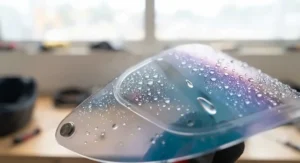
A standard tinted visor and a mirror visor for track riding both reduce glare, but they do it differently, and the distinction matters more than most buying guides admit. A tinted shield absorbs light fairly evenly across the visible spectrum, darkening your entire field of view by a fixed percentage regardless of where you’re looking. A mirror or iridium shield instead reflects a large portion of incoming light away from the coated surface, which is genuinely more effective against direct, low-angle sun — exactly the scenario riders exiting a corner into the afternoon sun encounter most often on a British circuit in summer.
For mirror visor glare control specifically, the reflective coating also reduces the “washed out” effect you get from a tinted shield when sunlight hits it at a sharp angle, because reflection scatters more of that light away rather than letting it scatter internally across the lens. The trade-off is cosmetic and practical: a mirror shield makes it harder for other riders and marshals to see your eyes and read your intentions at a junction or pit-lane merge, which is part of why mirror finishes are restricted to closed circuits under UK regulations. In practical terms, if your trackday runs through variable cloud cover, a mid-tone iridium shield like the HJC RPHA 11 Mirror in blue often performs more consistently across the day than a very dark chrome finish, which can feel almost too dark the moment the sun ducks behind cloud.
Common Mistakes When Buying a Track Day Visor
The single most common mistake buyers make is assuming a mirror shield fits any helmet from the same brand — it doesn’t, and ordering the wrong shield code is the most frequent return reason reported across UK retailers. A close second is buying the darkest chrome finish available assuming darker automatically means better glare control, when in UK conditions a mid-tone iridium often performs more usefully across a full day that includes cloud cover as well as bright sun.
Riders also commonly underestimate Pinlock compatibility, buying a shield that’s “Pinlock ready” without realising the insert itself is sold separately, then discovering their first cool, damp morning session fogs up badly without it. Another recurring error is treating a mirror shield as road-usable because it “looks similar” to a legal tinted visor — as covered in detail below, this isn’t a grey area worth risking. Finally, several reviewers across retailers mention buying based on colour alone to match helmet graphics, only to find the tint percentage of their chosen colourway is darker or lighter than expected once fitted — checking the specific light-transmission figure for your colour, not just the finish name, avoids this.
What to Expect: Real-World Performance on Track
Track day visor performance in the real world comes down to three things: how quickly your eyes adjust exiting shade into direct sun, how the shield behaves under vibration at speed, and how it copes with temperature swings between a cold pit lane and a hot, fast lap. On the first point, riders switching from a clear to a mirror shield consistently report the adjustment is immediate rather than gradual — there’s no lag equivalent to sunglasses taking a moment to work, because the reflective coating is constant regardless of light level.
On vibration, sportbike visor performance differs noticeably between shields with a snug quick-release base, like the Shoei and Arai options here, and looser generic-fit alternatives, which can develop a faint flutter at higher motorway-equivalent circuit speeds (120mph-plus on a fast straight like Silverstone’s Hangar). On temperature swings, Pinlock-prepared shields comfortably outperform tint-only mirror shields for fogging resistance in the first ten minutes of a session, particularly on a cool UK morning when the pit lane is markedly colder than the tarmac after a few laps of tyre-warming. None of this is dramatic, but across a full trackday the cumulative effect on comfort and confidence is genuinely noticeable, which is part of why experienced riders tend to pay more for the shields that get these small details right.
Mirror Visors for Different Riders: Trackday Novices, Racers and Sunny-Weather Commuters
A novice booking their first trackday needs a mirror visor for track riding that’s forgiving and inexpensive to replace if it picks up a scuff in an unfamiliar paddock environment — the Icon Airflite Fliteshield and HJC RPHA 11 Mirror both suit this brief without over-committing financially before you know if trackdays are a habit you’ll keep.
An experienced club racer chasing consistent lap times benefits most from the Arai VAS-V or AGV Pista GP-RR Race 3, where the wider eyeport and race-shell geometry translate into a genuinely clearer sightline through fast, committed corners. Meanwhile, riders using a mirror visor for sunny weather riding on a more relaxed basis — weekend trackdays on a road-registered bike rather than a dedicated circuit machine — tend to do well with the Nolan X-804 RS Ultra Carbon Iridium or a mid-tone Shark Race-R Pro finish, both of which balance genuine glare reduction against everyday comfort rather than outright race performance. Whichever category you fall into, the underlying road-riding advice covered earlier still applies off-track in principle even though it doesn’t govern closed-circuit use directly: check your visor is clean, secure and appropriate for conditions before every session.
Safety, Regulations and Track-Day Compliance Guide
This is the section worth reading carefully before you buy. In Great Britain, a visor may legally be used on the public road only if it’s a “prescribed type” under the relevant eye-protector regulations — in practice, that means it carries a BSI Kitemark or an equivalent UNECE Regulation 22 approval mark, alongside a minimum 50% light-transmission threshold. Mirror, iridium and chrome finishes sit below that transmission floor by design, which is why every shield in this guide is sold and labelled for closed-circuit or track use only, not road riding.
This isn’t a grey area enforced inconsistently — manufacturers including Shoei explicitly label their own mirrored and Spectra shields as not legal for road use, and the underlying standard is set out clearly in the SHARP helmet safety rating scheme framework operated on behalf of the UK’s Department for Transport. If you’re planning to ride to and from a trackday on the same bike, the sensible approach is to fit a road-legal clear or lightly tinted shield for the journey and swap to your mirror shield once you’re through scrutineering or signed on for the day, storing the road shield safely in your paddock bag. Most trackday organisers run their own helmet and visor checks as part of signing-on, broadly aligned with ACU or Motorsport UK guidance, so it’s worth checking your specific circuit or organiser’s rules — some are stricter than others about neutral-density tints for flag visibility, a detail worth confirming if you’re new to a venue.
Long-Term Cost & Maintenance
Total cost of ownership for a mirror visor for track riding extends beyond the shield’s sticker price. Budget for a Pinlock insert (typically £15-£35) if your chosen shield doesn’t include one, plus a pack of tear-offs (£10-£20) if you’re riding in a group where visibility from stones and debris is a real concern. Realistically, expect to replace a track-used mirror shield every one to two seasons of regular use, sooner if you’re riding dusty or gravel-adjacent circuits where fine scratches accumulate faster.
Cost-per-use is where the premium shields start to make more sense than they first appear: an Arai or Shoei shield costing £120 but lasting three full seasons of monthly trackdays works out cheaper per session than replacing a £50 budget shield every season because the coating has degraded. For riders doing fewer than five trackdays a year, that maths flips — a budget shield from Icon or HJC, replaced occasionally, is the more sensible long-term spend. Either way, storing the shield properly between uses (closed, in a padded bag, away from direct heat) extends coating life more than almost any other single habit, and costs nothing beyond a bit of discipline packing your kit bag.
Features That Actually Matter (And Those That Don’t)
Genuinely worth paying for: a snug, brand-matched quick-release base (reduces wind noise and flutter at speed), Pinlock pins supplied as standard (saves a separate purchase and fitting hassle), and a documented anti-scratch coating from a name-brand manufacturer, since aggregated reviews consistently link coating quality to how long the mirror finish stays distortion-free. Racing helmet accessories like a supplementary tear-off system are also worth having on hand for group trackdays, even if you don’t use them every session.
Less worth obsessing over: exact colour matching to your leathers or bike livery, which several reviewers admit mattered less once they were actually riding and focused on the road ahead rather than how the shield looked in photos. Similarly, the rarest, most expensive iridium finishes (like AGV’s elettro tone) don’t measurably outperform a standard silver or gold iridium for glare reduction — the premium there is largely aesthetic rather than functional, worth knowing if you’re choosing purely on a performance basis rather than wanting a specific look.
FAQ
❓ Is a mirror visor legal on the road in the UK?
❓ Do mirror visors fit any helmet of the same brand?
❓ How dark should a track day visor be?
❓ Can I use a mirror visor with a Pinlock insert?
❓ How long does a mirror visor coating last?
Conclusion
A well-chosen mirror visor for track riding solves a problem most riders don’t think about until they’re squinting through a fast corner with the sun in their eyes — and as this guide has covered, the right choice depends far more on your riding style and trackday frequency than on chasing the darkest, priciest shield available. Budget riders doing the occasional club day are genuinely well served by the Icon Airflite Fliteshield or HJC RPHA 11 Mirror, while committed club racers chasing consistent lap times get real, measurable value from the wider eyeport and tougher coatings on the Arai VAS-V or AGV Pista GP-RR Race 3.
Whichever of the seven shields here suits your riding, remember the core regulatory point: none of them are road legal, so plan your kit bag accordingly and keep a compliant clear shield for the ride to and from the circuit. If you’re still weighing up helmets as well as shields, MCN’s independently tested helmet reviews are a useful cross-reference before you commit to a shell that one of these seven visors will actually fit. Beyond that, the fitting and maintenance habits covered above — seating the shield evenly, rinsing rather than dry-wiping the coating, storing it closed and protected — will do more for how long your visor performs than almost any spec on the page. Track riding is one of the few places a small, honest upgrade like this genuinely changes how confident you feel corner after corner, session after session.
Recommended for You
- Blue Mirror Visor for Helmet: 7 Best Picks for UK Riders (2026)
- Mirror Visor Under £30: 7 Best Budget Picks for UK Riders (2026)
- Replacement Mirrored Visor for Full Face Helmet: 7 Top Picks 2026
Disclaimer: This article contains affiliate links. As an Amazon Associate, I earn from qualifying purchases. If you purchase products through these links, we may earn a small commission at no additional cost to you.
✨ Found this helpful? Share it with your friends! 💬🤗
