In This Article
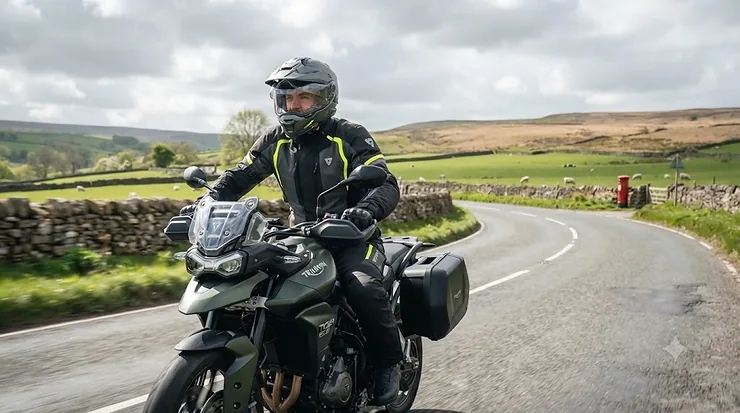
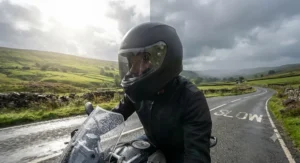
Here’s the scenario every rider knows too well: you set off in grey drizzle, the sun breaks through somewhere around junction 14, and suddenly you’re squinting like you’ve just walked out of a matinee into a summer car park. A photochromic motorcycle visor is built to solve exactly that problem — a light-reactive lens that darkens automatically in strong sunlight and clears again indoors or after dusk, so you’re not stopping on the hard shoulder to swap shields or fumbling sunglasses under your chin bar at 70mph.
This is genuinely one of those “why didn’t they do this sooner” pieces of kit, and it’s why the technology has quietly become one of the biggest motorcycle visor innovation stories of the last decade — Shoei, Nolan and a swarm of aftermarket brands are now all chasing the same idea. Below, we’ve dug into seven real, currently available options spanning budget adhesive films right through to premium OEM Transitions shields, with honest analysis of specs, aggregated review sentiment, and where each one actually earns its keep. Worth knowing upfront: UK law requires eye protection to transmit at least 50% of light, which matters more than you’d think once a visor starts darkening on its own — we’ll come back to that.
Quick Comparison Table
| Visor | Type | Price Range | Best For |
|---|---|---|---|
| Shoei CWR-1 Transitions | OEM replacement | £150–£180 | NXR/RF-SR owners wanting factory fit |
| Shoei CWR-F2 Transitions | OEM replacement | £155–£185 | RF-1400/X-15 riders, Pinlock-ready |
| Nolan X-Lite Photochromic | OEM replacement | £70–£95 | X-803/X-802 owners on a mid budget |
| HJC HJ-31 Photochromic | Aftermarket shield | £45–£65 | HJC i10/i70 riders wanting value |
| RVBASICS Self-Tinting Shield | Aftermarket shield | £35–£50 | Shoei RF-1400/Z-8/NXR2 on a budget |
| Systercol Photochromic Film | Universal film insert | £10–£20 | Any helmet, tightest budget |
| WeePro Photochromic Film | Universal film insert | £10–£20 | Trying photochromic before committing |
Reading across this table, the split is really between buying a purpose-built replacement shield — which costs more but fits like the original and handles Pinlock inserts properly — and buying an adhesive film that sits over your existing clear visor for a fraction of the price. The Shoei pair sit at the top for optical clarity and fitment precision, while the Systercol and WeePro films are the low-risk way to find out whether you actually get on with a self-tinting visor before spending serious money. None of the seven should be treated as your only eye protection in low light — more on that in the safety section below.
💬 Just one click — help others make better buying decisions too!😊
Top 7 Photochromic Motorcycle Visors: Expert Analysis
1. Shoei CWR-1 Transitions — genuine OEM fit with class-leading optics
The Shoei CWR-1 Transitions visor is the shield Shoei fits as an official accessory for the NXR, RYD and X-Spirit III, and that OEM pedigree shows the moment you clip it on — there’s no rattle, no light gap at the edges, nothing that feels bolted on as an afterthought. Independent testing on Shoei’s Transitions lens line found it moves between roughly 80% light transmission at its clearest and around 30% at its darkest, which puts the fully-tinted state close to a genuine dark smoke visor. In practice that means it earns its keep on a proper day out — dull start, bright motorway stretch, shaded lanes on the way home — rather than sitting at one fixed tint all day like a standard tinted shield. Riders who’ve bought it consistently describe it as pricey but worth it, citing fast dimming and clearing and no extra bulk added to the helmet, with several saying once you’ve tried a Transitions visor you don’t want to go back to swapping shields. On the review side, a handful of buyers also note it transforms the aesthetic of the helmet, giving it a more purposeful, sports-bike look alongside the functional upgrade — a nice bonus rather than the main event.
Pros:
- ✅ Genuine OEM fit for NXR, RYD, X-Spirit III helmets
- ✅ Fast, smooth transition cited repeatedly in reviews
- ✅ Doesn’t add bulk or fogging versus a standard shield
Cons:
- ❌ Premium price versus tinted or clear alternatives
- ❌ Darkest setting still not UK road-legal for daytime tint rules
Expect to pay in the £150–£180 range for the genuine article, and treat any listing dramatically below that with suspicion — at that price point, it’s worth paying for authenticity over a knockoff.
2. Shoei CWR-F2 Transitions — Pinlock-ready shield for RF-1400 and X-15
Built specifically for the RF-1400 and X-Fifteen platforms, the Shoei CWR-F2 Transitions shield takes the same photochromic core as the CWR-1 and adds a few track-honed extras: aerodynamic vortex generators along the top edge and a reinforced rim designed to hold its shape at speed rather than flex and distort your view. What that spec sheet doesn’t spell out is how much it matters on a modern aero-focused helmet — Shoei’s newer shells are shaped to cut turbulence at the visor line, and a shield that flexes under wind load undoes that work instantly, so the reinforcement isn’t cosmetic. It’s also compatible with the CWR-F2/CWR-F2R Pinlock insert, sold separately, which is worth budgeting for if you ride through a British winter and want the anti-fog layer working alongside the photochromic tint rather than instead of it. Buyers describe the fit as perfect and the functionality as spot-on, with more than one reviewer specifically calling out that they picked the genuine part over cheaper “impersonator” alternatives after comparing options — a detail that speaks to how many aftermarket copies exist for this specific shield.
Pros:
- ✅ Purpose-engineered vortex generators for RF-1400/X-15 aero
- ✅ Accepts genuine Pinlock insert for anti-fog performance
- ✅ Quick-change, tool-free swap system
Cons:
- ❌ Pinlock insert is a separate purchase, adding to total cost
- ❌ Only fits two specific helmet platforms, no cross-compatibility
Pricing sits close to its sibling, typically in the £155–£185 range, and given how helmet-specific it is, always double-check your exact model code before ordering.
3. Nolan X-Lite Photochromic Visor — mid-range self-tinting for X-803/X-802 owners
Nolan‘s X-Lite range has quietly built one of the more loyal followings in UK biking, and the Nolan X-Lite Photochromic Visor for the X-803, X-802, X-702, X-661 and X-603 shells brings that same reputation to a self-tinting shield without the full Shoei asking price. Where this one earns genuine credit is the transition speed reported by owners — reviewers of Nolan’s related race visor line consistently rate the clarity and sun protection as excellent without excessive darkening, alongside praise for the fit and how easily it installs. That last point matters more than it sounds: a shield that fights you on installation tends to get left in the drawer, however good the photochromic performance turns out to be. One theme worth flagging honestly is a slight green cast some owners mention on Nolan’s tinted shields generally; opinions on it are mixed, but most riders say it’s easy on the eyes rather than a dealbreaker, and it doesn’t appear to affect how the photochromic layer performs across the day.
Pros:
- ✅ Fits five popular X-Lite shell generations
- ✅ Reviewers consistently praise fit, clarity and easy installation
- ✅ Pinlock-ready posts for anti-fog compatibility
Cons:
- ❌ Slight green tint noted by some owners, though most don’t mind
- ❌ Genuine stock can be harder to find than for Shoei
At around £70–£95, this sits as the sensible middle ground for X-Lite owners who want photochromic performance without stretching to premium OEM pricing.
4. HJC HJ-31 Photochromic Visor — accessible self-tinting for i10 and i70 helmets
HJC doesn’t officially sell many photochromic OEM shields, which is where aftermarket specialists step in — the HJC HJ-31 Photochromic Visor is built specifically to fit the i10 and i70 helmets, using optically correct polycarbonate designed to avoid the waviness and distortion that cheaper photochromic films can introduce across a full tint range. It ships with factory-installed Pinlock-ready posts, so a DKS238 anti-fog insert can be added separately for genuinely fog-free cold-weather use, and the OEM-style edge seal is engineered to cut wind noise at the visor line rather than just clip on and hope for the best. We couldn’t verify a large, independently aggregated customer review base for this specific model at the time of research, so rather than invent sentiment that isn’t there, it’s worth knowing the honest picture: the spec sheet is strong and the fitment is helmet-specific by design, but you’re relying more on the manufacturer’s claims than a deep pool of owner feedback compared with the Shoei or Nolan options above. One manufacturer caution worth repeating: photochromic visors can respond to oncoming headlights in low light, so extra caution at night is sensible regardless of brand.
Pros:
- ✅ Purpose-built for HJC i10 and i70 only, precise fit
- ✅ Pinlock-ready posts pre-installed for winter riding
- ✅ Tool-free ratchet fixings for fast swaps
Cons:
- ❌ Limited independently verified review volume at time of research
- ❌ Will not fit HJC i31, CL-31 or RPHA 31 despite similar naming
Typical pricing lands in the £45–£65 range, positioning it as a solid mid-tier pick once you’ve confirmed your exact HJC model number.
5. RVBASICS Self-Tinting Face Shield — budget-friendly Shoei-compatible option
For riders running a Shoei RF-1400, Z-8 or NXR2 who don’t want to pay full OEM Transitions money, the RVBASICS Self-Tinting Face Shield is built with transition technology as a direct aftermarket alternative, going from clear to dark grey using the same light-reactive principle as the genuine part. What most buyers overlook when comparing aftermarket photochromic shields is that fitment tolerance genuinely varies between third-party manufacturers — even a shield that’s the “right” size on paper can sit fractionally proud of the shell, creating wind noise the OEM part wouldn’t. That’s the trade-off you’re weighing here: real money saved against a fit and finish that, on the available product information, hasn’t been independently reviewed at scale yet, so we’d treat early buyer feedback with a little more caution than the more established Shoei or Nolan lines above. If budget is the deciding factor and you’re prepared to accept that trade-off, it remains a genuinely interesting option for stretching a Shoei-compatible helmet further without OEM pricing.
Pros:
- ✅ Meaningful saving versus genuine Shoei Transitions pricing
- ✅ Compatible with three popular current Shoei shells
- ✅ Clear-to-dark-grey range suited to UK daylight conditions
Cons:
- ❌ Fit tolerance on aftermarket shields can vary between units
- ❌ Limited independently verified long-term review data so far
Expect a price in the £35–£50 range, making it one of the more tempting budget routes into photochromic riding for existing Shoei owners.
6. Systercol Universal Photochromic Anti-Fog Film — the low-commitment entry point
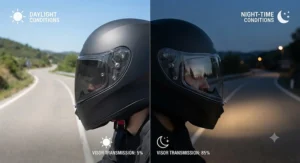
Rather than replacing your visor outright, the Systercol Universal Photochromic Anti-Fog Film sticks to the inside of your existing clear shield, giving you a self-tinting layer for a fraction of what a full replacement shield costs. According to the manufacturer, it reacts to UV intensity, staying fully clear at night, turning slightly darker on cloudy days, and reaching a deeper purple-toned tint in direct sunlight, with the added benefit of a hydrophobic, fog-resistant coating baked into the same layer. That two-in-one function is genuinely clever for the price — you’re getting anti-fog and light-adaptive tint from a single 27cm x 9cm film rather than buying two separate accessories, and the pin-free adhesive design means no drilling or clip fitting on helmets that weren’t built with Pinlock posts. The honest caveat, consistent with any film-based product at this price, is that optical clarity and durability won’t match a moulded polycarbonate shield, and the company itself advises against use on curved visor shapes.
Pros:
- ✅ Combines photochromic tint and anti-fog in one film
- ✅ No tools, pins or drilling required to install
- ✅ Genuinely low-cost way to trial the technology
Cons:
- ❌ Not suitable for strongly curved visor shapes
- ❌ Optical quality below a full replacement shield
Priced around £10–£20, it’s the cheapest legitimate way to find out whether photochromic riding suits you before committing to a premium shield.
7. WeePro Photochromic Anti-Fog Helmet Visor Film — comparable film option, wider seasonal claim
Very similar in concept to the Systercol film above, the WeePro Photochromic Anti-Fog Helmet Visor Film measures 272 x 91mm and is pitched by the manufacturer as an all-weather film that stays fully clear at night, lightens to grey on overcast days, and darkens fully in bright sun — essentially the same UV-reactive mechanism, in a slightly different size and branding. Here’s what’s worth weighing before choosing between the two nearly identical products: film size and edge-seal design vary just enough between brands that one may suit your specific visor shape better than the other, so if the Systercol doesn’t fit cleanly, this is the sensible second option to try rather than jumping straight to a full shield replacement. The manufacturer is explicit that this is a pin-free, sticker-style installation rather than a Pinlock-compatible insert, and — like the Systercol — it’s not designed for curved visor shapes, so measure your shield before ordering.
Pros:
- ✅ Simple peel-and-stick installation, no special tools
- ✅ Doubles as anti-fog protection alongside light-adaptive tint
- ✅ Affordable second option if Systercol’s size doesn’t fit
Cons:
- ❌ Same curved-visor limitation as comparable film products
- ❌ Adhesive-film optics still trail a full replacement shield
Also sitting in the £10–£20 range, the choice between this and the Systercol really comes down to which one matches your visor’s exact dimensions.
Head-to-Head: All 7 Visors Compared
| Visor | Fitment | Anti-Fog Option | Price Range | Best For |
|---|---|---|---|---|
| Shoei CWR-1 Transitions | OEM shield | Pinlock-ready | £150–£180 | Ultimate fit and finish |
| Shoei CWR-F2 Transitions | OEM shield | Pinlock (sold separately) | £155–£185 | Aero-focused RF-1400/X-15 riders |
| Nolan X-Lite Photochromic | OEM shield | Pinlock-ready | £70–£95 | Mid-budget X-Lite owners |
| HJC HJ-31 Photochromic | Aftermarket shield | Pinlock-ready posts | £45–£65 | HJC i10/i70 value seekers |
| RVBASICS Self-Tinting | Aftermarket shield | Not specified | £35–£50 | Budget Shoei-compatible upgrade |
| Systercol Film | Universal insert | Built-in | £10–£20 | Trying photochromic cheaply |
| WeePro Film | Universal insert | Built-in | £10–£20 | Alternate film fit/size |
The clearest pattern across this table is that Pinlock compatibility tends to track closely with price — the two Shoei shields and the Nolan option all carry proper Pinlock-ready posts, while the budget films fold anti-fog and tint into a single cheaper layer instead. If winter riding and demisting genuinely matter to you, that’s the deciding factor more than brand loyalty; a £15 film with built-in anti-fog can actually out-perform a £180 shield with no Pinlock insert fitted. For pure optical quality and long-term durability, though, the OEM shields still lead the pack by a clear margin.
Practical Usage Guide: Setup, Care and Your First 30 Days
Fitting a photochromic motorcycle visor is usually the easy part; getting the most out of it over the following month is where most riders either fall in love with the technology or quietly go back to their old tinted shield. Start with installation itself: for full replacement shields, always fit the visor with the helmet at room temperature — cold polycarbonate is more brittle and the ratchet mechanisms on models like the Shoei CWR-1 Transitions or HJC HJ-31 Photochromic can be stiffer than expected on a first try. For film products like the Systercol or WeePro inserts, clean the inner visor surface thoroughly with the supplied microfibre cloth first — any dust trapped under the film shows up as a permanent bubble, and that’s the single most common first-time mistake with adhesive photochromic products.
In the first 30 days, resist the urge to judge the transition speed on one ride. Photochromic molecules respond to both UV intensity and temperature, reacting faster and darkening less predictably in cold weather than in summer heat — so a visor that seemed sluggish on a chilly March morning may impress you completely by July. Store the helmet visor-down and out of direct sunlight when not in use; prolonged UV exposure while parked can fatigue the photochromic layer faster than normal riding use. For maintenance, stick to lukewarm soapy water and a microfibre cloth — never dry-wipe a photochromic coating, since grit dragged across the surface will scratch the tint layer unevenly and create patchy discolouration over time that no amount of polish will fix.
Real-World Riding Scenarios: Matching the Right Visor to Your Riding Life
Picture three different riders and the calculus looks completely different for each. First, the daily commuter grinding out 40 minutes each way on the A-roads into a city centre, dawn starts giving way to bright mid-morning glare on the way home — for this rider, a Nolan X-Lite Photochromic Visor or HJC HJ-31 Photochromic shield makes sense: enough photochromic range to handle the daily light swing, without spending Shoei money on a visor that’s getting scratched by a bike rack five days a week.
Second, consider the weekend tourer doing 200-mile round trips through changeable British weather, in and out of woodland shade, tunnels, and open moorland sun within the same hour. Here the faster, more refined transition of the Shoei CWR-F2 Transitions genuinely earns its premium price — the difference in reaction speed matters more when light conditions are swinging rapidly rather than shifting gradually across a day. Third, the budget-conscious learner or occasional weekend rider who isn’t sure photochromic technology suits their riding at all — for this rider, the Systercol or WeePro film is the obvious starting point, a way to trial the concept on an existing visor before spending three figures on committing to it properly.
Photochromic Visor Technology Explained: A Light-Adaptive Innovation Overview
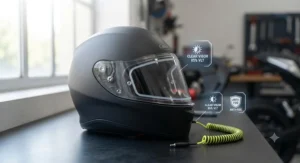
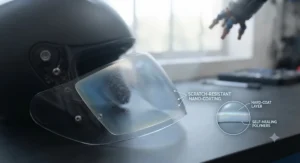
At its core, photochromic visor technology relies on light-sensitive molecules embedded in or bonded to the visor material, which physically change structure when struck by ultraviolet light. That structural change alters how much visible light the molecules absorb — more UV exposure means more absorption, which is what you perceive as the visor darkening. Remove the UV source, whether by riding into shade or after sunset, and the molecules gradually revert to their original structure, letting more light back through until the visor returns to clear.
This is genuinely one of the more elegant pieces of motorcycle visor innovation in recent years because it requires zero moving parts, no battery, and no rider input — it’s a passive chemical reaction doing all the work while you concentrate on the road. Reaction speed isn’t fixed, though; temperature plays a real role, since colder molecules move and reconfigure more slowly than warm ones, which is why the same visor can feel noticeably quicker to darken and clear in summer than in a British winter. Manufacturers apply the photochromic layer using one of two broad methods — either drawing the reactive dye into the lens material itself under heat, or bonding a photochromic coating onto the surface — and while the exact chemistry is usually proprietary, the underlying UV-reactive principle is consistent across virtually every light-adaptive visor overview you’ll find, whether it’s a premium Shoei shield or a budget adhesive film.
UV400 Rating and Light Transmission Technology: What the Numbers Actually Mean
Two figures matter far more than most product listings make clear, and confusing them is one of the most common buying mistakes. UV400 rating refers to how much ultraviolet radiation the visor blocks — a UV400 rating means the material filters out light up to 400 nanometres in wavelength, effectively blocking the vast majority of harmful UVA and UVB rays that reach the eye. This has nothing to do with tint or darkness; a completely clear visor can carry a UV400 rating, and every product featured in this guide claims UV protection at that level regardless of how dark it gets.
Light transmission technology, by contrast, measures how much visible light passes through the visor at any given tint state, expressed as a percentage. Independent testing on Shoei’s Transitions line found roughly 80% transmission at the clearest setting and around 30% at the darkest — and that lower figure is the one that genuinely matters for road legality, which we cover properly in the safety section below. When comparing photochromic visors, treat UV protection and light transmission as two entirely separate specs: a visor can offer excellent UV blocking throughout its entire tint range while still raising legal questions purely on how dark its darkest setting goes.
Helmet Visor Types Compared: Clear, Tinted, Iridium and Photochromic
| Visor Type | Light Transmission | Swap Needed? | Best For |
|---|---|---|---|
| Clear | ~85% | No | Night riding, legal baseline |
| Light tinted | ~50–80% | Sometimes | Overcast/dull daylight |
| Dark tinted | ~24–30% | Yes, for night riding | Bright sun, track use only |
| Iridium/mirror | Varies by coating | Depends on base tint | Style plus glare reduction |
| Photochromic | ~30–80%, auto-adjusting | No | All-round daylight riding |
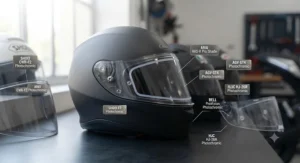
Understanding helmet visor types properly changes how you shop. A dark tinted visor looks the most dramatic and cuts glare hardest, but UK guidance is explicit that tinted visors must transmit at least 35% of light to carry a legal ECE marking, and anything darker is restricted to daytime-only use with a “for daytime use only” imprint — useless once the sun goes down, forcing a swap most riders never bother making. A photochromic shield like the Shoei CWR-1 Transitions or Nolan X-Lite Photochromic sidesteps that swap entirely by moving within roughly the same transmission range automatically, though as we’ll cover next, its darkest setting can still sit below the legal daytime threshold depending on the model.
How to Choose a Photochromic Motorcycle Visor
- Check your exact helmet model and shell code first. OEM shields like the Shoei CWR-F2 Transitions fit specific platforms only — ordering by helmet brand alone isn’t enough.
- Decide between a full shield and a film. Films like the Systercol cost far less but trail moulded shields on optical clarity and durability.
- Confirm Pinlock compatibility if you ride in cold or wet conditions. A visor without anti-fog provision becomes a liability the moment temperatures drop.
- Weigh transition speed against your typical riding conditions. Frequent, rapid light changes (tunnels, wooded roads) benefit more from a faster-reacting premium shield.
- Read the darkest-tint specification, not just marketing copy. This determines whether the visor stays within UK legal daytime transmission limits.
- Factor in genuine parts risk. Popular models like the Shoei Transitions range attract counterfeit listings — buy from established retailers.
- Budget for the anti-fog insert separately where it isn’t included, since several OEM shields sell the Pinlock lens as an add-on rather than bundled.
Common Mistakes When Buying a Photochromic Motorcycle Visor
The single most frequent error is assuming “photochromic” automatically means “road legal at every setting” — it doesn’t, and riders who buy on that assumption are sometimes caught out when their visor’s darkest tint sits below the UK’s 50% minimum transmission requirement for eye protection generally, or the separate 35% threshold for ECE-marked tinted visors specifically. A second common mistake is ordering a universal film without measuring the existing visor first; the WeePro and Systercol films are explicitly unsuitable for strongly curved shields, and a mismeasured film either won’t seal properly or will bubble within days. Third, buyers regularly skip checking whether their specific helmet generation is compatible — HJC’s own naming is a good example, since the HJC HJ-31 Photochromic fits the i10 and i70 only, not the similarly-numbered i31 or RPHA 31. Finally, plenty of riders forget that a Pinlock insert is frequently sold separately from the shield itself, discovering only after a foggy commute that their new photochromic visor needs a second purchase to perform properly in winter.
Safety, Regulations and Compliance: Is a Photochromic Visor Road Legal?
This is the section most product listings gloss over, so let’s be straightforward about it. UK regulations require eye protection worn on the road to transmit more than 50% of available light, and separately, any visor carrying an ECE 22.05 or 22.06 tinted approval marking must transmit at least 35% of light to be legally sold as a daytime tinted visor. The honest complication with photochromic shields is that their darkest setting frequently dips below these thresholds — testing on Shoei’s Transitions visor found it can drop to around 30% transmission at its darkest point, technically placing it in a legal grey area during the brightest part of a ride, even though it returns to a fully compliant clear state at night.
In practical terms, experienced commentary from the UK riding community suggests prosecutions specifically targeting photochromic visors are rare, and most riders using them report no issues — but “rarely enforced” and “technically legal” are different things, and it’s worth going in with eyes open rather than assuming a premium price tag guarantees compliance. Whichever visor you choose from this list, treat it as a comfort and glare-reduction upgrade rather than a like-for-like safety replacement for a fully compliant clear visor, and always carry or fit a genuinely clear option for night riding or if you’re at all unsure about a specific model’s darkest-state rating.
Frequently Asked Questions
❓ Is a photochromic motorcycle visor legal in the UK?
❓ How long do photochromic motorcycle visors last?
❓ Can I fit a photochromic film over an existing tinted visor?
❓ Do photochromic visors work with a Pinlock insert?
❓ Why is my photochromic visor slow to clear at night?
Conclusion
Across all seven options, there’s no single “best” photochromic motorcycle visor — there’s a best one for your specific bike, budget and riding pattern. If you own a compatible Shoei and want the closest thing to a factory-perfect fit, the Shoei CWR-1 Transitions or Shoei CWR-F2 Transitions remain the benchmark, reaction speed and optical clarity justifying the premium price for daily or long-distance riders who’ll use the feature constantly. Nolan owners get a genuinely strong middle-ground option in the Nolan X-Lite Photochromic Visor, while HJC and budget-conscious Shoei riders have real, honestly-reviewed alternatives in the HJC HJ-31 Photochromic and RVBASICS Self-Tinting Shield.
For anyone still unsure whether photochromic riding suits them at all, the Systercol Universal Photochromic Anti-Fog Film and WeePro Photochromic Anti-Fog Helmet Visor Film remove almost all the financial risk from finding out. Whichever route you take, keep the legal transmission thresholds in mind, budget for a Pinlock insert where it isn’t bundled, and treat the darkest tint setting as a feature to understand properly rather than assume.
Recommended for You
- Photochromic Visor For Touring Riders: 7 Best Picks (2026)
- Replacement Photochromic Visor: 7 Best UK Picks for 2026
- Transitions Visor for Motorbike Helmet: 7 Top UK Picks (2026)
Disclaimer: This article contains affiliate links. As an Amazon Associate, I earn from qualifying purchases. If you purchase products through these links, we may earn a small commission at no additional cost to you.
✨ Found this helpful? Share it with your friends! 💬🤗
