
In This Article
Rain hits the visor first. Long before it reaches your jacket, your gloves, or the tarmac under your wheels, it’s already smeared across the one piece of kit standing between your eyeballs and a 50mph gust of grit. A clear motorcycle visor is, without much competition, the single most safety-critical accessory on your helmet — and yet it’s usually the last thing riders think about until it’s scratched to the point of uselessness or fogging up on a roundabout at 7am in February.
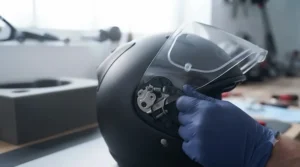
A clear motorcycle visor is a transparent, impact-rated eye shield fitted to a motorcycle helmet, designed to protect the rider’s eyes and face from wind, debris, insects and weather while preserving maximum light transmission for safe riding in low light, at night, or in the rain. Unlike tinted or mirrored options, a genuinely clear visor is legal for use at any hour and in any UK weather, which is precisely why most experienced riders keep one fitted as their default.
This guide walks through seven real, currently available clear visors — from genuine OEM Shoei and Arai shields through to budget-friendly aftermarket options — with honest analysis of what each one actually delivers on the road. We’ll also dig into scratch-resistant coatings, UV protection, and the clear-versus-tinted debate that trips up a lot of new riders. Everything here is grounded in real specifications and aggregated review sentiment; where I can’t verify a claim, I’ll say so rather than dress it up.
Quick Comparison Table
| Visor | Best For | Price Range | Pinlock-Ready |
|---|---|---|---|
| Shoei CWR-F2 | Premium touring/sport clarity | £60-£80 | Yes |
| Arai VAS-V Max Vision | Optical distortion-free riding | £45-£90 | Yes |
| AGV K3 SV / K1 S Clear Visor | Mid-range all-rounder | £30-£50 | Yes |
| Shark Race-R Pro Clear Visor | Sports/aerodynamic riding | £40-£70 | Partial* |
| HJC HJ-09 Clear Visor | Budget OEM replacement | £15-£30 | Yes (select variant) |
| Pinlock Original 70 Insert | Anti-fog upgrade, any brand | £15-£35 | N/A (insert) |
| ILM Z501 Clear Visor | Cheapest full-face option | £10-£20 | Partial* |
*Some Shark and ILM variants use a factory anti-fog coating rather than a true Pinlock post-and-lens system — more on that distinction below.
Looking at the table, the split isn’t really about who makes the “best” visor in the abstract — it’s about what your helmet accepts and how much fogging annoys you. Riders touring the length of the UK in October want genuine Pinlock compatibility more than they want a badge on the chin bar, while someone doing an 8-mile urban commute might never need it at all. Budget buyers should also note that Pinlock Original 70 Insert isn’t a standalone visor — it’s an upgrade you bolt onto a Pinlock-ready shield you already own, so don’t count it as a seventh full visor when comparing sticker prices.
If you’re weighing up whether to spend £70 on a genuine Shoei shield or £15 on a generic replacement, it helps to understand what UK law actually requires before price becomes the deciding factor — motorcycle eye protection must meet British Standard BS 4110 or an equivalent European standard, a requirement we’ll come back to in the safety section below.
💬 Just one click — help other make better buying decisions too!😊
Top 7 Clear Motorcycle Visors: Expert Analysis
1. Shoei CWR-F2 — distortion-free optics with Vortex Generator aero
The standout here is Shoei’s 3D injection-molding process, which is engineered specifically to eliminate the subtle visual warping that cheaper visors introduce at the edges of your peripheral vision. On paper this sounds like marketing fluff, but it matters more than it seems: distortion at speed is genuinely tiring on the eyes over a three-hour motorway stint, and it’s the kind of fatigue riders often blame on tinted sunglasses or dehydration rather than the visor itself.
The Shoei CWR-F2 fits the RF-1400, X-Fifteen and NXR2 helmet range and is Pinlock-ready out of the box, meaning it accepts a genuine Pinlock 70 or Pinlock EVO insert without any drilling or adaptation. Integrated Vortex Generators along the visor’s edge are designed to smooth airflow and cut wind noise at speed — a detail that matters more on a naked or adventure bike than a fully-faired sportsbike, where the screen already does most of that work.
Based on the spec comparison with own-brand alternatives from HJC and AGV, the Shoei CWR-F2 targets riders who already own a premium Shoei lid and want a shield that matches the helmet’s own optical standard rather than a generic aftermarket fit. Reviewers consistently report that the fit onto RF-1400 and X-Fifteen shells is precise, with the quick-change mechanism swapping shields in seconds without tools, and several buyers specifically praised the “high-end” feel and clarity compared with third-party replacements.
Pros:
- ✅ 3D-molded lens with genuinely distortion-free peripheral vision
- ✅ Tool-free quick-change mechanism for fast shield swaps
- ✅ Pinlock-ready for cold-weather and wet-weather anti-fog upgrade
Cons:
- ❌ Only fits specific Shoei helmet shells, not universal
- ❌ Sits at the top of the price range for a replacement shield
At around £60-£80, the Shoei CWR-F2 isn’t cheap for what is, fundamentally, a plastic shield — but if you’ve already invested £400-plus in the helmet it clips onto, matching it with a shield that won’t distort your view at motorway speed is arguably the more rational spend than trying to save £30 with a generic alternative.
2. Arai VAS-V Max Vision — widest field of view with Pro Shade compatibility
What most buyers overlook about Arai visors is that the company deliberately avoids building an internal drop-down sun visor into most of its helmet range, on the reasoning that cutting a slot into the EPS liner for a mechanism compromises the shell’s structural consistency. Instead, Arai routes sun protection externally through the Pro Shade System, a flip-down peak that clips over the top of the clear Arai VAS-V Max Vision shield rather than replacing it.
The base Arai VAS-V Max Vision clear visor fits the Quantic, Concept-X, RX-7V, Profile-V and Rapide-series helmets, and is Pinlock-prepared for an anti-fog insert sold separately. Reviewers reliably rate the optical clarity here extremely highly — one long-term reviewer described it as offering “exceptional optical clarity with no distortion” alongside a seal that matches genuine Arai fitment standards, which tracks with Arai’s reputation for hand-finished quality control on every shell that leaves its Japanese factory.
Here’s what to weigh before buying into this system: the Pro Shade add-on peak is sold separately from the base clear visor, so touring riders who want both day glare protection and a spare clear shield for night riding are effectively buying two components. That’s a genuine advantage for riders who hate carrying a second full visor in a tank bag, but it’s also an extra line item that a Shark or HJC buyer simply doesn’t have to think about.
Pros:
- ✅ Widest field of view in this shortlist, per Arai’s Max Vision design
- ✅ External Pro Shade peak protects the primary visor from scuffing
- ✅ Renowned optical clarity with minimal edge distortion
Cons:
- ❌ Pro Shade sun-peak sold as a separate accessory, adding cost
- ❌ Fitment is Arai-specific and not interchangeable with other brands
Expect to pay roughly £45-£90 depending on whether you’re buying the plain clear shield or the complete Pro Shade-equipped version — a wide bracket, so check exactly which configuration a listing includes before assuming you’re getting the flip-up peak as standard.
3. AGV K3 SV / K1 S Clear Visor with Pinlock 70 — the sensible mid-range all-rounder
The AGV K3 SV / K1 S Clear Visor occupies the gap that a lot of buying guides skip past: not premium enough to brag about, but genuinely well-specified enough that most riders never think about upgrading it. It uses AGV’s GT4 shield design and MaxVision Pinlock geometry, meaning the anti-fog insert recesses into the visor rather than sitting proud of the surface — a detail that reduces the chance of the insert catching wind noise or vibrating loose at speed.
Key specs with real-world meaning: the visor is compatible across the K1, K1 S, K3 SV and K5 S helmet family, which is a wider net than Shoei or Arai cast with any single shield, since AGV shares tooling across several models in that range. That compatibility spread is genuinely useful if you own more than one AGV lid, or if you’re buying second-hand and aren’t entirely sure which sub-variant you’ve ended up with.
Based on the spec comparison, this is the visor for a rider who wants Pinlock-grade fog resistance and a reputable brand name without paying Shoei or Arai’s premium. Aggregated seller and marketplace listings describe the fit as straightforward and the optical quality as solid for the price bracket, though it’s worth noting independently verified customer review volume for this specific shield on Amazon UK is thinner than for the bigger-name options, so treat sentiment here as reasonably positive but less exhaustively tested by the crowd.
Pros:
- ✅ Shared fitment across K1, K1 S, K3 SV and K5 S helmets
- ✅ Genuine Pinlock 70 compatibility with a recessed insert design
- ✅ Noticeably cheaper than Shoei or Arai equivalents
Cons:
- ❌ Fewer tint and finish variants than premium competitors
- ❌ Smaller pool of verified UK customer reviews to draw on
At roughly £30-£50 for the visor (with the Pinlock 70 insert typically sold separately for another £25-£35), this is a strong pick for riders who want anti-fog performance without stretching to Shoei or Arai pricing.
4. Shark Race-R Pro Clear Visor — aerodynamic sports optics for track-day riders
The Shark Race-R Pro Clear Visor is built for a different priority set than the touring-focused shields above it: aerodynamics and a low-profile racing silhouette over anti-fog convenience. It fits the Race-R, Race-R Pro and Speed-R helmet lines, all of which are designed with a sportsbike riding position in mind, where the visor sits closer to the rider’s face and the airflow over the shell is more aggressive than on an upright commuter or adventure lid.
Key specs worth interpreting rather than just listing: several Race-R Pro variants ship with a factory anti-fog treatment baked directly onto the lens surface rather than a true two-pane Pinlock system. That’s a meaningfully different technology — a coating that degrades gradually with cleaning and UV exposure, rather than a removable insert you can simply swap for a fresh one. One detailed long-term review from a rider who logged extended miles in the Race-R Pro helmet noted plainly that “the visor is not Pinlock compatible” on standard fitment, and that while the anti-fog coating performed well initially, it needed a refresh after a period of regular use — an honest trade-off rather than a dealbreaker, but one buyers should walk in expecting.
The spec sheet won’t tell you this, but user reports suggest the trade-off is worth it for the intended audience: riders tucked in behind a screen at speed, prioritising a slim, low-drag visor profile over maximum anti-fog longevity, will likely never notice the coating’s limits the way a stop-start winter commuter would.
Pros:
- ✅ Aerodynamic profile designed for sportsbike riding positions
- ✅ Quick-release fitment matching Shark’s Race-R helmet family
- ✅ Sharp, race-oriented optical clarity for track and B-road use
Cons:
- ❌ Standard variant relies on a coating rather than a true Pinlock insert
- ❌ Anti-fog coating needs periodic refreshing rather than a swap-in fix
Pricing typically sits in the £40-£70 range depending on the specific tear-off-ready or anti-fog-treated variant chosen, putting it roughly level with the AGV K3 SV / K1 S Clear Visor but aimed squarely at a different kind of rider.
5. HJC HJ-09 Clear Visor — the budget OEM replacement with genuinely wide fitment
If there’s a visor on this list built for sheer practicality, it’s the HJC HJ-09 Clear Visor. HJC has spread the HJ-09 mounting system across an unusually large slice of its helmet catalogue — CL-15, CL-16, CL-17, CL-SP, CS-R1, CS-R2, CS-R3, FS-10, FS-15, IS-16, FG-15, AC-12 and TR-1 all take the same shield, which means spares are easy to find and cross-shop even years after your specific helmet model has been discontinued.
The listing description for the HJC HJ-09 Clear Visor highlights an anti-scratch coating and tool-free attachment, and reviewers on the retail listing describe it as straightforward to fit without any special tools or trips to a dealer. What the spec sheet doesn’t dwell on is the trade-off implicit in that wide compatibility: because the HJ-09 mounting geometry has to work across a dozen-plus helmet shells with slightly different chin bar shapes, the seal and wind-noise performance won’t quite match a shield engineered for one specific shell, the way the Shoei CWR-F2 is tuned exclusively for its host helmets.
A separate Pinlock-ready variant of the HJ-09 exists for riders who want anti-fog capability, so it’s worth double-checking the exact listing before ordering — the plain clear shield and the Pinlock-prepared version look near-identical in photos but aren’t interchangeable once you’ve bought an insert for the wrong one.
Pros:
- ✅ Fits an unusually wide range of HJC helmet models
- ✅ Genuinely budget-friendly at roughly £15-£30
- ✅ Anti-scratch coating included as standard on the OEM part
Cons:
- ❌ Base version isn’t Pinlock-ready; check the listing carefully
- ❌ Seal and wind-noise control trail single-model-specific shields
For riders on a tight budget who just need a scratched-up visor replaced with a genuine OEM part rather than an unbranded copy, the HJC HJ-09 Clear Visor is hard to beat on value.
6. Pinlock Original 70 Clear Anti-Fog Insert — the upgrade almost every rider skips
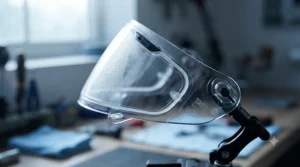
This one isn’t a visor at all — it’s the single accessory most likely to transform how any Pinlock-ready shield performs on a cold, wet UK morning. The Pinlock Original 70 Clear Anti-Fog Insert works on a moisture-absorbing principle: rather than relying on a coating to resist condensation, it creates a sealed air gap between the outer visor and the insert lens, so warm, humid breath never contacts the cold outer surface directly. Reviewers overwhelmingly frame this as a genuine before-and-after moment rather than a marginal improvement, with one long-term user reporting no misting at all through a heavy December cold snap after fitting one, and describing it as changing their entire outlook on cold-weather riding.
Key specs with real-world meaning: the “70” in the name refers to Pinlock’s mid-tier product line, sitting between the entry-level Pinlock 30 and the more heavy-duty Pinlock 120 and 200 lenses used in MotoGP-spec applications. For the vast majority of UK commuting and touring use, the 70 is the sweet spot — durable anti-fog performance without paying a premium for racetrack-grade endurance you’ll rarely need on the A-road network.
What most buyers overlook is that this insert only works with a visor that’s genuinely Pinlock-prepared and matched to the correct DKS product code for your specific shield shape — buying a generic “universal” insert and expecting it to seal properly against, say, a Shoei CWR-F2 shell is a common and avoidable mistake covered in more detail further down this guide.
Pros:
- ✅ Dramatically reduces misting in cold or wet UK conditions
- ✅ Cheaper than replacing an entire visor for anti-fog capability
- ✅ Compatible across most major Pinlock-ready visor brands
Cons:
- ❌ Requires matching the correct DKS code to your exact visor
- ❌ Needs correct pin tension to seal fully at the edges
At roughly £15-£35 depending on the shape variant, this is arguably the best value-for-money item on this entire list — not because it’s the cheapest outright, but because of how disproportionately it improves winter riding safety for the money.
7. ILM Z501 Clear Replacement Visor — the cheapest genuinely usable full-face option
The ILM Z501 Clear Replacement Visor exists at the opposite end of the market from the Shoei CWR-F2 and Arai VAS-V Max Vision, and it’s honest about it. ILM builds DOT-approved budget full-face helmets, and the Z501 clear shield is the standard replacement part for that specific model, with clear, tinted and mirrored variants sold separately so riders can build out a small collection of shields without buying multiple full helmets.
Key specs with real-world meaning: the listing specifies a minimum 85% visible light transmissivity and horizontal/vertical field-of-view figures that meet, though don’t dramatically exceed, the baseline you’d expect from any road-legal shield. It’s Pinlock-compatible in mounting terms, using posts designed to accept an aftermarket insert, though buyers should treat “Pinlock compatible” and “Pinlock-ready” as loosely used terms in this budget segment and check specific listings before assuming a genuine Pinlock lens will seal perfectly.
Honest analysis here: the ILM Z501 Clear Replacement Visor is not competing on optical precision with anything else on this list, and reviewers of ILM’s broader helmet range tend to describe the gear as solid entry-level kit rather than a match for premium-brand clarity. For a learner rider, a track-day spare, or anyone who simply wants a cheap, functional clear shield without the financial commitment of a branded replacement, it does the job the law requires without pretending to be more than that.
Pros:
- ✅ Lowest price point of any visor in this comparison
- ✅ Easy tool-free swap onto the matching ILM helmet shell
- ✅ Available in clear, tinted and mirrored variants from one range
Cons:
- ❌ Optical clarity noticeably behind premium-brand shields
- ❌ Only fits the specific ILM Z501 helmet model, not universal
Priced at roughly £10-£20, the ILM Z501 Clear Replacement Visor is the visor to buy when your budget, not your standards, is doing the deciding.
Top 7 Clear Motorcycle Visors: Full Comparison
| Visor | Fitment | Pinlock | Price Range | Best For |
|---|---|---|---|---|
| Shoei CWR-F2 | RF-1400, X-Fifteen, NXR2 | Yes | £60-£80 | Distortion-free premium clarity |
| Arai VAS-V Max Vision | Quantic, Concept-X, RX-7V, Profile-V | Yes (insert extra) | £45-£90 | Widest field of view, touring |
| AGV K3 SV / K1 S Clear Visor | K1, K1 S, K3 SV, K5 S | Yes | £30-£50 | Mid-range value all-rounder |
| Shark Race-R Pro Clear Visor | Race-R, Race-R Pro, Speed-R | Coating (partial) | £40-£70 | Sportsbike/track aerodynamics |
| HJC HJ-09 Clear Visor | 12+ HJC models (see listing) | Select variant | £15-£30 | Cheap, wide-fitment OEM swap |
| Pinlock Original 70 Insert | Any matched Pinlock-ready shield | N/A | £15-£35 | Anti-fog upgrade accessory |
| ILM Z501 Clear Visor | ILM Z501 helmet only | Compatible mount | £10-£20 | Absolute budget floor |
Reading across this table, the real decision point isn’t brand prestige — it’s whether your existing helmet is Pinlock-ready at all. If it isn’t, spending extra on the Shoei CWR-F2 or Arai VAS-V Max Vision buys you a visor with the anti-fog groundwork already in place, whereas pairing something like the ILM Z501 Clear Visor with the Pinlock Original 70 Insert gets a budget setup most of the way to premium fog resistance for a fraction of the outlay. Riders chasing outright optical sharpness for long motorway stints should lean toward the top two rows; everyone else is better served matching fitment first and worrying about badge later.
✨ Don’t Miss These Exclusive Deals!
🔍 Take your clear motorcycle visor shortlist to the next level with these carefully selected picks. Click on any highlighted item to check current pricing and availability, and see which one actually fits the helmet you already own.
Practical Usage Guide: Fitting, Cleaning and Maintaining Your Clear Visor
Getting a new clear visor onto your helmet correctly matters more than most riders assume — a shield that isn’t seated properly on both pivot points can whistle at speed, fog unevenly, or worse, pop loose on a bumpy back road. Most quick-release systems, including those on the Shoei CWR-F2, AGV K3 SV / K1 S Clear Visor and HJC HJ-09 Clear Visor, use a simple side-plate mechanism: align the visor’s mounting tabs with the helmet’s pivot gears, press until you hear or feel a click on both sides, then cycle the visor fully open and closed once before riding to confirm it’s seated.
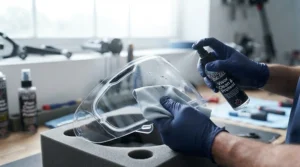
In the first 30 days, avoid two common mistakes. First, don’t clean a brand-new visor with anything abrasive, including paper towels or dry cloths — road grit trapped under a dry wipe is what actually causes most of the fine scratching riders blame on “cheap plastic,” regardless of how good the coating is. Rinse with lukewarm water first, then wipe with a genuinely soft microfibre cloth. Second, if you’ve fitted a Pinlock insert like the Pinlock Original 70 Clear Anti-Fog Insert, resist the urge to over-tighten the pins — the seal needs a small amount of give to sit flush; cranking it down hard can actually create the very gaps that let fog creep in at the edges.
For ongoing maintenance, a light monthly wipe-down with a helmet-specific cleaner (never household glass cleaner, which can degrade anti-scratch coatings over time) keeps optical clarity consistent. Riders who commute daily through UK winters should also get into the habit of checking the Pinlock seal every few weeks, since insert lenses can shift slightly with repeated visor opening and closing.
Real-World Scenario: Which Clear Visor Suits Your Riding?
The daily commuter. Picture a rider doing a 12-mile run into a city centre, five days a week, through a genuinely mixed British winter — frost some mornings, driving rain on others, the occasional dry, bright afternoon on the way home. This rider’s priority isn’t outright optical perfection; it’s reliability and anti-fog performance at traffic-light speeds, where airflow through the helmet is minimal and breath fogging is at its worst. The AGV K3 SV / K1 S Clear Visor paired with a genuine Pinlock Original 70 Clear Anti-Fog Insert is a sensible match here — proven fog control without premium-tier spend on a visor that spends most of its life below 30mph.
The weekend sportsbike rider. This rider covers 150 miles on a Sunday, mostly A- and B-roads, tucked in behind a small screen at speeds where wind noise and drag genuinely matter. For them, the Shark Race-R Pro Clear Visor‘s aerodynamic profile is a legitimate functional advantage, not just styling, and the occasional need to refresh the anti-fog coating is a fair trade for a shield that sheds wind buffet cleanly at speed.
The long-distance tourer. Covering 300-plus miles in a single day, often crossing several weather systems, this rider values consistency above all else — a visor that won’t distort their view after six hours in the saddle, and a sun-glare solution that doesn’t mean stopping to swap shields. The Arai VAS-V Max Vision with its Pro Shade System addresses exactly this brief, letting the rider flip a peak down for glare and back up for dusk without ever removing the base clear visor itself.
Problem → Solution: Fixing Common Clear Visor Issues
Problem: the visor fogs up at every traffic light. This is almost always a ventilation or seal issue rather than a visor quality issue. Solution: crack the visor slightly at very low speeds, and if it’s a persistent problem, fit a Pinlock Original 70 Clear Anti-Fog Insert matched to your specific shield’s DKS code rather than a generic universal film, which rarely seals as effectively.
Problem: fine scratches appearing after only a few months. This usually traces back to dry-wiping the visor with whatever’s to hand — a sleeve, a paper towel, a dusty glove. Solution: always rinse with water first and use a dedicated microfibre cloth; consider the Shoei CWR-F2 or Arai VAS-V Max Vision if you ride somewhere gritty or dusty often, since their coatings are generally reported as holding up better over time than budget alternatives.
Problem: the visor won’t seat properly after a replacement swap. Nine times out of ten this is a mismatched model — visors that look near-identical, like the plain and Pinlock-ready versions of the HJC HJ-09 Clear Visor, are not interchangeable with each other’s mounting posts in every case. Solution: cross-check the exact part code against your helmet’s model number before ordering, not just the helmet family name.
Problem: budget visor looks hazy or slightly distorted at the edges after a few weeks. Solution: this is a known trade-off with entry-level shields like the ILM Z501 Clear Visor, where the injection-molding tolerances are looser than premium equivalents. If distortion is bothering you on longer rides, it may be worth stepping up to the HJC HJ-09 Clear Visor or AGV K3 SV / K1 S Clear Visor rather than replacing the budget shield repeatedly.
Problem: sun glare is a daily nuisance but you don’t want to carry a spare tinted visor. Solution: either the Arai VAS-V Max Vision with its external Pro Shade peak, or simply switching between a stored tinted shield and your clear visor depending on time of day — see the clear-versus-tinted comparison below for the legal considerations either way.
How to Choose a Clear Motorcycle Visor
- Confirm fitment first, not brand. Check your helmet’s exact model number against the visor’s compatibility list — a Shoei CWR-F2 simply won’t clip onto an AGV shell, no matter how good the reviews are.
- Decide whether you need Pinlock compatibility. If you ride year-round in the UK, genuine Pinlock-ready fitment (like the AGV K3 SV / K1 S Clear Visor or Shoei CWR-F2) pays for itself the first foggy commute it saves you from.
- Match the visor to your riding style. Aerodynamic, race-oriented shields like the Shark Race-R Pro Clear Visor suit sportsbike positioning; wide-field touring shields like the Arai VAS-V Max Vision suit upright, long-distance riding.
- Set a realistic budget band. There’s a genuine, honest quality gap between the sub-£20 ILM Z501 Clear Visor and the £60-plus premium tier — decide which trade-offs matter to you before comparing prices.
- Check the anti-scratch coating claims against real reviews, not just the listing copy — coatings vary meaningfully in how they hold up after six months of daily use.
- Verify UK road-legal certification markings before buying anything from an unfamiliar seller — a visor without a BSI Kitemark or valid ECE approval number isn’t legal to use on the road, regardless of how clear or well-reviewed it looks.
- Budget for a Pinlock insert separately if buying a Pinlock-ready shield, since most listings sell the base visor and the anti-fog lens as two separate purchases.
What Makes a Clear Visor Scratch Resistant?
A scratch resistant clear visor isn’t simply “harder plastic” — it’s a polycarbonate shell with a separately applied hard coating, usually a silicon-based or UV-cured layer bonded to the surface during manufacturing. This coating is what actually resists the fine abrasion from road grit, insect strikes and repeated cloth-wiping; the polycarbonate underneath is inherently soft and would scuff almost immediately without it.
What most buyers overlook is that scratch resistance and impact resistance are two entirely separate properties, tested differently, and a visor can excel at one while being merely adequate at the other. The Shoei CWR-F2 and HJC HJ-09 Clear Visor both advertise anti-scratch coatings, but reviewers consistently report that coating durability correlates more closely with how the owner cleans the visor than with the manufacturer’s marketing claims — dry-wiping grit across any coated surface will eventually cut through even a premium finish.
Practically, this means the buying decision shouldn’t rest entirely on which brand claims the toughest coating. A mid-range scratch resistant clear visor cared for properly will outlast a premium one that’s routinely wiped dry with a dusty glove. If longevity matters more than brand prestige, prioritise a visor with a documented anti-scratch coating — most options on this list, including the budget-tier ILM Z501 Clear Visor, include one as standard — and pair it with sensible cleaning habits covered in the maintenance guide above.
UV Protection Clear Visor for Motorcycle Riding: What You Need to Know
It’s a common assumption that only tinted or mirrored visors offer meaningful sun protection, but a genuinely well-made UV protection clear visor for motorcycle use blocks the overwhelming majority of harmful UV radiation without darkening your field of view at all. Polycarbonate is naturally UV-absorbent to a degree, and most reputable manufacturers, including Shoei on the Shoei CWR-F2, specifically advertise blocking around 99% of UV rays as a standard feature rather than a premium add-on.
Here’s what the spec sheet won’t dwell on: prolonged UV exposure through an unrated visor is linked by ophthalmic researchers to cumulative eye conditions including cataracts and other degenerative effects, since UV radiation penetrates and damages the cornea and lens over repeated exposure, not just in a single dramatic incident. For riders who spend hours in direct sunlight on longer routes, a clear visor with genuine UV-blocking properties is doing real protective work even though there’s no visible tint to remind you it’s there.
The practical takeaway is straightforward: don’t assume every clear visor offers equivalent UV protection just because none of them look tinted. Check the listing specifically for a stated UV-blocking percentage, and treat vague marketing language like “UV protected” with a little more scepticism than a specific figure like the roughly 99% commonly cited by premium brands such as Shoei and Arai on shields like the Arai VAS-V Max Vision.
Clear Visor vs Tinted Visor for Daily Riding
The clear visor vs tinted visor decision for daily riding really comes down to one legal fact most new riders don’t appreciate: in the UK, any visor used on the road must transmit at least 50% of available light, and tinted visors meeting that threshold are legally marked “daylight use only.” That means a tinted shield genuinely can’t be your everyday visor if your commute spans both daylight and darkness — swapping back to clear (or carrying a spare) isn’t optional once the sun goes down.
| Factor | Clear Visor | Tinted Visor |
|---|---|---|
| Legal for night riding | Yes | No — daylight use only |
| Glare reduction | Minimal | Significant in bright sun |
| Light transmission | Near-total | Must be ≥50% to stay legal |
| Typical rider use case | All-day, all-weather default | Bright summer daytime only |
| Extra visor needed for full-day riding | No | Yes, if riding past dusk |
Interpreting that table: a clear visor is the only genuinely practical single-visor solution for anyone riding across variable daylight hours, which covers most UK commuters for at least half the year. A tinted visor earns its keep specifically on bright, sunny daytime rides, but functionally requires either a second clear shield in reserve or a system like the Arai VAS-V Max Vision‘s Pro Shade peak, which lets a rider toggle glare protection without ever swapping the base clear visor at all.
For daily riding specifically, most experienced riders default to clear and reach for sunglasses under the helmet on genuinely bright days, simply because the legal restriction on tinted visors makes them a part-time solution rather than a full-time one. If you’re only ever going to own one visor, this is precisely why clear remains the sensible default choice — a point echoed in the UK government’s own official safety advice on motorcycle helmets, visors and goggles.
Visor Scratch Resistance Coating: Care, Reapplication and Lifespan
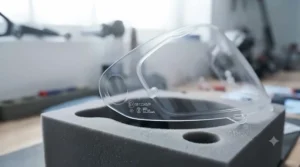
A visor scratch resistance coating isn’t permanent, and understanding its realistic lifespan helps set expectations before you’re disappointed by a shield that looked pristine on delivery. Most anti-scratch coatings, including those on the Shoei CWR-F2, AGV K3 SV / K1 S Clear Visor and HJC HJ-09 Clear Visor, are rated to resist fine abrasion for roughly two to three years of regular use under normal care — not indefinitely, and considerably less if the visor is routinely cleaned incorrectly.
Common mistakes that shorten a coating’s working life include dry-wiping grit off the surface, using household glass or window cleaner (many contain ammonia, which can degrade certain coatings over time), and storing the helmet visor-down where it can pick up scuffs from a shelf or tank bag zip. None of these mistakes are dramatic on their own, but they compound: a visor wiped dry twice a week for a year accumulates far more fine scratching than one rinsed properly each time.
Unlike a car windscreen, most motorcycle visor coatings genuinely cannot be professionally reapplied once worn through — the coating is typically bonded during manufacturing rather than sprayed on as an aftermarket service, so the practical solution once scratching starts affecting visibility is replacement, not restoration. This is precisely why budget shields like the ILM Z501 Clear Visor or the HJC HJ-09 Clear Visor make sense as a rolling replacement strategy for riders who accept they’ll swap the visor every year or two regardless of brand, rather than stretching for a premium coating they’ll still eventually need to replace.
Common Mistakes When Buying a Clear Motorcycle Visor
The single most common mistake is ordering by helmet brand alone rather than the exact model number — HJC alone spreads its HJ-09 mount across more than a dozen different helmet lines, and a visor that fits one CL-series shell won’t necessarily fit another model bearing a similar-sounding name. Always cross-check the specific model code, not just the brand.
A second frequent error is assuming “Pinlock compatible” and “Pinlock-ready with insert included” mean the same thing. In almost every case across this list, including the Shoei CWR-F2, Arai VAS-V Max Vision and AGV K3 SV / K1 S Clear Visor, the base visor and the Pinlock insert lens are sold as two separate purchases — budgeting for the visor alone and being surprised by a second charge for the insert is entirely avoidable with a five-minute check of the listing.
Buyers also regularly underestimate how much cleaning habits affect visor lifespan, expecting a premium coating to compensate indefinitely for dry-wiping grit off the surface — as covered above, no coating fully offsets poor cleaning technique. Finally, price-anchoring on the cheapest available listing without checking for a valid BSI Kitemark or ECE approval marking is a genuine safety mistake, not just a value one; an unmarked visor found via an unfamiliar third-party seller may not meet the legal eye-protection standards set out in UK regulation, regardless of how convincing the listing photos look.
Long-Term Cost & Maintenance: Total Cost of Ownership
Thinking purely in upfront price misses the real cost picture for a clear motorcycle visor, because most riders replace a visor two to four times over the life of a single helmet, either due to coating wear, an accidental drop, or simply switching bikes and needing a differently-fitted shield. Running the numbers over roughly five years of regular riding, a budget strategy built around the ILM Z501 Clear Visor or HJC HJ-09 Clear Visor — replacing every 18 months or so at £15-£30 a time — lands in a broadly similar total spend to buying one premium Shoei CWR-F2 or Arai VAS-V Max Vision shield and expecting it to last the full period with careful cleaning.
The variable that actually swings this calculation is the Pinlock Original 70 Clear Anti-Fog Insert. Because the insert lens is replaceable independently of the outer visor, riders who invest in the roughly £15-£35 anti-fog upgrade once can often keep using it across two or three subsequent outer-visor replacements, provided the DKS code matches. That makes the Pinlock insert arguably the single best long-term-value purchase on this entire list, since its cost amortises across multiple visor swaps rather than being a one-time, one-visor expense.
For riders trying to minimise total cost of ownership without compromising safety, a sensible strategy is: buy a mid-range, genuinely Pinlock-ready shield like the AGV K3 SV / K1 S Clear Visor, pair it with a matched Pinlock 70 insert, and budget for outer visor replacement roughly every two years rather than chasing the absolute cheapest option every single time a scratch appears.
✨ Ready to Sort Your Visor Once and For All?
🔍 Compare fitment, Pinlock compatibility and price across the full shortlist above before you commit — the right clear visor for your exact helmet model is usually only a few clicks away.
Safety, Regulations & UK Road-Legal Compliance Guide
Every visor covered in this guide needs to satisfy the same baseline legal requirement to be used on UK roads: compliance with British Standard BS 4110 or an equivalent European standard offering at least the same level of protection, typically evidenced by a BSI Kitemark or a UNECE ‘E’ approval marking bearing an approval number starting with 05 or 06. This isn’t a minor administrative detail — UK legislation specifically defines the eye-protector grades and marking requirements that any visor or goggle must display to be legally used while riding.
For clear visors specifically, light transmission compliance is rarely an issue, since a genuinely clear shield transmits far more than the legal 50% minimum threshold that applies to any tinted alternative. Where riders do run into trouble is buying unbranded, unmarked replacement shields from marketplaces with no verifiable certification — a visor without a visible BSI Kitemark or a UNECE ‘E’ mark and approval number simply isn’t legal for road use, regardless of how well it appears to fit or how positively it’s reviewed.
It’s also worth understanding how helmet and visor safety testing is independently verified in the UK. The government-run SHARP scheme rates full-face and system helmets using standardised impact and protection criteria, giving riders an independent reference point beyond manufacturer marketing when researching a new helmet-and-visor combination. None of the seven visors in this guide replace the need to check your own specific helmet’s certification status, but buying genuine, correctly-fitted OEM shields — as opposed to unmarked third-party copies — is the single most reliable way to stay within both the letter and the spirit of UK eye-protection law.

Frequently Asked Questions
❓ Is a clear visor legal to ride with at night in the UK?
❓ How often should I replace my motorcycle visor?
❓ Does a Pinlock insert fit any clear visor?
❓ Can I use a scratched visor if the scratches are only minor?
❓ What's the difference between anti-fog coating and a Pinlock insert?
Conclusion
Choosing a clear motorcycle visor genuinely comes down to matching three things correctly: your exact helmet model, your realistic budget, and how much you actually ride in fog-prone conditions. The Shoei CWR-F2 and Arai VAS-V Max Vision reward riders who’ve already invested in a premium helmet and want optical clarity to match; the AGV K3 SV / K1 S Clear Visor sits in a genuinely sensible middle ground for riders who want Pinlock-grade fog resistance without premium pricing; the Shark Race-R Pro Clear Visor earns its keep specifically for sportsbike riders chasing aerodynamic performance; and the HJC HJ-09 Clear Visor and ILM Z501 Clear Visor prove that a genuinely functional, legally compliant clear visor doesn’t have to cost a fortune.
If there’s one upgrade worth prioritising regardless of which outer visor you choose, it’s pairing a genuinely Pinlock-ready shield with the Pinlock Original 70 Clear Anti-Fog Insert — it’s the single cheapest change that measurably improves safety on the exact mornings UK riding gets hardest: cold, damp, and foggy at every junction. Whichever combination you land on, check the certification marking before you buy, match the exact model number to your helmet, and budget realistically for the fact that even the best visor is a wear item, not a lifetime purchase.
Recommended for You
- 7 Best Replacement Clear Visor for Full Face Helmets (2026)
- Pinlock Ready Clear Visor Guide 2026: 7 Best Picks Compared
- Anti-Fog Clear Visor for Motorbike Helmet: 7 Best Picks 2026
Disclaimer: This article contains affiliate links. As an Amazon Associate, I earn from qualifying purchases. If you purchase products through these links, we may earn a small commission at no additional cost to you.
✨ Found this helpful? Share it with your friends! 💬🤗
