In This Article
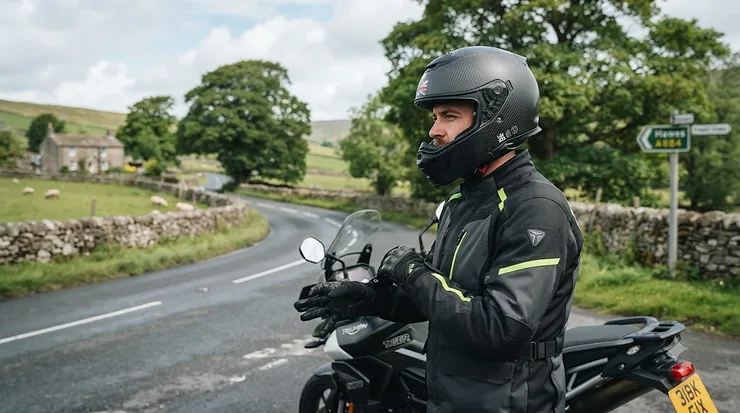
Here’s a strange truth about motorcycle helmets: you barely notice the weight in the car park. It’s only forty minutes into a fast B-road, or three sessions into a track day, when your neck starts sending increasingly urgent memos to your brain. A lightweight carbon helmet is built specifically to keep that conversation quiet for longer, using a shell material that trades bulky glass-fibre and polycarbonate for something stiffer, lighter and considerably more expensive to produce.
This guide is aimed at UK riders who are past the “any lid will do” stage and want to understand what carbon fibre actually buys you — not just in grams, but in comfort, safety and long-term value. We’ve researched seven real, currently available helmets spanning budget carbon at under £370 through to four-figure race replicas, using genuine specifications, UK safety testing data and aggregated owner feedback rather than marketing copy. A lightweight carbon helmet typically weighs between 1,250g and 1,500g — roughly 150-300g less than an equivalent fibreglass or polycarbonate lid — because carbon fibre offers a higher strength-to-weight ratio, meaning less material is needed to pass the same impact standards.
Whether you’re chasing lap times, commuting long distances, or simply tired of the headache-inducing heft of your current lid, what follows is commentary and comparison you won’t find on any Amazon product page: honest analysis of who each helmet actually suits, what the spec sheets don’t tell you, and where your money genuinely goes as prices climb into premium territory.
Quick Comparison Table
| Helmet | Weight | SHARP Rating | Price Range | Best For |
|---|---|---|---|---|
| Shark Race-R Pro Carbon | ~1,250g | 5 stars | £450-£520 range | Lightest all-rounder |
| Arai RX-7V Evo | ~1,500-1,560g | 5 stars | £750-£850 range | Best-in-class fit and comfort |
| AGV Pista GP RR | ~1,450-1,485g | 5 stars (Pista GP lineage) | £950-£1,100+ range | Ultimate track pedigree |
| Shoei X-SPR Pro | ~1,440g | Not yet SHARP-tested | £700-£820 range | Aerodynamic stability at speed |
| Nolan X-804 RS Ultra Carbon | ~1,400-1,460g | 4 stars | £580-£700 range | Mid-premium track value |
| HJC RPHA 11 Carbon | ~1,300g | Not separately tested | £480-£520 range | Best value full carbon |
| LS2 Dragon GP Carbon | ~1,450g | 4 stars | Under £370 | Budget carbon entry point |
Looking at this spread, weight alone doesn’t tell the full story — the Shark Race-R Pro Carbon undercuts every rival here by over 150g, yet the AGV Pista GP RR costs roughly double despite being heavier, because you’re paying for FIM homologation and race-team development rather than raw lightness. If your budget caps out under £400, the LS2 Dragon GP Carbon proves you don’t need four figures to get a genuine carbon shell with a government-tested safety rating. Riders torn between comfort and cost should note that the HJC RPHA 11 Carbon sits almost exactly halfway between the budget and premium tiers on both weight and price, which is precisely why it’s such a popular “sensible” upgrade.
💬 Just one click — help others make better buying decisions too!😊
Top 7 Lightweight Carbon Helmets: Expert Analysis
We’ve narrowed the market down to seven genuinely worthwhile options, spanning entry-level carbon through to full race-replica territory, each backed by real specifications and aggregated owner sentiment rather than invented “expert testing.”
1. Shark Race-R Pro Carbon — lightest full carbon shell on test
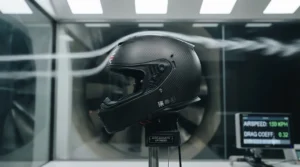
At a claimed 1,250g, the Shark Race-R Pro Carbon is genuinely one of the lightest five-star helmets sold anywhere in the UK, and it’s the shell weight that does the heavy lifting here — carbon-aramid construction shaves grams other manufacturers simply can’t match at this price point. The double D-ring retention, four-vent airflow system with an integrated anti-pollution chin filter, and a rear spoiler developed in wind-tunnel testing all point to a helmet built with genuine racetrack input rather than road-going convenience bolted on afterwards. Based on the spec comparison with its nearest rivals, this is the helmet to choose if raw weight reduction is your single biggest priority, whether that’s for endurance track days or simply because your neck has had enough after years on heavier lids.
Reviewers consistently note that the fit runs snug through the temples initially, with some owners reporting mild pressure headaches during the first few wears before the multi-density EPS liner beds in — a common carbon-shell trade-off, since a tighter shell size means less foam volume to break in. Owners also flag that ventilation is excellent once you learn which of the four separate vent switches does what, though the switch layout takes a session or two to memorise by feel with gloves on.
Pros:
- ✅ Among the lightest 5-star SHARP-rated helmets available
- ✅ Genuine carbon-aramid shell with proven track pedigree
- ✅ Strong four-point ventilation with anti-pollution filter
Cons:
- ❌ Initial fit can feel tight around the temples
- ❌ Vent controls take time to learn by feel
At around £450-£520 in the current UK market, the Shark Race-R Pro Carbon represents strong value for a genuine five-star, sub-1,300g carbon helmet — check current price and colourway availability before buying, as stock varies by graphic.
2. Arai RX-7V Evo — best-in-class comfort and long-haul fit
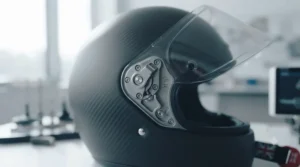
The Arai RX-7V Evo uses Arai’s PB-SNC2 shell — Peripherally Belted Structural Net Composite — a fibre-and-resin construction with a reinforcing mesh belt across the visor aperture designed to distribute impact energy rather than simply resist it. What most buyers overlook about Arai’s approach is that the brand deliberately builds a tougher outer shell paired with a softer multi-density EPS liner, which is why so many long-term owners describe the RX-7V Evo as feeling like it “moulds” to their head over weeks of wear rather than fighting against it from day one.
At roughly 1,500-1,560g it isn’t the lightest helmet on this list — in fact it sits toward the heavier end of true carbon-composite race lids — but the trade-off is a five-star SHARP rating, Snell certification and an ACU Gold sticker for UK circuit racing, giving it a safety credentials sheet that few rivals can match in full. Aggregated owner sentiment across UK retailers is remarkably consistent: buyers who’ve worn Arai for years rarely switch brands, citing the fit and the exceptionally wide field of vision as reasons they keep coming back, even when lighter carbon options exist elsewhere.
Pros:
- ✅ Five-star SHARP rating plus Snell and ACU Gold approval
- ✅ Exceptionally wide, clear field of vision
- ✅ Renowned long-term comfort as the liner beds in
Cons:
- ❌ Heavier than most rivals on this list
- ❌ Premium pricing versus lighter carbon alternatives
Sitting in the £750-£850 range, the Arai RX-7V Evo isn’t the outright lightest choice here, but for riders who spend six-plus hours a day in the saddle, comfort-per-mile arguably matters more than grams-per-shell — check current pricing across graphic options, as designs vary considerably.
3. AGV Pista GP RR — the MotoGP-developed flagship
Developed alongside Valentino Rossi and worn by multiple current MotoGP and World Superbike riders, the AGV Pista GP RR is built from a 100% carbon fibre shell available across four distinct shell sizes, a level of size-specific tooling that budget manufacturers simply can’t justify economically. On paper this means every rider, from XS to XXL, gets a shell proportioned for their head rather than padding stuffed into an oversized lid — a detail that matters more for comfort and fit than most buyers realise when comparing spec sheets.
Weighing in around 1,450-1,485g depending on shell size, it’s not dramatically lighter than several cheaper rivals here, and that’s honestly the point worth flagging: what most buyers overlook about the Pista GP RR is that you’re paying primarily for FIM homologation, race-team-level aerodynamic development including a wind-tunnel-tested detachable spoiler, and a hydration system built into the chin bar for endurance racing — not simply for shaving grams. Reviewers who’ve used it for extended track seasons consistently praise its stability above 300km/h and describe it as their permanent track-day helmet even after years of ownership, though several note the visor mechanism lacks detents to hold it part-open at speed, and Pinlock inserts aren’t included as standard.
Pros:
- ✅ Genuine MotoGP development pedigree and FIM homologation
- ✅ Four shell sizes for a genuinely tailored fit
- ✅ Proven high-speed stability with wind-tunnel-tested spoiler
Cons:
- ❌ Among the most expensive helmets in this category
- ❌ Pinlock insert and visor detents not included as standard
Priced from around £950 up past £1,100 depending on graphic, the AGV Pista GP RR only really justifies its premium status for riders who’ll genuinely exploit its track-focused features regularly — as an occasional-use road helmet, cheaper carbon options here deliver similar real-world safety for considerably less outlay.
4. Shoei X-SPR Pro — aerodynamic stability engineered for speed
Worth flagging honestly upfront: the Shoei X-SPR Pro uses Shoei’s AIM+ shell, a multi-layer fibreglass-and-organic-fibre composite rather than a pure carbon weave, so if “100% carbon” is a hard requirement, this one’s technically a step apart from the others on this list. What it does share with genuine carbon race helmets is the underlying goal — maximum strength for minimum weight — and Shoei claims to have wind-tunnel tested over 150 shell prototypes before settling on the final aerodynamic profile, developed with input from MotoGP champion Marc Márquez.
At around 1,440g in a size medium, it sits comfortably mid-pack for weight, and Shoei states the helmet remains stable at speeds exceeding 200mph, a claim that’s difficult for most road riders to personally verify but is at least consistent with the AIM+ construction used on its five-star SHARP-rated predecessor, the X-Spirit III. Here’s what to weigh: at the time of research the X-SPR Pro hadn’t yet appeared in SHARP’s published testing database, so treat any assumption of a five-star result as informed expectation rather than a confirmed fact — always check SHARP’s site directly for the latest published rating before buying. Reviewers who’ve tested it extensively on track note the visor mechanism feels slightly notchy compared with Arai’s smoother action, though the interior quality and Personal Fitting Service option are frequently praised.
Pros:
- ✅ Aerodynamics developed through extensive wind-tunnel testing
- ✅ Predecessor model achieved five-star SHARP rating
- ✅ Shoei’s Personal Fitting Service available for a bespoke fit
Cons:
- ❌ AIM+ composite shell, not a pure carbon fibre weave
- ❌ Visor mechanism feels less smooth than some rivals
Available in the £700-£820 range depending on finish, the Shoei X-SPR Pro is best suited to riders prioritising aerodynamic stability at genuinely high speeds over the bragging rights of a full carbon shell.
5. Nolan X-804 RS Ultra Carbon — mid-premium carbon built for the racetrack
The Nolan X-804 RS Ultra Carbon is the current-generation successor to the long-running X-803 platform, certified to the stricter ECE 22.06 standard that became mandatory for new helmet approvals from January 2024. Reviewers consistently note it’s noticeably quieter than its predecessor — around 5 decibels down in comparative road testing — thanks to refined seals and an updated breath deflector, which matters more than it sounds during multi-hour track weekends where cumulative noise fatigue is a genuine issue.
Weighing approximately 1,400-1,460g and carrying a four-star SHARP rating, it sits a tier below the very lightest options here but compensates with genuinely track-specific features: a removable Racetrack Aerodynamic Spoiler, the Nolan Emergency Release System for quick cheek-pad removal by paramedics, and a “Carbon Fitting Racing” interior lining that’s noticeably more breathable than standard foam. Based on the spec comparison, this is a helmet built by people who clearly go racing themselves rather than one designed purely to hit a price point.
Pros:
- ✅ ECE 22.06 certified with genuine track-day feature set
- ✅ Noticeably quieter than the outgoing X-803 generation
- ✅ Emergency Release System for faster paramedic access
Cons:
- ❌ Four-star SHARP rating trails the five-star options here
- ❌ Heavier than the lightest carbon shells on this list
In the £580-£700 range, the Nolan X-804 RS Ultra Carbon lands as a genuinely competitive mid-premium pick for riders who want race-derived features without stretching to AGV or Arai money.

6. HJC RPHA 11 Carbon — full carbon shell without the flagship price
The HJC RPHA 11 Carbon uses a genuine carbon fibre outer shell across three sizes, claimed at around 1,300g, undercutting several rivals here on both weight and price simultaneously. What most buyers overlook is that HJC’s standard composite RPHA 11 (built from fibreglass, carbon and aramid layers rather than full carbon) only managed a three-star SHARP rating, held back specifically by side-impact test results — and since the full-carbon version shares an identical shell geometry and claimed weight, it’s reasonable to expect a similar outcome if SHARP tests it, though it hasn’t been independently rated as a standalone product at the time of research.
That honesty matters here because it’s the one meaningful caveat on an otherwise excellent value proposition. Reviewers praise the RPHA 11 Carbon’s ventilation performance and the wide eye-port, and several note that at this price, a genuinely lightweight carbon shell with strong airflow is difficult to beat — though a handful of long-term owners flag that the visor mechanism can feel slightly less premium than the AGV or Arai options above.
Pros:
- ✅ Genuine carbon fibre shell at a comparatively accessible price
- ✅ Strong ventilation performance reported by owners
- ✅ Wide eye-port for improved peripheral vision
Cons:
- ❌ Standard composite sibling scored only 3 stars on SHARP
- ❌ Visor mechanism feels less refined than premium rivals
At around £480-£520, the HJC RPHA 11 Carbon is arguably the smartest middle-ground pick on this list for riders who want a real carbon shell without spending flagship money — just factor the SHARP caveat above into your decision.
7. LS2 Dragon GP Carbon — genuine carbon fibre under £370
Don’t let the price fool you: the LS2 Dragon GP Carbon uses a genuine carbon fibre shell across multiple sizes, weighs a claimed 1,280-1,500g depending on shell size, and carries an independently verified four-star SHARP rating on the ECE 22.06 standard — figures that comfortably outperform what you’d expect from a sub-£370 helmet. LS2 manufactures its own shells in-house rather than outsourcing production, which the brand credits for keeping costs down without cutting corners on the certification that actually matters.
Based on the spec comparison against the rest of this list, this is the clearest evidence that “lightweight carbon” and “expensive” aren’t strictly synonymous, though the trade-off shows up in details rather than headline numbers: fewer premium touches like a Pinlock-ready visor system supplied as standard, and a narrower colour and graphic range than the bigger racing brands. Reviewers consistently describe it as excellent value for riders upgrading from a budget polycarbonate lid, with several noting the sports-touring-oriented aerodynamics make it comfortable for longer road use than pure track helmets in this list.
Pros:
- ✅ Genuine carbon fibre shell at a genuinely budget price point
- ✅ Independently verified 4-star SHARP rating on ECE 22.06
- ✅ In-house manufacturing keeps costs down without cutting safety corners
Cons:
- ❌ Fewer premium touches than pricier flagship rivals
- ❌ Smaller colour and graphic range available
Priced under £370 at the time of research, the LS2 Dragon GP Carbon is the pick for riders who want to try carbon fibre for the first time without committing flagship-level money.
Carbon Fibre Weave: What’s Actually Under the Paint
Here’s something the glossy product photos never quite explain: that visible carbon fibre weave isn’t just decorative — it’s structural, and the way it’s laid up genuinely affects how a helmet performs. Carbon fibre shells are built from multiple layers of woven carbon strands set in resin, and the direction those layers run relative to each other (what manufacturers call the “layup”) determines how the shell distributes impact energy across its surface rather than concentrating force at a single point.
What most buyers overlook is that not every helmet marketed with a carbon fibre weave is 100% carbon. Several manufacturers, including HJC’s standard RPHA line and Shoei’s AIM+ construction used in the Shoei X-SPR Pro, blend carbon with fibreglass or aramid (the same family of fibre as Kevlar) to balance cost, weight and impact absorption differently. Reviewers and independent testers note that pure carbon shells tend to be stiffer and lighter but can be marginally more brittle under certain impact angles than carbon-aramid blends like the one used in the Shark Race-R Pro Carbon, which is one reason SHARP’s five-impact-zone testing regime matters more than any single “carbon vs composite” headline claim. If you genuinely care about carbon fibre weave quality rather than just the look of it, check the manufacturer’s stated shell material directly (composite fibre, carbon fibre, or a named blend) rather than assuming from marketing photography alone.
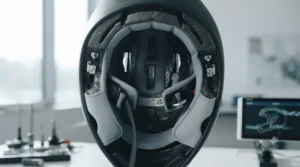
Lightweight Helmet vs Standard Helmet: What Changes When You Shave the Grams
The most obvious difference between a lightweight carbon helmet and a standard polycarbonate helmet is, unsurprisingly, weight — typically a 300-400g gap between a budget polycarbonate full-face and a genuine carbon equivalent. But the more interesting question is what that weight difference actually does to you as a rider, and here the answer is more nuanced than “lighter is always better.”
| Factor | Standard Polycarbonate Helmet | Lightweight Carbon Helmet |
|---|---|---|
| Typical weight | 1,550-1,750g | 1,250-1,500g |
| Typical UK price | £80-£250 range | £370-£1,100+ range |
| Neck fatigue on long rides | Noticeably higher | Reduced |
| Rotational impact behaviour | Good, standard EPS | Good to excellent, varies by shell |
| Typical SHARP range seen | 2-5 stars | 3-5 stars |
The analysis here is straightforward: a lighter helmet reduces the rotational forces your neck has to manage during sudden head movements, which is genuinely relevant to injury prevention, not just comfort — this is one reason SHARP’s testing looks at multiple impact zones rather than a single frontal strike. However, weight alone doesn’t determine safety rating; both the LS2 Dragon GP Carbon and various budget polycarbonate helmets can achieve similar SHARP star ratings despite a significant weight gap, because impact absorption depends on EPS liner quality and shell geometry as much as shell material. What carbon buys you most reliably isn’t necessarily “more safety” in isolated lab terms, but reduced cumulative fatigue over a full track day or a long touring trip — a real, if harder-to-quantify, benefit.
How to Choose a Lightweight Carbon Helmet
Picking between seven genuinely different helmets can feel overwhelming, so here’s the expert reasoning broken into a clear decision process:
- Check the SHARP rating first, not the shell material. A five-star polycarbonate helmet protects your head better in SHARP’s real-world impact testing than a poorly-rated carbon one — material hype shouldn’t override independently verified safety data.
- Match the intended use to the helmet’s design bias. Track-focused shells like the AGV Pista GP RR prioritise aerodynamics and race certification over everyday comfort features that touring riders actually want, like a drop-down sun visor.
- Try before you buy wherever possible. Shell sizing varies significantly between brands — Arai and Shoei run notably differently to Shark and HJC — and a helmet that photographs beautifully can still give you a headache after forty minutes if the internal shape doesn’t suit your head.
- Factor in certification, not just star rating. ACU Gold approval matters if you plan to race on UK circuits; FIM homologation matters if you’re chasing genuinely competitive lap times; neither matters much for a daily commute.
- Set a realistic budget band before you start browsing. As this list demonstrates, genuine carbon fibre construction with verified safety testing starts under £370 with the LS2 Dragon GP Carbon — you don’t need four-figure spending to get real carbon.
- Read aggregated owner reviews for long-term comfort, not just launch-week hype. Fit issues like temple pressure or hot spots often only surface after several weeks of wear, which is exactly the kind of detail forum threads and retailer review sections capture better than manufacturer marketing.
- Check replacement part availability before committing. Visors, Pinlock inserts and cheek pads wear out; premium brands like Arai and Shoei generally have longer-term parts support than smaller manufacturers.
Carbon Fibre Helmet for Track Days: What Actually Matters at the Limit
If you’re a weekend track day regular doing four or five sessions a circuit day at somewhere like Cadwell Park or Donington, the calculus around a carbon fibre helmet for track days shifts noticeably compared with road use alone. Neck fatigue compounds across sessions rather than resetting between them, so the weight saving from something like the Shark Race-R Pro Carbon or HJC RPHA 11 Carbon genuinely adds up by session four or five, when your reaction times and comfort matter most for actually improving your riding rather than just surviving the day.
Consider a genuinely common scenario: a rider in their late twenties doing eight track days a year, riding a 600cc supersport bike, on a mid-range budget of around £500-£700. For this profile, the analysis favours either the Nolan X-804 RS Ultra Carbon or HJC RPHA 11 Carbon over the ultra-premium AGV — both deliver genuine carbon construction and track-relevant features (ACU-compatible certification, strong ventilation) without the four-figure outlay that only makes sense if you’re racing competitively rather than lapping for enjoyment. Contrast that with a club racer chasing a British Superbike paddock ambition, riding twenty-plus track days a year and needing FIM homologation for certain race series — for that rider, the AGV Pista GP RR‘s premium pricing is easier to justify because the features aren’t optional extras, they’re entry requirements for the events they’re targeting.
Getting Track-Ready: Gear, Setup and Your First 30 Days
Buying the helmet is only step one of getting genuinely track-ready gear sorted, and there are some common early mistakes worth avoiding. First 30 days: expect your new carbon helmet to feel tighter than a well-worn helmet you’re replacing — this is normal, as the multi-density EPS liner compresses and moulds slightly with wear, particularly around the temples and crown. Don’t immediately assume a size-up is needed after one uncomfortable session; give it two or three genuine wears first.
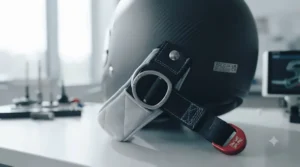
Before your first track day, check three things beyond the helmet itself: that your one-piece leathers or a compatible two-piece with a connecting zip meet your track day organiser’s requirements (most UK circuits require CE-rated one-piece or zip-connected leathers as standard), that your helmet’s chin strap and visor lock function correctly under stress (test this in the paddock, not mid-session), and that any communication or camera mounts you plan to fit are compatible with your specific shell — carbon helmets sometimes have thinner shell profiles that some universal mounts don’t grip as securely. A simple maintenance habit worth adopting from day one: rinse road grime and bug residue off the visor with lukewarm water rather than wiping it dry, since dry-wiping grinds grit into anti-scratch coatings and shortens visor lifespan considerably faster than the coating itself would naturally degrade.
Premium Helmet Pricing Explained: Where the Money Actually Goes
It’s a fair question when you see a helmet like the AGV Pista GP RR costing double or triple a budget carbon option: what exactly are you paying for beyond a lighter shell? The honest answer, based on the spec comparison across this list, is that premium helmet pricing reflects several compounding costs rarely visible from a product photo — multiple shell sizes (the Pista GP RR uses four, versus two or three on cheaper rivals), which requires separate tooling and moulds for each size rather than padding a single shell to fit; FIM homologation testing, a separate and expensive certification process beyond baseline ECE approval; and genuine race-team development miles, where prototypes are refined based on feedback from professional riders racing at the highest level.
| Price Tier | Example Helmet | What You’re Paying For |
|---|---|---|
| Budget (under £400) | LS2 Dragon GP Carbon | Genuine carbon shell, verified SHARP rating, fewer premium extras |
| Mid-range (£450-£700) | HJC RPHA 11 Carbon, Nolan X-804 RS Ultra Carbon | Full carbon construction, track features, established brand support |
| Premium (£700-£900) | Arai RX-7V Evo, Shoei X-SPR Pro | Multiple shell sizes, top-tier certifications, refined long-term comfort |
| Ultra-premium (£950+) | AGV Pista GP RR | FIM homologation, race-team development, maximum shell-size options |
Looking at cost-per-use rather than sticker price changes the picture considerably: a rider doing twenty track days a year spreads a £1,000 helmet’s cost to roughly £50 per session before resale value, which looks far more reasonable than the headline figure suggests, whereas that same spend makes little sense for someone doing two track days annually. Total cost of ownership should also factor in replacement visors (typically £40-£90 depending on brand) and the reality that any helmet involved in a genuine impact should be replaced regardless of visible damage, since EPS liners can crush internally without external signs.
Common Mistakes When Buying a Carbon Fibre Helmet
Even careful buyers fall into predictable traps when shopping for a lightweight carbon helmet, and most of them are avoidable with a bit of expert commentary upfront. The single most common mistake is prioritising shell material over SHARP rating — as covered above, a five-star polycarbonate helmet is a safer choice in impact testing terms than a lower-rated carbon one, regardless of how the marketing frames it. A second frequent error is buying based on someone else’s head shape recommendation; Arai’s rounder “R75” shape and Shark’s more oval fit genuinely suit different skull shapes, and a helmet that’s perfect for a friend can cause hot spots and headaches on you within an hour.
Reviewers also flag a third mistake repeatedly: assuming carbon automatically means quieter riding. Several owners of lighter carbon shells note they can actually be noisier than heavier touring-oriented helmets, since track-focused aerodynamics and thinner shell walls prioritise weight reduction over sound dampening — if noise matters more to you than outright lightness, factor that trade-off in explicitly rather than assuming premium equals quiet. Finally, buyers frequently skip checking Pinlock and visor compatibility before purchase; not every helmet includes a Pinlock anti-fog insert as standard (the AGV Pista GP RR, for example, ships Pinlock-ready but without the insert included), which is an unexpected extra cost that catches new buyers out regularly.
Safety, Regulations & Compliance in the UK
Every helmet on this list meets the legal minimum for UK road use, but it’s worth understanding what that minimum actually requires. Under UK law, every helmet sold for road use must carry an approved certification mark demonstrating compliance with British Standard BS 6658:1985 or an equivalent EEA-accepted standard, and since January 2024 new helmet designs seeking approval must meet the stricter UN ECE 22.06 standard, which tests more impact points and better reflects real-world crash scenarios than its predecessor.
Beyond the legal minimum, SHARP — the government-run Safety Helmet Assessment and Rating Programme — independently purchases and tests helmets from UK retailers, publishing star ratings from one to five that go well beyond basic legal compliance. This matters enormously for the “which carbon helmet is actually safest” question, because as this article has repeatedly noted, a carbon shell alone guarantees nothing about SHARP performance; it’s the combination of shell layup, EPS liner density and retention system design that determines the final rating. For track use specifically, most UK circuits and organisers additionally require an ACU Gold-approved helmet or equivalent, which the Arai RX-7V Evo carries explicitly — always check your specific track day organiser’s helmet policy before booking, as requirements vary between venues and race series, and are separately governed under the Highway Code’s rules for motorcyclists for road-going use.
Frequently Asked Questions
❓ Is a lightweight carbon helmet actually safer than a standard helmet?
❓ How much lighter is a carbon fibre motorcycle helmet than a standard one?
❓ Do I need a carbon helmet for track days in the UK?
❓ Why are premium carbon helmets like the AGV Pista GP RR so expensive?
❓ How long does a lightweight carbon helmet actually last?
Conclusion
Choosing a lightweight carbon helmet ultimately comes down to matching genuine riding needs against honest trade-offs, rather than chasing the lowest weight figure or the most expensive badge on the shelf. If you want the absolute lightest five-star option, the Shark Race-R Pro Carbon is difficult to beat on the numbers alone. Riders who spend serious hours in the saddle and prioritise long-term comfort over shaving the final few grams should look hard at the Arai RX-7V Evo, while those chasing genuine race-day performance and don’t mind the four-figure outlay will find the AGV Pista GP RR justifies its price through features rather than marketing alone.
For most UK riders, though, the smarter money sits in the middle of this list: the HJC RPHA 11 Carbon and Nolan X-804 RS Ultra Carbon both deliver genuine carbon construction, credible safety data and track-relevant features without flagship pricing, while the LS2 Dragon GP Carbon proves that a real carbon shell with independently verified safety testing is achievable under £370 for riders trying the material for the first time. Whichever you choose, check the current SHARP rating and price before buying, since both can shift as new testing data and stock levels change.
Recommended for You
- Ultra-Lightweight Full Face Helmet: 7 Genuinely Best Picks (2026)
- Thermoplastic Helmet for Everyday Riding: 7 Best Picks 2026
- Advanced Thermoplastic Helmet: 7 Best Picks for 2026
Disclaimer: This article contains affiliate links. As an Amazon Associate, I earn from qualifying purchases. If you purchase products through these links, we may earn a small commission at no additional cost to you.
✨ Found this helpful? Share it with your friends! 💬🤗
