In This Article
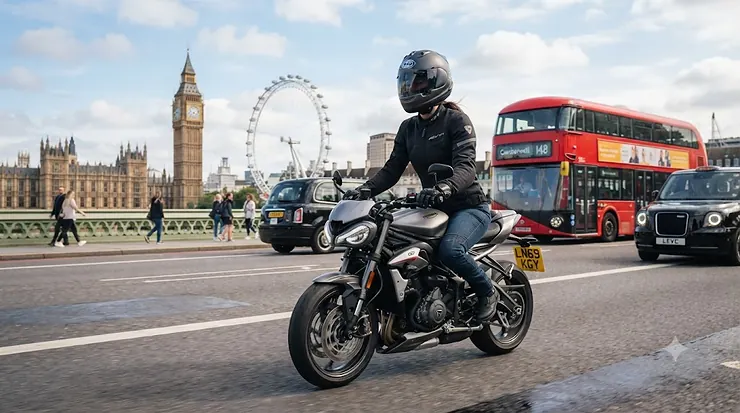
Somewhere around junction four of your regular route, the sun drops to exactly windscreen height and turns your visor into a blinding sheet of white noise. If that sentence made you wince in recognition, you already know why a tinted visor for sunny commutes earns its keep far more often than most riders expect — not on the occasional summer blast down a B-road, but twice a day, every day, precisely when you’re tired, in traffic, and least able to afford a few seconds of squinting. This isn’t a track-day accessory. It’s daily infrastructure for anyone who rides towards a low sun on the way to or from work.
The trouble is, “get a tinted visor” is where most advice stops, and the category is genuinely more complicated than it looks — smoke tints, photochromic shields, Pinlock inserts, and full-helmet upgrades all solve slightly different problems, and UK law has firm opinions about which ones you can legally wear after dark. This guide compares seven real, currently available products — from a £15 Pinlock insert to a solar-powered photochromic shield — with honest analysis grounded in real specifications and aggregated review sentiment, so you can pick the right sun protection visor for commuting without guessing.
What Is a Tinted Visor for Sunny Commutes?
A tinted visor for sunny commutes is a motorcycle helmet shield, insert, or automatically adjusting lens designed to cut glare and UV exposure during bright daylight riding, while still meeting UK legal light-transmission rules. Options range from fixed smoke tints and Pinlock inserts to photochromic shields that darken and clear on their own.
Quick Comparison Table
| Product | Best For | Tint Behaviour | Price Range |
|---|---|---|---|
| Pinlock 70 Light Smoke Insert | Cheapest glare fix | Fixed light smoke, road-legal | £15–£25 |
| Universal 3-Snap Flip-Up Smoke Visor | Open-face helmets on a budget | Fixed smoke, flip up/down | £15–£25 |
| HJC HJ-26ST Light Tinted Visor | Road-legal daily tint | Fixed light tint | £30–£45 |
| HJC HJ-26ST Dark Smoke Visor | Strongest fixed glare cut | Fixed dark smoke, daylight/track use | £30–£50 |
| Shoei CWR-1 Transitions Shield | No-swap convenience | Auto-photochromic | £110–£150 |
| Bell Qualifier DLX MIPS | Buying a new lid anyway | Built-in photochromic | £220–£280 |
| Shark IRID Photochromic Visor | Fastest-reacting tint | Solar-powered instant photochromic | £300–£350 |
The split that matters most here isn’t budget versus premium, it’s fixed tint versus photochromic. Fixed-tint options like the Pinlock 70 Light Smoke Insert and both HJC visors are cheap, simple, and road-legal in daylight, but you’ll still need a clear visor on standby for the ride home after dusk. Photochromic options — the Shoei CWR-1 Transitions Shield, Bell Qualifier DLX MIPS, and Shark IRID Photochromic Visor — solve that swap problem entirely by adjusting themselves, at a meaningfully higher price. Which side of that line you land on really depends on whether your commute crosses the dawn or dusk boundary regularly.
💬 Just one click — help other make better buying decisions too!😊
Top 7 Tinted Visors for Sunny Commutes: Expert Analysis
1. Pinlock 70 Light Smoke Insert — cheapest way to cut glare without losing your clear visor
The Pinlock 70 Light Smoke Insert‘s standout feature is that it doesn’t ask you to give anything up — it clips into your existing Pinlock-ready clear visor as a second inner layer, reducing glare while keeping the outer shield’s original approval and shape intact.
Based on the spec comparison, this is fundamentally a different approach to tinting than a replacement shield: rather than swapping the whole visor, you’re adding a lens that reduces light transmission evenly across the whole field of view without shifting colour perception, which manufacturer specifications describe as ideal for light-to-moderate sunny conditions rather than harsh midday glare. Reviewers consistently note that fitting takes minutes once you know the trick of the pin tension, and that it pairs naturally with the anti-fog benefits Pinlock inserts are best known for — useful on cooler commuting mornings that turn bright by lunchtime.
Pros:
- ✅ Keeps your existing visor’s road-legal approval intact
- ✅ Doubles up as anti-fog protection on cold mornings
- ✅ Cheapest genuine glare-reduction option on this list
Cons:
- ❌ Only works if your visor is already Pinlock-ready
- ❌ Mild tint won’t cut harsh midday glare fully
At around £15–£25, it’s the lowest-commitment way to test whether a tint actually helps your particular commute before spending more.
2. Universal 3-Snap Flip-Up Smoke Visor — budget glare control for open-face helmets
For riders on open-face or three-quarter helmets, the Universal 3-Snap Flip-Up Smoke Visor‘s big selling point is fit-anywhere simplicity — it clips onto the standard three-snap mounting found on the vast majority of open-face lids from major and budget brands alike, and flips up or down in a single motion without removing your helmet.
What most buyers overlook about this model is that “universal” fit comes with a genuine trade-off: it’s rarely as snug or optically precise as an OEM shield built for one specific helmet shell, and aggregated review sentiment flags noticeable variation in build quality between sellers of what is otherwise a fairly commodity product. On paper, this means it suits a rider who wants basic, cheap glare relief on a retro or commuter open-face lid rather than someone chasing optical perfection. Reviewers generally describe wind noise and fit as acceptable rather than excellent, and specifically recommend checking for a certification mark before buying, since not every universal listing carries one.
Pros:
- ✅ Fits almost any standard 3-snap open-face helmet
- ✅ Flip up/down in one motion, no helmet removal needed
- ✅ Genuinely inexpensive for basic glare relief
Cons:
- ❌ Fit and optical quality vary noticeably between sellers
- ❌ Certification marks aren’t guaranteed on every listing
Prices sit around £15–£25 — worth it as a budget fix, provided you check for a genuine approval mark before checkout.
3. HJC HJ-26ST Light Tinted Visor — road-legal daily tint from a major helmet brand
The HJC HJ-26ST Light Tinted Visor‘s standout feature is that it’s a genuine OEM replacement shield built specifically for HJC’s RPHA 70 and RPHA 11 helmets, rather than a generic bolt-on — meaning the fit, seal, and locking mechanism match what came on the helmet originally.
Here’s what the spec sheet won’t spell out clearly: HJC’s own retailer listings note this light tint is intended for road use, distinct from the brand’s darker options which several sellers explicitly flag as unsuitable for public roads. That distinction matters enormously for commuters, since it’s the difference between a visor you can legally wear at 7am in September and one that technically needs swapping before you set off. Reviewers consistently praise the Pinlock-ready design, which lets you stack an anti-fog insert on top of the tint for a genuinely all-weather daily setup, and note the scratch-resistant coating holds up well against typical commuter wear.
Pros:
- ✅ Genuine OEM fit for RPHA 70 / RPHA 11 helmets
- ✅ Designed and sold specifically for road use
- ✅ Pinlock-ready for combined anti-fog and anti-glare
Cons:
- ❌ Model-specific — won’t fit other helmet brands
- ❌ You’ll still want a clear visor for after dark
Expect to pay roughly £30–£45, a fair price for OEM-matched daylight glare control.
4. HJC HJ-26ST Dark Smoke Visor — the strongest fixed tint on this list, with a caveat
Same shell, same OEM fit, considerably darker glass — the HJC HJ-26ST Dark Smoke Visor cuts noticeably more glare on genuinely bright days than its light-tinted sibling, which is exactly what it’s built for on paper.
What most buyers overlook here is the legal distinction that separates this from entry three above it: several UK retailers explicitly mark strong and dark-tinted visors in this range as intended for track use rather than public roads, since UK law requires eye protection to transmit a minimum of 50% of visible light for road use, and darker smoke tints commonly fall below that threshold. Based on the spec comparison, that doesn’t make the visor bad — it makes it a specialist tool for very bright conditions where you can legally use it, or for track days, rather than a default daily commuter shield. Reviewers who do use it for road riding consistently describe carrying a legal spare visor as non-negotiable rather than optional.
Pros:
- ✅ Cuts significantly more glare than light tints on very bright days
- ✅ Same OEM build quality and fit as the light tint version
- ✅ Distinctive, deliberately “not-clear” look many riders want
Cons:
- ❌ Often marketed as track-only due to UK light transmission limits
- ❌ Requires carrying a compliant spare visor for road legality
Priced around £30–£50, treat this as a specialist accessory rather than your everyday commuting shield unless you’ve confirmed its specific light transmission rating meets road-legal limits.
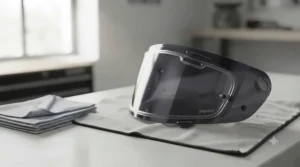
5. Shoei CWR-1 Transitions Photochromic Shield — auto-adjusting tint that removes the swap entirely
The Shoei CWR-1 Transitions Photochromic Shield‘s headline trick is genuinely useful for commuters: it fades to roughly 50% light transmission within about two minutes of hitting bright light, then clears again as conditions dim, meaning you never have to physically swap visors between a sunny morning and a dark evening ride home.
Based on the spec comparison, this positions it as the most convenience-focused option on this list rather than the darkest — manufacturer specifications state it blocks over 99% of UV rays while using Shoei’s 3D injection-molded optics for distortion-free viewing, a genuine step up in optical clarity from budget fixed-tint alternatives. Reviewers consistently describe the tint level as “moderate rather than aggressive,” useful context if you’re expecting the depth of a genuine dark smoke visor rather than a self-adjusting daylight aid. It’s also Pinlock-ready via a separate insert, so anti-fog performance isn’t sacrificed for the photochromic feature.
Pros:
- ✅ Automatically adjusts tint — no visor swapping needed
- ✅ Blocks over 99% of UV rays per manufacturer spec
- ✅ Premium Shoei optical clarity via 3D injection molding
Cons:
- ❌ Only fits specific Shoei RF-SR, RF-1200, and X-Fourteen models
- ❌ Tint depth is milder than a dedicated dark smoke shield
At £110–£150, it’s a genuine premium purchase, but one that removes the daily swap decision entirely for existing Shoei owners.
6. Bell Qualifier DLX MIPS — buy the whole helmet, get the photochromic shield built in
Rather than a standalone visor, the Bell Qualifier DLX MIPS takes a different approach entirely: its standout feature is that a self-tinting photochromic shield ships as standard equipment on the Deluxe MIPS version, meaning there’s no separate visor purchase decision to make at all.
What most buyers overlook about this model is that it bundles the tinting solution with MIPS rotational-impact protection — a slip-plane layer designed to reduce rotational strain on the head in an angled impact — at a price point where that combination is genuinely uncommon. On paper, this means it suits a rider whose helmet is due for replacement anyway, rather than someone who just wants to fix glare on an otherwise perfectly good lid. Reviewers consistently describe the included photochromic tint as noticeably milder in its darkest state than a true smoke visor, with several owners specifically noting the effect is more pronounced in direct low sun than in general bright daylight, and recommending riders confirm expectations before relying on it as their sole glare solution.
Pros:
- ✅ Self-tinting photochromic shield included as standard
- ✅ MIPS rotational-impact protection built in at this price point
- ✅ No separate visor purchase or fitting required
Cons:
- ❌ A whole-helmet purchase, not a simple visor upgrade
- ❌ Photochromic tint is milder than dedicated smoke visors
Budget £220–£280 for the complete helmet — a sensible option specifically if a helmet replacement is already on your list.
7. Shark IRID Photochromic Visor — the fastest-reacting tint on the market
Here’s what the spec sheet doesn’t fully convey: the Shark IRID Photochromic Visor uses a small solar panel mounted at the top of the shield to power a liquid crystal film, and according to manufacturer figures, the whole tinting process takes under a second — dramatically faster than the roughly 40 seconds conventional photochromic visors typically need to darken, and far quicker still than the several minutes they take to clear again.
That speed genuinely matters for commuters moving in and out of shade, tunnels, or tree-lined roads, situations where a slow-reacting photochromic visor leaves you either squinting or under-lit for uncomfortably long stretches. Based on the spec comparison, the system is fully waterproof and battery-free by design, drawing power only from the solar panel, and pairs with an anti-fog inner layer so it isn’t trading one commuter problem for another. It’s currently built specifically for Shark’s sportier helmet range — the Race R Pro, Aeron GP, and Aeron — which narrows its audience considerably compared with the more universally fitting options elsewhere on this list.
Pros:
- ✅ Tints in under a second — far faster than standard photochromic
- ✅ Fully waterproof and battery-free, solar-powered design
- ✅ Includes anti-fog inner layer as standard
Cons:
- ❌ Priciest option on this entire list
- ❌ Only fits Shark’s Race R Pro, Aeron GP, and Aeron helmets
At £300–£350 for the clear-based version, it’s a specialist premium buy — but for riders who already own a compatible Shark helmet and commute through genuinely variable light, the reaction speed alone may justify it.
Setting Up Your Commuter Visor Tint: Fitting, Pairing & the First 30 Days
Getting any commuter visor tint option working smoothly starts before you even open the box. Confirm your exact helmet model and generation first — visor mounting systems vary even within the same manufacturer’s range, and a visor that looks identical online can use an entirely different locking mechanism to the one already on your lid.
Fitting a replacement shield is usually a matter of releasing the side pivot mechanisms, sliding the old visor free, and clicking the new one into place — most modern helmets are designed for tool-free swaps in a couple of minutes. If you’re adding a Pinlock insert alongside a tint, fit the insert to the visor before mounting it on the helmet, and take care to seat it evenly against all edges; an unevenly tensioned Pinlock is the single most common cause of misting complaints in the first few weeks.
The most frequent mistake in the first 30 days is treating a fixed-tint visor as a permanent, all-conditions choice rather than a daylight tool — meaning riders get caught at dusk without a legal clear option to switch to. Keep a clear visor or spare shield in your pannier or bag until your commute pattern proves you genuinely never ride in low light, and inspect the new visor’s seal and pivot action weekly for the first month, since a slightly misaligned fit is far easier to correct early than after months of wear.
Real-World Scenarios: Matching Sun Protection to Your Commuting Motorcycle Gear
Scenario one — the fixed 8am/6pm commuter. A rider whose hours never change and whose route runs mostly east-to-west genuinely needs a photochromic solution rather than a fixed tint, since the sun will sit low and blinding at almost exactly the same point every single day. The Shoei CWR-1 Transitions Shield or Bell Qualifier DLX MIPS solve this without ever requiring a mid-commute visor change.
Scenario two — the occasional bright-day rider. Someone who mostly commutes in typical UK overcast conditions but wants glare relief on the handful of genuinely sunny weeks each year is better served by a cheap, swappable option like the Pinlock 70 Light Smoke Insert or HJC HJ-26ST Light Tinted Visor — paying a premium for auto-adjusting tech that sits unused most of the year rarely makes sense here.
Scenario three — the mixed commuting motorcycle gear upgrader. A rider already due a new helmet, who wants sun protection bundled into that purchase rather than as a separate accessory decision, is the exact audience the Bell Qualifier DLX MIPS is built for — solving two problems with one purchase rather than layering a visor upgrade onto ageing headgear.
Matching the solution to your actual commute pattern, rather than defaulting to whichever visor looks most technically impressive, is usually the difference between kit that gets used daily and kit that ends up in a drawer.
Sun Glare Reduction on the Road: Problem → Solution Guide
Problem: the sun sits directly at windscreen height during your commute, regardless of tint. No visor fully solves geometry — IAM RoadSmart’s advice on riding in low sun recommends increasing following distance and reducing speed specifically during low-sun periods, alongside keeping your visor genuinely clean, since even minor smears magnify glare dramatically at a shallow sun angle.
Problem: your fixed-tint visor is perfect for the ride in but useless for the ride home after dusk. This is the single strongest argument for a photochromic option like the Shoei CWR-1 Transitions Shield; short of that, simply carry a clear visor and treat the swap as a genuine part of your commute routine rather than an afterthought.
Problem: glare feels worse in wet or damp conditions, even with a tint fitted. Water on the visor scatters light unpredictably regardless of tint level — a rain-repellent coating or a fresh anti-fog Pinlock insert often does more for visibility in these conditions than a darker tint would.
Problem: your tint makes tunnels, underpasses, or heavily shaded roads uncomfortably dark. This is where fixed dark tints genuinely struggle compared with photochromic options, since a static tint can’t lighten itself for a sudden drop in ambient light the way the Shark IRID Photochromic Visor or Shoei CWR-1 can.
Problem: eye strain builds up over a long commute even with a decent tint fitted. Polarised sunglasses worn underneath a clear or lightly tinted visor can meaningfully reduce residual glare on top of what the visor itself cuts, particularly on long, straight, low-sun stretches.
How to Choose a Tinted Visor for Sunny Commutes
- Map your actual commute times against sunrise and sunset. If your ride regularly straddles dawn or dusk, prioritise a photochromic option over a fixed tint from the start.
- Check your helmet’s exact model and generation before buying. OEM visors are model-specific, and a mismatched fit undermines both comfort and weather sealing.
- Confirm road-legal status explicitly, not just tint colour. Look for a stated light transmission percentage or an explicit “for road use” description rather than assuming based on how dark the tint looks in photos.
- Decide whether Pinlock compatibility matters to you. Riders in the UK deal with fog as often as glare, so a tint that can also carry an anti-fog insert solves two problems at once.
- Weigh convenience against cost honestly. Photochromic shields remove the swap decision entirely but cost three to ten times more than a fixed tint — worth it for daily commuters, harder to justify for occasional riders.
- Consider whether a helmet upgrade makes more sense than a visor swap. If your current lid is ageing anyway, a model like the Bell Qualifier DLX MIPS bundles the solution into a purchase you’d likely make regardless.
- Always plan for the ride home, not just the ride in. Whatever you choose, keep a genuinely road-legal clear or light option accessible for whenever daylight runs out mid-commute.
Smoke Tint vs Photochromic: Which Suits Daily Riders?
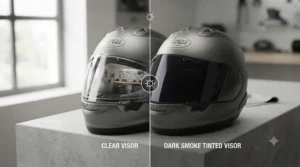
Smoke tint for daily riders has one clear advantage: cost. A fixed smoke visor like the HJC HJ-26ST Light Tinted Visor does one job extremely well for a fraction of the price of an auto-adjusting alternative, and for riders whose commute happens entirely within stable daylight hours, that’s genuinely all that’s needed. The trade-off is inflexibility — the tint is fixed the moment you buy it, which means carrying and swapping a second visor the instant conditions change.
Photochromic visors solve that inflexibility at a real cost premium. Based on the spec comparison, models like the Shoei CWR-1 Transitions Shield and Shark IRID Photochromic Visor remove the swap decision entirely, adjusting automatically as light changes throughout a ride — genuinely valuable for daily rider comfort on commutes that shift with the seasons, since sunrise and sunset times move by hours across a UK year. What most buyers overlook is that photochromic tint depth is usually milder than a dedicated dark smoke shield at its darkest point, so riders chasing maximum glare reduction on the very brightest days may still prefer a fixed dark tint, provided they’ve confirmed it meets road-legal limits and pack a clear alternative for the return leg.
Sun Protection Visor Commuting: Legal Limits, Safety & Compliance
None of the visors in this guide are worth buying without understanding the legal framework they sit inside. Under the Motor Cycles (Eye Protectors) Regulations 1999, eye protectors used on UK roads must meet British Standard BS 4110 or an equivalent EEA standard, and in practice this means a minimum light transmission of 50% — anything darker technically falls outside road-legal use, regardless of how the product is marketed.
This is exactly why the distinction between the light and dark HJC visors in this guide matters so much in practice, and why several retailers explicitly flag stronger tints as track-only rather than road-legal. According to the British Motorcyclists Federation’s rider rights guidance, visors must conform to BS 4110 to be legal, and any visor exceeding the permitted tint is illegal for road use regardless of the time of day, even though enforcement in practice tends to focus on use after dark or in poor visibility. Photochromic visors sit in a genuinely more complex legal position, since their tint level changes — riders relying on one should check the manufacturer’s stated compliance rather than assuming automatically. Whichever option you choose, always carry a confirmed road-legal clear visor as backup, since being caught without adequate eye protection carries real legal risk beyond simple inconvenience.
Common Mistakes When Buying a Tinted Visor for Commuting
The most common mistake is buying based purely on how dark a tint looks in product photos rather than checking its actual light transmission rating or stated road-legal status — a mistake that can leave a rider technically non-compliant without realising it. A close second is assuming a fixed tint will suit a commute that actually crosses dawn or dusk regularly; riders in this position consistently end up frustrated within the first fortnight and either buy a second visor or upgrade to photochromic anyway.
Fit compatibility trips up more buyers than expected too — ordering a visor for the wrong helmet generation, particularly with brands that update mounting systems across model years, is a genuinely common and avoidable error worth double-checking against your helmet’s specific model number. Finally, many riders underestimate how much a clean, scratch-free visor affects perceived glare regardless of tint; a scuffed budget visor with a decent tint can perform worse in practice than a pristine clear one, so factor visor condition into the buying decision alongside tint choice itself.
Long-Term Cost & Maintenance
Fixed-tint visors are the cheapest to own long-term in pure purchase terms, but that calculation shifts once you factor in a second clear visor for low-light riding — a genuinely necessary companion purchase for most commuters rather than an optional extra, typically adding another £20–£40 to the real cost of a fixed-tint setup.
Photochromic shields avoid that second purchase entirely, which meaningfully narrows the gap between their higher upfront price and a fixed-tint-plus-spare setup over a year or two of daily use. Maintenance across all the options here is broadly similar: gentle cleaning with warm water and a soft cloth, avoiding solvents or abrasive cleaners that can degrade anti-scratch and anti-fog coatings, and periodic checks of pivot mechanisms and seals, which wear faster on commuters covering daily mileage than on occasional weekend riders.
Daily Rider Comfort: What to Expect from a Tinted Visor Day to Day
Daily rider comfort with a tinted visor comes down to details that rarely show up in spec sheets. Expect a genuine reduction in eye strain on bright commutes almost immediately, particularly on long, straight, low-sun stretches where squinting against unfiltered glare becomes genuinely fatiguing over weeks of repeated exposure. What the spec sheet won’t tell you is that even a modest tint noticeably reduces the “white-out” effect of sudden bright light after emerging from shade or a tunnel, smoothing out what would otherwise be a jarring transition.
On the flip side, riders switching to a photochromic shield for the first time consistently report a short adjustment period, since the visible transition between clear and tinted states — however fast — is a new visual experience compared with a fixed tint’s constant appearance. Reviewers across both fixed and photochromic categories agree that pairing any tint with a well-fitted Pinlock anti-fog insert delivers the biggest overall comfort improvement for genuinely daily riders, since fog and glare tend to strike on the same cold, bright mornings that make commuting hardest in the first place.

Frequently Asked Questions
❓ Are tinted visors legal for commuting in the UK?
❓ What's the difference between smoke tint and photochromic visors?
❓ Can I use a dark tinted visor for daily riding?
❓ Do tinted visors work at night?
❓ How much does a good commuter visor tint cost?
Conclusion
Choosing the right tinted visor for sunny commutes really comes down to one practical question: does your ride genuinely cross the dawn or dusk line, or does it happen entirely within stable daylight? If it’s the latter, a cheap fixed tint like the Pinlock 70 Light Smoke Insert or HJC HJ-26ST Light Tinted Visor solves the problem for very little outlay. If your commute shifts with the seasons, or you’re simply tired of carrying a spare visor everywhere, a photochromic option like the Shoei CWR-1 Transitions Shield or Shark IRID Photochromic Visor earns its higher price by removing the decision entirely.
Whatever you choose, keep UK light transmission rules front of mind rather than an afterthought, and always have a genuinely road-legal clear option within reach for whenever daylight runs out mid-ride. Get that right, and low sun stops being a daily hazard and becomes exactly what it should be — mildly annoying, at worst.
🏍️ Ready to Ride Without Squinting?
🔍 Compare today’s prices on our top 7 tinted visors for sunny commutes and find the one that matches your actual ride. Check availability now before your size or fit sells out!
Recommended for You
- Legal Tinted Visor for Road Use: 7 Best UK Picks for 2026
- Value Smoke Visor Under £25: 7 Best Budget Picks for 2026
- Replacement Tinted Visor: 7 Brilliant UK Picks for 2026
Disclaimer: This article contains affiliate links. As an Amazon Associate, I earn from qualifying purchases. If you purchase products through these links, we may earn a small commission at no additional cost to you.
✨ Found this helpful? Share it with your friends! 💬🤗
