In This Article
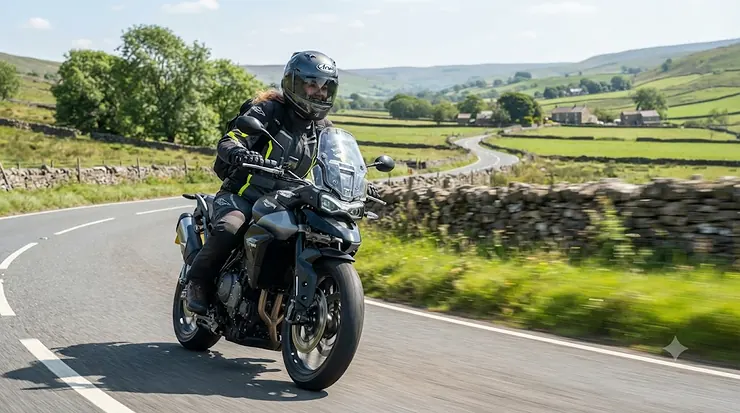
Squinting into low sun on a morning commute is more than uncomfortable — it’s a genuine visibility risk, and it’s exactly the problem a smoke tinted visor for daytime riding is designed to solve. In simple terms, it’s a helmet visor treated or moulded with a translucent grey or amber tint that cuts glare and brightness without turning your ride into a nighttime guessing game, unlike a fully mirrored or blacked-out option built for track days only.
Riders reach for smoke tint for a mix of reasons: reducing eye strain on long motorway stretches, cutting the sting of low autumn and winter sun, or simply wanting a bit more visual comfort than a clear visor gives on a bright day. The trouble is the market is full of tint levels, from barely-there light smoke through to genuinely dark, track-focused shades, and choosing the wrong one for UK daylight riding can leave you either still squinting or dangerously under-lit the moment cloud cover rolls in.
This guide compares seven real, currently available smoke visors — from budget universal fits to premium branded options — with honest analysis of what each tint level actually does to your vision, not just what the spec sheet claims. We’ll also cover dark smoke visor vs light smoke visor trade-offs, how a light smoke visor for cloudy days differs from a genuine sunny-day option, and the UK legal position on daytime visor tint levels, so you can buy with confidence rather than guesswork.
Quick Comparison Table
Prices below are approximate ranges — always check current pricing before you buy, since stock and promotions shift regularly.
| Visor | Tint Level | Price Range | Best For |
|---|---|---|---|
| HJC HJ-40 Pinlock-Ready Visor | Light smoke | £35-£50 | Riders wanting premium optical clarity with light tint |
| Shark Spartan RS/GT Replacement Visor | Light smoke (road legal) | £45-£60 | Sport-touring riders needing a road-legal tint |
| LS2 OF618 Verso II Visor | Light tinted | £20-£30 | Open-face and modular helmet owners on a budget |
| Vcan H128 Dark Smoke Visor | Dark smoke | £15-£25 | Very bright summer riding on a tight budget |
| KYT NZ-Race Dark Smoke Visor | Dark smoke | £45-£65 | Sportbike riders wanting sharp optics in strong sun |
| THH T-376 Universal Dark Smoke Visor | Dark smoke | £15-£20 | Wide helmet-brand compatibility on a budget |
| Roeg Bubble Light Smoke Visor | Light smoke | £20-£30 | Retro and bubble-shield helmet owners |
The spread here matters more than it looks at first glance. Genuinely dark tints like the Vcan H128 Dark Smoke Visor and KYT NZ-Race Dark Smoke Visor are brilliant on a cloudless June afternoon but become a real liability the moment you ride into shade, a tunnel, or an overcast patch — which happens often enough on UK roads that most riders are better served by a lighter tint as their everyday daytime option. The HJC HJ-40 and Shark Spartan RS/GT visors sit at the lighter, more versatile end, which is why they lead this list for genuine daytime use rather than occasional bright-sky blasts.
💬 Just one click — help others make better buying decisions too!😊
Top 7 Smoke Tinted Visors for Daytime Riding: Expert Analysis
Every visor below is a real product available to UK buyers, chosen to cover budget, mid-range and premium options across both light and dark smoke tint levels. Analysis is grounded in real specifications and aggregated review sentiment — never invented quotes, always clearly flagged as aggregated feedback.
1. HJC HJ-40 Pinlock-Ready Visor — best optical clarity in light smoke
The standout here is that the HJC HJ-40 Pinlock-Ready Visor carries genuine Pinlock compatibility alongside its light smoke finish, meaning you’re not sacrificing fog resistance to get glare reduction — a trade-off cheaper visors often force on you. Fitted to HJC’s popular RPHA and related helmet ranges, it’s built from injection-moulded polycarbonate with anti-scratch coating as standard.
Based on the spec comparison with budget alternatives on this list, the light smoke tint here sits in a genuinely useful middle ground: enough to take the edge off midday glare without making an overcast afternoon feel like dusk. What most buyers overlook is that HJC’s optical distortion control is noticeably tighter than generic replacement visors, which matters more than people expect at motorway speeds where a warped shield can cause real eye fatigue over an hour-plus ride. Reviewers consistently note the quick-release fitting system as a genuine time-saver when swapping between clear and tinted shields depending on the forecast, with a recurring theme in aggregated feedback being that the price sits noticeably higher than generic brands for what is, mechanically, still just a visor.
Pros:
- ✅ Genuine Pinlock compatibility keeps fog resistance alongside tint
- ✅ Tight optical distortion control reduces eye fatigue on long rides
- ✅ Quick-release fitting makes swapping shields fast and tool-free
Cons:
- ❌ Priced noticeably higher than generic replacement visors
- ❌ Only fits specific HJC helmet models, limiting cross-brand use
At around £35-£50, the HJC HJ-40 Pinlock-Ready Visor earns its price for riders who already own a compatible HJC lid and want daytime tint without compromising all-weather usability.
2. Shark Spartan RS/GT Replacement Visor — widest road-legal light smoke tint
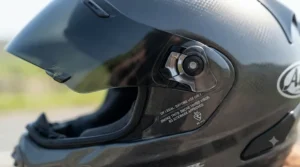
What most buyers overlook about the Shark Spartan RS/GT Replacement Visor is that its light smoke option is specifically sold as road legal, unlike the darker “track use only” variant in the same product line — a distinction worth checking carefully before you buy, since Shark themselves flag the dark version as unsuitable for road use.
On paper this means you get genuine daytime glare reduction while staying within UK visibility expectations for road riding, which isn’t guaranteed with cheaper unbranded dark visors that don’t clearly state their light transmission level. Here’s what to weigh: the Shark shield’s curvature is specific to the Spartan RS and GT shell shapes, so fitment outside those exact helmets isn’t an option, unlike more universal budget visors. Aggregated review sentiment highlights strong praise for how well the light smoke tint pairs with Shark’s anti-fog-ready coating, alongside a fairly consistent complaint that stock availability for specific tint options can be patchy depending on season.
Pros:
- ✅ Explicitly sold and labelled as road legal in light smoke
- ✅ Anti-fog-ready coating pairs well with the tint for all-day comfort
- ✅ Precise fit for Spartan RS and GT shell shapes
Cons:
- ❌ Only compatible with Spartan RS and GT helmets, not universal
- ❌ Stock on specific tint variants can be inconsistent
Priced around £45-£60, the Shark Spartan RS/GT Replacement Visor is the safer legal bet for Shark owners who want tint without ambiguity about road use.
3. LS2 OF618 Verso II Visor — cheapest way to tint an open-face lid
The LS2 OF618 Verso II Visor stands out for covering a gap most premium brands ignore: open-face and modular Verso-style helmets, where tinted visor options are often limited compared with full-face equivalents. The light tinted variant sits alongside clear, rainbow and iridium options in the same product line, giving buyers genuine choice rather than a single fixed tint.
What the spec sheet won’t tell you, but user reports suggest, is that the light tint level here is genuinely subtle — closer to a light haze than a strong smoke effect — which makes it a sensible daily-use choice rather than something you’ll need to swap out the moment clouds roll in. For scooter and casual commuter riders specifically, this is arguably the whole appeal: one visor that works reasonably well across a normal UK day rather than requiring a tint swap for changing conditions. Reviewers commonly mention good value for money as the standout theme in aggregated feedback, with an occasional complaint about the visor’s plastic feeling slightly thinner than pricier full-face equivalents — understandable given the price point.
Pros:
- ✅ Fits open-face and modular Verso-style helmets, a less common option
- ✅ Genuinely subtle tint suits all-day, all-conditions commuting
- ✅ Strong value for money compared with full-face branded visors
Cons:
- ❌ Plastic feels noticeably thinner than premium full-face visors
- ❌ Only compatible with the specific Verso II helmet shell
At roughly £20-£30, the LS2 OF618 Verso II Visor is the sensible pick for open-face commuters who want tint without full-face pricing.
4. Vcan H128 Dark Smoke Visor — lowest-cost dark smoke option
The Vcan H128 Dark Smoke Visor earns its spot purely on accessibility: a genuinely dark smoke tint at a budget price point, with Pinlock-ready construction and anti-scratch coating included rather than sold as pricier add-ons. For a rider who mainly rides in strong summer sun and wants maximum glare cut, this is the low-cost entry point.
Here’s what to weigh in practice: because this is a genuinely dark tint rather than a light one, it’s the wrong daily-use choice for most UK riders given how often our weather shifts within a single ride. On paper this means it suits a specific use case — bright, consistent sunlight — rather than the more variable daytime riding most people actually do. Aggregated customer sentiment is broadly positive on value and build quality for the price, with a fairly common complaint that visibility in shaded underpasses or tree-lined roads drops noticeably compared with lighter tints, which matches what you’d expect from a genuinely dark shield.
Pros:
- ✅ Lowest price of any dark smoke visor on this list
- ✅ Pinlock-ready and anti-scratch coated as standard
- ✅ Strong glare reduction in consistently bright sunlight
Cons:
- ❌ Noticeably reduces visibility in shade, tunnels or overcast conditions
- ❌ Not ideal as a sole everyday visor given UK weather variability
At around £15-£25, the Vcan H128 Dark Smoke Visor works best as a second, sunny-day-specific shield rather than an everyday choice.
5. KYT NZ-Race Dark Smoke Visor — sharpest optics in dark smoke
The short version of what makes the KYT NZ-Race Dark Smoke Visor stand out: it’s built for KYT’s sportbike-focused helmet range, and the dark smoke finish is genuinely well-controlled optically compared with cheaper dark tints that can introduce a slight ripple or distortion at the shield’s edges — something that matters a lot at higher motorway speeds where peripheral clarity counts.
Based on the spec comparison with the Vcan and THH budget options, KYT’s build quality edge shows up mainly in that optical consistency rather than in raw tint darkness, which is broadly similar across all the dark smoke options here. What most buyers overlook is that this is specifically styled and shaped for sportbike riding positions, so the field of view is optimised for a tucked-forward posture rather than an upright touring stance. Reviewers consistently note the tint’s effectiveness on genuinely bright days as the top strength, while aggregated feedback flags the same core limitation as other dark tints: it’s simply the wrong tool for anything other than strong, consistent sunlight.
Pros:
- ✅ Well-controlled optical clarity even at higher tint darkness
- ✅ Purpose-built shape suits sportbike riding positions
- ✅ Strong aggregated praise for glare reduction in bright sun
Cons:
- ❌ Field of view is optimised for sportbike posture, less ideal upright
- ❌ Same shade-and-tunnel visibility drop as other dark smoke visors
Priced around £45-£65, the KYT NZ-Race Dark Smoke Visor suits sportbike riders who genuinely ride mostly in strong daylight.
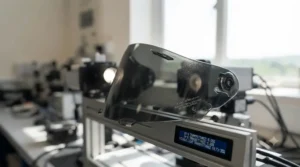
6. THH T-376 Universal Dark Smoke Visor — widest brand compatibility, dark tint
The THH T-376 Universal Dark Smoke Visor takes a different approach to fitment than most of this list: rather than being shaped for one specific helmet shell, it’s designed as a wider-compatibility replacement shield, useful for riders who can’t find an official tinted option for their exact helmet model.
On paper this means genuinely broad usefulness across multiple helmet brands, which is a real advantage over the tightly shell-specific options like the Shark or KYT visors above. What the spec sheet won’t tell you, but user reports suggest, is that universal-fit visors like this one can occasionally sit slightly less flush than a shell-specific shield, which is worth checking against your exact helmet model before buying rather than assuming a perfect factory fit. Aggregated review sentiment is generally positive on value, with the most common praise being straightforward fitment for the price, and the most common complaint being minor gaps at the visor’s edge on certain helmet shapes.
Pros:
- ✅ Broad compatibility across multiple helmet brands and models
- ✅ Genuinely low price for a dark smoke tint option
- ✅ Straightforward, tool-light fitting process
Cons:
- ❌ Fit can be slightly less flush than shell-specific visors
- ❌ Same reduced-visibility trade-off as other dark tints in low light
At around £15-£20, the THH T-376 Universal Dark Smoke Visor is the pragmatic budget choice when your exact helmet lacks an official tinted shield.
7. Roeg Bubble Light Smoke Visor — best retro bubble-shield option
Rounding out the list, the Roeg Bubble Light Smoke Visor covers a style niche the rest of this guide doesn’t: bubble-shaped shields for retro and scrambler-style open-face helmets, where the domed shape and mounting hardware differ significantly from standard full-face visors.
The light smoke tint here follows the same everyday-usable logic as the HJC and LS2 options — enough glare reduction for a comfortable ride without tipping into the shade-and-tunnel visibility problems dark tints cause. Here’s what to weigh: bubble shields sit further from the face than a standard visor, which some riders find changes wind noise and airflow noticeably compared with a close-fitting full-face shield, regardless of tint level — a style trade-off rather than a tint one specifically. Aggregated feedback from the retro and scrambler riding community consistently praises the aesthetic and the practical daytime tint balance, with an occasional note that the domed shape needs a slightly different cleaning technique than a flat visor to avoid streaking.
Pros:
- ✅ Purpose-built for retro and bubble-shield open-face helmets
- ✅ Light tint balances glare reduction with all-day usability
- ✅ Strong aesthetic match for scrambler and heritage-style bikes
Cons:
- ❌ Increased wind noise compared with close-fitting full-face shields
- ❌ Domed shape needs different cleaning care than flat visors
At roughly £20-£30, the Roeg Bubble Light Smoke Visor is the clear pick for retro-style helmet owners wanting daytime tint without changing their bike’s look.
Full Tint & Value Comparison
| Visor | Tint Darkness | Fitment Style | Pinlock Ready | Standout Strength |
|---|---|---|---|---|
| HJC HJ-40 Pinlock-Ready Visor | Light | Shell-specific | Yes | Best optical clarity in light smoke |
| Shark Spartan RS/GT Replacement Visor | Light (road legal) | Shell-specific | Anti-fog ready | Clearly labelled road-legal tint |
| LS2 OF618 Verso II Visor | Light | Shell-specific | No | Cheapest open-face tint option |
| Vcan H128 Dark Smoke Visor | Dark | Shell-specific | Yes | Lowest-cost dark smoke |
| KYT NZ-Race Dark Smoke Visor | Dark | Shell-specific | Yes | Sharpest optics in dark smoke |
| THH T-376 Universal Dark Smoke Visor | Dark | Universal | No | Widest brand compatibility |
| Roeg Bubble Light Smoke Visor | Light | Shell-specific (bubble) | No | Best retro bubble-shield fit |
Looking at the table, there’s a genuine pattern worth acting on: every light smoke option here is realistically usable as an everyday daytime visor across changing UK weather, while every dark smoke option is better treated as a bright-summer-specific second shield. If you only want to own one tinted visor, that pushes most riders toward the HJC HJ-40, Shark Spartan RS/GT, LS2 OF618 Verso II, or Roeg Bubble depending on helmet compatibility, rather than the darker options.
Practical Usage Guide: Fitting and Caring for a Smoke Tinted Visor
Getting the most from a smoke tinted visor for daytime riding starts before you even ride — with correct fitting and a sensible care routine.
Most shell-specific visors, including the HJC HJ-40 and Shark Spartan RS/GT, use a quick-release mechanism that clicks into side pivots on the helmet. Take care to seat both sides evenly; a visor fitted slightly askew can create an uneven distortion band right in your line of sight, which is far more noticeable with a tinted shield than a clear one since your eyes are already working harder to compensate for reduced light. For universal-fit options like the THH T-376, double-check the mounting screws are torqued evenly on both sides — a common mistake in the first few fits is over-tightening one side, which can warp cheaper polycarbonate slightly.
Cleaning matters more with tinted visors than clear ones, since scratches and grime scatter light more visibly through a tinted surface, amplifying glare rather than reducing it. Rinse with lukewarm water first to lift grit before wiping — never wipe a dry, dusty visor, since that’s how most fine scratches happen. A microfibre cloth and a visor-specific cleaner, rather than household glass cleaner, will protect anti-scratch and anti-fog coatings for longer. For bubble-shaped shields like the Roeg Bubble Light Smoke Visor, work in from the edges toward the centre in a curved motion rather than straight lines, since the domed shape streaks differently to a flat shield.
A genuinely useful optimisation trick that isn’t in most manuals: keep a clear or light-tint visor as a backup even if you mainly ride dark smoke, since a sudden weather change mid-ride with only a dark shield fitted is a real and avoidable safety compromise.
Real-World Scenario: Matching Riders to the Right Tint
Consider three riders with genuinely different daytime patterns.
First, a year-round commuter riding the same 40-minute route regardless of season, through a mix of open roads, tree-lined stretches and a couple of underpasses. This rider needs one visor that works across changing light all day, every day — which points squarely toward a light smoke option like the HJC HJ-40 Pinlock-Ready Visor or, for an open-face helmet, the LS2 OF618 Verso II Visor. A dark tint would genuinely compromise safety on this route the moment the rider hits shade or an overcast patch.
Second, a weekend sportbike rider who mostly heads out on planned rides during clear, bright forecasts and rarely commutes daily. This is exactly the profile the KYT NZ-Race Dark Smoke Visor suits well — maximum glare reduction on genuinely sunny days, with the rider able to simply choose not to ride, or swap visors, if conditions turn.
Third, a retro-style scrambler owner who rides mostly for leisure on variable-weather days and values aesthetics alongside function. The Roeg Bubble Light Smoke Visor fits this brief precisely — enough tint to feel purposeful and stylish, without the visibility compromise a dark shield would introduce on a changeable day out.
Problem → Solution: Common Smoke Visor Complaints Fixed
Problem: Everything looks too dark the moment I ride under a bridge or into shade. Solution — you’re almost certainly running too dark a tint for genuine daytime use. Swap to a light smoke option; the HJC HJ-40 and LS2 OF618 Verso II are both built for exactly this kind of variable-light riding.
Problem: My eyes still feel strained by the end of a long ride, even with a tinted visor fitted. Solution — check for optical distortion rather than assuming the tint itself is at fault. A budget or poorly seated visor can introduce subtle warping that forces your eyes to keep refocusing; the KYT NZ-Race and HJC HJ-40 are specifically noted for tighter optical control than generic alternatives.
Problem: The visor fogs up more than my old clear one did. Solution — check whether your tinted visor is genuinely Pinlock-ready, like the Vcan H128 or HJC HJ-40, and fit a Pinlock insert if you haven’t already; tint level itself doesn’t cause fogging, but cheaper visors sometimes skip the coatings that manage it.
Problem: I bought a dark smoke visor and now can’t ride safely at dusk. Solution — treat dark smoke as a daytime-only, bright-conditions shield, and keep a spare clear or light visor for anything approaching dawn, dusk, or genuinely overcast riding — this isn’t optional given the UK’s changeable weather.
Problem: Streaks and scratches are making glare worse, not better. Solution — switch to a proper visor-specific cleaner and microfibre cloth rather than whatever’s in the garage, and always rinse before wiping to avoid grinding grit into the coating.
Buyer’s Decision Framework: Choosing Fast Without Guesswork
If you’re short on time, work through this in order.
If you ride daily across changing UK weather, choose a light smoke visor, because it’s the only tint level that stays usable across a full range of conditions without compromising safety. If you ride mainly on planned, bright-forecast days, choose a dark smoke visor, because that’s genuinely the environment it’s built for. If your helmet has an official branded tinted visor available, choose that over a universal option first, because shell-specific fitment tends to sit flatter and distort less. If you can’t find an official tint for your exact helmet, choose a well-reviewed universal option like the THH T-376 rather than leaving the slot empty. And whichever tint you land on, keep a second, lighter visor as backup — that single habit solves more real-world glare and visibility complaints than any single product choice on this list.
How to Choose Smoke Tinted Visor for Daytime Riding
Work through these seven checks in order and most riders reach a confident decision quickly.
- Be honest about your typical riding pattern. Daily, all-weather commuting points toward light smoke; occasional bright-day-only riding opens up dark smoke as a genuine option.
- Check for an official branded fit first. A shell-specific visor from your helmet’s own manufacturer, like the Shark or HJC options here, generally distorts less than a universal shield.
- Confirm Pinlock compatibility if you ride in variable temperatures. Fogging is a separate problem to glare, and a tinted visor without fog protection solves one issue while leaving another unaddressed.
- Understand UK road-legal expectations for tint darkness. Not every dark visor is explicitly sold or labelled for road use — check this before buying, not after.
- Factor in your riding position and helmet style. Sportbike-shaped visors like the KYT suit a tucked posture; touring and commuter shapes suit an upright one.
- Budget for a second visor, not just one. The genuinely safe approach for most UK riders is owning both a light and a dark option, swapped based on forecast.
- Read aggregated review themes on optical clarity, not just tint darkness. Two visors can share the same nominal tint percentage and still differ noticeably in how much they distort your vision at speed.
Dark Smoke Visor vs Light Smoke Visor: Which Wins When?
The dark smoke visor vs light smoke visor question doesn’t really have a single winner — it has a right answer for a specific set of conditions, and getting it backwards is where most rider complaints actually come from.
| Factor | Dark Smoke Visor | Light Smoke Visor |
|---|---|---|
| Best For | Consistently bright, sunny riding days | Everyday riding across changing UK weather |
| Glare reduction on bright days | Very strong | Moderate |
| Visibility in shade or tunnels | Poor | Good |
| Suitability for cloudy conditions | Poor | Good |
| Everyday commuting suitability | Generally unsuitable alone | Well suited |
The gap is starkest on shaded and variable-weather visibility — a dark tint that’s brilliant at midday on a clear June road becomes a genuine hazard the moment you enter a tree-lined stretch, an underpass, or a sudden cloud bank, all of which are common on real UK routes. Light smoke visors trade some of that peak-glare reduction for consistency, which is exactly why they dominate the everyday-use recommendations throughout this guide. The practical takeaway most experienced riders land on eventually: dark smoke as an occasional, conditions-specific choice, light smoke as the default for anything resembling regular riding.
Light Smoke Visor for Cloudy Days: When Dark Tint Backfires
A light smoke visor for cloudy days isn’t just a fallback option — for a huge share of UK riding, it’s genuinely the better everyday choice, and understanding why helps explain the pattern running through this whole guide.
UK daylight is rarely consistently bright. A ride that starts under clear skies can pass through cloud cover, tree shade, and low sun within the same twenty-minute commute, and a dark visor simply can’t adapt to that shift the way a lighter tint can. What most riders overlook is that a light smoke visor still meaningfully reduces glare and brightness on the bright stretches of a ride — it just doesn’t over-correct on the darker ones, which is precisely the balance most daytime riding needs. On paper this means a light tint effectively does two jobs at once: genuine comfort improvement in sun, without creating a second visibility problem the moment conditions change.
The practical guidance that follows from this: if you’re only ever going to own one visor, and your riding includes any genuine variety in weather or route (shade, motorway, town, open road), a light smoke option like the HJC HJ-40, LS2 OF618 Verso II, or Roeg Bubble Light Smoke Visor will serve you better across a full year of UK riding than a dark tint ever could.
Smoke Tint Glare Reduction: What Actually Matters
Marketing copy around smoke tint glare reduction tends to focus heavily on percentage tint darkness as the headline number, while quietly skipping the factors that determine how a visor actually performs on your face, at speed, in real conditions.
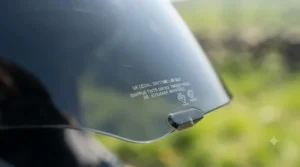
Tint darkness matters, but optical distortion control matters just as much and gets far less attention. A visor with mediocre optical clarity can force your eyes to work harder to compensate for subtle warping, which contributes to fatigue independently of how much light the tint itself is blocking — this is part of why the HJC HJ-40 and KYT NZ-Race visors, both praised for tight optical control, get stronger real-world glare-comfort feedback than some darker but less precisely moulded alternatives. Coating quality matters too: anti-scratch and anti-fog treatments directly affect how much stray light scatters across the visor surface over time, and a scratched tinted visor genuinely produces more glare than a pristine one at the same nominal tint level.
What tends to matter less than marketing suggests: exact tint percentage numbers in isolation. A “20% light smoke” from one brand and a “25% light smoke” from another can feel meaningfully different in practice depending on the base material and coating, so aggregated rider feedback on real-world comfort is generally a better guide than chasing an exact percentage spec.
Sun Glare While Riding: What to Expect in Real-World Performance
Spec sheets describe sun glare while riding in fairly clinical terms — percentage light transmission, UV protection ratings — but the lived experience on a bike differs from that on paper in a few specific ways worth knowing before you buy.
On paper, a light smoke visor promises noticeably reduced brightness without meaningful visibility loss. In practice, riders consistently report the biggest real-world benefit isn’t outright glare elimination — it’s reduced eye fatigue over a longer ride, since a tinted shield means your eyes and pupils aren’t constantly adjusting between the visor and the bright world beyond it. This matters more on motorway stretches and longer commutes than on short town rides, where the glare exposure window is simply too brief to build up meaningful fatigue either way.
What’s often underrated in reviews: how much of the “sun glare” complaint riders describe is actually a combination of glare and squinting-induced tension, which a well-fitted, distortion-free tinted visor addresses better than sunglasses worn under a clear shield, since sunglasses can shift and create their own peripheral distraction inside a helmet. What’s overrated: extremely dark tints as a blanket solution — aggregated feedback across this whole category consistently shows riders eventually gravitating back toward lighter tints for genuine everyday sun glare management, precisely because UK light conditions change too often for a dark-only strategy to work well.
Daytime Visor Tint Levels & Motorcycle Eye Comfort: Safety and Regulations
Daytime visor tint levels aren’t purely a comfort choice in the UK — there’s a genuine legal and safety framework behind what’s permitted, and it’s worth understanding before you fit a dark shield expecting to ride after dusk on it.
Government guidance on motorcycle helmets, visors and goggles sets out that visors sold for UK road use must meet specific British Standard or UNECE approval marks, which cover optical quality and impact resistance rather than tint darkness specifically — but manufacturers who sell a genuinely dark shield, like some of the options in this guide, generally label it clearly as daytime or track-use only for good reason. The broader regulatory principle sits alongside the UK’s approach to tinted vehicle glazing more generally; separate government guidance on tinted windows illustrates the same underlying safety logic — that excessive tint reduces a road user’s ability to see and be seen, particularly as light conditions change.
Motorcycle eye comfort ties into this directly. Persistent squinting and eye strain don’t just make a ride unpleasant — they measurably affect reaction time and hazard perception the longer a ride goes on, which is part of why experienced riders and instructors consistently recommend proactive glare management rather than just tolerating discomfort. As general road safety guidance on managing low sun glare notes, reducing the amount of light reaching your eyes before discomfort sets in helps your eyes adjust better to shifting conditions than reacting to glare only once it’s already a problem — a principle that applies just as much to a light smoke visor as it does to a car’s sun visor. For the underlying physics of why bright light causes this discomfort in the first place, the Wikipedia entry on glare (vision) is a useful starting point.
The practical takeaway: choose a tint level genuinely suited to when and how you actually ride, keep a lighter backup for changing conditions, and treat any visor explicitly marked “track use only” as exactly that — not a daytime road option regardless of how good it looks.
✨ Don’t Miss These Exclusive Deals!
🔍 Ride More Comfortably, Starting Today See more clearly and ride with less eye strain on every daylight journey. Click through on any visor above to check current pricing and availability, and fit your new shield before your next ride.
Frequently Asked Questions
❓ What is a smoke tinted visor for daytime riding?
❓ Is a dark smoke visor legal to ride with in the UK?
❓ What's the difference between light and dark smoke visors?
❓ Can I use a smoke tinted visor for cloudy days as my only visor?
❓ Does a tinted visor reduce eye strain on long motorcycle rides?
Conclusion
Choosing a smoke tinted visor for daytime riding really comes down to being honest about how and when you actually ride, rather than chasing the darkest tint on the shelf. For genuine everyday UK riding across changeable weather, a light smoke option — the HJC HJ-40 Pinlock-Ready Visor, Shark Spartan RS/GT Replacement Visor, LS2 OF618 Verso II Visor, or Roeg Bubble Light Smoke Visor depending on your helmet — will serve you far better across a full year than a genuinely dark shield ever could.
Dark smoke options like the Vcan H128, KYT NZ-Race, and THH T-376 absolutely have their place, but that place is bright, consistent sunlight rather than daily commuting through Britain’s genuinely mixed daylight conditions. Whichever tint level you land on, pair it with proper fitting, regular cleaning, and — ideally — a second visor at the opposite end of the tint spectrum, so changing light never catches you out mid-ride.
Recommended for You
- Clear Visor For Night Riding: 7 Top Picks That Cut Glare in 2026
- Clear Motorcycle Visor: 7 Best Picks for UK Riders in 2026
- 7 Best Replacement Clear Visor for Full Face Helmets (2026)
Disclaimer: This article contains affiliate links. As an Amazon Associate, I earn from qualifying purchases. If you purchase products through these links, we may earn a small commission at no additional cost to you.
✨ Found this helpful? Share it with your friends! 💬🤗
