In This Article
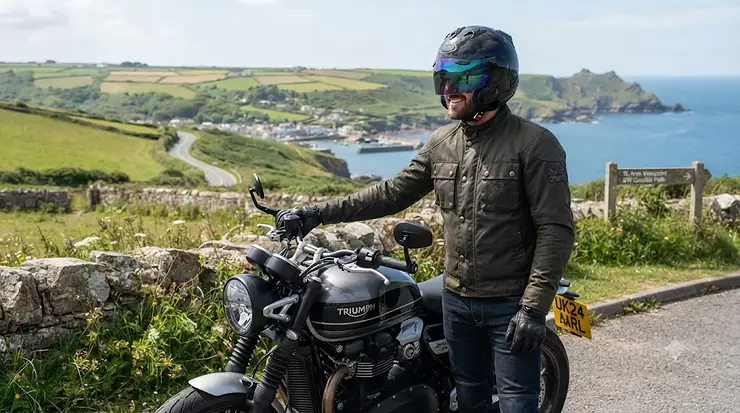
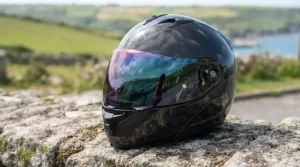
There’s a particular kind of squint every British rider knows. You crest a hill on the A303 at half seven in the morning, the sun’s sitting low and mean right on the horizon, and suddenly your clear visor is about as useful as a car windscreen with the sun visor stuck in the glovebox. A mirror tinted visor for motorbike helmet use solves exactly this problem, and it does something clear plastic never will: it bounces glare away from your eyes instead of just softening it. That reflective outer layer is the whole point — light hits the coating and scatters outward rather than punching straight through to your retinas.
This isn’t just a cosmetic upgrade, either, though we’ll admit the chrome-and-rainbow look does turn heads outside the local Costa on a Sunday ride-out. Reviewers across forums and retailer sites consistently flag reduced eye strain on long motorway stints and better contrast when riding into low sun. Below, we’ve dug into seven genuine products — from premium OEM shields to sensible budget alternatives — with honest analysis of the specs, the aggregated review sentiment, and exactly who each one suits. We’ll also cover UK road-legality, because this is one area where guesswork gets expensive.
Quick Comparison Table
| Product | Type | Price Range | Best For |
|---|---|---|---|
| Shoei CWR-1 Spectra Silver | OEM mirror shield | £90-£110 | Touring riders wanting factory-fit precision |
| Arai VAS-V Max-Vision Mirror | OEM mirror shield | £100-£130 | Long-distance riders prioritising optical clarity |
| AGV K6/K6S Iridium Silver Visor | OEM mirror shield | £70-£90 | Sportsbike riders wanting a race-derived look |
| HJC HJ-09 RST Mirrored Shield | OEM mirror shield | £40-£55 | Mid-range commuters and weekend riders |
| LS2 Pinlock-Ready Iridium Shield | OEM mirror shield | £25-£35 | Budget-conscious riders on LS2-fitted helmets |
| Bob Heath Dark Tint Mirror Visor | Specialist replacement | £30-£45 | Riders wanting a UK-made, cross-brand option |
| OZ-USA Iridium Universal Mirror Shield | Aftermarket universal | £15-£25 | First-time buyers testing the mirror-tint look |
Looking at the spread above, the price gap between the cheapest and most expensive option is roughly £100, yet the underlying job — reflecting glare — is broadly similar across all seven. What separates them is optical distortion at the edges, coating durability, and how precisely they seat into your specific helmet’s shell geometry. Riders on a first bike or a budget often start with something like the OZ-USA Iridium Universal Mirror Shield before graduating to an OEM option once they know they’ll use the tint regularly.
💬 Just one click — help others make better buying decisions too!😊
Top 7 Mirror Tinted Visors for Motorbike Helmets: Expert Analysis
Coverage below spans budget, mid-range and premium options, plus a couple of lesser-known specialists that don’t always make the “best of” round-ups but genuinely earn their place.
1. Shoei CWR-1 Spectra Silver — factory-precision mirror fit for RF-series helmets
Shoei’s own replacement shield is the benchmark a lot of aftermarket brands quietly measure themselves against. Built for the RF-1200, RF-SR, X-Fourteen and NXR shells, it’s a 3D-molded lens designed around Shoei’s own helmet geometry rather than a generic universal curve.
Specs-wise, the shield filters out more than 99% of UV-A and UV-B radiation, and the Spectra Silver coating is genuinely mirrored rather than a lightly tinted “smoke with shine.” It’s Pinlock EVO-ready via the CWR-1/CW-1/CNS-1 lens system, which matters more than it sounds — condensation on a mirror-coated shield is far harder to spot at a glance than on clear plastic. On the road, that reinforced top-and-bottom rib structure keeps the shield from flexing and popping the locking tabs at speed, a complaint that dogs some cheaper alternatives.
Based on the spec comparison, this is squarely built for riders who already own a compatible Shoei lid and want an OEM-perfect replacement rather than a compromise fit. Reviewers consistently report that the seal against the helmet aperture is noticeably tighter than third-party equivalents, which cuts wind noise at motorway speeds. A recurring theme in aggregated feedback is that the mirror coating resists pitting from stone chips slightly better than Shoei’s standard tinted shields, though nothing is bulletproof against gravel lorries.
Pros:
- ✅ Exact OEM fit for RF-1200, RF-SR, X-Fourteen and NXR
- ✅ Over 99% UV-A/UV-B filtration verified by Shoei
- ✅ Pinlock EVO compatible for anti-fog performance
Cons:
- ❌ Only fits Shoei-specific shells, no universal option
- ❌ Premium pricing compared with third-party mirror shields
At around £90-£110 depending on retailer stock, the Shoei CWR-1 Spectra Silver sits at the top of the price bracket, but for existing Shoei owners the fit-and-finish argument alone tends to justify it.
2. Arai VAS-V Max-Vision Mirror Silver — best optical clarity for long-distance riders
Arai’s approach to the VAS (Variable Axis System) shield line has always leaned toward “protect the eyes, don’t distort the world,” and the Max-Vision mirror version continues that philosophy. It’s built for the Corsair-X, Signet-X, Quantum-X, DT-X, Defiant-X and Regent-X range.
What most buyers overlook about this model is that the tint itself isn’t especially dark by mirror-visor standards — that’s a deliberate engineering choice. Arai calibrated the light transmittance so your eyes don’t have to fight through a jarring brightness shift moving from open road into tree-shaded lanes, which is exactly the kind of transition that causes momentary “blind spot” moments on B-roads. The shield is marked as exceeding ANSI Z87.1 and US VESC-8 standards, and it’s Pinlock-prepared for the VAS-V lens insert.
On paper this means slightly less “wow factor” than some flashier mirror coatings, but in practice, aggregated review sentiment from riders and specialist retailers points to better all-day comfort on longer rides — the kind of thing you only notice on hour six of a Continental tour, not hour one in the car park. The silver mirror coating gives white and silver helmets in particular a sharp, competition-inspired look that a lot of owners specifically buy for the aesthetic as much as the function.
Pros:
- ✅ Calibrated tint reduces bright-to-shade transition strain
- ✅ Exceeds ANSI Z87.1 and VESC-8 eye protection standards
- ✅ Pinlock-prepared for anti-fog lens fitting
Cons:
- ❌ Compatible only with specific current-generation Arai shells
- ❌ Marked “daytime use only,” so a clear spare is essential
Expect to pay in the £100-£130 range, making the Arai VAS-V Max-Vision Mirror Silver one of the pricier picks here, but the calibrated tint is a genuinely distinct selling point rather than marketing fluff.
3. AGV K6/K6S Iridium Silver Visor — race-derived styling for sportsbike helmets
AGV built its reputation on the track, and the Iridium Silver shield for the K6/K6S range carries that DNA fairly directly — this is essentially the same coating language you’ll see trickle down from AGV’s Pista GP racing lineage.
The shield is Max Pinlock 120-ready and uses AGV’s scratch-resistant hard coating on both surfaces, not just the outer mirror layer. That’s a detail worth flagging because plenty of budget shields only treat the exterior, leaving the inner face vulnerable to fine scratching from glove contact during removal and refitting. Here’s what to weigh: the K6/K6S shell is a lighter, more aerodynamically focused lid than most touring helmets, so the shield geometry is noticeably more curved and wraparound than something like the Arai or Shoei options above — great for a tucked-in riding position, less forgiving if you wear glasses underneath.
Reviewers consistently note the mirror finish holds its reflective quality well over a season of regular use, with less “misting” or dulling than some third-party iridium coatings that fade after a few months of UV exposure. It’s a shield that leans into the sportsbike aesthetic hard, which is either exactly what you want or slightly try-hard depending on your taste.
Pros:
- ✅ Dual-surface scratch-resistant coating, not just exterior
- ✅ Race-derived Iridium Silver finish holds reflectivity well
- ✅ Aerodynamic wraparound shape suits sportsbike riding
Cons:
- ❌ Tighter fit can feel cramped for glasses-wearers
- ❌ Not compatible with AGV’s touring or adventure helmet ranges
Pricing generally lands in the £70-£90 bracket, which puts the AGV K6/K6S Iridium Silver Visor in solid mid-premium territory for riders specifically on that helmet platform.
4. HJC HJ-09 RST Mirrored Shield — best mid-range mirror finish for commuters
HJC has spent decades chasing the “genuinely good value” positioning in the helmet market, and the HJ-09 shield reflects that (sorry) rather well. It’s a wide-fitting replacement shield covering an unusually broad range of shells: AC-12, CL-15/16/17, CS-R1/R2/R3, FS-10/11/15 and IS-16, among others.
The RST mirrored coating is applied via metallic vacuum deposition, which is the same broad manufacturing process used on pricier shields, just without the additional calibration work that brands like Arai put into transmittance tuning. Practically, that means a slightly more “rainbow” sheen at certain angles rather than a flat single-tone mirror — some riders love this, others find it a bit fairground. HJC states 95% UV protection, a touch below the 99% claimed by Shoei, though still well within what most riders would consider adequately protective for daytime use.
The RapidFire tool-less shield-change mechanism is arguably the standout practical feature here: swapping between this mirrored shield and a clear one for an evening ride home takes seconds, no screwdriver required. Aggregated customer feedback frequently praises this convenience specifically, alongside general comments that the shield represents strong value against pricier alternatives — though a handful of reviews mention the locking tabs feeling less positive than OEM Shoei or Arai mechanisms after repeated swaps.
Pros:
- ✅ Tool-less RapidFire mechanism for quick shield changes
- ✅ Broad compatibility across multiple HJC helmet lines
- ✅ Strong value relative to premium OEM alternatives
Cons:
- ❌ 95% UV protection is slightly below top-tier competitors
- ❌ Locking tabs can loosen slightly with frequent swapping
At roughly £40-£55, the HJC HJ-09 RST Mirrored Shield is a sensible middle-ground pick for riders who want the mirror look without premium-brand pricing.
5. LS2 Pinlock-Ready Iridium Shield — budget-friendly mirror option for Assault/Rapid/Stream helmets
LS2 built its business on undercutting the big Japanese and Italian brands without gutting core safety features, and this iridium replacement shield for the Assault, Rapid and Stream lines follows that pattern closely.
Structurally, it’s a straightforward Pinlock-ready shield with a vacuum-coated iridium mirror finish. There’s nothing exotic in the spec sheet — no calibrated transmittance curve, no dual-surface hard coating — but for riders who mainly want the glare-reducing benefit without the premium badge tax, that’s arguably the point. What most buyers overlook about budget mirror shields generally is that the underlying polycarbonate quality often matters more for impact resistance than the coating itself, and LS2’s base shields have a reasonable track record in that regard for the price bracket.
Reviewers report the mirror coating is noticeably thinner than premium equivalents, meaning it can show light “worming” — faint rainbow patterning under certain LED streetlights at dusk — that pricier shields largely avoid. That’s a real trade-off worth knowing about before you buy, not a dealbreaker, but something to expect rather than be surprised by.
Pros:
- ✅ Genuinely low price point for a mirrored, Pinlock-ready shield
- ✅ Straightforward fit for popular LS2 helmet lines
- ✅ Reasonable base polycarbonate impact resistance for the price
Cons:
- ❌ Thinner coating can show light patterning under streetlights
- ❌ No calibrated transmittance tuning like premium competitors
Typically priced around £25-£35, the LS2 Pinlock-Ready Iridium Shield is one of the most accessible ways into mirror-tint riding without gambling on an unbranded universal fit.
6. Bob Heath Dark Tint Mirror Visor — UK-made specialist option with wide part-number compatibility
Bob Heath Visors is a smaller UK specialist rather than a household helmet brand, but that’s precisely why it’s worth including — this is a genuinely useful lesser-known alternative for riders whose exact shield part number is getting hard to source from a mainstream retailer.
The business builds and stocks tinted and mirror-finish replacement visors matched against manufacturer part numbers for brands including AGV, Arai and Shoei, which solves a real headache: locating the specific shield code stamped somewhere on your existing visor. Because it’s a UK operation, stock availability and delivery timelines for domestic riders tend to be more predictable than ordering a shield from an overseas warehouse and hoping customs doesn’t add three weeks.
Honest analysis here has to note there’s less large-scale aggregated review data available for this specialist compared with the major brands above — it doesn’t carry the thousands of Amazon ratings that HJC or LS2 shields accumulate. What’s available from customer feedback on the retailer’s own site and enthusiast forums points toward reliable fitment and a genuinely road-legal tint option, which matters given how much confusion surrounds the “daytime use only” marking discussed later in this guide.
Pros:
- ✅ UK-based stock and dispatch for faster domestic delivery
- ✅ Matched against manufacturer part numbers for accurate fit
- ✅ Road-legal tint options clearly marked at point of sale
Cons:
- ❌ Smaller aggregated review volume than major helmet brands
- ❌ Range is narrower than the big three’s full shield catalogues
Priced around £30-£45 depending on the specific tint and helmet match, the Bob Heath Dark Tint Mirror Visor is worth a look before assuming your only options are the big brand names.
7. OZ-USA Iridium Universal Mirror Shield — lightest option on your wallet for first-time buyers
Rounding out the list is a genuinely budget, aftermarket-universal option built to fit shells including the CNS-1, GT-Air, GT Air 2, Neotec, Cog and TC-9 platforms — essentially a way to try the mirror-tint look on Shoei-adjacent helmets without paying Shoei prices.
This is where honesty matters most: universal aftermarket shields like this one are manufactured to a broader tolerance than OEM parts, so fitment can vary noticeably between individual units, and the mirror coating is generally thinner and less UV-stable over time than branded equivalents. That’s not a knock specifically on this product — it’s the inherent trade-off of the entire “cheap universal shield” category, and reviewers across retailer platforms consistently flag exactly this pattern for similarly priced alternatives.
What it does deliver, reliably, is the core function: glare reflection and a genuine mirror aesthetic at a fraction of OEM cost. For riders who aren’t sure they’ll actually use a mirror-tint visor regularly — maybe it’s for one summer touring trip, or simply curiosity about the look — this is a low-risk way to find out before committing to a £100+ OEM shield.
Pros:
- ✅ Lowest price point of any option in this round-up
- ✅ Fits several popular Shoei-adjacent helmet platforms
- ✅ Genuine mirror-finish glare reduction for the money
Cons:
- ❌ Wider fitment tolerance than OEM shields
- ❌ Coating durability and UV stability trail premium brands
At approximately £15-£25, the OZ-USA Iridium Universal Mirror Shield is the entry point of this list — ideal for testing the waters, less ideal as a long-term daily-rider investment.
Practical Usage Guide: Fitting, Caring For and Getting the Most from Your Mirror Visor
Getting a mirror tinted visor for motorbike helmet use to actually perform well over its lifespan comes down to a handful of habits most riders never get told when they buy one.
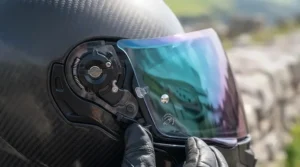
First, fitment: most modern shields use a tool-less quick-release mechanism, but the very first fit is where damage most commonly happens. Line the shield’s pivot pin up gently rather than forcing it, and check the locking tab clicks fully home on both sides before riding — a shield that isn’t fully seated can vibrate loose at motorway speed. Second, cleaning is where mirror coatings live or die. Never use dry cloths or household glass cleaner; the ammonia in standard glass cleaner degrades most mirror coatings within weeks. Warm water and a genuine microfibre cloth is the standard advice across every manufacturer we researched, including Arai’s own maintenance notes.
A mistake worth calling out specifically in the first 30 days: riders often store a spare clear shield loose in a tank bag or top box, where it picks up scratches that then transfer onto the mirror shield when they’re stacked together in storage. A simple visor sock or soft pouch solves this for a couple of pounds. Finally, if your shield is Pinlock-compatible, fit the anti-fog lens insert before your first cold-weather ride rather than after your visor mists up on the way to work — retrofitting on the roadside is not a fun experience.
Real-World Scenarios: Which Rider Are You?
If you’re a college or university student commuting five to eight miles daily on a budget-friendly 125cc, the LS2 Pinlock-Ready Iridium Shield or the OZ-USA Iridium Universal Mirror Shield make more financial sense than a premium OEM option — you’ll get the glare reduction without tying up cash better spent on fuel or insurance.
If you’re doing regular long-distance touring — think 200+ mile days across changing light conditions from motorway to shaded B-roads — the Arai VAS-V Max-Vision Mirror Silver is worth the extra spend specifically because of its calibrated transmittance, which reduces the eye fatigue that builds up over consecutive touring days.
If you’re a weekend sportsbike rider who cares as much about how the bike looks parked outside the café as how it rides, the AGV K6/K6S Iridium Silver Visor or HJC HJ-09 RST Mirrored Shield deliver the aesthetic payoff alongside genuine function, at a price point that doesn’t require justifying to a partner.
How to Choose a Mirror Tinted Visor for Motorbike Helmet Use
- Confirm your exact helmet model and shield part number first. Fitment is shell-specific, not brand-generic — an RF-1200 shield will not fit an RF-SR without checking, despite both being Shoei.
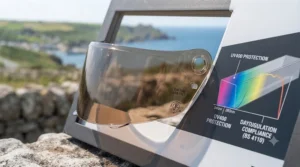
- Check the UK legal tint percentage before buying. Anything transmitting less than 50% of visible light isn’t legal for road use, regardless of how good it looks.
- Decide whether you need Pinlock compatibility. If you ride year-round in the UK, anti-fog capability isn’t optional — it’s essential.
- Weigh coating durability against budget. Cheaper universal shields save money upfront but often need replacing sooner as the mirror finish degrades.
- Consider whether you’ll keep a clear spare. Every genuinely mirror-tinted shield is daytime-only, so a clear visor for evening rides is a practical necessity, not an optional extra.
- Read aggregated review sentiment on fitment specifically, not just aesthetics — a shield that looks stunning in photos but pops loose at 60mph is a false economy.
- Factor in your riding position. Sportsbike-specific wraparound shields fit differently on a tucked-in riding stance than touring shield geometry does.
Tinted Visor for Track Days: What Changes When You Leave the Road
A tinted visor for track days operates under a genuinely different rulebook than road riding, and it’s worth understanding before you turn up to a trackday with the wrong kit. Race circuits and organised trackday events typically aren’t bound by the same road-legal visibility requirements as the public highway, which is why you’ll see genuinely dark “race visor” tints — sometimes well below the 50% light transmission threshold — permitted in the paddock that would get you pulled over on the way there.
That said, most trackday organisers still require riders to arrive and depart the venue on public roads wearing road-legal kit, which means a genuinely dark race tint often needs swapping at the circuit rather than worn for the journey. This is exactly where the tool-less quick-release mechanisms on shields like the HJC HJ-09 RST Mirrored Shield earn their keep — swap to a darker session-specific shield in the paddock, swap back to a road-legal or clear shield for the ride home. Reviewers who track regularly consistently mention keeping two or three shields in rotation rather than relying on a single visor for everything, which, once you’ve bought one spare shield, isn’t actually much more expensive than replacing a scratched one anyway.
Mirror Finish Visor Styles Explained
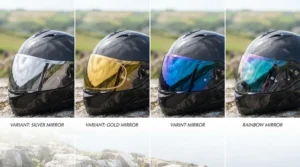
Not all mirror finish visor styles behave the same way, and the differences go beyond simple colour choice. Silver mirror coatings, like those on the Shoei CWR-1 Spectra Silver, tend to offer the most neutral colour rendering — the world outside still looks roughly true-to-colour, just dimmer and glare-reduced. Blue and gold mirror finishes, by contrast, introduce a visible colour cast that some riders find fatiguing on longer rides, though plenty of others specifically buy these for the styling statement.
Iridium finishes — the rainbow-sheen coatings used on the AGV K6/K6S Iridium Silver Visor and several budget alternatives — achieve their effect through multiple thin-film layers rather than a single reflective coat, which is part of why premium iridium coatings tend to hold their finish longer than budget equivalents using fewer layers. Reflective chrome finishes, meanwhile, offer the highest glare reduction but the most restricted low-light usability, making them the most strictly “daytime only” of the bunch. Choosing between these styles is genuinely as much about your typical light conditions as your taste — a commuter riding into low winter sun benefits more from a calibrated silver tint than a flashy chrome one.
Reflective Visor Coating vs Standard Tint: What’s Actually Different
It’s worth being precise here, because “tinted” and “mirrored” get used interchangeably online when they’re mechanically different things. A standard tint reduces light transmission by absorbing a percentage of it as it passes through the plastic — the visor looks uniformly darker from both sides. A reflective visor coating, on the other hand, is a metallic film applied to the outer surface that bounces a significant portion of incoming light away before it ever reaches the polycarbonate itself, which is why mirror shields look almost opaque silver from outside but noticeably lighter from the rider’s perspective inside.
This distinction matters practically: a visor reflective coating generally provides better glare reduction for the same nominal darkness rating than a plain tint would, because reflection removes light from your eyeline entirely rather than just dimming it. The trade-off, as covered in the product reviews above, is that reflective coatings are more vulnerable to fine scratching than the base polycarbonate underneath, since you’re dealing with an applied surface layer rather than tinted material throughout.
Sports Bike Styling: Matching Your Visor to Your Machine
Sports bike styling is one area where the mirror-visor conversation genuinely overlaps with fashion as much as function, and there’s nothing wrong with admitting that’s part of the appeal. A silver iridium shield on a white or silver-liveried sportsbike reads as clean and race-inspired; the same shield on a matte black naked bike can look almost aftermarket-custom by contrast.
Colour-matching isn’t purely aesthetic vanity, either — reviewers frequently mention that gold and blue mirror finishes photograph more distinctly in group ride-out photos, which matters more to some riders than they’ll openly admit. Practically, if you’re chasing a specific sports bike styling look, check the coating colour against your helmet shell and bodywork colour scheme before ordering, since photos on retailer sites can render mirror coatings noticeably differently depending on lighting and camera angle.
Common Mistakes When Buying a Mirror Tinted Visor
The single most frequent error is buying based on the shield’s advertised photo rather than confirming the exact part number against your specific helmet model — mirror shields are not universal by brand, only by specific shell. A second common mistake is assuming a mirror finish and a dark tint are interchangeable for legal purposes; a shield can be lightly mirrored yet still pass the 50% transmission threshold, or heavily tinted and mirrored and fail it, and only checking the actual specification tells you which.
Riders also frequently underestimate coating fragility, cleaning mirror shields with whatever cloth is nearest rather than a dedicated microfibre one, which introduces fine scratching that dulls the reflective effect within a single season. Finally, plenty of buyers skip checking Pinlock compatibility entirely, only to discover mid-winter that their new mirror shield fogs up constantly without an anti-fog insert they now have to source separately.
Safety, Regulations and UK Road-Legality Guide
This is the section to actually read carefully before you buy. Under UK guidance, motorcycle eye protection must meet recognised safety standards and any visor transmitting less than 50% of visible light does not comply for road use — this applies regardless of whether the visor is described as “tinted” or “mirrored.” Shields marked “For Daytime Use Only” are exactly that: legal to use in daylight, not legal after dusk or in poor visibility, and police forces do periodically enforce this using dedicated tint-testing equipment, so this isn’t a purely theoretical rule.
Beyond the legal transmission threshold, always check for a genuine safety standard mark on any replacement shield — BSI Kitemark or UNECE Regulation 22 approval, corresponding to the mark on your original motorcycle helmet itself. A shield without proper certification may offer significantly reduced impact protection regardless of how good the tint looks. Practically speaking, the safest long-term approach most experienced riders settle into is running a legally compliant mirror shield for daytime riding and swapping to a clear one the moment light starts fading — which circles back to why a tool-less quick-release mechanism, discussed throughout the product reviews above, is worth prioritising rather than treating as a nice-to-have extra.
Long-Term Cost & Maintenance
Total cost of ownership for a mirror tinted visor for motorbike helmet use isn’t just the sticker price — it’s replacement frequency multiplied by that price over however many years you keep the helmet. Budget universal shields in the £15-£25 range often need replacing every one to two riding seasons as the coating dulls or scratches, while premium OEM shields like the Shoei CWR-1 Spectra Silver or Arai VAS-V Max-Vision Mirror Silver frequently last three to five seasons with proper care, largely offsetting their higher upfront cost over the ownership period.
Factor in the near-mandatory second purchase, too: since every mirror shield covered here is daytime-only by design, most riders end up owning a clear or lightly tinted spare alongside it, adding roughly £20-£60 to the real cost depending on brand. Cheap Pinlock inserts (typically £10-£20) are a worthwhile addition regardless of shield choice, since a fogged-up mirror shield is arguably more disorienting than a fogged clear one, given the already-reduced light transmission working against you.
Frequently Asked Questions
❓ Are mirror tinted visors legal on UK roads?
❓ Do mirror visors scratch more easily than clear ones?
❓ Can I fit a Pinlock anti-fog lens to a mirror tinted visor?
❓ What's the difference between iridium and standard mirror coatings?
❓ Do I need a spare clear visor if I buy a mirror tinted one?
Conclusion
Choosing the right mirror tinted visor for motorbike helmet use really comes down to three honest questions: which helmet do you actually own, how often will you genuinely use the tint, and how much of the cost are you happy putting toward styling versus pure function. The Shoei CWR-1 Spectra Silver and Arai VAS-V Max-Vision Mirror Silver reward existing owners of those helmet platforms with precision fit and calibrated performance worth the premium. The AGV K6/K6S Iridium Silver Visor and HJC HJ-09 RST Mirrored Shield strike a sensible balance of style, function and price for riders who want both without breaking the bank. Budget options like the LS2 Pinlock-Ready Iridium Shield and OZ-USA Iridium Universal Mirror Shield are genuinely sound entry points, provided you go in understanding the coating durability trade-off, while the Bob Heath Dark Tint Mirror Visor deserves a look from anyone struggling to source their exact shield part number elsewhere.
Whichever you choose, keep the UK’s 50% light transmission rule and the “daytime use only” marking front of mind — the safest, smartest approach is treating your mirror shield as a bright-day companion to a clear visor, not a full replacement for one. Ride safe, keep that glare where it belongs, and enjoy the view.
✨ Don’t Miss These Exclusive Deals!
🔍 Take your riding kit to the next level with these carefully selected visors. Click on any highlighted item to check current pricing and availability. These options will help you create a genuinely more comfortable, sharper-looking ride your fellow bikers will notice!
Recommended for You
- Smoke Tinted Visor for Daytime Riding: 7 Best Picks 2026
- Clear Visor For Night Riding: 7 Top Picks That Cut Glare in 2026
- Clear Motorcycle Visor: 7 Best Picks for UK Riders in 2026
Disclaimer: This article contains affiliate links. As an Amazon Associate, I earn from qualifying purchases. If you purchase products through these links, we may earn a small commission at no additional cost to you.
✨ Found this helpful? Share it with your friends! 💬🤗
